债务货币化

Search documents
美联储2020年连续缩减量化宽松购买量,是在收紧货币政策吗?
Sou Hu Cai Jing· 2025-10-16 16:30
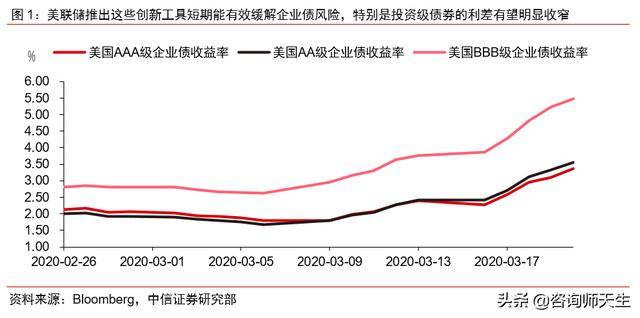
Group 1 - The Federal Reserve's monetary policy is not tightening but rather transitioning to a new phase of liquidity injection, having previously implemented a broad and unfocused approach [1] - The Fed's initial response to the stock market's continuous circuit breakers included a combination of zero interest rates, quantitative easing, and a $2 trillion fiscal stimulus, which did not yield the expected results [1][2] - The presence of the Volcker Rule has led banks to withdraw liquidity instead of providing loans, creating a situation where businesses in need of funds struggle to obtain loans from banks [1][2] Group 2 - The Fed's liquidity injection strategy consists of two parts: rescuing the market and supporting businesses, utilizing over nine tools to achieve liquidity distribution [4] - Despite the Fed's efforts, a significant portion of the released liquidity remains trapped within the financial system, prompting a reduction in the scale of quantitative easing [4] - The Fed has acquired a substantial amount of corporate and government bonds, managing to temporarily suppress risk, but the proportion of high-risk bonds is increasing, indicating a precarious situation [4]

降息周期有色商品展望-贵金属
2025-10-09 02:00
Summary of Key Points from Conference Call Industry Overview - The discussion primarily revolves around the gold market and its dynamics in the context of macroeconomic factors and geopolitical uncertainties. Core Insights and Arguments 1. **Gold Price Trends**: Gold prices have risen significantly from approximately $3,300 to $4,000 since late August 2025, with a total increase of nearly $700. This surge is not primarily driven by Federal Reserve interest rate cuts or traditional monetary easing factors, as the dollar index and U.S. Treasury yields have not shown corresponding declines [2][3][4] 2. **Geopolitical Risks**: While geopolitical risks, such as the Russia-Ukraine conflict and Middle Eastern tensions, exist, they are not substantial enough to fully explain the recent spike in gold prices. The current rise is more likely a continuation of the upward trend observed in early 2025 [2][4] 3. **Debt Monetization**: The monetization of debt is a significant factor contributing to the rise in gold prices. Countries are issuing debt to stimulate their economies, raising concerns about the global credit monetary system, which drives investors towards gold as a safe haven [1][4][10] 4. **ETF Influence**: The increase in gold prices has been significantly supported by inflows into gold ETFs rather than direct purchases by central banks. This trend indicates a market concern regarding future debt monetization and the uncertainties surrounding the global credit system [1][15] 5. **Market Dynamics**: The recent surge in gold prices can also be attributed to technical factors, including a breakout from a long-term consolidation phase, leading to short-sellers being forced to cover their positions. This has resulted in increased liquidity and investment in gold [7][10] 6. **Inflation Risks**: Although inflation expectations remain stable, rising commodity prices and increased costs associated with AI could pose future inflation risks. The current market does not fully reflect the potential for a return to a stagflation scenario similar to the 1970s [9][12] 7. **Trump Administration's Impact**: The uncertainty surrounding the Trump administration's policies has heightened market demand for gold as a safe asset. The administration's strategies, including tariffs and withdrawal from international agreements, have contributed to this uncertainty [5][6][4] 8. **Future Price Predictions**: The future trajectory of gold prices remains uncertain. While there is potential for continued upward movement if macroeconomic conditions remain favorable, the significant increase from $2,000 to $4,000 raises the possibility of technical corrections [7][22] 9. **Dollar Stability**: Despite the ongoing trend of de-dollarization, the dollar has shown signs of temporary stabilization, supported by strong performance from U.S. tech companies and expectations of economic recovery [14][17] 10. **Long-term Asset Allocation**: The current allocation of gold in global asset portfolios is around 4.5%, significantly lower than the 15% seen in the 1970s. If this allocation were to increase, it could lead to substantial price increases for gold [22] Other Important Insights - **Market Sentiment**: There is a growing sentiment among investors that gold prices will not decline significantly, with many holding physical gold for potential gains [20] - **Indicators for Price Prediction**: Traditional indicators such as the dollar index and ETF holdings have shown a decoupling from gold prices, suggesting a need for a reevaluation of how gold price movements are predicted [21] - **Cyclical Nature of Gold**: Gold exhibits a unique cyclical behavior that is influenced by global demand and investor sentiment rather than solely by economic cycles or Federal Reserve policies [23]
贝森特要“适度长期利率”,美银Hartnett:重回“尼克松时代”,做多黄金、数字币、美债,做空美元!
华尔街见闻· 2025-09-07 12:02
Core Viewpoint - The article discusses the potential repetition of the "Nixon era" in the context of current political pressures on the Federal Reserve, suggesting that these pressures may lead to significant changes in monetary policy, including the adoption of yield curve control (YCC) [2][8]. Group 1: Political Pressure and Historical Parallels - U.S. Treasury Secretary Yellen has publicly urged the Federal Reserve to return to "moderate long-term interest rates," highlighting the need for the Fed to focus on its statutory duties of maximum employment, price stability, and moderate long-term rates [2][5]. - The current economic challenges faced by the U.S. are compounded by the potential loss of the Federal Reserve's independence, which relies on public trust [6]. - The political motivations reminiscent of the Nixon administration's pressure on the Fed to implement expansive monetary policies are seen as a driving force behind potential changes in current monetary policy [8][10]. Group 2: Yield Curve Control (YCC) as a Policy Tool - Hartnett predicts that the rising global long-term bond yields will compel policymakers to intervene, potentially leading to the implementation of YCC as a means to control government financing costs [10][11]. - The article notes that 54% of respondents in a recent global fund manager survey expect the Federal Reserve to adopt YCC [11]. Group 3: Investment Strategies - Hartnett outlines a clear investment strategy based on the anticipated adoption of YCC: going long on bonds, gold, and cryptocurrencies while shorting the U.S. dollar [12][15]. - The strategy emphasizes that YCC will artificially lower bond yields, creating significant upside potential for bond prices as economic data shows signs of weakness [13]. - The anticipated monetary policy shift is expected to erode the purchasing power of fiat currencies, making gold and cryptocurrencies attractive as stores of value [14][15]. Group 4: Historical Context and Future Risks - The article warns that, similar to the Nixon era, the current period of monetary easing could lead to uncontrollable inflation and market crashes in the future, as evidenced by historical patterns [16].
一旦美国狂印37万亿美元,把欠债都还了,会发生什么?
Sou Hu Cai Jing· 2025-09-05 08:46
Group 1 - The total U.S. national debt has surpassed $37 trillion as of August 2025, significantly earlier than the Congressional Budget Office's previous estimate of reaching this figure after 2030, resulting in a per capita debt burden of over $108,000 [1][3] - The primary reason for the rising debt is the annual accumulation of fiscal deficits due to excessive spending and insufficient tax revenue, exacerbated by pandemic-related stimulus payments and military expenditures [3][5] - The debt-to-GDP ratio has exceeded 135%, the highest since World War II, driven by increased government spending and rising interest payments, which are projected to reach $952 billion in 2025 [5][7] Group 2 - High levels of debt are expected to increase borrowing costs, affecting household loans and corporate investments, while also leading to stagnant wages and rising prices [7][10] - The market is already reacting to these concerns, with significant fluctuations in U.S. Treasury yields and a sell-off by investors, indicating a loss of confidence in the dollar's safe-haven status [7][9] - Historical precedents show that attempts to print money to pay off debt have led to hyperinflation and economic collapse in other countries, raising alarms about the potential consequences for the U.S. economy [9][12] Group 3 - The current fiscal policies, including tax cuts and tariffs, have not effectively addressed the budget deficit and may lead to a downgrade in the U.S. credit rating, increasing the risk of financial instability [10][12] - Experts warn that if the Federal Reserve resorts to printing money to manage the debt, it could undermine the dollar's global standing and trigger a worldwide economic crisis [12][14] - The potential for a U.S. debt crisis in 2025 could reshape the global economic order, with emerging markets possibly benefiting from a more diversified currency system [14]
美债收益率为何“长短不一”?一文看懂通胀与债务的交织影响
Qi Huo Ri Bao Wang· 2025-09-04 01:21
Group 1: Economic Growth and Consumer Spending - The momentum of U.S. economic growth is weakening, evidenced by slowing consumer spending, a struggling manufacturing sector, and a declining real estate market [2][3] - Consumer spending, which accounts for two-thirds of GDP, grew only 1.4% in Q2, an improvement from Q1's 0.5% but still below last year's levels [2] - The manufacturing sector is facing challenges from tariffs, demand slowdown, and high raw material costs, with a new orders index slightly rebounding to 47.1% but remaining below 50% [2] Group 2: Inflation and Its Impact on Services - High inflation is impacting the service sector, with the ISM services PMI dropping to 50.1%, indicating a near-stagnation in expansion [3] - The services new orders index fell to 50.3%, while the prices index rose to 69.9%, indicating significant price increases that are reducing consumer purchasing power [3] Group 3: Long-term Bond Yields and Inflation Concerns - Long-term U.S. Treasury yields are rising due to investor concerns over persistent inflation, despite a lack of strong economic growth [4] - The core PCE inflation indicator rose to 2.9% in July, indicating sticky inflation, particularly in the service sector [4] Group 4: Tariffs and Consumer Impact - Tariffs have a delayed impact on inflation, with U.S. importers beginning to pass on costs to consumers, expected to rise to over 60% by Q4 [5] Group 5: Debt and Federal Reserve Policy - The U.S. government is facing high debt levels and interest burdens, leading to increased pressure on the Federal Reserve to lower interest rates [6] - The U.S. Treasury is expected to issue $1 trillion in net debt in Q3, with long-term bonds making up a significant portion, potentially tightening dollar liquidity [6][8] Group 6: Market Dynamics and Investment Opportunities - The combination of fiscal expansion and high inflation is likely to keep long-term bond yields elevated, while short-term yields may decline if the Federal Reserve lowers rates [8] - Investors may face risks with long-term U.S. Treasuries and could consider yield futures as a hedging strategy [8]

黄金和白银突然双双爆发,金价时隔数月再次创新纪录
Sou Hu Cai Jing· 2025-09-03 09:06
Group 1 - The core reason for the recent surge in gold and silver prices is the strengthened expectation of interest rate cuts by the Federal Reserve, which has led to increased demand for these non-yielding precious metals [3][5] - Gold prices have surpassed $3,500 per ounce for the first time in over four months, while silver has risen above $40 per ounce for the first time since 2011, driven by concerns over central bank policies and economic indicators suggesting a slowdown [1][3] - Central banks globally, particularly in countries like China, Poland, Turkey, and India, have been significantly increasing their gold reserves, reflecting a long-term strategy of "de-dollarization" and geopolitical risk hedging [7] Group 2 - The actual interest rates, which are the nominal rates minus inflation expectations, have been declining rapidly, enhancing the attractiveness of gold as a safe-haven asset [5] - Silver has outperformed gold this year, with a notable increase in holdings in silver-backed ETFs, driven by a weaker dollar and the dual nature of silver as both a precious and industrial metal [9] - The current bullish sentiment in the precious metals market suggests that if the Federal Reserve officially begins its rate-cutting cycle and central bank purchases of gold continue, both gold and silver could reach new highs [9]

贵金属“完美风暴”已至?金价迭创新高!有色龙头ETF(159876)近两日吸金7560万元,规模创新高!
Xin Lang Ji Jin· 2025-09-03 01:35
Core Viewpoint - International gold prices have reached new highs, driven by expectations of interest rate cuts by the Federal Reserve, leading to significant inflows into the non-ferrous metals sector, particularly highlighted by the surge in the non-ferrous metal ETF (159876) which attracted 75.6 million yuan in just two days, reaching a new high of 207 million yuan as of September 2 [1][3]. Group 1: Gold Market Dynamics - On September 2, spot gold in London surpassed $3,500 per ounce, marking a new high, with Morgan Stanley projecting a year-end target of $3,800 per ounce [3]. - Multiple institutions predict that after four months of consolidation, precious metals are poised to enter a new upward trend [3]. - The macroeconomic environment is characterized by increased fiscal dominance in the U.S., leading to a trend of abundant dollar liquidity, which is favorable for global risk assets and supports gold as an anti-inflation asset [3]. Group 2: Non-Ferrous Metals Sector Outlook - The non-ferrous metals sector is experiencing a tight supply-demand balance, with high growth prospects due to several factors: 1. Supply-side improvements are expected as "anti-involution" initiatives accelerate the clearance of excess capacity, enhancing profitability for non-ferrous enterprises [3]. 2. Demand from emerging industries such as new energy, infrastructure, artificial intelligence, and robotics is increasing the need for non-ferrous metals [3]. 3. The global economic recovery, coupled with a depreciating dollar, is supporting non-ferrous metal prices [3]. - The industrial metals sector is currently undervalued, indicating potential for upward valuation adjustments, with a bullish market for non-ferrous metals beginning to take shape [4]. Group 3: Investment Strategy - The non-ferrous metal ETF (159876) and its linked funds are designed to track the CSI Non-Ferrous Metals Index, which includes significant weights in copper (25.3%), aluminum (14.2%), rare earths (13.8%), gold (13.6%), and lithium (7.6%), providing a diversified investment approach [5]. - The ETF's performance reflects a strategy to mitigate risks associated with investing in single metal sectors, making it suitable for inclusion in investment portfolios [5].
中金:若特朗普政府掌控美联储,潜在顺序及影响?
中金点睛· 2025-08-29 00:07
Core Viewpoint - The article discusses the increasing political influence of the Trump administration over the Federal Reserve, particularly through recent personnel changes that could undermine the Fed's independence and affect monetary policy decisions [2][3][4]. Group 1: Importance of the Board of Governors - The Federal Reserve Board of Governors consists of 7 members with a 14-year term, designed to minimize political interference [3]. - The President has the authority to fill vacancies but requires "just cause" to remove members, which typically refers to serious misconduct rather than policy disagreements [3][4]. - Control over the Board can indirectly allow the President to influence the appointment of regional Federal Reserve Bank presidents, thereby impacting the Federal Open Market Committee (FOMC) and monetary policy [3][4]. Group 2: Historical Context and Current Trends - Historically, the power to veto or dismiss regional Federal Reserve Bank presidents has never been exercised, but recent political divisions within the Board suggest a shift towards increased politicization [4]. - The independence of the Federal Reserve has been challenged during periods of significant political pressure, particularly in the 1960s and 1970s when fiscal dominance was prevalent [5]. Group 3: Potential Future Actions by Trump - If Trump gains control of 4 votes on the Board, he could significantly influence FOMC personnel decisions [6]. - The expected steps include securing a majority on the Board before the 2026 regional Federal Reserve Bank president elections, replacing current presidents, and establishing a dovish team aligned with Trump's policies [6]. - This could lead to the implementation of accommodative monetary policies, such as interest rate cuts and quantitative easing [6]. Group 4: Asset Implications - The article suggests that fiscal dominance may lead to a weaker dollar and benefit assets like gold, while also positively impacting emerging market equities [7]. - The anticipated economic recovery, coupled with low interest rates, could elevate inflation expectations and support sectors such as manufacturing, military, and energy infrastructure [7].

当达里奥再次悲观
虎嗅APP· 2025-08-28 10:15
Core Viewpoint - The article discusses Ray Dalio's new book "Why Nations Fail," which explores the long-term debt cycle and its implications for the U.S. economy, emphasizing the historical patterns of debt accumulation and the eventual consequences of unsustainable debt levels [9][20][196]. Group 1: Economic Machine Operation - The economic machine can be divided into five macroeconomic sectors: households, businesses, government, finance, and overseas sectors [22][23]. - The private sector, comprising households and businesses, is the main wealth creator, with employment and customer relationships being key dynamics [26][30]. - The wealth distribution structure in the U.S. is highlighted, with 1% of the population holding significant wealth, while the bottom 50% are primarily in debt [41][44]. Group 2: Government and Debt - The government acts as the economic manager, with tax revenue being a crucial source of government credit [56][58]. - The U.S. government has a history of budget deficits, with expenditures exceeding revenues, leading to a national debt exceeding $36 trillion [70][72]. - The government often rolls over debt, creating a cycle of borrowing to pay off existing debt, which raises concerns about the sustainability of this approach [73][75]. Group 3: Long-term Debt Cycle - Dalio identifies an 80-year long-term debt cycle, where each cycle leads to significant debt accumulation and eventual crises [197]. - The short-term debt cycle typically lasts around 6 years, with the current cycle starting in 2020 and nearing completion [193][194]. - The article emphasizes that during the later stages of the long-term debt cycle, the government may resort to debt monetization, leading to currency devaluation as a means to manage debt [205][206]. Group 4: Economic Participants and Behavior - The main participants in the economic machine include borrowers, lenders, banks, central governments, and central banks, each with distinct motivations and behaviors [127][131]. - The article discusses the nature of debt and credit, highlighting that debt represents a promise to pay in the future, while credit is a commitment to repay borrowed funds [140][145]. - The relationship between debt and money supply is explored, indicating that increases in debt often correlate with economic fluctuations and purchasing power changes [155][181]. Group 5: Implications for Investment - The article suggests that understanding the dynamics of the economic machine and the long-term debt cycle can provide insights into potential investment opportunities and risks [20][196]. - The current state of the U.S. economy, characterized by high government debt and pressures on fiscal sustainability, may influence market behavior and investment strategies [119][225]. - The historical patterns of debt crises and government responses can serve as a framework for anticipating future economic developments and investment landscapes [124][205].
货币战又要来了,欧美逼人民币升值!金融战回旋镖重创美国制造业
Sou Hu Cai Jing· 2025-08-22 09:29
Group 1 - The core argument of the articles revolves around the failure of Trump's tariff strategy, which aimed to pressure China into a currency agreement similar to the Plaza Accord, resulting in a significant increase in electric vehicle prices in the U.S. by 23% [2][9] - The U.S. retail giants, including Walmart and Target, have shifted their stance, now willing to absorb tariffs to maintain supply chains, indicating a backlash against the tariff strategy [9] - The financial implications of the tariff war have led to a surge in U.S. debt costs, with the Treasury Department expressing concern over rising interest rates and the potential loss of dollar credibility [12] Group 2 - The articles highlight the contrast between the current U.S.-China trade dynamics and the historical context of Japan's Plaza Accord, emphasizing that China is less likely to concede financial sovereignty due to its strong manufacturing base and foreign reserves [6][10] - The impact of the tariffs has been felt in the semiconductor industry, where China's exports have reached $160 billion, and the rising costs have pressured U.S. automotive and chip manufacturers [4][9] - The emergence of alternative financial systems, such as the digital yuan and regional trade agreements, is seen as a challenge to the dominance of the U.S. dollar, with increasing use of local currencies in trade [12]