
债市修复

Search documents
债市 逆风环境与修复动能并存
Qi Huo Ri Bao· 2025-09-15 23:32
Group 1 - The bond market is facing headwinds due to increased market risk appetite and institutional behavior, with the 10-year and 30-year government bond yields rising to 1.83% and 2.11% respectively [1] - The 10-year government bond yield is expected to face significant upward resistance in the 1.80%-1.85% range, supported by increased market allocation and expectations of central bank operations [3][7] - Demand pressures remain, with weak financing needs and a reasonable liquidity environment providing support for the bond market [3][5] Group 2 - Recent macroeconomic data shows a slow transmission of policy expectations to the macroeconomic fundamentals, with inflation levels at a low point and a slight decline in the year-on-year growth rate of social financing [4][5] - The core CPI has expanded for four consecutive months, indicating that price levels are still at a bottoming stage, while PPI's decline has narrowed, supported by industrial price increases [4] - The central bank's stance on maintaining liquidity remains unchanged, with significant reverse repo operations indicating a continued loose monetary policy to support economic recovery [5][6] Group 3 - The "anti-involution" policy is expected to improve supply-demand relationships and support PPI stabilization, although the pace of recovery is anticipated to be slow [4][6] - The bond market's pricing is primarily influenced by market risk appetite and institutional behavior, with concerns over bond fund redemptions persisting [7] - The overall trend in the bond yield curve is expected to remain steep, reflecting the ongoing challenges in the bond market despite potential short-term recovery [7]


固定收益点评:物价趋势尚不明确
GOLDEN SUN SECURITIES· 2025-09-10 12:34
1. Report Industry Investment Rating No information is provided in the report regarding the industry investment rating. 2. Core Viewpoints of the Report - Current price data remains weak. The significant increase in gold prices is the main factor supporting the upward trend of core CPI year - on - year growth, while most other sub - items perform weaker than the seasonal average. The narrowing of the PPI decline in August is mainly due to the low base effect. The effectiveness of the national unified market construction policy is mainly concentrated in upstream industries such as coal, steel, and photovoltaic. The ineffective recovery of domestic demand may hinder the PPI's year - on - year recovery. The sustainability of the current industrial price increase and its price transmission effect on downstream industries depend on the improvement of social terminal demand [4][35]. - The bond market may gradually recover in a volatile manner. The decreasing correlation between stocks and bonds and the weakening impact of commodities on the bond market mean that the adjustment pressure on bonds is gradually alleviating. Given the continuous asset shortage, loose funds, and the downward trend of the entity's return rate, the downward trend of broad - spectrum interest rates such as loan interest rates remains unchanged. The over - increase in interest rates at the beginning of the year has been gradually digested. Therefore, there is limited room for further interest rate adjustment, and the bond market will gradually return to the fundamentals and the asset shortage situation. However, this return may not be smooth but rather a gradual recovery in a volatile manner. It is recommended to adopt a dumbbell - shaped operation strategy, combining short - term credit/certificates of deposit with long - term interest rates, and pay attention to the opportunities for high - selling and low - buying in long - term interest rate positions. The long - term bond interest rate may decline more smoothly in the second half of the fourth quarter, and interest rates are still expected to reach new lows this year [5][36]. 3. Summary by Related Content CPI Analysis - **Overall CPI**: In August, the year - on - year decline of CPI widened, dropping from flat to - 0.4%, indicating weak consumer - end prices. The year - on - year decline of core CPI increased by 0.1 percentage points to 0.9%, and the month - on - month figure remained flat. Gold prices, oil prices, and summer consumption are the main factors driving the CPI's year - on - year performance. After excluding the "other goods and services" sub - item, the overall price level remains weak [1][8]. - **Other Goods and Services Sub - item**: In August, this sub - item continued to grow at a high level, with a year - on - year increase of 8.6%, 0.6 percentage points higher than in July. The high - speed growth may be supported by the rising gold prices. In August, the year - on - year growth rate of domestic gold futures prices was 37.1%, slightly down 0.7 percentage points from July [2][16]. - **Food CPI**: In August, the year - on - year decline of food CPI widened, with a year - on - year decrease of 4.3%, 2.7 percentage points more than the previous month, mainly due to the decline in vegetable, egg, and fruit prices. The month - on - month increase was 0.5%, lower than the seasonal level by about 1.1 percentage points. The low pork prices are the main reason for the widening of the CPI's year - on - year decline [21]. - **Non - food CPI**: In August, the year - on - year growth rate of non - food CPI increased to 0.5%, up 0.2 percentage points from the previous month, while the month - on - month figure decreased by 0.1%. The increase in the year - on - year growth rate of summer service prices may be the main reason [23]. PPI Analysis - **Overall PPI**: In August, the year - on - year decline of PPI was 2.9%, narrowing by 0.7 percentage points from the previous month, the first narrowing since March this year, mainly due to the low base effect of the previous year and the narrowing decline of coal processing and ferrous metal smelting and rolling industries. The month - on - month figure remained flat compared to the previous month. The prices of domestic industrial products showed a mixed trend in August [3][29]. - **Sub - industries of PPI**: Some raw material industries' prices changed from decline to increase, such as coal processing, coal mining and washing, ferrous metal smelting and rolling, and glass manufacturing. However, the prices of the petroleum and some non - ferrous metal industries declined month - on - month due to input factors [3][29]. - **PPI of Means of Livelihood**: In August, the year - on - year decline of the PPI of means of livelihood was 1.7%, 0.1 percentage points wider than the previous month. Among them, the prices of clothing remained flat, the growth rate of general daily necessities slowed down, the decline of durable consumer goods widened, and the decline of food prices narrowed [30].
固定收益定期:债市在震荡中渐进修复
GOLDEN SUN SECURITIES· 2025-09-07 14:40
Group 1: Report Industry Investment Rating - No information provided Group 2: Core Viewpoints of the Report - The bond market may gradually recover in an oscillatory and progressive manner as the correlation between stocks and bonds weakens and commodity pressure eases, but other markets, seasonal factors, and regulatory policies may cause oscillations during the recovery process. It is recommended to adopt a dumbbell - shaped operation, and long - term bond rates may decline more smoothly in the second half of the fourth quarter, with rates expected to hit new lows this year [4][6][18] Group 3: Summary by Relevant Content Bond Market Performance This Week - This week, both long - term and short - term bonds remained oscillating. The active bonds of 10 - year and 30 - year treasury bonds, 250011.IB and 2500002.IB, changed by - 1.25bps and 0.95bps respectively compared with last week, reaching 1.77% and 2.03%. After the month - end, the capital price remained loose, and the 1 - year AAA certificate of deposit stayed at around 1.67%. Credit interest rates declined slightly, with the 3 - year and 5 - year AAA - secondary capital bonds falling by 1.7bps and 1.9bps respectively compared with last week, reaching 1.92% and 2.05% [1][9] Weakening Impact of the Stock and Commodity Markets on the Bond Market - The impact of the stock and commodity markets on the bond market has gradually weakened. The 10 - day moving correlation coefficient between the daily interest rate change of the 30 - year active bond and the increase of the Shanghai Composite Index dropped from around 0.8 in late July to around 0.15 currently. On one hand, it is due to the change in bond institutional positions; on the other hand, the relative cost - effectiveness of bonds compared with stocks has gradually increased. Since the end of July, the commodity price index has continued to decline, and the Nanhua Industrial Product Price Index on September 4th has cumulatively dropped by 6.3% compared with the high on July 25th [2][10] Factors Protecting the Bond Market - The loose capital and banks' under - allocation are the main protections for the bond market. The fundamentals are still under pressure, the demand is not strong, and the financing demand is insufficient, so the loose capital situation remains unchanged. The future asset supply will further decline, and the net financing of government bonds in the next 4 months may significantly decrease compared with the same period last year. For banks, the deposit growth rate is rising while the credit growth rate is slowing down, so banks need to increase bond allocation to make up for the gap, and they may have a high willingness to increase allocation [3][10] Reasons for the Oscillatory and Progressive Recovery of the Bond Market - Other markets still impact the bond market. Although the seesaw effect between stocks and bonds has weakened, non - banks still hold a relatively high position in long - term bonds, and a significant rise in the stock market may lead to institutional selling and short - term bond market fluctuations. Seasonal factors may restrict the downward speed of interest rates. September is often a period of interest rate adjustment, and October is an oscillatory period. The new regulations on public fund redemption fees may reduce institutional willingness to invest in bond funds, and the redemption behavior may bring short - term adjustment pressure to the market [4][14][17]
债市修复动能受限
Qi Huo Ri Bao· 2025-09-02 03:39
Group 1 - The bond market is experiencing a limited upward space for the 10-year government bond yield, which has reached around 1.8%, with a slight rebound observed recently despite a strong stock market environment [1][6] - The central bank's liquidity provision remains focused on maintaining a balanced and relatively loose funding environment, with significant net injections through various operations in August [1][5] - The economic fundamentals show signs of improvement, but the demand side remains weak, with the manufacturing PMI still below the expansion threshold, indicating that demand-side recovery is still under observation [4][6] Group 2 - The bond market faces headwinds due to weak demand pressures, subdued financing needs, and a reasonably ample funding environment, which are key supporting factors for the bond market [2][4] - The "anti-involution" policy has led to rising industrial prices, creating expectations for future credit expansion, which continues to suppress bond market performance [2][4] - The overall liquidity is expected to remain reasonably ample, with no basis for tightening monetary policy, as the economy is still in the early stages of a wide credit cycle [5][6]
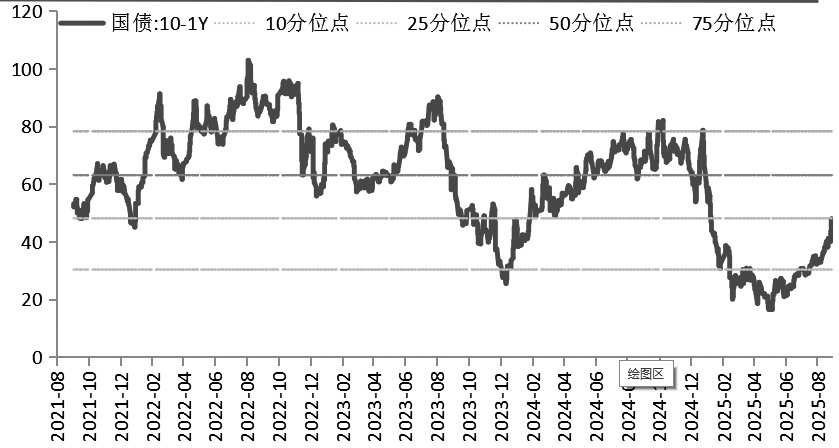
美联储降息预期升温!30年国债ETF博时(511130)成交破20亿,机构提前布局9月行情
Sou Hu Cai Jing· 2025-08-27 03:53
Group 1 - The core viewpoint indicates that the market is experiencing increased trading volume, with a total expected turnover of approximately 2.8 trillion yuan for the day, reflecting a rise of 401 billion yuan compared to the previous day [1] - The bond futures market is showing weakness, with the 30-year main contract down by 0.2% to 116.880 points, and other maturities also experiencing slight declines [1] - The 30-year bond ETF, Bosera (511130), is actively traded with a turnover exceeding 2 billion yuan and a net inflow of 890 million yuan over the past five days, highlighting its market attention [1] Group 2 - There is a high expectation for a Federal Reserve rate cut in September, which aligns with the ongoing trend of global liquidity easing [2] - The Bosera 30-year bond ETF, established in March 2024, tracks the "Shanghai 30-Year Government Bond Index" and is one of the few long-duration bond ETFs available, making it sensitive to interest rate changes [2] - The central bank's supportive stance remains unchanged despite seasonal funding pressures, indicating a potential for market stabilization and a rebalancing of liquidity between equity and bond markets [1][2]
【立方债市通】债市修复迹象出现/河南AAA主体拟发债3亿,明日申购/焦作建投换帅
Sou Hu Cai Jing· 2025-08-25 12:52
Group 1 - The central bank has conducted a significant liquidity injection, leading to a recovery in the bond market, with the yield on the 30-year special government bond falling by 4 basis points to 1.9975%, dipping below 2% for the first time in several days [1] - The central bank executed a 288.4 billion yuan reverse repurchase operation, with a net injection of 21.9 billion yuan for the day, alongside a 600 billion yuan one-year MLF operation, resulting in a total net injection of 621.9 billion yuan [1] - The stock market remains strong, with A-shares trading volume surpassing 3 trillion yuan for the second time in history, indicating a notable "see-saw" effect between stocks and bonds [1] Group 2 - Ten science and technology innovation bond ETFs will be included in the pledge library starting August 27, with a total scale reaching 120.384 billion yuan, allowing for general pledge-style repurchase business [2] - The joint notice from three departments encourages the expansion of direct financing channels for forestry enterprises, promoting bond issuance for eligible companies while ensuring no new hidden local government debt is created [3][4] Group 3 - Shanxi Province has issued guidelines to optimize the management of special bonds, stating that financing platforms with unresolved hidden debts cannot serve as project units [5][6] - Multiple provinces have reported significant progress in resolving hidden debts through bond replacement and negotiations, with some regions achieving a reduction in hidden debt to below 100 billion yuan [6] Group 4 - The Henan Agricultural Investment Group plans to issue 300 million yuan in medium-term notes, with the entire proceeds aimed at repaying existing debts [7] - The Xinxiang Shentou Operation Management Company has received approval for a 300 million yuan asset-backed securities project from the Shanghai Stock Exchange [9] Group 5 - Zhengzhou Economic Development Investment plans to conduct a cash tender offer for "21 Zhengzhou Economic Development MTN001," with a total face value of 230 million yuan [10] - The Sichuan provincial government has initiated the establishment of several new state-owned enterprises to address structural issues and enhance innovation capabilities [14] Group 6 - The bond market sentiment is currently influenced by various factors, with analysts suggesting that bonds can still provide returns even during a slow bull market in stocks [17] - Short-term bond market conditions remain challenging, but interest rates are expected to stabilize, with recommendations for specific bond types to mitigate risks [17]
中信建投:短期内债市可能迎来阶段性修复
Mei Ri Jing Ji Xin Wen· 2025-08-18 00:09
Group 1 - The core viewpoint indicates a slightly bullish outlook for the bond market in the short term, with historical data suggesting that a second round of adjustments typically occurs around five trading days after a significant drop [1] - The tracked sentiment indicators, including changes in bond fund durations and net purchases of long-term bonds by rural commercial banks and insurance companies, have exceeded the threshold for crowded short positions, suggesting a potential for a phase of recovery in the bond market [1] - In the medium term, after the second round of adjustments, the bond market may experience a dampening effect on the marginal increases in commodity prices and stock markets, leading to a period of narrow fluctuations characterized by chaotic trading logic, with a recommendation to maintain a neutral stance for wave operations [1] Group 2 - Future factors influencing bond market volatility include the US-China trade conflict, with the recent extension of reciprocal tariffs for another 90 days, indicating a potential reversal of the market's previous optimism regarding a "honeymoon period" between the two countries as the US completes tariff negotiations with other nations [1]

30年国债ETF昨日成交额达近百亿元,居全市场同类ETF排行第一
Zheng Quan Zhi Xing· 2025-08-05 04:21
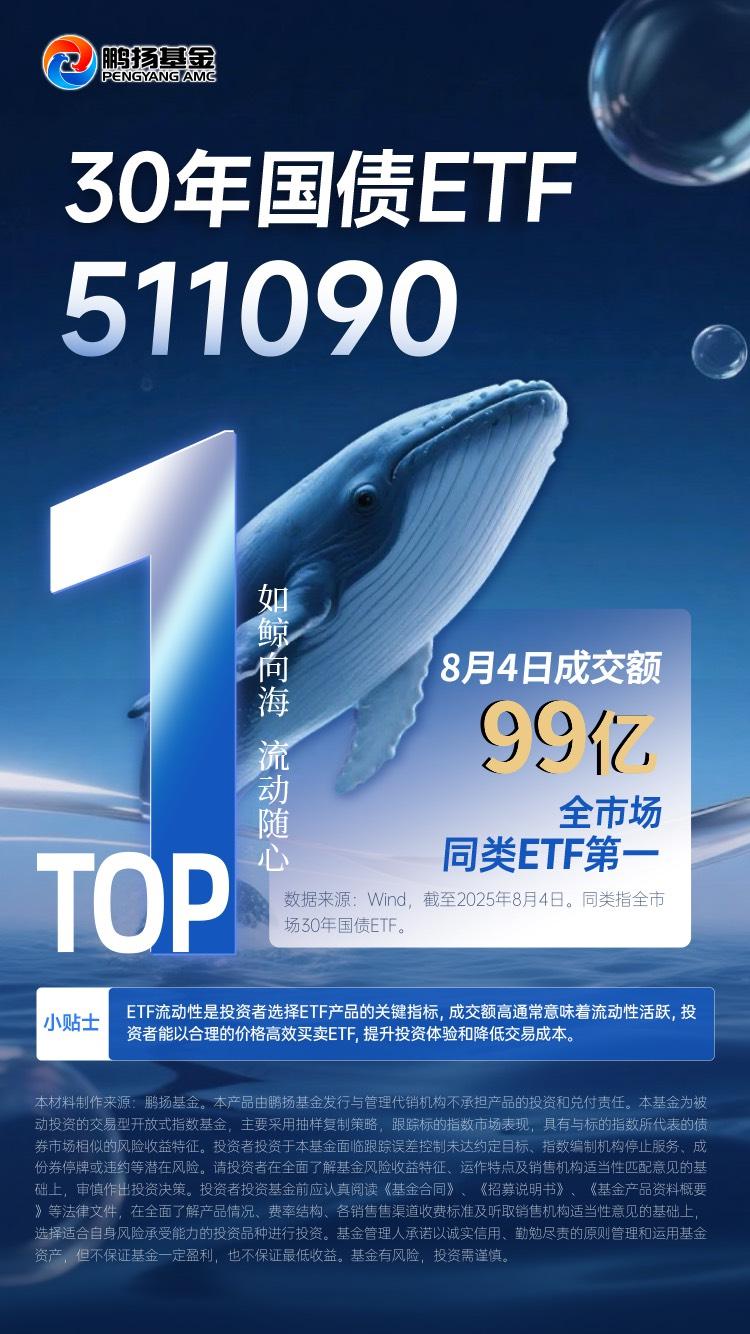
Group 1: Market Overview - The bond market saw a slight increase in early trading on August 5, with the 30-year Treasury ETF (511090) rising by 0.10% [1] - As of 10:00 AM, the latest price for the 30-year Treasury futures contract (TL2509) was 119.17 yuan, down by 0.08%, with a trading volume of 18,263 contracts and a total open interest of 105,935 contracts [1] - Other Treasury futures contracts, including the 10-year (T2509), 5-year (TF2509), and 2-year (TS2509), all saw a marginal increase of 0.01% [1] Group 2: Funding Conditions - The central bank conducted a 7-day reverse repurchase operation of 160.7 billion yuan today, maintaining the bidding rate at 1.40% [1] - Major interbank interest rates for government bonds saw a slight increase, with the 10-year government bond yield rising by 1.25 basis points to 1.7075% and the 30-year government bond yield increasing by 2 basis points to 1.923% [1] Group 3: Bond Market Insights - The 30-year Treasury ETF (511090) has become significantly more active, with its latest scale surpassing 23.287 billion yuan, marking a record high since its inception [2] - On August 4, the single-day trading volume for the 30-year Treasury ETF reached 9.962 billion yuan, ranking first among similar ETFs in the market [2] - Analysts suggest that the bond market has entered a phase of technical recovery due to previous adjustments, with short-term favorable conditions arising from central bank support and a decrease in insurance preset rates [2] - The 30-year Treasury ETF is noted for its T+0 trading feature, allowing investors to engage in day trading and manage portfolio duration effectively [2]
固定收益策略报告:税负调整会打断债市修复吗?-20250803
SINOLINK SECURITIES· 2025-08-03 14:06
Group 1 - The report indicates that despite multiple events intertwining, the bond market sentiment has shown signs of recovery amidst volatility, with a focus returning to fundamentals and liquidity after a period of policy uncertainty [2][12][22] - The recent tax adjustment on interest income from newly issued government bonds is expected to lead to a one-time and structural price reassessment rather than a trend change, with potential central bank support to smooth the market response [3][11][21] - The report identifies four relatively certain impacts of the tax adjustment, including an estimated widening of the new and old bond yield spread by 6-11 basis points, benefits for certain bond types, enhanced advantages for asset management products, and increased attractiveness of credit assets for banks [3][8][9] Group 2 - The report suggests that the current recovery in bond market sentiment may have continuity, particularly as three core variables show marginal changes, including an increasing probability of a peak in social financing growth and signs of economic pressure in the second half of the year [4][15][18] - The basic economic indicators have begun to reflect a scenario of marginal pressure, with PMI data showing declines in production and demand orders, supporting the view of weakening economic momentum [15][22] - The likelihood of a significant tightening of liquidity is low, as the central bank is expected to maintain a supportive stance in light of the economic conditions, potentially leading to a continuation of a relatively loose liquidity environment [5][18][22]
国债周报:债市短期修复-20250802
Wu Kuang Qi Huo· 2025-08-02 14:10
Report Industry Investment Rating No relevant content provided. Core Viewpoints of the Report - This year's H1 economic data remained resilient despite tariff disruptions. July's PMI data was below expectations, with both supply and demand sides declining. New export orders and high - frequency port data indicated a potential weakening of the front - loading export effect, and future exports may face pressure. - In terms of funds, the increase in government bond issuance and maturing inter - bank certificates of deposit, as well as fluctuations in the stock and commodity markets, had an impact on capital flow. However, the central bank's supportive attitude towards funds is expected to maintain overall liquidity in the future. - In the context of weak domestic demand recovery and continued loose funds, interest rates are expected to trend downward in the long - term. However, the recent positive sentiment in the stock market has suppressed the bond market, and attention should be paid to the stock - bond seesaw effect [10][13]. Summary by Directory 1. Weekly Assessment and Strategy Recommendation - **Economic and Policy**: H1 economic data was resilient under tariff influence. July's PMI was below expectations. Overseas, the FOMC meeting showed a marginally hawkish stance from the Fed, the BOJ kept interest rates unchanged, and the probability of a US rate cut in September increased. There were also important domestic and international policy events such as the Politburo meeting, Sino - US economic and trade talks, and the announcement of the national childcare subsidy system [10][11]. - **Liquidity**: This week, the central bank conducted 1633.2 billion yuan in reverse repurchase operations, with 1656.3 billion yuan in reverse repurchases maturing, resulting in a net injection of 6.9 billion yuan. The DR007 rate closed at 1.42% [13]. - **Interest Rates**: The latest 10Y Treasury yield was 1.71%, down 3.17BP week - on - week; the 30Y Treasury yield was 1.95%, down 3.70BP week - on - week. The latest 10Y US Treasury yield was 4.23%, down 17.00BP week - on - week [13]. - **Trading Strategy**: Adopt a long - position strategy on dips, with a profit - loss ratio of 3:1 and a recommended cycle of 6 months, driven by loose monetary policy and difficult - to - improve credit conditions [15]. 2. Futures and Spot Markets - Presented the closing prices, annualized discounts, settlement prices, and net basis of T, TL, TF, and TS contracts, as well as the closing prices and trading volumes of TS and TF, T and TL contracts [19][22][25]. 3. Main Economic Data - **Domestic Economy**: - GDP: In Q2 2025, the actual GDP growth rate was 5.4%, exceeding market expectations. - PMI: In July, the manufacturing PMI was 49.3%, down 0.4 percentage points from the previous month; the non - manufacturing PMI was 50.1%, down 0.4 percentage points. - Price Index: In June, CPI increased by 0.1% year - on - year, core CPI increased by 0.7% year - on - year, and PPI decreased by 3.6% year - on - year. - Export: In June, exports increased by 5.8% year - on - year, and imports increased by 1.1% year - on - year. - Industrial and Consumption Data: In June, industrial added value increased by 6.4% year - on - year, and social consumer goods retail sales increased by 4.8% year - on - year. - Investment and Real Estate Data: In June, fixed - asset investment increased by 2.8% year - on - year, and real estate - related data showed continued adjustment [43][49][52]. - **Foreign Economy**: - US: Q1 GDP had a real year - on - year growth rate of 2.05% and a quarter - on - quarter decline of 0.3%. In June, CPI increased by 2.7% year - on - year, and the non - farm payrolls increased by 147,000. - EU: Q1 GDP increased by 1.4% year - on - year and 0.3% quarter - on - quarter. - Eurozone: In July, the preliminary CPI increased by 2% year - on - year, and the manufacturing PMI was 49.8 [70][73][79]. 4. Liquidity - In June, M1 growth was 4.6%, M2 growth was 8.3%, and the social financing increment was 4.2 trillion yuan. The increase in social financing mainly came from government bonds. - In July, the MLF balance was 535 billion yuan, with a net injection of 20 billion yuan. This week, the central bank's net injection through reverse repurchases was 6.9 billion yuan, and the DR007 rate closed at 1.42% [84][90]. 5. Interest Rates and Exchange Rates - **Interest Rates**: The latest 2 - year, 5 - year, 10 - year, and 30 - year Treasury yields were 1.42%, 1.57%, 1.71%, and 1.95% respectively, with corresponding week - on - week changes of - 1.29BP, - 5.66BP, - 3.17BP, and - 3.70BP. The 10 - year US Treasury yield was 4.23%, down 17.00BP week - on - week [93]. - **Exchange Rates**: No specific analysis of exchange rate trends was provided, only relevant data charts were presented [101].