
国内大循环

Search documents
三场发布会召开,利好消息不断落地
中指研究院· 2026-01-30 01:29
更多政策解读、城市月报、房企研究报告 ..... 中指云 就在 \ Q 中指】三场发布会召开,利好消息不断 落地! 《中指解读》根据中指调查数据,当前影响购房者置业的因素中,居民收入不稳定排在首位。 本次发布会进一步明确 2026年宏观政策的发力点放在做强国内大循环上,全方位扩大国内需求,明 确提出"目前有关方面正在研究制定稳岗扩容提质行动和城乡居民增收计划",预计年内将有具体 政策落地,稳定居民收入或收入预期将为购房需求释放奠定重要基础,若更多"投资于人"的举措 出台,也有望为稳定房地产市场发挥积极作用。 三场发布会召开,利好消息不断落地! 1月20日,国新办举行两场新闻发布会,一是请国家发展改革委副主任王昌林介绍落实中央经 济工作会议精神,推动"十五五"实现良好开局有关情况;二是请财政部副部长廖岷介绍发挥积极 财政政策作用,推动经济社会高质量发展有关情况。除此之外,自然资源部召开例行新闻发布会, 发布解读《自然资源部 住房和城乡建设部关于进一步支持城市更新行动若干措施的通知》。同一天, 三个部门召开三场新闻发布会,财政部等多部门推出财政金融促内需一揽子政策,彰显政策协调一 致性,其中多个政策与房地产密切相 ...
东莞重回全国外贸第五城
21世纪经济报道· 2026-01-28 13:32
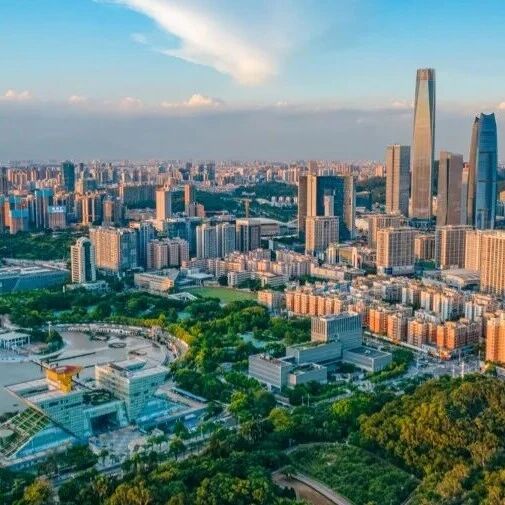
记者丨 程浩 编辑丨蒋韵 日前,南方财经记者从黄埔海关了解到, 2025年东莞外贸进出口规模达1.58万亿元,创历史 同期新高,重回全国第5,交出了一份沉甸甸的外贸"成绩单"。 资料图 从总量看,东莞稳住了"外贸大市"的地位。据黄埔海关统计,"十四五"期间,东莞市进出口累 计增长超2490亿元,年均增长3.5%。2025年,东莞市外贸进出口1.58万亿元,规模稳居全国 第五,较上年(下同)增长13.8%,增速位居全国外贸万亿级城市第二位。其中,出口9707.4 亿元,增长9.1%;进口6087亿元,增长22.1%。 从结构看,东莞实现了"质"的新跃升。东莞优势产品持续发力,本土品牌加速"出海"。数据显 示,2025年,东莞市出口机电产品6821.9亿元,增长12.5%,拉高出口整体增速8.5个百分点。 其中,出口电子元件、电工器材、电脑及其零部件、手机分别增长12.4%、20.1%、17.3%、 7.4%。同期,自主品牌产品出口增长15%,占东莞出口总值的15.1%。同时,以电动汽车、锂 电池、光伏产品为代表的"新三样"出口增长迅猛,成为新的外贸增长点。 从主体看,东莞激发了企业新活力。2025年,东莞市有进 ...

商务部详解2026如何促销费、稳外贸、扩外资
Jing Ji Guan Cha Bao· 2026-01-27 01:32
Core Insights - In 2025, China's total retail sales of consumer goods exceeded 50 trillion yuan for the first time, reaching 50.1 trillion yuan, with a growth rate of 3.7%, contributing 52% to economic growth, an increase of 5 percentage points [1][3] Group 1: Consumer Market Performance - The retail sales of consumer goods in 2025 reached 50.1 trillion yuan, marking a 3.7% increase, with consumption contributing 52% to economic growth, up by 5 percentage points [1][3] - Service retail sales grew by 5.5%, with sectors like cultural, sports, leisure, and travel maintaining double-digit growth [3] Group 2: Foreign Trade Resilience - China's total goods import and export reached 45.47 trillion yuan, growing by 3.8%, while service trade imports and exports reached 7.2 trillion yuan, increasing by 7.1% [3] - The number of enterprises engaged in import and export exceeded 780,000, with private enterprises accounting for 57.3% of total foreign trade [3] Group 3: Investment Expansion - Over 70,000 new foreign enterprises were established in 2025, a growth of 19.1%, with foreign investment absorption reaching 747.69 billion yuan, of which high-tech industries accounted for 32.3% [4] - Non-financial direct investment abroad reached 1 trillion yuan, growing by 1.6%, with new contracts for foreign engineering projects totaling 2.1 trillion yuan, an increase of 8.5% [4] Group 4: Bilateral Cooperation - China signed the upgraded version of the free trade agreement with ASEAN and implemented zero-tariff measures for 100% of African countries with diplomatic relations [4] - China has signed 24 free trade agreements with 31 countries and regions, with free trade partners accounting for 45% of total goods trade [4] Group 5: Future Plans for Domestic Demand - The Ministry of Commerce plans to implement special actions to boost consumption, focusing on policies, activities, and improving consumption scenarios [5][6] - Initiatives include optimizing the replacement of consumer goods, promoting automobile consumption, and organizing over 20 "Buy in China" themed activities [5][6] Group 6: Foreign Trade Strategy for 2026 - The Ministry of Commerce will focus on expanding market access in service sectors, optimizing foreign investment support policies, and enhancing the service guarantee system for foreign enterprises [8] - Plans include creating diverse open highlands and promoting high-quality development in foreign trade through policy support and market expansion [9][10]
今年将优化实施消费品以旧换新 全力稳住外贸基本盘
Xin Lang Cai Jing· 2026-01-26 22:42
Core Viewpoint - The Ministry of Commerce of China is committed to implementing the decisions of the Central Committee and the State Council, focusing on high-quality business development to contribute positively to the economic recovery by 2025 [1][5]. Group 1: Domestic Circulation and Consumption Promotion - The Ministry will enhance domestic circulation, facilitate both domestic and international circulation, and expand international circulation to promote high-quality business development [1][5]. - To boost consumption in 2026, the Ministry will focus on three areas: policy issuance, event organization, and scenario optimization [2][5]. - Specific policies will include promoting the replacement of old consumer goods, reforming automobile circulation, and implementing reward invoice trials to stimulate consumption [2][5]. Group 2: Consumption Environment and Activities - The Ministry plans to organize over 20 "Buy in China" themed events and support local activities to create a vibrant consumption atmosphere [2][6]. - Efforts will be made to improve the consumption environment by accelerating the development of international consumption center cities and creating new consumption scenarios [6]. Group 3: Foreign Trade and Investment - The Ministry acknowledges the complex external environment affecting foreign trade, emphasizing the resilience and potential of the Chinese economy [6][7]. - In 2026, the Ministry aims to stabilize foreign trade and promote service market openness, including improving the management of cross-border service trade [6][7]. - The Ministry will also enhance policies to attract foreign investment, ensuring equal support for foreign enterprises participating in various economic activities [7].
畅通国内大循环,激活经济高质量发展“新引擎”
Xin Lang Cai Jing· 2026-01-26 22:08
筑牢国内大循环"主阵地",激活经济高质量"新引擎",需要推进全国统一大市场建设,畅通循环。主要 指"五统一、一开放"。统一市场基础制度,即实现产权保护、市场准入、公平竞争、社会信用、质量标 准等制度的统一,这是市场高效运行的前提;统一市场基础设施,即打通物流、资金流、信息流,健全 现代商贸流通体系,降低物流和交易成本,这是打通商品要素流动的物质保障;统一政府行为尺度,即 健全防范行政权力干预市场的制度,避免各地政策"各自为政",保障市场公平竞争;统一市场监管执 法,即明确市场监管行政处罚裁量基准,统一监管规则与程序,杜绝多头执法、违规执法,保障各类经 营主体公平参与竞争;统一要素资源市场,即促进土地、劳动力、资本、技术、数据等要素自由流动、 高效配置,完善要素价格市场决定机制,破解要素流动壁垒;持续扩大对内对外开放,即强调对内破除 地方保护与区域壁垒,对外主动对接国际高标准经贸规则,扩大商品、服务、资本等领域开放,推动国 内国际两个市场良性互动、开放联通。 筑牢国内大循环"主阵地",激活经济高质量"新引擎",需要更大力度综合施策扩大内需,拓展增量。一 是要夯实"能消费"的收入基础,让居民"有钱花"。要落实就业 ...
社评:从《疯狂动物城2》看懂中国大市场的“深意”
Xin Lang Cai Jing· 2026-01-26 15:53
Core Insights - The success of "Zootopia 2" highlights the consumption enthusiasm and potential of China's lower-tier cities, challenging traditional Western perceptions of Chinese consumer behavior [1][2] - The film's box office performance indicates a balanced and healthy economic development in China, with 42% of its revenue coming from third and fourth-tier cities, showcasing the expanding cultural consumption beyond major urban centers [2][4] Group 1: Market Dynamics - The film's box office success is a reflection of a significant shift in consumer demand in China, moving from basic material needs to a focus on high-quality and emotionally resonant experiences [4][5] - The collaboration between local brands and Disney's IP demonstrates a two-way commercial engagement, enhancing both domestic and international market opportunities [3][4] Group 2: Economic Implications - The performance of "Zootopia 2" serves as a counterargument to narratives of "consumption downgrade" or "market fatigue," indicating a robust internal market with substantial growth potential [4][5] - The evolving consumer landscape in China, characterized by a demand for personalized and high-quality products, is crucial for sustaining economic resilience and participating in global value chains [3][4]
商务部副部长鄢东:目前我国已与31个国家和地区签署24个自贸协定,自贸伙伴占货物贸易总额的45%
Jin Rong Jie· 2026-01-26 07:37
Core Viewpoint - The Chinese Ministry of Commerce emphasizes significant achievements in bilateral cooperation, particularly in trade negotiations with the U.S. and agreements with ASEAN, which contribute positively to global economic stability [1] Bilateral Cooperation - Under the leadership of state-level diplomatic strategies, China and the U.S. have made positive progress in economic and trade consultations, providing reassurance to the global economy [1] - China has signed 24 free trade agreements with 31 countries and regions, with free trade partners accounting for 45% of total goods trade [1] Multilateral Cooperation - China has announced it will not seek new special and differential treatment in current and future negotiations at the World Trade Organization, promoting practical economic development outcomes through various international organizations [1] - The "Green Mineral International Economic and Trade Cooperation Initiative" launched by China has seen participation from over 20 countries and international organizations, fostering win-win cooperation [1] Future Directions - The Ministry of Commerce plans to implement the important directives from the Central Economic Work Conference, focusing on strengthening domestic circulation, facilitating international circulation, and promoting high-quality business development [1]
保持战略定力 增强必胜信心 奋力开创中国式现代化建设新局面——习近平总书记在省部级主要领导干部专题研讨班开班式上的重要讲话引发热烈反响
Yang Guang Wang· 2026-01-26 05:31
Group 1 - The core message emphasizes the importance of implementing the spirit of the 20th Central Committee's Fourth Plenary Session to achieve a strong start for the "14th Five-Year Plan" [1] - The "14th Five-Year Plan" is seen as a critical period for achieving socialist modernization and requires comprehensive planning and execution [1] - Local leaders express commitment to applying the principles from the speech to drive high-quality development and practical results [1] Group 2 - The focus on building a modern industrial system and achieving an overall leap in the industrial framework is highlighted as a key strategic task during the "14th Five-Year Plan" [2] - Local governments are encouraged to develop new productive forces tailored to their regional strengths, emphasizing technological and industrial innovation [2] - Specific sectors such as pharmaceuticals, new materials, and energy chemicals are identified as priorities for industrial growth [2] Group 3 - The need to enhance the quality and efficiency of the national economic cycle is stressed to contribute to the new development pattern [3] - The role of Hainan Free Trade Port as a high-level platform for international cooperation is emphasized to facilitate domestic and international market integration [3] - The importance of coordinating economic and social development is highlighted, with a focus on improving people's living standards alongside economic growth [3] Group 4 - The necessity of strengthening party leadership, legal safeguards, and grassroots foundations to maintain national security and social stability is underscored [4] Group 5 - The consolidation of poverty alleviation achievements is identified as a major political task, with a focus on integrating assistance into rural revitalization strategies [5] - Addressing urgent public concerns related to employment and social security is emphasized to ensure effective outcomes in improving people's livelihoods during the "14th Five-Year Plan" [5]
好评中国·“经”彩开局|高质量推进“两重”建设
Zhong Guo Jing Ji Wang· 2026-01-26 01:59
Group 1 - The central government has approved an early batch of "two重" construction projects and a central budget investment plan totaling approximately 295 billion yuan for 2026, aimed at expanding effective investment [1] - Investment is seen as both current demand and future supply, with significant potential for growth despite a slowdown in investment growth due to various complex factors [1] - In 2025, investments in pipeline transportation are expected to grow by 36.0%, internet and related services by 23.8%, and multimodal transport and logistics by 22.9%, indicating a positive trend in the "two重" construction efforts [1] Group 2 - The "two重" construction not only addresses major national issues but also focuses on urgent matters affecting the public, such as improving childcare services and higher education [2] - The strategic deployment of "two重" construction is essential for long-term planning and addressing current economic challenges, emphasizing the need for proactive measures [2] - The "十五五" period is critical for achieving socialist modernization, and "two重" construction is a key driver that requires coordinated efforts across various sectors [2] Group 3 - Various regions are actively promoting "two重" construction by focusing on strategic needs and major projects, particularly in urban-rural integration and energy security [3] - "Two重" construction involves not only hard investments in infrastructure but also soft construction, such as integrated wastewater treatment systems to enhance efficiency [3] - High-quality advancement of "two重" construction is expected to create new supply and stimulate demand, thereby enhancing the internal dynamics and reliability of domestic circulation [3]
避险情绪降温,累库速度放缓:铝行业周报-20260125
Guohai Securities· 2026-01-25 08:32
Investment Rating - The report maintains a "Recommended" rating for the aluminum industry [1] Core Views - The report indicates a decrease in risk aversion and a slowdown in inventory accumulation, suggesting a more favorable macroeconomic environment for the aluminum sector [6][10] - The aluminum price is expected to remain volatile at high levels, with a long-term outlook indicating limited supply growth against a backdrop of increasing demand [10] Summary by Sections 1. Prices - As of January 23, 2026, the LME three-month aluminum closing price was $3173.5 per ton, up $39.5 from the previous week, marking a 1.3% week-on-week increase and a 20.6% year-on-year increase [22] - The Shanghai aluminum active contract closing price was 24290.0 CNY per ton, up 365.0 CNY from the previous week, reflecting a 1.5% week-on-week increase and a 19.6% year-on-year increase [22] - The average price of A00 aluminum in Changjiang was 24130.0 CNY per ton, up 130.0 CNY week-on-week, representing a 0.5% increase and a 19.5% year-on-year increase [22] 2. Production - In December 2025, the production of electrolytic aluminum was 378.1 million tons, a month-on-month increase of 14.4 million tons and a year-on-year increase of 5.5% [55] - The production of alumina in December 2025 was 752.0 million tons, up 8.0 million tons month-on-month and up 2.5% year-on-year [55] 3. Inventory - As of January 22, 2026, the inventory of electrolytic aluminum ingots in major domestic consumption areas was 743,000 tons, with a week-on-week increase of 7,000 tons, indicating a slight slowdown in inventory accumulation [7] - The report notes that the overall inventory levels have not peaked, suggesting ongoing supply-demand imbalances in the market [7] 4. Key Companies and Earnings Forecast - Key companies highlighted include China Hongqiao, Tianshan Aluminum, Shenhuo Co., China Aluminum, and Yunnan Aluminum, all rated as "Buy" with projected earnings per share (EPS) growth for 2026 [5] - China Hongqiao's stock price was 32.16 CNY with an EPS forecast of 2.77 CNY for 2026, reflecting a price-to-earnings (PE) ratio of 11.6 [5] 5. Demand - The report indicates that downstream demand remains subdued, with only essential purchases being made due to high aluminum prices and a seasonal demand lull [7] - The overall operating rate for aluminum processing was recorded at 60.9%, showing a slight increase but indicating mixed performance across different segments [7]



