
新型政策性金融工具

Search documents
【新华解读】锚定“促发展”与“防风险” 从中央经济工作会议看银行业下一步重点工作
Xin Hua Cai Jing· 2025-12-12 15:25
Core Viewpoint - The Central Economic Work Conference held on December 10-11 outlines the direction for China's economic policy in 2026, emphasizing support for expanding domestic demand, technological innovation, and small and medium enterprises [1][2]. Monetary Policy - The conference advocates for a moderately loose monetary policy, with a focus on maintaining liquidity and using various policy tools such as reserve requirement ratio (RRR) cuts and interest rate reductions to stabilize economic growth and promote reasonable price recovery [2][3]. - Experts predict potential interest rate cuts of 0.2 to 0.3 percentage points and RRR cuts of up to 1 percentage point in 2026, with possible implementation in the first quarter of the year [2][3]. Financial Support for Key Areas - Financial institutions are encouraged to increase support for key areas such as domestic demand, technological innovation, green development, and small and medium enterprises [2][3]. - The central bank is expected to optimize structural monetary policy tools, increasing their overall quota while also lowering operational interest rates to facilitate high-quality development [3]. Real Estate Market Stability - The conference emphasizes stabilizing the real estate market through targeted policies, including controlling inventory and improving supply, while encouraging the acquisition of existing homes for affordable housing [5][6]. - The current loan quota for "white list" real estate projects has reached 7 trillion yuan, an increase of 2 trillion yuan from the previous year, indicating a focus on supporting quality real estate enterprises [6]. Support for Financial Institutions - The conference highlights the need for reform in small and medium financial institutions, transitioning from risk management to structural optimization, which reflects a proactive approach to enhancing quality and efficiency [7]. - Experts suggest that measures should be taken to prevent a decline in quality during the reduction of small financial institutions, emphasizing the importance of optimizing the financial institution system [7].
中央明确推动投资止跌回稳 哪些政策工具可以期待
Di Yi Cai Jing· 2025-12-12 04:41
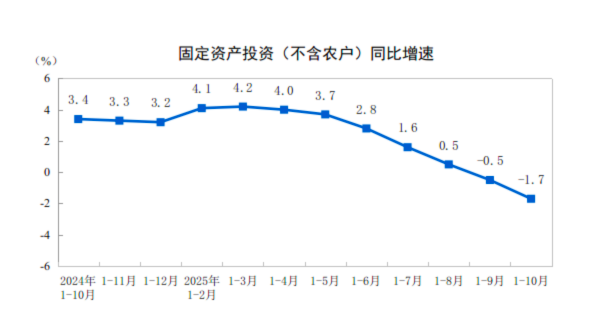
Group 1 - The central economic work conference emphasized the need to "maintain domestic demand as the main driver and build a strong domestic market," with a clear directive to "promote investment stabilization" [1] - Fixed asset investment growth turned negative from September, with a further decline in October, influenced by factors such as the real estate market adjustment and declining investment returns [1][3] - A series of policies, including the issuance of 500 billion yuan in new policy financial tools and an additional 200 billion yuan in special bonds, aim to support investment growth [1][3] Group 2 - From January to October, national fixed asset investment (excluding rural households) reached 4,089.14 billion yuan, a year-on-year decrease of 1.7%, with private fixed asset investment down by 4.5% [3] - Real estate development investment fell by 14.7% year-on-year, significantly impacting overall investment growth, which was down by 3 percentage points due to this decline [3][4] Group 3 - Despite the slowdown in investment growth, the investment structure is optimizing, with high-tech industries experiencing rapid growth, such as aerospace manufacturing investment increasing by 19.7% and information services by 32.7% [4] - Clean energy investments, including solar, wind, nuclear, and hydropower, collectively grew by 10.4% year-on-year [4] Group 4 - The conference highlighted the importance of increasing investment to strengthen the real economy, promote technological and industrial innovation, and address regional development imbalances [5] - The "Two Heavy" projects, which focus on major national strategies and key area security capabilities, are identified as crucial for expanding effective investment [6] Group 5 - The role of new policy financial tools will continue to be emphasized, with expectations for increased fiscal spending in areas such as social security, education, and healthcare in 2026 [7] - Measures to stimulate private investment include 13 policy initiatives aimed at improving access and addressing barriers for private enterprises [8] Group 6 - The National Development and Reform Commission plans to enhance the effectiveness of policies promoting private investment, including support for technology-driven enterprises and infrastructure REITs [9]

重磅经济数据即将发布
第一财经· 2025-12-09 13:35
Core Viewpoint - The article discusses the fluctuations in China's macroeconomic indicators due to weak domestic demand and increased external uncertainties, while suggesting that major economic indicators such as industrial production and consumption may stabilize in November due to coordinated policy efforts and resilient external demand [3][4]. Economic Indicators - The predicted year-on-year growth rate for industrial added value in November is 5.0%, slightly higher than the previous month's 4.9% [4][6]. - The forecast for the year-on-year growth rate of retail sales of consumer goods in November is 3.09%, up from 2.9% in the previous month [4][9]. - The predicted year-on-year growth rate for fixed asset investment from January to November is -2.1%, lower than the previous month's -1.7% [4][13]. Industrial Growth - Industrial added value is expected to see a slight increase, with predictions ranging from 5.0% to 5.3% year-on-year growth for November [6][7]. - The manufacturing PMI improved to 49.2%, indicating a slight recovery in market confidence, although it remains below the threshold [6][8]. Consumer Spending - The "old-for-new" consumption policy has significantly supported consumer spending, with related sales exceeding 2.5 trillion yuan and benefiting over 360 million people [9]. - The "Double 11" shopping festival contributed to a 17.6% year-on-year increase in total online sales, although the average daily sales showed a decline of 6.0% compared to the previous year [10]. Investment Trends - Fixed asset investment is under pressure, with predictions indicating a further decline in November due to reduced infrastructure spending and weak manufacturing investment [13][14]. - The introduction of new policy financial tools aims to support investment in high-tech manufacturing and digital economy sectors [14][15]. Infrastructure Investment - The expansion of infrastructure REITs is seen as a key measure for stabilizing investment, with a significant number of projects already launched [16][17]. - The government has allocated substantial funds for long-term special bonds to support major investment projects, reflecting a strategic approach to infrastructure development [15][16].

重磅经济数据即将发布,11月工业生产、消费有望企稳
Di Yi Cai Jing· 2025-12-09 13:00
Economic Overview - China's economy is experiencing fluctuations in macroeconomic indicators due to weak domestic demand and increased external uncertainties, but there is optimism for stabilization in November with coordinated policies [1][2] - Premier Li Qiang expressed confidence in achieving economic and social development goals, highlighting industrial upgrades and large-scale market demand as key growth drivers [1] Industrial Production - The forecast for November's industrial value-added growth is 5.0%, slightly up from 4.9% in October, indicating a potential recovery in industrial production [3][4] - The manufacturing PMI improved to 49.2 in November, reflecting a slight increase in market confidence, although it remains below the growth threshold [3][4] Consumer Spending - The predicted year-on-year growth for retail sales in November is 3.09%, an increase from 2.9% in October, supported by policies encouraging consumption upgrades [5][6] - The "Double 11" shopping festival contributed to a 17.6% increase in online sales compared to last year, indicating a positive impact on consumer spending [6] Fixed Asset Investment - The forecast for fixed asset investment growth in November is -2.1%, a decline from -1.7% in October, reflecting ongoing challenges in infrastructure and manufacturing investments [8][9] - New policy financial tools have been introduced to support investments in key sectors, including digital economy and infrastructure, with a total of 500 billion yuan allocated to over 2,300 projects [9][10] Policy Measures - The government is implementing various policies to stabilize investment, including the expansion of infrastructure REITs, which aim to attract private investment into public projects [10] - Recent meetings have emphasized the importance of strategic planning and collaboration across departments to enhance investment in critical areas [10]
宏观经济深度研究报告:2026年固定资产投资能迎来“开门红”吗?
ZHESHANG SECURITIES· 2025-12-09 08:59
Group 1: Fixed Asset Investment Trends - In the first ten months of 2025, national fixed asset investment decreased by 1.7% year-on-year, with monthly declines of -5.3%, -7.1%, -7.1%, and -12.2% from July to October, marking five consecutive months of negative growth[1] - The fixed asset investment growth rate for Q1 2026 is projected to be +2.8%, with both broad infrastructure and manufacturing investments expected to exceed +5.0% year-on-year[1] - Historical data shows that the probability of achieving a positive growth in fixed asset investment in Q1 exceeds 80%, indicating a strong likelihood of a "good start" in 2026[4] Group 2: Policy Support and Debt Management - The new policy financial tools amounting to 500 billion yuan support over 2,300 projects, with a total investment of approximately 7 trillion yuan, aimed at both broad infrastructure and manufacturing sectors[2] - The rapid debt repayment progress in the second half of 2025 is expected to alleviate the pressure on project funding in 2026, allowing local governments to support investment and consumption more effectively[3] - By the end of 2025, local government debt issuance exceeded 10.2 trillion yuan, with special refinancing bonds playing a significant role in debt management and project funding[26] Group 3: Economic Environment and Investment Confidence - The meeting between the leaders of China and the U.S. in October 2025 is anticipated to improve micro-enterprise investment confidence, contributing to a more favorable investment environment[2] - The current data suggests that the "watered-down" statistics from previous periods may have been adequately addressed, reducing the likelihood of statistical manipulation in future investment data[4]
港股异动 | 内银股全线走低 建设银行(00939)跌超3% 工商银行(01398)跌近3%
智通财经网· 2025-12-08 06:15
Core Viewpoint - The banking sector in China is experiencing a decline, with major banks' stock prices falling due to upcoming maturity of a large number of fixed-term deposits and a potential shift of residents' savings towards insurance assets [1][1]. Group 1: Stock Performance - All major Chinese banks' stocks are down, with China Construction Bank (00939) falling by 3.38% to HKD 7.71, Industrial and Commercial Bank of China (01398) down 2.69% to HKD 6.16, Bank of China (03988) down 2.2% to HKD 4.45, and China Merchants Bank (03968) down 1.96% to HKD 52.65 [1][1][1]. Group 2: Economic Outlook - A report from Zhongyou Securities indicates that from December to the end of March, a significant amount of fixed-term deposits will mature, leading to a further decline in the risk-free interest rate for residents' savings [1][1]. - The report suggests that fixed asset investment growth in key provinces and cities is expected to improve significantly, supported by new policy financial tools [1][1]. Group 3: Investment Trends - Galaxy Securities notes that the risk factors for insurance capital's stock investments have been lowered, which is expected to attract more medium- to long-term funds into the market, benefiting the banking sector [1][1]. - The upcoming mid-term dividend payouts from the four major banks are anticipated to be substantial, with a concentrated dividend window expected in December, highlighting the value of dividends [1][1].


聚焦大行信贷投放及近期舆情信贷策略变化
2025-12-04 15:36
Summary of Conference Call Records Industry Focus - The conference call primarily discusses the banking sector's credit allocation strategies, particularly focusing on emerging manufacturing and technology innovation sectors. [1][2][4] Key Points and Arguments Credit Allocation Trends - Banks are shifting their credit focus towards emerging manufacturing and technology innovation sectors, with loan growth rates exceeding 15% in these areas. [2][4] - Support for high-tech SMEs is also strong, with double-digit loan growth. [2] - The overall credit growth for the residential sector is weak, heavily relying on corporate business. [1][7] Project Reserve and Expectations - The reserve for "opening red" projects in Q1 2026 is under pressure, with current reserves 70% lower than the same period last year. [1][7] - The bank is actively preparing for this by accumulating projects, although the current reserve is not meeting expectations. [5][6] Impact of Policy Tools - The introduction of a new 500 billion yuan policy financial tool is expected to leverage bank credit allocation, particularly benefiting high-tech industries. [1][4] - The capital ratio for projects utilizing this tool is between 20% to 30%, indicating a strong correlation with loan growth in high-tech sectors. [4] Regional Performance - Regions such as Jiangsu, Sichuan, and Guangdong show strong corporate credit performance, while inland areas like Xinjiang and Inner Mongolia also perform well. [2][9] - However, other regions are underperforming, with low willingness to increase leverage due to historical issues. [1][9] Real Estate Sector Insights - The recent Vanke bond extension event did not significantly alter the bank's overall credit direction towards the real estate sector, maintaining cautious support for quality projects and state-owned enterprises. [2][30] - The real estate market's downturn is impacting industry dynamics and bank collateral auctions. [30] Risk Management and Future Outlook - The bank's credit strategy for city investment platforms post-platform exit involves careful evaluation of regional economies and corporate debt ratios, with a focus on maintaining low debt levels. [11][14][18] - The bank is cautious about new loans to city investment platforms that have exited, with a preference for those that can adapt to market operations. [11][14] Challenges and Opportunities - Local governments face challenges in asset revitalization, with many assets being difficult to liquidate. [24] - The bank is exploring innovative financial tools and policies to support local governments in asset management. [24] Conclusion - The banking sector is navigating a complex landscape of credit allocation, with a focus on emerging industries while managing risks associated with traditional sectors like real estate. The effectiveness of new policy tools and regional performance will be critical in shaping future credit strategies. [1][2][30]
11月PMI:反弹的底色
Ge Long Hui· 2025-12-01 00:57
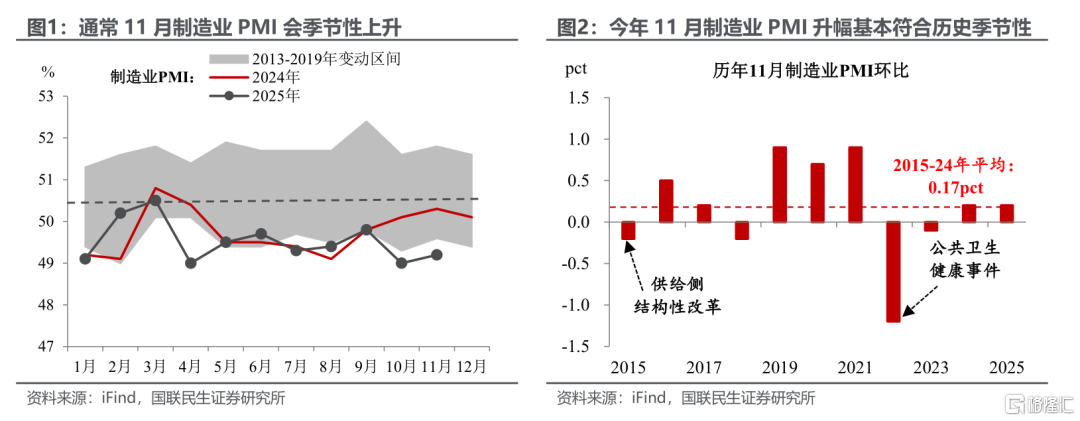
Core Viewpoint - The November manufacturing PMI shows a seasonal rebound post-holiday, but underlying signals indicate unusual trends that warrant deeper analysis [1]. Group 1: Manufacturing PMI Overview - The November manufacturing PMI typically rises due to increased working days compared to October's holiday month, with an average increase of 0.17 percentage points from 2015 to 2024; this year, it increased by 0.2 percentage points, aligning with seasonal trends [1]. - The main drivers of the PMI increase are the new orders index and production index, with the former rising by 0.4 percentage points to 49.2% and the latter by 0.3 percentage points to 50.0% [3]. Group 2: Demand and Supply Dynamics - Although the production index has reached the neutral line, the demand side shows stronger improvement, with the new orders index reflecting seasonal growth while the production index remains weak; this divergence suggests that "anti-involution" policies are facilitating orderly adjustments on the supply side, potentially leading to a balanced supply-demand landscape [4]. Group 3: Price Indicators - Price indicators are sending positive signals, with the raw materials purchasing price index rising by 1.1 percentage points to 53.6% and the factory price index increasing by 0.7 percentage points to 48.2%, indicating potential for continued improvement in overall PPI growth; however, the greater improvement in upstream prices compared to downstream suggests that corporate profit margins may be narrowing [7]. Group 4: Export and Sector Performance - The November export sector showed significant improvement, with the new export orders index rising by 1.7 percentage points, driven by two main factors: a phase one trade agreement between China and the U.S. and the upcoming overseas Christmas order season [9]. - The construction PMI has risen by 0.5 percentage points to 49.6%, marking the largest increase since June, reflecting the effectiveness of new policy financial tools; in contrast, the service sector PMI has decreased by 0.7 percentage points, indicating a need for stronger measures to enhance service consumption mechanisms [9].
经济景气水平总体平稳(锐财经)
Ren Min Ri Bao Hai Wai Ban· 2025-11-30 22:20
Group 1: Manufacturing Sector - The manufacturing PMI for November is reported at 49.2%, a slight increase of 0.2 percentage points from the previous month, indicating an improvement in economic conditions [1] - The production index and new orders index are at 50.0% and 49.2%, respectively, both showing increases of 0.3 and 0.4 percentage points, suggesting a recovery in production and demand [1] - High-tech manufacturing PMI remains above the critical point at 50.1%, indicating continued growth in this sector [2] Group 2: Small and Medium Enterprises - The PMI for small enterprises has significantly increased to 49.1%, up by 2.0 percentage points, marking the highest level in six months [2] - Medium-sized enterprises show a slight improvement with a PMI of 48.9%, an increase of 0.2 percentage points from last month [2] - Large enterprises, however, experienced a decline in PMI to 49.3%, down by 0.6 percentage points, indicating a drop in economic activity [2] Group 3: Non-Manufacturing Sector - The non-manufacturing business activity index is at 49.5%, a decrease of 0.6 percentage points from the previous month, reflecting a decline in the sector's economic performance [1][4] - The service sector's business activity index has also dropped to 49.5%, down by 0.7 percentage points, influenced by factors such as the end of holiday effects [3][4] - The construction sector shows signs of recovery with a business activity index of 49.6%, an increase of 0.5 percentage points, and a business activity expectation index of 57.9%, indicating improved confidence among construction firms [4] Group 4: Market Expectations - The production and business activity expectation index for manufacturing is at 53.1%, up by 0.3 percentage points, indicating increased confidence among manufacturers regarding market developments [2] - The business activity expectation index for the service sector is at 55.9%, despite a slight decrease of 0.2 percentage points, suggesting that service sector firms remain optimistic about future market conditions [4] Group 5: Policy Impact - The implementation of new policy financial tools has resulted in the allocation of 500 billion yuan, supporting over 2,300 projects with a total investment of approximately 7 trillion yuan, focusing on key sectors such as digital economy and infrastructure [5] - The additional 500 billion yuan in special bonds allocated to local governments is expected to further stimulate investment in manufacturing and infrastructure, contributing to an overall improvement in manufacturing sentiment [5]
债市基本面点评报告:新旧分化中的回升
SINOLINK SECURITIES· 2025-11-30 14:26
1. Report Industry Investment Rating No information provided. 2. Core Viewpoints - In November, although the manufacturing economic activity did not exceed expectations, there were still positive factors. The emerging industries' prosperity rebounded first, the inventory problem caused by supply - demand imbalance was continuously digested, and the price upward trend remained unchanged with a continuous repair expectation for next year. The impact of new policy - based financial instruments on the industry and market was still in the early stages, and the actual work volume needed further verification next year [5]. 3. Summary by Directory 3.1 Demand Drags Production, and De - stocking Exceeds Re - stocking - The drag of previous supply - demand imbalance on production emerged. The production index was weak in the past two months, and the procurement volume was below the critical value for two consecutive months. The "new order index - production index" reached a peak in September [13]. - Manufacturing enterprises have been actively de - stocking for nearly half a year. The inventory growth rate was already at a historically low level, and the downward space was limited. Compared with previous inventory cycles, this cycle had two characteristics: the peak was much lower and the inventory state switched frequently at a low level. The active re - stocking period was short, and the active de - stocking period was long. This was favorable for the bond market [16]. 3.2 Differentiation between Traditional Manufacturing and Emerging Industries - Traditional manufacturing has been in a downturn since April, with PMI below the boom - bust line for 8 consecutive months. However, emerging industries showed improvement since September. The EPMI index of emerging industries was above the boom - bust line for 3 consecutive months, and the BCI index of high - quality private enterprises also rose above the line, with sub - items such as corporate financing environment and investment forward - looking index improving significantly [19]. - The improvement in the prosperity of emerging industries boosted the employment market. The BCI corporate recruitment forward - looking index improved, and the "Internet unemployment benefit search index" decreased. The 500 billion yuan new policy - based financial instruments, fully invested by the end of October, supported over 2,300 projects with a total investment of about 7 trillion yuan, showing a strong pulling effect on emerging industries [19][25]. 3.3 Rare Contraction in Service Industry Prosperity - This month, the non - manufacturing PMI dropped 0.6 points to 49.5, falling below the critical value for the first time excluding public health events. The construction industry was at the bottom, and the service industry was the main drag. The service industry PMI dropped 0.7 points to 49.5, which was a rare contraction. This was related to seasonal factors and the real - estate sales slump [5][26]. - Some industries in the service industry, such as railway transportation, telecommunications, and finance, were in a high - prosperity range, while real - estate and residential services were below the critical point [28][29].