
AI泡沫

Search documents
透视当前海外三大风险点:基本面、降息预期和AI泡沫
Guo Tai Jun An Qi Huo· 2025-11-24 10:03
国泰君安期货研究所· 海 外 研 究 戴璐 Z0021475 国泰君安期货·君研海外 基本面、降息预期和"AI泡沫" ——透视当前海外三大风险点 资料来源:Bloomberg,国泰君安期货研究 Special report on Guotai Junan Futures (本报告感谢杨藤贡献) 日期:2025年11月24 Guotai Junan Futures all rights reserved, please do not reprint 三大逻辑点落地,市场如何定价? 11月以来,全球市场经历较多地缘、宏观和产业逻辑的冲击,主要大类资产表现整体呈现几个特征:1)科技板块引领Risk-on,权益 转向防御;2)缺乏明显有效的避险资产,贵金属高位回落,全球国债市场表现不佳;3)年底市场微观流动性不佳,上风险情绪有限 非官方就业指标指向了本次非农数据改善,制造业PMI、服务业PMI、中小 企业就业和CB就业分项集合指数有改善 当前海外市场的波动源自三大逻辑点:1)经济基本面如何?2)基于基本面,对于短期(12月)和远期(2026年)的降息预期如 何?3)从"AI 泡沫"这一更务虚的叙事,转为对AI投资持续 ...
产业精炼:AI应用终结泡沫论,谷歌阿里系持续暴涨!
格隆汇APP· 2025-11-24 09:57
| | | 近三轮科技牛期间最大调整情况 | | | | --- | --- | --- | --- | --- | | 牛市名称 | 指数名称 | 最大级别调整持续时间 | 调整幅度 (%) | 调整时长 | | 互联网牛 | | 创业板指 = 2014年2月25日到5月19日 | 22.95 | 57个交易日 | | 塞道牛 | 创业板指 | 2019年4月8日到6月10日 | 21.92 | 42个交易日 | | | 创业板指 | 2020年2月26日到3月23日 | 20.75 | 20个交易日 | | | 创业板指 | 2021年2月18日到3月25日 | 25.09 | 26个交易日 | | 本轮牛市 | 创业板指 | 2025年10月30日至今 | 12.36 | 17个交易日 | | | 科创50指数 | 2025年10月9日至今 | 19.28 | 31个交易日 | | 了解更多图文干货,请下载 "格隆汇App" | | | | | 一边喊"泡沫要破了",说AI就是资本堆出来的概念,烧钱无数却没见多少真赚钱的业务,甚至 杜撰出英伟达庞氏骗局;另一边怼"格局小了",坚信AI是下一次生产力革命, ...




债市对利多钝化,逢高再考虑介入
Sou Hu Cai Jing· 2025-11-24 08:53
一、债市策略总览 1.1 海外部分美国11月Markit综合PMI(54.8)创4个月以来新高,其中服务业PMI(55)供需两旺,而制 造业PMI(51.9)创4个月以来新低,主因需求放缓和成本上行压力。在借贷成本走低下,10月成屋销 售创八个月以来新高。劳动力数据喜忧参半,9月非农就业新增11.9万,远超预期,但7~8月合计下修 3.3万。劳动力参与率上升拉动9月失业率上行至4.44%,叠加时薪环比从前值0.3%降至0.2%,指向用人 需求放缓。此外,最新一周初请失业金人数虽下降,但续请人数创2021年10月以来新高,劳动力市场趋 弱压力犹存。威廉姆斯等票委表态偏鸽,带动12月CME降息预期从44.4%上行至71%,但在数据缺失 下,不排除12月暂停降息。日本10月核心CPI同比(3%)连续18个月高于2%,三季度GDP环比 (-0.4%)为六个季度以来首次负增,在滞胀压力下,政府推出21.3万亿日元刺激计划推升财政压力。 欧元区11月综合PMI初值(52.4)略低于预期,其中服务业扩张,制造业萎缩。在能源价格拖累下,欧 元区10月CPI同比(2.1%)较前值回落0.1个百分点。综合来看,在美国经济韧性+欧 ...
股票私募仓位刷新年内新高
Shen Zhen Shang Bao· 2025-11-24 08:09
Group 1 - The stock private equity position index has reached a new high of 81.13% as of November 14, marking a significant increase of 1.05% from the previous week, and has maintained above 80% for three consecutive weeks, the highest level in nearly 112 weeks [1] - The increase in private equity positions is primarily driven by a rise in the willingness of medium-position private equity to increase their holdings, with full-position private equity now accounting for 65.90% and medium-position private equity dropping to 18.97% [1] - The distribution of stock private equity positions varies by scale, with over 100 billion yuan private equity reaching 87.07%, while those in the 50-100 billion yuan range are at 83.56% [1] Group 2 - Over 73.41% of large-scale private equity funds have moved to full positions, with a significant drop in medium-position funds to 18.47%, indicating a trend of increasing full positions among large private equity [2] - As of November 17, the total number of registered private equity securities investment funds this year has reached 10,608, a year-on-year increase of 100.76%, with stock strategies being the dominant approach, accounting for 65.55% of new registrations [2] - The recent decline in A-shares, with the Shanghai Composite Index dropping 2.45%, is attributed to liquidity concerns stemming from the Federal Reserve's expected interest rate policy, alongside worries about an AI bubble [2]
阶段性调整延续
Qi Huo Ri Bao· 2025-11-24 07:54
Economic Overview - The A-share market has shown a decline in sectors such as energy metals, power equipment, and electronics, while defensive sectors like agriculture, home appliances, and banking have performed relatively better [1] - Fixed asset investment has decreased by 1.7% year-on-year from January to October, with a notable decline in real estate investment by 14.7% [2] - Industrial production has slowed down, with a year-on-year growth of 6.1% for the first ten months, and a drop to 4.9% in October compared to the previous month [2] Financial Data - In October, new RMB loans amounted to 220 billion, a decrease of 280 billion compared to the same month last year, while the social financing scale increased by 816.1 billion, down by 595.9 billion year-on-year [3] - M2 growth has slowed to 8.2%, down from 8.4%, and M1 growth has decreased to 6.2%, reflecting a cautious approach from enterprises towards investment [3] Market Sentiment - The Federal Reserve's hawkish signals have raised concerns about persistent inflation, leading to a decrease in expectations for interest rate cuts in December [4] - The domestic economic data has shown a downward trend, suggesting that the stock index may enter a phase of adjustment in the short term [4]
高盛:12月降息“呼之欲出”,明年3月和6月各降一次
美股IPO· 2025-11-24 07:45
Core Viewpoint - Goldman Sachs predicts that the Federal Reserve is likely to cut interest rates in December, with further cuts expected in March and June of next year, driven by economic risks and inflation nearing the target [1][3]. Monetary Policy Outlook - The report indicates that the FOMC is expected to lower rates by 25 basis points during the December meeting, with a potential terminal federal funds rate of 3%-3.25% by 2026 [3]. - Key figures within the Federal Reserve support this view, highlighting the need for "further adjustments" due to cooling labor markets and reduced inflation risks [3][5]. - The upcoming employment report and CPI data are scheduled after the December meeting, suggesting no obstacles to the rate cut decision [3]. Economic Growth Projections - Goldman Sachs forecasts that U.S. economic growth will accelerate to a range of 2%-2.5% in 2026, aided by reduced tariffs, tax cuts, and eased financial conditions [4]. - The unemployment rate is expected to stabilize slightly above the September level of 4.44% [4]. Inflation Outlook - The report suggests limited upside risks for further rate cuts, based on a positive interpretation of recent inflation data [5]. - Core PCE inflation has remained stable around 2.8% as of September, indicating that underlying inflation is close to the target [6][7]. Labor Market Concerns - Despite a strong non-farm payroll report, there are growing risks in the labor market, with potential job growth trends estimated at only 39,000 [9]. - The unemployment rate for college graduates aged 25 and older has risen to 2.8%, while the rate for those aged 20-24 has increased to 8.5%, indicating a deterioration in job opportunities for this demographic [9]. - The impact of AI and efficiency improvements may disproportionately affect consumer spending, potentially leading to more rate cuts by the Fed [9]. Stock Market Outlook - The report indicates that while spending is not excessive, stock market valuations are high, leading to expectations of lower returns for U.S. equities over the next decade compared to historical averages [10].


A股收评 | 市场探底回升 军工股延续强势 “慢牛”行情能否延续?
智通财经网· 2025-11-24 07:27
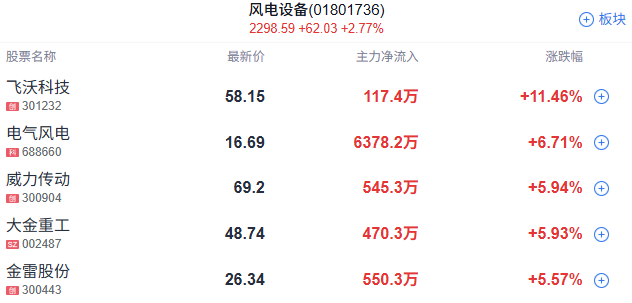
Market Overview - The market showed signs of recovery with a slight increase in major indices: Shanghai Composite Index up 0.05%, Shenzhen Component Index up 0.37%, and ChiNext Index up 0.31% [1] - Over 4,200 stocks in the market experienced gains, indicating a broad-based rally [1] Market Adjustments - Dongwu Securities noted that the recent market adjustment is a result of both external factors and internal pressures, including global liquidity tightening and concerns over an "AI bubble" affecting the tech sector [1] - The market is becoming more cautious regarding the transmission of capital expenditure to earnings per share (EPS) due to the aggressive capital spending by major North American AI companies [1] Sector Performance Wind Power Equipment - The wind power equipment sector showed strong performance, with Feiwo Technology rising nearly 11% and Dajin Heavy Industry increasing over 6% [3] - The Chinese government has raised its wind power installation targets significantly, with annual new installations expected to increase by 140% [3] Military and Defense - The military sector, particularly the China Shipbuilding Industry, saw strong gains with stocks like Jiuzhiyang and China Ship Defense hitting the daily limit [5][6] - Increased defense spending is anticipated due to rising geopolitical tensions, which may accelerate the development of China's military industry [6] Commercial Aerospace - The commercial aerospace sector became active again, with stocks like Zhaobiao Co. and Aerospace Hanyu reaching their daily limits [8] - The establishment of a key regulatory body for commercial aerospace in China and the upcoming launch of the reusable rocket "Zhuque-3" are significant developments [8] Institutional Insights - Citic Securities suggests that the current market risks present an opportunity for reallocating investments in A-shares and Hong Kong stocks as the market stabilizes [10] - Industrial sectors such as chemicals, non-ferrous metals, and new energy are highlighted as areas of focus for investment [11] - The overall sentiment indicates that the market is adjusting to external pressures, with a potential for recovery in Chinese assets as these pressures dissipate [12] Future Outlook - Zhejiang Securities emphasizes the importance of not panicking during market adjustments and suggests focusing on sectors that have shown resilience, such as brokerage firms and consumer stocks [13] - Goldman Sachs predicts that the bull market for Chinese stocks will continue, driven by advancements in AI applications, with expected profit growth of 12% to 13% for Chinese companies next year [14]
华安基金:投入转化业绩存疑 避险资金恐惧美股AI泡沫
Zheng Quan Shi Bao Wang· 2025-11-24 06:58
Group 1 - The core concern is the rising fear of an AI bubble in the US stock market, driven by significant capital expenditures and record-high valuations of AI-related companies [1] - Increased volatility in the market, as indicated by the rising VIX index, suggests a surge in demand for safe-haven assets like gold [1] - There is a notable risk that if the outcomes and returns from AI investments do not align with the substantial initial investments, it could impose significant burdens on companies [1]
对冲需求创15个月来新高,美股反弹成强弩之末?
Hua Er Jie Jian Wen· 2025-11-24 06:23
Core Viewpoint - Concerns are rising among traders regarding the sustainability of this year's stock market rally, particularly in the tech sector, despite the S&P 500 index being up over 12% this year [1] Group 1: Market Volatility and Investor Sentiment - The S&P 500 index recently recorded its largest weekly volatility range since June, indicating heightened market fluctuations [1] - The cost of options for the Invesco QQQ Trust ETF has surged to its highest level since August 2024, reflecting increased hedging sentiment among investors [1] - The VIX fear index reached its highest level since April, highlighting the nervousness in the market [1] Group 2: Tech Stocks and Bitcoin Correlation - Recent declines in tech stocks have coincided with a significant drop in Bitcoin, which has seen increased sensitivity to the Nasdaq 100 index [3] - The iShares Bitcoin Trust ETF has experienced nearly $2.2 billion in outflows in November after attracting over $27.6 billion in inflows this year, indicating a shift in investor sentiment [3] Group 3: Market Dynamics and Trading Strategies - The implied volatility premium remains at a historically high level, with the six-month VIX premium relative to the actual volatility of the S&P 500 being notably elevated [2] - Some traders are beginning to cash in on positions betting on higher volatility, with over 250,000 VIX call spreads being sold last week [4] - A risk reversal strategy was employed by an investor who bought put options on the Bitcoin ETF while selling call options, indicating a hedging approach against potential declines [3]
商品期货早班车-20251124
Zhao Shang Qi Huo· 2025-11-24 05:59
2025年11月24日 星期一 商品期货早班车 招商期货 黄金市场 招商评论 贵 金 属 市场表现:周五贵金属价格震荡,伦敦金冲高回落依旧未能站稳 4100 美元。 基本面:美联储"三把手"纽约联储行长威廉姆斯称"近期"仍存在降息空间,市场预期 12 月降息概率盘中 突破 70%美国劳工统计局取消 10 月 CPI 发布,11 月 CPI 12 月 18 日发,不含环比涨幅;美国 11 月标普全 球综合 PMI 初值为 54.8,四个月来最高,服务业 PMI 增长加快,制造业 PMI 增长放缓。欧元区 11 月服务业 PMI 初值 53.1 创一年半新高,但制造业 PMI 初值 49.7,意外重回荣枯线下方,德法制造业双双恶化;日本 批准 21.3 万亿日元经济刺激计划,为疫情以来最大规模。国内黄金 ETF 持续流入,COMEX 黄金库存 1148.7 吨,减少 0.1 吨;上期所黄金库存 90.4 吨,维持不变;伦敦 10 月黄金库存 8926 吨,增加 18 吨;上期所白 银库存 519 吨,减少 16 吨;金交所白银库存上周库存 774 吨,减少 47 吨,COMEX 白银库存 14327 吨,减 少增 ...