
价格战

Search documents
政策红利叠加“价格战”冲击,乘用车均价连续两月跌幅超2万元
Xin Hua Cai Jing· 2025-05-16 08:28
Core Insights - The Chinese passenger car market experienced a significant structural price adjustment in the first four months of 2025, with a total retail of 6.872 million units, reflecting a year-on-year growth of 7.9% [1] - The average price of passenger cars in 2025 was 170,000 yuan, a decrease of 7000 yuan compared to 2024, with April 2025 showing a decline of 21,000 yuan year-on-year, marking the largest drop in nearly five years [1] Market Dynamics - The decline in prices is attributed to the increase in entry-level model sales due to government subsidies for scrapping and replacing old vehicles, leading to a shift in consumer preference towards mid-to-low-priced vehicles [1] - The penetration rate of new energy vehicles (NEVs) in the market below 50,000 yuan reached 90% in April 2025, with pure electric models accounting for 86% of this segment [2] - In the high-end market (above 300,000 yuan), NEVs accounted for approximately 40%, with range-extended models being more prevalent than pure electric and hybrid models [2] Brand Performance - In the first four months of 2025, luxury brands maintained an average price of 366,000 yuan, while joint venture brands saw a slight increase to 174,000 yuan [3] - New force brands experienced a significant price drop of 36,000 yuan to 235,000 yuan, and domestic brands slightly decreased to 121,000 yuan [3] - Notably, the average price of NEVs across luxury, joint venture, and domestic brands surpassed that of their fuel counterparts, indicating a strong market position for NEV products [3]
交通运输行业一季报总结:内需量增价减,红利保持稳健
Hua Yuan Zheng Quan· 2025-05-15 09:39
Investment Rating - The report maintains a "Positive" investment rating for the transportation industry [1] Core Insights - The transportation industry is experiencing a steady demand increase despite price reductions, maintaining a healthy dividend [1] - The express delivery sector is facing intensified price competition, leading to operational divergence among companies, while direct-operated express companies are achieving stable growth [4][10] - The aviation sector is under pressure due to increased passenger volume but reduced ticket prices, with a slow improvement in supply-demand relationships [4][52] - The highway sector is seeing a recovery in traffic volume, resulting in profit restoration for most leading companies [4][59] - The shipping industry is experiencing mixed performance, with container shipping under pressure from external trade policies, while oil shipping is recovering [4][59] - The shipbuilding market is facing challenges due to fluctuating demand and pricing pressures [7] - Port operations are stable, with significant growth in cargo throughput [7] - The bulk supply chain is under pressure from weak demand, but leading companies are demonstrating resilience [7][32] Summary by Sections Express Delivery - The express delivery industry saw a year-on-year business volume growth of 21.6% in Q1 2025, exceeding market expectations [14] - Major companies like YTO, Yunda, and Shentong reported business volumes of 6.78 billion, 6.08 billion, and 5.81 billion pieces respectively, with year-on-year growth rates of 21.7%, 23.0%, and 26.6% [14] - The average revenue per package in Q1 2025 decreased by 8.8% year-on-year, indicating ongoing price competition [18] - The single-package profit for YTO, Yunda, and Shentong decreased by 25.3%, 36.7%, and 2.0% respectively [24] Aviation - The aviation sector experienced a 4.9% year-on-year increase in passenger volume in Q1 2025, reaching 186 million passengers [52] - The international passenger volume surpassed the 2019 level for the first time, indicating a recovery in international travel [52] - The average ticket price is under pressure, leading to a decline in unit revenue for major airlines [68] Highways - The highway sector is witnessing a steady recovery in traffic volume, contributing to profit growth for most leading companies [4][59] - Nine out of nineteen listed highway companies reported an increase in dividend yield year-on-year [4] Shipping - The container shipping index decreased by 12% year-on-year due to external trade uncertainties, while domestic shipping showed some recovery [4][59] - The oil shipping market is experiencing a recovery, but the bulk shipping market remains sluggish [4] Ports - Major ports achieved a cargo throughput of 4.222 billion tons in Q1 2025, a year-on-year increase of 3.23% [7] Bulk Supply Chain - The bulk supply chain is facing challenges due to weak demand, but leading companies are adapting through operational optimizations [7][32] Investment Recommendations - The report suggests focusing on leading companies in the express delivery sector, such as ZTO Express, YTO Express, and Shentong Express, due to their stable operations and growth potential [32]



汽车价格战还要打多久?
创业邦· 2025-05-15 03:11
Core Viewpoint - The article discusses the intensifying price war in the automotive industry, particularly in the context of the rapid increase in the number of discounted models and the shift in market dynamics due to the rise of electric vehicles. It highlights the transition from a fragmented market to a more concentrated one, driven by technological disruption and competitive pressures [3][10][31]. Group 1: Price War Dynamics - In 2024, the number of discounted car models in China reached 227, which is 1.5 times that of 2023 and 2.3 times that of 2022 [3] - The price war in the automotive sector is seen as a necessary outcome of industry development rather than merely a result of "involution" [3][4] - Price wars often emerge when market concentration changes, leading to fierce competition among numerous players [4][5] Group 2: Market Structure Changes - The automotive industry is experiencing a shift from a fragmented market to a concentrated one, similar to the smartphone market's evolution [5][12] - The market share of the top five automotive companies has decreased from 74% to 55% over the past decade, indicating a rapid fragmentation [16] - The entry of new players and the challenge to established market structures have led to a reconfiguration of the competitive landscape [10][13] Group 3: Impact of Technological Disruption - The introduction of electric vehicles has disrupted the traditional automotive supply chain, leading to a reallocation of market power [10][13] - The transition to electric vehicles has created new components and eliminated old ones, allowing new competitors to enter the market more easily [13][14] - The competitive dynamics in the electric vehicle market are reminiscent of the smartphone industry's evolution, where technological advancements led to significant market restructuring [13][30] Group 4: Financial Implications - The automotive industry generated revenues of 1,064.7 billion yuan with a profit margin of only 4.3%, indicating the financial strain caused by the price war [22] - The price war is seen as a precursor to market consolidation, where the pressure on participants often signals the end of the market's fragmentation phase [24][28] - The leading companies, such as BYD, have managed to maintain or even increase their profit margins despite the price war, showcasing their cost control capabilities [25][26]



汽车价格战还要打多久?
36氪· 2025-05-14 09:39
Core Viewpoint - The article discusses the ongoing price war in the automotive industry, particularly in the context of new energy vehicles (NEVs) and traditional fuel vehicles, highlighting the impact of market concentration and competition dynamics on pricing strategies [2][3][16]. Group 1: Price War Dynamics - In 2024, the number of discounted vehicle models in China reached 227, 1.5 times that of 2023 and 2.3 times that of 2022, indicating a significant increase in price competition [2]. - The price war in the automotive sector is seen as a reflection of broader societal "involution," where companies are pressured to lower prices while simultaneously calling for a shift from price competition to value competition [2][3]. - The emergence of price wars is often linked to changes in market concentration, where industries transition from fragmented competition to oligopolistic structures, making price wars inevitable [4][5]. Group 2: Historical Context and Market Structure - The last major price war in the memory chip sector occurred during the 2008 financial crisis, leading to a significant market consolidation where only a few players remained [7][8]. - The smartphone market in China experienced a similar trajectory, with a vast number of models leading to intense price competition before consolidating into a few dominant brands [10][11]. - The automotive industry is currently witnessing a similar pattern, with the number of passenger vehicle models increasing from 515 in 2016 to 800 in 2019, leading to a fragmented market ripe for price wars [12][13]. Group 3: Impact of New Energy Vehicles - The competition between new energy vehicles and traditional fuel vehicles has intensified, with the rapid increase in market participants outpacing market growth, making price wars unavoidable [13][16]. - The shift towards electric vehicles is disrupting the long-standing market structure of the automotive industry, leading to a reallocation of market shares and the emergence of new competitors [24][30]. - As the market for electric vehicles expands, investment in both vehicle production and supply chains is expected to increase, further fragmenting the market [25]. Group 4: Future Outlook and Industry Consolidation - The article suggests that the ongoing price wars are indicative of an impending industry consolidation, where the most competitive players will survive while others may exit the market [39][40]. - The automotive market is not yet fully consolidated, but the new energy vehicle sector is showing signs of significant concentration, with the top ten companies holding approximately 78% of the market share [41]. - The article concludes that the price war, while brutal, is a necessary phase for the industry to achieve a more stable and profitable market structure in the future [45][50].

“价格战”降温!4月仅有14款车型降价,车企转向“隐性优惠”
Hua Xia Shi Bao· 2025-05-14 09:24
Core Insights - The latest data from the Ministry of Commerce indicates that as of May 11, 2025, the number of applications for the vehicle trade-in subsidy reached 3.225 million, with 1.035 million for scrapping and 2.19 million for replacement [2] - The domestic passenger car market maintained a growth rate of over 10% in April, driven by various promotional policies and incentives from local governments, automakers, and dealers [2] - In April, retail sales of new energy passenger vehicles reached 905,000 units, a year-on-year increase of 33.9%, accounting for 51.5% of the passenger car market, up 7 percentage points from the same period last year [2] Market Dynamics - The competition between traditional and new energy vehicles is intensifying, with A00 and A0 class electric vehicles showing higher cost-effectiveness under subsidies, while B-class vehicles saw only a 20% growth and a 7 percentage point decline in market share [3] - Major automakers like BYD and Geely are launching low-priced models to capture the sinking market, while mid-to-high-end brands face intense competition from models like Model Y and Xiaomi SU7 [3] - Analysts suggest that balancing scale expansion with profitability will be crucial for automakers in the second half of the year [3] Price War Trends - The price war in the automotive market is showing signs of cooling, with only 14 models seeing price reductions in April, a significant drop from 41 in April last year [4] - The promotional discount for traditional fuel vehicles was 22.2%, a slight increase from the previous month, remaining stable for 10 consecutive months [4] - The shift from "price for volume" to "value upgrade" is noted as a long-term competitive strategy among automakers, supported by government policies and market recovery [5] Sales and Inventory - In April, wholesale sales of domestic passenger vehicles increased by 10.7% year-on-year to 2.19 million units, marking the first time in history that monthly sales exceeded 2 million units [5] - The cumulative wholesale volume for the first four months reached 8.468 million units, a year-on-year increase of 11.1% [5] - Automakers are now focusing on "implicit discounts" and enhancing customer experience through improved features and services [5] Brand Performance - The market share gap between brands is widening, with mainstream joint venture brands experiencing a 3% decline in retail share, while domestic brands saw an 8% increase, reaching 65.5% [6] - In the new energy vehicle segment, domestic brands dominate with a penetration rate of 72.8%, compared to only 6.8% for mainstream joint venture brands [6] - The proportion of replacement buyers in the trade-in market has risen to 70%, while first-time buyers have decreased to 31%, indicating a shift in consumer behavior [6] Future Outlook - The automotive market is expected to see a significant increase in sales in May due to policy incentives, new car launches, and promotional events [7] - The competition among automakers is anticipated to intensify in the second half of the year, with a focus on diverse strategies to enhance product competitiveness [7] - There is a possibility of a renewed price war in the second half of the year, driven by favorable market conditions and decreasing lithium carbonate costs [7]

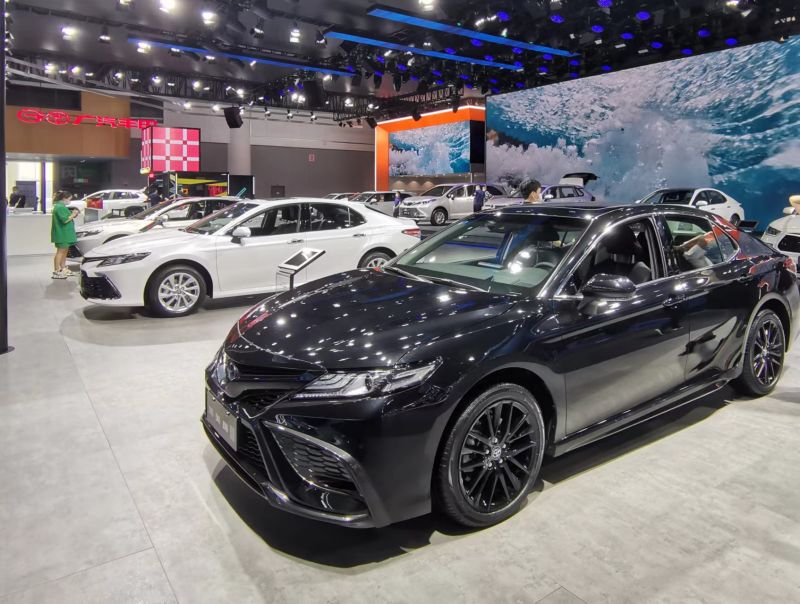
消费参考丨鲜奶市场价格战加剧:大量品牌“买一赠一”
2 1 Shi Ji Jing Ji Bao Dao· 2025-05-13 23:37
Group 1: Fresh Milk Market Price War - The fresh milk market price war is intensifying, with various promotions observed in supermarkets and online platforms [1][2] - Specific examples include discounts and buy-one-get-one-free offers from major brands like Yili, Junlebao, and Mengniu [1][2] Group 2: Sales Pressure on Dairy Companies - Major dairy companies are experiencing significant sales pressure, with Yili's liquid milk revenue dropping to 75 billion RMB in 2024, a year-on-year decline of 12.32% [3] - Mengniu's liquid milk revenue for 2024 was 73.07 billion RMB, down 10.6% year-on-year [4] - Other companies like Guangming and Sanyuan also reported declines in liquid milk revenue, indicating a broader trend in the industry [4] Group 3: Overall Dairy Market Challenges - The entire dairy market is facing demand contraction, with a 2.7% year-on-year decline in total dairy sales in 2024 [5] - Companies are producing large quantities of industrial milk powder to cope with excess raw milk, leading to significant inventory issues and losses of 10,000 to 20,000 RMB per ton sold [5] Group 4: Market Outlook - The price war in the fresh milk market shows no signs of abating, as companies continue to struggle with sales and profitability [6]
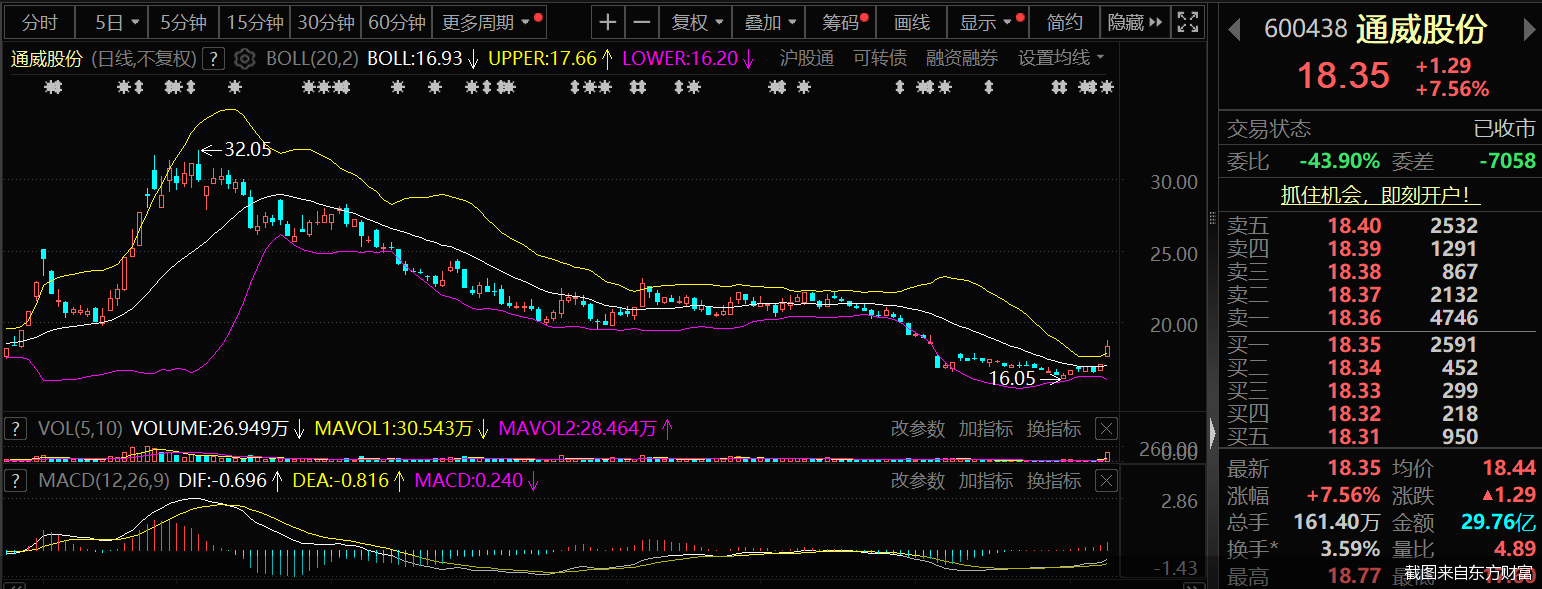
通威股份狂飙的债务与消逝的千亿市值
Bei Jing Shang Bao· 2025-05-13 13:50
Core Viewpoint - The photovoltaic industry is facing unprecedented challenges, with Tongwei Co., Ltd. experiencing significant financial pressure and a decline in market value, dropping from a peak of over 1 trillion yuan to 826.1 billion yuan as of May 13, 2025 [1][3]. Financial Performance - In 2024, Tongwei reported a revenue of approximately 919.94 billion yuan, a year-on-year decrease of 33.87%, and a net profit attributable to shareholders of approximately -70.39 billion yuan, marking the company's first annual net loss since its listing [3][5]. - For Q1 2025, the company recorded a revenue of about 159.33 billion yuan, down 18.58% year-on-year, with a net profit of approximately -25.93 billion yuan, indicating a worsening financial situation [4][5]. Debt and Financial Pressure - As of the end of 2024, Tongwei's long-term borrowings reached 558 billion yuan, with short-term borrowings increasing from approximately 18.78 billion yuan to 35.31 billion yuan in Q1 2025 [6][7]. - The company's financial expenses rose significantly, with Q1 2025 financial costs reaching 6.71 billion yuan, including interest expenses of about 7.11 billion yuan [6]. Asset and Liquidity Position - As of the end of Q1 2025, Tongwei had approximately 291.46 billion yuan in cash and cash equivalents, up from 164.48 billion yuan at the end of 2024 [8][9]. - The company is seeking to enhance its financial structure by introducing strategic investors, aiming to raise up to 100 billion yuan for its subsidiary, Sichuan Yongxiang Co., Ltd. [9]. Industry Context - The photovoltaic sector is undergoing a "cold winter," characterized by overcapacity, intense price competition, and declining profitability, which is reflected in Tongwei's financial struggles [5][10]. - The industry is expected to enter a "淘汰赛" (elimination round) phase, focusing on high-quality competition rather than rapid growth [10].

汽车价格战还要打多久?
远川研究所· 2025-05-13 12:37
Core Viewpoint - The article discusses the ongoing price war in the automotive industry, particularly in the context of the rapid growth of new energy vehicles (NEVs) and the resulting market dynamics. It highlights how the price war is a reflection of market concentration and the inevitable restructuring of the industry as it transitions from a fragmented to a more concentrated market structure [3][18][45]. Group 1: Price War Dynamics - In 2024, there are 227 models with price reductions in the domestic market, which is 1.5 times that of 2023 and 2.3 times that of 2022 [3]. - The price war in the automotive sector is characterized as a necessary outcome of industrial development rather than merely a social issue of "involution" [3][5]. - The emergence of price wars in manufacturing is often linked to changes in market concentration, transitioning from a competitive landscape to an oligopoly [5][9]. Group 2: Historical Context and Comparisons - The last significant price war in the memory chip sector occurred during the 2008 financial crisis, leading to a consolidation of major players [6][8]. - The smartphone market in China experienced a similar trajectory, with a vast number of models leading to intense price competition before consolidating into a few dominant brands [10][11]. - The automotive industry is undergoing a comparable transformation, with the rise of NEVs causing a disruption in the long-standing market order [18][26]. Group 3: Market Structure and Future Outlook - The market for NEVs is becoming increasingly concentrated, with the top ten companies holding approximately 78% of the market share, indicating a shift towards oligopoly [46]. - The article predicts that the automotive industry may reach a tipping point in 2-3 years, resulting in the elimination of over half of the existing car manufacturers [55]. - The ongoing price war is seen as a strategy by industry leaders to consolidate their positions and push out weaker competitors [44][50]. Group 4: Implications for Industry Players - The price war is expected to lead to a significant restructuring of the automotive industry, with new entrants and established players competing on a more level playing field due to technological advancements [26][28]. - The article emphasizes that the profitability of the automotive sector is under pressure, with an average profit margin of only 4.3% across the industry [41]. - The transition to NEVs is viewed as a critical opportunity for the Chinese automotive industry to leapfrog traditional competitors and reshape its market dynamics [58].

酸菜也“卷”起来了,朱老六去年酸菜产品收入同比下滑近三成
Bei Ke Cai Jing· 2025-05-13 12:10
Core Insights - The company, Zhu Laoliu, is experiencing a significant decline in the gross margin of its pickled cabbage products for 2024, primarily due to a decrease in average selling prices driven by increased competition and promotional activities [1][2]. Financial Performance - In 2024, Zhu Laoliu reported a revenue of approximately 238 million yuan, a year-on-year decline of 1.38% [2]. - The net profit attributable to shareholders was approximately 18.4 million yuan, down 15.93% year-on-year [2]. - The sales revenue from pickled cabbage products saw a substantial decline of 27.95%, while the revenue from fermented bean curd products increased by 8.38% [2]. Product Performance - The gross margin for pickled cabbage products in 2024 was 9.09%, a decrease of 16.07 percentage points compared to the previous year [2]. - The decline in gross margin is attributed to lower average selling prices resulting from a price war in the industry and increased promotional activities [1][2]. Future Strategies - To improve the gross margin of pickled cabbage products in 2025, the company plans to focus on enhancing product quality and brand premium [2]. - The company intends to raise the ex-factory price of pickled cabbage products in response to rising cabbage procurement costs [2]. - Zhu Laoliu aims to expand sales channels through partnerships with catering institutions and leverage live streaming for direct sales to consumers [2].
磷酸铁锂深耕价值成关键
Zhong Guo Hua Gong Bao· 2025-05-12 02:02
Core Insights - The lithium iron phosphate (LFP) industry is transitioning from a price war to a value war, with technology innovation becoming the key to capturing the high-end market [1][5] Price Recovery - LFP prices hit a low of below 40,000 yuan per ton, with some low-end products dropping to 30,000 yuan, but are expected to rebound above 40,000 yuan by early 2025 [2] - The actual shipment volume of LFP materials in China reached 2.46 million tons in 2024, with the average capacity utilization rate remaining below 40% [2] - As supply-demand imbalances improve and outdated capacities are phased out, LFP prices are anticipated to return to reasonable levels [2] Market Share Dynamics - LFP battery cell production is projected to exceed 1,100 GWh by 2025, surpassing that of ternary lithium batteries [3] - In early 2023, LFP batteries accounted for 49.9% of global power battery installations, marking a significant increase in market share compared to ternary batteries [3] - The market share of LFP batteries has dramatically increased from 32.5% in 2019 to 81.5% in February 2023, reflecting a reversal in competitive dynamics [3] Competitive Advantages - The energy density gap between LFP and ternary lithium batteries is narrowing, with LFP batteries becoming more cost-effective and safer [4] - LFP batteries do not rely on expensive metals like cobalt, providing a clear cost advantage [4] - The thermal stability of LFP batteries is significantly higher, with decomposition temperatures around 700°C compared to 200°C for ternary batteries, enhancing safety [4] Industry Evolution - From 2025 to 2028, the total production capacity of LFP in China is expected to gradually increase, leading to a market where high-performance materials gain a larger share [5] - The industry is witnessing a shift towards higher energy density and fast-charging capabilities, with only a few leading companies able to supply high-density LFP [6] - The penetration of lithium manganese iron phosphate (LMFP) is expected to rise due to its advantages in energy density, safety, and cost, opening up high-end market opportunities [6]
