供给侧改革

Search documents
新能源及有色金属日报:宏观情绪扰动下的波动缺乏基本面支撑-20250723
Hua Tai Qi Huo· 2025-07-23 05:31
Report Summary 1. Investment Rating - Unilateral: Neutral [4] - Arbitrage: Neutral [4] 2. Core View - Under the lingering macro - sentiment, the price of SHFE zinc continues to oscillate strongly, but lacks fundamental support. The downstream procurement enthusiasm is low. The supply - side increment expectation remains unchanged, and the consumption side is difficult to match the high growth of the supply side. The overseas inventory has a risk of delivery, and the domestic social inventory shows a trend of accumulation, which is expected to continue in the second half of the year. After the emotional disturbance, the oversupply pattern may dominate the price trend again [3] 3. Key Data Summary Spot - LME zinc spot premium is - $1.72/ton. SMM Shanghai zinc spot price decreased by 40 yuan/ton to 22,780 yuan/ton compared with the previous trading day, and the SMM Shanghai zinc spot premium increased by 25 yuan/ton to - 40 yuan/ton. SMM Guangdong zinc spot price decreased by 70 yuan/ton to 22,750 yuan/ton, and the SMM Guangdong zinc spot premium decreased by 5 yuan/ton to - 70 yuan/ton. SMM Tianjin zinc spot price decreased by 40 yuan/ton to 22,740 yuan/ton, and the SMM Tianjin zinc spot premium increased by 25 yuan/ton to - 80 yuan/ton [1] Futures - On July 22, 2025, the SHFE zinc main contract opened at 22,880 yuan/ton and closed at 22,945 yuan/ton, up 160 yuan/ton from the previous trading day. The trading volume was 184,578 lots, a decrease of 66,827 lots from the previous trading day. The position was 134,060 lots, an increase of 746 lots from the previous trading day. The intraday price fluctuated, with the highest point reaching 22,985 yuan/ton and the lowest point reaching 22,760 yuan/ton [1] Inventory - As of July 21, 2025, the total inventory of SMM seven - region zinc ingots was 92,700 tons, a decrease of 400 tons compared with the same period last week. As of July 22, 2025, the LME zinc inventory was 116,600 tons, a decrease of 1,625 tons from the previous trading day [2] 4. Market Analysis - Cost side: With the zinc ore import window closed, the import volume in June increased by 3.2% year - on - year, the imported ore TC continued to rise, the smelting profit was maintained, and the supply - side increment expectation remained unchanged. The smelters had sufficient raw material reserves and low enthusiasm for ore procurement. - Consumption side: Although the downstream operating rate showed relative resilience and the overall consumption was not bad, it was difficult to match the high growth of the supply side. The overseas inventory had a risk of delivery, and the domestic social inventory showed a trend of accumulation, which was expected to continue in the second half of the year [3]
质疑、笃定与狂热:供给侧改革的情绪节奏
Hu Xiu· 2025-07-23 03:26
商品市场对反内卷的计价已然轰轰烈烈。很多人尝试对标2015~2016年的供给侧改革行情,但值得注意 的是,此时与彼时已有很大的不同:在见到供改的明确方案和目标前,市场已经迅速进入了加速的阶 段。历史记忆之下,市场似乎明显压缩了上一轮"质疑"和"犹豫"的环节。 这表明,在各路测算之余,我们还需要对上一轮供改的"情绪节奏"进行复盘,我们看到,在巨大的上升 行情中,质疑、笃定、验证、恐慌、凝聚、狂热…在每一个阶段表现得淋漓尽致,供改从口号到现实并 不是一路坦途。其中既有政策执行过程中必然的纠结反复,也有市场和行业的反身性演绎。 本文以复盘为先,希望直接阅读结论和启示的读者可以照例直接拉到文末。 一般认为供改的起点是2015年11月,但从黑色系行情来看,直到12月18日细化提出"三去一降一补"后, 黑色系行情才算正式启动。需要注意到,尽管地产需求是供改行情的大背景,但并非直接触发,产业高 度过剩的阶段,需求端并非主导逻辑。在后视镜看来相当重要的棚改货币化政策,早在2015年3月即已 提出,经历了5月PSL的加速落地和6月地产新政的加速,已经全面铺开了大半年。 截至年末,尽管土拍和新开工面积增速都还处于水下,但地产销售 ...
方正中期期货新能源产业链日度策略-20250723
Fang Zheng Zhong Qi Qi Huo· 2025-07-23 02:59
Group 1: Report Industry Investment Rating - No relevant content provided Group 2: Core Views of the Report - The sentiment of lithium resource supply shortage has resurfaced, resonating with the current "anti - involution" market. The optimistic commodity atmosphere supports the strong performance of lithium salt spot and futures prices. For industrial silicon and polycrystalline silicon, the "anti - involution" sentiment continues to ferment, and the market has stronger expectations for future supply - side reforms, production control, and reduction. Although the fundamentals of industrial silicon and polycrystalline silicon are still weak, the main logic of the market operation lies in the "strong expectations" brought by policies [4][5][6] Group 3: Summary According to the Directory 3.1 First Part: Spot Prices 3.1.1 Plate Strategy Recommendation - For the lithium carbonate 09 contract, it is expected to operate in a volatile and relatively strong manner. The support level is 65,000 - 66,000, and the pressure level is 78,000 - 83,000. It is recommended to seize the opportunity for selling hedging, and downstream cathode material enterprises should pay attention to low - level stockpiling or buying hedging. For the industrial silicon 09 contract, with the high - rising "anti - involution" sentiment, it may maintain an upward trend in the short term. The support level is 8,900 - 9,000, and the pressure level is 9,900 - 10,000. It is recommended to take a bullish approach. For the polycrystalline silicon 08 contract, with the high - rising "anti - involution" sentiment, it may maintain an upward trend in the short term. The support level is 43,000 - 44,000, and the pressure level is 50,000 - 51,000. It is recommended to take a bullish approach [15] 3.1.2 Spot and Futures Price Changes - The closing price of lithium carbonate is 72,880, with a daily increase of 2.24%, a trading volume of 1,118,226, an open interest of 411,638, an open - interest increase of 30,453, and 10,089 warehouse receipts. The closing price of industrial silicon is 9,655, with a daily increase of 4.27%, a trading volume of 1,234,403, an open interest of 380,961, an open - interest decrease of 2,335, and 50,053 warehouse receipts. The closing price of polycrystalline silicon is 49,105, with a daily increase of 8.99%, a trading volume of 757,482, an open interest of 192,179, and 2,780 warehouse receipts [16] 3.2 Second Part: Fundamental Situation 3.2.1 Lithium Carbonate Fundamental Data - **Production and Inventory Situation**: On Tuesday, the SMM battery - grade lithium carbonate index price was 68,877 yuan/ton, a daily increase of 1,136 yuan/ton. The average price of battery - grade lithium carbonate was 69,100 yuan/ton, a daily increase of 1,100 yuan/ton. The average price of industrial - grade lithium carbonate was 67,450 yuan/ton, a daily increase of 1,100 yuan/ton. Last week, the lithium carbonate output was 19,115 tons, an increase of 302 tons from the previous week. The full - caliber sample inventory was 142,620 tons, an increase of 1,827 tons from the previous week, hitting a new historical high. The weekly apparent demand was 17,288 tons, reaching a high for the year, and the inventory - available days were 57.7 days [4] - **Downstream Situation**: No specific data provided, but only relevant figure references are given, such as the capacity of lithium iron phosphate, the operating rate of lithium iron phosphate devices, the monthly operating rate of SMM ternary materials, and the monthly output of lithium hexafluorophosphate [26][28] 3.2.2 Industrial Silicon Fundamental Data - **Production and Inventory Situation**: The sentiment of "anti - involution" to manage the disorderly low - price competition in the market continues to ferment. The cost of industrial silicon has increased due to the significant rise in coal prices. In June, China's industrial silicon exports increased significantly year - on - year and month - on - month, reaching the highest monthly level since May 2024. Although the fundamentals are still weak, the market is expected to operate in a volatile and relatively strong manner [6] - **Downstream Situation**: No specific data provided, only relevant figure references are given, such as the monthly output of Chinese organic silicon DMC and the operating rate of aluminum alloys [37] 3.2.3 Polycrystalline Silicon Fundamental Data - **Production and Inventory Situation**: The sentiment of "anti - involution" to manage the disorderly low - price competition in the market continues to ferment. Although the supply - demand situation has not changed much and the oversupply situation persists, last week's inventory decreased because the rise in silicon material prices boosted the downstream's enthusiasm for picking up goods, and enterprises had a large volume of shipments for previous orders [8][9] - **Downstream Situation**: No specific data provided, only relevant figure references are given, such as the monthly output of silicon wafers and the monthly output of Chinese photovoltaic modules [46]
“反内卷”纵深推进,下半年哪些板块可能受益?丨高景气行业探究
Xin Lang Ji Jin· 2025-07-23 02:28
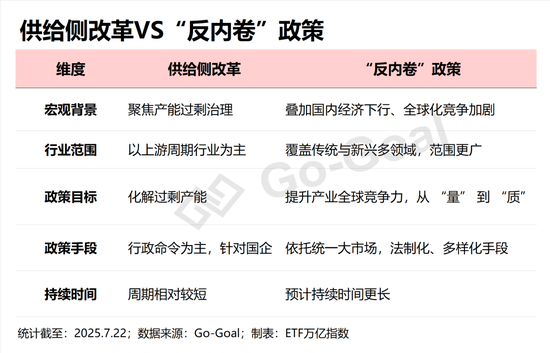
Core Insights - The "anti-involution" trend has become a market focus and policy priority, with the Ministry of Industry and Information Technology planning to issue growth stabilization plans for industries such as machinery and automobiles, which is expected to boost thematic market trends [1] Historical Insights: Supply-Side Reform Experience - Historical supply-side reforms show that market acceptance of policy effects tends to lag, requiring concrete policy implementation or increased intensity for market reactions [2] - Key signals for price increases in cyclical industries are improvements in fundamentals rather than mere reductions in output, with industrial price increases and capacity utilization rates being critical indicators [2] - Demand resonance can broaden the beneficiary scope, with directly impacted sectors expanding to include a wider range of industries if demand-side support is present [2] Comparison of "Anti-Involution" and Supply-Side Reform - Both "anti-involution" and supply-side reforms arise from structural oversupply environments, with significant pressure on the supply side and prolonged negative growth in PPI since October 2022 [3][4] - The current "anti-involution" policies cover a broader range of industries and aim for higher-level goals compared to previous supply-side reforms [3][4] Policy Direction: Industry-Specific Measures and Key Focus Areas - The "anti-involution" policies are accelerating, with recent meetings emphasizing the need to address low-price disorderly competition and promote the exit of backward production capacity, with industries like cement and photovoltaics already initiating self-discipline measures [5][11] Industry Opportunities and ETF Allocation Strategies - The "anti-involution" policies are expected to accelerate industry clearing, improving profitability and market performance, particularly in sectors with significant improvement potential before supply clearing [7] - Specific sectors such as chemicals, non-ferrous metals, new energy vehicles, and e-commerce are highlighted for potential investment opportunities through corresponding ETFs [20] Sector-Specific Insights - **Chemicals**: The sector is expected to benefit from the exit of backward production capacity and a shift towards R&D and quality improvement, with industry associations already taking self-discipline actions [11] - **Non-Ferrous Metals**: The sector faces significant overcapacity issues, with policies aimed at controlling midstream capacity growth to restore processing profits [10] - **New Energy Vehicles**: The production and sales gap is narrowing, indicating initial policy effects, although profit margin improvements are still lagging [15] - **E-commerce**: The industry is transitioning from low-price competition to differentiated competition, driven by policy guidance and platform strategy adjustments [18]

“反内卷”开启煤炭夏季攻势
Datong Securities· 2025-07-23 02:23
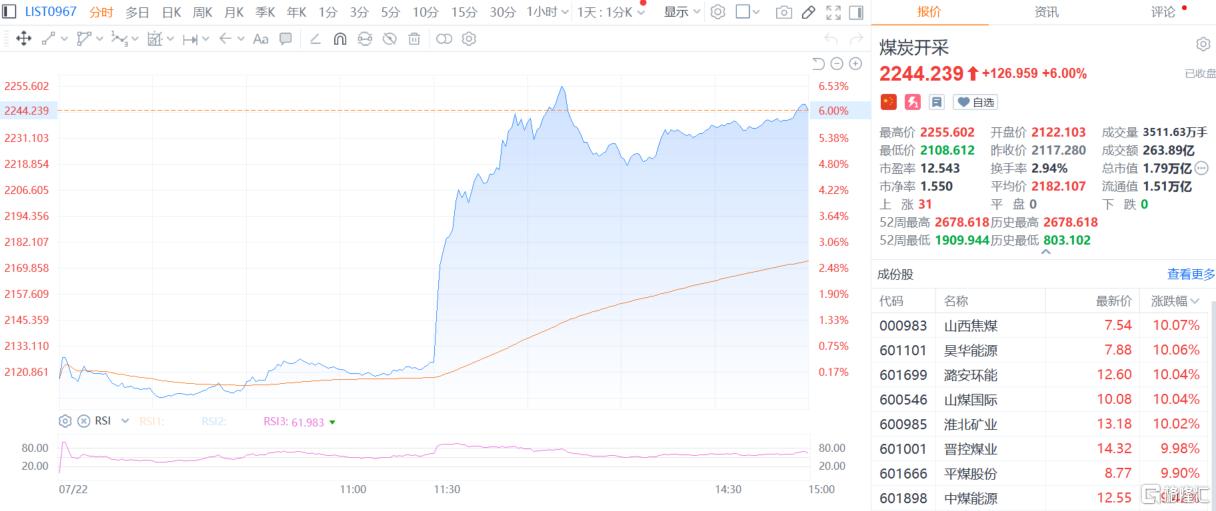
Investment Rating - The industry investment rating is optimistic [2] Core Viewpoints - The coal sector is experiencing explosive growth, with a 6.18% increase on July 22, indicating a lag compared to the Shanghai Composite Index, which has reached a new high since last year [4] - The current proportion of loss-making enterprises in the coal industry is 53.6%, significantly higher than 35% in 2016, highlighting the need for regulatory measures to optimize the industry order and stabilize supply-demand relationships [6][8] - The "anti-involution" policy initiated on July 1, 2025, aims to eliminate low-price competition and promote the exit of backward production capacity, which is crucial for the coal industry's recovery [7][8] Summary by Sections Section 1: Market Dynamics - High temperatures have led to a surge in daily coal consumption for power generation, with coal prices continuing to rise due to increased demand from steel mills and ongoing infrastructure projects [12] - The price of Qinhuangdao Q5500 coal has increased by 38 yuan/ton, reflecting a clear turning point in the coal market fundamentals [12] Section 2: Valuation and Dividend Yield - As of July 22, the coal sector's price-to-book ratio is 1.27, placing it in the 34.77th percentile over the past five years, indicating a low valuation level [15] - The dynamic dividend yield for coal stocks is 5.27%, which is higher than the banking sector's 4.0% and the CSI 300's 2.82%, suggesting a favorable investment opportunity [15]
宝城期货甲醇早报-20250723
Bao Cheng Qi Huo· 2025-07-23 01:55
投资咨询业务资格:证监许可【2011】1778 号 宝城期货甲醇早报-2025-07-23 品种晨会纪要 时间周期说明:短期为一周以内、中期为两周至一月 | 甲醇 2509 | 震荡 | 震荡 | 震荡 | 偏强运行 | | | --- | --- | --- | --- | --- | --- | | 品种 | 短期 偏强 | 中期 | 日内 偏强 | 观点参考 | 核心逻辑概要 煤炭期价上涨,甲醇震荡偏强 | 备注: 晨会纪要 1.有夜盘的品种以夜盘收盘价为起始价格,无夜盘的品种以昨日收盘价为起始价格,当日日盘收盘 价为终点价格,计算涨跌幅度。 2.跌幅大于 1%为下跌,跌幅 0~1%为震荡偏弱,涨幅 0~1%为震荡偏强,涨幅大于 1%为上涨。 3.震荡偏强/偏弱只针对日内观点,短期和中期不做区分。 主要品种价格行情驱动逻辑—商品期货能源化工板块 甲醇(MA) 日内观点:震荡偏强 中期观点:震荡 参考观点:偏强运行 核心逻辑:国内甲醇产能持续释放,内部供应压力有增无减。叠加海外船货不断到港,外部供应预 期逐渐增大,港口迎来累库周期,而下游需求则步入淡季,供需结构趋于宽松。在经历前期大幅回 调以后,利空情绪 ...
金融期货早评-20250723
Nan Hua Qi Huo· 2025-07-23 01:49
Report Industry Investment Ratings No information provided regarding industry investment ratings. Core Views of the Report - The RMB exchange rate is likely to remain stable in the short term, with an expected operating range of 7.15 - 7.20 this week [1]. - The stock index is expected to continue to strengthen as various sentiment indicators are positive [2]. - Treasury bond trading desks are advised to temporarily stop losses and wait for the details of the anti - involution policy to be fully implemented after important meetings. There may be a configuration opportunity for the bond market after the policy is implemented and emotions are released [2][3][4]. - The shipping index (European line) futures prices may continue to oscillate and decline slightly. Attention should be paid to the actions of other shipping companies and the changes in the spot quotes of European lines [4][5]. - Copper may be slightly stronger in the short term but may face risks in the medium term. Aluminum is expected to oscillate at a high level, alumina to run strongly, and casting aluminum alloy to oscillate at a high level. Zinc is expected to oscillate at a high level in the short term and decline in the long term. Nickel and stainless steel are affected by macro - emotions, and the trend needs to pay attention to the fermentation of macro - emotions. Tin prices are expected to follow the overall trend of the non - ferrous sector in the short term, and it is recommended to hedge inventory at an appropriate time. Lithium carbonate is expected to oscillate strongly in the short term. Industrial silicon and polysilicon are affected by coal price disturbances and macro - emotions, and there are opportunities for long positions and positive spreads. Lead is expected to oscillate [6][7][8][9][10][11][13][14][15][16][17][19][21][22]. - The steel and hot - rolled coil market is expected to remain strong before the Politburo meeting in July, but the risk of a pullback due to the weakening of emotions should be vigilant. Iron ore is driven by expectations, and its price is expected to fluctuate more strongly near the meeting. Coking coal and coke are expected to oscillate strongly in the short term, and it is recommended to pay attention to the opportunity of 9 - 1 reverse spreads. Silicon iron and silicon manganese are expected to be optimistic in the short term, and attention should be paid to the implementation of policies [24][25][26][27][28][29][30][31][32]. - Crude oil is in an oscillating and weakening pattern, and attention should be paid to the risk of a price decline. PX - PTA and MEG - bottle chips are driven by the "anti - involution" policy and are expected to run strongly in the short term. Methanol is recommended to be observed. PP and PE are affected by the cost side and macro - policies, with resistance to price increases and a "weak reality + strong expectation" pattern respectively. PVC is affected by the "anti - involution" emotion and is recommended to avoid risks. Fuel oil is in a weak adjustment, low - sulfur fuel oil is under pressure and should be observed, asphalt is adjusted weakly following the cost side, and urea is expected to oscillate strongly [33][34][35][36][37][38][39][40][41][42][43][44][45][46][47][48][49][50][51][52][53]. - Soda ash supply is strong and demand is weak, and glass is expected to remain strong. Logs have a relatively independent market, and pulp may break through and can be cautiously chased long if it breaks through effectively. Caustic soda is at a high level, and attention should be paid to the change in downstream demand [54][55][57][59][60]. - For agricultural products, live pigs are recommended to be shorted at high prices and appropriate reverse spreads can be arranged. Oilseeds are recommended to be long - allocated in the far - month contracts. Corn and starch are expected to oscillate narrowly. Cotton is expected to be strong in the short term, and attention should be paid to inventory changes. Sugar is under short - term pressure. Apples are expected to oscillate in the short term [62][63][64][65][66][67][68][69][70][71]. Summaries According to Relevant Catalogs Financial Futures RMB Exchange Rate - Yesterday, the on - shore RMB against the US dollar closed at 7.1756 at 16:30, up 12 basis points from the previous trading day, and closed at 7.1695 at night. The central parity rate of the RMB against the US dollar was reported at 7.1460, up 62 basis points [1]. - The current market has no obvious expectation of RMB appreciation or depreciation, and the foreign exchange market transactions are rational and orderly. The external environment shows that the rapid depreciation stage of the US dollar index is likely to have ended, but the overall weak trend is expected to continue. Domestically, the central bank is likely to continue to adhere to the regulatory philosophy of "bottom - line thinking + discretionary decision - making" [1]. Stock Index - Yesterday, the stock index continued to strengthen, and the trading volume of the two markets increased by 1930.58 billion yuan. The futures index increased in volume. Affected by the anti - involution policy and the start of the hydropower project in the lower reaches of the Yarlung Zangbo River, the water conservancy, steel, and building materials sectors led the rise [2]. - With positive sentiment indicators and relatively calm news, the stock index is expected to continue to strengthen [2]. Treasury Bonds - Treasury bond futures opened strongly, oscillated narrowly, then dived and closed down. The short - end was relatively strong, and the liquidity improved, with the capital interest rate returning to the key level of 1.3% [2]. - With the strong performance of risk assets and the decline of treasury bond futures prices, trading desks are advised to temporarily stop losses and wait for the details of the anti - involution policy. After the policy is implemented and emotions are released, there may be a configuration opportunity for the bond market [2][3][4]. Container Shipping - Yesterday, the prices of container shipping index (European line) futures contracts oscillated downward. Affected by commodity emotions, they rebounded slightly and then continued to decline [4]. - On July 31, the total quote of Maersk's 20GP from Shanghai to Rotterdam increased by $10 compared with the previous value, and the 40GP increased by $20. On August 7, the opening quotes of 20GP and 40GP decreased compared with the previous week [4]. - The futures price is expected to continue to oscillate and decline slightly, and attention should be paid to the actions of other shipping companies and the changes in the spot quotes of European lines [4][5]. Commodities Non - ferrous Metals - **Copper**: The Shanghai Copper Index maintained a high - level oscillation on Tuesday. The anti - involution policy has an impact on the non - ferrous metal sector. Copper may be slightly stronger in the short term, but there are hidden risks in the medium term [6][7]. - **Aluminum Industry Chain**: The price of Shanghai Aluminum increased by 0.75% on the previous trading day, and the price of alumina increased by 6.07%. The price of casting aluminum alloy increased by 0.90%. Aluminum is expected to oscillate at a high level, alumina to run strongly, and casting aluminum alloy to oscillate at a high level [8][9][10][11]. - **Zinc**: The main contract of Shanghai Zinc increased by 0.01% on the previous trading day. The supply of zinc is expected to change from tight to surplus, and the demand is weak. It is recommended to short at high prices in the short term and pay attention to supply - side disturbances [11][13]. - **Nickel and Stainless Steel**: The main contract of Shanghai Nickel increased by 1.52% during the day, and the main contract of stainless steel increased by 0.47%. The current market is mainly affected by macro - emotions, and the fundamentals have not improved significantly [15]. - **Tin**: The Shanghai Tin Index showed a V - shaped trend on Tuesday. Tin prices are affected by the anti - involution policy, but the fundamentals remain stable. It is recommended to hedge inventory at an appropriate time [16][17]. - **Lithium Carbonate**: On Tuesday, the futures price of lithium carbonate oscillated strongly. The spot market of the lithium - battery industry chain strengthened, and the cost support was enhanced. It is expected to oscillate strongly in the short term [17][18]. - **Industrial Silicon and Polysilicon**: On Tuesday, the futures prices of industrial silicon and polysilicon rose by the daily limit. Affected by coal price disturbances and macro - emotions, there are opportunities for long positions and positive spreads [19][20]. - **Lead**: The main contract of Shanghai Lead decreased by 0.02% on the previous trading day. The supply of lead is in a tight - balance state, and it is difficult to synchronize with the anti - involution policy. It is expected to oscillate in the short term [21][22]. Black Metals - **Rebar and Hot - Rolled Coil**: The coking coal market led to a rise in the steel market. The market is expected to remain strong before the Politburo meeting in July, but the risk of a pullback due to the weakening of emotions should be vigilant [24][25]. - **Iron Ore**: Affected by news and expectations, the price of iron ore followed the rise of coking coal. The fundamentals have not changed much, and the price is expected to fluctuate more strongly near the meeting [26][27]. - **Coking Coal and Coke**: The coking coal and coke markets rose by the daily limit. The production of domestic coking coal mines is gradually recovering, and the import is expected to increase. The coking industry is under cost pressure, and the demand for coke is supported in the short term. The market is expected to oscillate strongly in the short term [28][29][30]. - **Silicon Iron and Silicon Manganese**: The profits of silicon iron and silicon manganese have improved, and the production enterprises have a certain driving force to resume production. However, the growth space is limited due to weak downstream demand. The market is expected to be optimistic in the short term, and attention should be paid to the implementation of policies [31][32]. Energy and Chemicals - **Crude Oil**: The prices of New York and London crude oil futures decreased, and the SC crude oil main contract also closed down at night. The market is in an oscillating and weakening pattern, and attention should be paid to the risk of a price decline [33][34]. - **PX - PTA**: The PX - PTA industry chain has limited fundamental driving forces. The macro "anti - involution" policy has an uncertain impact, and it is expected to run strongly in the short term [35][36][37]. - **MEG - Bottle Chips**: The supply of ethylene glycol has frequent accidents, and the demand is weak. Affected by the "anti - involution" emotion, the overall trend is strong. The bottle chips' price fluctuates with the cost side [38][39][40]. - **Methanol**: The methanol 09 contract closed at 2450 on Tuesday. The port inventory continued to accumulate. It is recommended to observe due to strong macro - emotions [41][42]. - **PP**: The PP 2509 contract increased. The supply is under pressure, and the demand is in the off - season. Although the trading volume has increased, the price increase faces resistance [43][44]. - **PE**: The PE 2509 contract increased. The supply has a high level of maintenance, and the demand is gradually recovering. It is in a "weak reality + strong expectation" pattern [45][46]. - **PVC**: The PVC price increased sharply, driven by the "anti - involution" emotion and the expectation of eliminating outdated chemical devices. Although the fundamentals are poor, the anti - involution value is high. It is recommended to avoid risks [47][48][49]. - **Fuel Oil**: The fuel oil market is in a weak adjustment. The supply is still tight, and the demand has increased in some areas. The Singapore and Malaysian floating - storage inventories are at a high level [50]. - **Low - Sulfur Fuel Oil**: The low - sulfur fuel oil market is under pressure. The supply has decreased overseas, and the demand has slightly improved. It is recommended to observe in the short term [51]. - **Asphalt**: The asphalt market is adjusted weakly following the cost side. The supply has increased slightly, and the demand is in the off - season. The inventory structure is being adjusted, and the market is expected to improve in the peak season [51][52]. - **Urea**: The urea 09 contract closed at 1810 on Tuesday. Affected by the "anti - involution" policy, it is expected to oscillate strongly in the short term. However, the agricultural demand is gradually weakening, and the fundamentals will be under pressure in the second half of the year [53]. - **Glass and Soda Ash**: The soda ash supply is strong and demand is weak, and the glass market is expected to remain strong. The "anti - involution" policy has an impact on the market, and attention should be paid to the implementation of the policy [54][55]. Others - **Logs**: The main contract of logs closed at 838, with a decrease of 4 and a reduction of 2264 lots. The market is relatively independent, and the spot price is stable. The current price is slightly overvalued [57][58]. - **Pulp**: The main contract of pulp closed at 5368, with an increase of 40. Affected by the macro - atmosphere, the price has risen. If it can break through effectively, it can be cautiously chased long [59]. - **Caustic Soda**: The caustic soda 2509 contract closed at 2658, with an increase of 3.46%. The inventory has increased slightly, and the market is at a high level. Attention should be paid to the change in downstream demand [60]. Agricultural Products Live Pigs - The LH2509 contract closed at 14380, with a daily increase of 0.1%. The national average price of live pigs decreased slightly. The supply is still high, and it is recommended to short at high prices and arrange appropriate reverse spreads [62][63]. Oilseeds - The external market of US soybeans oscillated after a rebound, and the domestic near - month contracts were strong, and the far - month contracts also followed the rise. The supply of imported soybeans is relatively abundant, and the demand for domestic soybean meal has neutral support. The supply of rapeseed meal has a short - term rhythm problem, and attention should be paid to the supply recovery of the rapeseed sector [64]. - It is recommended to long - allocate far - month contracts [65][66]. Corn and Starch - The CBOT corn futures closed down, and the Dalian corn starch oscillated. The prices of corn and starch in different regions were stable. The market is expected to oscillate narrowly, and attention should be paid to the auction成交 rate [66]. Cotton - The ICE cotton futures rose slightly, and the Zhengzhou cotton futures rose nearly 0.5% overnight. The new cotton in Xinjiang is growing well, and the domestic cotton inventory is low, which supports the cotton price. However, the terminal demand is weak in the off - season [67]. - The cotton market is expected to be strong in the short term, and attention should be paid to the import quota policy and inventory changes [67][68]. Sugar - The ICE raw sugar futures closed down, and the Zhengzhou sugar futures oscillated. The global sugar supply is expected to be in surplus, and the short - term sugar price is under pressure [69][70]. Apples - The apple futures price increased slightly. The spot price of apples in different regions is stable. Affected by seasonal fruits, the sales volume is limited. The inventory is at a low level in the past five years. The market is expected to oscillate in the short term [71].
全市场唯一煤炭ETF(515220)规模超70亿元,昨日净流入超5.7亿元!
Sou Hu Cai Jing· 2025-07-23 01:46
Group 1 - The only coal ETF in the market (515220) has exceeded 7 billion yuan in scale, with a net inflow of over 570 million yuan yesterday [1] - During the last round of supply-side reform in the coal industry, the sector saw a growth of 31.55% by the end of 2017. The current round of reform policies is expected to benefit related industries [1] - Since the supply-side reform began in 2016, outdated production capacity in the coal industry has been continuously eliminated, leading to significant optimization of the production capacity structure [1] Group 2 - The coal industry policy in China is shifting from scale expansion to quality prioritization, with the "anti-involution" policy expected to further control the increase in coal supply [1] - In June, coal imports reached a two-year low, indicating a strong certainty of decline in import volumes [1] - From the demand side, the growth rate of thermal power generation turned positive since late May, with a year-on-year increase of 4.83% in early July [1] Group 3 - The national power load has repeatedly set historical highs, surpassing 1.5 billion kilowatts for the first time on July 16, indicating a potential marginal improvement in electricity demand [1] - The third quarter is expected to maintain high levels of iron and steel production, providing strong support for coking coal demand [1] - The supply-demand dynamics are showing marginal improvement, coupled with the acceleration of the "anti-involution" policy, leading to strong expectations for coal price recovery [1]
文字早评2025/07/23星期三宏观金融类-20250723
Wu Kuang Qi Huo· 2025-07-23 01:35
Report Industry Investment Ratings No relevant content provided. Core Views - The overall market sentiment is positive, influenced by policies such as "anti - involution" and the expected release of key industry stability and growth plans. However, different sectors have different outlooks based on their specific fundamentals [6][11]. - In the short term, the market style may shift from small - and medium - cap stocks to large - and medium - cap stocks. For the bond market, although the long - term trend of interest rates is downward, the recent strong performance of commodities and the stock market has suppressed the bond market [3][6]. Summary by Category Macro - Financial Index Futures - Macro news includes the release of the "Rural Highway Regulations", the establishment of China Fusion Energy Co., Ltd., coal stock surges due to production checks, and net foreign capital inflows into domestic stocks and funds in the first half of the year [2]. - The basis ratios of IF, IC, IM, and IH are provided. The trading logic suggests that the market style may shift, and it is recommended to go long on IF index futures at low prices [3]. Treasury Bonds - On Tuesday, the main contracts of TL, T, TF, and TS all declined. Foreign capital has been increasing its allocation of RMB assets, and the scale of foreign investment in RMB bonds is at a historically high level. The human resources department will promote pension - related reforms [4]. - The central bank conducted 2148 billion yuan of 7 - day reverse repurchase operations, resulting in a net withdrawal of 2477 billion yuan. The economic data in the second quarter was resilient, and the central bank is expected to maintain a loose monetary policy. The bond market may be affected by the stock - bond seesaw [5][6]. Precious Metals - Shanghai gold and silver prices rose, while COMEX gold fell slightly and COMEX silver rose. The statements of Fed officials have affected the precious metals market. It is recommended to maintain a long - term bullish view on precious metals, with reference price ranges provided for Shanghai gold and silver [7][8]. Non - Ferrous Metals Copper - The US dollar index is weak, and the commodity sentiment is positive, driving up copper prices. However, the supply of copper raw materials remains tight, and the downstream is in a relatively off - season. The implementation of US copper tariffs may pose a downward risk to copper prices. Reference price ranges are provided for Shanghai copper and LME copper [10][11]. Aluminum - The rise of black - series commodities has led to an increase in aluminum prices. Although the domestic aluminum ingot inventory is relatively low, it is expected to accumulate due to the off - season and weak export demand. Reference price ranges are provided for domestic and LME aluminum [12]. Zinc - In the long - term, the zinc price is expected to be bearish due to the abundant supply of zinc ore and the expected increase in zinc ingot production. In the short - term, the dovish Fed atmosphere and the strong commodity sentiment may lead to a short - term upward trend in zinc prices [13]. Lead - The supply of lead ingots is relatively loose, and the demand is affected by anti - dumping tariffs. It is expected that the domestic lead price will be weak [15][16]. Nickel - The short - term macro - environment is positive, but the stainless - steel inventory is high, and the demand for nickel is weak. It is expected that the price of nickel ore will continue to decline, and it is recommended to wait and see in the short - term [17]. Tin - The supply of tin is expected to increase in the third and fourth quarters, but the short - term supply of raw materials is still tight, and the demand is weak. It is recommended to wait and see, with reference price ranges provided [18]. Carbonate Lithium - The price of carbonate lithium has increased. The "anti - involution" policy has affected the market sentiment, but the fundamental improvement is limited. It is recommended to wait and see, with a reference price range provided [19][20]. Alumina - The price of alumina has increased. The policy of "eliminating backward production capacity" has boosted the market sentiment, but the over - capacity situation may still exist. It is recommended to wait and see, with a reference price range provided [21]. Stainless Steel - The price of stainless steel has increased slightly, but the supply exceeds demand, and the market sentiment has cooled. The anti - involution policy has boosted the industry's willingness to support prices, but the fundamental situation has not improved significantly [22]. Cast Aluminum Alloy - The price of cast aluminum alloy has increased slightly. The downstream is in an off - season, and the supply and demand are both weak. The cost support has strengthened, but the price may face difficulties in continuous increase [23]. Black Building Materials Steel - The prices of rebar and hot - rolled coil have increased. The start of the Motuo Hydropower Station project has increased the demand expectation for building materials. The supply - side reform and low inventory levels may support the price increase. Attention should be paid to policy signals and terminal demand [25][26]. Iron Ore - The price of iron ore has increased. The high demand for iron water and low overseas ore arrivals have supported the price. The "anti - involution" policy has also boosted the market sentiment. The ore price may remain strong in the short - term [27][28]. Glass and Soda Ash - The price of glass has increased due to policy support and inventory reduction. The price of soda ash has also increased in the short - term, but the long - term supply - demand contradiction still exists. It is recommended to avoid short - selling in the short - term and wait for short - selling opportunities later [29][30]. Manganese Silicon and Ferrosilicon - The prices of manganese silicon and ferrosilicon have increased due to the coal market rally. The fundamental situation of the alloy market is still bearish, but the short - term market sentiment is strong. It is recommended to wait and see [31][32]. Industrial Silicon - The price of industrial silicon has increased. The supply of industrial silicon is still excessive, and the demand is insufficient. It is recommended to rationally treat the current market and consider hedging for the industrial side [35][36]. Energy and Chemicals Rubber - The prices of NR and RU have risen. The rubber market has different views from bulls and bears. The operating rates of domestic tire enterprises have changed, and the inventory situation is complex. It is recommended to maintain a long - term bullish view on rubber prices in the medium - term and be cautious in the short - term [38][39][41]. Crude Oil - The prices of WTI, Brent, and INE crude oil have declined. The fundamental market is healthy, but the seasonal demand in August may limit the upward space. A target price for WTI in September is provided, and it is recommended to go long at low prices and take profits [42][44]. Methanol - The price of methanol has increased. The market is driven by news, and the volatility has increased. The supply and demand are expected to be weak in the future. It is recommended to wait and see after the sharp increase [45]. Urea - The price of urea has increased. The domestic urea supply and demand are acceptable, and the price has support at the bottom but limited upside. It is recommended to pay attention to long - position opportunities at low prices [46]. Styrene - The spot price of styrene has increased, and the futures price has decreased, with a strengthening basis. The cost - side support is strong, and the BZN spread may be repaired. It is expected that the styrene price will follow the cost - side fluctuations [47]. PVC - The price of PVC has increased. The fundamental situation has improved slightly, but the supply and demand and valuation still face pressure. The short - term trend is strong due to anti - dumping extension and market sentiment [49]. Ethylene Glycol - The price of ethylene glycol has increased. The supply and demand situation is changing, and the inventory is decreasing. The short - term valuation has upward support, but the fundamental situation may turn weak in the future [50]. PTA - The price of PTA has increased slightly. The supply is expected to increase, and the demand is weak in the off - season. It is recommended to pay attention to long - position opportunities following PX at low prices [51]. Para - Xylene - The price of para - xylene has increased. The short - term negative feedback from the downstream is small, and the inventory is low. It is recommended to pay attention to long - position opportunities following crude oil at low prices [52]. Polyethylene (PE) - The futures price of PE has increased. The cost - side support has returned, but the demand is in an off - season. The price may maintain a downward trend in a volatile manner [53]. Polypropylene (PP) - The futures price of PP has increased. The supply and demand are weak in the off - season, and it is expected that the price will be bearish in July. It is recommended to wait and see [54]. Agricultural Products Live Pigs - The domestic pig price has generally declined. The short - term supply is limited, and the price may rise again in August. In the long - term, the supply pressure in the fourth quarter may increase. It is recommended to buy at low prices for the 09 contract and consider hedging or short - selling for the 11 contract [56]. Eggs - The egg price has mostly stabilized, with some increases and decreases. The supply pressure has eased, but the high - premium situation makes the market lack a clear trend. It is recommended to pay attention to short - selling opportunities after the price rebounds for the 09 and later contracts [57]. Soybean and Rapeseed Meal - The price of US soybeans is expected to fluctuate within a range. The domestic soybean import cost is affected by trade relations. The domestic soybean meal market has both long and short factors. It is recommended to go long at the low end of the cost range and wait for new drivers [58][59]. Oils and Fats - The price of palm oil has continued to rise. The US biodiesel policy supports the price, but the high - yield expectation and other factors limit the upward space. It is recommended to view the market as volatile [60][62]. Sugar - The price of sugar has declined slightly. The import of syrup and pre - mixed powder has decreased, but the import supply pressure may increase in the second half of the year. It is expected that the price of Zhengzhou sugar will continue to decline [63]. Cotton - The price of cotton has increased slightly. The US cotton growth situation is good, and the downstream consumption is average. The potential issuance of import quotas may be a negative factor. The price has reflected some positive expectations [64][65].
"煤超疯"再现?双焦期货暴走,反内卷行情引爆煤炭股!
Ge Long Hui· 2025-07-23 01:21
雅江题材掀起市场高潮,有色稀土、煤炭占据反内卷"高地"。 今日午后,A股煤炭股受传闻刺激突然爆发。 截至收盘,山西焦煤、昊华能源、潞安环能、山煤国际、淮北矿业、晋控煤业等多股涨停。 受此提振,国内期货主力合约多数上涨,玻璃、多晶硅、纯碱、焦炭、焦煤、工业硅涨停。 | 名称 | 最新 | 涨跌 | 张幅� | 持合 | 日壇仓 | 成交额 | 成交量 | | --- | --- | --- | --- | --- | --- | --- | --- | | 1 焦炭主连 | 1697.5 | +125.5 | +7.98% | 40527 | -3388 | 96.92 7 | 58919 | | 2 焦煤主连 | 1048.5 | +77.5 | +7.98% | 44.217 | -62782 | 100417 | 163.6万 | | 3 PVC主连 | 5260 | +187 | +3.69% | 86.537 | -49630 | 480.017 | 185.1万 | | 4 铁矿石主连 | 823.0 | +20.0 | +2.49% | 61.99万 | -43544 | 484.9 7 | 59 ...