物价回升

Search documents
9月经济数据点评:经济分化加大,稳预期需加力
Huachuang Securities· 2025-10-21 09:50
Economic Growth Perspective - In Q3, the actual GDP growth rate was 4.8%, while the nominal GDP growth rate was 3.7%[5] - Industrial output growth was 6.2%, while demand growth (including retail, fixed investment, and exports) was 2.98%, resulting in a growth rate difference of 3.2%[5] - Export growth was 7.1%, compared to a combined growth of 1.92% for retail and fixed investment, leading to a difference of 5.18%[5] Consumer Spending Insights - The combined growth rate for travel and policy-driven replacement consumption was 8.6%, while essential consumption categories like food and clothing saw a growth rate of only 0.3%[5] - The consumer spending tendency in Q3 was 68.1%, down from 68.9% in the same period last year, indicating a decline in consumer confidence[48] Investment Trends - Fixed asset investment growth was -6.6% in Q3, a significant drop from the previous value of 1.8%[43] - Equipment investment grew by 14%, contrasting with a -4.1% decline in construction investment, highlighting a shift towards new economic sectors[15] Market Expectations and Policy Recommendations - To stabilize market expectations, it is crucial to maintain confidence in long-term economic transformation and short-term price recovery, with a target Q4 growth rate of around 4.5% to meet the annual goal[4] - The need for further reduction in mortgage rates is emphasized, as the cumulative decline in second-hand housing prices was 3.93% while mortgage rates only decreased by 3 basis points[8] Employment and Labor Market - The total number of rural laborers working outside their home areas reached 19.187 million, with a year-on-year growth of 0.9%[52] - The urban survey unemployment rate was 5.2%, showing a slight decrease from the previous month[56]
强化政策协同,筑牢“十五五”价格合理回升基石
Sou Hu Cai Jing· 2025-09-22 22:49
Group 1 - The core viewpoint of the articles highlights the persistent low inflation in China as a significant challenge for the economy, affecting both macroeconomic stability and microeconomic sentiment [1][8][9] - The Consumer Price Index (CPI) has shown a positive trend, with the core CPI rising by 0.9% year-on-year in August, marking the highest level since February 2024, indicating potential recovery in prices [1][4][3] - The industrial producer price index (PPI) has also shown signs of improvement, with a year-on-year decline of 2.9% in August, a narrowing of the decline by 0.7 percentage points from the previous month [6][8] Group 2 - Experts emphasize the need for a combination of short-term policies and long-term reforms to stabilize prices, suggesting a target CPI growth of 2% as a long-term goal for the 14th Five-Year Plan [11][12] - The "anti-involution" policy is seen as a crucial measure for structural adjustment in the economy, aimed at reducing excess capacity and optimizing supply structures [12][10] - The current economic environment is characterized by insufficient demand, which is expected to continue influencing price trends during the 14th Five-Year Plan period [9][8]


温彬:反内卷政策显效,物价有望低位温和回升
Di Yi Cai Jing· 2025-09-11 03:05
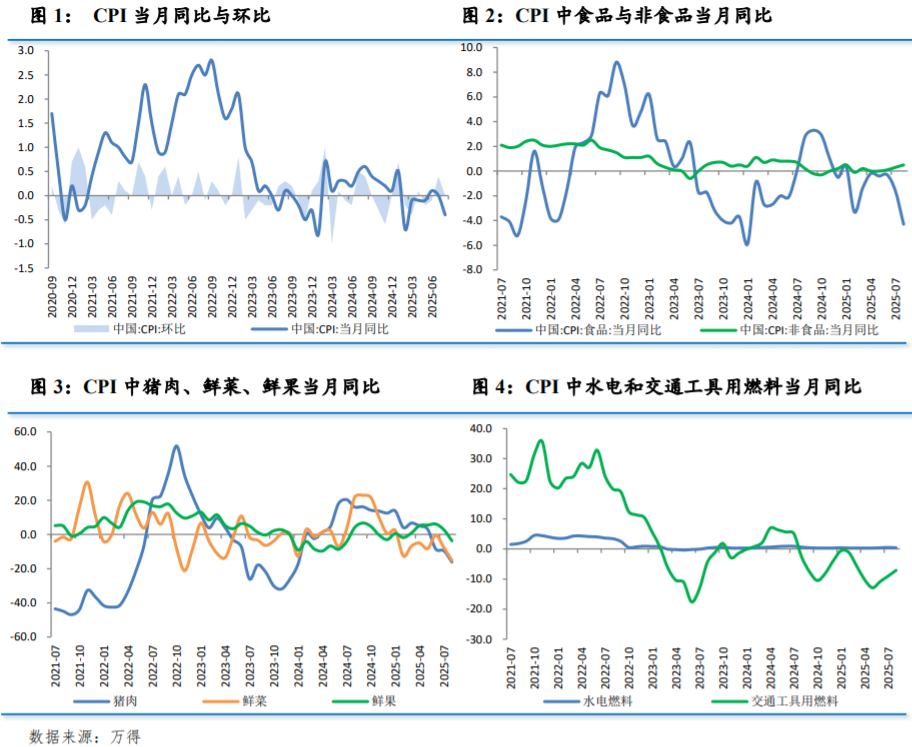
Core Insights - The article highlights the gradual improvement in supply-demand relationships due to policies aimed at expanding domestic demand, countering excessive competition, and developing new growth drivers [1][2]. CPI Analysis - In August, the Consumer Price Index (CPI) showed a flat month-on-month change and a year-on-year decline of 0.4%, influenced by falling food and energy prices [4]. - Food prices were weaker than seasonal trends, with a month-on-month increase of 0.5%, below the historical average of 1.5%. Pork prices fell by 0.5%, while egg prices rose by 1.5%, both lower than historical averages [4]. - Energy prices decreased due to lower international oil prices, with transportation fuel prices down by 0.9% month-on-month and 7.1% year-on-year [4]. - Core CPI improved, remaining flat month-on-month and increasing by 0.9% year-on-year, marking the fourth consecutive month of growth [4]. PPI Analysis - The Producer Price Index (PPI) showed signs of recovery, with a month-on-month change from a decline of 0.2% to flat, and a year-on-year decline of 2.9%, narrowing by 0.7 percentage points [12]. - Prices for production materials improved, with a month-on-month increase of 0.1% and a year-on-year decline of 3.2%, also narrowing by 1.1 percentage points [12]. - Specific industries saw price increases, such as coal processing prices rising by 9.7% month-on-month, indicating a positive trend in domestic market competition [13]. Future Outlook - The outlook suggests a moderate recovery in prices, driven by the continued effects of domestic demand expansion policies and improved market competition [14]. - CPI is expected to reflect a trend of "food and energy prices declining while core inflation rises," with seasonal factors likely to support a decrease in food prices [15]. - PPI may enter a recovery phase, supported by ongoing policy measures against excessive competition and improvements in export structures [15].
8月份核心CPI同比上涨0.9%
Zhong Guo Zheng Quan Bao· 2025-09-10 20:18
Core Insights - The Consumer Price Index (CPI) remained flat month-on-month in August, with a year-on-year decline of 0.4%, while the core CPI, excluding food and energy, rose by 0.9%, marking the fourth consecutive month of growth [1][2] - The Producer Price Index (PPI) showed a month-on-month stabilization after a 0.2% decline in the previous month, with a year-on-year decrease of 2.9%, which is a narrowing of the decline by 0.7 percentage points compared to the previous month [1][3] CPI Analysis - The year-on-year decline in CPI was primarily attributed to a high comparison base from the previous year and lower-than-seasonal food price increases in August [1][2] - Food prices fell by 4.3% year-on-year, with a significant impact on CPI, contributing approximately 0.51 percentage points to the decline [2] - The core CPI's growth indicates the effectiveness of policies aimed at expanding domestic demand and promoting consumption [2] PPI Analysis - The PPI's month-on-month stabilization is attributed to improved supply-demand relationships in certain industries, leading to price increases in energy and raw materials [2][3] - The year-on-year decline in PPI has narrowed due to a combination of lower comparison bases from the previous year and proactive macroeconomic policies [3] - Analysts suggest that PPI may enter a recovery phase, supported by improved market competition and rising demand for upgraded consumption [3]
8月CPI核心指标持续改善 PPI环比止跌持平
Zhong Guo Jing Ying Bao· 2025-09-10 12:18
Group 1 - In August, the Consumer Price Index (CPI) remained stable month-on-month but decreased by 0.4% year-on-year, while the core CPI, excluding food and energy, increased by 0.9% year-on-year, marking the fourth consecutive month of growth [1][2] - The Producer Price Index (PPI) showed a month-on-month stabilization after a 0.2% decline in July, with a year-on-year decrease of 2.9%, which is a narrowing of the decline by 0.7 percentage points compared to July [1][2] - The improvement in core CPI signals a positive consumption recovery, supported by policies aimed at expanding domestic demand and promoting consumption [1][4] Group 2 - The PPI's month-on-month stabilization and narrowing year-on-year decline are attributed to improved supply-demand structures and the effects of policy measures [2][4] - Certain industries, such as coal processing and black metal smelting, experienced price increases, contributing to the stabilization of the PPI [2][3] - The overall positive changes in price dynamics are expected to lay a solid foundation for future economic recovery, with ongoing effects from policies aimed at expanding domestic demand [4]
中信证券:预计下半年物价将温和回升,推动上市公司利润保持平稳
Xin Lang Cai Jing· 2025-09-01 00:54
Group 1 - The revenue growth rate of listed companies improved in Q2, but profit growth rate declined, reflecting the macroeconomic characteristic of "exchanging price for volume" [1] - It is expected that prices will moderately rebound in the second half of the year, supporting stable profit levels for listed companies [1] - The overseas revenue of listed companies significantly outperformed overall revenue in the first half of the year, driven by better-than-expected exports and accelerated overseas expansion of Chinese enterprises due to tariff conditions [1] Group 2 - External demand is expected to remain resilient in the second half of the year, with export-oriented and overseas expansion companies likely to maintain high levels of prosperity [1] - Capital expenditure of listed companies continued to decline in the first half of the year, particularly in the electric, machinery, and chemical industries, while the automotive sector saw a counter-cyclical rebound [1] - The "anti-involution" policy is expected to accelerate supply-side adjustments in the future [1] Group 3 - The average salary growth rate of listed companies slightly declined in the first half of the year, with industries such as military industry, agriculture, forestry, animal husbandry, and consumer services showing higher growth rates [1]

棉花市场:新棉供应偏紧,策略逢回调低多
Sou Hu Cai Jing· 2025-08-25 08:53
Group 1 - The People's Bank of China emphasizes the importance of promoting a reasonable recovery in prices as a key consideration for monetary policy, aiming to maintain prices at a reasonable level [1] - A new policy financial tool worth 500 billion yuan will be introduced, focusing on emerging industries and infrastructure, with participation from policy banks [1] - Domestic cotton inventory is decreasing faster than the same period last year, leading to increased tension by the end of September [1] Group 2 - The cotton market is experiencing tight supply before the new cotton harvest, with a possibility of rush harvesting in some areas, providing short-term support to the market [1] - The demand for cotton is expected to be observed as the "Golden September and Silver October" stocking season begins, with a recommendation to buy on dips [1] - The textile and apparel export data for July shows pressure, with markets in ASEAN, EU, and the US weakening both year-on-year and month-on-month [1]
【西街观察】降息在等待更佳时机
Bei Jing Shang Bao· 2025-08-20 15:11
Group 1 - The central bank has maintained the Loan Prime Rate (LPR) unchanged for three consecutive months since its decline in May, indicating a careful timing of policy adjustments in a complex economic environment [1] - The current interest rate environment supports the real economy, with new corporate loan rates around 3.2% and new personal housing loan rates around 3.1%, reflecting a decrease of approximately 45 and 30 basis points year-on-year, respectively [1] - The feedback from the market shows that the effects of previous low-interest rate policies are gradually being released, as evidenced by the recovery in M1 growth and the rise of the Shanghai Composite Index above 3700 points, indicating economic resilience and market confidence [1] Group 2 - In the context of uneven economic recovery, targeted tools are preferred over broad rate cuts to enhance policy effectiveness, avoiding inefficient capital allocation while injecting targeted momentum into specific weak areas [2] - Structural contradictions in the economy still leave room for future rate cuts, as there is a coexistence of insufficient domestic demand and excessive competition on the supply side, necessitating a moderately loose monetary policy [3] - The timing of potential rate cuts is crucial and should align with the pace of price recovery, as premature large cuts could lead to capital misallocation, while appropriate cuts could reinforce demand recovery and create a positive economic cycle [3]
国新国证期货早报-20250819
Guo Xin Guo Zheng Qi Huo· 2025-08-19 01:36
Report Summary 1. Market Performance on August 18, 2025 - **Stock Index Futures**: A-share market showed strong performance. The Shanghai Composite Index reached a ten-year high since August 2015, the Northbound 50 hit a record high, and the Shenzhen Component Index and ChiNext Index both exceeded their October 8, 2024 highs. The Shanghai Composite Index rose 0.85% to 3728.03 points, the Shenzhen Component Index rose 1.73% to 11835.57 points, and the ChiNext Index rose 2.84% to 2606.20 points. The trading volume of the two markets reached 2764.2 billion yuan, a significant increase of 519.6 billion yuan from the previous trading day. The CSI 300 Index closed at 4239.41, up 37.06 [1][2] - **Coke and Coking Coal Futures**: Coke weighted index oscillated weakly, closing at 1693.3, down 22.8. Coking coal weighted index was also weak, closing at 1174.0 yuan, down 34.1 [3][4] - **Other Futures**: - Zhengzhou Sugar 2601 contract rose due to stable spot prices and capital factors, despite the decline of US sugar on Friday. - Shanghai Rubber oscillated and adjusted due to large short - term gains, technical factors, and the decline of crude oil prices. - Palm Oil 2601 contract closed with a small increase, and the expected export volume from Malaysia from August 1 - 15 increased by 34.5% compared to the same period last month. - Shanghai Copper closed slightly down 0.01%, with limited macro - guidance and increased social inventory dragging down the price, but potential restocking demand restricted the decline. - Iron Ore 2601 contract closed down 0.64% at 772 yuan, with supply tightening and high iron - water production leading to a short - term oscillating trend. - Asphalt 2510 contract closed up 0.06% at 3473 yuan, with short - term demand difficult to improve and prices oscillating. - Cotton: Zhengzhou Cotton's night - session main contract closed at 14130 yuan/ton, and the cotton inventory decreased by 87 lots. - Logs: The 25091 contract opened at 817, closed at 811, and decreased by 1105 lots. The spot price in Shandong remained unchanged. - Steel: rb2510 closed at 3155 yuan/ton, hc2510 closed at 3419 yuan/ton. Steel futures may face short - term pressure due to poor fundamental improvement. - Alumina: ao2601 closed at 3171 yuan/ton, with supply expected to be in surplus in the second half of the year and prices oscillating. - Shanghai Aluminum: al2510 closed at 20595 yuan/ton. The expansion of US tariffs on aluminum derivatives affected the price, but the probability of a trend reversal is low [1][5][8] 2. Fundamental Information Coke - The sixth round of price increase has been implemented. The overseas demand for US Treasury bonds is resilient, with foreign investors' holdings reaching a new high in June, while India and Ireland's holdings declined. - Raw material inventory has increased. The current iron - water production is 240.66 tons, an increase of 0.34 tons. The coal mine inventory has no pressure, and the inventory has shifted downstream. The total coking coal inventory is increasing. - The average profit per ton of coke for 30 independent coking plants is 20 yuan/ton [5] Coking Coal - The price of Tangshan Mongolian 5 coking coal is 1230, equivalent to 1010 on the futures market. - The central bank's second - quarter monetary policy report aims to promote a reasonable increase in prices. - The mine - end inventory has increased, and the coking coal inventory has shifted downstream. The cumulative import growth rate has declined for three consecutive months, and the inventory is moderately high [5] Other Commodities - **Soybean Meal**: The supply of imported soybeans is abundant, and the oil - mill operating rate is high, with high inventory. The Brazilian premium has slightly declined, but the high price of US soybeans keeps the import cost high. There is an expected supply shortage in the fourth quarter [7] - **Pig**: It is currently the off - season for pork consumption, with weak terminal demand. The supply of suitable pigs has increased, and the overall situation is one of loose supply and demand [7] - **Palm Oil**: The expected export volume from Malaysia from August 1 - 15 increased significantly compared to the same period last month [8] - **Copper**: The social inventory increased at the beginning of the week, dragging down the price, but the potential restocking demand of downstream processing enterprises restricts the decline [8] - **Iron Ore**: The global shipment and arrival volume of iron ore decreased last week, and the iron - water production is at a relatively high level, resulting in a short - term oscillating price [8] - **Asphalt**: The capacity utilization rate increased last week, but the shipment volume decreased. The demand is affected by weather and funds, and the price is oscillating [9] - **Logs**: The import volume in July decreased year - on - year, and the futures price is affected by the increase in external quotes. The spot trading is weak [10] - **Steel**: The weekly output of five major steel products has increased for three consecutive weeks, the inventory has accumulated faster, and the apparent demand has declined to a new low since early March [11] - **Alumina**: The domestic operating capacity is high, the import window opens intermittently, and the supply is expected to be in surplus in the second half of the year, with inventory increasing [11] - **Aluminum**: The expansion of US tariffs on aluminum derivatives affects China's exports, but the impact is weaker than before. Considering the expected peak season in September and the expected interest - rate cut, the probability of a trend reversal is low [11]
21评论丨如何落实落细适度宽松的货币政策?
2 1 Shi Ji Jing Ji Bao Dao· 2025-08-18 22:41
Core Viewpoint - The People's Bank of China emphasizes the implementation of a moderately loose monetary policy to align with economic growth and price level expectations, while maintaining ample liquidity in the financial system [2][3]. Economic Outlook - Domestic economic conditions are improving, while uncertainties remain regarding overseas economic recovery. The growth in the second half of the year is expected to be supported by the acceleration of new growth drivers, continuous expansion of total demand, and more proactive macro policies [2][3]. Inflation Trends - The report indicates a moderate recovery in price levels, with positive factors increasing. It highlights the importance of promoting reasonable price recovery as a key consideration for monetary policy [3][6]. Monetary Policy Framework - The monetary policy remains focused on balancing multiple objectives, including short-term and long-term goals, growth stability and risk prevention, and internal and external equilibrium [3][4]. Credit Policy - The report calls for flexible measures to optimize the structure of credit, with a focus on maintaining ample liquidity and adjusting the pace of policy implementation based on economic conditions [4][5]. Liquidity Management - The report maintains the stance of ensuring ample liquidity but does not specify the use of certain monetary policy tools, indicating a potential shift towards a neutral loose policy orientation [5][6]. Structural Support - The report emphasizes the use of structural monetary policy tools to support technology innovation, consumption, small and micro enterprises, and stabilize foreign trade, with a particular focus on the housing market through guaranteed housing refinancing [6].