
地缘政治

Search documents
金属市场动荡之际再添变数!LME因故障推迟开盘 铜价单日暴涨11%后回落
智通财经网· 2026-01-30 10:59
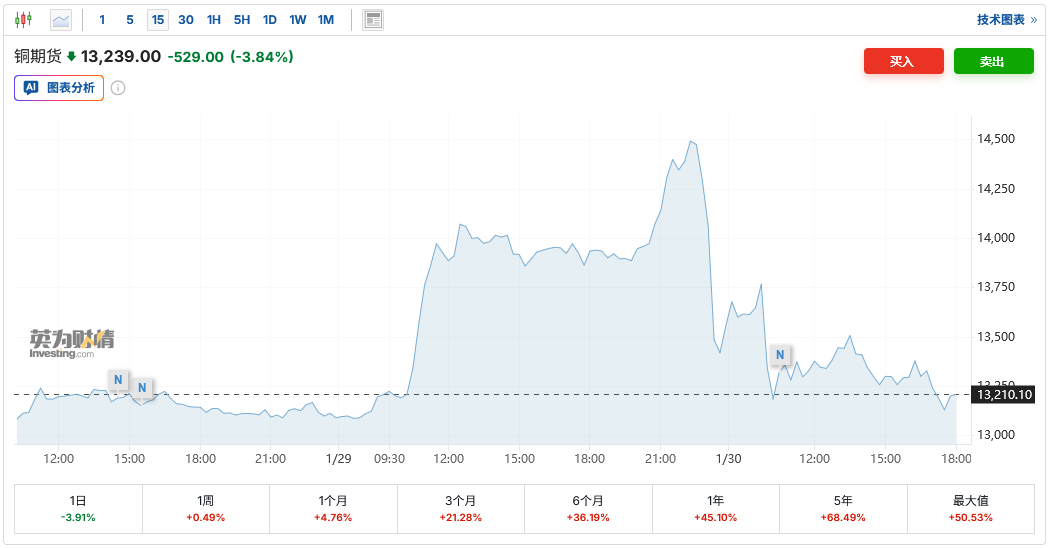
Core Viewpoint - The London Metal Exchange (LME) experienced a one-hour delay in opening due to a technical fault, adding uncertainty to an already volatile global metal market [1] Group 1: Market Volatility - The global metal market is facing extreme volatility driven by multiple factors, including U.S. military threats against Iran, renewed tariff threats from the White House, and a weakening dollar boosting demand for physical assets [2] - Copper prices surged by 11% in a single day, reaching a historical high of $14,500 per ton, before falling nearly 4% to $13,239 per ton after trading resumed [2] Group 2: Technical Issues - The LME stated that the delay was a precautionary measure after discovering a potential issue with a specific component during routine checks [1] - The incident has raised concerns about the reliability of the LME's trading systems, especially following previous disruptions in the market [5] Group 3: Analyst Insights - Citigroup analysts noted that while copper prices may rise in the short term, fundamental demand could pose challenges, with potential resistance to soaring prices due to increased scrap supply and demand destruction [4] - Market participants expressed that current expectations are overly uniform and adjustments are needed, leading to a preference for risk management and reduced participation [5]

大越期货沪铜早报-20260130
Da Yue Qi Huo· 2026-01-30 08:38
Report Industry Investment Rating - Not provided Core Viewpoints - The supply side of copper is disturbed with smelting enterprises reducing production and the scrap copper policy being relaxed. The December manufacturing PMI rose 0.9 percentage points to 50.1%, entering the expansion range, which is bullish. The spot price shows a discount to the futures, and the inventory has increased, which is neutral. The closing price is above the 20 - day moving average with the 20 - day moving average rising, and the main positions are net long but with long positions decreasing, both being bullish. Geopolitical disturbances remain, and copper prices have reached a new high and are currently fluctuating at a high level, so attention should be paid to position control [3]. - The global policy is loose and the mining end is in short supply, while the risks include natural disasters [4]. Key Points by Directory Daily View - The supply side of copper has disturbances and smelting enterprises have production - reducing actions. The scrap copper policy is relaxed. The December manufacturing PMI is 50.1%, up 0.9 percentage points from the previous month, entering the expansion range, which is bullish [3]. - The spot price is 100870 with a basis of -470, showing a discount to the futures, which is neutral [3]. - On January 23, copper inventory increased by 3450 to 171700 tons, and the SHFE copper inventory increased by 12422 tons to 225937 tons compared with last week, which is neutral [3]. - The closing price is above the 20 - day moving average, and the 20 - day moving average is rising, which is bullish [3]. - The main positions are net long, but long positions are decreasing, which is bullish [3]. - Geopolitical disturbances still exist, and the copper price has reached a new high and is currently fluctuating at a high level. Attention should be paid to position control [3]. Recent利多利空Analysis - Bullish factors: Global policy is loose and the mining end is in short supply [4]. - Bearish factors: The US comprehensive tariff exceeds expectations, and the global economy is not optimistic. High copper prices will suppress downstream consumption [5]. Supply - Demand Balance - In 2024, there is a slight surplus, and in 2025, it will be in a tight balance [19]. - The Chinese annual supply - demand balance table shows production, import, export, apparent consumption, actual consumption, and supply - demand balance data from 2018 to 2024. For example, in 2024, production is 12060000 tons, import is 3730000 tons, export is 460000 tons, apparent consumption is 15340000 tons, actual consumption is 15230000 tons, and there is a surplus of 110000 tons [21]. Other Information - The bonded area inventory has rebounded from a low level [13]. - The processing fee has declined [15].
Gold slumps 3%, but set for its strongest monthly gain since 1980
Invezz· 2026-01-30 06:45
Despite a sharp, more than 4% slide on Friday—fueled by rumors of a potentially more hawkish Federal Reserve chair—gold remains on course for its strongest monthly gain since 1980, as geopolitical and... ...

聚酯2月报:聚酯淡季创新高,需求端跟进不足-20260130
Yin He Qi Huo· 2026-01-30 04:42
1. Report Industry Investment Rating - No relevant content provided 2. Core Viewpoint of the Report - The valuation of polyester products has increased compared to 2025, but the current production capacity base is still large. In 2026, the growth rate of PTA downstream polyester production capacity will slow down, and the profits of the polyester industry chain are mainly distributed upstream. The market is sensitive to the supply changes of ethylene glycol at low prices, and the cost of oil can support the upward trend of the polyester sector in the short term. Without geopolitical catalysts, the upward space of the aromatic hydrocarbon sector is limited. The demand side has limited driving effect on the price of the polyester sector before the Spring Festival [4][68]. 3. Summary According to the Directory 3.1 Fundamental Situation 3.1.1 Aromatic Hydrocarbon Sector Strengthens, PX and TA Increase Positions and Rise in the Second Half of the Month - In late January, PX and TA futures increased positions and rose, and the valuation rebounded after a period of shock adjustment. The core factor for the new high of polyester raw materials in the off - season is that the investment cycle of TA has ended, and the market begins to trade the logic that the period of loose supply is coming to an end. In 2025, new PTA production capacity totaled 8.7 million tons, and the PTA production capacity in mainland China has been adjusted to 92.09 million tons. PTA will have a production vacuum period in 2026. There has been no new PX production capacity from 2023 - 2025, and there will be little new PX production capacity in 2026, mainly concentrated in the second half of the year. The growth rate of downstream polyester production capacity continues to slow down, with an expected new production capacity of 3.76 million tons in 2026 and a production capacity growth rate of 4.17% [3][9]. - The crude oil market has entered a stage of game between geopolitical risks and supply - demand fundamentals. OPEC+ maintains its production policy, and the political situation in Venezuela has changed. The market is more concerned about the potential supply risk interruptions of major oil - producing countries such as Russia and Iran. PX was under pressure in the first half of the month, and the spot market and paper - cargo structure performed poorly. The PX 3 - 5 month spread weakened, and the basis of TA also remained weak [14][15]. - In January, the economic benefits of PX plants were good, with PXN maintaining above $340/ton and the PX - MX spread between $160 - 180/ton. High benefits drove the return of supply, and PX plants at home and abroad increased their loads. The average monthly operating rate of PX in January was 90.9%, a month - on - month increase of 2.7% and a year - on - year increase of 5%. As of January 29, the operating rate of Asian PX was 81.6%, also at a high level over the years [21]. - Some PTA plants had equipment start - up and shutdown operations. The average monthly operating rate of PTA in January was 77.39%, a month - on - month increase of 3.9% and a year - on - year decrease of 2.33%. The TA processing margin rebounded to a relatively high level, and is currently around 450 yuan/ton [22]. 3.1.2 Ethylene Glycol Rebounds from a Low Level, Sensitive to Supply Changes at Low Prices - As of the 26th, the inventory of MEG in some main ports in East China was about 858,000 tons, and ethylene glycol had a significant inventory build - up in January. The market is sensitive to the supply changes of ethylene glycol at low prices. The lower boundary of ethylene glycol is around 3,700 yuan based on the marginal cost of coal - based plants. A 900,000 - ton/year ethylene glycol plant of Satellite Petrochemical plans to stop production and switch to PE production in mid - February. The planned ethylene glycol plants in 2026, such as Zhongsha Gulei and Huajin Aramco, are all scheduled to be put into operation in the second half of the year [35]. - The average monthly total load of ethylene glycol in January was 73.99%, a month - on - month increase of 1.76% and a year - on - year increase of 2.31%. The average monthly load of synthetic - gas - based ethylene glycol was 79.12%, a month - on - month increase of 4.96% and a year - on - year increase of 6.88%. Some overseas ethylene glycol plants had maintenance or shutdown operations. The import volume of ethylene glycol will decline to around 600,000 tons in March, and the inventory build - up expectation still exists, with insufficient upward driving force in the spot market [36]. 3.1.3 As the Spring Festival Approaches, More Polyester Plants Undergo Maintenance and Shutdown, and the Operating Rate of Terminals in Jiangsu and Zhejiang Decreases - As the Spring Festival approaches, the polyester load decreases, and most polyester plants have announced Spring Festival maintenance plans. The export orders of terminal textiles and clothing are average, and the inventory of grey cloth before the Spring Festival is high. The market is optimistic about the traditional peak season after the festival. The demand for polyester staple fiber from downstream draw - texturing and weaving enterprises decreases, and the inventory of staple fiber decreases rapidly. The inventory of filament production enterprises is controllable, and the market supply pressure is relatively small. After the maintenance of polyester bottle chips, the efficiency has improved significantly, and the inventory is also decreasing [49]. - In the process of the rise of polyester raw materials, the processing margin of bottle chips has expanded, the processing margin of staple fiber is basically maintained between 900 - 1,000 yuan/ton, and the processing margin of filament has changed little [49]. 3.1.4 Impact of Naphtha Consumption Tax on the Chemical Supply - Side - In 2026, there are news that the consumption tax on naphtha will be fully levied in the circulation link, changing from "direct supply at fixed points and direct exemption" to "levy first and then refund". The consumption tax needs to be prepaid by petrochemical plants in the procurement link, with a tax amount of 2,105 yuan per ton, and the subsequent tax - refund process may take several months. This will squeeze the production cost and profit space of petrochemical plants and increase the cost of ethylene, aromatic hydrocarbons and their derivatives [64]. - This policy aims to eliminate small and medium - sized production capacities with old equipment, backward technology and fragile capital chains, and guide the industry towards large - scale integrated refining and chemical projects. In the long run, the industry concentration will increase, and the industrial pattern will evolve towards large - scale, intensive and high - end directions [66]. 3.2 Market Outlook and Strategy Recommendation 3.2.1 Market Outlook - The valuation of the polyester sector has increased compared to 2025, but the production capacity base is still large. The growth rate of PTA downstream polyester production capacity will slow down in 2026, and the profits of the polyester industry chain are mainly distributed upstream. The market is sensitive to the supply changes of ethylene glycol at low prices, and the cost of oil can support the upward trend of the polyester sector in the short term. Without geopolitical catalysts, the upward space of the aromatic hydrocarbon sector is limited. The demand side has limited driving effect on the price of the polyester sector before the Spring Festival [4][68]. 3.2.2 Strategy Recommendation - Unilateral: Go long on PX and TA at low prices after the bullish sentiment cools down and corrects. Without the cooperation of cost - side crude oil driving, the upward driving force is not strong. Ethylene glycol maintains a wide - range shock, and pay attention to the switch between the market's trading of supply - surplus inventory build - up expectation and the rebound sentiment of the chemical sector [6][68]. - Arbitrage: Go long on PX and TA and short ethylene glycol. Pay attention to the positive - spread opportunity of ethylene glycol and shrink the TA processing margin at high prices [6][68]. - Options: Wait and see [6][68].
金价探底回升,黄金股ETF(159562)深度回调或迎上车机会
Sou Hu Cai Jing· 2026-01-30 04:12
Group 1 - Gold prices continued to decline, with COMEX gold futures dropping to $5145 before recovering to around $5264, leading to significant losses in resource stocks such as Xiaocheng Technology, Sichuan Gold, Zhongjin Gold, Tongling Nonferrous Metals, and Silver Nonferrous, with ETFs like Huaxia Gold (518850) down 6.39%, Nonferrous Metals ETF (516650) down 8.62%, and Gold Stock ETF (159562) down 9.82% [1] - The increase in gold prices this year has been driven by heightened geopolitical tensions, concerns over the independence of the Federal Reserve, and a growing government budget deficit, continuing the remarkable upward trend that began in 2023, primarily fueled by central bank gold purchases, loose monetary policy from the Federal Reserve, and buying from Asian investors [1] Group 2 - Looking ahead, gold prices are expected to serve as a real-time gauge of global political and economic uncertainty and credit risk premiums, with short-term movements closely following geopolitical events and medium-term fluctuations directly related to the coordination and contradictions of U.S. fiscal and monetary policies [2] - The long-term value of gold fundamentally depends on the evolution of the U.S. dollar credit system and the substantive process of diversifying global reserve assets, despite the need to be cautious of technical corrections and liquidity volatility at high price levels [2] - The role of gold has profoundly changed; it is no longer just a traditional safe-haven asset but also a core financial expression of the deep adjustments in globalization and the reassessment of sovereign credit [2]
光大期货能化商品日报(2026年1月30日)-20260130
Guang Da Qi Huo· 2026-01-30 03:40
1. Report Industry Investment Rating The report does not provide an overall industry investment rating. 2. Core Views of the Report - The current major driving factor for crude oil is geopolitical factors. With the U.S. increasing its military presence in the Middle East and potential actions against Iran, short - term oil prices are expected to fluctuate strongly [1]. - Fuel oil prices are affected by factors such as demand recovery, supply changes, and geopolitical situations. Short - term prices of FU and LU are volatile, and it is advisable to wait and see [3]. - For asphalt, with a slight decline in refinery production in February and weak demand in the off - season, attention should be paid to the speed of social inventory accumulation [3]. - The polyester sector has a situation of weak reality and strong expectation. It is expected to follow the cost - side fluctuations, and attention should be paid to oil price fluctuations and downstream negative feedback [5]. - Rubber prices are affected by production and consumption data, as well as cost - side factors. They are expected to follow the macro - environment and cost - side price fluctuations [5][7]. - Methanol supply is at a high level, and demand is weak. It is expected to maintain bottom - level fluctuations [7]. - Polyolefins are expected to gradually start accumulating inventory, but short - term prices are strong due to cost and geopolitical risks, showing wide - range fluctuations [8]. - PVC has a structure of weak reality and strong expectation. It is expected to maintain bottom - level fluctuations, with support in the short - term and upward pressure in the long - term [8]. 3. Summary According to Relevant Catalogs Research Views - **Crude Oil**: On Thursday, oil prices rose significantly. WTI March contract rose $2.21 to $65.42 per barrel, a 3.50% increase; Brent March contract rose $2.31 to $70.71 per barrel, a 3.38% increase; SC2603 closed at 480.9 yuan per barrel, up 13.9 yuan per barrel, a 2.98% increase. The U.S. has increased its military presence in the Middle East, and OPEC+ will hold a meeting on Sunday. The current major driving factor for oil prices is geopolitical factors, and short - term oil prices are expected to fluctuate strongly [1]. - **Fuel Oil**: On Thursday, the main fuel oil contracts on the Shanghai Futures Exchange rose. As of the week of January 26, Singapore's on - land fuel oil inventory decreased, while Fujeirah's inventory increased. The low - sulfur fuel oil market in Singapore is supported by demand, but there may be inventory accumulation pressure in the future. High - sulfur fuel oil has mixed factors. Short - term prices of FU and LU are volatile, and it is advisable to wait and see [3]. - **Asphalt**: On Thursday, the main asphalt contract on the Shanghai Futures Exchange rose. This week, domestic asphalt shipments decreased, and the capacity utilization rate of modified asphalt enterprises decreased. In February, refinery production is expected to decline slightly, and demand is weak in the off - season. Attention should be paid to the speed of social inventory accumulation [3]. - **Polyester**: TA605 and EG2605 closed down on Thursday. The production and sales of polyester yarn in Jiangsu and Zhejiang are weak. A polyester factory in Shandong has shut down for maintenance, and a MEG device in Fujian has restarted. The polyester sector has a situation of weak reality and strong expectation, and is expected to follow the cost - side fluctuations [5]. - **Rubber**: On Thursday, the main rubber contracts on the Shanghai Futures Exchange rose. According to the ANRPC December report, global natural rubber production decreased and consumption increased in December. The production of high - cis butadiene rubber increased slightly. Rubber prices are expected to follow the macro - environment and cost - side price fluctuations [5][7]. - **Methanol**: On Thursday, methanol spot prices showed different trends in different regions. Supply is at a high level, and demand is weak. MTO device load has decreased, and port inventory reduction is under pressure. It is expected to maintain bottom - level fluctuations [7]. - **Polyolefins**: On Thursday, polyolefin prices showed different trends. Supply is at a high level as some upstream maintenance devices have resumed production. Demand will weaken as downstream factories approach the Spring Festival holiday. It is expected to gradually start accumulating inventory, but short - term prices are strong due to cost and geopolitical risks, showing wide - range fluctuations [8]. - **Polyvinyl Chloride (PVC)**: On Thursday, PVC prices in different regions showed different trends. Supply is at a high level, and domestic demand is slowing down. PVC has a structure of weak reality and strong expectation. It is expected to maintain bottom - level fluctuations, with support in the short - term and upward pressure in the long - term [8]. Daily Data Monitoring The report provides the daily basis data of various energy - chemical products on January 30, 2026, including spot prices, futures prices, basis, basis rate, and their changes and historical quantiles [9]. Market News - Due to U.S. President Trump's consideration of military strikes against Iran, an OPEC member, crude oil prices rose by more than 3%. Trump is weighing targeted strikes against Iranian security forces and leaders to support anti - government protesters and create conditions for regime change [11]. - Trump has deployed the "Abraham Lincoln" aircraft carrier strike group to the Middle East and warned Iran that the time to reach an agreement on its nuclear program is running out. The market is worried that U.S. military intervention will lead to an interruption in regional crude oil supply, and potential supply risks continue to support oil prices [11]. Chart Analysis - **Main Contract Price**: The report provides the closing price charts of main contracts of various energy - chemical products from 2022 to 2026, including crude oil, fuel oil, low - sulfur fuel oil, asphalt, LPG, PTA, ethylene glycol, etc. [13][15][17] - **Main Contract Basis**: The report provides the basis charts of main contracts of various energy - chemical products from 2022 to 2026, including crude oil, fuel oil, low - sulfur fuel oil, asphalt, ethylene glycol, etc. [32][35][39] - **Inter - period Contract Spread**: The report provides the spread charts of inter - period contracts of various energy - chemical products, such as the spread between fuel oil 01 - 05 and 05 - 09 contracts, the spread between asphalt main and sub - main contracts, etc. [45][47][50] - **Inter - commodity Spread**: The report provides the spread charts of inter - commodity contracts of various energy - chemical products, such as the spread between crude oil internal and external markets, the spread between high - and low - sulfur fuel oils, etc. [61][64][66] - **Production Profit**: The report provides the production profit charts of various energy - chemical products, such as the production profit of LLDPE, the processing fee of PTA, etc. [68][70]
刚刚,黄仁勋否认
半导体行业观察· 2026-01-30 02:43
Core Viewpoint - Nvidia's CEO Jensen Huang refuted claims that the U.S. plans to transfer 40% of Taiwan's semiconductor capacity to the U.S., asserting that the construction of global fabs represents new capacity rather than a transfer of existing capacity [2] Group 1: Semiconductor Capacity and Production - Huang emphasized that TSMC must expand globally to meet the surge in AI-driven chip demand while maintaining Taiwan's core market status [2] - He explained that current wafer demand exceeds Taiwan's physical grid capacity, making overseas production a necessity rather than a political strategy [2] - Despite TSMC's plans to build and expand fabs in the U.S., Europe, and Japan, the majority of production will remain in Taiwan due to its unmatched manufacturing ecosystem [2] Group 2: Importance of Memory and Chip Supply - For Nvidia, substantial capacity in both Taiwan and the U.S. is crucial, with sufficient memory (HBM, DDR5, GDDR7, LPDDR5X, NAND flash) being as important as logic chip capacity [3] - Huang stated that the company is closely collaborating with major HBM suppliers—Samsung, SK Hynix, and Micron—to ensure chip supply for the next-generation AI accelerator, Rubin [3] Group 3: Geopolitical Considerations - Huang discussed the need for legislators to balance three conflicting goals: national security, technological leadership, and economic competitiveness [3] - He refuted comments from Anthropic's CEO regarding the export of advanced AI processors to China, clarifying that the U.S. government has determined that selling Nvidia's H200 processors to Chinese entities does not compromise national security [3] - Huang noted that the approval for these processors to enter the Chinese market now depends on the Chinese government, as Nvidia awaits regulatory approval [3] Group 4: Engagements in Taiwan - During his visit to Taiwan, Huang plans to attend internal Nvidia meetings and Lunar New Year events, as well as meet with TSMC founder Morris Chang and Chairman Mark Liu [3]


我大使摊牌,租借99年的达尔文港,若澳强制收回,中方将予以反制
Sou Hu Cai Jing· 2026-01-30 02:32
Core Viewpoint - The Darwin Port lease issue exemplifies the intertwining of international trade with national security and geopolitical factors, highlighting the complexities of China-Australia relations [1][3]. Group 1: Background of the Issue - The Darwin Port lease was awarded to Landbridge Group through a transparent bidding process for 99 years, aligning with Australian laws and regulations [1]. - Over the past decade, Landbridge has invested capital to turn around the port's previously loss-making operations, improving infrastructure and boosting the local economy [1]. Group 2: Geopolitical Context - The strategic location of Darwin Port makes it a focal point in the great power competition, particularly under pressure from Western nations like the United States [3]. - Australia is attempting to elevate commercial issues to the level of national security, linking Landbridge's investment to potential security risks without providing substantial evidence [3]. Group 3: Implications for Australia - Australia's contradictory stance of relying on Chinese markets for agricultural and mineral exports while appeasing external pressures raises questions about its economic interests [3]. - The potential unilateral actions by Australia could lead to significant repercussions, including loss of international credibility and substantial penalties for breach of contract [3][5]. Group 4: Path Forward - A rational solution lies in adhering to the spirit of contracts and returning to the essence of business, which could lead to mutual benefits for both China and Australia [5]. - Respecting the legitimate rights of Chinese enterprises is essential for attracting foreign investment and achieving sustainable economic development in Australia [5]. Group 5: Broader Reflections - The Darwin Port incident serves as a profound reflection on global economic order and international relations, emphasizing the need for rational communication and practical dialogue [5][7]. - The future development of this situation will be a measure of Australia's diplomatic rationality and the credibility of its business environment [7].
铜价高位震荡运行
Bao Cheng Qi Huo· 2026-01-30 01:38
1. Report's Investment Rating for the Industry - There is no information provided regarding the report's investment rating for the non - ferrous metals (copper) industry. 2. Core Viewpoints of the Report - The Shanghai Copper main contract has been continuously trading above 100,000 yuan/ton, and the LME copper price has been fluctuating around $13,000/ton. The market shows a "near - weak, far - strong" futures - spot structure, with converging monthly spreads of futures contracts and continuous accumulation of domestic electrolytic copper social inventories, indicating pressure on the spot market and cautious downstream procurement, while forward contracts remain strong due to expected supply - demand tightness [6][63]. - The global financial environment is shifting towards easing. Major economies are adopting looser monetary policies, releasing large - scale liquidity, leading to an upswing in global stock and commodity markets. Copper has stood out in this asset rally, breaking through the post - 2020 infinite QE high in Q4 2025, supported by its solid supply - demand fundamentals [6][63]. - In 2026, against the backdrop of macro - easing, rigid supply constraints and green intelligent demand will continue to drive up copper prices, strengthening the long - term upward foundation for copper prices. However, frequent global geopolitical events since the New Year and the significant price increase since December 2025 have led to strong short - term profit - taking intentions. Copper prices may oscillate at high levels, waiting for the industry to catch up [6][64]. 3. Summary by Report Sections 3.1 Market Review - Price Trend: The Shanghai Copper main contract has been trading above 100,000 yuan/ton, and the LME copper price has been fluctuating around $13,000/ton. The trading volume of Shanghai Copper reached 700,000 contracts at one point and then declined as the upward trend of copper prices slowed [9]. - Market Structure: The market shows a "near - weak, far - strong" futures - spot structure. Converging monthly spreads of futures contracts and continuous inventory build - up in the domestic electrolytic copper market indicate pressure on the spot market and cautious downstream procurement, while forward contracts remain strong due to expected supply - demand tightness [10]. 3.2 Macroeconomic Analysis 3.2.1 Fluctuating Expectations of Fed Rate Cuts - In January 2026, the market's expectation of a Fed rate cut in March or April dropped from around 50% at the beginning of the month to below 30% by the end of the month. The decline in the rate - cut probability was accompanied by a rebound of the US dollar index, which then weakened due to the intensification of US tariff policies towards Europe and South Korea [14]. 3.2.2 Frequent Geopolitical Events - Since the New Year, geopolitical events such as the US military action in Venezuela, the tense situation in Iran, and the Greenland issue have increased gold prices and reduced market risk appetite, negatively affecting copper prices. These ongoing geopolitical hotspots have created a high - risk, low - certainty international environment that suppresses the risk appetite of the global market and exerts downward pressure on copper prices [15]. 3.2.3 Domestic Macroeconomic Easing and High - Quality Industrial Development - In January 2026, China's fiscal, monetary, and industrial policies were coordinated to support domestic demand, scientific innovation, and market expectations, providing a solid macro - policy foundation for copper's downstream demand. - The State Grid plans to invest 4 trillion yuan during the 14th Five - Year Plan period (2026 - 2030), a 40% increase from the previous period, which will drive copper consumption through ultra - high - voltage, distribution network, and new energy sectors and strengthen copper's strategic position in energy transformation [17]. 3.3 Industry Analysis 3.3.1 Persistent Disturbances at the Mining End - From January to November 2025, the global copper mine production increased by only about 1% year - on - year. Some major copper mines faced declining ore grades and unexpected incidents, which restricted production growth. - In Chile, the total production decreased by 1.3% due to the decline in some mines. In Peru, production increased by 2.4% due to the increase in several mines. In the Democratic Republic of the Congo, production was estimated to increase by 6.5%. Mongolia's copper concentrate production increased by 34%, while Indonesia's production decreased by about 40% [18][19]. 3.3.2 Marginal Relaxation of Domestic Mining Supply - On January 23, 2026, the domestic copper concentrate port inventory was 569,000 tons, a decrease of about 100,000 tons month - on - month and about 140,000 tons year - on - year, indicating tightening domestic copper ore supply. The high sulfuric acid price and low TC processing fees in January led to a decline in smelter profits compared to December [20][25]. 3.3.3 Contraction of Refined Copper Supply - From January to November 2025, the global electrolytic copper production was 26.177 million tons, a 3.81% increase year - on - year, with primary copper increasing by 3.08% and recycled copper by 7.44%. China and the Democratic Republic of the Congo (accounting for about 57% of global production) are expected to have a combined growth of 9%, while the rest of the world's refined copper production decreased by about 1.7% [26][27]. - The global electrolytic copper consumption from January to November 2025 was 25.89 million tons, a 3.96% increase year - on - year. China's apparent demand for refined copper is expected to increase by about 5.5%, with a 11% decline in net imports. Ex - China consumption increased by about 1.8% [30][31][32]. 3.3.4 Counter - seasonal Inventory Build - up of Electrolytic Copper - As of January 26, 2026, the global exchange inventory was 962,100 tons, an increase of 210,400 tons from the previous month and 510,400 tons from the same period last year. There was a significant divergence between domestic and overseas inventories, with overseas inventories rising continuously at a high level and domestic inventories building up seasonally [41][44]. 3.3.5 Downstream End - Users - Power grid infrastructure construction underpins about 50% of copper's terminal consumption. The State Grid's planned investment of 4 trillion yuan during the 14th Five - Year Plan period will drive copper consumption through ultra - high - voltage, distribution network, and new energy sectors [46][48]. - In 2025, from January to November, the cumulative new photovoltaic installed capacity was 274.89GW, a 33.25% increase year - on - year, and the cumulative new wind power installed capacity was 82.5GW, a 59.42% increase year - on - year. - In 2025, the real estate industry showed negative growth in development investment, new construction area, sales area, and completion area. - In 2025, the production of air conditioners, refrigerators, and washing machines increased slightly, while home appliance exports decreased by 0.6% year - on - year. - In 2025, China's automobile production was 34.7785 million vehicles, a 9.8% increase year - on - year, and the new energy vehicle production was 16.524 million vehicles, a 25.1% increase year - on - year, with a penetration rate of 47.51% [51][55][58][61]. 3.4 Conclusion - The Shanghai Copper main contract has been trading above 100,000 yuan/ton, and the LME copper price has been fluctuating around $13,000/ton. The market shows a "near - weak, far - strong" futures - spot structure. - The global financial environment is shifting towards easing, and copper has outperformed in the asset rally due to its solid supply - demand fundamentals. - In 2026, copper prices have a solid long - term upward foundation but may oscillate at high levels in the short term due to geopolitical events and profit - taking intentions [63][64].
格林大华期货早盘提示:贵金属-20260130
Ge Lin Qi Huo· 2026-01-30 01:37
1. Report Industry Investment Rating - Not provided 2. Core Viewpoints - The market for precious metals, including gold and silver, is volatile but shows a bullish trend. The continuous geopolitical and economic uncertainties have boosted the safe - haven demand, increasing the attractiveness of gold as a safe - haven asset, and silver also has industrial demand support. The report suggests that long - position holders should continue to hold their positions while controlling risks [1][2] 3. Summary by Related Catalogs 3.1 Market Quotes - COMEX gold futures rose 1.32% to $5410.80 per ounce, and COMEX silver futures rose 1.98% to $115.78 per ounce. The Shanghai gold main contract fell 1.38% to 1202 yuan per gram, and the Shanghai silver main contract rose 2.1% to 30358 yuan per kilogram [1] - On January 29, the COMEX gold futures once reached a record high of $5600 and then plunged, with a decline of nearly 9% from the daily high, and then the decline narrowed. COMEX silver reached a record high of $121 and then tumbled more than 12% before rebounding sharply [2] 3.2 Important Information - As of January 29, the holdings of the world's largest gold ETF - SPDR Gold Trust decreased by 3.43 tons from the previous day to 1086.53 tons, and the holdings of the world's largest silver ETF - iShares Silver Trust decreased by 112.76 tons to 15523.36 tons [1] - According to CME's "FedWatch", the probability of the Fed cutting interest rates by 25 basis points in March is 13.4%, and the probability of keeping interest rates unchanged is 86.6%. The probability of the Fed cutting interest rates by 25 basis points cumulatively in April is 25.5%, the probability of keeping interest rates unchanged is 72.2%, and the probability of cutting interest rates by 50 basis points cumulatively is 2.2% [1] - CME raised the margin levels for gold, copper, and some aluminum futures, and also raised the margin ratio for some silver contracts starting from January 28 [1][2] - The World Gold Council reported that the total global gold demand reached a new high last year, and central banks around the world net - purchased 230 tons of gold in the fourth quarter of 2025 [1] - The number of initial jobless claims in the US last week was 209,000, with an estimate of 205,000, and the previous value was revised from 200,000 to 210,000 [1] - US President Trump and Senate Democrats reached an agreement on Thursday to avoid a long - term shutdown of most federal government departments [1] 3.3 Market Logic - On January 28, the Fed decided to keep the federal funds target rate unchanged at its January meeting, in line with market expectations. After the dispute between the US and Europe over Greenland eased, the US surrounded Iran with heavy troops. The continuous geopolitical and economic uncertainties have boosted the safe - haven demand, increasing the attractiveness of gold as a safe - haven asset, and silver also has industrial demand support [1] - The US President's criticism of the Fed threatening the central bank's independence and the deterioration of US - Europe relations have also intensified market risk - aversion sentiment. From January 19 to January 27, the US dollar index declined continuously, and the weakening of the US dollar also promoted the rise of the precious metals market. After the US Treasury Secretary supported the US dollar, the US dollar index rebounded on Wednesday. On January 29, the US dollar index closed down 0.19% at 96.16 [1][2] 3.4 Trading Strategy - The short - term volatility of precious metals has increased. Long - position holders should continue to hold their positions and pay attention to risk control [2]