
供给侧改革

Search documents
“反内卷”激发供改猜想,有色龙头ETF(159876)盘中涨超2.3%!机构:建议把握四条主线!
Xin Lang Ji Jin· 2025-07-21 03:35
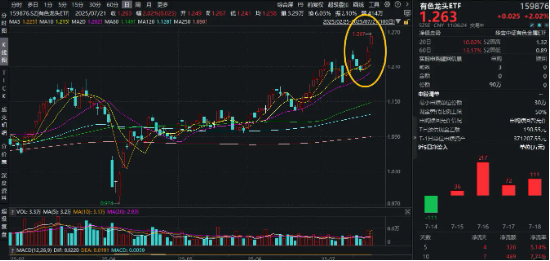
7月21日,揽尽有色金属行业龙头的有色龙头ETF(159876)场内价格涨幅盘中上探2.34%,现涨 2.02%,再度刷新年内高点(1.267元)!当前,有色龙头ETF(159876)已获资金实时净申购90万 份! 成份股方面,雅化集团、盛和资源涨停,北方稀土、中孚实业涨超6%,中色股份、天山铝业、西藏矿 业涨逾5%。 消息面上,7月18日,工信部宣布将出台有色金属等十大重点行业稳增长工作方案,重点推动"调结构、 优供给、淘汰落后产能"。该政策被视为2016年供给侧改革的延续,旨在解决产能过剩导致的低价无序 竞争问题。 市场分析人士指出,光伏、水泥等行业已通过主动减产响应政策,有色行业紧随其后,市场预期铜、 铝、锂等品种的过剩产能将加速出清。 中信建投表示,工信部消息一出,有色金属价格全面上涨,越是过剩的行业表现越是强势,如氧化铝、 锌。尽管未知方案具体内容,但从调结构、优供给、淘汰落后产能的工作侧重点来看,对供应端的约束 会推高金属底部重心。 基本面上,截至7月20日,有色龙头ETF(159876)覆盖的60只有色金属行业龙头上市公司中,已有27 家披露2025年中报业绩预告,其中22家预告盈利,占比超八成 ...


宏观面偏好,铅价企稳修复
Tong Guan Jin Yuan Qi Huo· 2025-07-21 03:12
Group 1: Report Industry Investment Rating - Not provided in the given content Group 2: Core Viewpoints of the Report - The macro - situation is neutrally positive, while there are more negative factors in the fundamentals. The impact of tariffs on battery exports is uncertain, consumption improvement is limited, and inventory has increased, putting pressure on lead prices. However, after the decline in lead prices, cost - side support emerges, and the elimination of backward production capacity by high - quality domestic supply is expected to improve the oversupply situation in the lead market. It is expected that lead prices will fluctuate with a slight upward trend in the short term. Attention should be paid to policy changes and consumption improvement [3][7] Group 3: Summary by Directory Transaction Data - From July 11th to July 18th, the SHFE lead price dropped from 17,075 yuan/ton to 16,820 yuan/ton, a decrease of 255 yuan/ton; the LME lead price fell from 2,017 dollars/ton to 2,011.5 dollars/ton, a decrease of 5.5 dollars/ton; the Shanghai - London ratio decreased from 8.47 to 8.36; the SHFE inventory increased from 55,149 tons to 62,335 tons, an increase of 7,186 tons; the LME inventory rose from 249,375 tons to 268,400 tons, an increase of 19,025 tons; the social inventory increased from 63,400 tons to 69,000 tons, an increase of 5,600 tons; the spot premium increased from - 225 yuan/ton to - 195 yuan/ton, an increase of 30 yuan/ton [4] Market Review - Last week, the price of the main SHFE lead contract PB2508 fluctuated and declined, with both domestic and foreign inventories rising simultaneously. The increase in tariffs on Chinese battery exports by Middle - Eastern countries dragged down the demand outlook. The lead price broke below the 17,000 - yuan mark and ended at 16,820 yuan/ton, a weekly decline of 1.49%. On Friday night, it opened and closed higher. The strengthening of the US dollar and the significant increase in LME inventory dragged down the LME lead price, which continued to decline from 2,050 dollars/ton and then stabilized and rebounded on Thursday and Friday, finally closing at 2,011.5 dollars/ton, a weekly decline of 0.27%. In the spot market, on July 18th, the lead prices in the Shanghai and Jiangsu - Zhejiang markets were at a discount to the SHFE 2508 contract. Some smelting enterprises held firm on prices due to inventory reduction, and the price difference between the north and the south narrowed. The downstream demand was more inclined to the primary lead market [5] Industry News - As of July 11th, the weekly processing fee for domestic lead concentrates was reported at 500 yuan/metal ton, a decrease of 50 yuan/metal ton compared to the previous week; the weekly processing fee for imported lead concentrates was - 50 dollars/dry ton, remaining unchanged from the previous week. In mid - August 2024, the Technical Secretariat for International Trade Anti - Damage Actions of the GCC announced an anti - dumping investigation into lead - acid batteries originating from or imported from China or Malaysia. According to the latest news, Middle - Eastern countries will impose different levels of tariffs on relevant Chinese lead - acid battery enterprises, with tariff ranges of 25 - 40%, 50 - 65%, and 55 - 70%, and 40 - 65% for other cooperative Chinese enterprises [8] Related Charts - The report presents multiple charts including SHFE and LME lead prices, the Shanghai - London ratio, SHFE and LME inventories, 1 lead premium and discount, LME lead premium and discount, the price difference between primary lead and recycled refined lead, waste battery prices, recycled lead enterprise profits, lead ore processing fees, electrolytic lead production, recycled refined lead production, lead ingot social inventory, and refined lead import profit and loss [10][12][13]
宝城期货甲醇早报-20250721
Bao Cheng Qi Huo· 2025-07-21 03:02
投资咨询业务资格:证监许可【2011】1778 号 | 品种 | 短期 | 中期 | 日内 | 观点参考 | 核心逻辑概要 | | --- | --- | --- | --- | --- | --- | | 甲醇 2509 | 震荡 | 震荡 | 震荡 偏强 | 偏强运行 | 煤炭期价反弹,甲醇震荡偏强 | 备注: 1.有夜盘的品种以夜盘收盘价为起始价格,无夜盘的品种以昨日收盘价为起始价格,当日日盘收盘 价为终点价格,计算涨跌幅度。 2.跌幅大于 1%为下跌,跌幅 0~1%为震荡偏弱,涨幅 0~1%为震荡偏强,涨幅大于 1%为上涨。 3.震荡偏强/偏弱只针对日内观点,短期和中期不做区分。 晨会纪要 宝城期货甲醇早报-2025-07-21 品种晨会纪要 时间周期说明:短期为一周以内、中期为两周至一月 仅供参考,不构成任何投资建议 主要品种价格行情驱动逻辑—商品期货能源化工板块 甲醇(MA) 日内观点:震荡偏强 中期观点:震荡 参考观点:偏强运行 核心逻辑:国内甲醇产能持续释放,内部供应压力有增无减。叠加海外船货不断到港,外部供应预 期逐渐增大,港口迎来累库周期,而下游需求则步入淡季,供需结构趋于宽松。在经历前期 ...
国泰君安期货所长早读-20250721
Guo Tai Jun An Qi Huo· 2025-07-21 02:48
Group 1: Report Industry Investment Rating - Not mentioned in the provided content Group 2: Core Viewpoints of the Report - The policy focus in the second half of this year is clear, aiming to repair the supply - demand mismatch pressure through "anti - involution" and "anti - deflation", improve the sluggish nominal growth rate, and address industrial homogenization competition and local protection issues for high - quality development. In the early stage of policy implementation, expectations outweigh reality, and the market may follow a similar logic to stock market valuation expansion. Later, expectations will give way to reality, and price performance will fluctuate according to actual situations [6] Group 3: Summary by Related Catalogs Metals - **Gold and Silver**: Gold is expected to oscillate upward, and silver to break through and rise. The trend intensities of gold and silver are both 1 [11][17][21] - **Copper**: Market sentiment is positive, supporting copper prices. The trend intensity is 0 [11][22][24] - **Zinc**: Zinc is in a range - bound oscillation. The trend intensity is 0 [11][25][27] - **Lead**: Supply - demand contradictions are gradually emerging, and lead prices are strengthening. The trend intensity is 1 [11][28][29] - **Tin**: Tin prices are weakening. The trend intensity is - 1 [11][32][35] - **Aluminum, Alumina, and Casting Aluminum Alloy**: Aluminum is expected to oscillate strongly, alumina has capital inflows, and casting aluminum alloy follows electrolytic aluminum. The trend intensities of aluminum, alumina, and casting aluminum alloy are 0, 1, and 0 respectively [11][36][38] - **Nickel and Stainless Steel**: Macro - sentiment boosts nickel expectations, but reality limits its upward space. Stainless steel prices oscillate due to the game between reality and macro - factors. The trend intensities of nickel and stainless steel are both 0 [11][39][43] Energy - related - **Carbonate Lithium**: Attention should be paid to lithium mining industry policies, and carbonate lithium is expected to run strongly. The trend intensity is 1 [11][44][46] - **Industrial Silicon and Polysilicon**: Industrial silicon is de - stocking in supply and demand, and the market is resistant to decline. Polysilicon has an upward - driving force due to sentiment fermentation. The trend intensities of industrial silicon and polysilicon are 0 and 1 respectively [11][47][50] - **Iron Ore**: Supported by macro - expectations, iron ore is in a strong - oscillating state. The trend intensity is 1 [11][51][52] - **Rebar and Hot - Rolled Coil**: Market sentiment remains high, and both rebar and hot - rolled coil are in wide - range oscillations. The trend intensities of rebar and hot - rolled coil are both 0 [11][56][59] - **Silicon Ferrosilicon and Manganese Silicon**: The market trading atmosphere is strong, and both are in wide - range oscillations. The trend intensities of silicon ferrosilicon and manganese silicon are both 0 [11][60][62] - **Coke and Coking Coal**: Coke has completed a round of price increases and is oscillating strongly. Coking coal is also oscillating strongly. The trend intensities of coke and coking coal are 0 and 1 respectively [11][64][67] - **Steam Coal**: Daily consumption is recovering, and steam coal is oscillating and stabilizing. The trend intensity is 0 [11][69][72] Others - **Log**: Log is in a wide - range oscillation [11][73]
新世纪期货交易提示(2025-7-21)-20250721
Xin Shi Ji Qi Huo· 2025-07-21 02:26
Report Industry Investment Ratings - Iron ore: Upward [2] - Coking coal and coke: Upward [2] - Rolled steel and rebar: Oscillating strongly [2] - Glass: Upward [2] - Soda ash: Oscillating [2] - CSI 50: Rebound [2] - CSI 300: Oscillating [2] - CSI 500: Upward [4] - CSI 1000: Upward [4] - 2-year Treasury bond: Oscillating [4] - 5-year Treasury bond: Oscillating [4] - 10-year Treasury bond: Rebound [4] - Gold: High-level oscillation [4] - Silver: Strong operation [4] - Pulp: Oscillating [6] - Logs: Strongly oscillating [6] - Soybean oil: Oscillating more [6] - Palm oil: Oscillating more [6] - Rapeseed oil: Oscillating more [6] - Soybean meal: Oscillating more [6] - Rapeseed meal: Oscillating more [6] - Soybean No. 2: Oscillating more [6] - Soybean No. 1: Oscillating more [6] - Live pigs: Oscillating weakly [7] - Rubber: Oscillating [9] - PX: Wait-and-see [9] - PTA: Wait-and-see [9] - MEG: Short at high prices [9] - PR: Wait-and-see [9] - PF: Wait-and-see [9] Core Views of the Report The report analyzes the market trends of various commodities and financial products on July 21, 2025. It is believed that the "anti-involution" policy has boosted the sentiment of the black market, the iron ore market is temporarily stable in the short term but oversupplied in the long term, the coking coal and coke market is expected to be strong in the short term, and the steel market is affected by policies and demand and may fluctuate strongly. In the financial market, with the improvement of China's economic data and the implementation of positive policies, the stock index is expected to rise, and the bond market may be volatile. Precious metals are affected by factors such as interest rates, geopolitics, and central bank purchases and are expected to maintain high-level oscillations. In the agricultural and light industrial product markets, the prices of logs and some oils and meals are expected to be strong, while the prices of live pigs are expected to be weak. The rubber market is in a state of supply and demand adjustment and is expected to oscillate widely. Summaries by Relevant Catalogs Black Industry - **Iron ore**: The "anti-involution" policy has boosted market sentiment, and the iron ore price has risen significantly. The end-of-season impulse of mines is basically over, and global iron ore shipments have declined to some extent. The near-term arrivals have increased month-on-month due to the previous high shipments, and the supply remains loose. In the off-season of the industry, the output of five major steel products has decreased, but the molten iron output has increased by 26,300 tons to 2.4244 million tons month-on-month, and the iron ore port inventory has slightly increased. In the long term, the supply of iron ore is expected to gradually increase, the demand will remain relatively low, and the port inventory will enter the accumulation channel, with the pattern of oversupply remaining unchanged. Due to short-term sentiment disturbances, the iron ore price has risen significantly and broken through the 750 yuan/ton mark, and it is expected to be strong [2]. - **Coking coal and coke**: After the first round of price increases, the cost of coke still faces pressure, and the market's expectation of future price increases has strengthened. With the molten iron output remaining high, the current fundamentals of coke are relatively healthy, and the futures price is expected to oscillate strongly in the short term. The overall operation of coking plants is stable, with smooth shipments, and the enthusiasm of traders to purchase goods remains high, resulting in a slightly tight supply of spot goods. With the arrival of high temperatures and the rainy season in various regions, downstream demand has weakened, but the current profitability is still acceptable, and the overall enthusiasm for operation is good, with the molten iron output continuing to rise. Currently, steel mills' enthusiasm for purchasing coke has slightly increased. The current supply of coke spot goods is tight, and the price of upstream coking coal still has support. It is expected that the coke price will remain strong in the short term. Attention should be paid to the trends of molten iron and the supply side of coking coal and coke in the later stage [2]. - **Rolled steel and rebar**: The "anti-involution" has triggered a rise in the positive sentiment on the supply side. Although the Central Urban Work Conference did not meet expectations, the expectation of stable growth in the steel industry has continued to boost market sentiment, and the futures price has continued to rise. In the off-season, the demand for building materials has declined month-on-month. The profits of five major steel products are acceptable, and the output has declined month-on-month. The pressure on the total steel inventory is not obvious, and the supply-demand contradiction is not prominent. In June, infrastructure was weak, real estate was stable, and exports were strong, basically in line with previous expectations. External demand exports were overdrawn in advance, and real estate investment continued to decline. Total demand is unlikely to show an anti-seasonal performance. On the basis of no increase in total annual demand, an obvious pattern of high in the front and low in the back will be formed. In the short term, the expectation of stable growth in the steel industry has improved market sentiment. Attention should be paid to whether more policies will be introduced at the Politburo meeting at the end of July. Finished steel products are currently supported by the macro and policy aspects [2]. - **Glass**: The "anti-involution" trading may continue, and the Politburo meeting is approaching, with the macro situation being neutral and strong. On the demand side, the glass deep-processing orders have weakened slightly month-on-month, but the speculative demand brought by the rising futures price is relatively strong. On the supply side, the output is expected to increase after the glass produced by the previously ignited production lines comes out, and the pressure on the supply side still exists. To meet the seasonal destocking of glass, the daily melting volume needs to be reduced to below 154,000 tons. There are many disturbances in market sentiment. The inventory of glass in the middle and lower reaches is low, with room for replenishment, but the rigid demand has not recovered. In the long term, the real estate industry is still in the adjustment cycle, and the year-on-year decline in the completed floor area of houses is relatively large, making it difficult for the glass demand to rebound significantly. In the short term, continuous observation is needed to see if the actual demand can improve [2]. Financial Market - **Stock index futures/options**: On the previous trading day, the CSI 300 index rose by 0.60%, the CSI 50 index rose by 0.74%, the CSI 500 index rose by 0.28%, and the CSI 1000 index rose by 0.25%. Funds flowed into the basic metals and fertilizer and pesticide sectors, while funds flowed out of the electronic components and automobile parts sectors. The G20 Finance Ministers and Central Bank Governors Meeting was held in Durban, South Africa. China will implement a more proactive fiscal policy and expand high-level opening up in the second half of the year. The Ministry of Commerce responded to the US approval of the sale of NVIDIA H20 chips to China, emphasizing that cooperation and win-win results are the right path. The market's risk aversion sentiment has eased, and it is recommended to hold long positions in stock index futures [2][4]. - **Treasury bonds**: The yield to maturity of the 10-year Chinese government bond remained unchanged, FR007 decreased by 4 basis points, and SHIBOR3M remained unchanged. The central bank conducted 187.5 billion yuan of 7-day reverse repurchase operations at a fixed interest rate, with a net investment of 102.8 billion yuan on the day. The market interest rate is consolidating, and the Treasury bond price has rebounded slightly. It is recommended to hold long positions in Treasury bonds with a light position [4]. - **Precious metals**: - **Gold**: In the context of a high-interest rate environment and the reconstruction of globalization, the pricing mechanism of gold is shifting from being centered on real interest rates to being centered on central bank gold purchases. The actions of central banks to purchase gold are crucial, reflecting the concentration of "decentralization" and risk aversion needs. In terms of monetary attributes, Trump's "Make America Great Again" bill has been successfully passed, which may exacerbate the US debt problem and lead to cracks in the US dollar's currency credit. In the process of de-dollarization, the de-fiat currency attribute of gold is prominent. In terms of financial attributes, in the global high-interest rate environment, the substitution effect of gold as a zero-yield bond for bonds has weakened, and its sensitivity to the real interest rate of US Treasury bonds has decreased. In terms of risk aversion attributes, although the geopolitical risk has weakened marginally, Trump's tariff policy has intensified global trade tensions, and the market's risk aversion demand remains strong, which has become an important factor in boosting the gold price in stages. In terms of commodity attributes, the demand for physical gold in China has increased significantly, and the central bank has restarted gold purchases since November last year and has increased its holdings for eight consecutive months. Currently, the logic driving the rise of the gold price has not completely reversed. The Fed's interest rate policy and tariff policy may be short-term disturbing factors. It is expected that the Fed's interest rate policy will be more cautious this year, and the evolution of the tariff policy and geopolitical conflicts will dominate the change in market risk aversion sentiment. According to the latest US data, the non-farm payrolls data shows that the labor market is relatively resilient, with the non-farm employment population exceeding market expectations and the unemployment rate dropping to 4.1%. The PCE data in May shows that the inflation data has slowed down, with the core PCE rising by 2.7% year-on-year, exceeding market expectations, and the PCE rising by 2.3% year-on-year, in line with market expectations, indicating the resilience of core inflation. The CPI in June rose by 2.7% year-on-year, in line with market expectations and rebounding from the previous month, indicating the resilience of inflation. With the progress of trade negotiations, the impact of tariffs on inflation is expected to weaken. In the short term, the weakening of the US dollar, combined with the uncertainty of geopolitics and tariff policies, and the debate over the Fed's independence have boosted the demand for risk aversion funds, but some funds have shifted to alternative assets such as silver. It is expected that the gold price will maintain high-level oscillations [4]. - **Silver**: It is expected to operate strongly [4]. Light Industry and Agricultural Products - **Pulp**: On the previous trading day, the spot market price of pulp was strong. The price of some coniferous pulp in the spot market rose by 20 - 70 yuan/ton, and the price of some broadleaf pulp in the spot market rose by 70 yuan/ton. The latest FOB price of coniferous pulp decreased by 20 US dollars to 720 US dollars/ton, and the latest FOB price of broadleaf pulp decreased by 60 US dollars to 500 US dollars/ton. The decline in the cost price has weakened the support for the pulp price. The profitability of the paper industry is at a low level, and the inventory pressure of paper mills is relatively large, with low acceptance of high-priced pulp. The demand is in the off-season, and raw materials are purchased on a rigid basis, which is negative for the pulp price. The pulp market presents a pattern of weak supply and demand, and it is expected that the pulp price will oscillate mainly under the game between long and short positions [6]. - **Logs**: Last week, the average daily shipment volume of logs at the port was 58,800 cubic meters, a decrease of 8,100 cubic meters month-on-month. The downstream demand was poor, the orders of processing plants declined significantly, the utilization rate of the sawing machine capacity of processing plants decreased, and the average daily outbound volume dropped below 60,000 cubic meters. In June, the volume of logs shipped from New Zealand to China was 1.406 million cubic meters, an increase of 0.3% from the previous month. The expected arrival volume this week is 192,000 cubic meters, a decrease of 44% month-on-month. As of last week, the log port inventory was 3.22 million cubic meters, a decrease of 10,000 cubic meters month-on-month. The spot market price is relatively stable. The spot market price in Shandong is stable at 740 yuan/cubic meter, a decrease of 10 yuan from the previous week, and the price in the Jiangsu market is stable at 750 yuan/cubic meter, a decrease of 10 yuan from the previous week. The latest CFR quote in July is 114 US dollars/cubic meter, an increase of 4 US dollars from the previous month, with a maximum of 117 US dollars, and the cost-side support has increased. In the short term, the arrival volume of logs has decreased again, the supply pressure has eased, and the sudden hurricane in the key ports of New Zealand's logs has affected the log shipments, stimulating the rise of the log price. Although the average daily outbound volume is below 60,000 cubic meters, the "anti-involution" policy in China has boosted market sentiment, and the shortage of the 6-meter medium A, the mainstream delivery product in the Taicang area, has promoted the price increase. It is expected that the log price will maintain a strong oscillation [6]. - **Oils and meals**: - **Oils**: In June, the production of Malaysian palm oil was 1.692 million tons, a decrease of 4.5% month-on-month, while the inventory increased to 2.03 million tons, the fourth consecutive month of growth, mainly due to the unexpected decline in exports. The increase in the export tariff in July may further slow down the export pace. The production activity of US biodiesel is increasing, which supports the demand for soybean oil as the main raw material, and is also boosted by Indonesia's B40 policy. Affected by the large arrival of South American soybeans and the high-pressure crushing of oil mills, the domestic soybean oil inventory has accelerated the growth, the palm oil inventory has rebounded, and the rapeseed oil inventory has continued to decline, but the year-on-year inventory pressure is still high. The inventory of the three major oils has continued to rise, with sufficient supply and a demand off-season, lacking its own driving force. However, it benefits from the expectation of biodiesel, and the oils are expected to oscillate more in the short term. Attention should be paid to the weather in the US soybean-producing areas and the production and sales of Malaysian palm oil [6]. - **Meals**: The estimated output of US soybeans has been reduced, but the increase in the crushing volume cannot offset the decrease in the export volume, and the final increase in the year-end inventory exceeds expectations. The growth of US soybean crops is good, and the improvement of the US crop rating has strengthened the expectation of a bumper autumn harvest. However, the expected consumption of US soybean crushing is continuously driven by the favorable biofuel policy, which supports the US soybean futures price. The agricultural trade agreement reached between the US and Indonesia has increased the market's confidence in future soybean export demand, and the US soybean price has risen. The expected arrival volume of imported soybeans in China in July is about 10 million tons, and the operating rate of oil mills remains relatively high. Some oil mills in certain regions are facing the pressure of full storage of soybean meal, and the phenomenon of oil mills urging提货 has increased, with the提货 volume of soybean meal at a high level. It is expected that soybean meal will oscillate more in the short term under the boost of cost and the expectation of US soybean exports. Attention should be paid to the weather of US soybeans and the arrival situation of soybeans [6]. - **Live pigs**: The average trading weight of live pigs continues to show a downward trend. The average trading weight of live pigs across the country has dropped to 124.91 kilograms. From a regional perspective, the average trading weights of live pigs in various provinces have risen and fallen, but the overall trend is downward. Recently, the increase in temperature has slowed down the weight gain rate of live pigs. In addition, after the price difference between fat pigs and standard pigs turned positive, the price of large pigs was relatively high, and slaughtering enterprises increased their procurement efforts for low-priced standard pigs to relieve the procurement pressure, resulting in a decline in the overall average procurement weight. However, some large-scale farms in certain regions have chosen to hold back pigs for weight gain based on the bullish expectation of the large pig market, driving a slight increase in the average trading weight of live pigs in the local area. Looking forward to the future, as the breeding end may continue to adopt the weight loss strategy, and slaughtering enterprises will still focus on purchasing standard pigs, it is expected that the average trading weight of live pigs in most regions still has room to decline. However, considering the continuous phenomenon of holding back pigs for weight gain in some regions, it is expected that the average trading weight of live pigs across the country may continue to decline slightly. The average settlement price of live pigs of key slaughtering enterprises has risen slightly to 15.55 yuan/kg, a slight increase of 0.98% month-on-month. From the price trend, the settlement price shows an oscillating downward trend. Affected by factors such as the accelerated slaughtering rhythm of the breeding end and the impact of high temperatures on terminal consumption, although the overall average price has increased slightly compared with last week, the price has fallen from the high level due to the price reduction and procurement by slaughtering enterprises. At the same time, the average operating rate of key slaughtering enterprises this week has dropped to 31.97%, a decrease of 0.97 percentage points month-on-month. The decline in the operating rate is mainly due to two factors: on the one hand, the supply of live pigs is sufficient, and the procurement difficulty of enterprises has decreased
中欧红利优享灵活配置混合A:2025年第二季度利润3.59亿元 净值增长率8.22%
Sou Hu Cai Jing· 2025-07-21 02:14
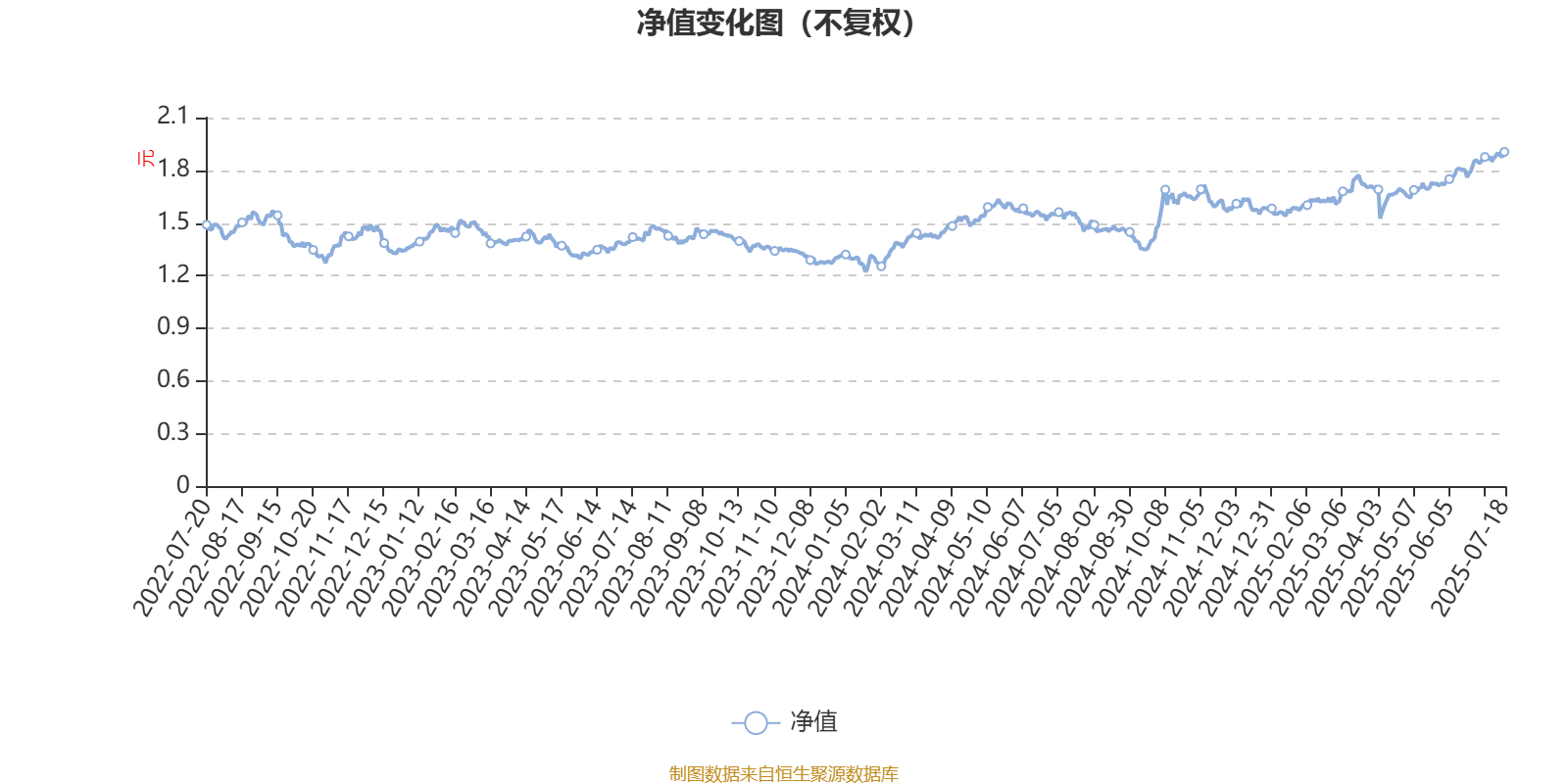
Core Viewpoint - The AI Fund, China Europe Dividend Enjoyment Flexible Allocation Mixed A (004814), reported a profit of 359 million yuan in Q2 2025, with a weighted average profit per fund share of 0.1336 yuan, and a net asset value growth rate of 8.22% for the period [2] Fund Performance - As of July 18, the fund's unit net value was 1.905 yuan, with a three-month net value growth rate of 14.13%, ranking 16 out of 82 in its category [3] - The fund's six-month net value growth rate was 20.09%, ranking 6 out of 82, and the one-year growth rate was 22.31%, also ranking 6 out of 77 [3] - Over the past three years, the fund achieved a net value growth rate of 41.31%, ranking 2 out of 57 [3] - The fund's Sharpe ratio over the past three years was 0.7644, ranking 4 out of 57 [8] - The maximum drawdown over the past three years was 19.38%, with the largest single-quarter drawdown occurring in Q1 2020 at 19.96% [10] Fund Holdings and Strategy - As of June 30, the fund maintained an average stock position of 91.42% over the past three years, compared to the category average of 84.99% [13] - The fund's top ten holdings as of Q2 2025 included Zijin Mining, New China Life Insurance, China Life Insurance, China Ping An, Construction Bank, Zhongjin Gold, Ningbo Bank, China National Heavy Duty Truck Group, China Gold International, and SANY Heavy Industry [17] - The fund manager expressed optimism about the stability and certainty of the Chinese economy, focusing on undervalued assets in both Hong Kong and A-shares, while also highlighting risks from Western debt and geopolitical conflicts [2]




中央一声令下!多晶硅领涨30%,周期股嗨翻七月
Sou Hu Cai Jing· 2025-07-21 02:06
上个月还在"卷到停产"的工业圈,这个月直接"涨疯了"!多晶硅期货30天飙30%,焦煤、玻璃、钢铁跟着翻红,连文华工 业品指数都涨了4%——这哪是反弹?分明是"反内卷"这剂猛药,给奄奄一息的周期品打了强心针! 要聊明白这波行情,得先说说工业圈之前有多"卷"。就拿光伏行业举例,去年多晶硅价格从20万一吨跌到6万,跌得企业老 板拍桌子:"卖一吨亏5千,不卖仓库堆成山!"为啥?产能过剩呗。你扩产我也扩产,你降价抢订单我就降得更狠,最后大 家都在赔本赚吆喝,这就是典型的"工业内卷"——拼价格不拼质量,拼规模不拼技术,卷到最后全行业躺平。 结果呢?今年上半年,光伏企业库存同比涨了40%,多晶硅工厂开工率跌到50%,有的小厂直接停工。不光光伏,钢铁企 业吨钢利润薄到"卖一辆自行车赚的钱",水泥企业为了抢工地订单,连"买水泥送搅拌机"的招都用上了。这哪是发展?分 明是集体"自杀式竞争"。 就在这时,政策出手了。7月1日中央财经委开会,直接点题"治理低价无序竞争";3天后工信部座谈会,给光伏行业划重 点:"别卷价格了,搞点正经事——提升品质,淘汰落后产能!"这两记组合拳下去,市场瞬间炸了:"卷王"要被收拾了? 最敏感的资金先动 ...

利率上行,债市或可布局,关注十年国债ETF(511260)
Sou Hu Cai Jing· 2025-07-21 01:05
Group 1 - Recent interest rates have risen, influenced by the "stock-bond seesaw," suggesting that pullbacks may present good investment opportunities [1] - The "anti-involution" policy has positively impacted market sentiment, but weak demand cannot be improved solely by "controlling prices" [1] - A simultaneous effort on both supply and demand sides is necessary for economic recovery, similar to the previous supply-side reform policies that included monetary support for housing [1] Group 2 - There is a possibility of interest rate cuts and reserve requirement ratio reductions in the second half of the year, with expected cuts of 10 to 20 basis points [1] - If no reserve requirement ratio cut occurs, liquidity may be supported through measures like restarting government bond trading and increasing reverse repos [1] - The ten-year government bond remains a favorable investment option, being the most traded single bond in the market [1] Group 3 - The ten-year government bond ETF (511260) offers three trading advantages: flexible trading with T+0, high collateral utilization with a pledge rate of about 94%, and suitability for arbitrage strategies [1] - Investors are encouraged to continuously monitor investment opportunities in the ten-year government bond ETF (511260) [1]
周期中报预告有何亮点?
2025-07-21 00:32
Summary of Key Points from Conference Call Records Industry or Company Involved - **Airline Industry**: White Cloud Airport, Hainan Airlines, China National Aviation, Eastern Airlines, Southern Airlines, Huaxia Airlines - **Shipping Industry**: Jinjiang Shipping, Antong Holdings - **Express Logistics Industry**: Jitu Express, SF Express, Shentong, Yunda, YTO Express - **Chemical Industry**: TDI market, high-speed resin market, various sub-industries - **Steel Industry**: General steel market performance and outlook - **Coal Industry**: Current market conditions and challenges Core Points and Arguments Airline Industry Performance - White Cloud Airport reported a Q2 profit of 450 million yuan, with net profit excluding non-recurring items at 290 million yuan, stable compared to Q1 [3] - Hainan Airlines expects a mid-term profit of 45 to 65 million yuan, despite a slight loss in Q2 [3] - China National Aviation anticipates a mid-term net profit increase of 78% to 90%, driven by fleet expansion and lower fuel prices [3] - Huaxia Airlines showed strong performance with a Q2 profit of approximately 160 million yuan, exceeding expectations [3] Shipping Industry Growth - Jinjiang Shipping's net profit for H1 is expected to be between 780 million to 810 million yuan, a significant increase of 146% to 155% due to rising demand in Southeast Asia [4] - Antong Holdings reported a net profit of 490 million to 540 million yuan, with a growth of 218% to 250% attributed to adjustments in shipping capacity [4] Express Logistics Sector Highlights - Jitu Express saw a 66% increase in package volume in Southeast Asia and a 14.7% increase in China, benefiting from strong TikTok e-commerce growth [5] - SF Express reported a 32% growth in business volume in June, with Shentong surpassing Yunda in revenue for the first time since 2020 [5] Chemical Industry Insights - The chemical industry’s operating rate fell to 71.9%, the lowest in history, with significant implications for older production facilities [8] - TDI market supply has contracted significantly, leading to rapid price increases, though sustainability of these price hikes is uncertain [12] - High-speed resin market demand remains strong, with companies like Shengjun Group expected to see a 50% increase in sales [13] Steel Industry Outlook - The steel industry is experiencing the lowest production and inventory levels historically, with a potential recovery driven by government policies [15] - Major steel companies have seen a 20% increase in stock prices, with expectations of further profit growth in the coming months [15] Coal Industry Challenges and Opportunities - Coal companies reported mixed results, with some facing significant declines while others, like Baotai Long, turned losses into profits [18] - The coal market is currently in a destocking phase, with rising demand from electricity and chemical sectors [19] Other Important but Possibly Overlooked Content - The launch of the official direct sales platform by Hanglv Zongheng APP aims to enhance ticket sales efficiency for airlines, potentially reducing reliance on OTA platforms [6] - The government’s redefinition of old equipment standards in the petrochemical industry may significantly impact sectors with high old capacity ratios [9] - The chemical sector is expected to face downward pressure in Q3, but certain products like refrigerants and high-speed resins are projected to perform well [14] - The Ministry of Industry and Information Technology's supply-side reforms are expected to benefit major oil companies and private refining enterprises [20][21]
供给侧改革持续推进,持续看好光伏、固态电池
2025-07-21 00:32
Summary of Conference Call Records Industry Overview - The conference call primarily discusses the **photovoltaic (PV) industry** and **solid-state battery** technology, highlighting ongoing supply-side reforms and their implications for market dynamics and investment opportunities. Key Points on Photovoltaic Industry 1. **Supply-Side Reforms**: Continuous supply-side reforms in the PV industry are expected to streamline the pricing across the industry chain, promoting healthy development. The rise in polysilicon futures prices and silicon wafer prices indicates cost transmission, with polysilicon prices potentially stabilizing around 60,000 RMB based on a five-year investment recovery period [1][2][6]. 2. **Demand Concerns**: Market concerns regarding PV demand for the second half of the year and 2026 may be overestimated. Historical trends suggest that significant demand growth often follows periods of low demand, as seen in 2012 and 2018. Key macro factors, such as overseas solar-plus-storage projects, are likely to catalyze demand [4][5]. 3. **Overseas Projects**: The Abu Dhabi 5.2 GW solar and 19 GWh storage project demonstrates competitive levelized cost of electricity at 3 cents per kWh, indicating strong demand for large-scale solar-plus-storage projects in overseas markets [4][5]. 4. **Investment Focus**: Recommendations include focusing on the main chain and auxiliary materials within the PV sector, as these areas may experience price recovery during the ongoing anti-involution process [7]. Key Points on Solid-State Batteries 1. **Market Position**: Solid-state batteries are still in the early stages of industrial development, with a positive outlook for equipment and materials sectors. Major companies like CATL and BYD are already making procurement moves in solid-state equipment [9]. 2. **Technological Innovations**: Innovations such as semi-solid batteries are enhancing solid electrolyte performance while reducing electrolyte usage, which significantly impacts equipment requirements [9]. 3. **Comparison with Liquid Batteries**: Liquid lithium batteries have made significant safety advancements, while solid-state batteries are still evolving. Liquid batteries currently offer cost advantages and have improved safety standards following new regulations [10]. Additional Insights - **Emerging Technologies**: New PV technologies, including BC (Back Contact) cells and silver reduction techniques, are critical for competitive positioning in the market. The inverter and storage sectors are also highlighted as areas of potential investment [3][8]. - **AIDC Sector Dynamics**: Developments in the AIDC sector, particularly NVIDIA's potential resumption of H20 sales to China, could drive growth in related markets, including HVDC and server power systems [13]. - **Long-Term Trends**: The long-term outlook for humanoid robots remains strong despite recent fluctuations, with upcoming events expected to catalyze interest and investment in this area [14]. Conclusion The conference call emphasizes the resilience and growth potential of the photovoltaic industry and solid-state battery technology, driven by supply-side reforms, technological advancements, and favorable macroeconomic factors. Investors are encouraged to focus on key areas within these sectors for potential opportunities.