
地缘风险

Search documents
金价暴跌后的“过山车”行情
Sou Hu Cai Jing· 2026-02-15 02:38
Core Viewpoint - The international gold price experienced a dramatic drop from $5536 to $4402 per ounce, marking a nearly 20% decline in one week, the worst in 40 years, followed by a rebound to around $4858.060 per ounce, raising questions about whether this is a technical recovery or a trend reversal [1]. Technical Analysis - Oversold signals triggered short covering, with the Gold Volatility Index (GVZ) soaring to 46.02, indicating extreme market panic and triggering algorithmic trading and stop-loss liquidations [1]. - The key support level is identified at $4400 per ounce, which corresponds to the 38.2% Fibonacci retracement level of the 2025 October rally, leading to a technical buying intervention [1]. - The psychological resistance at $5000 is only 1.2% away, but a breakthrough of the $4950-$5000 trading range, which accounts for 62% of the total trading volume in December 2025, is necessary to open up upward potential [2]. - The COMEX gold open interest has decreased by 23% from its peak, indicating that bullish sentiment has not fully recovered [3]. Fundamental Analysis - Geopolitical risks and policy expectations are acting as a double-edged sword, with potential for increased safe-haven demand due to U.S.-Iran tensions. A breakdown in negotiations could lead to a surge in gold buying [4]. - The nomination of Walsh, who advocates for "balance sheet reduction before rate cuts," could suppress gold prices if implemented, although the market still anticipates two rate cuts this year with a probability of 68% [5]. - In terms of supply and demand, China's gold consumption is projected to decline by 3.6% in 2025, while investment demand (ETFs and gold bars) is expected to grow by 18%, highlighting structural contradictions [6]. Market Outlook - Short-term (1-2 weeks): The market is expected to stabilize with a focus on policy catalysts, with potential daily volatility of 3-5% due to increased margin requirements [7][8]. - Mid-term (1-3 months): Two scenarios are possible: an optimistic scenario where geopolitical tensions escalate and the Fed initiates rate cuts, potentially pushing gold above $5500, or a pessimistic scenario where easing tensions and inflation pressures delay rate cuts, possibly pulling gold back to $4200 [9]. - Long-term (3-5 years): The strategic insurance value of gold is expected to become more pronounced as global central bank gold reserves increase from 17% to 26%, with a potential systemic upward shift in gold valuations if it surpasses 30% [10][11]. Investment Strategy - Conservative strategies may include gold ETFs with options for downside protection, while aggressive strategies could involve gold stock ETFs and futures trading to leverage returns [12][13]. - Position management suggests a pyramid approach to adding positions below $4800 and reducing exposure by 50% after surpassing $5000 [14]. - Stop-loss discipline is recommended, with a 3% dynamic stop-loss for short-term trades and a tolerance for 15% volatility for medium to long-term holdings [15].
你准备补仓吗?近期金价银价波动剧烈,深夜跳水现象频发
Sou Hu Cai Jing· 2026-02-13 15:44
Core Viewpoint - The market is divided into two camps regarding gold prices: the bearish camp, which holds a pessimistic view and advises against entering the market, and the bullish camp, which is optimistic about long-term trends and sees current adjustments as buying opportunities [1]. Group 1: Bearish Perspective - Gold prices have surged to historical highs, indicating a severe valuation bubble, and a correction is inevitable [2]. - If the Federal Reserve maintains high interest rates and delays rate cuts, the strength of the dollar and U.S. Treasury yields will increase, significantly reducing gold's attractiveness [2]. - Geopolitical conflicts are likely to ease, leading to a gradual decline in risk aversion, which will remove core support factors for gold prices [2]. - Institutions have already taken profits, while retail investors are chasing prices at high levels, making entry at this point akin to catching a falling knife [2]. Group 2: Bullish Perspective - The trend of de-dollarization globally is irreversible, with central banks continuing to purchase large amounts of gold, providing solid long-term demand support [2]. - The weakening of the dollar's credibility and the restructuring of the monetary system will highlight gold's monetary attributes [2]. - Persistent global inflation and geopolitical risks ensure that the rigid demand for gold as a safe-haven asset will not disappear [2]. - The recent price drop is viewed as a short-term fluctuation rather than a trend reversal, with the long-term price center expected to continue rising [2]. Group 3: Short-term Outlook - The upcoming U.S. CPI data will be crucial in determining short-term trends; if inflation remains high, gold prices may continue to face pressure, seeking the next support level around $4,800 [4]. - For ordinary investors, it is advisable to wait for market sentiment to stabilize and for gold prices to regain the $5,000 level before considering entry [4].

风险仍未消退,注意假期外盘波动
Hua Tai Qi Huo· 2026-02-13 08:16
1. Report Industry Investment Rating - High - sulfur fuel oil: Neutral [2] - Low - sulfur fuel oil: Neutral [2] - Cross - product: None [2] - Cross - period: None [2] - Spot - futures: None [2] - Options: None [2] 2. Core Viewpoints of the Report - The energy sector's recent fluctuations are significantly affected by the Iran situation, and the situation is still unclear. During the Spring Festival holiday, changes in the situation and news may lead to significant fluctuations in international oil prices, which will be transmitted to the post - holiday market, so risks should be noted before the holiday [1] - From the perspective of its own fundamentals, the market structure of high - sulfur fuel oil has been running strongly recently, with good downstream marine fuel demand, and the raw material substitution of Venezuelan oil by domestic refineries has also promoted the import demand for fuel oil. However, there is no shortage expectation in the market. Russia's shipments increased significantly in January, which will lead to an increase in arrivals in Asia in February. Overall, under the premise of relatively controllable geopolitical situations, the fundamentals of high - sulfur fuel oil do not have the momentum to strengthen continuously. In a high - freight environment, over - valuation will suppress downstream refinery demand. If the Iran situation deteriorates further, high - sulfur fuel oil, as the main product of Iran's exports, has a relatively prominent risk exposure [1] - For low - sulfur fuel oil, the current fundamental contradictions are not obvious. Due to the resumption of production at the Azur refinery, Kuwait's shipments were relatively high in January, but the overall pressure is relatively limited, and it mainly follows the fluctuations of the crude oil end in the short term [1] 3. Summary by Relevant Catalog Market Analysis - The main contract of Shanghai Futures Exchange's fuel oil futures closed up 1.09% at 2,888 yuan/ton in the day session, and the main contract of INE low - sulfur fuel oil futures closed up 0.45% at 3,349 yuan/ton [1] Strategy - High - sulfur fuel oil: Maintain a neutral stance, pay attention to the development of the Iran situation, avoid geopolitical risks as much as possible, and operate with a light position before the holiday [2] - Low - sulfur fuel oil: Maintain a neutral stance, pay attention to the development of the Iran situation, avoid geopolitical risks as much as possible, and operate with a light position before the holiday [2] Figures and Data - There are multiple figures showing the prices, spreads, closing prices of futures contracts, and trading volumes and open interests of Singapore high - sulfur and low - sulfur fuel oils, as well as the fuel oil FU and low - sulfur fuel oil LU futures in China, with corresponding units such as US dollars/ton and yuan/ton, and hand [3]
光大期货金融期货日报-20260213
Guang Da Qi Huo· 2026-02-13 04:32
Group 1: Report Industry Investment Rating - Not provided in the given content Group 2: Report's Core View - The A-share market fluctuated and rose on February 12, 2026, with the Wind All A index up 0.46% and a trading volume of 2.16 trillion yuan. The TMT and power equipment sectors led the gains, while the consumer sector continued to decline. The CSI 1000 index rose 0.91%, the CSI 500 index rose 1.17%, the SSE 50 index fell 0.28%, and the SSE 300 index rose 0.12% [1]. - Geopolitical risks during the Spring Festival are one of the important factors affecting the A-share market. The situation between the US and Iran and the victory of right-wing political parties in Japan's elections are worthy of attention. The volatility of precious metals and other non-ferrous metals may increase, and the index volatility may rise if geopolitical conflicts break out during the festival. Since November last year, A-share technology themes have shown an increasing correlation with the US stock market. The new nominee for the Fed chairman has a more "hawkish" monetary policy stance, and the US economic data during the Spring Festival holiday may disturb the equity market [1]. - On February 12, 2026, the 30-year Treasury bond futures main contract fell 0.03%, the 10-year main contract rose 0.02%, the 5-year main contract rose 0.02%, and the 2-year main contract remained stable. The central bank conducted 400 billion yuan of 14-day and 166.5 billion yuan of 7-day reverse repurchases, with a net injection of 448 billion yuan. In the short term, the bond market has insufficient momentum to continue to strengthen, and the pattern of interest rate range fluctuations continues [3]. Group 3: Summaries by Relevant Catalogs 1. Research Views - **Stock Index Futures**: The A-share market showed a mixed performance, with different index movements. Geopolitical risks and US economic data are potential influencing factors, and the market is expected to be volatile [1]. - **Treasury Bond Futures**: The central bank's open market operations and the current economic policy environment affect the bond market, which is expected to remain in a range - bound state [3]. 2. Daily Price Changes - **Stock Index Futures**: The IH contract fell 0.27%, the IF contract rose 0.04%, the IC contract rose 1.35%, and the IM contract rose 1.18% on February 12, 2026 compared with the previous day [4]. - **Stock Indexes**: The SSE 50 index fell 0.28%, the SSE 300 index rose 0.12%, the CSI 500 index rose 1.17%, and the CSI 1000 index rose 0.91% on February 12, 2026 compared with the previous day [4]. - **Treasury Bond Futures**: The TS contract rose 0.04%, the TF contract rose 0.01%, the T contract rose 0.04%, and the TL contract fell 0.04% on February 12, 2026 compared with the previous day [4]. 3. Market News - The EU announced on February 12, 2026, that it would request the WTO to establish a panel for a dispute case related to standard - essential patent licensing litigation against China. China regrets the EU's decision and will handle the case in accordance with WTO procedures to safeguard its legitimate rights and interests [5][6]. 4. Chart Analysis - **Stock Index Futures**: There are charts showing the trends of IH, IF, IM, and IC main contracts, as well as the basis trends of each index futures [8][9][10][11][12]. - **Treasury Bond Futures**: There are charts showing the trends of Treasury bond futures main contracts, bond yields, basis, inter - period spreads, cross - variety spreads, and capital interest rates [15][18][19][20]. - **Exchange Rates**: There are charts showing the exchange rate trends of the US dollar against the RMB, the euro against the RMB, forward exchange rates, and other currency pairs [23][24][25][27][28].
大越期货燃料油早报-20260213
Da Yue Qi Huo· 2026-02-13 02:26
Report Summary 1. Report Industry Investment Rating No information provided. 2. Core Viewpoints - The fundamentals of the fuel oil market are mixed. The arrival of low - sulfur fuel oil arbitrage from the Western market in Singapore in February decreased slightly, but the inventory will still increase, pressuring the current market fundamentals. The Asian high - sulfur fuel oil market has cooled after a recent rise due to moderate demand and sufficient supply [3]. - The overnight statement of US President Trump about a tough stance on reaching an agreement with Iran reduced geopolitical concerns, causing a sharp drop in oil prices, and fuel oil followed suit. The expected trading ranges are 2770 - 2820 for FU2604 and 3230 - 3280 for LU2604 [3]. - Market drivers are the resonance of supply affected by geopolitical risks and neutral demand, while risks include the breakdown of OPEC+ unity and the escalation of war risks [4]. 3. Summary by Catalog 3.1 Daily Tips - The price of the FU main contract futures increased from 2857 to 2916, a rise of 59 or 2.07%. The price of the LU main contract futures increased from 3334 to 3379, a rise of 45 or 1.35%. The FU basis increased from 200 to 202, a rise of 1.66 or 0.83%. The LU basis decreased from - 17 to - 45, a decrease of 29 or - 172% [5]. - In the spot market, the price of Zhoushan high - sulfur fuel remained at 488.00, the price of Zhoushan low - sulfur fuel remained at 500.00. The price of Singapore high - sulfur fuel increased from 430.94 to 435.87, a rise of 4.93 or 1.14%. The price of Singapore low - sulfur fuel decreased from 471.50 to 466.89, a decrease of 4.61 or - 0.98%. The price of Middle - East high - sulfur fuel increased from 400.16 to 406.23, a rise of 6.07 or 1.52%. The price of Singapore diesel increased from 644.09 to 650.62, a rise of 6.52 or 1.01% [6]. 3.2 Long - Short Concerns - Bullish factors: Iranian situation turmoil, China's import quota issuance [4]. - Bearish factors: The optimism of the demand side remains to be verified, the upstream crude oil is under pressure [4]. 3.3 Fundamental Data - Fundamentals: The arrival of low - sulfur fuel oil arbitrage from the Western market in Singapore in February decreased slightly, but the inventory will still increase, pressuring the current market fundamentals. The Asian high - sulfur fuel oil market has cooled after a recent rise due to moderate demand and sufficient supply; neutral [3]. - Basis: The basis of Singapore high - sulfur fuel oil is 202 yuan/ton, and the basis of Singapore low - sulfur fuel oil is - 45 yuan/ton, with the spot at a premium to the futures; bullish [3]. - Inventory: The Singapore fuel oil inventory in the week of February 11 was 2637.9 million barrels, an increase of 85 million barrels; bearish [3]. - Market trend: The price is above the 20 - day line, and the 20 - day line is upward; bullish [3]. - Main positions: The main positions of high - sulfur and low - sulfur are short, and the short positions are decreasing; bearish [3]. 3.4 Spread Data No detailed analysis provided, only a graph of high - low sulfur futures spread is mentioned [11]. 3.5 Inventory Data - The Singapore fuel oil inventory has been increasing recently. On February 11, 2026, it was 2637.9 million barrels, an increase of 85 million barrels compared to the previous period [3][8].
格林期货早盘提示:贵金属-20260213
Ge Lin Qi Huo· 2026-02-13 01:56
1. Report Industry Investment Rating - No information provided 2. Core View of the Report - The prices of gold and silver futures have declined significantly, and the market is in a volatile state without a new trend. Investors are advised to control positions and prevent risks during the Spring Festival holiday [1][2] 3. Summary by Relevant Catalogs 3.1 Market Quotes - COMEX gold futures closed down 3.08% at $4941.4 per ounce, and COMEX silver futures closed down 10.62% at $75.01 per ounce. The main Shanghai gold contract fell 2.42% to 1100.96 yuan per gram, and the main Shanghai silver contract fell 8.35% to 19188 yuan per kilogram [1] 3.2 Important Information - As of February 12, the holdings of the world's largest gold ETF, SPDR Gold Trust, decreased by 5.14 tons from the previous day to 1076.18 tons. The holdings of the world's largest silver ETF, iShares Silver Trust, decreased by 62 tons from the previous day to 16174.18 tons [1] - According to the CME's "FedWatch," the probability of the Fed cutting interest rates by 25 basis points in March is 7.8%, and the probability of keeping interest rates unchanged is 92.2%. The probability of the Fed cutting interest rates by a cumulative 25 basis points by April is 25.3%, the probability of keeping interest rates unchanged is 73.1%, and the probability of a cumulative 50 basis point cut is 1.6%. By June, the probability of a cumulative 25 basis point cut is 49.9% [1] - The Ministry of Foreign Affairs responded to Trump's expected visit to China in early April: President Xi Jinping reiterated the invitation to President Trump to visit China, and the two sides are maintaining communication on this [1] - The Ministry of Commerce stated that China and the United States maintain close communication at all levels through the economic and trade consultation mechanism [1] - The US President said that the US "must" reach an agreement with Iran, otherwise the situation will be "very serious." According to the AXIOS website, the Israeli Prime Minister said that the US may reach a good agreement with Iran [1] - The number of initial jobless claims in the US for the week ending February 7 was 227,000, compared with an expected 222,000, and the previous value was revised from 231,000 to 232,000 [1] 3.3 Market Logic - On Thursday, the three major US stock indexes closed down collectively, and US technology stocks declined. The market was once again worried about whether the huge investment in the AI field could yield considerable returns. Some investors were forced to liquidate their positions in commodities (including metals) to replenish liquidity, and some funds turned to US Treasuries for safety, leading to a full - scale decline in risk assets. Gold prices fell sharply, and silver and copper futures also declined [1] 3.4 Trading Strategy - As the Spring Festival holiday approaches, investors should pay attention to controlling positions and preventing risks [2]
申银万国期货:昨夜贵金属下跌,白银跌幅较大
Jin Rong Jie· 2026-02-13 01:44
Core Viewpoint - Precious metals have declined, with silver experiencing a significant drop due to a decrease in market risk appetite and liquidity shocks impacting prices [1] Economic Data - The U.S. added 130,000 non-farm jobs in January, significantly exceeding the expected 70,000 [1] - The unemployment rate stands at 4.3%, lower than the anticipated 4.4% [1] - Following the data release, expectations for interest rate cuts have cooled, although the overall U.S. job market is trending towards a slowdown [1] Federal Reserve Outlook - The U.S. economy is expected to require interest rate cuts for support, particularly after the new Federal Reserve Chair takes office mid-year [1] Long-term Factors - Long-term supportive factors for gold, such as de-dollarization, geopolitical risks, and central bank gold purchases, remain intact [1] - The People's Bank of China has increased its gold holdings for the 15th consecutive month [1] Market Expectations - After sufficient market adjustments and accumulation of new positive factors, gold is anticipated to return to a steady upward trend [1] - Due to the higher volatility of silver compared to gold and the current low gold-silver ratio, investors are advised to adopt a wait-and-see approach [1]
光大期货:2月13日金融日报
Xin Lang Cai Jing· 2026-02-13 01:30
Stock Market - The A-share market experienced a slight increase, with Wind All A rising by 0.46% and a trading volume of 2.16 trillion yuan, while the TMT and power equipment sectors led the gains [3][9] - The consumer sector continued to decline, with the CSI 1000 index up by 0.91%, CSI 500 index up by 1.17%, CSI 300 index up by 0.12%, and the SSE 50 index down by 0.28% [3][9] - Geopolitical risks, particularly the US-Iran situation and Japan's election results, are significant factors affecting the A-share market during the Spring Festival [3][10] - The correlation between A-share technology themes and US stocks has increased since November, indicating a global market linkage rather than isolated A-share sentiment [3][10] - The newly nominated Federal Reserve Chairman's monetary policy is more hawkish than market expectations, emphasizing a results-oriented approach rather than a predictive model [3][10] Bond Market - The 30-year bond futures contract fell by 0.03%, while the 10-year and 5-year contracts rose by 0.02%, and the 2-year contract remained stable [11] - The People's Bank of China conducted a 400 billion yuan 14-day and a 166.5 billion yuan 7-day reverse repurchase operation, resulting in a net injection of 448 billion yuan [11] - The interbank market saw a decline in the weighted rates for DR001 and DR007, down by 0.79 basis points to 1.362% and 1.31 basis points to 1.5257%, respectively [11][5] - The bond market's upward momentum is limited due to ongoing fiscal policies aimed at stabilizing growth, maintaining a fluctuating interest rate environment [5][11] Precious Metals - London spot precious metals saw a significant decline, influenced by geopolitical shifts, particularly Russia's potential return to the dollar settlement system [12] - Concerns over market liquidity were heightened following a drop in US stocks, leading to increased volatility in precious metals [12] - The current trend in precious metals remains unclear, with recommendations for light positions during the holiday period, focusing more on gold performance [12]

油价上行的核心催化因素有哪些?
Mei Ri Jing Ji Xin Wen· 2026-02-13 01:27
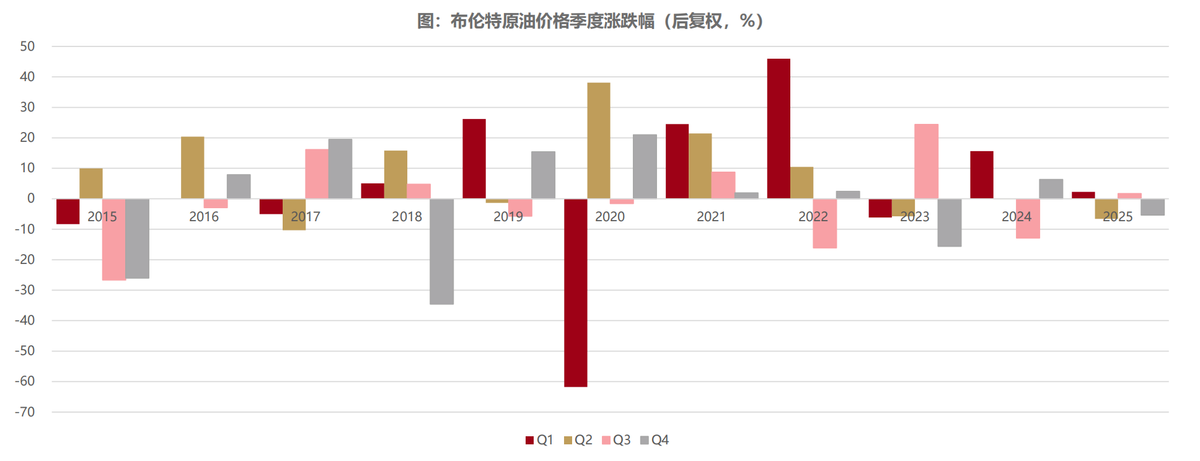
Group 1 - The core viewpoint of the articles indicates that geopolitical tensions and inventory risks have reversed the market consensus on falling oil prices, with recent oil price movements being primarily driven by emotional trading [1][2] - Extreme winter weather in the U.S. has increased heating demand and disrupted oil production and refining, leading to a substantial contraction in physical oil supply, thus supporting international oil prices [1] - Recent supply disruptions, such as the interruption of operations at the Caspian pipeline and power outages at Kazakhstan's Tengiz oil field, have also provided support for international oil prices [1] Group 2 - The U.S.-Iran negotiations have introduced volatility in oil prices, with initial diplomatic talks potentially seen as bearish, but subsequent news of possible breakdowns in talks led to a surge in oil prices [2] - The ongoing geopolitical struggle between the U.S. and Iran is expected to continue affecting international oil prices due to significant differences in their core demands [2] - The shipping situation in the Strait of Hormuz is critical, as approximately 20% to 30% of global oil maritime trade passes through this route, and any disruption could significantly impact global oil supply and prices [3] Group 3 - The current geopolitical risks, particularly the U.S.-Iran situation, are the main focus, while other regional conflicts have temporarily subsided [4] - The U.S. has historically acted to suppress oil prices to alleviate inflation and weaken Russia's position in the ongoing Ukraine conflict, but this influence is diminishing [4][5] - As the midterm elections approach, the U.S. may have less motivation to suppress oil prices, potentially leading to a rebound in oil prices [5] Group 4 - Recent analyses suggest that the oil market is experiencing a shift, with several institutions raising their oil price forecasts, indicating a potential upward trend in oil prices [5] - The first and second quarters typically see a strengthening trend in oil prices due to policy implementations and geopolitical events, although this calendar effect should not be solely relied upon for investment decisions [6] - The current upward trend in oil prices is supported by ongoing geopolitical conflicts and potential adjustments in OPEC policies, with expectations of a rebound in oil prices as high-cost production begins to exit the market [8]
帝国石油股价创新高后回调,机构对估值持谨慎态度
Jing Ji Guan Cha Wang· 2026-02-12 22:48
Group 1 - The core viewpoint is that Imperial Oil (IMO.AM) has reached a historical high stock price of $119.61 on February 11, 2026, driven by rising oil prices and geopolitical risks, with Brent crude futures closing at $69.40 per barrel on the same day [1] - Key drivers include OPEC+ maintaining production policies and an unexpected decline in January production, which supports short-term oil prices, along with a rotation of funds into cyclical stocks boosting the energy sector [1] - The stock price experienced a slight pullback to $116.13 on February 12, 2026, reflecting a daily drop of 2.91%, but still shows a cumulative increase of 7.21% over the past five days [1] Group 2 - As of February 12, 2026, the stock price is reported at $116.13, with a year-to-date increase of 34.54% and a five-day increase of 7.21%, indicating strong buying interest with a trading volume of $84.79 million on February 11 [2] - The oil and gas sector saw a 2.47% increase on February 11, followed by a 2.15% pullback on February 12, highlighting the direct impact of oil price fluctuations on the sector [2] - The stock price has shown a strong technical pattern with a 20-day increase of 17.43% after breaking previous highs, indicating a bullish trend [2] Group 3 - For the fourth quarter of 2025, the company reported revenues of 17.813 billion yuan, reflecting an 11.9% year-on-year growth, and a net profit of 1.223 billion yuan, which is a 23.2% increase year-on-year [3] - The company maintains a solid annual profitability with a gross margin of 21.23% and a return on equity (ROE) of 14.37%, alongside an operating cash flow of $4.8 billion [3] - The dividend yield stands at 1.90%, indicating a strong capability for shareholder returns [3] Group 4 - Institutional views are mixed, with 48% of ratings being reductions or sell recommendations, and a target average price of $84.57, which is below the current stock price, suggesting some caution regarding valuation [4] - Profit forecasts indicate a projected 24.32% year-on-year decline in net profit for the first quarter of 2026, reflecting market concerns about future performance [4]