
财政政策

Search documents
十四届全国人大常委会第十七次会议举行第二次全体会议,审议执法检查报告、专项工作报告等
Hua Er Jie Jian Wen· 2025-09-10 06:10
市场有风险,投资需谨慎。本文不构成个人投资建议,也未考虑到个别用户特殊的投资目标、财务状况或需要。用户应考虑本文中的任何 意见、观点或结论是否符合其特定状况。据此投资,责任自负。 风险提示及免责条款 据新华社,受国务院委托,财政部部长蓝佛安作了关于今年以来预算执行情况的报告。报告指出,今年 以来,财政政策更加积极、接续发力,预算执行和财政运行总体平稳。报告介绍了落实十四届全国人大 三次会议预算决议情况,提出下一步财政重点工作安排:用好用足更加积极的财政政策,全力支持稳就 业稳外贸,加快培育壮大发展新动能,进一步保障和改善民生,持续用力防范化解重点领域风险,不断 提升财政治理效能和水平,严格落实过紧日子要求。 ...
强化财政政策提振消费实效
Jing Ji Ri Bao· 2025-09-07 22:13
Group 1 - The core viewpoint emphasizes the importance of boosting consumption as a key driver for economic growth and enhancing people's well-being, with a call for stronger fiscal and financial policies to unleash domestic demand potential [1][2][4] - A series of fiscal measures, including the allocation of 300 billion yuan in special government bonds for consumption upgrades, are being implemented to stimulate consumer spending [1][2] - The implementation of personal consumption loan interest subsidies and service industry loan interest subsidies aims to support consumer spending and stabilize market expectations [2][4] Group 2 - The government is focusing on innovative consumption scenarios to meet the diverse and multi-layered consumer demands, promoting new growth points in consumption [3] - Specific policies are being introduced to enhance sports consumption, recognizing its potential and broad consumer base, with financial support for related service providers [3] - The optimization of consumer services is crucial for ensuring that policies effectively benefit consumers, with a focus on simplifying processes for accessing financial support [4]
宏观周报:海外边际变化即将到来-20250907
Yin He Zheng Quan· 2025-09-07 09:26
Domestic Macro - Demand Side - After the summer holiday, domestic travel demand has significantly decreased, with subway passenger volume growth at -0.68% year-on-year and -7.25% month-on-month as of September 6[2] - In August, retail sales of passenger cars reached 1.952 million units, a year-on-year increase of 2.2% and a month-on-month increase of 6.4%[2] - Export resilience is noted, with the Baltic Dry Index (BDI) averaging 1978.4, down 1.15% month-on-month but up 0.54% year-on-year[2] Domestic Macro - Production Side - Production generally declined in the first week of September, with average blast furnace operating rates down 3.09 percentage points to 80.38%[3] - The chemical industry shows a significant downturn, with PTA production and operating rates down 7.76% and 11.71 percentage points respectively, falling below 70% for the first time this year[3] - The construction sector remains sluggish, with rebar operating rates averaging 42.28%, down 1.6 percentage points[3] Price Performance - Pork prices have seen a narrowing decline, while fruit and vegetable prices have risen, with key monitored vegetable prices up 3.47% and fruit prices up 1.28% as of September 5[3] - WTI crude oil prices decreased by 0.38% and Brent crude by 1.01% as of September 5, reflecting a general decline in black commodity prices[3] Fiscal and Monetary Policy - The issuance of government bonds has accelerated, with 820 billion yuan in special bonds and 2.671 trillion yuan in regular bonds issued this week, achieving 70.6% of the annual issuance target[3] - The People's Bank of China is expected to restart government bond purchases, signaling a more accommodative monetary policy[3] International Macro - The U.S. labor market shows significant weakness, with only 22,000 jobs added in August, far below the expected 75,000, and the unemployment rate rising to 4.3%[1] - The probability of a 50 basis point rate cut by the Federal Reserve in 2025 is high due to ongoing economic slowdown and policy pressures from the Trump administration[1]
股指月报:持续上涨后,波动加剧-20250905
Wu Kuang Qi Huo· 2025-09-05 13:24
1. Report Industry Investment Rating No relevant information provided. 2. Core Views of the Report After continuous upward movement, high - level hot sectors such as AI have recently adjusted, and together with the shrinking market trading volume, the short - term index faces certain adjustment pressure. However, in the long - run, policies still support the capital market, and the main strategy is to go long on dips [10][11]. 3. Summary by Relevant Catalogs 3.1 Monthly Assessment and Strategy Recommendation - **Important News**: The Chinese President proposed to build an AI application cooperation center; the joint working group of the Ministry of Finance and the central bank held a meeting; the central bank conducted 100 billion yuan of repurchase operations; Wu Qing aimed to consolidate the stable and positive momentum of the capital market [10]. - **Economic and Corporate Earnings**: In July, industrial added value increased by 5.7% year - on - year, fixed - asset investment from January to July increased by 1.6%, and retail sales rose by 3.7% year - on - year. In August, the manufacturing PMI was 49.4%, up 0.1 percentage points. In July, M1 and M2 growth rates were 5.6% and 8.8% respectively. The social financing increment was 1.13 trillion yuan, and exports and imports increased by 7.2% and 4.1% respectively [10]. - **Interest Rates and Credit Environment**: In August, the stock market rose significantly, causing the 10 - year Treasury bond rate to rebound and the credit bond rate to decline, with a lower credit spread and loose liquidity [10]. - **Trading Strategy Recommendations**: Hold a small number of IM long positions in the long - term due to medium - low valuation and long - term discount; hold IF long positions for six months as a new interest - rate cut cycle may benefit high - dividend assets [12]. 3.2 Futures and Spot Markets - **Spot Market**: The Shanghai Composite Index reached 3857.93, up 7.97%; the Shenzhen Component Index was at 12696.15, up 15.32%, etc. [14]. - **Futures Market**: IF, IH, IC, and IM contracts all showed varying degrees of increase [15]. 3.3 Economic and Corporate Earnings - **Economic Indicators**: In Q2 2025, GDP growth was 5.2%. In August, the manufacturing PMI was 49.4%. In July, consumption growth was 3.7%, exports increased by 7.2%, and investment growth was 1.6% [31][34][37]. - **Corporate Earnings**: In the 2025 semi - annual report, the revenue growth rate was flat year - on - year and up 0.4% quarter - on - quarter, and the net profit growth rate was 2.5% year - on - year and down 1.0% quarter - on - quarter [40]. 3.4 Interest Rates and Credit Environment - **Interest Rates**: The 10 - year Treasury bond rate rebounded, and the 3 - year AA - corporate bond rate is presented in the chart [43]. - **Credit Environment**: In July 2025, M1 and M2 growth rates were 5.6% and 8.8% respectively. The social financing increment was 1.13 trillion yuan, mainly due to government bonds and bill financing growth, while resident and corporate credit data declined [54]. 3.5 Capital Flows - **Inflow**: This week, 20.528 billion shares of partial - stock funds were newly established, and ETF trading volume increased rapidly. In August, the margin trading balance increased by nearly 300 billion yuan, reaching a record high [60][63]. - **Outflow**: In August, major shareholders had a net increase of - 34.467 billion yuan, and the number of IPO approvals was 7 [66]. 3.6 Valuation - The price - to - earnings ratios (TTM) of the Shanghai 50, CSI 300, CSI 500, and CSI 1000 were 11.83, 13.85, 32.09, and 44.68 respectively; the price - to - book ratios (LF) were 1.29, 1.44, 2.13, and 2.37 respectively [70].
国际货币基金组织执行董事会完成与波黑的2025年《国际货币基金组织协定》第四条磋商
Shang Wu Bu Wang Zhan· 2025-09-04 13:57
Group 1 - The core viewpoint of the report indicates that despite facing severe external conditions, Bosnia's economic growth remains resilient, with a projected acceleration to 2.5% in 2024 and a return to a potential level of 3% by 2027 [1] - The report highlights that consumption levels were suppressed in the first quarter due to political uncertainty, but high-frequency indicators show a recovery in consumption starting from the second quarter [1] - Overall inflation is expected to rapidly decline to 1.7% in 2024 from 6.1% in 2023, before rising to 2.3% in May 2025, with core inflation stabilizing around 4% [1] Group 2 - The report identifies several downward risks to Bosnia's economic outlook, including trade uncertainties, a slowdown in the European economy, commodity price volatility, tightening global financial conditions, and escalating political tensions [2] - It emphasizes the need for Bosnia's fiscal policy to focus on medium-term consolidation, rebuilding buffer space, and improving the quality of public spending, supported by a strong structural reform agenda [2] - The report suggests that Bosnia should promptly implement priority actions for anti-money laundering organizations to avoid being placed on a gray list, which could hinder its ability to gain further growth benefits [2]
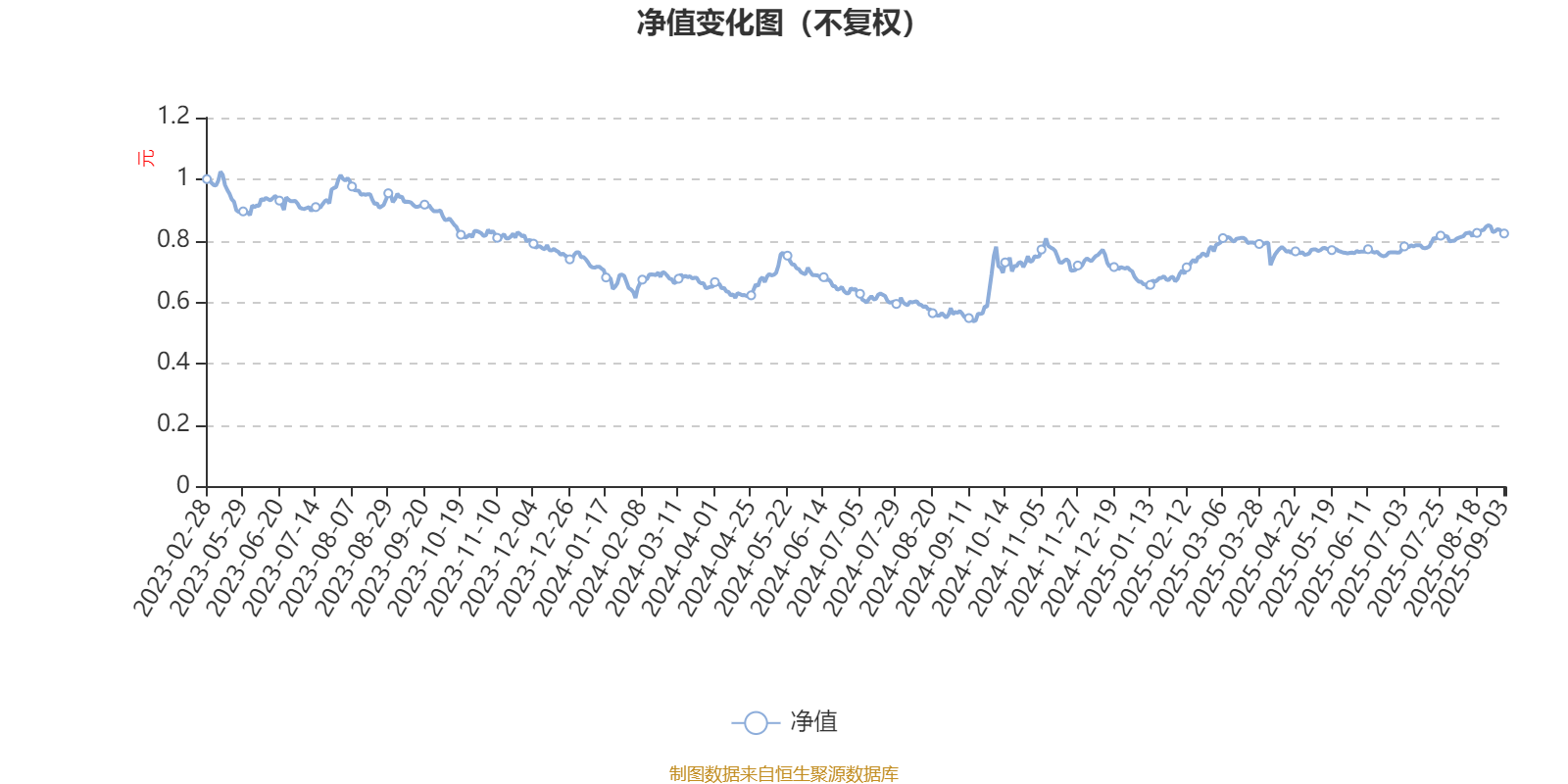
景顺长城致远混合A:2025年上半年利润5086.24万元 净值增长率8.66%
Sou Hu Cai Jing· 2025-09-04 11:31
Group 1 - The core viewpoint of the news is that the Invesco Great Wall Zhi Yuan Mixed A Fund (017860) reported a profit of 50.86 million yuan for the first half of 2025, with a net value growth rate of 8.66% [2] - As of September 3, 2025, the fund's unit net value was 0.823 yuan, and the fund manager, Han Wenqiang, has managed four funds that have all yielded positive returns over the past year [2][5] - The fund's one-year compounded unit net value growth rate reached 44.81%, the highest among its peers, while the lowest was 18.14% for another fund managed by the same manager [2][5] Group 2 - The fund's weighted average price-to-earnings ratio (TTM) is approximately 24.5 times, which is lower than the peer average of 26.16 times [10] - The weighted average price-to-book ratio (LF) is about 1.34 times, compared to the peer average of 2.38 times, and the weighted average price-to-sales ratio (TTM) is around 0.65 times, against a peer average of 2.05 times [10] - From a growth perspective, the fund's weighted revenue growth rate (TTM) for the first half of 2025 was -0.06%, and the weighted net profit growth rate (TTM) was -0.07% [16] Group 3 - As of June 30, 2025, the fund's total assets amounted to 652 million yuan, with a total of 4,971 holders owning 857 million shares [31][34] - The fund's turnover rate over the last six months was approximately 147%, consistently lower than the peer average [37] - The fund has a high concentration of holdings, with the top ten stocks accounting for over 60% of the portfolio for nearly two years [40]

国债期货日报:短期遇阻-20250904
Nan Hua Qi Huo· 2025-09-04 10:29
1. Report Industry Investment Rating - Not provided in the given content 2. Core View of the Report - The report suggests a band - trading approach for treasury bond futures. It indicates that the bond market may enter a period of oscillation as the 10 - year treasury bond yield faces significant resistance around 1.75%. It advises against chasing high prices and recommends taking profit on previous long positions [1][3] 3. Summary by Related Catalogs 3.1. Market Conditions - On Thursday, treasury bond futures opened higher across the board, with narrow intraday fluctuations. Medium - and long - term bonds closed higher, while short - term bonds weakened at the end of the session. Spot bond yields first declined and then rose, with most turning upward by the end of the day. The open market had a net withdrawal of 20.35 billion yuan, and the funds were loose, with DR001 remaining at 1.31% [1] 3.2. Intraday News - The second group leader meeting of the Ministry of Finance and the central bank aims to jointly ensure the better implementation of fiscal and monetary policies - Bloomberg reported that China is considering measures to curb stock market speculation and seek stable development of the A - share market - Federal Reserve Governor Waller suggested starting interest rate cuts this month and multiple cuts in the next 3 - 6 months, with the pace depending on data [2] 3.3. Market Judgment - The opening of spot bonds continued the upward trend from the previous day's close, driving treasury bond futures to open higher. Then, each variety basically maintained a narrow - range shock. The A - share market fell for the third consecutive day, with the Shanghai Composite Index dropping by up to 2% during the session, and the previous hot sectors experiencing greater declines. However, the bond market did not gain more upward momentum. After the futures market closed, spot bonds weakened, indicating a lack of further upward drivers in the bond market [3] 3.4. Treasury Bond Futures Daily Data - **Contract Prices and Changes**: TS2512 was at 102.44 (unchanged), TF2512 at 105.745 (up 0.055), T2512 at 108.27 (up 0.15), and TL2512 at 117.4 (up 0.37) - **Contract Positions and Changes**: TS contract positions increased by 429 to 76,004 hands, TF by 3,428 to 142,981 hands, T by 4,090 to 217,136 hands, and TL decreased by 2,021 to 140,684 hands - **Basis and Changes**: TS basis (CTD) was - 0.0299 (down 0.0074), TF basis (CTD) was 0.0269 (down 0.0577), T basis (CTD) was 0.3866 (down 0.0537), and TL basis (CTD) was 0.8792 (up 0.1384) - **Trading Volume and Changes**: TS main contract trading volume increased by 5,941 to 31,545 hands, TF by 501 to 62,934 hands, T decreased by 2,944 to 83,913 hands, and TL decreased by 21,692 to 135,244 hands [4]
BlueberryMarkets蓝莓外汇:美元走弱欧元看涨,大风向转变前奏?
Sou Hu Cai Jing· 2025-09-04 07:22
Group 1 - The recent performance of the euro against the dollar has been "lackluster," leading to doubts about the sustainability of the rebound, but market sentiment is not as pessimistic as it seems, indicating a potential for further upward movement after adjustments [1] - The Federal Reserve's policy is increasingly perceived as dovish, suggesting a shift towards easing and rate cuts, which diminishes the dollar's attractiveness as investors reassess their expectations for interest rate differentials [1] - Structural issues in the U.S. economy are causing investors to question how long the dollar can maintain its strength, indicating a shift in market sentiment from reliance on the dollar to caution regarding its future performance [1] Group 2 - In the Eurozone, while short-term economic data is not impressive, Germany's plans to increase fiscal spending are seen as a potential game-changer, which could lead to a re-evaluation of the euro's value in the market [3] - If Europe implements more aggressive fiscal policies alongside previous trade progress with the U.S., the euro could be viewed as an asset with recovery potential rather than just a defensive currency [3] - Analysts generally expect the euro to reach 1.20 against the dollar by the end of the year, with potential for further gains in the coming years, which could attract more investment at lower levels [3] Group 3 - The current market atmosphere indicates that while there are risks of a decline for the dollar, the euro is viewed as bullish in the medium to long term, though short-term movements require patience and caution [4] - This period may represent a "prelude to a significant directional change" in the market, suggesting that a more substantial trend may be developing [4]

期指:仍有支撑
Guo Tai Jun An Qi Huo· 2025-09-04 02:53
Report Summary 1. Investment Rating - The report does not mention the industry investment rating. 2. Core View - The futures index still has support [3]. 3. Key Points from Related Catalogs 3.1 Futures Index Data - On September 3, all four major futures index contracts for the current month declined. IF dropped 0.96%, IH dropped 1.29%, IC dropped 1.3%, and IM dropped 1.22% [1]. - The total trading volume of futures indices rebounded on this trading day, indicating an increase in investors' trading enthusiasm. Specifically, the total trading volume of IF increased by 876 lots, IH increased by 5491 lots, IC decreased by 6690 lots, and IM increased by 551 lots. In terms of positions, the total positions of IF decreased by 11,866 lots, IH decreased by 7211 lots, IC decreased by 9914 lots, and IM decreased by 2021 lots [1][2]. 3.2 Basis of Futures Indices - The basis data of IF, IH, IC, and IM are presented in the report, showing the differences between the spot and futures prices [1]. 3.3 Positions of the Top 20 Members in Futures - The changes in long and short positions of the top 20 members in various futures contracts (IF, IH, IC, IM) are provided, including the increase or decrease in long and short positions and the net changes [5]. 3.4 Trend Intensity and Important Drivers - The trend intensity of IF and IH is 1, and that of IC and IM is also 1. The trend intensity ranges from -2 to 2, with -2 indicating the most bearish and 2 indicating the most bullish [6]. - The joint working group of the Ministry of Finance and the central bank held its second meeting to discuss issues such as financial market operations, government bond issuance management, central bank bond trading operations, and the improvement of the offshore RMB government bond issuance mechanism. The Shanghai Composite Index fell 1.16% to 3813.56 points, the Shenzhen Component Index fell 0.65%, and the ChiNext Index rose 0.95%. The A - share trading volume was 2.4 trillion yuan, down from 2.91 trillion yuan the previous day [6].
深夜!股、债、汇三杀 发生了什么?
Sou Hu Cai Jing· 2025-09-03 03:05
Core Viewpoint - The financial markets in Europe and the US experienced significant turmoil on September 2, with widespread sell-offs in stocks, currencies, and bonds, driven by concerns over fiscal sustainability and rising debt yields [1][2][4]. Group 1: European Market Reactions - The European market faced a "triple whammy" with the pound and euro sharply declining against the dollar, with the pound dropping 1.52% to 1.3340, marking its largest single-day decline since April 7 [2]. - Major European stock indices fell, with the German index down 1.68%, and the broader European Stoxx 600 index also declining over 1% [2]. - The UK 30-year bond yield surged to 5.69%, the highest level since 1998, reflecting market fears regarding the sustainability of public finances [4]. Group 2: US Market Reactions - The US stock market also faced declines, with major indices dropping, including a more than 1% fall in the Nasdaq [1]. - The VIX index, a measure of market volatility, spiked over 19%, indicating increased investor anxiety [1]. - US 30-year bond yields approached 5%, the highest since July, contributing to the overall negative sentiment in the market [1]. Group 3: Debt Market Dynamics - Rising yields in the European bond market are attributed to increased fiscal spending by governments in response to geopolitical and economic challenges, with analysts noting a "vicious cycle" of rising debt concerns leading to higher yields [4]. - The UK government is facing pressure to implement tax increases, which could further impact the pound and investor confidence [4]. - Historical trends indicate that September is typically a challenging month for long-term bonds, with a median loss of 2% over the past decade for bonds with maturities over 10 years [5]. Group 4: Inflation and Monetary Policy - Inflation pressures in both the UK and Eurozone are limiting the ability of central banks to lower interest rates, with the Eurozone's August CPI rising to 2.1%, above July's 2.0% [6]. - The core inflation rate in the Eurozone remains at 2.3%, indicating persistent inflationary pressures despite a slowdown in service sector inflation [6]. - Market expectations suggest a low probability of interest rate cuts by the European Central Bank before December, with only a 25% chance of a rate reduction [6].
