反内卷

Search documents
汽车周报:供应链涨价、购置税兜底驱缓,关注通胀环节投资机会-20260113
Shenwan Hongyuan Securities· 2026-01-13 04:13
Investment Rating - The report maintains a positive outlook on the automotive industry, indicating a favorable investment rating for the sector [2]. Core Insights - The report highlights the impact of rising prices for memory, copper, aluminum, and key components, which are expected to lead to an increase in consumer vehicle prices. It suggests focusing on supply chain companies with good supply-demand dynamics and price transmission capabilities, as well as mid-to-high-end vehicle manufacturers with model cycles [2]. - The report notes that the average daily retail sales of passenger vehicles in China reached 123,000 units in the last week of December, a year-on-year increase of 17% [2]. - The report emphasizes the importance of the recently implemented green consumption policies, which aim to support the purchase of new energy vehicles and enhance the automotive industry's supply chain [11][12]. Market Updates - The automotive industry recorded a total transaction value of 638.35 billion yuan, with a week-on-week increase of 11.27%. The automotive industry index rose by 2.53% during the week [2][13]. - The report indicates that the automotive industry index's growth was lower than that of the Shanghai and Shenzhen 300 index, which increased by 2.79% [13]. - The report lists significant stock movements, with 201 stocks rising and 68 falling, highlighting the top gainers and losers in the automotive sector [19]. Key Events - The Ministry of Industry and Information Technology released the 403rd batch of new vehicle approvals, featuring several notable models from various manufacturers [3][4]. - The report discusses the rising cost pressures in the automotive industry due to increasing memory prices, which are becoming a significant factor affecting profitability [6][8]. - The report mentions a strategic cooperation agreement between CATL and NIO, focusing on battery technology and market collaboration [36]. Financial Metrics - The automotive sector's price-to-earnings ratio stands at 30.20, ranking 18th among all primary industries, indicating a moderate valuation compared to the Shanghai and Shenzhen 300 index's 14.41 [16][18].





ETF午盘资讯|攻势又起!化工ETF(516020)开盘猛拉1.56%,机构高呼“行业重估”在即!
Sou Hu Cai Jing· 2026-01-13 03:53
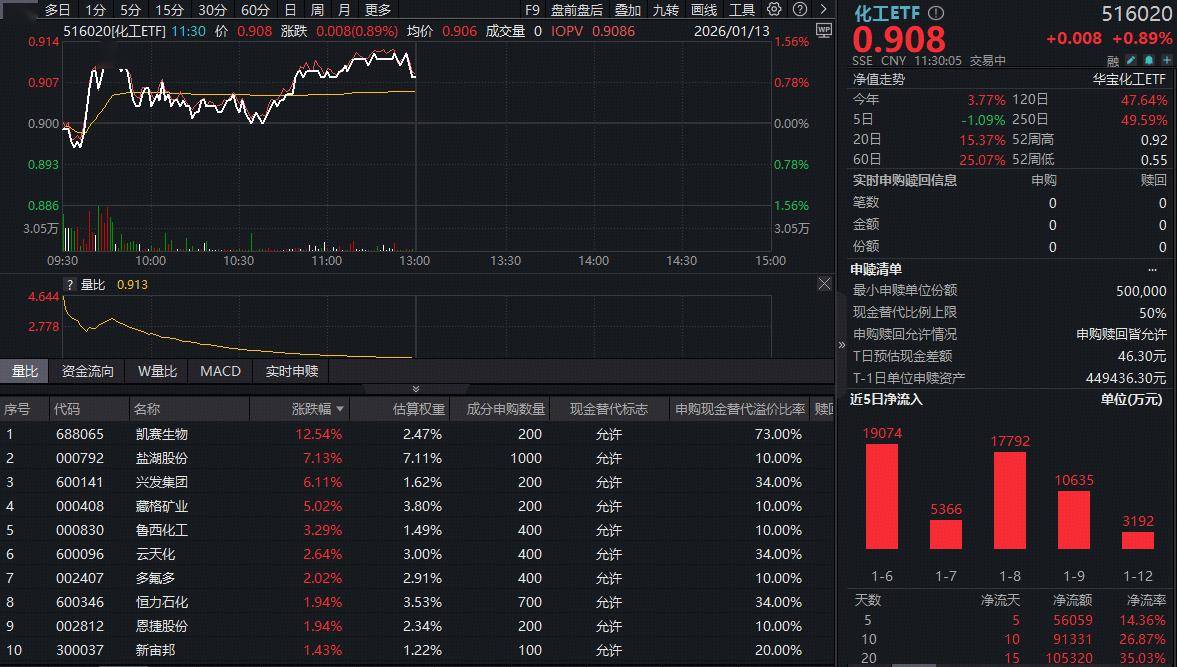
Group 1 - The chemical sector is experiencing a rebound, with the chemical ETF (516020) showing a significant increase, reaching a maximum intraday gain of 1.56% and closing up by 0.89% [1] - Key stocks in the sector include Kasei Bio, which surged by 12.54%, and Salt Lake Co., which rose by 7.13%, among others [1][2] - Recent capital inflow into the chemical sector has been strong, with the chemical ETF accumulating a net subscription of 560 million yuan over the last five trading days and over 910 million yuan in the last ten days [2] Group 2 - The Producer Price Index (PPI) for industrial products decreased by 1.9% year-on-year in December 2025, with a month-on-month increase of 0.2%, indicating a narrowing decline compared to the previous month [3] - The chemical industry is expected to undergo a revaluation, as its industry position and profit levels do not align, with potential recovery in profitability anticipated [3] - The chemical sector is at a new starting point of supply-demand rebalancing, influenced by policies aimed at reshaping competition and advancements in new production capabilities [3] Group 3 - The chemical ETF (516020) tracks the CSI segmented chemical industry theme index, with nearly 50% of its holdings concentrated in large-cap leading stocks, providing an opportunity for investors to capitalize on strong performers [4] - Investors can also access the chemical ETF through linked funds, enhancing investment efficiency in the chemical sector [4]





攻势又起!化工ETF(516020)开盘猛拉1.56%,机构高呼“行业重估”在即!
Xin Lang Cai Jing· 2026-01-13 03:43
Group 1 - The chemical sector has regained momentum, with the chemical ETF (516020) opening strong and reaching a maximum intraday increase of 1.56%, closing up 0.89% by midday [1][7] - Key stocks in the sector include potassium fertilizers, phosphorus chemicals, and lithium batteries, with notable gains from companies like Kaisa Bio (up 12.54%) and Salt Lake Co. (up 7.13%) [1][7] Group 2 - The chemical sector has seen continuous capital inflow, with a net subscription of 560 million yuan for the chemical ETF (516020) over the last five trading days and over 910 million yuan in the last ten days [3][9] - The Producer Price Index (PPI) for December 2025 showed a year-on-year decline of 1.9%, with a narrowing drop of 0.3 percentage points from the previous month, and a month-on-month increase of 0.2%, marking three consecutive months of growth [3][8] Group 3 - Guojin Securities suggests that the large chemical industry is likely to be revalued, as its industry position and profitability are mismatched, indicating a potential recovery in profitability [3][10] - Huafu Securities notes that the chemical industry has experienced a bottoming out of profits and valuations in 2025, with expectations for a rebound in profitability in 2026, driven by supply-demand rebalancing and new production capabilities [3][10] Group 4 - The chemical ETF (516020) tracks the CSI segmented chemical industry theme index, with nearly 50% of its holdings in large-cap leading stocks, providing an opportunity for investors to capitalize on strong performers [4][10] - Investors can also access the chemical ETF through linked funds (Class A 012537/Class C 012538) for efficient exposure to the chemical sector [4][11]
省级对高耗能行业实施差异化电价征求意见稿发布,或为反内卷开拓新思路,化工行业ETF易方达(516570)低费率投资工具备受关注
Sou Hu Cai Jing· 2026-01-13 02:24
Core Viewpoint - The recent policy proposal from the Shaanxi Provincial Development and Reform Commission regarding differentiated electricity pricing for high-energy-consuming industries is gaining attention, indicating a new policy direction for these sectors [1] Industry Policy - The proposed policy includes charging higher electricity fees for restricted and eliminated capacities in industries such as electric stone and caustic soda, which, although not yet implemented, provides a new approach to address overcapacity in high-energy-consuming sectors [1] - The high-energy-consuming chemical sub-industries are currently at the bottom of the cycle, with only leading companies that own self-sufficient power plants achieving excess profits [1] Industry Trends - The introduction of the "Petrochemical Industry Steady Growth Work Plan (2025-2026)" is expected to enhance technological innovation capabilities, expand new market and application demands, and allow for scientific regulation of the supply side, accelerating the transformation and upgrading of the petrochemical industry [1] - Capital expenditure in the chemical sector is nearing its end, with ongoing construction projects declining for three consecutive quarters year-on-year, alongside the elimination of outdated facilities and the deepening of "anti-involution" policies, leading to a significant improvement in the marginal supply side [1] - By Q3 2025, the overall ROE of the petrochemical industry index is expected to slightly rebound to 10.1%, indicating a clearer bottoming trend, while the price-to-earnings ratio remains around the central level of the past decade, making the valuation of the sector worth noting [1] Related Products - The E Fund Chemical Industry ETF (516570) offers a bundled investment in leading companies in the oil, petrochemical, and basic chemical industries, closely aligning with the "dumbbell strategy" in the petrochemical sector, while also including high dividend and high growth components [2] - The management and custody fees for the E Fund Chemical Industry ETF are 0.15% and 0.05% per year, significantly lower than similar ETF products in the petrochemical sector, effectively reducing cost expenditures for investors and providing a higher cost-performance ratio for exposure to the favorable development opportunities in the petrochemical industry [2]
东吴证券晨会纪要2026-01-13-20260113
Soochow Securities· 2026-01-12 23:40
Macro Strategy - The report anticipates a "good start" for financial data in January 2026, driven by seasonal factors and government fiscal policies [1][11] - The U.S. economy shows mixed signals, with a surprising drop in unemployment alleviating some market concerns, while geopolitical tensions and unresolved tariff issues add uncertainty [1][11] - The expectation for Q1 2026 is a potential upward pulse in the U.S. economy, benefiting risk assets like equities and commodities [1][11] Financial Products - A-share trading volume surpassed 30 trillion yuan, indicating heightened trading sentiment, but also suggesting potential for increased short-term volatility [2][12] - The macro timing model for January 2026 scores 0, historically correlating with a 76.92% probability of A-share index gains in the following month [2][12] - The report recommends a balanced ETF allocation strategy, focusing on sectors showing strength and those rebounding from lows [2][12] Fixed Income - The report discusses the "stock-bond seesaw effect," highlighting a steepening yield curve under a loose monetary policy environment [5][14] - The central economic work conference indicates a flexible approach to monetary policy, with potential for reserve requirement ratio cuts and interest rate reductions in Q1 2026 [5][14] - The bond market is experiencing adjustments, with a notable shift of funds from bonds to equities, influenced by strong stock market performance [5][14] Industry Recommendations - Xianle Health (300791) is highlighted for its commitment to innovation and growth potential in the health sector [7] - WeRide (00800.HK) is positioned as a leader in the Robotaxi space, expected to benefit from policy support and technological advancements, with projected revenues increasing significantly from 5.55 billion yuan in 2025 to 19.87 billion yuan by 2027 [7] - Haidilao (06862.HK) maintains a strong market position with a focus on operational efficiency and new brand development, projecting net profits to grow from 42.28 billion yuan in 2025 to 51.13 billion yuan in 2027 [8] - Lingyun Co. (600480) is recognized for its leadership in the automotive parts sector, with expected net profits rising from 8.01 billion yuan in 2025 to 10.55 billion yuan in 2027 [9]
地方两会的“信息点”
一瑜中的· 2026-01-12 16:04
Group 1 - The provincial two sessions are typically held before the Lunar New Year, with 17 provinces confirming meetings in January, representing 57.3% of the national GDP for 2024 [1] - Among the six major economic provinces, four will hold their sessions in January, which collectively account for 44.4% of the national GDP [1] - Zhejiang will kick off the sessions on January 14, followed by Henan, Shandong, and Guangdong on January 26, while Jiangsu is scheduled for early February [1] Group 2 - The focus of the provincial two sessions includes setting GDP targets for the next five years, with Changsha establishing a range of 5%-5.5% annual growth, down from the previous target of around 7% [2] - Historical data shows that the weighted GDP targets of the 31 provinces are consistently higher than the national target by 0.3-0.6 percentage points from 2022 to 2025 [2] - The CPI targets are generally aligned with the national target, with Wuhan maintaining a target around 2% and Changsha lowering its target from around 3% to around 2% [3] Group 3 - Employment targets are assessed by comparing the total across the 31 provinces to the previous year, with Wuhan's new employment target remaining consistent with last year [3] - The growth rate of major projects in economic provinces is a key observation point, with previous years showing limited project increases, indicating potential investment momentum issues [3] - Other areas of interest include real estate investment, service consumption statements from provinces, and local consensus on industrial policies [3]

部委年度会议的6大要点——政策周观察第63期
一瑜中的· 2026-01-12 16:04
Monetary Policy - The central bank emphasizes a flexible and efficient use of various monetary policy tools, including reserve requirement ratio (RRR) cuts and interest rate reductions, to maintain relatively loose social financing conditions and guide reasonable growth in financial totals and balanced credit issuance [2][13] - The focus on supporting key areas such as expanding domestic demand, technological innovation, and small and medium-sized enterprises (SMEs) has been reinforced [2][13] Consumption - The Ministry of Commerce highlights a shift towards prioritizing service consumption and optimizing the implementation of the old-for-new consumption policy, aiming to accelerate the cultivation of new growth points in service consumption [2][16] - The previous year's focus was on expanding the scope of the old-for-new policy and innovating diverse consumption scenarios [2][16] Real Estate - The central bank's annual meeting did not mention real estate in the context of risk prevention, focusing instead on local debt risks and risks associated with small financial institutions [3] Foreign Trade - The Ministry of Commerce emphasizes structural optimization in foreign trade, with a detailed approach to foreign-related security deployments, including promoting trade innovation and encouraging service exports [3][16] - The focus has shifted from merely stabilizing foreign trade to fostering high-quality development and expanding new foreign trade drivers [3][16] Industry - The Civil Aviation Administration and the Postal Administration both address the need to strengthen and innovate macro-control to prevent "involution" competition within industries [4] - The Ministry of Natural Resources stresses the importance of enhancing strategic mineral resource security and monitoring risks [4] Social Welfare - The National Health Commission proposes optimizing childbirth support policies and promoting integrated development of childcare services, while the Ministry of Civil Affairs emphasizes implementing comprehensive elderly care consumption subsidy projects [4] - The Ministry of Education outlines initiatives for revitalizing ordinary high schools in counties and advancing artificial intelligence education across all school levels [4] Recent Policy Developments - The Ministry of Finance announced adjustments to export tax rebate policies for photovoltaic products, with a phased reduction in VAT export rebates starting from April 2026 [5][14] - The Ministry of Industry and Information Technology issued implementation opinions for the "Artificial Intelligence + Manufacturing" initiative, aiming for significant advancements in AI applications within the manufacturing sector by 2027 [5][15]

光伏锂电出口退税将取消 ,有代理商称现货5分钟被抢光
2 1 Shi Ji Jing Ji Bao Dao· 2026-01-12 14:28
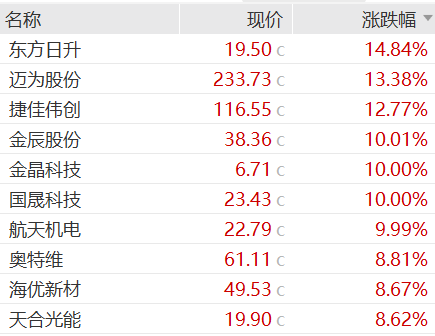
Core Viewpoint - The recent changes in export tax policies for photovoltaic and lithium battery products are seen as a significant move to combat excessive competition and improve profitability in the renewable energy sectors [4][8][9]. Group 1: Market Performance - On January 12, the opening saw fluctuations in the new energy photovoltaic and lithium battery sectors, with notable divergences in individual stock performances [1]. - Leading lithium battery company CATL (宁德时代) saw its H-shares drop by 3% and A-shares decline by over 4%, while companies like Deyang Nano (德方纳米) and Hunan Youneng (湖南裕能) experienced mixed results [1]. - In the photovoltaic sector, companies such as Maiwei (迈为股份) and Jiejia Weichuang (捷佳伟创) surged over 10%, while Trina Solar (天合光能) and Haiyou New Materials (海优新材) rose over 8% [1]. Group 2: Export Tax Policy Changes - Starting April 1, 2026, the export tax rebate for photovoltaic products will be eliminated, and the rebate rate for battery products will be reduced from 9% to 6% until the end of 2026, after which it will be completely removed [2]. - This policy change is part of a broader "anti-involution" initiative aimed at addressing the supply-demand mismatch and intense price competition that have weakened profitability in the photovoltaic and lithium battery industries [4][5][8]. Group 3: Industry Response and Measures - Since 2025, there have been ongoing calls within the lithium battery sector to resist harmful competition and control capacity growth, with various industry meetings held to discuss these issues [7]. - The Ministry of Industry and Information Technology has organized discussions with leading battery companies to establish measures for regulating competition and ensuring sustainable growth [7]. - A total of 20 measures were proposed, including monitoring production capacity and implementing penalties for non-compliant companies, which may affect financing and tax rebates [8]. Group 4: Market Dynamics and Future Outlook - Despite the seasonal downturn typically seen in the first quarter, demand for power and energy storage batteries remains strong, with companies reporting full order books and saturated production capacity [11]. - The anticipated increase in costs due to the export tax policy is prompting overseas buyers to adjust their purchasing schedules, potentially leading to a robust first quarter for lithium battery sales [11][12]. - Analysts predict that the cancellation of export tax rebates will ultimately raise the costs and prices of Chinese photovoltaic components in overseas markets, which could help clear out excess capacity and stabilize prices in the long run [13].




A股越走越强引全球关注,瑞银报告:2026趋势上行,七大板块值得超配
Zhi Tong Cai Jing· 2026-01-12 14:21
Group 1 - The core viewpoint of the article is that the A-share market is entering a new upward trend in 2026, supported by a recovery in funds and sentiment, along with corporate earnings, highlighting structural investment opportunities [1][2] - UBS predicts that the overall profit growth rate of A-shares will increase from 6% in 2025 to 8% in 2026, driven by both profit and valuation [3] - The report emphasizes that the current equity risk premium in A-shares is still above historical averages, indicating clear potential for valuation recovery [4] Group 2 - Key factors supporting profit growth include the recovery of nominal GDP growth, narrowing PPI declines, and targeted policy support such as equipment upgrade subsidies and new infrastructure investments [4] - The report suggests focusing on growth stocks, with a preference for cyclical sectors over defensive ones, as growth stocks are expected to outperform in an upward market cycle [6] - UBS recommends overweighting seven key sectors: electronics, telecommunications, non-bank financials, defense and military, non-ferrous metals, chemicals, and electric power equipment, each with specific growth drivers [7] Group 3 - The report identifies four thematic investment directions: technology self-sufficiency, consumer recovery, beneficiaries of "anti-involution," and global leaders with competitive advantages [8][9] - The A-share market has seen a significant increase in trading activity, with average daily turnover rising to 24.6 trillion yuan, up from 17.3 trillion yuan in 2025, indicating strong investor interest [2] - The influx of various long-term funds, including insurance capital and foreign investment, is expected to provide ongoing support for the market [2]

光伏锂电出口退税将取消 ,有代理商称现货5分钟被抢光
21世纪经济报道· 2026-01-12 14:21
Core Viewpoint - The article discusses the recent fluctuations in the new energy photovoltaic and lithium battery sectors, highlighting the impact of changes in export tax policies on these industries and the ongoing "anti-involution" actions aimed at stabilizing prices and production capacity [1][5][6]. Summary by Sections Market Performance - On January 12, the lithium battery leader CATL saw its H-shares drop by 3% and A-shares fall over 4%, while companies like Deyang Nano and Hunan Yueneng experienced mixed results with increases and decreases in their stock prices [1]. Export Tax Policy Changes - The Ministry of Finance announced that starting April 1, 2026, the export VAT refund for photovoltaic products will be canceled, and the VAT refund rate for battery products will be reduced from 9% to 6% until the end of 2026, after which it will be completely eliminated [2][3]. Industry Response and Actions - The lithium battery and photovoltaic industries have been facing challenges due to mismatched supply and demand and intense price competition, leading to a series of "anti-involution" initiatives aimed at expanding demand, adjusting prices, and controlling production capacity [3][5]. - Since 2025, there have been calls within the lithium battery sector to resist vicious competition and control the disorderly growth of production capacity, with various companies announcing price adjustments to stabilize the market [5][6]. Price Trends and Market Dynamics - Despite the seasonal downturn typically seen in the first quarter, the demand for power and energy storage batteries remains strong, with companies reporting sufficient orders and saturated production capacity [8]. - The export tax policy changes are expected to lead to an increase in battery prices, as overseas buyers adjust their purchasing strategies to avoid higher costs after the policy takes effect [8][10]. Future Outlook - Analysts predict that the cancellation of export tax refunds will increase the costs and prices of Chinese photovoltaic components in overseas markets, which may lead to industry consolidation and a return to more rational pricing in the long term [7][10].