AI泡沫

Search documents
利空,全球股市跳水!瑞银、大摩,唱多中国股市
Sou Hu Cai Jing· 2025-11-18 15:12
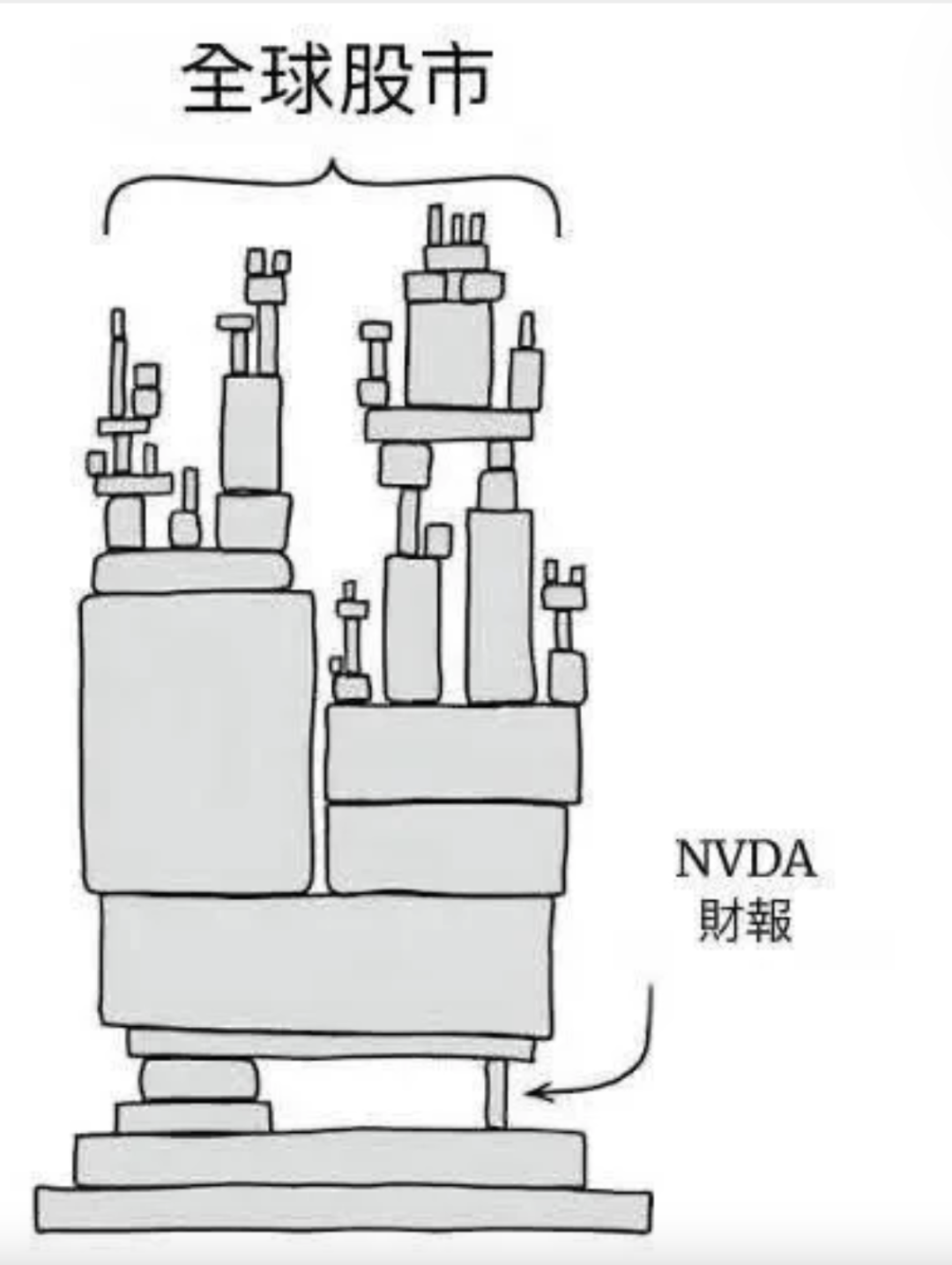
Group 1: Global Market Trends - Global stock markets experienced a significant decline, termed "Black Tuesday," with the Nikkei 225 index dropping 3.22%, marking its largest single-day drop since April, closing below 49,000 points. The KOSPI index fell by 3.32%, led by declines in chip stocks [1][3] - Gold and silver prices also plummeted, while Bitcoin fell below $90,000 for the first time in seven months, erasing all gains made in 2025 over the past month [2] - A-shares and Hong Kong stocks opened lower and continued to decline, with the Shanghai Composite Index experiencing its first three consecutive days of decline since mid-September [3] Group 2: Economic Factors - The expectation of a Federal Reserve interest rate cut has cooled, with the probability of a 25 basis point cut in December now below 50% according to the CME FedWatch Tool [4][5] - Japanese government bonds faced significant selling pressure, with the 10-year bond yield rising above 1.75%, nearing its highest level since 2008. This increase in yield is closely linked to global liquidity and capital flows [6] Group 3: AI Market Concerns - There are growing concerns about a potential AI bubble, particularly ahead of Nvidia's upcoming earnings report, which follows a previous strong performance but resulted in a significant stock price drop [7][8] Group 4: Chinese Market Outlook - UBS forecasts a prosperous year for the Chinese stock market in 2026, driven by favorable factors including innovation. The MSCI China Index is projected to reach a target of 100 by the end of next year, indicating a 14% upside from current levels [10] - Earnings per share for Chinese companies are expected to grow by 10% in 2026, supported by measures against "involution" and a decrease in depreciation expenses. The focus remains on internet, hardware technology, and brokerage sectors, while high-dividend stocks are being removed from the watchlist [11] Group 5: Baidu's AI Revenue - Baidu reported a total revenue of 31.2 billion yuan for Q3 2025, with core revenue at 24.7 billion yuan. The company disclosed its AI business revenue for the first time, showing a year-on-year growth of over 50% [12] - AI cloud revenue grew by 33%, while AI application revenue reached 2.6 billion yuan, and AI native marketing service revenue surged by 262% to 2.8 billion yuan [12]

Stock market today: Dow, S&P 500, Nasdaq pull back as AI worries sap markets ahead of Nvidia earnings
Yahoo Finance· 2025-11-18 14:38
US stocks retreated on Tuesday as worries about an AI bubble and the broader US economy continued to set markets on edge, with a pivotal Nvidia (NVDA) earnings report and shutdown-delayed jobs data on the horizon. The Dow Jones Industrial Average (^DJI) fell nearly 0.8%, coming off the worst three-day run for the blue-chip benchmark since April. The tech-heavy Nasdaq Composite (^IXIC) pulled back roughly 0.5%, while the S&P 500 (^GSPC) was roughly 0.3% lower, eyeing its fourth consecutive losing session. ...
投顾晨报:震荡整固看风格,中盘蓝筹谋先机-20251118
Orient Securities· 2025-11-18 14:12
Market Strategy - The current market is expected to experience limited index growth, with a judgment of "fluctuating up and down, sideways consolidation, slightly strengthening" [7] - Mid-cap blue chips are anticipated to rise again after four years, presenting investment opportunities in manufacturing, consumption, and cyclical sectors [7] - Related ETFs include 中证 500ETF (159922) and 中证 1000ETF (512100) [7] Chemical Industry - Global chemical supply is expected to contract due to high costs and aging equipment, leading to a structural adjustment in the supply chain [7] - European chemical sales account for approximately 13% of the global market, but high energy costs and punitive carbon taxes are causing continued capacity exit [7] - Domestic production progress has slowed, and with the implementation of "anti-involution" policies, the chemical sector is likely to enter a new prosperity cycle [7] - Related stock: 万华化学 (600309, Buy) [7] - Related ETF: 化工 ETF (159870/516020) [7] Financial Technology - Hong Kong's "FinTech 2030" strategy marks a shift from application-focused development to a more systemic, forward-looking, and ecological approach [7] - This strategy emphasizes the collaborative development of data, AI, resilience, and tokenization, providing valuable insights for the high-quality development of mainland financial technology [7] - Related ETFs include 金融科技 ETF (159851/515720/159103) and 香港证券 ETF (513090) [7]

资产配置全球跟踪2025年11月第3期:资产概览:美联储降息预期出现逆转
GUOTAI HAITONG SECURITIES· 2025-11-18 14:10
Group 1: Asset Overview - The Federal Reserve's interest rate cut expectations have reversed, leading to volatile movements in gold and silver prices during the week of November 10-14, with the Nasdaq experiencing significant sell-offs [1] - The Brazilian IBOVESPA index has seen a monthly increase of 10% [1] Group 2: Investment Highlights - As of the week ending November 14, commodities have outperformed equities and bonds, with COMEX silver and Shanghai gold leading in gains. Oil prices have also risen, while global stock market performance has shown significant divergence [6][19] - The correlation between A-shares and Hong Kong, US, and Indian stocks has marginally decreased, indicating a weakening relationship [6][7] - The risk premium of A-shares relative to 10-year government bonds has increased, while the risk premium of US stocks relative to 10-year US Treasuries has decreased [9][12] Group 3: Equity Market Performance - Hong Kong and Brazilian stocks continue to rise, with the IBOVESPA up 10% over the past month. The global stock market overall increased by 0.4% as of November 14, with developed markets showing slight rebounds [19][24] - In emerging markets, A-share indices generally declined, with the ChiNext 50 and the ChiNext index experiencing the most significant pullbacks of -3.8% and -3.0%, respectively [19][24] Group 4: Bond Market Analysis - The Chinese bond market is characterized by a "bull steep" yield curve, with the 10Y-2Y yield spread widening. The 10-year yield remains stable at 1.81% [37][39] - In contrast, the US bond market exhibits a "bear flat" yield curve, with the probability of a December rate cut by the Federal Reserve dropping to 44.4% from 66.9% [37][39] Group 5: Commodity and Currency Trends - Silver and copper have led commodity gains, with the CRB commodity index rising by 0.5%. The dollar index has decreased by 0.3%, while major currencies like the euro and pound have appreciated against the dollar [6][12] - The gold-to-oil ratio has increased, while the gold-to-silver and gold-to-copper ratios have decreased, indicating changing dynamics in the precious metals market [12][18]
20年来首现“过度投资”!美银基金经理调查:AI泡沫已成市场上最大“尾部投资”
美股IPO· 2025-11-18 13:57
Core Viewpoint - Market sentiment is oscillating between optimism and caution, with fund managers showing increased stock allocations while cash levels have dropped to 3.7%, triggering a "sell signal" [1][2][13] Group 1: Market Sentiment and Risks - Fund managers' stock allocation has reached its highest level since February 2025, but cash holdings have decreased, raising concerns about overly bullish positions potentially hindering risk assets [2][13] - 45% of respondents view the "AI bubble" as the biggest tail risk, a significant increase from the previous month, while 54% consider "longing the seven giants" as the most crowded trade [2][8] - 63% of respondents believe current stock market valuations are too high, indicating a growing concern about the sustainability of the market rally [4][10] Group 2: Economic Outlook - Despite improved macro sentiment, with 53% of investors predicting a soft landing for the economy, there are warnings about excessive corporate investment, a phenomenon not seen in 20 years [5][10] - 43% of investors see broad AI productivity improvements as the most bullish catalyst for 2026, while 26% view a slowdown in AI capital expenditure as a significant bearish factor [10][20] Group 3: Asset Allocation Trends - In November, investors significantly increased allocations to healthcare (net 40% increase), emerging market stocks (net 36% increase), and bank stocks (net 36% increase) [17] - Conversely, UK stocks saw the fastest decline in allocation since October 2022, and consumer discretionary stocks experienced the largest monthly reduction since 2005 [17] Group 4: Future Expectations - Looking ahead to 2026, 42% of investors expect international stocks to be the best-performing asset class, with 30% anticipating the Japanese yen to perform best among currencies [19][20] - 45% of investors expect the 10-year U.S. Treasury yield to be in the 4.0%-4.5% range by the end of 2026, while 34% predict gold will trade between $4000 and $4500 per ounce [20]


全球股市遭遇“黑色星期二”,什么情况?
Guo Ji Jin Rong Bao· 2025-11-18 13:56
Market Overview - Global stock markets experienced a significant decline, with the Korean Composite Index and Nikkei 225 both dropping over 3% [1] - A-shares also fell, with 4,106 stocks closing down, particularly in coal, power equipment, steel, and non-ferrous metals sectors [1] - The Shanghai Composite Index closed down 0.81% at 3,939.81 points, while the ChiNext Index fell 1.16% to 3,069.22 points [2] Sector Performance - The TMT (Technology, Media, and Telecommunications) sector showed resilience, with the media sector rising by 1.6% [7] - Semiconductor, computer software, and Huawei HiSilicon concepts saw gains, while sectors like power battery recycling, phosphorus chemical, and coal experienced significant declines [4] - Among 31 first-level industries, 26 sectors closed down, with coal, power equipment, steel, and non-ferrous metals each dropping around 3% [5] Trading Activity - Daily trading volume slightly increased from 1.93 trillion yuan to 1.95 trillion yuan, indicating active leverage funds [2] - Margin trading balance in Shanghai and Shenzhen returned to 2.5 trillion yuan as of November 17 [2] Investment Sentiment - Market sentiment remains cautious due to external market declines and the need for A-shares to correct [1] - Investors holding heavy positions in technology stocks are advised to reduce their holdings, particularly in thematic technology stocks [1][11] Future Outlook - Analysts suggest a "dual-line layout" strategy, focusing on undervalued financial and dividend sectors while also participating in TMT segments with potential for rebound [12] - The long-term trend for technology remains positive, with ongoing support from policies and rapid development in AI and semiconductor sectors [11][13]




美银调查:投资者现金头寸跌破关键阈值触发股市卖出信号 潜在AI泡沫为最大尾部风险
智通财经网· 2025-11-18 13:39
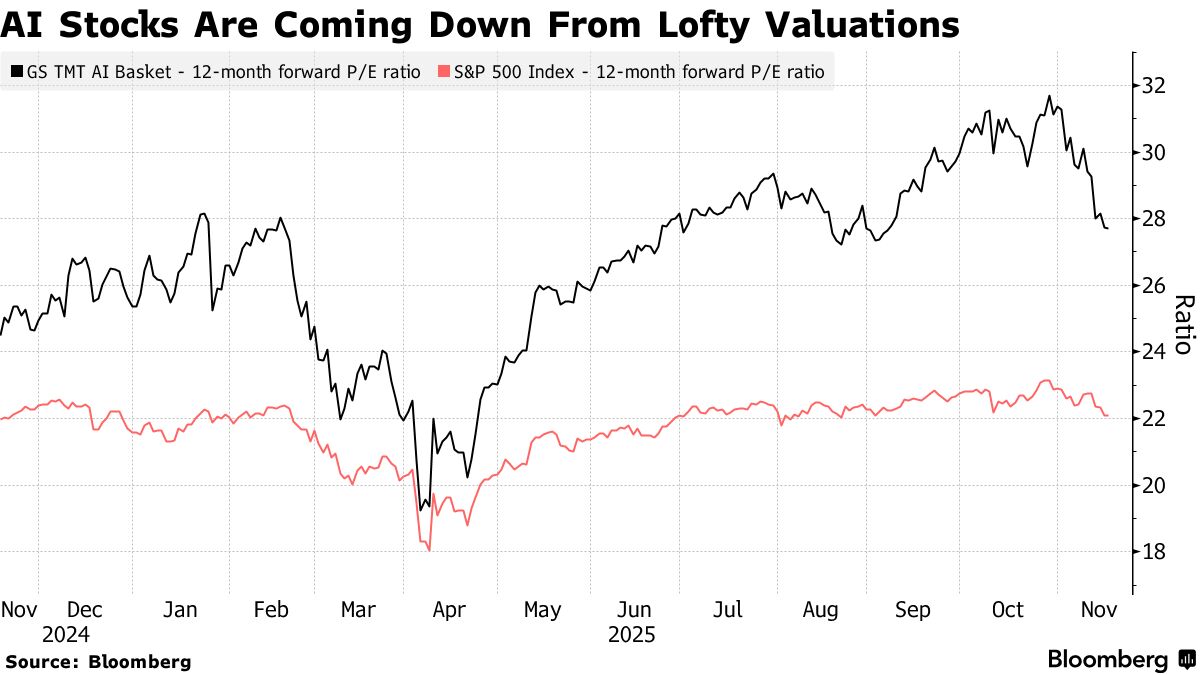
Group 1 - A monthly survey by Bank of America indicates that investor cash positions have fallen below a critical threshold, triggering a sell signal in the stock market amid rising concerns over the overvaluation of tech stocks [1] - The average cash holding of global fund managers has dropped to 3.7%, a level that has only been seen 20 times since 2002, historically leading to stock market declines within one to three months [1] - The MSCI Global Index, which has risen 17% this year, is showing signs of pressure, while the S&P 500 index has dropped approximately 3% from its October peak [1] Group 2 - Investors' exposure to the stock market is at its highest level since February, with concerns that if the Federal Reserve does not cut rates in December, the market may face further adjustments [4] - The survey identifies a potential AI bubble as the largest tail risk, with investors believing for the first time in two decades that companies are over-investing [4] - Approximately 42% of respondents expect international stocks to be the best-performing asset class next year, while only 22% believe U.S. stocks will lead [4] Group 3 - As tech giants continue to invest heavily in AI, investors are reassessing economic growth prospects, leading to increased pressure on financial markets [5] - The S&P 500 index has experienced a significant sell-off, with a decline of 3.2% since reaching a historical high on October 28, marking the largest drop since the February to April downturn [5] - The index has closed below its 50-day moving average for the first time in 139 trading days, breaking a record of the second-longest period above this trend line in the century [5] Group 4 - The Nasdaq index has also fallen below its 50-day moving average, ending the longest streak above this level since October 1995 [6] - There are concerning signals within the Nasdaq, as the number of stocks hitting 52-week lows exceeds those reaching new highs, indicating weak market internals and low chances for a rebound [6]
中美顶尖科技巨头,争夺AI世界入口
Jing Ji Guan Cha Bao· 2025-11-18 13:11
Core Insights - The global race for a "super application" in the AI field is intensifying, with significant investments focused not on the technology itself but on identifying the "super entry point" [1][2] - Alibaba's launch of the "Qianwen" project marks its entry into the AI to C (consumer-facing AI) market, positioning it as a competitor to ChatGPT [1][3] - The competition is characterized by two main fronts: the "engine war" focusing on the capabilities of large models, and the "entry war" which emphasizes the importance of productizing AI capabilities into indispensable tools [3][4] Industry Dynamics - The emergence of AI applications is creating strong ecological barriers, making them essential bridges between users and the digital world [2][4] - The uncertainty surrounding the form of the "super entry point" fuels a competitive arms race among AI players, with various potential forms such as advanced chatbots or integrated assistants [2][5] - The future of AI applications is expected to revolve around creating an "AI Agent" that not only provides information but also executes tasks, thus enhancing user experience [4][5] Competitive Landscape - Major players like OpenAI and Google are actively developing their ecosystems, with OpenAI introducing APIs and collaborative features, while Google integrates its AI models into existing platforms [4][5] - Alibaba aims to leverage its existing e-commerce, life services, and cloud computing ecosystems to create a comprehensive integration path with its "Qianwen" project [4][5] - The competition for the "super entry point" is critical, as it will determine the allocation of trillion-dollar market values and shape the global technology landscape for the next decade [5]

“伦敦鲸”杀手再出手!AI泡沫论甚嚣尘上,传Saba基金出售甲骨文、微软等巨头CDS
Zhi Tong Cai Jing· 2025-11-18 12:21
Core Insights - Saba Capital Management has sold credit derivatives linked to major tech companies like Oracle and Microsoft due to concerns over risks associated with debt financing in the AI investment boom [1] - The demand for credit default swaps (CDS) from banks indicates a growing concern about potential losses in the tech sector, particularly as companies accumulate significant debt for AI projects [3] Group 1: Market Dynamics - The current market is eager to hedge against the rising valuations and increasing debt burdens of AI companies, with fears that a potential bubble could lead to a significant market correction [3] - Saba's sale of CDS for these tech companies marks a first for both the hedge fund and the banks seeking such protection [3] Group 2: Financial Metrics - Oracle's five-year CDS spread recently exceeded 105 basis points, while Alphabet and Amazon's CDS spreads are around 38 basis points, and Microsoft's is approximately 34 basis points [4] - The issuance of investment-grade bonds in the tech sector has surged, with the volume in September and October reaching over twice the annual average [5] Group 3: Investor Sentiment - Despite the increase in CDS prices for major tech companies, analysts note that the current levels remain lower than those of some investment-grade companies in other sectors [4] - There is a sentiment among some investment strategists that the best shorting opportunities lie within the corporate bonds of large AI companies [5]


单季度合计超500条!跨境ETF溢价风险被密集提示,美日主题产品成“高发区”
第一财经· 2025-11-18 12:16
Core Viewpoint - The article discusses the significant premium risks associated with cross-border ETFs, highlighting a surge in their market activity and the potential for price bubbles driven by investor demand and market sentiment [2][4]. Group 1: Premium Risks in Cross-Border ETFs - Since the beginning of the fourth quarter, at least 33 cross-border ETF products have issued over 500 premium risk alerts, with 11 products issuing more than 20 alerts each [4]. - The Invesco Great Wall Nasdaq Technology Weighted ETF has maintained an IOPV premium rate above 10% for 25 consecutive trading days, indicating persistent high premium conditions [3][4]. - The prevalence of premium alerts has become a normalized trend, with multiple products frequently issuing warnings and even suspending trading to mitigate risks [3][4]. Group 2: Market Growth and Demand - The total scale of cross-border ETFs reached approximately 920.29 billion yuan, reflecting a nearly 117% increase from the previous year, significantly outpacing the 28% growth of A-share ETFs [7]. - The number of cross-border ETFs with over 10 billion yuan in assets has doubled from 11 to 22, showcasing the rapid expansion of leading products in this market [7][8]. - The demand for cross-border ETFs has led to a diversification of investment options, with new products tracking indices from various global markets, including Brazil and Europe [8]. Group 3: Market Sentiment and AI Discussion - Recent volatility in overseas markets, particularly in the Nasdaq and Nikkei indices, has raised concerns about the sustainability of the current investment climate, with significant declines observed [10][11]. - The ongoing debate regarding whether the AI sector represents a bubble or genuine growth is highlighted, with differing opinions on the long-term viability of tech stocks amid current market conditions [11][12]. - Despite short-term fluctuations, many institutions maintain a cautiously optimistic outlook on the tech sector, suggesting that the underlying trends in AI and technology investment remain strong [12].