
产业政策

Search documents
国贸期货黑色金属周报-20250728
Guo Mao Qi Huo· 2025-07-28 05:18
Report Title - The report is titled "Black Metal Weekly Report" and is from the Black Metal Research Center of Guomao Futures, dated July 28, 2025 [1] Report Industry Investment Ratings - Not provided in the report Core Views - The market sentiment has cooled down, and short - term volatility has increased. After the exchange restricted position - opening, the far - month coking coal contracts hit the daily limit after consecutive limit - up boards. Iron ore showed strong resistance to decline after the coking coal position - opening restriction. Different sub - sectors in the black metal industry have different supply - demand situations and investment outlooks [4] Summary by Directory 1. Steel - **Supply**: Neutral. Pig iron production decreased slightly within market expectations. Near September, production restrictions may occur due to important events. Short - process production may fluctuate in some areas during the peak power season, but it won't significantly impact the total output. Recently, the price of scrap steel has lagged behind, and some electric furnaces may increase their operating rates [6] - **Demand**: Neutral. After the price rebound, the trading volume improved, and the "buy on rising" mentality supported the demand. The spot market's liquidity is still locked. The large fluctuations in coking coal and coke may drive the trading in the black metal sector [6] - **Inventory**: Bullish. The total inventory level is low, and the inventory accumulation during the off - season is not significant, which may trigger unexpected restocking [6] - **Basis/Spread**: Bearish. The basis decreased slightly this week. The rb2510 basis in the East China region (Hangzhou) was 44 on Friday, down 20 from the previous week [6] - **Profit**: Bearish. Long - process steel mills still have profits, while short - process production profits are unstable, and the reduction in production has increased slightly [6] - **Valuation**: Neutral. The production links in the industry chain have meager profits, with relatively low relative valuation and moderately high absolute valuation [6] - **Macro and Policy**: Bullish. The market is waiting for the Politburo meeting in July to set the direction. The "anti - involution" in the industry has digested some optimistic expectations [6] - **Investment View**: Hold. Pay attention to the Politburo meeting's guidance on policies in the second half of the year. The data shows the resilience of steel products, but the large fluctuations in coking coal and coke may drive the black metal sector. Consider taking profit on positive cash - and - carry positions [6] - **Trading Strategy**: Unilateral: Hold; Arbitrage: None; Cash - and - carry: Take profit on rolling positions [6] 2. Coking Coal and Coke - **Demand**: Bullish. The five major steel products have not shown obvious inventory accumulation during the off - season. The daily average pig iron production of 247 steel mills remained at a high level, and the steel mill profitability rate increased, indicating high demand for furnace materials [48] - **Coking Coal Supply**: Bullish. Domestic over - production inspections have lowered the supply expectation. The port clearance has reached a high level, and the import window for overseas coal has opened [48] - **Coke Supply**: Neutral. Coke production has rebounded from a low level, but the coking profit has decreased, and the cost of raw coal has increased, leading to faster price increases [48] - **Inventory**: Bullish. Downstream replenishment demand has been released, and the overall inventory of coking coal and coke has shifted downstream. The total inventory has continued to decline significantly [48] - **Basis/Spread**: Bearish. The basis cost of coke and coking coal has increased, and the import window for overseas coal has opened [48] - **Profit**: Neutral. Steel mills have a high profitability rate, while coking profits are negative and the cost of raw coal has risen rapidly [48] - **Summary**: Neutral. The off - season data of the black metal industry is still good, but the previous rapid rise in futures prices may have over - anticipated the market. After the exchange restricted position - opening, the market may decline further. It is recommended to wait and take profit on previous cash - and - carry positions [48] - **Trading Strategy**: Unilateral: Take profit on previous cash - and - carry positions; Arbitrage: Hold [48] 3. Iron Ore - **Supply**: Bullish. The shipping volume will seasonally increase in the following weeks, but the typhoon weather has affected the arrival and unloading rhythm. The arrival volume will decline later, and the supply pressure is not significant based on the current pig iron demand [94] - **Demand**: Neutral. The pig iron production of steel mills decreased slightly this week due to a temporary blast furnace maintenance. The steel mill profitability rate reached a new high this year, and the port inventory increased slightly [94] - **Inventory**: Neutral. Although the arrival volume usually increases in July and August, it is difficult to enter a large - scale inventory accumulation stage in the short term with high pig iron production [94] - **Profit**: Neutral. Steel mills' profits are still high, so pig iron production can remain at a high level in the short term [94] - **Valuation**: Neutral. With high pig iron production, the short - term valuation is relatively neutral [94] - **Summary**: Neutral. Pig iron production remained at a high level with small fluctuations. Iron ore showed strong resistance to decline after the coking coal position - opening restriction. The port inventory accumulation is small, and there is still room for the port inventory to decline in the short term. It is not recommended to short the black metal market in the short term [94] - **Investment View**: Consolidation - **Trading Strategy**: Unilateral: Buy on dips; Arbitrage: Hold [94]
知本洞察:未来产业格局与资本布局深度报告
Sou Hu Cai Jing· 2025-07-21 03:24
Core Insights - The global industry is undergoing profound changes driven by technological innovation, restructuring, and policy adjustments, prompting a new phase in capital markets [1] - The report from Zhiben Insight Research Center provides a comprehensive investment reference framework by analyzing industry trends, technological developments, and policy environments [1] Group 1: Emerging Industry Opportunities - The post-pandemic era has seen uneven economic recovery across countries, with traditional industries slowing down while emerging industries like AI, renewable energy, semiconductors, and biomedicine are rapidly rising [3] - The global AI industry market size surpassed $1 trillion in the first half of 2025, with a year-on-year growth exceeding 30% [3] - The renewable energy sector is experiencing double-digit growth, with China leading in wind and solar power installations, reflecting a rapid development of the entire industry chain [3] - The semiconductor market in China is expanding with a year-on-year growth rate exceeding 22%, driven by domestic substitution processes [3] Group 2: Technological Innovation and Value Reconstruction - Technological innovation is accelerating changes in the internal logic of industry operations, with AI, 5G, and chip technologies significantly impacting value creation models across various sectors [5] - Over 80% of traditional industries are expected to complete digital and intelligent transformations within the next 5-10 years [5] - Breakthroughs in energy storage technology and the rapid development of the electric vehicle industry are transforming energy consumption patterns and reshaping the global energy landscape [5] Group 3: Policy Environment as a Key Factor - Industrial policies are critical variables influencing industry development, with major economies implementing supportive policies for emerging industries [6] - China's "14th Five-Year Plan" outlines clear development directions focusing on strategic emerging industries such as renewable energy, new materials, AI, chips, and biotechnology, supported by tax incentives and R&D subsidies [6] - The U.S. and EU are also increasing investments and policy support in key technology sectors to maintain competitive advantages in supply chains [6] Group 4: Capital Layout Logic - Future capital layout should follow three core logics: long-term vision, value orientation, and risk control [8] - A long-term vision requires investors to understand industry technology cycles and market development patterns, focusing on sectors with clear growth potential [8] - Value orientation emphasizes identifying key value-creating segments within the industry chain, with companies possessing critical technologies and R&D capabilities expected to achieve higher valuation premiums [8] - Risk control highlights the importance of managing risks through reasonable asset allocation and diversification to ensure the safety and stability of asset portfolios [8] Conclusion - The acceleration of global industrial restructuring and the rise of emerging industries, supported by technological innovation and policy backing, are reshaping capital market layouts [8] - Understanding the interplay between technology, policy, and market dynamics is essential for investors to seize long-term wealth opportunities in the evolving landscape [8]


恒生前海恒祥纯债债券A,恒生前海恒祥纯债债券C: 恒生前海恒祥纯债债券型证券投资基金2025年第2季度报告
Zheng Quan Zhi Xing· 2025-07-18 04:52
Core Viewpoint - The report provides an overview of the performance and management of the Hengsheng Qianhai Hengxiang Pure Bond Fund for the second quarter of 2025, highlighting its investment strategy, financial indicators, and market conditions affecting the fund's performance [1][2][3]. Fund Overview - Fund Name: Hengsheng Qianhai Hengxiang Pure Bond Fund - Fund Manager: Hengsheng Qianhai Fund Management Co., Ltd. - Fund Custodian: Nanjing Bank Co., Ltd. - Total Fund Shares at Period End: 942,930,659.40 shares - Investment Objective: To achieve stable asset appreciation while strictly controlling investment risks and maintaining good liquidity [3][4]. Financial Indicators and Fund Performance - For the period from April 1, 2025, to June 30, 2025, the net value growth rate for Hengsheng Qianhai Hengxiang Pure Bond A was 0.90%, while for Hengsheng Qianhai Hengxiang Pure Bond C, it was 0.88% [15]. - The performance benchmark for the fund is the China Bond Index yield, which recorded a return of 1.95% during the same period [15]. Economic and Market Analysis - The economic growth rate for Q2 2025 is projected at approximately 5.2%, with retail sales showing strong performance due to promotional events [8]. - The real estate sector has shown signs of weakness, with second-hand housing prices declining for three consecutive months [9][10]. - The bond market experienced a favorable environment in Q2, with a loosening of monetary conditions and a positive performance in credit bonds [8][13]. Investment Strategy - The fund employs an active management strategy, focusing on macroeconomic analysis and credit selection to optimize bond portfolio duration and category allocation [3]. - The report indicates a balanced approach towards credit and interest rate bonds, with a focus on mid-term credit bonds for future performance [14]. Portfolio Composition - As of the report date, the fund's total assets were primarily invested in bonds, with 99.79% allocated to this asset class, specifically 78.90% in policy financial bonds [15][16].

五矿期货文字早评-20250717
Wu Kuang Qi Huo· 2025-07-17 01:03
1. Report Industry Investment Ratings No industry investment ratings are provided in the report. 2. Core Views of the Report - The overall market is influenced by a combination of domestic and international factors, including policy announcements, economic data, and geopolitical events. Different sectors show varying trends and investment opportunities based on their specific fundamentals and market sentiment [2][3][6]. - For stocks, the market may experience style rotations, and it is advisable to go long on IF stock index futures at dips. For bonds, interest rates are expected to trend downward in the long - term, and it is recommended to enter the market at dips. For precious metals, silver is favored for long - positions due to the expected weakening of the Fed's independence. In the non - ferrous metals sector, most metals face different supply - demand situations, with some expected to be under pressure and others to be in a volatile state. In the energy and chemical sector, each product has its own supply - demand characteristics, and investment strategies vary accordingly. In the agricultural products sector, different products also present different investment opportunities based on factors such as supply, demand, and policy [3][6][8]. 3. Summary by Relevant Catalogs Macro Financial Stock Index - **Macro News**: The State Council meeting discussed key policies for the domestic market and the new energy vehicle industry. The national power load hit a new high. Huang Renxun predicted the development of AI in the robot system. US PPI and inflation data were released, and Ethereum prices rose [2]. - **Futures Basis Ratio**: Different contracts of IF, IC, IM, and IH showed different basis ratios. The trading logic suggests paying attention to the impact of US tariffs and the "Central Political Bureau Meeting" in July. It is recommended to go long on IF stock index futures at dips [3]. Treasury Bonds - **Market Quotes**: TL, T, and TF contracts declined slightly, while the TS contract rose slightly on Wednesday. - **News**: US CPI data was released, and the possibility of a Fed rate cut in September is high. The US - China tariff truce deadline is flexible. - **Strategy**: The economy showed resilience in Q2, but the "rush - to - export" effect may weaken. The central bank's actions indicate a loose money - supply attitude, and it is recommended to enter the bond market at dips [4][6]. Precious Metals - **Market Quotes**: Shanghai gold and silver rose, while COMEX gold fell slightly and COMEX silver rose slightly. - **Market Outlook**: The "removal - of - Fed - chair" incident supported precious metal prices. The weakening of the Fed's independence is expected to drive precious metal prices higher, and it is recommended to go long on silver [7][8]. Non - Ferrous Metals Copper - **Market Quotes**: LME copper prices fell, and Shanghai copper prices were stable. LME copper inventory increased, and the cancellation warrant ratio decreased. - **Outlook**: Trump's tariff on copper may widen the price gap between US copper and LME/Shanghai copper, and copper prices are expected to be under pressure and trade in a weak - volatile range [10]. Aluminum - **Market Quotes**: LME aluminum prices fell, and Shanghai aluminum prices were stable. Shanghai aluminum contract positions decreased, and LME aluminum inventory increased. - **Outlook**: The domestic commodity market is positive, but aluminum has inventory accumulation pressure due to factors such as low - level processing fees and weak downstream demand. Aluminum prices are expected to be volatile in the short - term [11]. Zinc - **Market Quotes**: Shanghai and LME zinc prices fell. Domestic zinc ore supply is loose, and zinc ingot production is expected to increase. - **Outlook**: In the long - term, zinc prices are expected to be bearish, while in the short - term, they are expected to be volatile due to factors such as Fed policy expectations and the photovoltaic industry [12][13]. Lead - **Market Quotes**: Shanghai and LME lead prices fell. Lead supply is relatively loose, and social inventory is increasing. - **Outlook**: Lead prices are expected to be weak due to a slight oversupply in the lead market [14]. Nickel - **Market Quotes**: Nickel prices fell on Wednesday. A fire incident had limited impact on supply. - **Outlook**: Stainless steel demand is weak, and nickel iron prices are expected to fall. It is recommended to go short on nickel at high prices [15]. Tin - **Market Quotes**: Tin prices were weak on Tuesday. - **Outlook**: Supply is short, and demand is weak. Due to the expected resumption of production in Myanmar, tin prices are expected to be weak and volatile in the short - term [16]. Carbonate Lithium - **Market Quotes**: The spot index was flat, and the futures contract price fell slightly. - **Outlook**: The supply - demand situation is unfavorable, and it is recommended to pay attention to news and market sentiment [17]. Alumina - **Market Quotes**: The alumina index fell, and the spot price in some regions rose. - **Outlook**: The long - term over - capacity situation remains, and it is recommended to short at high prices considering the overall market sentiment [18]. Stainless Steel - **Market Quotes**: The stainless - steel futures price fell slightly, and the spot price was stable. - **Outlook**: It is in the traditional off - season, and demand is weak. Stainless - steel prices are expected to be volatile [19]. Cast Aluminum Alloy - **Market Quotes**: The futures contract price rose slightly, and the spot price was stable. - **Outlook**: It is in the off - season, and prices are expected to face resistance due to factors such as aluminum price pressure and large futures - spot price differences [20][21]. Black Building Materials Steel - **Market Quotes**: Rebar and hot - rolled coil futures prices fell slightly, and the spot price was stable. - **Outlook**: The market is affected by the Central Urban Work Conference. The current fundamental contradiction is not obvious, and it is necessary to pay attention to policy signals and demand recovery [23][24]. Iron Ore - **Market Quotes**: The iron - ore futures price rose, and the spot price was stable. - **Outlook**: Supply is stable, demand is slightly weak, and iron - ore prices are expected to be strong and volatile in the short - term [25][26]. Glass and Soda Ash - **Glass**: The spot price fell slightly, inventory decreased, and prices are expected to be strong and volatile in the short - term [27]. - **Soda Ash**: The spot price fell, inventory increased, and demand is weak. Prices are expected to be weak in the medium - term [28]. Manganese Silicon and Ferrosilicon - **Market Quotes**: Manganese silicon and ferrosilicon futures prices fell. - **Outlook**: The fundamental situation is bearish, but the short - term market is affected by sentiment. It is recommended to wait and see [29][30]. Industrial Silicon - **Market Quotes**: The industrial - silicon futures price fell slightly, and the spot price rose slightly. - **Outlook**: Supply is excessive, and demand is insufficient. It is recommended to be rational and consider hedging for the industry [33][34]. Energy and Chemicals Rubber - **Market Quotes**: NR and RU prices rose and then fluctuated slightly. - **Outlook**: There are different views on the market. It is recommended to be bullish in the medium - term and neutral - to - bullish in the short - term [36][40]. Crude Oil - **Market Quotes**: WTI, Brent, and INE crude - oil futures prices fell slightly. - **Outlook**: The market is in a state of high - reality and low - expectation. It is recommended to control risks and wait and see [41]. Methanol - **Market Quotes**: The methanol futures price fell, and the spot price fell slightly. - **Outlook**: The market is expected to be in a state of weak supply and demand, and it is recommended to wait and see [42]. Urea - **Market Quotes**: The urea futures price rose slightly, and the spot price fell. - **Outlook**: Supply and demand are balanced, and it is recommended to go long at low prices [43]. Styrene - **Market Quotes**: The spot price fell, and the futures price rose. - **Outlook**: The BZN spread may repair, and prices are expected to follow the cost - side [44]. PVC - **Market Quotes**: The PVC futures price fell, and the spot price fell slightly. - **Outlook**: Supply is strong, demand is weak, and prices are expected to be under pressure [46]. Ethylene Glycol - **Market Quotes**: The EG futures price rose, and the spot price fell slightly. - **Outlook**: The short - term is expected to be strong, but the long - term fundamentals are weak [47]. PTA - **Market Quotes**: The PTA futures price rose, and the spot price rose slightly. - **Outlook**: Supply is expected to increase, demand is under pressure, and it is recommended to go long at low prices following PX [48]. Para - Xylene - **Market Quotes**: The PX futures price rose, and the CFR price fell. - **Outlook**: The short - term valuation is compressed, and it is recommended to go long at low prices following crude oil [49]. Polyethylene (PE) - **Market Quotes**: The PE futures price fell, and the spot price was stable. - **Outlook**: Prices are expected to be volatile due to factors such as trade policy and seasonal demand [50]. Polypropylene (PP) - **Market Quotes**: The PP futures price fell, and the spot price was stable. - **Outlook**: Prices are expected to be bearish in July due to weak supply and demand [52]. Agricultural Products Live Pigs - **Market Quotes**: Pig prices fell. - **Outlook**: Short - term long - positions may be profitable, but there are medium - term supply and hedging pressures [54]. Eggs - **Market Quotes**: Egg prices were stable or rose. - **Outlook**: It is recommended to wait for a rebound to short - sell [55]. Soybean and Rapeseed Meal - **Important Information**: US soybeans rebounded, and domestic soybean meal futures fluctuated. - **Trading Strategy**: It is recommended to go long at low prices and wait for new supply - side drivers [56][58]. Oils and Fats - **Important Information**: Malaysian palm oil export data and Indian vegetable oil import data were released. - **Trading Strategy**: The market is expected to be volatile due to factors such as production and policy [59][61]. Sugar - **Market Quotes**: Zhengzhou sugar futures prices were weak and volatile. - **Outlook**: Prices are expected to decline if the external market does not rebound significantly [62][63]. Cotton - **Market Quotes**: Zhengzhou cotton futures prices rose. - **Outlook**: Prices are expected to be volatile in the short - term, waiting for new drivers [64].
专家:铜关税不会让美国制造业“再次伟大”
Zhi Tong Cai Jing· 2025-07-14 03:46
Core Viewpoint - The proposal by President Trump to impose a 50% tariff on imported copper reflects a chaotic economic policy that hinders the development of U.S. manufacturers both now and in the future [1] Group 1: Economic Impact - Increasing the cost of copper for Americans will make U.S. aircraft manufacturing less attractive, giving competitors from Europe, Brazil, and Canada an advantage [1] - The tariff could exacerbate the already challenging situation for the U.S. shipbuilding industry, which relies heavily on protectionist policies [1] - The U.S. imports most of its copper from Chile, Canada, and Peru, indicating a reliance on foreign suppliers, particularly China for certain materials [1] Group 2: Domestic Copper Industry - The U.S. has a strong domestic copper industry that accounts for about half of the copper used in the country, primarily sourced from Arizona [2] - There are concerns that raising the price of a widely used production material will weaken U.S. competitiveness in key industries [2] Group 3: Historical Context and Policy Analysis - Historical leaders believed in active government involvement to promote industrialization, contrasting with Trump's approach which may overlook the complexities of modern economies [3] - The focus on resource extraction and primary commodity production could lead to deindustrialization, undermining the goal of becoming a manufacturing powerhouse [3][4] - Trump's tariff policies may raise the prices of essential inputs, potentially stifling capital accumulation necessary for manufacturing growth [4] Group 4: Labor and Skills Consideration - A serious industrial policy should consider establishing visa programs for skilled workers in sectors like semiconductors, batteries, and shipbuilding [5] - The importance of copper lies in its use for manufacturing other goods, suggesting that trade policies should aim to enhance production capabilities rather than hinder them [5]
美元体系的内在困境:金融权力能否撼动
Sou Hu Cai Jing· 2025-07-11 01:19
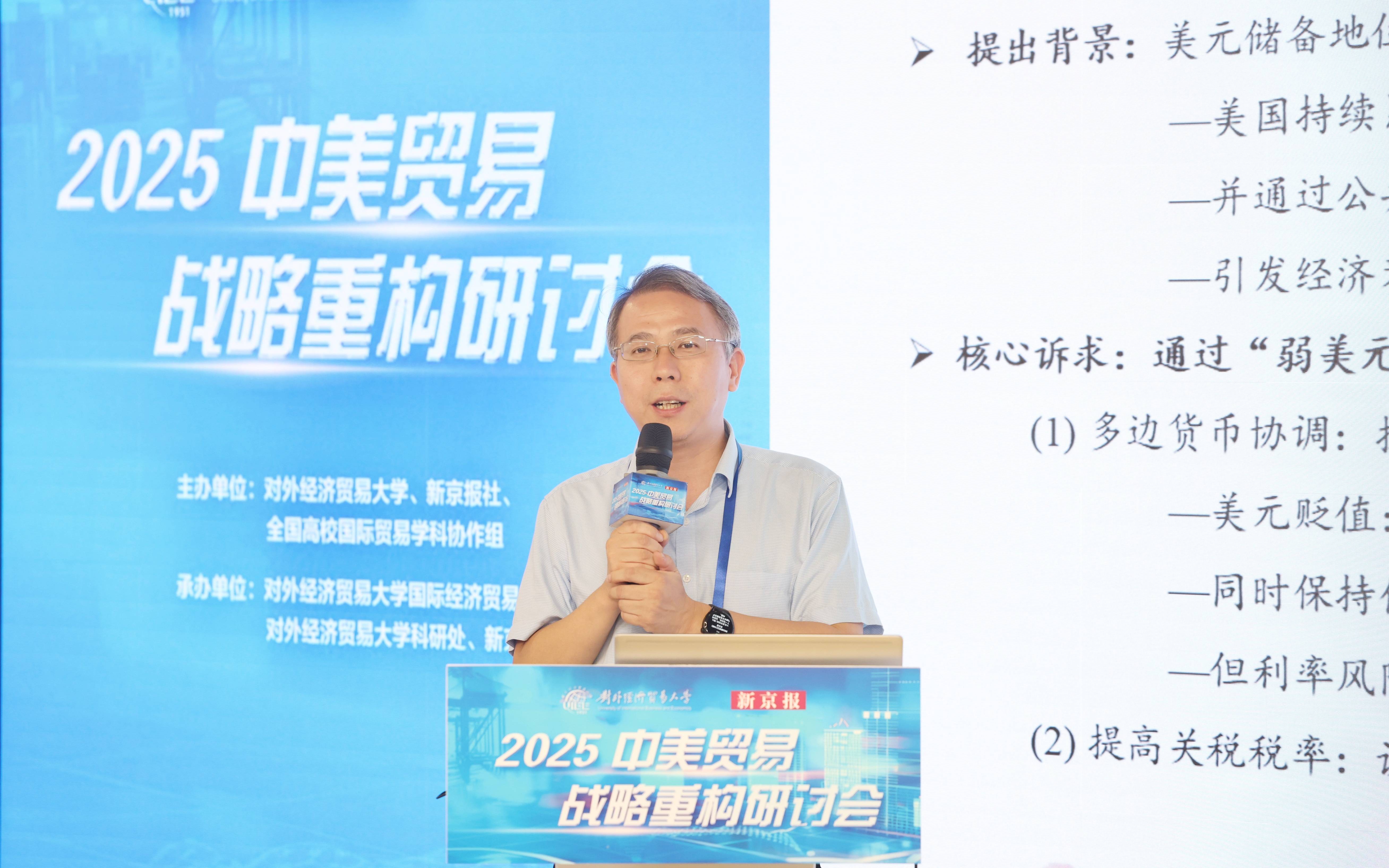
Core Viewpoint - The "Mar-a-Lago Agreement" aims to restructure global economic governance through high tariffs, dollar depreciation, debt swaps, multilateral currency negotiations, and security fees, indicating potential challenges for the dollar system [1] Group 1: Dollar System Challenges - The internal dilemma of the dollar's reserve status stems from its provision of global liquidity since the Bretton Woods system, leading to persistent trade and current account deficits [6] - The demand for dollars and U.S. Treasury bonds is driven by strategic, risk-averse, and national security considerations rather than trade balance [6] - The implementation of the "Mar-a-Lago Agreement" could trigger a sell-off of dollar assets, although the current domestic holding of U.S. Treasuries exceeds foreign holdings, which may mitigate drastic market reactions [6] Group 2: Trade Policies and Currency Dynamics - High tariff policies may narrow the U.S. trade deficit in the short term but cannot fundamentally alter trade structures or address the hollowing out of manufacturing [11] - A single trade policy is insufficient to disrupt the currency landscape; a macro-level approach involving coordinated policies across trade, fiscal, monetary, and industrial sectors is necessary [15] - Even if trade balances change, the distribution of international monetary power may not shift correspondingly due to institutional inertia [15] Group 3: Global Monetary Governance - The global monetary governance structure will not rapidly restructure due to short-term maneuvers; it requires a systematic replacement path involving technology, governance capabilities, and legal foundations [16] - The "Mar-a-Lago Agreement" could negatively impact China’s economy and industries, particularly in electronics, metallurgy, and transportation equipment sectors [16] - Under unilateral pressure and currency depreciation, China's manufacturing sectors, especially in high-tech fields like semiconductors, may face significant losses [20] Group 4: Future of Currency Systems - The U.S. is attempting to create a new global currency anchor system involving "dollars + gold + digital dollars," necessitating China to propose systematic institutional options for participation [21] - The current trade disputes are evolving into currency wars, highlighting the need for the renminbi to establish its own safe asset attributes and financial institutional discourse power to challenge the dollar's dominance [21]
五矿期货早报有色金属-20250711
Wu Kuang Qi Huo· 2025-07-11 01:03
1. Report Industry Investment Rating No investment rating information is provided in the report. 2. Core Viewpoints of the Report - The US copper tariff policy has increased market volatility, and the price differences between US copper, LME copper, and SHFE copper are expected to widen. There is a risk of correction for LME copper and SHFE copper. [2] - The aluminum market is affected by the strong domestic commodity atmosphere, but the expected increase in aluminum ingot inventory in July may resist the upward movement of aluminum prices. [4] - The lead price shows a relatively strong trend, but the increase of SHFE lead is expected to be limited due to weak domestic consumption. [5] - The zinc price has rebounded, but the expected increase in zinc ingot supply and limited consumption may restrict its upward space. [7] - The tin market is in a stalemate between supply shortage and limited acceptance of high - price raw materials by the end - users, and the price is expected to fluctuate within a certain range. [8][9] - The nickel price is affected by macro - sentiment, but the weak demand for stainless steel and the high premium of nickel price over nickel - iron limit its upward space, and it is recommended to sell short on rallies. [10] - The fundamental situation of lithium carbonate is weak, with increased production and inventory, and the upward space of lithium price is limited. [12] - The alumina market has an over - capacity pattern, and it is recommended to short on rallies, with the price anchored to the cost. [15] - The stainless steel market shows a short - term improvement, but the future trend depends on the implementation of anti - involution policies and the substantial improvement of the fundamentals. [17] - The casting aluminum alloy market has weak supply and demand in the off - season, and the futures price faces upward pressure. [19] 3. Summary by Metals Copper - Market performance: LME copper rose 0.23% to $9682/ton, and SHFE copper closed at 78,590 yuan/ton. [2] - Inventory: LME inventory increased by 975 tons to 108,100 tons, and domestic refined copper social inventory and bonded - area inventory both increased slightly. [2] - Price outlook: There is a risk of correction for LME copper and SHFE copper, and the price difference between US copper and others is expected to widen. The operating range of SHFE copper is 77,000 - 79,200 yuan/ton, and that of LME copper 3M is 9,400 - 9,800 dollars/ton. [2] Aluminum - Market performance: LME aluminum rose 0.15% to $2606/ton, and SHFE aluminum closed at 20,760 yuan/ton. The position of SHFE aluminum weighted contract increased. [4] - Inventory: Domestic aluminum ingot social inventory decreased, while LME aluminum inventory increased. [4] - Price outlook: The expected increase in aluminum ingot inventory in July may resist the upward movement of aluminum prices. The operating range of SHFE aluminum is 20,600 - 20,850 yuan/ton, and that of LME aluminum 3M is 2,570 - 2,640 dollars/ton. [4] Lead - Market performance: SHFE lead index rose 0.34% to 17,238 yuan/ton, and LME lead 3S rose to $2068/ton. [5] - Inventory: Domestic social inventory increased slightly. [5] - Price outlook: The lead price shows a relatively strong trend, but the increase of SHFE lead is expected to be limited due to weak domestic consumption. [5] Zinc - Market performance: SHFE zinc index rose 1.28% to 22,347 yuan/ton, and LME zinc 3S rose to $2767/ton. [7] - Inventory: Domestic social inventory increased slightly. [7] - Price outlook: The zinc price has rebounded, but the expected increase in zinc ingot supply and limited consumption may restrict its upward space. [7] Tin - Market performance: SHFE tin rose 1.46% to 266,740 yuan/ton. [8] - Supply - demand situation: The supply of tin ore is still tight, and the demand is in the off - season, with weak procurement intention. [8] - Price outlook: The domestic tin price is expected to fluctuate between 250,000 - 270,000 yuan/ton, and the LME tin price between 31,000 - 33,000 dollars/ton. [9] Nickel - Market performance: SHFE nickel rose 1.92% to 121,720 yuan/ton, and LME nickel rose 1.90% to $15,285/ton. [10] - Fundamental contradiction: The weak demand for stainless steel leads to a decline in nickel - iron price, and the high premium of nickel price over nickel - iron limits its upward space. [10] - Price outlook: It is recommended to sell short on rallies, with the operating range of SHFE nickel at 115,000 - 128,000 yuan/ton and that of LME nickel 3M at 14,500 - 16,000 dollars/ton. [10] Lithium Carbonate - Market performance: The MMLC index rose 0.32%, and the LC2509 contract fell 0.34%. [12] - Supply - demand situation: Production increased by 3.8% to 18,813 tons, and inventory increased by 1.8% to 140,793 tons. [12] - Price outlook: The upward space of lithium price is limited. The operating range of the LC2509 contract is 62,900 - 65,300 yuan/ton. [12] Alumina - Market performance: The alumina index rose 2.44% to 3,186 yuan/ton. [14] - Cost and price: The price is anchored to the cost, and it is recommended to short on rallies. The operating range of the domestic main contract AO2509 is 2,800 - 3,300 yuan/ton. [15] Stainless Steel - Market performance: The stainless steel main contract rose 0.74% to 12,865 yuan/ton, and the spot price increased. [17] - Inventory: Social inventory increased by 0.93%. [17] - Price outlook: The future trend depends on the implementation of anti - involution policies and the substantial improvement of the fundamentals. [17] Casting Aluminum Alloy - Market performance: The AD2511 contract rose 0.55% to 19,940 yuan/ton. [19] - Inventory: The social inventory of recycled aluminum alloy ingots in three regions increased. [19] - Price outlook: The futures price faces upward pressure due to weak supply and demand in the off - season. [19]
特朗普确认8月1日起对铜进口征收50%关税 铜价应声飙至历史高位
智通财经网· 2025-07-10 03:20
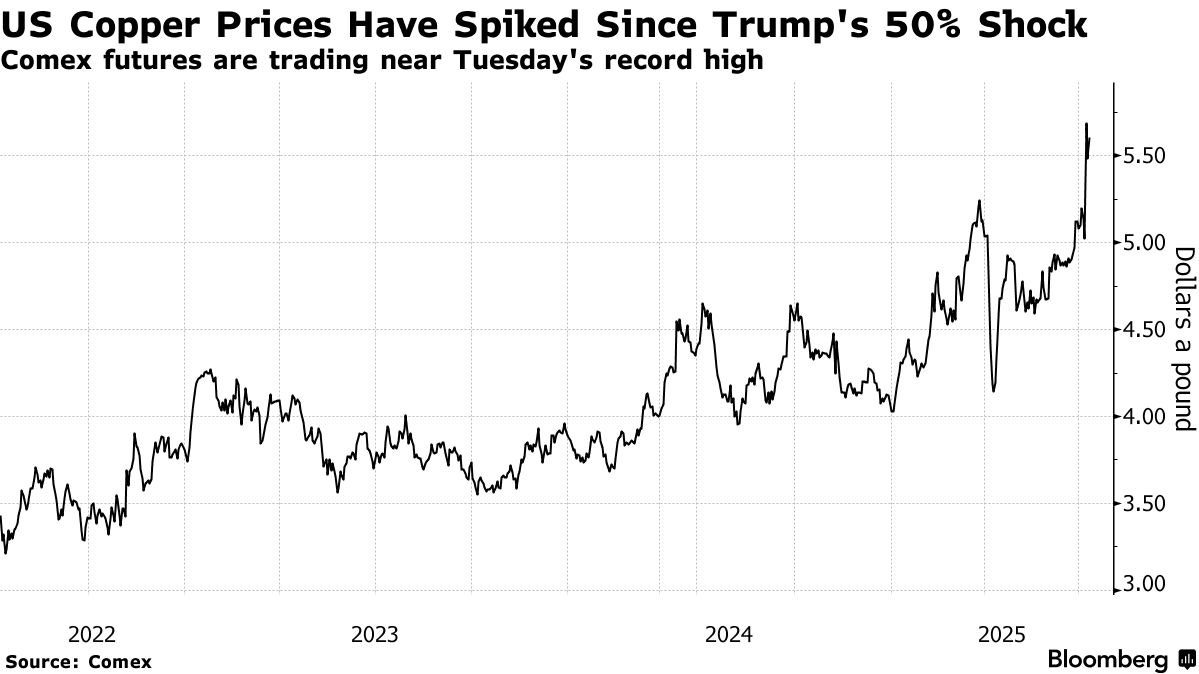
Core Viewpoint - The U.S. government, under President Trump, will impose a 50% tariff on copper imports starting August 1, aimed at revitalizing the domestic metal industry and reversing the decline in U.S. copper market influence [1][5]. Policy Implementation - Specific details regarding the implementation of the copper tariff, such as the method of collection, product scope, and potential supplier exemptions, remain unclear, leaving metal traders awaiting further clarification [3]. - The announcement has already influenced copper futures, which surged to historical highs before slightly retreating, maintaining a 1.40% increase at $5.6200 per pound [3]. Industry Context - The copper tariff is part of a broader series of industrial policies by the Trump administration, which has previously raised tariffs on steel and aluminum, with indications of more industry-specific tariffs in preparation [5]. - The U.S. heavily relies on copper imports, primarily from Chile, Canada, and Mexico, despite copper being the second most used strategic metal by the Department of Defense [5]. - In anticipation of the tariff's impact, U.S. producers and traders are adjusting their supply chains, with some shifting delivery locations to Hawaii and Puerto Rico to shorten shipping times [5]. - Since the initial proposal of the copper tariff in February, U.S. metal imports have reached record highs as traders seek to capitalize on price differences before the tariff takes effect [5].
21社论丨协调好创新与竞争,推动高质量发展
2 1 Shi Ji Jing Ji Bao Dao· 2025-07-08 22:50
Group 1 - The current consensus in the market is to combat "involutionary" competition through legal and market measures, stabilizing market prices and promoting the orderly exit of backward production capacity [1] - The complex causes of "involutionary" competition include local governments using industrial policies for inter-regional capacity investment competition, leading to overcapacity and price competition in related industries [1] - The shift to high-quality development emphasizes the importance of the real economy, with a focus on developing emerging industries and promoting the transformation and upgrading of manufacturing [1] Group 2 - Industrial policies and competition policies have coexisted in China, with industrial policies being necessary for promoting technological innovation and industrial upgrading, but they should be based on competitive policies [2] - The experience of Japan suggests that an overemphasis on industrial policies can lead to low growth, highlighting the need for a balance between industrial and competition policies during different growth phases [2] - During the high-quality development phase, the main drivers of economic growth are innovation and the market's ability to shift resources from low productivity to high productivity sectors [3] Group 3 - The need for a coordinated approach between industrial policies and macroeconomic policies is crucial to avoid asset bubbles and ensure effective resource allocation [3] - When industrial policies are misused by local governments for quantity-based expansion, it can lead to "involutionary" competition, reducing corporate profits and hindering innovation investment [3] - Establishing a unified national market is essential for ensuring fair competition and effective resource allocation [4] Group 4 - There is an urgent need to establish a system and institutional guarantees for achieving high-quality development, with central government-led industrial policies to promote innovation and industrial upgrading [4] - A well-coordinated relationship between industrial and competition policies is necessary to prevent local governments from undermining fair competition rules [4] - Improving the assessment systems for high-quality development and local government performance can help avoid the distortion of industrial policies into tools for regional competition [4]
刘元春:破解“内卷”必须全面启动微观治理,让竞争政策走到C位
Di Yi Cai Jing· 2025-07-07 10:03
Group 1 - The core viewpoint is that China's industrial policy has long prioritized over competition policy, leading to micro-level disorder, necessitating a reorientation of industrial policy and placing competition policy at the forefront [1][2] - The current industrial sector is experiencing a phenomenon where costs are decreasing, but profits are declining even faster, indicating a need for comprehensive micro-governance to address low pricing and "involution" issues [1][2] - The focus of policy has shifted towards preventing "involution-style" vicious competition, with the Central Committee emphasizing the need for industry self-discipline and orderly competition [1][2] Group 2 - The primary concern in the macro economy is the persistently low price levels, driven by both demand-side and supply-side factors, including structural issues and the impact of technological advancements [2] - China's labor productivity has increased by nearly 90% over the past decade, with significant cost reductions in new energy sectors, indicating a shift towards new production models [2] - Despite technological upgrades, many industries are experiencing deteriorating financial metrics, with profit margins hitting historical lows due to "involutionary pricing models" leading to fierce competition [2][3] Group 3 - Overcapacity is not a new phenomenon, but the overcapacity in emerging industries and involution may signal the emergence of new systemic issues [3] - The approach to breaking the low-price phenomenon includes expanding domestic demand, social reforms, and micro-restructuring as supplementary measures [3] - A shift in policy thinking is suggested, moving from an industry-led model to a government-led, industry-coordinated, and enterprise-implemented model, elevating competition policy to a central role [3]