
关税风险

Search documents
中辉有色观点-20250725
Zhong Hui Qi Huo· 2025-07-25 01:55
Report Industry Investment Ratings - Gold: High-level adjustment, long-term strategic allocation [1] - Silver: Bullish [1] - Copper: Bounce under pressure, long-term optimistic [1] - Zinc: Bounce under pressure, long-term supply increase and demand decrease [1] - Lead: Bounce under pressure [1] - Tin: Bounce under pressure [1] - Aluminum: Bounce under pressure [1] - Nickel: Bounce under pressure [1] - Industrial silicon: Cautiously bullish [1] - Polysilicon: Cautiously bullish [1] - Lithium carbonate: Bullish [1] Core Views - Some tariffs have been implemented, reducing the safe-haven sentiment, leading to an adjustment in gold and silver prices. However, the strong long-term support factors for gold, such as a weak US dollar, interest rate cuts, debt issuance, and central bank gold purchases, still exist [2] - The copper market is affected by a rebound in the US dollar index, with high-level consolidation. In the long term, the tight global copper ore supply and its strategic importance support a positive outlook [5] - The zinc market faces supply surplus and demand weakness during the off-season, with prices under pressure. Long-term, there are opportunities to short on rallies [8] - The aluminum market is pressured by inventory accumulation, and the price rebound is limited. Alumina also shows a similar trend [11] - The nickel market is suppressed by supply factors, and the price is under pressure. Stainless steel also faces inventory pressure during the off-season [13] - The lithium carbonate market is influenced by supply disruptions, and the price remains strong. Low-buying strategies are recommended [14] Summary by Variety Gold - **Core view**: High-level adjustment, long-term strategic allocation [1] - **Main logic**: Short-term tariff risks have landed, reducing the risk and causing a price adjustment. However, Powell's pressure, a medium-term weak US dollar trend, and loose monetary policies of multiple countries, along with continued central bank gold purchases, support long-term investment [1] - **Price range**: 770 - 794 [1] Silver - **Core view**: Bullish [1] - **Main logic**: Supported by economic demand, with increased industrial and physical demand due to loose fiscal policies. Short-term, it is affected by gold's adjustment sentiment [1] - **Price range**: 9250 - 9550 [1] Copper - **Core view**: Bounce under pressure, long-term optimistic [1] - **Main logic**: The US dollar index rebounds, and domestic social copper inventories have decreased seasonally. In the long term, the tight global copper ore supply and its strategic importance support a positive outlook [1][6] - **Price range**: Shanghai copper 78500 - 80500; London copper 9700 - 10000 USD/ton [7] Zinc - **Core view**: Bounce under pressure, long-term supply increase and demand decrease [1] - **Main logic**: In 2025, zinc concentrate supply is abundant, and new smelting capacity is being released. Demand is weak during the off-season [9] - **Price range**: Shanghai zinc 22600 - 23200; London zinc 2750 - 2950 USD/ton [10] Lead - **Core view**: Bounce under pressure [1] - **Main logic**: Affected by maintenance in domestic primary lead smelters and increased losses in secondary lead enterprises, with high social inventories [1] - **Price range**: 16500 - 17200 [1] Tin - **Core view**: Bounce under pressure [1] - **Main logic**: Slow resumption of production in Myanmar's Wa State tin mines during the rainy season, with weak supply and demand in the domestic market and inventory accumulation [1] - **Price range**: 265000 - 273000 [1] Aluminum - **Core view**: Bounce under pressure [1] - **Main logic**: Disturbance from overseas bauxite news, inventory accumulation in domestic aluminum ingots and aluminum rods, and weakening开工率 in the aluminum processing industry [1][11] - **Price range**: 20500 - 21000 [1] Nickel - **Core view**: Bounce under pressure [1] - **Main logic**: Stable overseas nickel ore prices, slowdown in downstream stainless steel production cuts, and inventory accumulation during the off-season [1][13] - **Price range**: 122000 - 124000 [1] Industrial Silicon - **Core view**: Cautiously bullish [1] - **Main logic**: The market is strongly influenced by policies, with an increase in southwest开工率 and stable demand [1] - **Price range**: 9600 - 10000 [1] Polysilicon - **Core view**: Cautiously bullish [1] - **Main logic**: The "sales price not lower than cost" provides strong support, with little change in fundamentals and positive market sentiment [1] - **Price range**: 51000 - 56000 [1] Lithium Carbonate - **Core view**: Bullish [1] - **Main logic**: Little change in fundamentals, sensitive to positive news, and influenced by supply disruptions. Technical indicators are strong [1][15] - **Price range**: 75000 - 80000 [1]
惠誉评级:关税、市场和地缘政治风险对全球信用构成持续威胁。
news flash· 2025-07-24 17:54
Core Insights - Fitch Ratings indicates that tariffs, market dynamics, and geopolitical risks continue to pose significant threats to global credit conditions [1] Group 1: Tariffs - The imposition of tariffs has led to increased costs for businesses, impacting their profitability and credit ratings [1] - Ongoing trade tensions between major economies are expected to exacerbate these tariff-related challenges [1] Group 2: Market Dynamics - Market volatility has been heightened due to economic uncertainties, affecting investor confidence and credit availability [1] - Companies are facing challenges in maintaining stable cash flows amid fluctuating market conditions [1] Group 3: Geopolitical Risks - Geopolitical tensions are contributing to an unpredictable business environment, which can lead to credit downgrades for affected companies [1] - The potential for conflict or instability in key regions remains a concern for global credit markets [1]
最新调查:对于美股,本季企业盈利足以盖过关税风险
Hua Er Jie Jian Wen· 2025-07-23 10:17
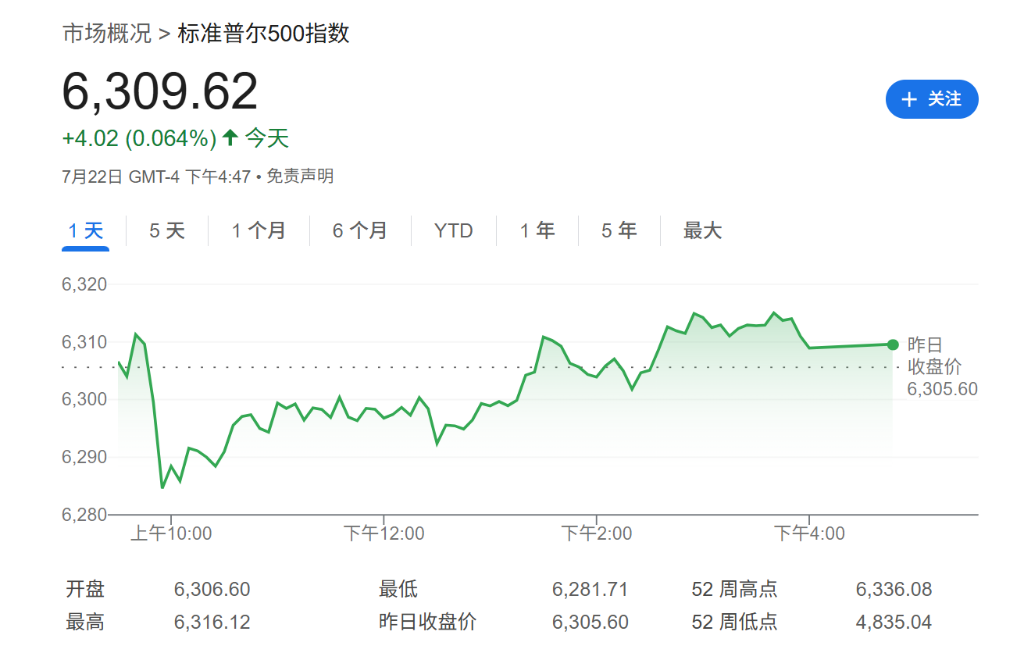
一项最新调查显示,尽管关税给企业前景蒙上阴影,但美国股市本季度将受到企业盈利的提振,强劲的盈利表现足以盖过贸易政策带来的风险。 根据彭博最新的Markets Pulse调查,近三分之二的受访者认为,在未来几周财报季全面展开时,股票的波动性调整后回报将优于美国国债。这项 于7月10日至17日对102名市场参与者进行的调查指出,对股市的积极展望继续由科技行业支撑,受访者预计该行业将在本轮财报季中表现最为强 劲。 美股第二季度财报季刚刚拉开序幕,但标普500指数的盈利预期已经好于分析师的初步预测。在财报季开始前,华尔街预测盈利增长仅为2.8%, 是自2023年年中以来的最慢增速。但随着银行业公布稳健的业绩,整体盈利增长预估已小幅上调至3%以上。 截止发稿,标普500小幅上涨至6309点。 科技巨头或将继续引领美股盈利上涨 本次财报季前景的核心,是科技巨头与其他公司之间日益扩大的业绩差距。数据显示,在人工智能需求的强劲推动下,Mag7的利润增长预计将达 到近15%。与此形成鲜明对比的是,标普500指数中其余493家公司的利润增长预计将"几乎为零"。 富兰克林邓普顿投资解决方案公司副首席投资官Max Gokhman在接 ...

贝莱德:欧洲企业盈利已计入关税风险 股市涨势有望延续
news flash· 2025-07-21 07:52
Core Viewpoint - BlackRock's European equity investment head, Helen Jewell, indicates that European corporate earnings have reasonably factored in tariff risks, suggesting that the current market uptrend can continue as long as there are no significant trade shocks [1] Group 1: Earnings Outlook - European corporate earnings forecasts have been adjusted downwards, but this is not a sign of blind optimism in the market [1] - The market still has upward potential as long as European exporters continue to perform well [1] Group 2: Market Sentiment - Jewell's perspective contrasts sharply with that of strategists from Goldman Sachs, who warn that the stock market appears overly optimistic given the ongoing trade uncertainties as the August 1 U.S. tariff deadline approaches [1]


东方战略观察:关税风险拖累东南亚经济增长预期
Orient Securities· 2025-07-18 10:11
Trade Agreements and Economic Impact - The US-Vietnam trade agreement reduced punitive tariffs on Vietnamese exports to the US from 46% to 20%, while a 40% tariff will be imposed on products transiting through Vietnam from China[5][6] - Vietnam's exports to the US reached $70.91 billion in the first half of 2025, with a trade surplus of $62 billion, marking a 29.1% year-on-year increase[6] Regional Competition and Economic Shifts - Southeast Asian countries like Malaysia and Indonesia are expected to accelerate trade negotiations with the US, potentially including similar transit trade tax clauses[2][5] - The competition among emerging Southeast Asian economies will shift from "tariff differences" to domestic demand potential and technological density[3][12] Challenges for Vietnam - Vietnam faces pressure to fill domestic industrial gaps and explore new trade routes, with stronger domestic demand in Indonesia and a more complete industrial chain in Malaysia[5][12] - The reliance on low-value exports to the US may weaken Vietnam's economic growth momentum, as domestic consumption and investment play limited roles[9][10] Risks and Future Outlook - The uncertainty surrounding the implementation of future trade agreements may lead to a shift in traditional assembly and transit models, pressuring Vietnam's local industries[3][11] - If Thailand and Malaysia secure lower tax rates in negotiations with the US, Vietnam's short-term competitive advantages may diminish[12]
零售与就业双强、美联储官员“放鹰” 金价上演“深V”行情
Jin Tou Wang· 2025-07-18 03:32
Core Viewpoint - The recent strong U.S. economic data has put short-term pressure on gold prices, while geopolitical tensions and tariff risks continue to provide support for the gold market [1][2][4]. Economic Data Impact - U.S. retail sales in June increased by 0.6%, with core retail sales rising by 0.5%, indicating a moderate recovery in consumer spending [2]. - Initial jobless claims fell by 7,000 to 221,000, the lowest level in three months, suggesting a stable labor market that supports consumer spending [2]. Federal Reserve Policy Divergence - There is a notable split within the Federal Reserve regarding interest rate policy, with some members advocating for maintaining restrictive policies to curb inflation, while others support rate cuts [3]. - The probability of a rate cut in September is currently at 54%, with a 30% chance for action in July [3]. Trade Risks and Market Reactions - The Trump administration is in urgent negotiations with Japan regarding a 25% tariff, with a deadline of August 1 for an agreement [4]. - A significant increase of 44% in Swiss gold exports in June indicates that some institutions are still accumulating physical gold as a hedge against potential policy and market risks [4]. Future Outlook for Gold Prices - Gold prices are currently under pressure from macroeconomic factors, but the outlook for the second half of the year will depend on the Federal Reserve's policy direction and the actual implementation of Trump's trade policies [4][5]. - Technically, gold prices remain in a long-term uptrend, with a critical support level at $3,300 per ounce, and potential resistance levels at $3,350 and $3,380 per ounce [5].
帮主郑重:美股新高背后的暗战!中长线投资者该如何破局?
Sou Hu Cai Jing· 2025-07-18 01:24
咱来聊聊美股为啥能创新高。首先得夸夸英伟达,这家公司最近简直是"AI芯片界的霸主",黄仁勋前脚刚宣布恢复对华H20芯片的销售,后脚股价就蹭蹭 往上涨,市值直接冲破4.2万亿美元。不过有个细节得注意,黄仁勋最近在减持,虽然是按照预设计划进行,但这么大的动作还是得留个心眼。 各位朋友,咱们又见面了。最近美股市场可是相当热闹,纳指和标普500齐刷刷创下历史新高,连英伟达的市值都突破了4.2万亿美元,相当于A股整个半 导体板块的总市值。这场景,就像一场高手过招的棋局,表面上风平浪静,实则暗流涌动。 先给大家盘盘昨夜的关键事儿。美国众议院通过了加密货币法案,这可是给数字货币市场打了一剂强心针。不过另一边,穆迪敲响了警钟,说关税风险 可能让更多公司逼近违约。再看Netflix,第二季度营收110.79亿美元,虽说超了预期,但股价盘后还是跌了,看来市场对它的未来增长有点疑虑。 国际油价最近因地缘风险和供应趋紧涨了不少,但金价却跌了,黄金现货下跌0.23%。这说明市场的避险情绪在降温,但同时也反映出大家对经济复苏的 预期在增强。 作为中长线投资者,咱们得把眼光放长远。首先,要关注企业的财报质量,尤其是那些在关税压力下还能保持 ...

台积电(TSM.N):在下半年,到目前为止还没有看到客户行为的任何变化,关税存在风险和不确定性。
news flash· 2025-07-17 06:17
台积电(TSM.N):在下半年,到目前为止还没有看到客户行为的任何变化,关税存在风险和不确定性。 ...
贵金属数据日报-20250715
Guo Mao Qi Huo· 2025-07-15 07:14
Group 1: Report Industry Investment Rating - No relevant content provided Group 2: Core Viewpoints of the Report - On July 14, the main contract of Shanghai gold futures closed up 1.06% to 781.4 yuan/gram, and the main contract of Shanghai silver futures closed up 2.11% to 9207 yuan/kg [5]. - Trump's "Reciprocal Tariffs 2.0" boosts the demand for precious metals and stimulates their prices. The silver price has risen strongly due to factors such as the technical breakthrough and the expected recovery of overseas manufacturing, with the COMEX silver breaking through $39 per ounce and the Shanghai silver main contract breaking through 9200 yuan/kg [5]. - In the short - term, tariff risks may support the precious metals prices to remain strong, especially silver. In the long - term, considering the background of trade war, the probability of the Fed's interest rate cut, global geopolitical uncertainties, and central bank gold purchases, the long - term upward trend of gold remains unchanged, and the strategy of buying on dips is recommended [5]. Group 3: Summary by Relevant Catalogs Price Data - **Spot and Futures Prices**: On July 14, 2025, London gold spot was $3367.33 per ounce, London silver spot was $38.90 per ounce, COMEX gold was $3380.10 per ounce, and COMEX silver was $39.31 per ounce. Compared with July 11, gold prices rose by about 1.1% and silver prices rose by 3.5% - 4.3%. The AU2508 contract was 778.98 yuan/gram, and the AG2508 contract was 9179 yuan/kg, with increases of 1.0% - 1.8% [5]. - **Price Spreads and Ratios**: The gold TD - SHFE active price spread on July 14 was - 2.18 yuan/gram, with a 18.5% change compared to July 11. The silver TD - SHFE active price spread was - 3 yuan/kg, with a - 40.0% change. The gold and silver price ratios also had corresponding changes [5]. Position Data - **ETF and COMEX Positions**: As of July 11, 2025, the gold ETF - SPDR held 947.64 tons, with a - 0.12% change compared to July 10. The silver ETF - SLV held 14758.51984 tons, with a - 0.88% change. COMEX non - commercial long and short positions of gold and silver also had different degrees of changes [5]. Inventory Data - **SHFE and COMEX Inventories**: On July 14, 2025, SHFE gold inventory was 28857 kg, a 17.38% increase compared to July 11. SHFE silver inventory was 1223982 kg, a - 6.11% decrease. COMEX gold and silver inventories also had slight decreases [5]. Interest Rate, Exchange Rate and Stock Market Data - **Exchange Rates and Indexes**: On July 14, 2025, the dollar/yuan central parity rate was 7.15, with a 0.02% change compared to July 11. The dollar index was 97.87, with a 0.29% increase. The yields of 2 - year and 10 - year US Treasuries also increased, and the VIX increased by 3.93% [5].