
宠物经济

Search documents
鼎越LOF: 平安鼎越灵活配置混合型证券投资基金2025年第2季度报告
Zheng Quan Zhi Xing· 2025-07-17 12:23
Core Viewpoint - The report highlights the performance and investment strategy of the Ping An Dingyue Flexible Allocation Mixed Securities Investment Fund for the second quarter of 2025, emphasizing its focus on long-term stable asset growth while managing risks effectively [2][4][10]. Fund Overview - Fund Name: Ping An Dingyue Mixed Fund - Fund Manager: Ping An Fund Management Co., Ltd. - Fund Custodian: Bank of China Limited - Total Fund Shares at Period End: 26,877,735.11 shares - Investment Objective: To utilize various investment strategies flexibly to uncover market opportunities while strictly controlling risks [2][3][4]. Investment Strategy - The fund employs a flexible investment strategy aimed at long-term stable asset appreciation, with a performance benchmark of 50% CSI 300 Index return and 50% China Bond Composite Index return [3][4]. Financial Performance - Net Asset Value at Period End: 2.7146 RMB per share - Net Value Growth Rate for the Period: 2.21% - Performance Benchmark Return: 1.61% - Historical Performance: - Last 3 Months: 2.21% - Last 6 Months: 15.71% - Last Year: 26.99% [5][11]. Investment Composition - Total Value of Stocks Held: 67,447,715.24 RMB, accounting for 90.23% of total assets - Total Value of Bonds Held: None reported - Total Value of Asset-Backed Securities: None reported - Major Sector Allocation: Manufacturing (84.47%) and Information Technology (7.98%) [11][12]. Management Report - The fund manager, Lin Qingyuan, has a background in finance and has been with Ping An Fund Management since February 2023, focusing on flexible allocation strategies [6][7]. Market Outlook - The report expresses confidence in the long-term trends of artificial intelligence (AI) technology and the pet economy, highlighting the shift towards high-value products and the growing market potential in these sectors [9][11].
21对话|硕腾首席商务官:中国宠物经济展现持续增长潜力
2 1 Shi Ji Jing Ji Bao Dao· 2025-07-17 07:17
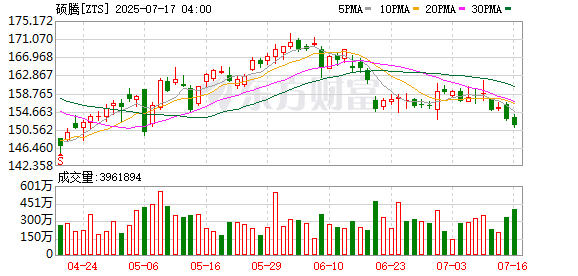
Core Insights - The pet economy in China is experiencing significant growth, driven by the changing attitudes of younger consumers who now view pets as family members rather than mere animals [3][5] - The Chinese pet market is projected to exceed 300 billion yuan in 2024, with a year-on-year growth of 7.5%, and is expected to reach 330 billion yuan by 2025 [3] - The animal health market in China ranks second globally and presents substantial growth opportunities, as many needs remain unmet [3][4] Company Insights - Merck, a Fortune 500 company, reported a revenue of $9.3 billion in 2024, providing vaccines, pharmaceuticals, diagnostic products, and professional services for pets and livestock [2] - As of July 16, Merck's market capitalization was approximately $70 billion [2] - Merck has established a research and production base in Suzhou, China, to better meet local demands and strengthen its supply chain [4] Challenges and Opportunities - The global trade environment poses challenges, particularly regarding tariffs, which can increase costs for pet owners and affect the animal health market [4] - Merck is focusing on local production and supply chain strategies to mitigate tariff impacts and has implemented short-term measures like increasing inventory [4][5] - Despite economic uncertainties, pet owners are willing to invest in their pets' health, indicating a resilient market with rising demand for veterinary services and new treatment options [5]

研判2025!中国宠物保健品行业发展背景、产业链图谱、发展现状、竞争格局及发展趋势分析:行业进入高速发展期[图]
Chan Ye Xin Xi Wang· 2025-07-17 01:58
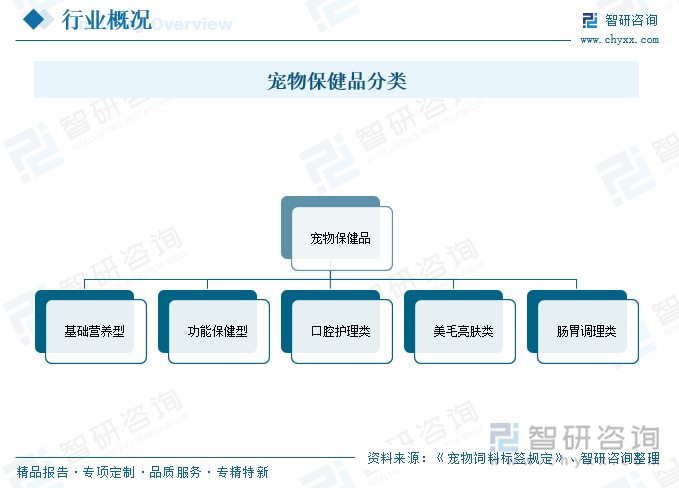
Overview - The role of pets in families is evolving from animals to family members, leading to a significant increase in pet owners' focus on pet health and a willingness to purchase health products for pets [1][12] - The market for pet health products in China is projected to reach 12.65 billion yuan in 2024, with a year-on-year growth of 15.73%, and over 80% of this market is attributed to dog and cat health products [1][12] Development Background - The increase in pet ownership is driven by demographic changes such as an aging population, rising divorce rates, and declining birth rates, leading to more people seeking companionship from pets [6][10] - Over 90% of pet owners now consider their pets as family members, which enhances their willingness to spend on pet care, thus driving the growth of the pet health product market [6][10] Industry Chain - The upstream of the pet health product industry includes suppliers of basic nutritional raw materials such as vitamins and minerals, as well as functional raw materials like glucosamine and probiotics [8] - The midstream involves the production and manufacturing of pet health products, while the downstream includes sales channels such as pet stores, veterinary clinics, and e-commerce platforms [8] Current Market Situation - The demand for pet health products is becoming more refined and personalized, with increasing interest in products targeting specific health functions such as joint protection and digestive care [1][12] - Companies are encouraged to develop more personalized products to meet the diverse needs of different pet breeds, ages, sizes, and health conditions [1][12] Competitive Landscape - The pet health product market in China is relatively concentrated, with key players including Shanghai Hongxing Pet Products Co., Ltd., Shenzhen Hongrui Biotechnology Co., Ltd., and others [15][17] - Notable companies like Guobao Pet Food Group Co., Ltd. reported a total revenue of 5.245 billion yuan in 2024, with health products contributing 0.46 billion yuan, accounting for 0.88% of total revenue [19] Future Trends - Functional health products such as those for joint health and immune support are expected to dominate the market, while personalized health products based on genetic testing and AI algorithms are anticipated to emerge [21] - There is a growing consumer preference for natural and organic ingredients in pet health products, aligning with concerns about food safety and health [21]

全球金霉素霸主:高杠杆扩张与行业变局突围!
市值风云· 2025-07-16 10:05
Core Insights - The animal health industry is crucial for ensuring the health of livestock and pets, driven by increasing demand for high-quality vaccines and medications due to rising disease risks in concentrated farming environments [1][2] - The industry is experiencing significant growth fueled by the booming pet economy, where pet owners are willing to spend more on vaccines, deworming, specialty drugs, and health products [1] - Regulatory changes in China, such as "reducing antibiotic use" and the new GMP for veterinary drugs, are accelerating industry consolidation, favoring companies with strong R&D capabilities and product quality [1] Industry Dynamics - The trend towards centralized farming increases the risk of disease outbreaks, prompting farm owners to invest more in preventive measures, making animal health products essential [1] - The focus on prevention over treatment has become a societal consensus, as large-scale epidemics can severely impact the entire supply chain [1] - Major livestock producers are evolving into large conglomerates, prioritizing product effectiveness, service quality, and cost efficiency when purchasing animal health products [1] Market Opportunities - The animal health market is a multi-billion dollar industry, with growth driven by continuous innovation in product development and the ability to provide comprehensive solutions [2] - Companies that can offer a diverse product line and maintain high production standards will have a competitive edge in capturing market share [2]

谁在为“毛孩子”买单?宠物经济背后的“它消费” | 观产业
高毅资产管理· 2025-07-16 09:30
Core Insights - The rise of the "pet economy" in China is driven by social changes, consumption upgrades, and technological empowerment, with pets increasingly viewed as family members rather than mere tools [2][6][10]. Group 1: Emotional Value Drivers - The demand for emotional companionship is growing, as pets provide significant comfort and reduce stress in modern society [8]. - Factors such as the increase in single-person households, an aging population (over 310 million aged 60 and above), and declining birth rates contribute to the rising need for emotional support from pets [9]. Group 2: Key Influencing Factors - Increased consumer spending power leads to a rise in demand for pets, with a positive correlation between pet industry growth and GDP per capita [10]. - Urbanization accelerates the pet market's development, especially in lower-tier cities where growth potential remains high [11]. - The aging population drives the expansion of the pet market, with older adults increasingly viewing pets as family members and investing in quality pet care [15]. - The single economy presents new growth opportunities for the pet industry, as pets become integral to family life amid low birth rates [17]. - Diverse family structures, including childless couples, elevate the demand for pets as emotional companions [19]. Group 3: Consumer Demographics - The primary consumer base for the pet market consists of individuals born in the 1990s and 2000s, who account for 67.7% of market share and prioritize pet quality and personalized needs [21]. - The elderly population is increasingly investing in pet care, with significant growth in spending on pet food and health management [24]. - First- and second-tier cities dominate the pet ownership landscape, but there is notable growth in pet ownership in lower-tier cities, with a 30% increase in 2023 [26]. Group 4: Market Size and Segmentation - The Chinese pet market surpassed 592.8 billion yuan in 2023 and is projected to reach 811.4 billion yuan by 2025 [30]. - Pet food and medical care are the two largest segments, with pet food accounting for 52.2% of the market, driven by a shift towards higher quality and specialized nutrition [35]. - The pet medical sector holds a 28.5% market share, with increasing demand for specialized care due to the aging pet population [36]. - Pet supplies and services are also growing, with smart pet products expected to reach nearly 7 billion yuan by 2024, reflecting a 13.9% annual growth rate [38]. Group 5: Future Trends - The trend of domestic brand preference is rising, with 32.9% of dog owners and nearly 35% of cat owners favoring local brands by 2024 [41]. - The pet industry is experiencing a dual empowerment of consumption upgrades and technological advancements, with a growing acceptance of high-end services and personalized pet care [44]. - The concept of "pet-friendly" spaces is becoming integral to urban development, with businesses increasingly catering to pet owners [46]. - The "silver economy" and lower-tier markets are emerging as new frontiers for the pet economy [47].
收评:沪指震荡微跌,医药、酿酒等板块拉升,金融板块走弱
Zheng Quan Shi Bao Wang· 2025-07-16 07:44
Market Overview - The Shanghai Composite Index experienced slight fluctuations, closing down 0.03% at 3503.78 points, while the Shenzhen Component Index and the ChiNext Index both fell by 0.22% to 10720.81 points and 2230.19 points respectively [1] - The total trading volume across the Shanghai, Shenzhen, and Beijing markets reached 1461.9 billion yuan [1] Sector Performance - Weak sectors included insurance, steel, banking, non-ferrous metals, coal, and brokerage [1] - Strong sectors included automotive, electricity, pharmaceuticals, and liquor, with active themes in innovative drugs, short drama games, pet economy, and humanoid robots [1] Investment Insights - Dongguan Securities indicated that the market may enter a consolidation phase following recent rebounds, suggesting a balanced investment approach and focusing on high-performing stocks as the semi-annual report window approaches [1] - Fuhong Fund noted a rising bullish sentiment in the equity market, with a rotation of gains across various sectors, particularly in value sectors like banking and cyclical stocks, as well as growth sectors related to overseas computing power chains and stablecoins [2] - The ongoing negotiations regarding US-China tariffs are expected to positively impact the market, with potential unlocking of certain chips and a resurgence in capital expenditures from internet platforms, leading to optimistic expectations for domestic AI computing power and applications [2]
收评:沪指微跌 医药股整体表现强势 钢铁等金属股跌幅靠前
Xin Hua Cai Jing· 2025-07-16 07:39
Market Performance - The Shanghai Composite Index opened slightly lower, while the Shenzhen Component and ChiNext Index opened slightly higher on July 16, 2023. After initial adjustments, all indices rose collectively, with the ChiNext Index peaking at a 1.1% increase before fluctuating back down. The Shanghai Composite Index experienced narrow fluctuations, while the Shenzhen Component and ChiNext Index faced downward movements during the day. By the end of the trading session, the Shanghai Composite Index closed at 3503.78 points, down 0.03%, with a trading volume of approximately 572.4 billion yuan [1] Sector Performance - The pharmaceutical sector showed strong performance, with significant increases in sub-sectors such as animal vaccines, hepatitis concepts, generic drugs, innovative drugs, weight loss drugs, and pharmaceutical e-commerce. Other sectors that saw notable gains included pet economy, Hainan free trade, textile manufacturing, automotive parts, education, integrated die-casting, short drama games, and humanoid robots. Conversely, metal stocks, including steel, titanium, lithium extraction from salt lakes, and rare earth permanent magnets, faced declines [1] Institutional Insights - According to institutional perspectives, the overall market trend remains upward, with the Shanghai Composite Index solidifying around the 3500-point mark, indicating potential for further upward movement. The second quarter economic outlook is positive, enhancing the value of Chinese asset allocation. Key sectors to watch include high-growth areas such as semiconductors, consumer electronics, artificial intelligence, robotics, and low-altitude economy [2] - The pet consumption market is transitioning from a "basic needs" model to a "quality upgrade" model, with a significant portion of new pet owners (67% from the post-90s and post-00s generations) prioritizing ingredient quality over basic availability [2] Industry Development - The robotics industry is experiencing robust growth, with local supply chain rates exceeding 60%. The Ministry of Commerce emphasizes the importance of a complete industrial chain in optimizing domestic and international circulation, supporting high-level openness [3] - Chongqing is focusing on identifying and nurturing enterprises in the intelligent connected vehicle sector that meet listing and merger conditions. The city plans to establish a joint service mechanism to support key component enterprises in market expansion, technology research, and financing [4]
2025年中国宠物托运行业发展背景、产业链、市场规模、竞争格局和发展趋势研判:高铁加入宠物托运“大军”,行业市场规模有望进一步增长[图]
Chan Ye Xin Xi Wang· 2025-07-16 01:06
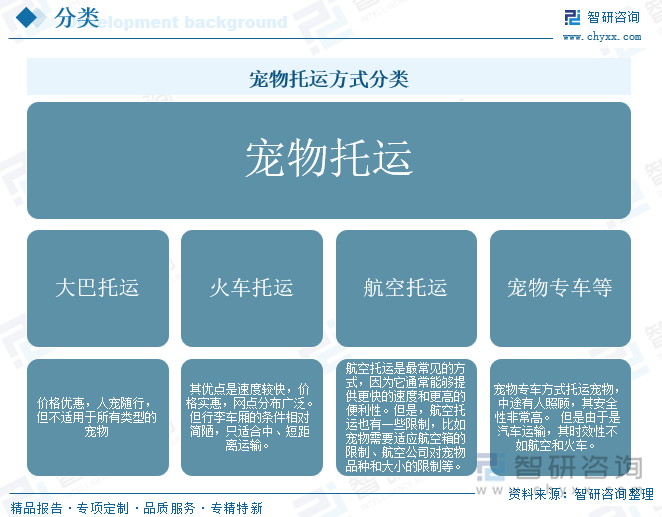
Core Insights - The pet transportation market in China is experiencing explosive growth due to urbanization, increased population mobility, and rising demand for traveling with pets. The market size is projected to grow from 22.01 billion yuan in 2020 to 32.00 billion yuan by 2024, with a compound annual growth rate (CAGR) of 9.81% [1][15] - Starting from April 8, 2025, certain high-speed rail services will introduce pet transportation options, indicating an expansion of transportation methods for pets and further growth in the market [1][15] Pet Transportation Industry Overview - Pet transportation refers to the logistics service of transporting pets over various distances, requiring compliance with national regulations. It includes different modes such as bus, train, air, and dedicated pet vehicles [3] - The industry is supported by upstream sectors including pet breeding, pet supplies, and veterinary services, which ensure the health and safety of pets during transportation [7] Market Dynamics - The number of pet-owning households in China has surpassed 120 million, driven by an increase in both young and older pet owners. The pet dog population is expected to reach 52.58 million and pet cats 71.53 million by 2024, indicating a growing market base for pet transportation [9] - Economic factors such as rising disposable income and consumer spending are contributing to the increasing demand for pet services, including transportation [5] Competitive Landscape - The pet transportation industry is characterized by a large number of small to medium-sized enterprises, leading to intense competition. Key players include companies like Kunming Pet Travel Co., Air Pet (Guangzhou) Service Co., and China Railway Express Co. [17][19] Future Trends - The industry is expected to see the emergence of more specialized pet transportation companies offering tailored services based on pet type, age, and health status. Technological advancements such as drone delivery and smart logistics systems will enhance efficiency and safety in pet transportation [23] - Regulatory frameworks are anticipated to evolve, with stricter policies to ensure market order and consumer protection, including standards for transportation equipment and personnel qualifications [23]
奶酪棒卖不动了?妙可蓝多要跨界入局宠物食品赛道
Sou Hu Cai Jing· 2025-07-10 10:21
Core Viewpoint - Miao Ke Lan Duo, a leading cheese company, is expanding into the pet food market by recruiting for positions related to pet cheese products, indicating a strategic move into the "it economy" sector [2][3]. Company Summary - Miao Ke Lan Duo is looking to establish a pet cheese product line from scratch, with a three-year development plan for the new business [3]. - The company has historically focused on cheese products, which account for over 80% of its revenue, but has faced challenges due to a lack of business diversification [3][4]. - The company's revenue growth has slowed significantly, with a notable decline in net profit from 1.93 billion yuan in 2021 to 790 million yuan in 2023, although a slight recovery is expected in 2024 [4][8]. Industry Summary - The pet economy in China is projected to exceed 300 billion yuan in 2024, with significant growth in both dog and cat markets [9]. - Over 30 leading companies from various sectors, including food and beverage, are entering the pet industry, indicating a trend of cross-industry expansion [10]. - The pet food and supplies market is characterized by intense competition, with both foreign and domestic brands vying for market share, necessitating innovation and product differentiation [11].


奶酪巨头10万月薪求贤 妙可蓝多跨界宠物市场寻增长
Xin Lang Zheng Quan· 2025-07-10 06:52
Core Insights - The company, Miaokelando, is strategically transitioning into the pet food market, highlighted by high-paying job postings for key positions in pet cheese product management [1][2] - The company's revenue for 2024 is projected at 4.844 billion yuan, a decline of 8.99% year-on-year, primarily due to a contraction in trade business, despite a 6.92% growth in cheese business [2] - The pet food market in China is expected to reach 345.3 billion yuan in 2024, with a 5.8% year-on-year growth, and pet food accounting for 48% of this market [2] Strategic Shift - Miaokelando's entry into the pet food sector is driven by the need for new growth engines, as the market for children's cheese sticks is maturing [2] - The company has set ambitious performance targets, including a 66.37% increase in net profit by 2025 and a compound annual growth rate of around 60% for net profit from 2025 to 2027 [2] Market Potential - The high-end pet food market offers significant profit margins, with premium pet milk products priced at 10 yuan per bottle compared to 3.1 yuan for human lactose-free milk, indicating a lucrative opportunity [3] - The pet dairy product segment is experiencing rapid growth, with no dominant brands currently established, presenting an opportunity for Miaokelando [2][3] Competitive Landscape - The pet food market is competitive, with established brands like Maifudi and Wei Shi already in the pet cheese niche, and new entrants like Dogsee Chew securing significant funding [3] - Current regulations do not adequately cover dairy products in pet food, placing the onus of product safety on companies [3] Marketing Strategy - Miaokelando is leveraging innovative marketing strategies, including the creation of a "pet ambassador" character and celebrity endorsements, to capture the attention of the Gen Z market [3] Ecosystem Development - The company benefits from its relationship with Mengniu, which has invested in pet healthcare and supply chain solutions, creating a synergistic ecosystem for Miaokelando's pet products [4][5] - The potential for a complete ecosystem encompassing research, production, and medical channels could position Miaokelando advantageously in the market [5] Future Outlook - The challenges in developing pet dairy products, particularly addressing lactose intolerance, require significant R&D investment, with product testing taking 12-18 months [5] - The high profit margins in the premium pet food sector, potentially exceeding 60%, present a compelling incentive for Miaokelando to pursue this market aggressively [5]