
降息预期

Search documents
金融期货早评-20251117
Nan Hua Qi Huo· 2025-11-17 03:17
Report Industry Investment Ratings No specific industry investment ratings are provided in the report. Core Views of the Report - Overseas, the end of the US government shutdown requires attention to economic data release and its impact on the economy. In the US, the potential replacement of the Atlanta Fed President by a dovish candidate and the uncertainty of the next Fed Chair's identity could affect the interest - rate cut outlook. Domestically, the economic data shows a marginal slowdown, and the strength and effectiveness of policy support are key concerns [2]. - For the RMB exchange rate, it broke through the 7.10 mark due to the weak US dollar index, and is expected to get some support from seasonal effects. Export enterprises are advised to lock in forward exchange settlement at 7.12, and import enterprises can adopt a rolling purchase strategy at 7.07 [6]. - The stock index is expected to continue to fluctuate due to the weak recovery of the domestic fundamentals and the influence of external factors such as US officials' hawkish remarks and the release of key US economic data [7]. - For treasury bonds, mid - term long positions can be held, and short - term investors can buy on dips [8]. - In the container shipping market, the EC2602 contract's last trading day is confirmed. The market is affected by both macro and fundamental factors, with multiple long and short factors in play. Trend traders are advised to wait and see, and arbitrageurs can focus on specific spreads [9][10][11]. - For precious metals, in the short - term, the adjustment may continue. Long - term factors still support the upward movement of precious metal prices. Specific support and resistance levels are provided for gold and silver [17]. - For copper, the macro - environment is mixed, and the fundamental de - stocking limits the price increase. The copper price is expected to find a balance based on downstream procurement, with different price ranges predicted [20][21]. - For aluminum, it is expected to fluctuate at a high level. Alumina is expected to be weak, and cast aluminum alloy is expected to fluctuate at a high level [22][24]. - For zinc, it is expected to show a relatively strong and fluctuating trend, with support at the bottom in November [24]. - For tin, it is recommended to enter the market on dips as the supply is weak compared to demand in the short - term [25]. - For industrial silicon and polysilicon, the fundamentals are weak, and they are expected to show wide - range fluctuations. Attention should be paid to market sentiment and policies [28]. - For lead, it is expected to fluctuate strongly, and opportunities at the lower level can be noted [29]. - For steel products (rebar and hot - rolled coil), they are expected to fluctuate within a certain range, with the lower limit supported by raw material costs and the upper limit restricted by inventory [32]. - For iron ore, the short - term supply and demand are both weak, and the inventory is accumulating, but there is a structural shortage. It is recommended to reduce short positions at low prices for better risk - return [34][36]. - For coking coal and coke, the short - term prices may adjust, but in the long - term, they may strengthen with the implementation of policies and winter storage demand. Specific price ranges are provided for investment [37][38]. - For ferroalloys (silicon iron and silicon manganese), they are expected to fluctuate weakly due to high inventory and weak demand [39]. - For crude oil, it is expected to fluctuate at a low level between 60 - 65 dollars, with key attention on geopolitical and risk - aversion factors [44]. - For LPG, it is expected to show a relatively strong and fluctuating trend, with a high valuation [46]. - For PTA - PX, they are expected to fluctuate strongly with the cost side, but the PTA surplus expectation restricts the processing fee recovery [50]. - For MEG - bottle chips, the long - term supply - demand surplus remains, and it is recommended to short at high prices. Specific price levels are provided for operation [53]. - For urea, it is expected to continue to fluctuate, with the downward space supported and the upward space pressured [55]. - For PP, the short - term supply - demand situation improves, and the PP1 - 5 positive spread is supported [58]. - For PE, it shows a bottom - up trend, but the upward space is limited due to the long - term weak supply - demand pattern [61]. - For pure benzene and styrene, they rebounded at a low level, but the fundamental surplus situation remains, and the rebound height is limited [62][63]. - For fuel oil, the high - sulfur cracking is bearish, and the low - sulfur fuel oil is expected to be at a low - level consolidation with upward drivers [65][66]. - For asphalt, it is expected to fluctuate in the short - term, and attention should be paid to the winter storage situation [69]. - For rubber and 20 - grade rubber, the supply and demand are affected by multiple factors, and the price may face pressure during the upward process [70]. - For glass, soda ash, and caustic soda, the fundamentals are weak. Soda ash is cost - priced, glass may decline towards the end of the 01 contract, and caustic soda has a weak supply - demand pattern in the long - term [71][72][73]. - For pulp and offset paper, they are expected to continue wide - range fluctuations with a slightly downward - shifted center [75]. - For logs, long - term strategies such as 01 - 03 reverse spreads can be considered [76]. - For propylene, it is expected to fluctuate, with the supply side being the main source of price fluctuations [78]. - For hogs, the near - term pressure is large. It is recommended to wait and see and participate in reverse spreads appropriately [83]. - For oilseeds, the USDA report's bullish effect was less than expected. The domestic soybean meal shows a pattern of near - strong and far - weak, and the rapeseed meal is in a state of weak supply and demand in the fourth quarter [84][85][86]. - For oils, they are expected to fluctuate in the short - term, and attention should be paid to the upward opportunities of the far - month 05 contract [88]. - For soybeans, the bullish trend continues with strong capital buying willingness [90]. - For corn and starch, they are expected to fluctuate strongly at the bottom, with limited one - way upward movement [92]. - For cotton, the domestic supply pressure is increasing, and the price may fluctuate weakly in the short - term, but there is still some support from the demand side [94]. - For sugar, attention should be paid to the performance around 5500 [96]. - For eggs, the long - term egg - laying hen capacity is still excessive, and it is recommended to participate in long positions lightly if betting on a rebound [97]. - For apples, the recent trend remains strong [99]. - For jujubes, the new - season production is still uncertain. The price may have limited downward space during the purchase season, and attention should be paid to the commodity rate and purchase situation [101]. Summaries According to Related Catalogs Financial Futures - **Macro**: Key events include the publication of important articles on new - quality productivity, government meetings on promoting consumption, and the release of China's October economic data. The US has a schedule for releasing important economic data, and there are developments in trade agreements and Fed interest - rate cut expectations [1]. - **RMB Exchange Rate**: The previous trading day's exchange rate data is provided. It is affected by the US dollar index and domestic policies. The key is to follow economic data and domestic enterprise settlement intentions [3][4][6]. - **Stock Index**: The previous trading day's stock index was weak, and the trading volume decreased. The release of October financial and economic data shows that the domestic fundamentals are in a weak - recovery state, and the index is expected to continue to fluctuate [6][7]. - **Treasury Bonds**: The previous week's treasury bonds fluctuated, and the market lacked trading hotspots. The 10 - month economic and financial data were mostly disappointing, but the market reaction was limited. It is recommended to hold mid - term long positions [7][8]. - **Container Shipping (European Line)**: The last trading day of the EC2602 contract is confirmed. The market is affected by both macro and industry fundamentals, with multiple long and short factors [9][10]. Commodities Non - Ferrous Metals - **Gold & Silver**: Last week, the prices of precious metals rose and then fell. The long - term factors support the upward movement, but the short - term adjustment may continue [15][17]. - **Copper**: The domestic and international copper prices had different performances last week. The macro - environment is mixed, and the fundamental de - stocking limits the price increase [18][20]. - **Aluminum**: The price and position of Shanghai aluminum reached a high this week, and then some long positions left. The overseas supply is expected to tighten, but the downstream demand is weak. Alumina is in an oversupply situation, and cast aluminum alloy follows the trend of aluminum [21][22][23]. - **Zinc**: The zinc price adjusted at a high level. The smelting end may reduce production in November, and the inventory has the possibility of de - stocking. It is expected to show a relatively strong and fluctuating trend [24]. - **Tin**: The tin price adjusted intraday. The supply is weak compared to demand in the short - term, and it is recommended to enter the market on dips [25]. - **Industrial Silicon & Polysilicon**: The industrial silicon market has a weak supply - demand pattern, and the polysilicon industry is in a state of production reduction and inventory accumulation. They are expected to show wide - range fluctuations [25][28]. - **Lead**: The lead price adjusted slightly. The supply was tight in October, and it is gradually returning to balance. It is expected to fluctuate strongly in the short - term [29]. Black Metals - **Rebar & Hot - Rolled Coil**: Last week, the steel products fluctuated, and the bottom support was strong. The supply and demand of rebar are improving marginally, while the hot - rolled coil has high inventory pressure. The price is expected to fluctuate within a certain range [30][31][32]. - **Iron Ore**: The supply and demand are both weak in the short - term, and the inventory is accumulating, but there is a structural shortage. It is recommended to reduce short positions at low prices [34][36]. - **Coking Coal & Coke**: The recent price increase of coking coal and thermal coal has led to a wait - and - see attitude in the market. The demand for coking coal is seasonally weak, but the long - term supply may be restricted, and it is recommended to consider long positions at appropriate price ranges [37][38]. - **Silicon Iron & Silicon Manganese**: The steel mill profitability is declining, and the demand for ferroalloys is expected to decrease. The inventory is at a high level, and they are expected to fluctuate weakly [39]. Energy and Chemicals - **Crude Oil**: The previous week's oil price showed an N - shaped fluctuation and moved down. The current supply is loose, and the price is expected to fluctuate at a low level, with key attention on geopolitical and risk - aversion factors [41][43][44]. - **LPG**: It is expected to show a relatively strong and fluctuating trend, with a high valuation and a neutral - to - positive fundamental situation [45][46]. - **PTA - PX**: The PX supply is expected to be high in the fourth quarter, and the PTA has many maintenance plans in November. The PX - TA is expected to fluctuate strongly with the cost side, but the PTA surplus restricts the processing fee [47][50]. - **MEG - Bottle Chips**: The supply side has many unexpected events, and the demand side is relatively stable. The long - term supply - demand surplus remains, and it is recommended to short at high prices [52][53]. - **Urea**: The daily production is expected to remain high in November, but the export policy alleviates the pressure. The price is expected to continue to fluctuate [54][55]. - **PP**: The short - term supply - demand situation improves, but the long - term demand growth is limited. The PP1 - 5 positive spread is supported [57][58]. - **PE**: It shows a bottom - up trend, but the long - term supply - demand pattern is weak, and the upward space is limited [59][61]. - **Pure Benzene & Styrene**: They rebounded at a low level, but the fundamental surplus situation remains, and the rebound height is limited [62][63]. - **Fuel Oil**: The high - sulfur cracking is bearish, and the low - sulfur fuel oil is expected to be at a low - level consolidation with upward drivers [65][66]. - **Asphalt**: The price fell last week, and the supply increased while the demand was weak. It is expected to fluctuate in the short - term, and attention should be paid to the winter storage situation [67][69]. - **Rubber & 20 - Grade Rubber**: The supply and demand are affected by weather, downstream demand, and inventory. The price may face pressure during the upward process [69][70]. - **Glass, Soda Ash, & Caustic Soda**: The fundamentals are weak. Soda ash is cost - priced, glass may decline towards the end of the 01 contract, and caustic soda has a weak supply - demand pattern in the long - term [71][72][73]. - **Pulp & Offset Paper**: They are expected to continue wide - range fluctuations with a slightly downward - shifted center, affected by factors such as spot prices, port inventory, and macro - environment [74][75]. - **Logs**: The price and inventory data are provided. It is recommended to consider long - term strategies such as 01 - 03 reverse spreads [76]. - **Propylene**: It is expected to fluctuate, with the supply side being the main source of price fluctuations [78]. Agricultural Products - **Hogs**: The near - term pressure is large, and the far - term supply may be affected by policies. It is recommended to wait and see and participate in reverse spreads appropriately [81][83]. - **Oilseeds**: The USDA report's bullish effect was less than expected. The domestic soybean meal shows a pattern of near - strong and far - weak, and the rapeseed meal is in a state of weak supply and demand in the fourth quarter [84][85][86]. - **Oils**: The USDA report was disappointing, and the oils are expected to fluctuate in the short - term. Attention should be paid to the upward opportunities of the far - month 05 contract [87][88]. - **Soybeans**: The bullish trend continues with strong capital buying willingness, and the supply structure has changed [89][90]. - **Corn & Starch**: The prices are expected to fluctuate strongly at the bottom, with limited one - way upward movement. The corn supply has converged, and the starch is supported by the raw material price [91][92]. - **Cotton**: The US cotton production is expected to increase, and the domestic supply pressure is increasing. The price may fluctuate weakly in the short - term, but the downstream demand has some resilience [93][94]. - **Sugar**: The international and domestic sugar market information is provided. Attention should be paid to the performance around 5500 [95][96]. - **Eggs**: The long - term egg - laying hen capacity is still excessive, and it is recommended to participate in long positions lightly if betting on a rebound [97]. - **Apples**: The recent trend remains strong [98][99]. - **Jujubes**: The new - season production is still uncertain. The price may have limited downward space during the purchase season, and attention should be paid to the commodity rate and purchase situation [100][101].
金鹰基金:聚焦科技核心主线 关注政策加码价值方向
Xin Lang Ji Jin· 2025-11-17 03:13
Group 1 - The A-share market continues to experience fluctuations with significant sector differentiation, as the Shanghai Composite Index struggles around the 4000-point mark, indicating a high-level consolidation phase [1] - The market shows structural characteristics with consumer recovery leading the gains, defensive pharmaceutical stocks strengthening, and technology sectors under pressure, reflecting a trend of consumption > finance > cyclical > growth [1] - The average daily trading volume in the A-share market has risen to 2.04 trillion yuan, indicating increased trading activity despite a general decline in market participation [1] Group 2 - Economic data in China presents mixed signals, with October CPI turning positive year-on-year, but other indicators such as retail sales, fixed investment, and industrial value-added showing marginal weakness, suggesting that domestic economic momentum still requires policy support [2] - The U.S. government has ended its shutdown, but market sentiment remains cautious due to the absence of U.S. economic data, with the Federal Reserve maintaining a hawkish stance; this has led to short-term valuation pressure on U.S. tech stocks [2] - Looking ahead, there is a possibility of the Federal Reserve choosing to cut interest rates in December, supported by upcoming inflation and employment data, which could influence market dynamics [2] Group 3 - The investment strategy suggests a balanced approach to rapidly rotating market styles, focusing on core themes in technology while paying attention to domestic policy directions for value stocks [3] - Although cyclical and consumer sectors may face short-term performance pressures, current stock prices have largely reflected pessimistic mid-term expectations, indicating potential for valuation recovery [3] - The technology sector is expected to undergo a phase of capital pressure digestion, with short-term stagnation in pharmaceuticals and military industries potentially leading to a rotation towards technology, while mid-term focus remains on sectors with fundamental support such as overseas computing power, storage, consumer electronics, and wind energy storage [3]
宝城期货国债期货早报(2025年11月17日)-20251117
Bao Cheng Qi Huo· 2025-11-17 03:10
Group 1: Report's Investment Rating - No investment rating information provided Group 2: Core Viewpoints - The short - term view of TL2509 is to oscillate, the medium - term view is to oscillate, and the intraday view is to be weak, with an overall view of oscillatory consolidation due to a decrease in short - term interest rate cut expectations and the existence of medium - to - long - term easing expectations [1] - For financial futures index stock sectors including TL, T, TF, and TS, the intraday view is weak, the medium - term view is to oscillate, and the reference view is oscillatory consolidation. In the long run, the lack of effective domestic demand requires a loose monetary environment, providing strong support for Treasury bond futures. However, in the short term, the economic data shows resilience, and there is no high necessity for additional easing at the end of the year, and the possibility of an interest rate cut in the short term is low, so the upward momentum of Treasury bond futures is limited. Overall, Treasury bond futures will mainly oscillate and consolidate in the short term [5] Group 3: Summary by Related Catalogs Variety Viewpoint Reference - Financial Futures Index Stock Sector - For TL2509, the short - term is to oscillate, the medium - term is to oscillate, the intraday is weak, with an overall view of oscillatory consolidation. The core logic is that short - term interest rate cut expectations decline while medium - to - long - term easing expectations remain [1] Main Variety Price Market Driving Logic - Financial Futures Index Stock Sector - For TL, T, TF, and TS, the intraday view is weak, the medium - term view is to oscillate, and the reference view is oscillatory consolidation. Last week, Treasury bond futures oscillated and consolidated. Currently, they are in a state with limited upward and downward space. In the long run, the lack of effective domestic demand requires a loose monetary environment, supporting Treasury bond futures. In the short term, economic data shows resilience, and there is no high need for additional easing at the end of the year, and the short - term interest rate cut possibility is low, limiting the upward momentum of Treasury bond futures [5]
美国政府重启缓解流动性担忧,降息预期左右贵金属短期价格走向 | 投研报告
Zhong Guo Neng Yuan Wang· 2025-11-17 02:29
Core Viewpoint - The non-ferrous metal sector experienced a weekly increase of 1.07% from November 10 to November 14, ranking among the top in all primary industries [1][2] Summary by Category Performance Overview - Precious metals sector rose by 2.77%, energy metals by 2.47%, and industrial metals by 1.56% during the week, while small metals and new materials sectors declined by 1.42% and 3.22% respectively [1][2] Industrial Metals - The U.S. government resumed operations, alleviating liquidity concerns, which led to a strong but volatile performance in industrial metals. The further upward movement in prices will depend on domestic and international supply-demand dynamics [2] - As of November 14, copper prices were reported at $10,846 per ton (up 1.41% week-on-week) and 86,900 CNY per ton (up 1.12% week-on-week). Supply concerns were heightened as Codelco's copper production fell by 7.2% year-on-year [3] Aluminum - Domestic sales of new energy vehicles exceeded 50%, coupled with rising overseas energy prices, contributed to a strong performance in aluminum prices. As of November 14, LME aluminum was priced at $2,859 per ton (up 1.41% week-on-week) and 21,840 CNY per ton (up 0.99% week-on-week) [4] - The theoretical demand for electrolytic aluminum increased, with social inventory rising by 0.45% to 629,900 tons [4] Precious Metals - The resumption of U.S. government operations eased liquidity concerns, influencing short-term price movements in precious metals. As of November 14, COMEX gold closed at $4,084.40 per ounce (up 1.91% week-on-week) and SHFE gold at 953.20 CNY per gram (up 3.47% week-on-week) [5] - The market anticipates a reduction in interest rate expectations, with projections dropping from 95% to around 50% for a December rate cut, impacting gold prices [5]
有色金属行业跟踪周报:美国政府重启缓解流动性担忧,降息预期左右贵金属短期价格走向-20251117
Soochow Securities· 2025-11-17 02:20
Investment Rating - The report maintains an "Overweight" rating for the non-ferrous metals sector [1]. Core Views - The non-ferrous metals sector saw a weekly increase of 1.07% from November 10 to November 14, outperforming the overall market index [14]. - Precious metals, particularly gold, are expected to maintain a bullish outlook in the medium term despite short-term fluctuations due to changing interest rate expectations [4][49]. Summary by Sections Market Review - The Shanghai Composite Index fell by 0.18%, while the non-ferrous metals sector ranked 16th among 31 sectors, outperforming the index by 1.25 percentage points [14]. - Precious metals increased by 2.77%, energy metals by 2.47%, and industrial metals by 1.56%, while small metals and new materials declined by 1.42% and 3.22%, respectively [14]. Industrial Metals - **Copper**: Prices rose with LME copper at $10,846 per ton (up 1.41%) and SHFE copper at ¥86,900 per ton (up 1.12%). Supply remains weak, with Codelco's September production down 7.2% year-on-year [2][31]. - **Aluminum**: LME aluminum reached $2,859 per ton (up 1.41%), driven by increased demand from the electric vehicle sector, where sales exceeded 50% of total new car sales in October [3][35]. - **Zinc**: Prices fell with LME zinc at $3,015 per ton (down 1.70%) and SHFE zinc at ¥22,470 per ton (down 1.30%). Zinc inventories increased, indicating a bearish trend [41]. - **Tin**: LME tin rose to $36,860 per ton (up 2.90%) due to reduced exports from Indonesia, which halved in October [45]. Precious Metals - **Gold**: COMEX gold closed at $4,084.40 per ounce (up 1.91%), while SHFE gold was at ¥953.20 per gram (up 3.47%). The resumption of U.S. government operations alleviated liquidity concerns, boosting prices [4][49]. - The Federal Reserve's hawkish comments and the lack of supporting economic data have led to a decrease in December rate cut expectations from 95% to around 50%, causing some price corrections in precious metals [50]. Inventory Changes - Copper inventories decreased, with LME at 135,700 tons (down 0.13%) and SHFE at 109,400 tons (down 4.89%) [29][34]. - Aluminum inventories increased slightly, with LME at 552,400 tons (up 0.57%) and SHFE at 114,900 tons (up 1.38%) [35].





张尧浠:美停摆结束鹰言出击、金价跳水再陷调整待涨预期
Sou Hu Cai Jing· 2025-11-17 00:40
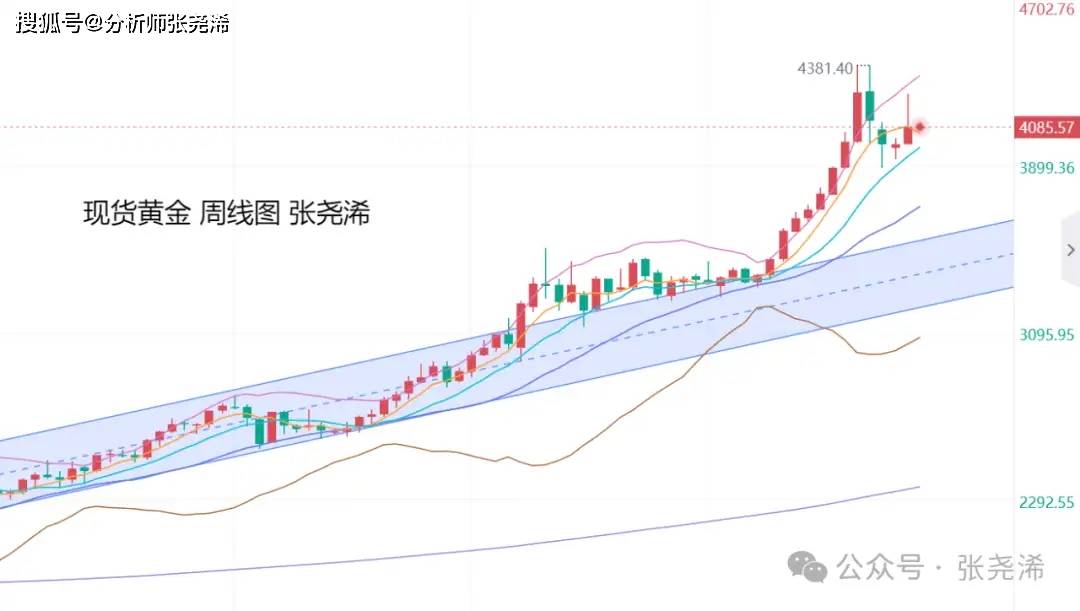
Core Viewpoint - The article discusses the recent fluctuations in gold prices, highlighting a bullish outlook despite short-term adjustments, driven by economic data and geopolitical factors [1][5][6]. Market Overview - Gold prices experienced a high of $4245.07 per ounce before retreating to $4080.31, with a weekly fluctuation of $247.37 and a net increase of $78.94, or 1.97% [1]. - The market anticipates a continuation of bullish trends, with gold remaining above the 10-week moving average and the Bollinger Bands indicating upward momentum [1][5]. Economic Influences - Weak economic data has reinforced expectations for a loose monetary policy, contributing to a temporary rebound in gold prices of over $200 [3]. - The reopening of the U.S. government is expected to release a backlog of important employment and inflation data, which may further support gold prices [5][6]. Federal Reserve Outlook - The article notes that several Federal Reserve officials have expressed cautious views on interest rate cuts, which has pressured gold prices [3]. - However, there is a prevailing sentiment that the market may see a more dovish environment in the future, potentially leading to rate cuts that would benefit gold [5][6]. Technical Analysis - The technical outlook suggests that gold prices are likely to rebound from current support levels, with key focus on the 5/10 week moving averages for potential bullish signals [7][9]. - Immediate support levels for gold are identified at $4070 or $4050, while resistance levels are at $4125 or $4160 [9]. Future Projections - The article posits that gold could target $5000 per ounce in the long term, with current price adjustments viewed as buying opportunities rather than a trend reversal [6]. - The expectation of a continued easing cycle or a more accommodative monetary policy environment is likely to sustain upward pressure on gold prices [6].

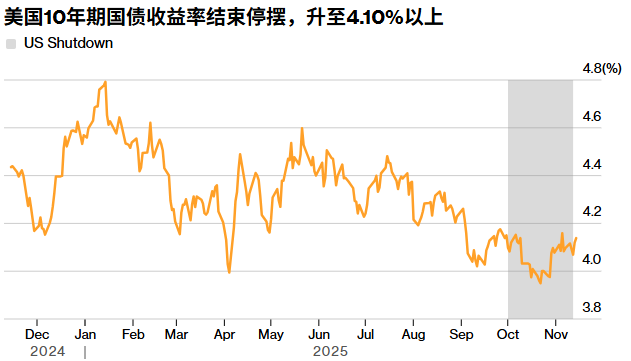
美债多头屏息以待“数据潮” 降息预期与不确定性激烈博弈
Zhi Tong Cai Jing· 2025-11-17 00:00
"随着经济数据开始逐步明朗,劳动力市场可能展现更多稳定性,"摩根大通投资管理公司投资组合经理 普里亚.米斯拉表示。"届时市场可能进一步下调12月降息预期,波动性也将随之上升。"她同时表示, 若10年期国债收益率从上周五约4.14%的收盘水平升至4.25%,他们将视其为买入机会。 债券交易员正屏息以待即将密集发布的数据,这些数据将强化市场对美联储后续降息节奏的预期。今年 以来,在降息预期的推动下,美国国债价格已创下2020年以来最大涨幅。 随着美国政府停摆正式结束,各机构将集中补发自10月初积压的关键经济报告,其中包括定于本周四 (11月20日)出炉的9月份就业数据。 此前政府停摆期间官方数据的缺失令经济走势难以研判,不过私人部门数据——如薪资公司ADP的持续 疲软表现——已促使美联储在9月和10月两次下调基准利率,结束了此前长达九个月的"按兵不动"立 场。 但官方数据存在超预期风险:一方面,数据或将显示企业新增岗位速度远超预期;另一方面,政府停摆 也可能导致数据失真或不完整。鉴于政策制定者仍对通胀高企保持警惕,若数据表现强劲,这可能导致 他们在12月10日会议上选择维持利率不变,或打压市场对2026年的降息预 ...
降息预期降温之际,金价在连跌两日后小幅回升
Sou Hu Cai Jing· 2025-11-16 23:54
Core Viewpoint - Gold prices experienced a slight rebound after a two-day decline driven by diminishing optimism regarding a potential interest rate cut by the Federal Reserve [1] Group 1: Gold Market - Current gold prices are trading around $4,100 per ounce [1] - Gold prices fell over 2% in the previous trading session due to Federal Reserve officials showing little confidence in lowering borrowing costs [1] Group 2: Silver Market - Silver prices followed gold's upward trend, with spot silver reaching above $51 per ounce at the beginning of trading [1] Group 3: Other Precious Metals - Palladium and platinum prices remained stable during the same period [1]
12月降息概率跌破50% 美联储降息预期生变!A股将如何演绎?
Zheng Quan Shi Bao· 2025-11-16 23:05
Core Viewpoint - The probability of a rate cut by the Federal Reserve in December has fallen below 50%, leading to a shift in market expectations and impacting global stock markets, including A-shares in China [5][6]. Market Performance - The Egyptian stock market rose over 2.5%, reaching a record closing high, while Saudi and Qatari indices fell by 1%, indicating a divergence in market performance [2][4]. - The Saudi stock exchange index closed down 1.12% at 11,052.61 points, with Saudi Aramco shares declining by 1.08% [3][4]. - The EGX 30 index in Egypt closed up 2.54% at 41,211.27 points, surpassing its previous record high [4]. Federal Reserve Insights - The probability of a 25 basis point rate cut by the Federal Reserve in December is now at 44.4%, with a 55.6% chance of maintaining current rates [5]. - Predictions from Morgan Stanley suggest that the Fed will have access to key economic data before the December meeting, which will influence their decision-making [5][6]. - Recent hawkish statements from Fed officials and concerns over economic data have increased market uncertainty, impacting investor sentiment [6]. A-share Market Outlook - Short-term liquidity in the A-share market is expected to remain loose, but inflows may slow due to decreased overseas rate cut expectations [7]. - The market is currently in a phase of searching for a main theme, with popular sectors like AI and semiconductors showing weak sustainability [8]. - If new policies are introduced or if there are signs of economic recovery in upcoming data, certain sectors may attract capital inflows [8].
固收-金融数据背后,降息预期和机构行为的长期变化
2025-11-16 15:36
Summary of Conference Call Notes Industry or Company Involved - The notes primarily focus on the fixed income market, particularly the credit bond market and convertible bond market in China. Core Points and Arguments 1. **Asset Allocation Trends** - The allocation of amortized cost method funds has significantly shifted towards high-grade credit bonds and commercial bank financial bonds, with proportions exceeding 70% for public credit bonds and commercial bank bonds, reflecting a preference for higher yield assets due to low short-term interest rates [1][3][5] 2. **Market Demand Forecast** - By the end of 2026, the remaining maturity scale of amortized cost method funds is expected to reach 744.4 billion yuan, with incremental funding needs for public credit and commercial bank bonds estimated at 200.2 billion yuan and 136.2 billion yuan respectively, indicating a notable increase in market demand for these assets [1][6] 3. **Credit Risk Management** - High-grade central state-owned enterprise bonds dominate the credit asset holdings, with a focus on low credit risk and valuation fluctuations. The preference remains for high-rated credit and commercial bank financial assets [1][7] 4. **Monetary Policy and Interest Rate Outlook** - The recent slowdown in social financing credit growth and the emphasis on structural optimization rather than rapid stimulus suggest a potential opening of the lower bound for interest rate fluctuations in the medium to long term, although short-term expectations for rate cuts remain unfavorable [1][8][9][10] 5. **Impact of Policy on Credit Growth** - Current policy directions support a slowdown in credit growth, which may lead to a contraction in bank balance sheets. Historical data indicates that during periods of slowed bank expansion, the yield spread between long-term and short-term government bonds tends to widen [1][11][12] 6. **Convertible Bond Market Dynamics** - The convertible bond market faces supply and demand pressures, with expected issuance of 50-100 billion yuan in new convertible bonds over the next 6-12 months. Despite this, strong performance of underlying stocks and capital inflows create a positive feedback loop, limiting long-term valuation compression [2][13] 7. **Investment Strategy for Convertible Bonds** - Suggested strategies include focusing on sectors aligned with upward trends in the equity market, such as solid-state batteries and AI applications, while maintaining a balanced portfolio of cyclical and defensive bonds [2][14][15] 8. **Market Outlook** - The overall market outlook remains optimistic despite external disturbances, with limited downside potential and an upward trend expected to dominate, supported by improved corporate performance and favorable policy developments [2][16] Other Important but Possibly Overlooked Content - The shift in asset allocation reflects a broader trend of institutional investors seeking higher yields in a low-interest-rate environment, indicating a potential long-term change in investment strategies within the fixed income market [1][5] - The emphasis on high-grade assets suggests a cautious approach to credit risk, which may influence future investment decisions and market dynamics [1][7]