运输设备

Search documents
中国中车(601766):运输设备年报点评:铁路装备高景气,海外持续发力
HTSC· 2026-03-30 11:16
Investment Rating - The report maintains a "Buy" rating for the company [7][5]. Core Insights - The company achieved a revenue of 273.06 billion RMB in 2025, representing a year-over-year increase of 10.79%, with a net profit of 13.18 billion RMB, up 6.40% year-over-year [1][2]. - The railway equipment sector remains highly prosperous, with significant contributions from both traditional and new industries, particularly in clean energy [3][4]. - The company has a strong order backlog of approximately 357.1 billion RMB, providing robust support for future performance [4]. Revenue and Profitability - The company's gross margin for 2025 was 21.38%, remaining stable year-over-year, while the net profit margin decreased slightly to 4.83% [2]. - The revenue breakdown for 2025 shows that railway equipment accounted for 45.27% of total revenue, with new industries contributing 37.76% [3]. Order and Market Expansion - New orders signed in 2025 reached approximately 346.1 billion RMB, with international orders contributing around 65 billion RMB, indicating successful overseas market expansion [4]. - The company has made significant strides in international markets, including new orders for electric locomotives in Central Asia and wind power equipment sales in Europe and North America [4]. Financial Forecast and Valuation - The earnings per share (EPS) forecast for 2026-2028 is adjusted to 0.50, 0.53, and 0.56 RMB respectively, reflecting a slight downward revision due to increased R&D expenses [5]. - The target price for the company's A/H shares is set at 9.00 RMB and 7.08 HKD, based on a price-to-earnings (PE) ratio of 18 for A shares and 12.6 for H shares [5].

2026年1-2月工业企业利润点评:开年工业企业利润:超预期的含金量
Guolian Minsheng Securities· 2026-03-27 05:27
Profit Growth Overview - In January-February 2026, industrial enterprises achieved a total profit of 10,245.6 billion yuan, marking a year-on-year increase of 15.2%[6] - The profit growth rate surged from 5.3% in December 2025 to 15.2% in the first two months of 2026, indicating a significant improvement in industrial profitability[6] Industry Performance - Profit recovery showed clear industry differentiation: upstream industries saw a profit increase of 34.3%, midstream industries 26.4%, while downstream industries faced a decline of 11.4%[3] - Upstream profit improvements were primarily driven by price support, particularly in non-ferrous metal smelting and mining, which experienced nearly triple-digit growth[3][4] Midstream and Downstream Insights - Midstream profit growth was attributed to accelerated production, with the electronics manufacturing sector seeing a remarkable profit increase of 203.5% year-on-year[4] - Downstream industries, particularly furniture manufacturing (-40.0%) and automotive manufacturing (-30.2%), showed significant profit declines, reflecting consumer caution towards durable goods and large expenditures[4][7] Cost and Efficiency Factors - The revenue profit margin for enterprises improved significantly, with a notable decrease in the cost-to-revenue ratio, likely due to equipment upgrades and ongoing tax reductions[3] - The increase in finished goods inventory growth in January-February indicated early signs of proactive restocking, although sustainability depends on demand recovery[4][7] Risk Considerations - Future profit sustainability is contingent on the recovery pace of end-user demand, with current downstream profits indicating that demand has not fully stabilized[7] - Potential risks include policy outcomes not meeting expectations, unexpected changes in the domestic economic landscape, and fluctuations in export dynamics[7]
2026年1-2月经济数据点评:投资带动开年经济向好
BOHAI SECURITIES· 2026-03-17 08:13
Economic Growth Indicators - In January-February 2026, industrial added value increased by 6.3% year-on-year, exceeding the expected 5.3% and the 2025 annual growth of 5.9%[2] - Retail sales of consumer goods rose by 2.8% year-on-year, surpassing the expected 2.5% and the 2025 annual growth of 3.7%[2] - Fixed asset investment grew by 1.8% year-on-year, significantly better than the expected decline of 5.1% and the 2025 annual decline of 3.8%[2] Industrial Performance - The growth rate of industrial added value in January-February 2026 improved compared to the 2025 annual level, with export delivery value growth reaching a recent high, indicating strong external demand[3] - High-tech manufacturing sectors showed growth rates significantly above the overall level, supported by the transition of new and old growth drivers[3] Consumer Behavior - The retail sales growth reversed the downward trend seen in the second half of 2025, with service retail boosted by an extended Spring Festival holiday[4] - Consumption patterns showed divergence, with limited contributions from certain goods due to reduced subsidies and previous consumption overextension[4] Investment Trends - Fixed asset investment saw a substantial increase, with manufacturing investment growth rising by 2.5 percentage points to 3.1% year-on-year, driven by high export growth and technological upgrades[5] - Infrastructure investment rebounded significantly, supported by fiscal deposit allocations and a robust increase in public utilities and transportation sectors[5] Real Estate Market - Real estate sales area and value showed a year-on-year decline, with first-tier cities experiencing slight positive changes in new and second-hand home prices, but overall market remains weak[6] - The decline in personal mortgages and down payments has negatively impacted real estate investment funding sources, with new construction and project completions also declining[7]
——1-2月经济数据点评:经济的开门红成色几何
Changjiang Securities· 2026-03-16 14:41
Economic Performance - In January-February, industrial added value increased by 6.3% year-on-year, exceeding market expectations[6] - Social retail sales grew by 2.8% year-on-year, also surpassing market consensus[6] - Fixed asset investment rose by 1.8% year-on-year, indicating a significant recovery[6] Investment Insights - Private investment saw a year-on-year decline of 2.6%, while public investment increased by 6.8%[9] - Manufacturing investment rebounded to a year-on-year growth of 3.1%, the highest since July of the previous year[9] - Infrastructure investment (including electricity) surged by 11.4%, marking the highest growth since April of the previous year[9] Consumption Trends - The consumption of essential goods showed a notable increase, with a year-on-year growth rate of 7.6%[9] - Restaurant income rose by 4.8% year-on-year, the highest since May of the previous year[9] - Despite overall retail improvement, durable goods consumption showed mixed results, with declines in automotive and communication equipment sales[9] External Factors - Strong external demand remains a key driver of economic performance, particularly in the context of the Federal Reserve's interest rate cuts[3] - Geopolitical tensions may disrupt external demand, necessitating a focus on domestic policy adjustments[3] - The late timing of the Spring Festival contributed to the significant improvement in economic data, warranting cautious optimism about sustainability[3]
2026年1-2月经济数据:投资升、生产强、消费稳
Donghai Securities· 2026-03-16 12:18
Economic Overview - In January-February 2026, the total retail sales of consumer goods increased by 2.8% year-on-year, up from 0.9% in the previous period[2] - Fixed asset investment (FAI) showed a cumulative year-on-year increase of 1.8%, reversing from a decline of 3.8% previously[2] - The industrial added value of enterprises above designated size grew by 6.3% year-on-year, surpassing the previous value of 5.2%[2] Investment Insights - The rebound in investment growth is a key highlight, supported by policies from the last quarter of the previous year and early implementation of this year's policies[2] - Infrastructure investment surged to 11.4% growth, driven by major projects and fiscal policies[3] - Manufacturing investment returned to positive growth at 3.1%, with equipment updates and high-tech manufacturing leading the way[3] Consumption Trends - Service consumption showed strong performance with a cumulative year-on-year growth of 5.6%, benefiting from the Spring Festival effect[2] - Excluding automobiles, retail sales of consumer goods showed resilience, with significant growth in categories like communication equipment (17.8%) and office supplies (5.8%)[2] - The retail growth of gold and jewelry reached 13.0%, indicating a recovery in luxury consumption[2] Risks and Considerations - Potential risks include the possibility of policy implementation falling short of expectations and geopolitical tensions affecting market stability[3]
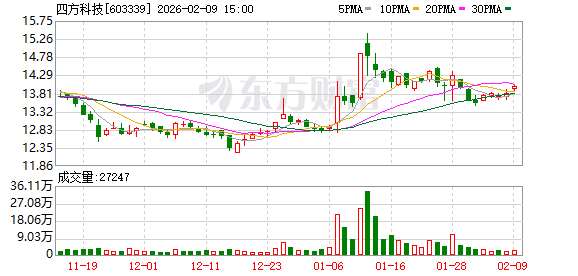
四方科技:公司罐式集装箱产品包括标准罐式集装箱和特种罐式集装箱,应用于化工、能源、食品饮料等物流领域
Mei Ri Jing Ji Xin Wen· 2026-02-09 09:24
Group 1 - The company, Sifang Technology (603339.SH), confirmed that its tank containers include standard and special tank containers, which are used in logistics for chemical, energy, and food and beverage sectors [2] - The company responded to an investor inquiry regarding the capability of its containers to store hydrogen gas, indicating that further details can be found in the company's disclosures [2]


科创板收盘播报:科创综指跌0.34% 电气设备股呈普涨态势
Xin Hua Cai Jing· 2026-02-06 07:46
Market Performance - The two major indices of the Sci-Tech Innovation Board opened significantly lower on February 6, with the Sci-Tech 50 Index dropping as much as 1.86% and the Sci-Tech Composite Index falling by 1.52% at one point [1] - By the end of the trading day, the Sci-Tech 50 Index closed at 1422.41 points, down 0.71%, with a total trading volume of approximately 623 billion yuan, showing a slight decrease compared to the previous trading day [1] - The Sci-Tech Composite Index finished at 1753.61 points, down 0.34%, with a total trading volume of about 2006 billion yuan, also reflecting a minor decline from the previous day [1][2] Stock Performance - On February 6, 277 stocks on the Sci-Tech Board rose, accounting for approximately 46.17% of the total, indicating a majority of stocks experienced declines [1] - In specific sectors, stocks related to the photovoltaic industry showed overall gains, contributing to a general rise in electrical equipment stocks, while transportation equipment stocks also saw slight increases [1] - Conversely, most software service stocks experienced declines [1] Individual Stock Highlights - Euroland New Materials saw the highest increase, rising by 12.93% [3] - Chenghe Technology recorded the largest decline, falling by 7.71% [3] Trading Activity - Cambrian's trading volume reached 82.72 billion yuan, ranking first in terms of trading volume [4] - Hanbang Technology had the lowest trading volume at 12.2789 million yuan [4] - In terms of turnover rate, Beixin Life led with a turnover rate of 44.53%, while Bairen Medical had the lowest at 0.17% [4]
美联储官员首现2026年不降息论调,美国1月PMI达52.6!远超预期!
Sou Hu Cai Jing· 2026-02-03 02:07
Group 1 - The core advantage of the U.S. lies in the military and the dollar system, which influences market dynamics and pricing logic, indicating a significant shift in 2026 compared to 2025, primarily driven by the direction of the dollar [1] - The Federal Reserve's balance sheet reduction is aimed at controlling inflation and restoring policy credibility, with a target to reduce the balance sheet from approximately $6.6 trillion to below $5 trillion [5][12] - The ISM manufacturing PMI rose to 52.6 in January, indicating a significant rebound in the manufacturing sector, driven by new orders and production indices, suggesting the U.S. economy is emerging from a low point [5][7] Group 2 - The increase in the PMI is partially attributed to seasonal factors and potential preemptive purchasing due to tariff pressures, indicating that the sustainability of this growth needs further validation [8][10] - There is a divergence between the S&P PMI and ISM PMI, with the former indicating a slowdown in business activity, suggesting that the ISM PMI rebound may have short-term distortions [10] - Input costs for manufacturers have continued to rise, with the ISM prices index indicating that 29% of companies reported higher input prices, driven by increases in steel and aluminum costs [13]

美国1月ISM制造业指数升至52.6超预期 美债随之下行
Sou Hu Cai Jing· 2026-02-02 23:09
Group 1 - The core viewpoint of the article highlights that the U.S. manufacturing sector showed stronger-than-expected performance in January, with the ISM manufacturing index rising to 52.6, marking the highest level since August 2022 and indicating a return to expansion for the first time in a year [1] - The increase in the ISM manufacturing index was supported by significant growth in new orders and production, with new orders rising nearly 10 points and production indicators also showing steady improvement, both reaching their highest growth rates in nearly four years [1] - The report indicates that backlog orders have increased for the first time since 2022, and there has been an expansion in export orders, reflecting a rebound in demand [1] Group 2 - The ISM report includes comments from business executives, many of whom expressed concerns about U.S. tariff policies and uncertainty, indicating that strategic planning is challenging in such an environment [2] - A representative from a transportation equipment company mentioned that industry strategies are based on "hope" due to the uncertain policy landscape, making long-term planning difficult [2] - Executives from various sectors, including machinery and metal products, highlighted that unclear tariff policies hinder long-term planning and investment commitments, particularly for small and medium-sized enterprises [2]
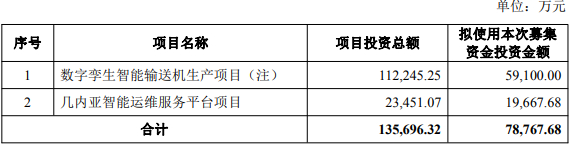
运机集团拟不超7.88亿定增 A股募13亿去年实控人方减持
Zhong Guo Jing Ji Wang· 2026-01-29 06:49
Core Viewpoint - The company, 运机集团, announced a plan to issue A-shares to specific investors, aiming to raise up to 787.68 million yuan for two key projects: the Digital Twin Intelligent Conveyor Production Project and the Guinea Intelligent Operation and Maintenance Service Platform Project [1][2]. Group 1: Fundraising Details - The total amount to be raised from the issuance is capped at 787.68 million yuan, which will be net of issuance costs [1][2]. - The funds will be allocated as follows: 591 million yuan for the Digital Twin Intelligent Conveyor Production Project and 196.68 million yuan for the Guinea Intelligent Operation and Maintenance Service Platform Project, totaling 1.356 billion yuan in project investments [2]. - The shares will be issued as domestic listed ordinary shares (A-shares) with a par value of 1.00 yuan per share, and the issuance will be conducted through a private placement to no more than 35 specific investors [2][3]. Group 2: Issuance Conditions - The pricing for the shares will be set at no less than 80% of the average trading price over the 20 trading days prior to the pricing date [3]. - The maximum number of shares to be issued will not exceed 7.04643 million shares, which is 30% of the total shares before the issuance [3][4]. - After the issuance, the public shareholders will still hold at least 25% of the total shares, ensuring compliance with relevant laws and regulations for listing [5]. Group 3: Shareholder Structure - As of the announcement date, the total share capital of the company is 23.48811 million shares, with the controlling shareholder, 吴友华, holding 10.72876 million shares (45.68%) [4]. - The issuance is not expected to change the control of the company, as 吴友华 and his spouse will continue to hold at least 38.97% of the shares post-issuance [4]. Group 4: Financial Performance - The company forecasts a net profit attributable to shareholders of between 220.25 million yuan and 251.71 million yuan for 2025, representing a year-on-year growth of 40% to 60% [7][8]. - However, the net profit after excluding non-recurring gains and losses is expected to decline by 30% to 8% compared to the previous year, with estimates ranging from 97.96 million yuan to 128.74 million yuan [7][8].