
新能源车

Search documents
新能源车ETF(159806)涨超1.3%,行业景气上行与需求分化并存
Mei Ri Jing Ji Xin Wen· 2025-07-11 05:39
Group 1 - The core viewpoint indicates that the domestic sales of new energy vehicles (NEVs) in June showed positive trends, benefiting from national "two new" policy subsidies and improved external trade conditions [1] - The estimated wholesale sales of new energy passenger vehicles in June reached 1.26 million units, representing a year-on-year increase of 29% and a month-on-month increase of 3%, with a penetration rate of 50.9% [1] - Cumulatively, from January to June, wholesale sales totaled 6.47 million units, reflecting a year-on-year growth of 38% [1] Group 2 - The industry is experiencing an upward trend in prosperity, driven by the resonance of demand for power and energy storage, with leading companies showing strong production performance in July [1] - Global power battery installations grew by 38.5% year-on-year from January to May, with Chinese companies accounting for 68.4% of the total share among the top 10, an increase of 4.2 percentage points year-on-year [1] - The SPE has proposed a tenfold expansion target for energy storage in Europe, with significant year-on-year growth in large-scale storage installations in Germany, indicating a positive outlook for energy storage demand [1] Group 3 - The New Energy Vehicle ETF closely tracks the CS New Energy Vehicle Index, which is compiled and published by the China Securities Index Co., Ltd [1] - The index selects listed company securities involved in the core industrial chain of new energy vehicles, including lithium batteries, electric motors, electronic controls, and charging piles, covering all segments of the new energy vehicle industry [1] - The index aims to accurately reflect the overall market performance of listed companies in China's new energy vehicle sector, highlighting industry growth and representativeness [1]
新能源车下游销售增长
Hua Tai Qi Huo· 2025-07-11 02:40
Industry Overview Upstream - International oil prices have rebounded, while the PTA price has declined [2] Midstream - The polyester operating rate has decreased, and the coal consumption of power plants has seasonally declined to a three-year low [3] Downstream - The sales of commercial housing in first- and second-tier cities have seasonally declined to a nearly three-year low, while the number of domestic flights during the summer vacation has increased [3] Key Events Production Industry - From January to June, the production and sales of the automotive market exceeded 15 million units, with a year-on-year increase of over 10%. The production and sales of new energy vehicles reached 6.968 million and 6.937 million units respectively, with year-on-year increases of 41.4% and 40.3%. The new energy vehicle sales accounted for 44.3% of the total new vehicle sales [1] Service Industry - The agreement on visa exemption between the Chinese government and the Malaysian government will take effect on July 17, 2025. Eligible passport holders can enter, exit, or transit the other country without a visa for up to 30 days per visit and 90 days within 180 days [1] Industry Credit Spread Tracking - The industry credit spreads of various sectors, including agriculture, mining, and chemicals, have shown different trends from last year to this week, with some sectors experiencing significant declines [48] Key Industry Price Index Tracking - The prices of various commodities, such as corn, eggs, and crude oil, have shown different trends, with some increasing and some decreasing [49]
“反内卷”与上一轮供给侧结构性改革的比较
Qi Huo Ri Bao· 2025-07-11 00:39
Group 1 - The core objective of the "anti-involution" policy is to address low-price and disorderly competition, guiding companies to enhance product quality and promoting the orderly exit of backward production capacity, thereby optimizing and upgrading the industrial structure to improve China's global economic and industrial competitiveness [1] - The "anti-involution" policy shares similarities with the supply-side structural reform initiated in 2015, focusing on technological innovation, product differentiation, and sustainable development of the industrial chain [1] Group 2 - The macroeconomic context for "anti-involution" is more complex compared to previous reforms, and it encompasses a broader range of industries, including emerging sectors like photovoltaics and new energy vehicles, in addition to traditional industries [2] - The focus of the "anti-involution" policy is on enhancing domestic core competitiveness and transitioning from quantity competition to quality improvement, emphasizing green and low-carbon transformation [2] - The policy measures for "anti-involution" are more diversified and rely on the construction of a unified national market, emphasizing legal frameworks and fair competition, unlike the more administrative measures used in the supply-side structural reform [2] Group 3 - Both the 2015 supply-side structural reform and "anti-involution" aim to resolve structural issues in the economy, optimizing resource allocation and improving economic quality and efficiency [3] - The supply-side structural reform was primarily focused on eliminating ineffective low-end supply and optimizing economic structure, while "anti-involution" addresses the challenges of disordered low-price competition that harms cash flow and industry health [3] - The "anti-involution" initiative is expected to have a longer duration, focusing on long-term institutional construction to enhance industry competitiveness [2][3]
两个中国狠人,拯救7万亿特斯拉
36氪· 2025-07-10 14:58
Core Viewpoint - The article discusses the significant contributions of two Chinese executives, Ren Yuxiang and Zhu Xiaotong, in helping Tesla navigate challenges in the Chinese market and achieve substantial growth through the establishment of the Shanghai Gigafactory [6][20][48]. Group 1: Ren Yuxiang's Role - In 2018, Tesla faced severe production capacity issues and low product quality, leading to a crisis in the U.S. market [6][7]. - Ren Yuxiang was instrumental in facilitating Tesla's entry into the Chinese market by advocating for a wholly-owned factory, which was a departure from the traditional joint venture model [19][20]. - He successfully negotiated favorable terms for Tesla's Shanghai factory, including land acquisition at a significant discount, low-interest loans, and expedited approval processes [19][20]. - The Shanghai Gigafactory, established under Ren's leadership, became a critical asset, contributing to half of Tesla's global production and reducing costs by 65% [20][21]. Group 2: Zhu Xiaotong's Contributions - Zhu Xiaotong joined Tesla in 2014 and played a key role in the construction and operation of the Shanghai factory after Ren Yuxiang's initial negotiations [29][30]. - He is recognized for his efficiency and hands-on approach, often working long hours to ensure production targets were met, including achieving a record monthly delivery of 100,000 vehicles during the Shanghai lockdown in 2022 [34][36]. - Zhu's leadership has led to significant improvements in production speed and capacity, making him a vital figure in Tesla's operational success [32][36]. Group 3: Current Challenges and Future Outlook - As of 2025, Tesla faces declining sales in both the Chinese and European markets, with a projected drop in vehicle deliveries [27][42]. - Zhu Xiaotong has been tasked with addressing these challenges, particularly in expanding Tesla's market presence in China and improving performance in Europe [40][41]. - The article suggests that while Ren Yuxiang laid the groundwork for Tesla's success in China, Zhu Xiaotong's ability to navigate current market challenges will be crucial for the company's future [48].



香港,梦回2019
3 6 Ke· 2025-07-10 03:41
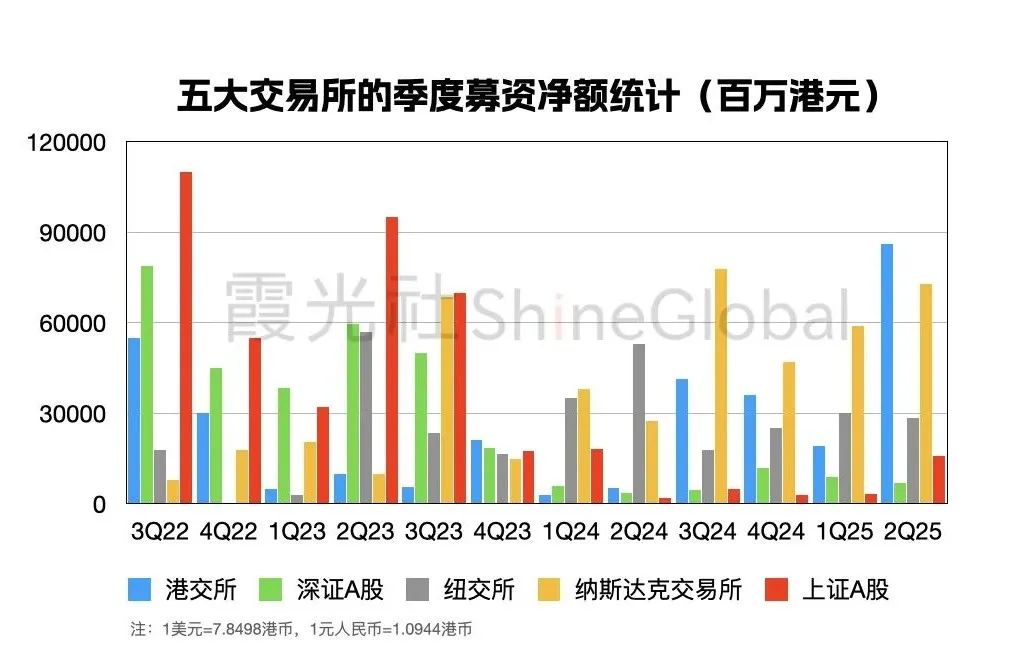
Group 1 - The article reflects on the nostalgia for the market conditions of 2019, highlighting a period of growth and optimism in Hong Kong's financial landscape [1] - In 2025, the Hong Kong stock market is expected to show a strong performance, with the Hang Seng Index rising 20% in the first half of the year, marking the largest increase in history for that period [2] - The number of new IPOs in Hong Kong has increased significantly, with 43 companies listed in the first half of the year, raising a total of 1,067.13 million HKD, a 688.54% increase compared to the previous year [2] Group 2 - The Hong Kong Stock Exchange (HKEX) has regained its position as the global leader in IPO fundraising after six years [3] - The second quarter of 2025 saw a surge in fundraising, with HKEX raising 880.44 million HKD, surpassing the Nasdaq's 95 billion USD [6] - The number of applications for new listings has doubled, with around 200 applications received, including interest from companies in the Middle East and Southeast Asia [6] Group 3 - The recent surge in IPOs is largely driven by A-share companies seeking to list in Hong Kong, facilitated by policy changes that have eased listing requirements [10] - The China Securities Regulatory Commission has implemented measures to support leading domestic companies in listing in Hong Kong, significantly shortening the listing timeline [10][11] - The listing criteria for technology companies have been adjusted, allowing for a wider range of companies to qualify for IPOs [10] Group 4 - The article discusses the geopolitical factors influencing capital flows, with many investors seeking stability in Hong Kong amid uncertainties in the US market [13][14] - The HKEX is positioned as a key financial hub for Chinese companies looking to expand globally, with a growing number of firms choosing to list there [13][18] - The trend of Chinese companies returning to Hong Kong for listings is attributed to a combination of regulatory changes and a more favorable market environment [14] Group 5 - The article notes that the pricing power in the Hong Kong market is shifting, with increasing participation from domestic investors [21][24] - The influx of southbound funds has become a significant factor in the Hong Kong market, accounting for 20% of total trading volume [27] - The article highlights the growing influence of domestic capital in determining market valuations, moving away from reliance on foreign investment [24][27] Group 6 - The technology sector in Hong Kong is experiencing a renaissance, with a notable increase in IPOs from tech companies, reflecting a shift in investor sentiment [28][34] - The article emphasizes the emergence of Chinese tech giants in the Hong Kong market, which are now seen as key players in the global tech landscape [36] - The HKEX is increasingly viewed as a platform for Chinese companies to showcase their innovations and attract international investment [38]

从“大美丽法案”到关税新信函,海外变局下的应对与思考
天天基金网· 2025-07-09 11:46
Core Viewpoint - The article discusses the significant changes in the global capital market driven by the "One Big Beautiful Bill Act" (OBBB) and its implications for various industries, alongside the Federal Reserve's monetary policy and global trade dynamics [1][2]. Group 1: The "One Big Beautiful Bill Act" - The OBBB was passed by the U.S. Senate after overcoming internal party divisions and external opposition, marking a pivotal moment in Trump's policy agenda [3][4]. - The act focuses on three main areas: large-scale tax cuts favoring the wealthy, adjustments in government spending with increased defense budgets and reduced social welfare, and raising the federal debt ceiling by $5 trillion, the largest adjustment in U.S. history [7][8]. - The act creates a dichotomy in industry impacts, benefiting traditional energy, manufacturing, real estate, and defense sectors while imposing pressures on clean energy, healthcare, and food industries due to reduced incentives [8][9]. Group 2: Federal Reserve's Dilemma - The Federal Reserve has paused interest rate changes four times, with market expectations leaning towards two rate cuts by the end of the year, potentially starting in September [14][15]. - Trump's push for immediate rate cuts contrasts with the Fed's cautious approach, which is influenced by high unemployment and inflation uncertainties stemming from tariffs and fiscal stimulus [16][20]. - Current economic conditions differ from previous cycles, with fiscal expansion and tariff uncertainties constraining the Fed's decision-making space [20]. Group 3: Global Trade Dynamics - The expiration of tariff exemptions on July 9 has heightened tensions, with Trump announcing new tariffs on imports from 14 countries, including Japan and South Korea, effective August 1 [21][24]. - The trade landscape remains volatile, with previous tariff announcements causing market fluctuations and ongoing negotiations between the U.S. and China [25][26]. Group 4: Future Market Considerations - The article emphasizes the need for diversified asset allocation in response to the evolving global landscape, highlighting the importance of low correlation among assets for risk mitigation [29][30]. - It suggests focusing on sectors aligned with new productivity paradigms, such as AI and high-end manufacturing, as potential growth areas in the A-share and Hong Kong markets [30]. - The importance of cash flow assets and maintaining liquidity is underscored, as these can provide stability in a fluctuating market environment [32][34].

“反内卷”与新一轮供给侧改革解读
Guo Tai Jun An Qi Huo· 2025-07-09 10:02
Report Industry Investment Rating No relevant content provided. Core Viewpoints of the Report The new round of "Supply - side Reform" centered around "Anti - involution" mainly focuses on the disorderly competition in the mid - downstream manufacturing and emerging industries. It aims to build a unified large market, promote economic circulation, optimize supply quality through reform, and ultimately achieve industrial upgrading and high - quality development. The regulation requires more complex institutional innovation and market mechanisms, and involves industry self - discipline, improvement of laws and regulations, and standardization of local government behavior. After being set by the Central Financial and Economic Affairs Commission, it will be a key mid - term policy task, and its effect release may be milder than the previous round of supply - side reform [2]. Summary According to the Table of Contents 1. Review of the Previous Round of "Supply - side Reform" 1.1 Progress of the Previous Round of "Supply - side Reform" The policy of reducing over - capacity started to appear in 2013. In 2015, "Supply - side Structural Reform" was first proposed, and in 2016, a more systematic "Three Reductions, One Lowering, and One Filling" framework was formed. The scope of over - capacity reduction expanded in 2017, and policies for cost reduction and de - leveraging were also introduced [7][8]. 1.2 Characteristics of the Previous Round of "Supply - side Reform" The tasks of "Three Reductions, One Lowering, and One Filling" formed a systematic policy framework, with over - capacity reduction in upstream resource products like steel and coal being the core. There were clear over - capacity reduction targets and supporting measures for employment stability [10][12]. 1.3 Effects of the Previous Round of "Supply - side Reform" From 2016 - 2018, it exceeded the over - capacity reduction targets for steel and coal. Raw material prices ended their long - term slump, PPI turned positive in September 2016, and the profitability of enterprises was restored [13]. 2. Connotation and Goals of the New Round of "Supply - side Reform" - "Anti - involution" On July 1, 2025, the Central Financial and Economic Affairs Commission meeting and an article in Qiushi Journal raised the expectation of a new round of "Supply - side Reform" through "Anti - involution". It aims to solve the problem of low prices in some fields caused by unfair competition and local protectionism, covering both traditional and emerging industries [15][18]. 3. Timeline of "Anti - involution" Policy Introduction The concept of "Anti - involution" was first proposed in the Politburo meeting in July 2024. After the Central Financial and Economic Affairs Commission meeting on July 1, 2025, it became more prominent. Since June 2025, industry organizations have accelerated the implementation of "Anti - involution" policies [20][21]. 4. Differences between the Two Rounds of "Supply - side Reform" 4.1 Different Targets for Over - capacity Reduction The previous round targeted the over - capacity of upstream traditional resource products, while the current round focuses on the over - competition in emerging industries and the mid - downstream manufacturing industries [22][23]. 4.2 Different Ownership of Over - capacity Enterprises In the previous round, state - owned enterprises in upstream resource industries accounted for a high proportion. In this round, private enterprises in mid - downstream and emerging industries such as photovoltaics and new energy vehicles account for a higher proportion, and market - oriented methods can be better used for over - capacity reduction [28]. 4.3 Different Policy Purposes and Implementation Methods The previous round repaired the deflation environment and improved corporate profits, while this round aims to build a unified large market, promote economic circulation, and achieve high - quality development. The previous round mainly used administrative measures, while this round requires more complex institutional innovation and market mechanisms [32]. 5. Outlook for the Follow - up of the Current Round of "Anti - involution" The "Anti - involution" policy is expected to be continuously implemented and may become an important mid - term policy direction. Policies are expected to be more diversified, legalized, and market - oriented, and supply - side policy intensification and demand - side support will go hand in hand [35][36]. 6. Research Feedback and Impact Outlook of Some Commodities on the "Anti - involution" Policy The previous round of supply - side reform effectively reduced over - capacity in upstream resource industries, and their current capacity utilization rates are not low. The marginal increment of this "Anti - involution" lies in emerging industries. However, there are difficulties in policy implementation in emerging industries, and the effect release may be weaker than the previous round [40][41].
美国大漂亮法案正式通过,或持续扩大中美新能源车产业发展差距
Great Wall Securities· 2025-07-09 03:09
Investment Rating - The industry investment rating is "Outperform the Market" [13] Core Viewpoints - The passage of the "big beautiful" bill in the U.S. is expected to negatively impact the domestic new energy vehicle industry, potentially widening the gap between China and the U.S. in this sector [1] - The cancellation of tax credits for new energy vehicles in the U.S. may reduce consumer enthusiasm for choosing electric vehicles over gasoline vehicles, especially as solid-state batteries remain in the early stages of commercialization and are costly [1] - The U.S. Department of Energy's efforts to reduce reliance on foreign entities, particularly from China, in the battery manufacturing sector may hinder local energy storage projects [2] - Chinese battery manufacturers are gaining global competitiveness, with companies like BYD and CATL showing significant growth in battery installation volumes [3] Summary by Sections Section 1: U.S. Policy Impact - The "big beautiful" bill modifies previous incentives for the new energy industry, likely leading to a decline in the U.S. electric vehicle market [1] - The removal of tax incentives could diminish consumer interest in electric vehicles, impacting sales and market dynamics [1] Section 2: Energy Storage and Supply Chain - The new legislation may exclude Chinese suppliers from U.S. energy storage projects, complicating the supply chain for local integrators [2] - Chinese companies dominate the global energy storage battery market, accounting for over 90% of shipments, which poses challenges for U.S. manufacturers [2] Section 3: Chinese Battery Manufacturers - Chinese battery companies are improving their global market positions, with BYD entering the top five in global battery installations [3] - CATL maintains a leading market share, indicating strong competitive advantages for Chinese firms in the battery sector [3] - Tesla's collaboration with CATL for localized production in the U.S. is expected to benefit from federal and state manufacturing subsidies [3]

从贸易大数据看关税冲击下的中国外需
2025-07-09 02:40
Summary of Key Points from Conference Call Industry Overview - The conference call discusses the impact of tariff pressures on China's external demand, highlighting the resilience of Chinese exports despite these challenges [1][2][3]. Core Insights and Arguments - **Export Resilience**: China's exports have shown resilience, with growth outperforming most economies since the beginning of the year. In April and May, exports continued to grow, indicating a shift in trade dynamics with an increasing share from emerging markets and a decreasing share from developed economies [1][2]. - **Product Category Differences**: Tariffs have a more pronounced impact on consumer goods, while intermediate and capital goods demonstrate resilience, reflecting China's competitive advantages globally. High-demand products such as lithium batteries, new energy vehicles, engineering machinery, and integrated circuits are thriving, while sectors like photovoltaics, building materials, and textiles are struggling [1][4]. - **Impact on Exports to the U.S.**: Approximately 70% of products exported to the U.S. are sensitive to tariffs, with 10% facing severe impacts and 20% showing resilience. Consumer goods are more affected than intermediate goods, with consumer electronics under significant pressure, while electronic components and lithium batteries remain resilient [5][6]. - **Decline in Major Categories**: In the second quarter, exports to the U.S. across major categories saw a decline, although certain categories like automotive chains, electronic components, outdoor sports goods, steel products, and textiles maintained resilience due to price competitiveness [7]. - **Strategic Product Adjustments**: The demand for rare earths from the U.S. was strong in the first quarter, but after China implemented preventive measures in the second quarter, imports from the U.S. significantly decreased. Despite a slight easing in trade policies in May, exports of strategic goods continued to decline [8][9]. Additional Important Insights - **Value Chain Shifts**: The current tariff situation has altered the role of trade hubs, with countries like Chile and Peru emerging as important players, while traditional hubs like Mexico and Canada have diminished in significance. ASEAN, the EU, and India are also playing crucial roles in value chain adjustments [2][10]. - **Emerging Market Opportunities**: Excluding China, emerging markets are showing faster import demand growth compared to developed economies, particularly in capital goods. This indicates a strong alignment between China's manufacturing advantages and emerging market needs, providing both short-term safety and long-term growth potential [11][12]. - **Future Outlook**: In the short term, the resilience of demand in emerging markets offers a solid safety net for China's external demand. Long-term prospects are promising due to the competitive advantages of Chinese manufacturing aligning with the growth needs of emerging markets, suggesting structural opportunities despite tariff challenges [14].
反内卷,怎么反? 总量联合行业投资机会全解析
2025-07-09 02:40
Summary of Key Points from Conference Call Records Industry Overview - The conference call discusses the "anti-involution" policy in China, focusing on structural adjustments aimed at increasing the proportion of high-quality supply to achieve industrial upgrades, contrasting with the 2016 policies targeting cyclical supply-demand imbalances in the steel and coal industries [1][6][10]. Core Insights and Arguments - **Anti-Involution Policy Goals**: The policy aims to regulate low-price disorderly competition among enterprises, enhance product quality, and facilitate the orderly exit of outdated production capacity to achieve high-quality development through technological upgrades [2][5]. - **Electricity Consumption vs. Industrial Value Added**: In 2023-2024, China's industrial electricity consumption is expected to grow faster than industrial value added, indicating a slowdown in investment and a necessary capacity clearance [11]. - **Wind Power Sector**: The wind power sector is benefiting from stabilized bidding prices and increased demand, with private companies showing significant profit recovery potential if strict cost control measures are implemented [3][21]. - **Copper Smelting Industry Challenges**: The copper smelting industry faces severe raw material shortages, with over 80% reliance on imports. The TC price is currently negative, indicating unsustainable conditions that may improve with industry consolidation [34]. - **Pig Farming Industry**: The pig farming sector is under pressure from CPI and capacity recovery issues, with policies aimed at controlling sow inventory to stabilize prices [3][39]. Additional Important Content - **New Anti-Unfair Competition Law**: The revised law includes provisions to combat involution-style competition, prohibiting illegal subsidies from local governments and enhancing regulation of low-quality products [7]. - **Differences from Previous Policies**: The current anti-involution policy differs from the 2016 supply-side reforms by focusing on structural quality improvements rather than merely reducing total capacity [6][15]. - **Investment Opportunities**: The conference highlights potential investment opportunities in sectors like wind power, where companies like Goldwind Technology and Yunda shares are recommended due to their cost advantages and recovery potential [21]. - **Challenges in the Photovoltaic Industry**: The photovoltaic sector faces challenges such as oversupply in the silicon material segment and financial pressures on companies, necessitating regulatory measures against low-cost sales [16][17]. - **Future of the Construction Materials Sector**: The construction materials sector, particularly in waterproofing and cement, is expected to see consolidation and price increases as inefficient players exit the market [26][29]. Conclusion - The anti-involution policy is set to reshape various industries in China, focusing on quality and efficiency rather than sheer output. Key sectors such as wind power, copper smelting, and the pig farming industry are highlighted for their unique challenges and opportunities in this evolving landscape.