
金属冶炼

Search documents
原料 | 震荡与重构:伦敦金属交易所金属市场年度回顾七图解析
Xin Lang Cai Jing· 2025-12-24 05:06
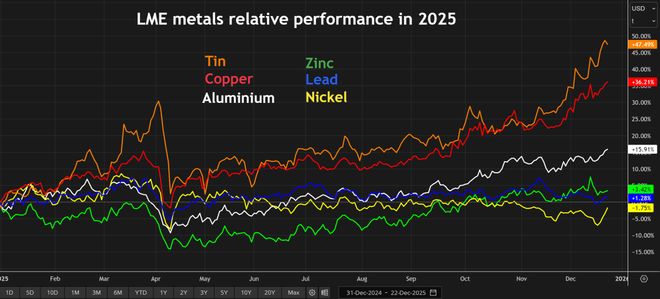
Group 1 - The core theme defining the LME base metals market this year is the market restructuring caused by supply disruptions and trade tariffs [1] - Despite a challenging demand outlook, supply chain pressures have driven the LME index for six base metal futures contracts to its highest level since the historical peak in 2022, the year the Russia-Ukraine conflict began [1] - The market turmoil this year is also attributed to the unpredictable tariff policies of former U.S. President Donald Trump, which have led to structural changes in global metal trade [1] Group 2 - Copper prices on the LME have reached historical highs, approaching $12,000 per ton, driven by expectations of potential tariffs on refined copper imports [3] - The threat of tariffs has caused significant market disturbances, comparable to the actual impact of the tariffs themselves [3] - Tin has emerged as a "star commodity" this year, facing multiple supply threats due to its concentrated global supply from high-risk regions [5] Group 3 - The aluminum market is experiencing a supply ceiling as China's production capacity has reached government-imposed limits, leading to heightened market awareness of new aluminum smelting projects outside China [7][8] - The U.S. aluminum market is facing a supply shortage, with spot prices significantly above LME benchmark prices, indicating a critical supply gap [9] - Zinc has encountered a dramatic market situation with low inventories, leading to record premiums for spot zinc over three-month futures [10] Group 4 - The lead market remains oversupplied, with no immediate changes expected in this situation, as traders prefer storage arbitrage over spot sales [16] - Nickel supply is increasing significantly due to rising production in Indonesia, outpacing demand growth, although there are indications of strategic stockpiling in China [17]

涟钢30万吨热轧钛板及钛复合材项目启动生产
Zhong Guo Xin Wen Wang· 2025-12-24 00:55
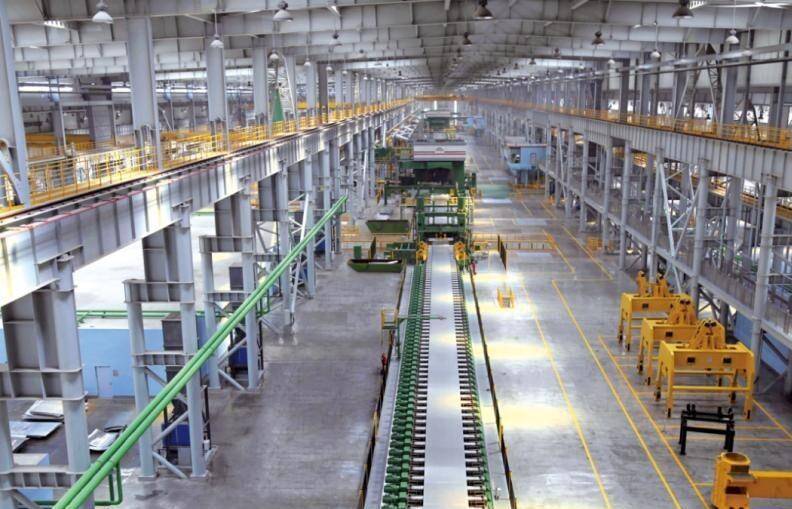
Core Insights - The production of a 300,000-ton hot-rolled titanium plate and titanium composite material project by Lian Steel has officially commenced in Loudi, Hunan, marking a significant step towards the integration of the titanium industry chain in the central region of China [1][2] - The establishment of the titanium hot-rolled alliance aims to promote resource integration and collaborative innovation among various enterprises, research institutions, and industry associations [1][2] - Loudi is leveraging its strong steel industry foundation to transition into high-end new materials, with several major titanium projects totaling over 10 billion yuan already underway this year [1][2] Industry Development - Titanium, known as the "metal of the future," is widely used in aerospace, biomedical, and emerging technologies due to its low density, high strength, and strong corrosion resistance [1] - Loudi has developed a complete industrial chain layout for titanium materials, with upstream resource security provided by local companies like Wujian Group and Hongwang Group, ensuring a robust supply chain [2] - The region's processing capacity for titanium materials is expected to exceed 300,000 tons, supported by a collaborative structure of leading enterprises such as Hualing Lian Steel and Hunan Hongwang [2] Ecosystem and Policy Support - Loudi is creating a supportive industrial ecosystem characterized by government-enterprise collaboration, offering services in policy, land, finance, and talent to reduce transaction costs for businesses [3] - The establishment of high-level scientific innovation platforms and expert teams has led to significant cost reductions in collaborative research and development, achieving an 18% decrease in costs for silicon steel and titanium materials [3] - The titanium hot-rolled alliance is seen as a catalyst for cross-enterprise technological breakthroughs and aims to enhance the competitiveness and security of the regional industrial chain [3]
宏观金融类:文字早评2025/12/23-20251223
Wu Kuang Qi Huo· 2025-12-23 01:10
Report Industry Investment Rating The provided content does not mention the report industry investment rating. Core Viewpoints of the Report - For the overall market, although there is uncertainty at the end of the year, the policy support for the capital market remains unchanged. In the medium and long - term, the idea of buying on dips is the main strategy [4]. - Different commodities have different market trends and investment strategies. For example, precious metals are expected to show strong performance; some metals like copper and aluminum have certain price support but also face resistance; and some agricultural products like sugar are expected to be bearish in the long - term but with short - term uncertainties [7][11][86]. Summary by Category Macro - Financial Stock Index - **Market Information**: Li Qiang plans major projects; the Ministry of Commerce imposes temporary anti - subsidy measures on EU dairy products; spot gold hits $4400/oz, up nearly 68% this year; Goldman Sachs expects a bull market in Chinese stocks next year, with corporate earnings potentially growing 14% in 2026 and 12% in 2027, and the stock market may rise 38% by the end of 2027 [2]. - **Strategy Viewpoint**: At the end of the year, some funds cash in on profits, and the market faces uncertainty. But in the long - run, it is advisable to buy on dips [4]. Treasury Bonds - **Market Information**: On Monday, TL, T, TF, and TS main contracts had different declines; the 12 - month LPR remained unchanged; the central bank issued 40 billion yuan of 6 - month RMB central bank bills in Hong Kong; there was a net withdrawal of 6.36 billion yuan in liquidity on Monday [5]. - **Strategy Viewpoint**: The unchanged LPR is in line with expectations. The economy has stable production but weak service and demand. There is still an expectation of interest rate cuts. The bond market is expected to oscillate in the short - term, and attention should be paid to the supply - demand relationship repair and rebound [6]. Precious Metals - **Market Information**: Shanghai gold rose 1.60%, silver rose 2.30%; COMEX gold and silver had corresponding prices; the Fed's attitude towards interest rate cuts changed, and the Bank of Japan's policy statement affected the market [7]. - **Strategy Viewpoint**: The release of overseas central bank policy risks boosts market sentiment. Gold and silver prices are expected to be strong. It is recommended to hold long positions, with reference price ranges for Shanghai gold and silver [7]. Non - Ferrous Metals Copper - **Market Information**: The unchanged LPR and strong precious metals prices pushed copper prices up. LME inventory decreased, and domestic inventories and premiums had corresponding changes [9]. - **Strategy Viewpoint**: The Fed's loose policy and strong precious metals support copper prices. But there is resistance due to the higher - than - expected 2026 copper concentrate processing fee and weak November consumption. The price is expected to oscillate [11]. Aluminum - **Market Information**: Domestic aluminum inventories increased, and prices oscillated down. LME inventory was flat, and premiums had corresponding changes [12]. - **Strategy Viewpoint**: Overall inventory is relatively low, and there is support from overseas supply disruptions and the precious metals market. But there are pressures from tariff hikes and the off - season. The price is expected to oscillate and rise [13]. Zinc - **Market Information**: Shanghai zinc index rose, and LME zinc also had a price increase. There were corresponding changes in inventories, premiums, and other indicators [14]. - **Strategy Viewpoint**: The shortage of domestic zinc ore is expected to ease. The price is expected to be weak in the medium - term but may rise in the short - term due to macro - sentiment [14]. Lead - **Market Information**: Shanghai lead index rose, and LME lead also increased. There were changes in inventories, premiums, and other aspects [15]. - **Strategy Viewpoint**: Domestic lead supply is tightening, and the price is expected to be strong in a wide - range in the short - term [15]. Nickel - **Market Information**: Nickel prices rebounded sharply. Spot premiums and cost - end prices had corresponding changes [16]. - **Strategy Viewpoint**: The oversupply pressure is still large, but the bottom may have been reached. It is recommended to wait and see in the short - term [17]. Tin - **Market Information**: Shanghai tin main contract price declined. The smelting enterprises in Yunnan and Jiangxi had different production situations, and the demand was weak [18]. - **Strategy Viewpoint**: The demand is weak, and the supply is expected to improve. The price is expected to fluctuate with market sentiment. It is recommended to wait and see [19]. Carbonate Lithium - **Market Information**: The spot index and futures contract price of carbonate lithium increased [20]. - **Strategy Viewpoint**: The supply pressure is relieved, and the bullish trend is not over. It is recommended to wait and see or buy options lightly [21]. Alumina - **Market Information**: The alumina index declined, and there were changes in positions and premiums [22]. - **Strategy Viewpoint**: The ore price is expected to decline, and the over - capacity pattern of alumina is hard to change. It is recommended to wait and see in the short - term [23]. Stainless Steel - **Market Information**: The stainless steel main contract price rose, and there were changes in positions and spot prices [24]. - **Strategy Viewpoint**: The reduction of Indonesia's nickel ore production target affects the market. The actual spot trading is light. It is recommended to wait and see and pay attention to policy implementation [24]. Cast Aluminum Alloy - **Market Information**: The price of cast aluminum alloy fluctuated. There were changes in positions, trading volume, and prices [25]. - **Strategy Viewpoint**: The cost is firm, and there are supply disruptions. The price is expected to fluctuate within a range [26]. Black Building Materials Steel - **Market Information**: The prices of rebar and hot - rolled coil increased. There were changes in positions, spot prices, and inventories [28]. - **Strategy Viewpoint**: The steel market oscillates. The terminal demand is weak, and the steel price is expected to oscillate at the bottom. The winter storage willingness is not strong [29]. Iron Ore - **Market Information**: The iron ore main contract price rose. There were changes in positions and spot prices [30]. - **Strategy Viewpoint**: The overseas iron ore shipment decreased, and the demand for iron water declined. The port inventory increased, and the steel mill inventory was at a low level. The price is expected to oscillate [31]. Glass and Soda Ash - **Market Information**: The glass main contract price declined, and the inventory increased. The soda ash main contract price also declined, and the inventory increased [32][34]. - **Strategy Viewpoint**: The glass demand is weak, and the market is expected to oscillate narrowly. The soda ash demand is weak, and it is advisable to short - sell [33][34]. Manganese Silicon and Ferrosilicon - **Market Information**: The prices of manganese silicon and ferrosilicon increased. There were changes in spot prices and premiums [35]. - **Strategy Viewpoint**: The market macro - sentiment is stable. The future market is affected by the black market trend, cost, and supply. Attention should be paid to manganese ore and "dual - carbon" policies [39]. Industrial Silicon and Polysilicon - **Market Information**: The industrial silicon main contract price declined. The polysilicon main contract price also declined. There were changes in positions, spot prices, and inventories [40][42]. - **Strategy Viewpoint**: The industrial silicon supply may decrease, and the demand is weak. The polysilicon production is expected to decline, and the demand is weak. The prices are expected to fluctuate [41][43]. Energy and Chemicals Rubber - **Market Information**: The rubber price oscillated. There are different views on the market from bulls and bears. The tire enterprise operating rates and inventories had corresponding changes [45][46][47]. - **Strategy Viewpoint**: It is recommended to operate short - term and hedge partially [50]. Crude Oil - **Market Information**: The INE main crude oil futures and related refined oil futures prices increased. The European ARA refined oil inventories had different changes [51]. - **Strategy Viewpoint**: It is not advisable to be overly bearish on oil prices in the short - term. It is recommended to wait and see [52]. Methanol - **Market Information**: The regional spot and main futures prices of methanol had corresponding changes [53]. - **Strategy Viewpoint**: After the bullish factors are realized, the market will consolidate. The port pressure remains, and it is recommended to wait and see [54]. Urea - **Market Information**: The regional spot and main futures prices of urea had corresponding changes [55]. - **Strategy Viewpoint**: The demand has improved, and the supply is expected to decline seasonally. It is recommended to buy on dips [56]. Pure Benzene and Styrene - **Market Information**: The prices of pure benzene and styrene increased. There were changes in premiums, inventories, and operating rates [57]. - **Strategy Viewpoint**: The non - integrated profit of styrene has room for repair. It is advisable to go long on the non - integrated profit before the first quarter of next year [58]. PVC - **Market Information**: The PVC05 contract price declined. There were changes in spot prices, costs, operating rates, and inventories [59]. - **Strategy Viewpoint**: The supply is strong, and the demand is weak. It is recommended to short - sell in the medium - term [61]. Ethylene Glycol - **Market Information**: The EG05 contract price declined. There were changes in supply, demand, inventories, and profits [62]. - **Strategy Viewpoint**: The supply is expected to improve, but the inventory is high. Attention should be paid to the risk of price rebound [63]. PTA - **Market Information**: The PTA05 contract price increased. There were changes in operating rates, inventories, and processing fees [64]. - **Strategy Viewpoint**: The supply has high maintenance, and the demand will decline. It is advisable to go long on dips [65]. p - Xylene - **Market Information**: The PX03 contract price increased. There were changes in operating rates, inventories, and valuations [66][67]. - **Strategy Viewpoint**: The PX inventory is expected to increase slightly in December. It is advisable to go long on dips [68]. Polyethylene (PE) - **Market Information**: The PE main contract price declined. There were changes in spot prices, operating rates, and inventories [69]. - **Strategy Viewpoint**: The PE valuation has limited downward space. It is advisable to go long on the LL5 - 9 spread [70]. Polypropylene (PP) - **Market Information**: The PP main contract price declined. There were changes in spot prices, operating rates, and inventories [71]. - **Strategy Viewpoint**: The supply pressure is large, and the demand is seasonally weak. The inventory pressure is high. The market may be supported in the first quarter of next year [72]. Agricultural Products Hogs - **Market Information**: The domestic hog prices fluctuated. The demand after the Winter Solstice decreased but still supported the price [74]. - **Strategy Viewpoint**: The demand has decreased marginally, but the supply is large. It is recommended to short - sell on rebounds in the short - term and pay attention to the long - term support [75]. Eggs - **Market Information**: The national egg prices were mostly stable. The supply was normal, and the market trading was tepid [76]. - **Strategy Viewpoint**: The spot price is expected to squeeze the premium. It is recommended to short - sell on rebounds in the short - term and pay attention to the long - term pressure [77]. Soybean and Rapeseed Meal - **Market Information**: The CBOT soybean price increased. The domestic soybean meal price increased, and there were changes in inventories and压榨量 [78]. - **Strategy Viewpoint**: The import cost has a bottom, and the soybean meal is expected to oscillate [80]. Oils - **Market Information**: The Malaysian palm oil production and export data had different changes. The domestic oil prices rebounded [81]. - **Strategy Viewpoint**: The palm oil supply is large in the short - term but may reverse in the first quarter of next year. It is recommended to operate based on high - frequency data [82]. Sugar - **Market Information**: The Zhengzhou sugar futures price rebounded. The spot prices of different regions had corresponding changes. The import and production data of different countries had different changes [83][84][85]. - **Strategy Viewpoint**: The global sugar supply is expected to be in surplus. It is advisable to be bearish in the long - term but wait and see in the short - term [86]. Cotton - **Market Information**: The Zhengzhou cotton futures price increased. The spot price increased, and there were changes in import, inventory, and operating rate data [87][88]. - **Strategy Viewpoint**: The demand is not bad after the peak season. The price is unlikely to have a unilateral trend [89].
强者恒强,金银闪亮
Shen Yin Wan Guo Qi Huo· 2025-12-22 05:29
1. Report Industry Investment Rating - Bullish on stock indices (IH, IF, IC, IM), treasury bonds (TS), rubber, rebar, hot - rolled coils, iron ore, gold, silver, copper, aluminum, lithium carbonate, cotton, and corn; bearish on crude oil, methanol, apples, and container shipping to Europe [6] 2. Core Views - A - shares are expected to form a long - term and slow - rising bull market pattern with the resonance of "policy support, capital escort, and industrial drive". The expected December interest rate cut by the Fed and capital market reforms will further strengthen this foundation [2][12] - The downward trend of CPI provides room for interest rate cuts, and weak employment data supports the Fed to continue cutting rates, boosting precious metal prices. The long - term upward trend of precious metals remains unchanged [3][20] - The short - term trend of aluminum prices is expected to continue consolidation, while a long - term optimistic outlook is maintained, considering supply and demand factors and the approaching holidays [4][23] 3. Summary by Relevant Catalogs 3.1. Main News on the Day 3.1.1. International News - The EU Commission proposed to relax the 2035 "ban on the sale of fuel - powered vehicles" requirements, seen as a concession to the traditional European automotive industry and a step back in climate policy [7] 3.1.2. Domestic News - State - owned enterprises will take on national science and technology tasks, aiming to make breakthroughs in "neck - choking" areas and supply "root technologies" and key common technologies [8] 3.1.3. Industry News - Three government departments jointly issued the "Internet Platform Price Behavior Rules" to promote the innovation and healthy development of the platform economy [9] 3.2. Daily Returns of Overseas Markets - The S&P 500 rose 0.88%, ICE Brent crude oil increased 1.41%, London silver climbed 2.26%, and other varieties showed different degrees of price changes from December 18th to 19th [11] 3.3. Morning Comments on Major Varieties 3.3.1. Financial - **Stock Indices**: The long - term and slow - rising bull market pattern of A - shares is expected to be consolidated. The Fed's expected December interest rate cut and positive policy signals will boost market risk appetite [2][12] - **Treasury Bonds**: The price of short - term treasury bond futures is supported by the expectation of loose policies, despite factors such as the rise in US and Japanese bond yields [13][14] 3.3.2. Energy and Chemicals - **Crude Oil**: The overall downward trend of crude oil is hard to reverse, with a decrease in US commercial crude oil inventory and an increase in gasoline and distillate inventories [15] - **Methanol**: Short - term methanol is expected to be weak and volatile, affected by factors such as the decline in CTO/MTO开工率 and the change in coastal inventory [16] - **Rubber**: Short - term rubber prices are expected to maintain a wide - range oscillation due to supply and demand factors [17] - **Polyolefins**: Polyolefin futures are running weakly. Short - term attention should be paid to the cost trend and the digestion rhythm of supply and demand [18] - **Glass and Soda Ash**: Both glass and soda ash are in the process of inventory digestion. The focus of market trading is shifting to the May contract [19] 3.3.3. Metals - **Precious Metals**: The long - term upward trend of precious metals remains unchanged, supported by factors such as the Fed's possible interest rate cuts and the weakening of the US dollar's credit [3][20] - **Copper**: The copper market is facing a supply - demand gap due to supply disruptions. Attention should be paid to factors such as the US dollar and downstream demand [21] - **Zinc**: The supply of zinc concentrate is temporarily tight, and the overall supply - demand difference is not obvious. Market sentiment and related factors need to be monitored [22] - **Aluminum**: Short - term aluminum prices are expected to consolidate, and a long - term optimistic view is maintained, considering supply, demand, and holiday factors [4][23] - **Lithium Carbonate**: Although there are signs of a slowdown in inventory reduction, the overall trend is still upward, and attention should be paid to factors such as production resumption and demand verification [24][25] 3.3.4. Black Metals - **Coking Coal and Coke**: After a significant decline, the double - coking market is expected to stabilize, and attention should be paid to factors such as iron - water production and downstream inventory [26] - **Steel**: The short - term steel price has the potential to rebound, but the medium - term trend is weak, affected by supply, demand, and macro - expectations [27] - **Iron Ore**: Short - term iron ore prices are expected to be slightly stronger and volatile, considering factors such as shipping, inventory, and steel - mill demand [28] 3.3.5. Agricultural Products - **Protein Meals**: Domestic soybean meal is expected to continue range - bound due to factors such as the slow US soybean exports and sufficient future supply [29] - **Oils and Fats**: Short - term oil prices are expected to be weak and volatile, affected by factors such as palm oil export policies and inventory pressure [30][31] - **Sugar**: Zhengzhou sugar shows signs of stabilization. Attention should be paid to the impact of supply and cost factors on market sentiment [32] - **Cotton**: Cotton prices are supported by factors such as fast sales progress, possible reduction in planting area, and improved Sino - US relations [33] 3.3.6. Shipping Index - **Container Shipping to Europe**: The freight rate of the 02 contract may face adjustment pressure as the Spring Festival approaches and the shipping schedule changes [34]
宏观金融类:文字早评2025/12/22星期一-20251222
Wu Kuang Qi Huo· 2025-12-22 02:11
Report Industry Investment Ratings No relevant content provided. Core Views of the Report - For the stock index, although there is uncertainty at the end of the year due to some funds cashing in on profits, the long - term strategy is to go long on dips as policy support for the capital market remains unchanged [4]. - For treasury bonds, in the short term, the bond market is expected to fluctuate due to weak domestic demand and institutional behavior disturbances. There is an expectation of a rebound after the supply - demand relationship is repaired at the end of the year [6]. - For precious metals, with the release of overseas central bank monetary policy risks and the expectation of a loose monetary policy from the Fed, gold and silver prices are expected to remain strong. It is recommended to hold long positions [8]. - For non - ferrous metals, different metals have different outlooks. For example, copper is expected to trade in a high - level range; aluminum is expected to oscillate and gradually rise; zinc may have an upward impulse in the short term but is expected to be weak in the medium term; lead is expected to be strong in a wide - range in the short term; nickel is recommended to be observed in the short term; tin is expected to be affected by supply and demand and trade in a range; lithium carbonate is recommended to be observed due to uncertainty in supply recovery; alumina is recommended to be observed due to cost and supply factors; stainless steel is expected to continue to build a bottom in a range; and cast aluminum alloy is expected to trade in a range [11][13][16][17][19][21][22][24][25][27]. - For black building materials, steel prices are expected to remain in a bottom - range oscillation. Iron ore prices are expected to trade in a range. Glass is expected to trade in a narrow range, and soda ash is recommended to consider short positions. Manganese - silicon and silicon - iron prices are expected to be affected by the black sector and their own fundamentals. Industrial silicon and polysilicon prices are expected to follow the market with some uncertainties [30][32][34][35][38][40][43]. - For energy and chemicals, rubber is recommended for short - term operations. Crude oil is recommended to wait and see. Methanol is recommended to be observed. Urea is recommended to go long on dips. Pure benzene and styrene can be considered for long - position operations on non - integrated profits. PVC is recommended to go short on rallies. Ethylene glycol needs to guard against the risk of a rebound. PTA can be considered for long - position operations on dips. Para - xylene can be considered for long - position operations on dips. Polyethylene can go long on the LL5 - 9 spread on dips. Polypropylene is expected to be supported by a change in the cost - supply pattern in the first quarter of next year [49][51][53][56][58][61][63][65][67][69][71]. - For agricultural products, for live pigs, it is recommended to short after a consumption - driven rebound in the near term and consider reverse spreads or long positions in the far term. For eggs, it is recommended to short on rallies in the near term and pay attention to the upper pressure in the far term. For soybean and rapeseed meal, prices are expected to oscillate. For oils and fats, short - term operations based on high - frequency data are recommended. For sugar, short - term observation is recommended. For cotton, it is unlikely to have a unilateral trend [74][76][79][81][84][87]. Summaries by Directory Macro - Financial Stock Index - **Market Information**: The National Internet Information Office and the CSRC are cracking down on false information in the capital market. The National Healthcare Security Administration includes AI - assisted diagnosis in the price composition of pathological diagnosis. The Ministry of Commerce aims to boost consumption. Chinese scientists have made a breakthrough in optical computing chips [2]. - **Basis Ratio of Index Futures**: Different contracts of IF, IC, IM, and IH have specific basis ratios [3]. - **Strategy**: Although there is uncertainty at the end of the year, the long - term strategy is to go long on dips [4]. Treasury Bonds - **Market Information**: On Friday, the prices of TL, T, TF, and TS main contracts changed. In November, the number of new foreign - invested enterprises increased, but the actual use of foreign capital decreased. The Bank of Japan raised interest rates. The central bank conducted reverse repurchase operations and had a net injection of funds [5]. - **Strategy**: The bond market is expected to fluctuate in the short term due to weak domestic demand and institutional behavior disturbances. There is an expectation of a rebound after the supply - demand relationship is repaired at the end of the year [6]. Precious Metals - **Market Information**: Shanghai gold and silver prices rose. COMEX gold and silver prices are at certain levels. The Bank of Japan's interest - rate hike was less hawkish than expected, and the prices of gold and silver stabilized and rebounded. The holdings of major gold and silver ETFs increased, and the silver lease rate rose slightly [7][8]. - **Strategy**: With the release of overseas central bank monetary policy risks and the expectation of a loose monetary policy from the Fed, gold and silver prices are expected to remain strong. It is recommended to hold long positions [8]. Non - Ferrous Metals Copper - **Market Information**: The Japanese interest - rate hike led to a rise in copper prices. LME copper inventory decreased, and the domestic warehouse receipt increased. The domestic copper spot import was at a loss, and the refined - scrap copper price difference widened [10]. - **Strategy**: The Fed's loose monetary policy and the easing of concerns about the US stock AI bubble are positive. However, the supply - demand situation restricts the upward movement of copper prices. It is expected to trade in a high - level range [11]. Aluminum - **Market Information**: Overseas supply disturbances pushed up the price of LME aluminum. The position of the Shanghai aluminum contract increased, and the inventory situation changed. The domestic spot was at a discount to the futures [12]. - **Strategy**: With the decline in global aluminum inventory and positive external factors, the price of aluminum is well - supported. However, tariff and seasonal factors pose pressure. It is expected to oscillate and gradually rise [13]. Zinc - **Market Information**: The price of Shanghai zinc index rose slightly. The inventory and basis of zinc in different markets changed [14][15]. - **Strategy**: The shortage of domestic zinc ore is expected to ease. The LME zinc inventory increased, and the domestic social inventory decreased. The price is expected to be weak in the medium term but may have an upward impulse in the short term [16]. Lead - **Market Information**: The price of Shanghai lead index rose. The inventory and basis of lead in different markets changed [17]. - **Strategy**: The supply of domestic lead ingots is expected to tighten, and the inventory is at a relatively low level. The price is expected to be strong in a wide - range in the short term [17]. Nickel - **Market Information**: The price of Shanghai nickel rebounded significantly. The spot premium and cost of nickel remained stable, while the price of nickel iron declined slightly [18]. - **Strategy**: The oversupply pressure of nickel is still large. It is recommended to observe in the short term [19]. Tin - **Market Information**: The price of Shanghai tin rose. The production of tin smelters in Yunnan and Jiangxi faced different problems, and the demand was affected by high prices [20]. - **Strategy**: The supply and demand of tin are both weak. The price is expected to follow the market with some uncertainties [21]. Lithium Carbonate - **Market Information**: The price of lithium carbonate rose. The price of lithium concentrate decreased slightly [22]. - **Strategy**: The short - term supply recovery expectation was falsified. It is recommended to observe due to the uncertainty of the mid - term fundamentals [22]. Alumina - **Market Information**: The price of the alumina index decreased. The domestic spot was at a premium to the futures, and the overseas price remained stable [23]. - **Strategy**: With the recovery of ore supply and over - capacity in the smelting end, it is recommended to observe due to cost and supply factors [24]. Stainless Steel - **Market Information**: The price of the stainless - steel contract rose. The spot price increased, and the inventory decreased [24]. - **Strategy**: The spot market is inactive, and the price is expected to continue to build a bottom in a range [25]. Cast Aluminum Alloy - **Market Information**: The price of the cast - aluminum alloy contract rose. The position and inventory changed [26]. - **Strategy**: With a strong cost and supply disturbances, but weak demand and delivery pressure, the price is expected to trade in a range [27]. Black Building Materials Steel - **Market Information**: The prices of rebar and hot - rolled coil decreased slightly. The warehouse receipt and position of the contracts changed. The spot prices in different regions remained stable or decreased slightly [29]. - **Strategy**: Terminal demand is weak, and the inventory pressure of hot - rolled coils is relatively high. Steel prices are expected to remain in a bottom - range oscillation. The export license policy may have a short - term impact [30]. Iron Ore - **Market Information**: The price of the iron - ore contract rose slightly. The spot price and basis changed [31]. - **Strategy**: The supply of iron ore is increasing, and the demand is decreasing. The port inventory is increasing, and the steel - mill inventory is at a low level. The price is expected to trade in a range [32]. Glass and Soda Ash - **Market Information**: The price of the glass contract decreased. The inventory increased, and the positions of long and short decreased. The price of the soda - ash contract decreased. The inventory increased, and the positions of long and short decreased [33][35]. - **Strategy**: The demand for glass is weak, and it is expected to trade in a narrow range. The demand for soda ash is weak, and it is recommended to consider short positions [34][35]. Manganese - Silicon and Silicon - Iron - **Market Information**: The prices of manganese - silicon and silicon - iron contracts rose. The spot prices increased, and the basis changed [36]. - **Strategy**: The prices are expected to be affected by the black sector and their own fundamentals. Attention should be paid to the cost of manganese ore and the supply contraction of silicon - iron [38]. Industrial Silicon and Polysilicon - **Market Information**: The price of the industrial - silicon contract rose. The spot price remained stable, and the basis changed. The price of the polysilicon contract rose. The spot price remained stable, and the basis changed [39][41]. - **Strategy**: The price of industrial silicon is expected to follow the market with some uncertainties. The price of polysilicon is expected to be unstable, and attention should be paid to spot transactions and warehouse - receipt registration [40][43]. Energy and Chemicals Rubber - **Market Information**: The price of rubber oscillated weakly. The开工 rate of tire enterprises changed, and the inventory increased [45][47]. - **Strategy**: A neutral approach is recommended for short - term operations. A hedging strategy of buying RU2601 and selling RU2609 is recommended [49]. Crude Oil - **Market Information**: The price of the INE crude - oil contract decreased. The inventory of refined oil products changed [50]. - **Strategy**: A low - buying and high - selling range strategy is maintained, but it is recommended to wait and see for now [51]. Methanol - **Market Information**: The regional spot and futures prices of methanol changed. The MTO profit decreased [52]. - **Strategy**: After the realization of positive factors, the market is in a short - term consolidation. The port pressure remains, and it is recommended to observe [53]. Urea - **Market Information**: The regional spot and futures prices of urea changed. The basis decreased [54][55]. - **Strategy**: The supply is decreasing, and the demand is increasing. The price is expected to build a bottom in a range. It is recommended to go long on dips [56]. Pure Benzene and Styrene - **Market Information**: The prices and basis of pure benzene and styrene changed. The supply and demand indicators also changed [57]. - **Strategy**: It is possible to go long on non - integrated profits of styrene before the first quarter of next year [58]. PVC - **Market Information**: The price of the PVC contract decreased. The spot price, basis, and cost changed. The开工 rate and inventory also changed [59]. - **Strategy**: The domestic supply is strong, and the demand is weak. It is recommended to go short on rallies [61]. Ethylene Glycol - **Market Information**: The price of the ethylene - glycol contract decreased. The supply, demand, and inventory indicators changed [62]. - **Strategy**: The supply is expected to improve, but the inventory is increasing. It is necessary to guard against the risk of a rebound [63]. PTA - **Market Information**: The price of the PTA contract increased. The supply, demand, and inventory indicators changed [64]. - **Strategy**: The supply is in high - level maintenance, and the demand is affected by the off - season. It is recommended to consider long - position operations on dips [65]. Para - Xylene - **Market Information**: The price of the para - xylene contract increased. The supply, demand, and inventory indicators changed [66]. - **Strategy**: The supply is high, and the demand is weak. It is recommended to consider long - position operations on dips [67]. Polyethylene - **Market Information**: The price of the polyethylene contract decreased. The spot price, basis, and inventory changed [68]. - **Strategy**: The price is expected to be supported by a change in the cost - supply pattern. It can go long on the LL5 - 9 spread on dips [69]. Polypropylene - **Market Information**: The price of the polypropylene contract decreased. The spot price, basis, and inventory changed [70]. - **Strategy**: The supply and demand are both weak, and the inventory pressure is high. It is expected to be supported by a change in the cost - supply pattern in the first quarter of next year [71]. Agricultural Products Live Pigs - **Market Information**: The price of live pigs decreased. The supply is expected to be sufficient, and the demand may decline slightly [73]. - **Strategy**: It is recommended to short after a consumption - driven rebound in the near term and consider reverse spreads or long positions in the far term [74]. Eggs - **Market Information**: The price of eggs remained stable with a slight decline in some areas. The supply is sufficient, and the demand is general [75]. - **Strategy**: It is recommended to short on rallies in the near term and pay attention to the upper pressure in the far term [76]. Soybean and Rapeseed Meal - **Market Information**: The price of CBOT soybeans decreased. The domestic spot price of soybean meal changed slightly. The supply and demand indicators changed [77][78]. - **Strategy**: The price is expected to oscillate due to cost support and pressure on crushing margins [79]. Oils and Fats - **Market Information**: The price of domestic oils and fats decreased. The production and export data of Malaysian palm oil changed. The inventory and consumption data of Indian vegetable oils changed [80]. - **Strategy**: Short - term operations based on high - frequency data are recommended [81]. Sugar - **Market Information**: The price of the sugar contract decreased. The spot price decreased. The import and production data of sugar changed [82][83]. - **Strategy**: Short - term observation is recommended due to the expected increase in global supply [84]. Cotton - **Market Information**: The price of the cotton contract increased slightly. The spot price increased. The import, production, and inventory data of cotton changed [85][86]. - **Strategy**: It is unlikely to have a unilateral trend due to uncertain policies and hedging pressure [87].
自食其果!美囤铜谋制约,铝价逆势飙涨,中国坐庄,他们急着求饶
Sou Hu Cai Jing· 2025-12-20 12:57
2025年的国际大宗商品市场格外动荡。铜价在年初暴涨40%,突破1.2万美元/吨,白银价格更是翻倍飙升110%,但从年中开始,铝这种"平民金属"突然成了 主角。 伦敦金属交易所的数据显示,10月铝现金价月均达到2786美元/吨,11月进一步升至2859美元/吨,创下年内新高。 而同一时期,美国未锻轧铝及铝材的进口量连续下滑,1-7月累计进口量同比下降6.18%,7月单月进口量跌至30.3万吨,成为近年来的最低点。 这种反差让美国制造业措手不及,因为铝作为工业基础材料,一旦短缺会直接冲击新能源汽车、AI数据中心等高新产业的生产成本。 美国之所以陷入被动,与其此前囤积铜资源的战略直接相关。2025年初,美国试图通过大规模囤铜推高国际铜价,从而制约全球制造业竞争对手的发展空 间。这一操作短期内确实拉高了铜价,但没想到市场很快转向了铝需求的爆发。 根据国家统计局数据,2025年前11个月,中国原铝产量达到4120万吨,同比增长2.5%,而全球铝年消耗量高达7700多万吨,是铜消耗量的2.8倍。这种庞大 的需求基数,在供应紧张时迅速推高了铝价。 铝价飙升的根本原因在于全球产业升级带来的需求裂变。新能源汽车行业是铝消费的 ...
对“铊”下药:白银集团开具冶炼废水净化新处方
Xin Lang Cai Jing· 2025-12-19 12:43
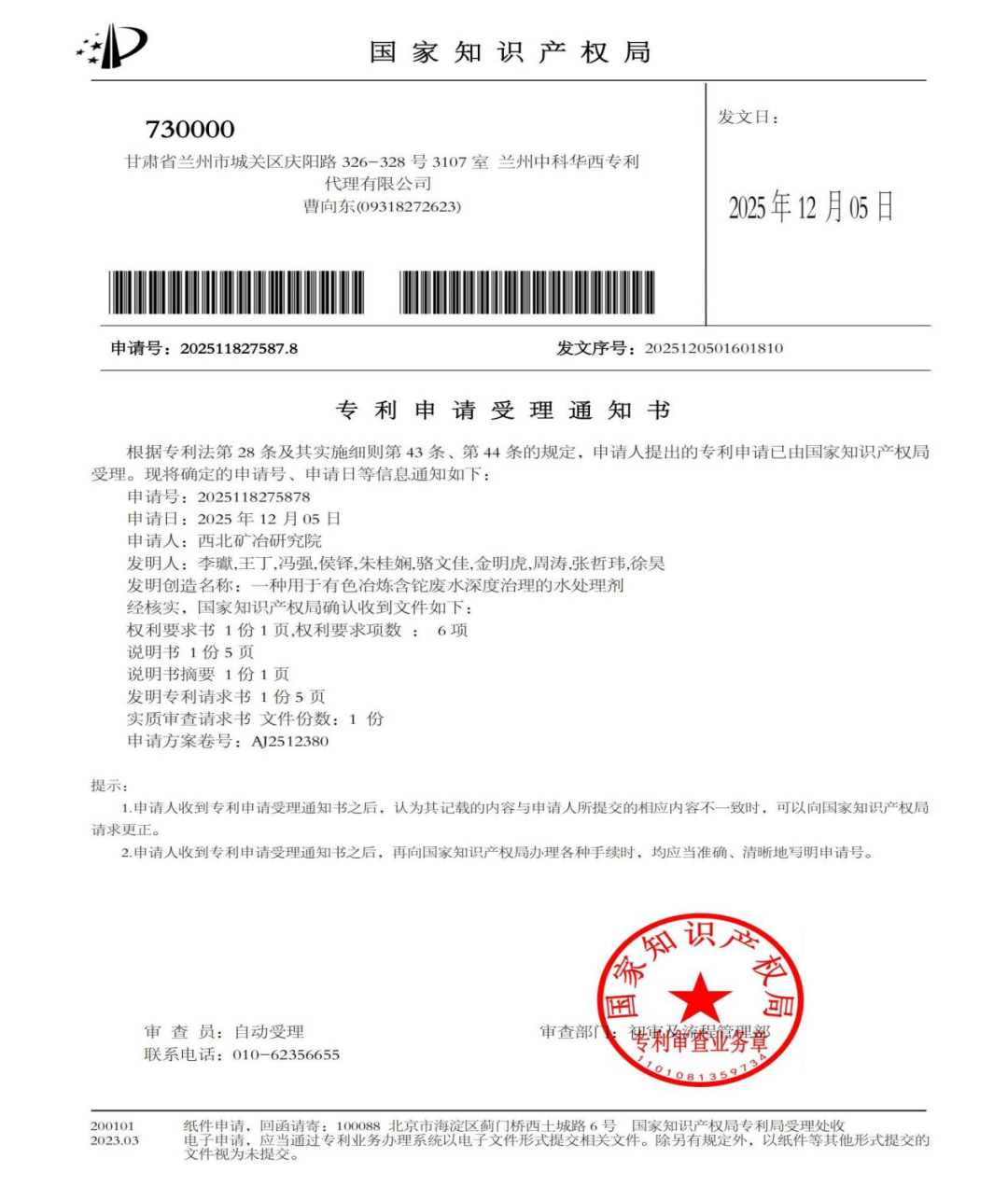
近日,由白银有色(维权)集团股份有限公司(以下简称"白银集团")西北矿冶研究院研发升级的高效环保D90系列水处理剂,收到了国家知识产权局的 《专利申请受理通知书》。这一D90系列水处理剂,是西北矿冶院针对剧毒稀有分散金属"铊"开具的一张新处方,投用生产能让冶炼企业废水净化达到铊 的排放限值和监测要求。 据悉,铊元素的毒性在重金属行列中遥遥领先,是工业废水净化过程中的"硬骨头"。行业内通常采用氧化沉淀法和硫化沉淀法净化处置,存在容易引入其 他杂质和处理不彻底等弊端,进行二次处理则会带来较大的成本投入。近年来,生态环境部先后提高了铅、锌工业污染物的排放标准,其中对铊元素的排 放限值划出了红线,并对监测工作也明确了更严格的要求。 与此同时,白银集团主导的"先进金属材料和矿用浮选药剂智能化中试基地"正在建设中,正在为D90系列水处理剂立足白银走向甘肃并向西北地区拓展应 用打下产能基础。 2023年5月,西北矿冶院精细化工研究所联合环境资源研究所组成专项攻关小组,针对这一行业的"老大难"开始了为期一年的技术研发,经过成百次的精 准计算、反复调配、试验攻关,最终研发出D90系列水处理剂,成功打破传统化学沉淀法的繁复流程, ...

12月18日LME金属库存及注销仓单数据
Wen Hua Cai Jing· 2025-12-19 09:30
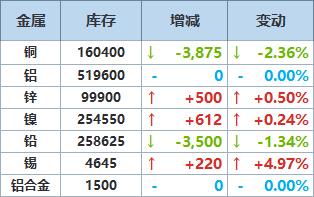
Group 1: Copper Inventory - LME copper inventory decreased to 160,400 tons, a change of -1.19% from the previous day [1] - Registered warehouse receipts for copper are at 103,950 tons, with a decrease of -8.29% [1] - The cancellation ratio of copper warehouse receipts is 35.19% [1] Group 2: Aluminum Inventory - LME aluminum inventory remains unchanged at 519,600 tons [5] - Registered warehouse receipts for aluminum are at 445,800 tons, with no change [5] - The cancellation ratio of aluminum warehouse receipts is 14.20% [5] Group 3: Zinc Inventory - LME zinc inventory increased to 99,900 tons, a change of +0.50% [9] - Registered warehouse receipts for zinc are at 92,600 tons, with a change of +35.19% [9] - The cancellation ratio of zinc warehouse receipts is 7.31% [9] Group 4: Lead Inventory - LME lead inventory decreased to 258,625 tons, a change of -4.78% [7] - Registered warehouse receipts for lead are at 154,725 tons, with a change of +4.29% [7] - The cancellation ratio of lead warehouse receipts is 40.17% [7] Group 5: Tin Inventory - LME tin inventory increased to 4,645 tons, a change of +5.13% [11] - Registered warehouse receipts for tin are at 4,510 tons, with a change of +2.91% [11] - The cancellation ratio of tin warehouse receipts is 2.91% [11] Group 6: Nickel Inventory - LME nickel inventory increased to 254,550 tons, a change of +0.24% [13] - Registered warehouse receipts for nickel are at 241,986 tons, with a change of +4.94% [13] - The cancellation ratio of nickel warehouse receipts is 4.94% [13]
国泰君安期货商品研究晨报-20251219
Guo Tai Jun An Qi Huo· 2025-12-19 01:42
Report Industry Investment Ratings The report does not provide industry investment ratings. Core Views of the Report The report offers comprehensive analysis and forecasts for various commodities in the futures market, including precious metals, base metals, energy, chemicals, agricultural products, etc. It assesses the supply - demand situation, price trends, and influencing factors of each commodity, providing investors with reference for trading decisions [2][4]. Summary by Commodity Categories Precious Metals - **Gold**: Inflation is moderately declining, with a trend strength of 0. Gold prices are affected by factors such as inflation data and central bank policies [2][5]. - **Silver**: Adjusting at a high level, trend strength is 0. Silver prices are in a high - level adjustment phase [2][5]. - **Platinum**: ETFs are continuously flowing in, and prices are oscillating upwards, trend strength is 1 [2][28]. - **Palladium**: Successfully breaking through the previous high, with strong upward momentum, trend strength is 1 [2][28]. Base Metals - **Copper**: Both domestic and overseas inventories are decreasing, providing support for prices, trend strength is 0 [2][11]. - **Zinc**: Moving sideways in a range, trend strength is 0 [2][14]. - **Lead**: Inventory reduction is supporting prices, trend strength is 0 [2][17]. - **Tin**: Supply is facing new disruptions, trend strength is 1 [2][20]. - **Aluminum**: Oscillating within a range, trend strength is 0 [2][25]. - **Alumina**: Slightly declining, trend strength is 0 [2][25]. - **Cast Aluminum Alloy**: Following the trend of electrolytic aluminum, trend strength is 0 [2][25]. - **Nickel**: The surplus is undergoing a structural shift, and attention should be paid to Indonesian policy risks, trend strength is 0 [2][32]. - **Stainless Steel**: Supply and demand are both weak, and steel prices are oscillating at a low level, trend strength is 0 [2][32]. Energy and Chemicals - **Crude Oil - related**: The report does not directly cover crude oil, but some products are affected by it. For example, asphalt is in a low - level oscillation, trend strength is 0 [2][78]. - **PTA**: Cost support is relatively strong, with a 4500 - 4800 range operation suggested, trend strength is 1 [2][63][69]. - **MEG**: In a range - bound market, trend strength is 1 [2][63][69]. - **Rubber**: Widely oscillating, trend strength is 0 [2][70]. - **Synthetic Rubber**: The upward trend is slowing down, trend strength is 0 [2][74]. - **LLDPE**: Supply elasticity is limited, and valuation continues to be under pressure, trend strength is 0 [2][92]. - **PP**: Factory warehouse warrants are cancelled, and the market is moving sideways, trend strength is 0 [2][95]. - **Caustic Soda**: There will still be pressure in the later stage, trend strength is 0 [2][98]. - **Paper Pulp**: Widely oscillating, trend strength is 0 [2][101]. - **Glass**: The price of the original sheet is stable, trend strength is 0 [2][108]. - **Methanol**: Oscillating with support, trend strength is 0 [2][111]. - **Urea**: Oscillating with support, trend strength is 0 [2][115]. - **Soda Ash**: The spot market has little change, trend strength is 0 [2][119]. - **LPG**: Strong in the short - term but under pressure in the long - term, trend strength is 0 [2][123]. - **Propylene**: Narrowly adjusting in the short - term, trend strength is 0 [2][124]. - **PVC**: The rebound is difficult to sustain, trend strength is 0 [2][132]. - **Fuel Oil**: Consolidating in the short - term with support below, trend strength is 0 [2][135]. - **Low - Sulfur Fuel Oil**: Narrowly oscillating, with the spread between high - and low - sulfur in the overseas spot market narrowing, trend strength is 0 [2][136]. Agricultural Products - **Palm Oil**: May rebound in the short - term and is searching for a bottom while oscillating, trend strength is 0 [2][160]. - **Soybean Oil**: Weak performance of US soybeans, and it is difficult for soybean oil to stabilize, trend strength is 0 [2][160]. - **Soybean Meal**: Oscillating at a low level, trend strength is 0 [2][166]. - **Soybean**: Oscillating, trend strength is 0 [2][166]. - **Corn**: Attention should be paid to the spot market, trend strength is 0 [2][169]. - **Sugar**: Weakly operating, trend strength is - 1 [2][173]. - **Cotton**: Oscillating with an upward bias, attention should be paid to downstream demand, trend strength is 0 [2][69][178]. - **Eggs**: Maintaining an oscillating trend, trend strength is 0 [2][184]. - **Hogs**: The peak demand during the Winter Solstice has passed, trend strength is - 1 [2][186]. - **Peanuts**: Attention should be paid to oil mill purchases, trend strength is 0 [2][192]. Shipping - **Container Freight Index (European Line)**: In an oscillating market, trend strength is 0 [2][138]. Fibers - **Short Fiber**: Oscillating at a low level in the short - term and facing pressure in the medium - term, trend strength is 0 [2][148]. - **Bottle Chip**: Oscillating at a low level in the short - term and facing pressure in the medium - term, trend strength is 0 [2][148]. Paper - **Offset Printing Paper**: It is advisable to take a wait - and - see approach, trend strength is 0 [2][151]. Aromatics - **Pure Benzene**: Oscillating in the short - term, trend strength is 0 [2][156].
铜冠金源期货商品日报-20251217
Tong Guan Jin Yuan Qi Huo· 2025-12-17 07:26
投资咨询业务资格 沪证监许可[2015]84 号 宏观:非农数据喜忧参半,A 股延续缩量下跌 商品日报 20251217 海外方面,美国经济呈现"就业走弱、需求尚稳、通胀黏性犹存"的格局。11 月新增非 农 6.5 万人超市场预期,但失业率升至 4.6%、创四年新高,就业结构明显恶化,全职岗位流 失、兼职就业增加,反映就业质量走弱。需求端方面,10 月核心零售超预期走强,对四季度 增长形成支撑。与此同时,12 月 Markit PMI 回落,制造业与服务业均弱于预期,就业指标 逼近停滞、价格指数显著上行,显示经济动能放缓与通胀压力并存。美股涨跌分化,美元指 数最低回落至 97.8,美债利率下行,金价、铜价窄幅震荡,供给宽松预期推动油价下跌、美 油创 2021 年来新低。 联系人 李婷、黄蕾 电子邮箱 jytzzx@jyqh.com.cn 国内方面,中央财办表示,明年将把扩大内需置于首要位置,继续实施适度宽松的货币 政策,从供需两端协同稳市场。供给端严控增量、盘活存量,推动收购存量商品房用于保障 性住房等用途,加快去库存,并有序推进"好房子"建设。A 股周二延续缩量调整,两市近 4300 只个股收跌、成交额回落 ...