能源

Search documents
视频丨芬兰将举行多场联合军演 俄芬关系再度紧张
Yang Shi Xin Wen Ke Hu Duan· 2025-11-03 23:21
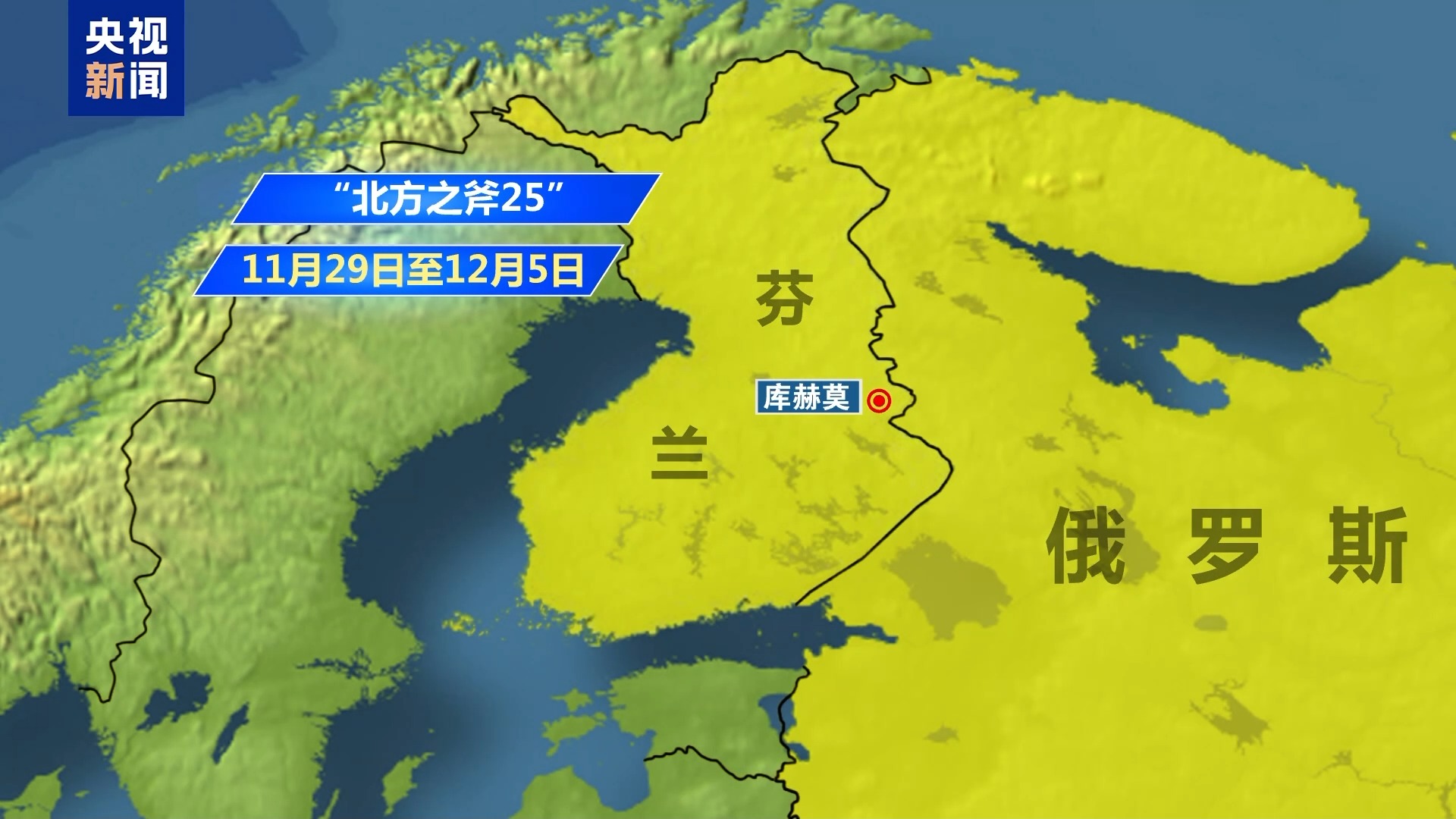
Group 1 - Finland will conduct a series of joint military exercises with NATO member countries, including Sweden and the UK, from November to December, involving nearly 15,000 troops [1][3] - The "Vibrant Sentinel 25" exercise will take place from November 27 to December 4 in southern Finland, with over 6,500 soldiers and more than 900 pieces of equipment participating [3] - The "Northern Axe 25" exercise will occur in eastern Finland, involving approximately 3,000 soldiers, including 70 British troops, from November 29 to December 5, located about 70 kilometers from the Russian border [5] Group 2 - The establishment of a new NATO command in Finland, located over 100 kilometers from the Russian border, aims to enhance NATO's defense capabilities and strengthen Finland's security [13][14] - The Finnish military's training days and exercise scales have significantly increased since joining NATO, impacting local pastoral activities [16] - Finland has closed all border crossings with Russia, resulting in an estimated daily loss of 1 million euros in tourism revenue for the South Karelia region [20] Group 3 - The joint exercises are intended to improve operational capabilities in winter conditions and enhance joint air defense capabilities with NATO allies [23][26] - Russia is responding to NATO's expansion by reorganizing its military districts and increasing its military presence in the northern region [27][29] - Economic measures, such as terminating parts of energy agreements with Finland, are being employed alongside military responses to counter NATO's forward deterrence [29]

大宗商品周度报告:宏观情绪有所反复,商品短期或震荡运行-20251103
Guo Tou Qi Huo· 2025-11-03 15:37
Group 1: Report Industry Investment Rating - There is no clear report industry investment rating provided in the text. Group 2: Core Views of the Report - The commodity market oscillated last week, closing down 0.27% overall, with only the black sector rising 1.96%, while non - ferrous metals, precious metals, agricultural products, and energy and chemicals declined by 0.36%, 0.61%, 0.62%, and 0.97% respectively [1]. - The Fed cut interest rates and announced the end of balance - sheet reduction on December 1st, but Powell's stance was hawkish, and geopolitical uncertainties, along with a rebound in the US dollar index, may lead to short - term oscillations in the commodity market [1]. - Different sectors have different short - term trends: precious metals may oscillate at high levels; non - ferrous metals may operate stably; the black sector may face pressure; energy prices may oscillate in the short term and turn bearish in the medium term; the chemical industry may oscillate; and in the agricultural products sector, meal is expected to be stronger than oil in the short term [1][2][3]. Group 3: Summary by Relevant Catalogs 1. Market Performance Summary - **Overall Market**: The commodity market oscillated last week, closing down 0.27%. The black sector was the only one to rise, up 1.96%, while other sectors declined [1]. - **Top - Gaining and Top - Losing Varieties**: The top - gaining varieties were apples, iron ore, and coking coal, with increases of 4.38%, 3.76%, and 3% respectively. The top - losing varieties were methanol, palm oil, and rapeseed oil, with declines of 4.05%, 3.92%, and 3.47% respectively [1]. - **Volatility and Capital**: The 20 - day average volatility of the commodity market continued to rise, with most varieties in precious metals, non - ferrous metals, black, and chemical sectors seeing an increase in volatility. The overall market capital scale decreased, with only the black sector seeing an increase in capital, and outflows mainly concentrated in the precious metals sector [1]. 2. Sector - by - Sector Outlook - **Precious Metals**: After a short - term oversell, the sector rebounded last week. The Fed cut interest rates as expected and ended balance - sheet reduction, but Powell's hawkish stance and policy disagreements among officials, along with the US government shutdown in a game stage, may lead to high - level oscillations in the sector [2]. - **Non - Ferrous Metals**: Sino - US economic and trade relations have eased, but Powell's hawkish stance led to a rebound in the US dollar index, and China's PMI unexpectedly declined. The supply side remains tight, but the terminal is weak, and inventories have slightly increased. The sector may operate stably in the short term due to expected incremental stimulus policies and a suspension of trade frictions [2]. - **Black Sector**: The apparent demand for rebar continued to improve last week, production increased, and inventories continued to decline. Hot metal production decreased significantly, and the steel mill profitability rate reached a new low this year. The negative feedback pressure in the industrial chain needs to be relieved. Iron ore port inventories continue to increase, and there are expectations for safety production assessments in the coking coal main production areas, but steel mills have a strong desire to lower raw material prices. The sector may face pressure in the short term [2]. - **Energy**: US EIA data showed that crude oil, gasoline, and refined oil inventories declined more than expected, supporting oil prices. However, the Fed's negative guidance on a December interest - rate cut, the easing of Sino - US relations, and OPEC +'s decision to increase production in December limit the rebound height of oil prices. Oil prices may oscillate in the short term and turn bearish in the medium term [3]. - **Chemical Industry**: For polyester products, downstream demand is currently okay but is expected to weaken in the medium term. With a lack of more positive factors, it may oscillate in the short term. For building materials, the weak reality persists, with rising costs and decreasing inventories, and it may fluctuate with macro - sentiment in the short term [3]. - **Agricultural Products**: US soybeans are supported by optimistic trade expectations, and meal performance is strong. Palm oil in Malaysia has not shown seasonal production cuts, and with weak export demand, the risk of a decline in oils has increased. Meal is expected to be stronger than oil in the short term [3]. 3. Commodity Fund Overview - **Gold ETFs**: Most gold ETFs had negative weekly returns, with the total scale of gold ETFs decreasing by 2.91% and the total trading volume decreasing by 4.22% [33]. - **Other Commodity ETFs**: The energy and chemical ETF had a weekly return of - 0.83%, the feed soybean meal futures ETF had a 2.22% return, the non - ferrous metals futures ETF had a 0.20% return, and the silver futures (LOF) had a - 0.12% return. The total scale of commodity ETFs decreased by 1.83%, and the total trading volume decreased by 6.43% [33]
卸任在即 巴菲特坚持“现金为王”
Bei Jing Shang Bao· 2025-11-03 15:01
Core Insights - Warren Buffett, at 95, is preparing to step down as CEO of Berkshire Hathaway, with the latest financial report potentially being his last before the transition to successor Greg Abel [1][7] - Berkshire's stock price has faced pressure recently, leading to a rare downgrade by an investment bank [1][8] Financial Performance - In Q3, Berkshire reported total revenue of $94.972 billion, a 2% year-over-year increase, surpassing market expectations of $91.55 billion; net profit reached $30.796 billion, up 17% from the previous year, exceeding expectations of $12.73 billion [2] - Operating profit, a key metric for Buffett, was $13.485 billion, a significant 34% increase from $10.09 billion year-over-year [2] - The substantial growth in operating profit was primarily driven by the insurance underwriting business, which saw profits soar over 200% to $2.37 billion [2] - The top five holdings remain American Express, Apple, Bank of America, Coca-Cola, and Chevron, with these stocks representing 66% and 71% of total equity investment fair value as of September 30, 2025, and December 31, 2024, respectively [2] Cash Reserves and Acquisitions - Berkshire's cash reserves reached a record high of $381.7 billion, surpassing the previous high of $347.7 billion set in Q1 [3] - The company announced a significant acquisition plan to purchase Occidental Petroleum's chemical business for $9.7 billion in cash, expected to close in Q4 2025 [3] Stock Sales and Market Sentiment - Berkshire has continued to sell stocks, with a net sale of $61 billion in Q3, marking the 12th consecutive quarter where sales exceeded purchases [5][4] - Analysts suggest that Buffett perceives limited opportunities in the current market, leading to a strategy focused on selling rather than buying [5] - The company has not repurchased any of its own stock in Q3 or the first 20 days of October, maintaining a pause on buybacks since May 2024 [6] Leadership Transition and Market Reactions - As Buffett prepares to hand over leadership to Greg Abel, the effective deployment of Berkshire's substantial cash reserves will be a primary challenge for the new CEO [7] - Concerns about the company's future performance without Buffett at the helm have led to an 11% decline in Berkshire's B shares since the announcement of his retirement, while the S&P 500 has risen 20% in the same period [7][8] - Analysts have downgraded Berkshire's stock rating to "underperform" due to potential pressures on its insurance business and geopolitical risks affecting its railway income [8]
狂欢下的暗涌:2025年10月全球资产分化与回调真相
Sou Hu Cai Jing· 2025-11-03 11:49
Core Insights - The global asset bull market narrative since 2025 has reached a critical juncture in October [1] - Despite significant year-to-date gains in silver (64.73%) and gold (52.53%), October revealed market fragility with declines in major indices [2] - The divergence in performance between US and Asian markets highlights a stark contrast, with US indices reaching new highs while Asian markets, particularly Hong Kong and Chinese stocks, faced significant pullbacks [3][4] Market Performance - US stock markets showed strong performance in October, with the Nasdaq index rising 4.70% to close at 23,724.96 points, and the S&P 500 index increasing by 2.27% to 6,840.20 points [3][6] - In contrast, the Hang Seng Index fell by 3.53% to 25,906.65 points, and the Nasdaq China Golden Dragon Index dropped by 4.19% [3][6] - The A-share market also exhibited mixed results, with the Shanghai Composite Index up 1.85% and the Shenzhen Component Index down 1.10% [3][6] Precious Metals - The precious metals market experienced volatility, with silver peaking at $54.142 per ounce before retreating to $48.85, while gold reached $4,355.685 before falling to $4,018.52 [7][8] - Year-to-date performance for gold and silver remains strong, with gold up 52.53% and silver up 68.44% [8] Energy and Currency - The US dollar index strengthened in October, rising from 97.82 to 99.73, which exerted pressure on dollar-denominated assets [9] - Oil prices faced downward pressure, with WTI crude oil falling 2.23% to $60.98 per barrel and Brent crude down 1.91% to $64.77 per barrel [9] Market Dynamics - The October pullback in Chinese stocks is attributed to multiple pressures, including increased IPO activity and ongoing US-China trade tensions, leading to reduced risk appetite [10] - The divergence in performance is also linked to the relative strength of the US economy and the liquidity environment, which continues to support US equities [11] Future Outlook - The medium-term bullish outlook for precious metals remains intact, supported by central bank gold purchases and geopolitical uncertainties [12] - The performance of US stocks is heavily reliant on large technology companies, which have shown strong earnings growth and market dominance [12] - Concerns about potential valuation bubbles in the tech sector are emerging, particularly regarding AI investments, which could impact future market stability [12][13]




一周财报预览丨AMD、Palantir、辉瑞、 Realty Income 等集体来袭
美股研究社· 2025-11-03 10:33
Core Insights - The upcoming earnings season from November 3 to November 7 will cover a diverse range of sectors, including semiconductors, cloud software, artificial intelligence, consumer retail, healthcare, energy, media, and cryptocurrency, providing a comprehensive view of corporate performance this quarter [1][5]. Semiconductor and AI Infrastructure - Key companies such as AMD, Qualcomm, Supermicro, ON Semiconductor, Arista Networks, and Skyworks will report earnings, influencing market expectations for AI server demand, edge computing, and smartphone recovery cycles [2]. - AMD is expected to show over 27% year-on-year growth in revenue and profit, with a consensus revenue forecast of $8.75 billion [10][12]. Cloud, Software, and AI Platforms - Companies like Palantir, The Trade Desk, Unity Software, and Datadog will reflect the progress of AI applications and enterprise budget trends, with Palantir expected to report a revenue of $1.09 billion, marking a growth of over 50% year-on-year [6][8]. Consumer and Services Sector - Major players including McDonald's, Airbnb, and Uber will provide insights into consumer resilience and discretionary spending, with McDonald's expected to report a revenue of $7.09 billion, reflecting a slight growth of over 3% [16][18]. Healthcare and Biotechnology - Pfizer, Moderna, and Amgen will discuss drug pricing and demand for GLP-1 drugs, with Pfizer's revenue forecast at $16.52 billion, despite a projected 40% decline in earnings per share [13][15]. Energy, Refining, and Commodities - Companies like ConocoPhillips and BP will update on global supply and commodity pricing, with ConocoPhillips expected to report a revenue of $8.44 billion, reflecting a decline of over 20% [22][24]. Financial, Real Estate, and Asset Management - Firms such as Realty Income and Simon Property Group will clarify credit demand and commercial real estate risks, with Realty Income's revenue forecast at $0.51 billion [4]. Media, Gaming, and Streaming - Warner Bros. Discovery and Spotify will highlight trends in media consumption, while cryptocurrency-related companies like Marathon Digital will also report [4]. Industrial and Materials - Companies including DuPont and Archer Daniels Midland will provide key signals regarding manufacturing health and agricultural demand, with DuPont's revenue expected to be $3.25 billion [4].



哪些上市科技公司最受保险资金青睐?
Zhong Guo Jing Ying Bao· 2025-11-03 07:48
Core Viewpoint - The insurance industry is increasingly active in supporting technological innovation through various investment strategies, including venture capital and private equity, to meet the funding needs of tech companies at different stages of development [1][5]. Investment in Listed Technology Companies - Insurance funds are becoming more prominent among the top shareholders of listed technology companies, with significant holdings reported in companies like Anji Technology and Deep Technology [2]. - Specific holdings include China Life Insurance and other insurers holding substantial shares in various tech firms, indicating a growing trend of insurance capital in the tech sector [2]. Participation in IPOs - Major insurance companies are deeply involved in the IPOs of technology firms, acting as cornerstone investors in several recent listings on the Hong Kong Stock Exchange [3]. - Notable participation includes investments by Taikang Life and China Pacific Insurance in multiple IPOs, showcasing the strategic role of insurance capital in the public offering process [3]. A-share Market Engagement - In the A-share market, insurance funds are actively participating in IPO projects within the energy and equipment manufacturing sectors, with significant investments made by China Life Insurance in major IPOs [4]. - The establishment of specialized insurance investment funds has facilitated strategic investments in various companies, further integrating insurance capital into the A-share market [4]. Focus on Technology Sectors - Insurance capital is increasingly targeting key technology sectors such as artificial intelligence, semiconductors, and advanced manufacturing, with a significant portion of holdings allocated to these areas [5]. - The shift towards a "long money, long investment" philosophy reflects the industry's commitment to supporting innovation and growth in technology [5]. Innovative Investment Models - Insurance funds are utilizing venture capital and private equity to indirectly invest in technology projects, with many insurers participating as limited partners in private equity funds [6]. - The development of a comprehensive investment support system for technology companies is being emphasized, allowing for tailored financing solutions throughout different stages of a company's lifecycle [6]. S-Fund Investment Strategy - The establishment of S-funds, which focus on acquiring alternative asset fund shares, is being utilized by insurance companies to optimize capital allocation and enhance investment strategies [7]. - Notable initiatives include the creation of funds aimed at investing in technology innovation, demonstrating a strategic approach to capital deployment [7]. Diverse Financing Channels - Insurance funds are also providing diverse financing options for technology companies through the purchase of bonds and asset-backed securities, enhancing the funding landscape for innovation [8]. - The integration of quality tech assets into insurance portfolios is seen as essential for achieving long-term stable returns [8]. Deep Adaptation to Innovation Needs - Insurance institutions are focusing on enhancing their mechanisms to better support technology innovation investments, including establishing specialized research teams [10]. - The emphasis on aligning investment strategies with the evolving needs of technology sectors is critical for fostering a sustainable investment environment [10]. Risk Management and Valuation - The establishment of robust risk management frameworks is essential for the sustainable participation of insurance capital in technology investments, with a focus on long-term analysis and monitoring [11]. - Valuation and pricing capabilities are being developed to ensure that investments in technology firms are based on sound financial assessments [12].






红利板块逆势走强,红利ETF易方达(515180)、恒生红利低波ETF(159545)等助力布局高股息资产
Sou Hu Cai Jing· 2025-11-03 05:07
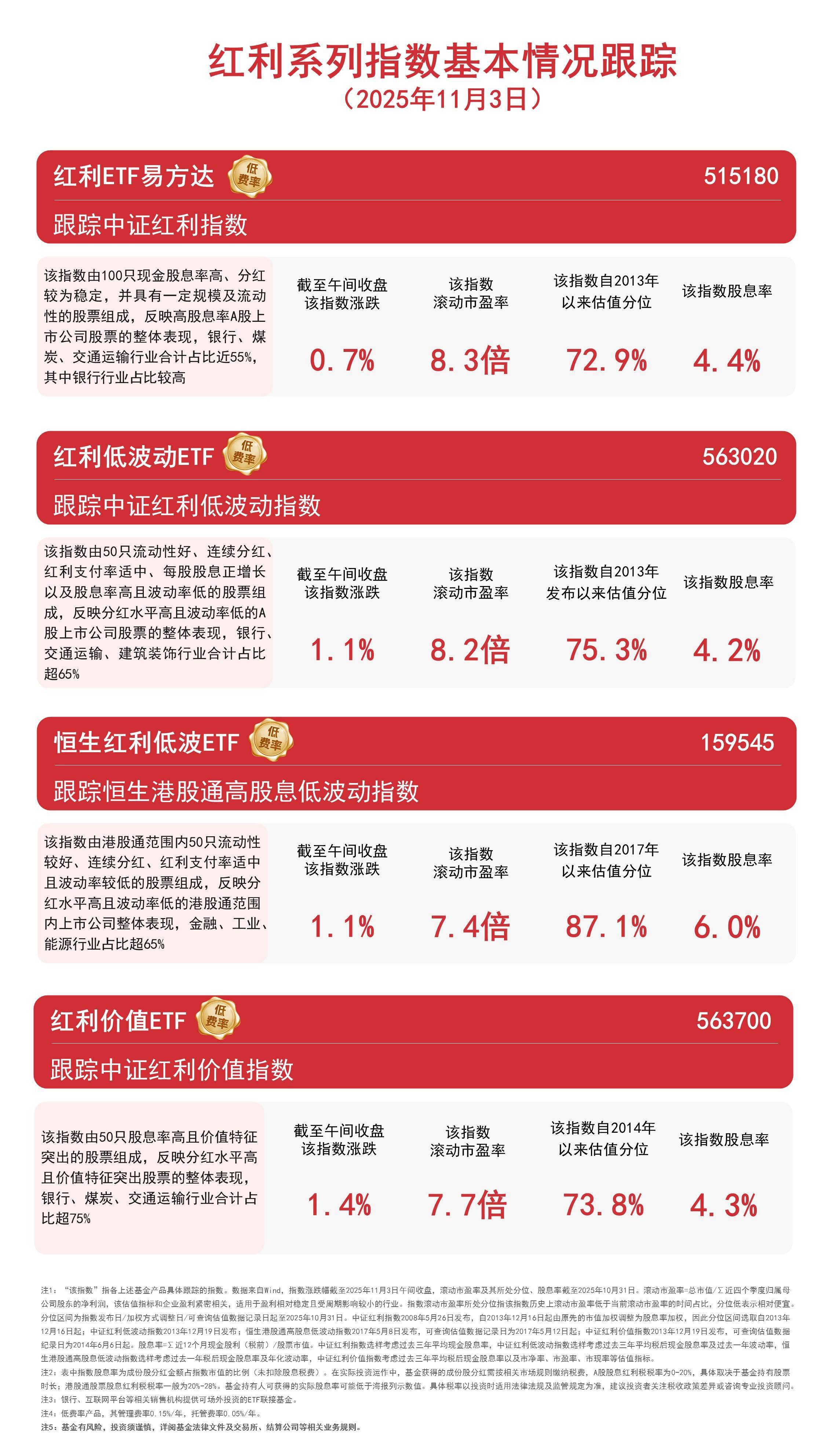
Group 1 - The dividend sector showed resilience, with the CSI Dividend Value Index rising by 1.4% and other related indices also experiencing gains of 1.1% and 0.7% respectively [1][5][7] - The E Fund Dividend ETF (515180) has seen a net inflow of over 1 billion yuan over the past 10 trading days, indicating strong investor interest [1] - The composition of the dividend-paying stocks includes those with moderate payout ratios, positive growth in dividends per share, and high dividend yields with low volatility, particularly in the banking, transportation, and construction sectors, which together account for over 65% [5][7] Group 2 - The Hang Seng Low Volatility Dividend ETF tracks a selection of 50 liquid stocks within the Hong Kong Stock Connect that have a history of continuous dividends and moderate payout ratios, with over 65% representation from the financial, industrial, and energy sectors [6][7] - The CSI Dividend Value ETF is designed to follow the CSI Dividend Value Index, which consists of 50 stocks characterized by high dividend yields and value traits [9]
金融期货早评-20251103
Nan Hua Qi Huo· 2025-11-03 04:45
Report Industry Investment Ratings No relevant content provided. Core Views of the Report - The "15th Five-Year Plan" draft provides future focus directions, and the Sino-US economic and trade consultation has reached a phased consensus, but the long - term game remains. The manufacturing PMI has declined marginally, and the economy needs policy support. Overseas, the Fed has cut interest rates with internal differences, and the market's interest - rate cut expectation has cooled [2]. - The RMB exchange rate is in a tug - of - war around 7.10. Last week, the USD/CNY spot rate showed a V - shaped reversal, and it is expected to trade in the 7.09 - 7.14 range this week [3][4]. - Short - term stock index is expected to fluctuate mainly due to a dull news environment. Treasury bonds suggest holding medium - term long positions. The container shipping European line is expected to maintain high - level fluctuations [7][8][13]. - Precious metals are in a short - term adjustment phase, and copper's 12 - month contract has reached its high. Aluminum is expected to be in high - level fluctuations, and alumina may be in weak fluctuations [18][21][23]. - Zinc is expected to be in narrow - range fluctuations, and nickel and stainless steel are under fundamental pressure. Tin is in high - level fluctuations, and lithium carbonate is expected to be in an oscillating and relatively strong state [26][29][30]. - Industrial silicon is in a supply - strong and demand - weak situation, and polycrystalline silicon has a weak fundamental situation. Lead is expected to be in narrow - range fluctuations [34][35][36]. - Steel products are expected to be in an oscillating adjustment. Iron ore has limited upward space, and coking coal and coke are suitable for long - position allocation in the black sector [37][40][41]. - Ferroalloys are expected to oscillate due to high inventory and weak demand. Crude oil is expected to oscillate in the $60 - 65 range this week [42][46]. - LPG is affected by cost. PX - PTA is expected to be strong and oscillating with the cost, and MEG is expected to be in wide - range fluctuations and maintain a short - position allocation [48][52][55]. - Methanol 01 may continue to decline, and PP and PE are in a supply - strong and demand - weak situation. Pure benzene and styrene are expected to be in low - level fluctuations [57][61][64]. - Fuel oil's cracking is weakening, and low - sulfur fuel oil's cracking is strengthening. Asphalt's basis is weakening [68][69][72]. Summary by Relevant Catalogs Macroeconomy - China's October official manufacturing PMI fell to 49, and the non - manufacturing index rose to 50.1. Overseas, the Fed cut interest rates with internal differences, and Powell's hawkish speech reduced the probability of a December interest - rate cut [1][2]. RMB Exchange Rate - Last week, the USD/CNY spot rate showed a V - shaped reversal. It is expected to trade in the 7.09 - 7.14 range this week, and the key technical point around 7.10 is the focus of the battle between bulls and bears [3][4]. Stock Index - Last Friday, most stock indexes fell except for the CSI 1000. Short - term news is dull, and it is expected to oscillate. It is recommended to hold positions and wait and see [5][7]. Treasury Bonds - Last week, treasury bonds rose significantly. The central bank's stance on supporting monetary policy and resuming secondary - market bond purchases improved market expectations. It is recommended to hold medium - term long positions [7][8]. Container Shipping European Line - There are both positive and negative factors. The contract price is expected to maintain high - level fluctuations in the 1800 - 1900 point range. Trend traders can wait, and arbitrage traders can pay attention to the spread between EC2512 and EC2602 [10][11][13]. Precious Metals - Last week, precious metals continued to adjust. Although the medium - and long - term prices are expected to rise, the short - term is in an adjustment phase. It is recommended to pay attention to the opportunity of buying on dips [15][16][18]. Copper - The 12 - month contract of copper has reached its high. In November, the market focuses on the 1 - month contract. If the December interest - rate cut expectation increases, there may be an upward impulse [19][21]. Aluminum Industry Chain - Aluminum is affected by macro - policies and is expected to be in high - level fluctuations. Alumina is in a supply - surplus state and may be in weak fluctuations. Cast aluminum alloy has strong follow - up to aluminum and is expected to be in high - level fluctuations [23][24][25]. Zinc - Zinc prices are in narrow - range fluctuations. There is an upward drive in November, and it is recommended to wait and see exports and the macro - situation [25][26]. Nickel and Stainless Steel - The prices of nickel and stainless steel are under fundamental pressure. The 12 - month interest - rate cut expectation is uncertain, and the Sino - US tariff situation is changeable [27][29]. Tin - Tin prices are in high - level fluctuations, mainly affected by the weakening of the Fed's interest - rate cut expectation. It is recommended to go long in the short - term and conduct high - selling and low - buying operations [30]. Lithium Carbonate - The lithium carbonate futures price is expected to be in an oscillating and relatively strong state in the 74000 - 85000 yuan/ton range, affected by supply and demand factors [30][31]. Industrial Silicon and Polycrystalline Silicon - Industrial silicon is in a supply - strong and demand - weak situation, and polycrystalline silicon has a weak fundamental situation. It is recommended to be cautious when investing in polycrystalline silicon [33][34][35]. Lead - Lead prices are in narrow - range fluctuations. It is recommended to use option double - selling strategies to earn option premiums [36]. Steel Products - Steel products are in an oscillating adjustment. The follow - up apparent demand needs to be improved, and it is affected by raw material costs and the macro - environment [37]. Iron Ore - Iron ore is facing a situation of "exhausted macro - benefits and pressured fundamentals". It is recommended to short at high levels after valuation repair [38][39][40]. Coking Coal and Coke - Downstream coking plants and steel mills are actively replenishing inventory. Coking coal and coke are suitable for long - position allocation in the black sector [41]. Ferroalloys - Ferroalloys are facing the contradiction of high inventory and weak demand. After the macro - sentiment fades, they are expected to oscillate [42]. Crude Oil - Last week, crude oil was in a sideways adjustment. This week, it is expected to oscillate in the $60 - 65 range, and it is difficult to break through [44][46]. LPG - LPG is affected by cost. The domestic fundamental support is relatively limited, and it is mainly affected by the cost side [47][48]. PX - PTA - PTA's price has rebounded due to the "anti - involution" rumor and improved fundamentals. It is expected to be strong and oscillating with the cost, but the surplus expectation remains [49][50][52]. MEG - Bottle Chip - Ethylene glycol's demand has improved marginally, but the valuation is under pressure due to the inventory accumulation expectation. It is recommended to short at high levels [53][54][55]. Methanol - Methanol 01 may continue to decline due to the delay of the Iranian gas - restriction expectation [56][57]. PP - PP is in a supply - strong and demand - weak situation. The supply pressure is difficult to fundamentally relieve, and it is expected to be weak [59][61]. PE - PE is in a supply - strong and demand - weak situation. The supply pressure is large, and the demand support is weak. It is recommended to pay attention to macro - changes [63][64]. Pure Benzene and Styrene - Pure benzene is expected to be weak due to the expected inventory accumulation. Styrene has high inventory and de - stocking pressure. It is recommended to short after a rebound [66][67]. Fuel Oil - High - sulfur fuel oil's cracking is weakening, and low - sulfur fuel oil's cracking is strengthening due to improved fundamentals [68][69]. Asphalt - Asphalt's basis is weakening. The short - term is affected by external disturbances, and the long - term demand in the south may be boosted [70][72].
晨会纪要:2025年第186期-20251103
Guohai Securities· 2025-11-03 01:39
Group 1 - The report highlights that Fengshen Co., the only centrally controlled tire listed company in China, has entered a growth phase with a 168% year-on-year increase in net profit for Q3 2025 [2][6][7] - The company achieved a revenue of 5.543 billion yuan for the first three quarters of 2025, representing a 13.58% increase year-on-year, despite a decline in net profit [6][8] - The average selling price of products increased by 7.88% year-on-year to 1198 yuan per tire, contributing to improved profitability [8][10] Group 2 - Dongfang Tower benefited from the potassium fertilizer boom, reporting a 77.57% increase in net profit for Q3 2025, with a revenue of 3.392 billion yuan [16][17] - The company’s gross profit margin increased by 10.23 percentage points to 40.53% due to rising potassium prices [17][19] - The average price of potassium chloride reached 3269 yuan per ton in Q3 2025, up 773 yuan per ton year-on-year [17][19] Group 3 - Longbai Group's net profit decreased by 34.68% year-on-year in Q3 2025, impacted by falling titanium dioxide prices, with a revenue of 6.105 billion yuan [23][24] - The average price of titanium dioxide fell by 2018 yuan per ton year-on-year, leading to a significant profit squeeze [25][27] - The company is pursuing a strategic acquisition of Venator UK's titanium dioxide assets to enhance its global presence [27][29] Group 4 - Shanmei International reported a 30.20% decline in revenue for the first three quarters of 2025, with a net profit drop of 49.74% [32][33] - The company’s coal production increased by 8.73% year-on-year, while trade coal sales fell by 28.50% [35][36] - The average selling price of self-produced coal decreased by 24.72% year-on-year, affecting overall profitability [36][37] Group 5 - Fenhong Media achieved a total revenue of 9.607 billion yuan in the first three quarters of 2025, reflecting a 3.73% year-on-year growth [38][39] - The company’s gross profit margin improved significantly, reaching 74.1% in Q3 2025 [40][41] - The company plans to distribute a cash dividend of 0.5 yuan per share, indicating a commitment to shareholder returns [41][42] Group 6 - Yunnan Rural Commercial Bank reported a 0.67% increase in revenue for the first three quarters of 2025, with a net profit growth of 3.74% [43][44] - The bank's non-performing loan ratio decreased to 1.12%, reflecting improved asset quality [44]





“股神”巴菲特谢幕季定格传奇生涯! 伯克希尔Q3营业利润大增34% 给“阿贝尔时代”留下创纪录现金
智通财经网· 2025-11-03 00:04
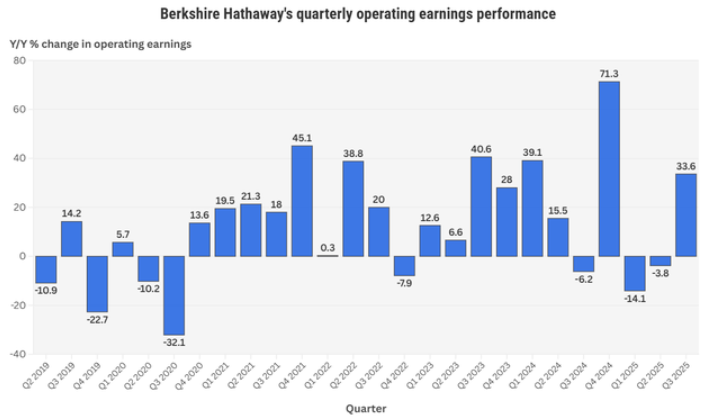
Core Insights - Berkshire Hathaway, led by Warren Buffett, reported a significant year-over-year increase in operating profit of nearly 34% in Q3, primarily driven by strong performance in its insurance underwriting business [1][2] - The company continues to sell off its holdings in stocks like Apple and Bank of America without any stock buybacks, resulting in a record cash reserve of $381.7 billion [1][4][5] - This Q3 report marks the last quarterly performance under Buffett's leadership, as he will step down as CEO by the end of the year, with Greg Abel set to take over [1] Financial Performance - Operating profit for Q3 rose 33.6% to $13.49 billion, marking a recovery after significant declines in the previous two quarters [2] - Net earnings attributable to Berkshire shareholders increased by 17.3% to $30.8 billion in Q3 [4] - Cash reserves reached a historic high of $381.7 billion, surpassing the previous record of $344.1 billion [4][6] Investment Strategy - Buffett's strategy of maintaining high cash reserves is interpreted as a cautious approach amid potential market volatility, with analysts suggesting it provides flexibility for future acquisitions [5][7] - The company has not engaged in stock buybacks for five consecutive quarters, indicating a belief that current valuations are not favorable [6] - Berkshire has sold approximately $184 billion in stocks over the past three years, with $6.1 billion in stock sales occurring in Q3 alone [6] Business Segment Performance - The insurance underwriting segment saw a remarkable profit increase of over 200% to $2.37 billion in Q3 [8] - Investment income from insurance decreased by 13.2% to $3.18 billion due to declining domestic interest rates [10] - The BNSF railway segment reported a 4.8% increase in after-tax profit to $1.45 billion, driven by increased freight volume [10][11] - The energy segment experienced an unexpected decline of 8.6% in after-tax profit to $1.49 billion [11] - Manufacturing, service, and retailing sectors showed an 8.2% improvement in after-tax profit to $3.62 billion [11]