
基建

Search documents
中国能建:助力行业构建健康可持续的发展生态
Zheng Quan Ri Bao Zhi Sheng· 2025-12-18 10:48
Group 1 - The core viewpoint is that the Chinese government is actively promoting the transformation and development of the infrastructure industry through various measures aimed at improving market competition and shifting focus from price competition to technology and quality competition [1] - The company plans to leverage its technological advantages and resource integration capabilities to focus on high value-added and high-quality key projects [1] - The company aims to enhance refined management and innovation-driven approaches to contribute to the establishment of a healthy and sustainable development ecosystem in the industry [1]

11月经济数据点评:需求偏弱延续,政策加力必要性上升
LIANCHU SECURITIES· 2025-12-18 09:42
Production - In November, industrial added value increased by 4.8% year-on-year, with a month-on-month growth of 0.4%, indicating resilience in industrial operations[1] - The service production index grew by 4.2% year-on-year, down 0.4 percentage points from the previous month[1] Investment - Fixed asset investment in November saw a month-on-month decline of 12.0%, with a cumulative growth rate dropping to -2.6%, a decrease of 0.9 percentage points from the previous month[2] - Infrastructure investment showed a cumulative growth rate of 0.1% for broad infrastructure and -1.1% for narrow infrastructure, both continuing to decline[2] - Real estate investment fell by 15.9% cumulatively, with funding and sales also showing significant declines, indicating ongoing instability in housing prices[2] Consumption - Social retail sales grew by 1.3% year-on-year in November, a decrease of 1.6 percentage points from the previous month, primarily due to high base effects from last year[3] - Restaurant consumption showed relative resilience with a year-on-year growth of 3.2%, while retail sales of goods increased by only 1.0%, reflecting a notable slowdown[3] Policy Outlook - The necessity for policy support has increased due to continued weak demand, with the December Central Economic Work Conference emphasizing the need for proactive fiscal measures and enhancing macroeconomic governance[5] - The policy toolbox remains ample, with a focus on expanding domestic demand and optimizing supply[5]
关注上游价格波动,中游开工低位
Hua Tai Qi Huo· 2025-12-18 02:39
Industry Overview - The report focuses on the upstream, midstream, and downstream industries, analyzing price fluctuations, production, and sales trends [1][3] Upstream Industry - In the non - ferrous metals sector, nickel and lead prices have declined; in the agricultural sector, pork prices have slightly decreased; in the energy sector, international crude oil and liquefied natural gas prices continue to fall [3] - As of December 17, the prices of some agricultural products such as eggs, palm oil, and pork have decreased, while the prices of corn and cotton have increased; among non - ferrous metals, the prices of zinc and some aluminum products have decreased, while the prices of copper, nickel, and some other aluminum products have increased; in the energy sector, the prices of WTI crude oil, Brent crude oil, liquefied natural gas, and coal have decreased [36] Midstream Industry - In the chemical industry, the operating rates of PX and PTA have declined; in the energy sector, the coal consumption of power plants has increased; in the infrastructure sector, the operating rate of road asphalt has decreased [3] Downstream Industry - In the real estate sector, the sales of commercial housing in first, second, and third - tier cities have continued to pick up at the end of the year; in the service sector, the number of domestic and international flights has continued to decline [3] Policy and Data - The National Development and Reform Commission and other departments have issued the "Benchmark Levels and Baseline Levels for the Clean and Efficient Utilization of Coal in Key Areas (2025 Edition)", aiming to promote the clean and efficient utilization of coal and eliminate backward production capacity [1] - From January to November 2025, the stamp duty was 404.4 billion yuan, a year - on - year increase of 27%. Among them, the securities trading stamp duty was 185.5 billion yuan, a year - on - year increase of 70.7%. In November 2025, the securities trading stamp duty was 22.6 billion yuan, a month - on - month increase of 24.86% compared with October and a year - on - year increase of 2.26% compared with November 2024 [1]
上游价格持续回落,关注扩内需政策推进
Hua Tai Qi Huo· 2025-12-17 02:47
宏观日报 | 2025-12-17 上游价格持续回落,关注扩内需政策推进 中观事件总览 生产行业:1)欧盟将放弃2035年内燃机禁令。欧盟拟放宽新车排放标准,取消对内燃机的实质性禁令。欧盟委员 会将降低原定2035年起禁止销售汽油和柴油新车的标准,转而允许部分插电式混合动力车和配备燃油增程器的电 动汽车上市。新提案要求到下个十年中期尾气排放量较当前目标减少90%(原目标为100%减排)。这一转变背后, 是因为欧洲的汽车制造商在与特斯拉和比亚迪等中国电动汽车的竞争中举步维艰。 服务行业:1)针对内需发展现状如何?提振消费、扩大投资的空间和动力在哪里?中央财办有关负责同志表示, 扩大内需是明年排在首位的重点任务。今年我国内需总体保持稳健,前三季度内需对经济增长贡献率达到71%。提 振消费政策成效明显,扩大有效投资扎实推进。我们也注意到,近几个月消费和投资增速有所放缓,需要持续加 力扩内需。明年要把握消费的结构性变化,从供需两侧发力提振消费。 数据来源:iFind,华泰期货研究院 行业总览 风险 经济政策超预期,全球地缘政治冲突 2025年期货市场研究报告 第1页 请仔细阅读本报告最后一页的免责声明 上游:1)有色 ...
隔离器上游缺口—偏振片与法拉第片
2025-12-17 02:27
Summary of Key Points from Conference Call Records Industry Overview - The isolator market is facing supply-demand imbalances due to tight upstream material supplies, specifically Faraday rotators and polarizers, primarily controlled by overseas manufacturers such as Sumitomo, Coherent, Hoya, and Corning. This has led to price increases, creating opportunities for domestic manufacturers like Xinhua Guang and Fuzhijing [1][2][4] - Global infrastructure demand remains strong, but North America is experiencing shortages, impacting related supply chains. Space computing, as part of broader infrastructure, is expected to address ground energy shortages through commercial space technology [1][5][19] Key Insights and Arguments - The isolator is crucial in optical communication for ensuring unidirectional light transmission, with increasing demand and quality requirements, especially in North America [2] - The financial results of Broadcom and Oracle have caused market fluctuations, but the underlying demand remains strong. Concerns about AI demand and supply chain issues are significant [1][6][8] - The AI sector shows notable valuation disparities, with core AI stocks like TSMC and NVIDIA being relatively undervalued, while segments like power, fuel cells, and storage are overvalued [8] - NVIDIA's H200 offers significant cost-performance advantages, attracting major organizations like Alibaba and Tencent, and is pivotal in advancing AI technology [3][12][14] Market Dynamics - Broadcom's lack of a substantial upward revision in its 2026 guidance has led to market anxiety, despite strong financial performance. The stock dropped 10% post-earnings release due to concerns over AI demand and supply chain capabilities [6][7] - Oracle's recent financial performance raised concerns about cash flow and order fulfillment, particularly regarding its collaboration with OpenAI [9] Technological Developments - Companies are accelerating model iterations, with advancements like GPT-5.2 and Gemini 3.3 Pro showcasing different strengths in AI capabilities. NVIDIA maintains a competitive edge in computing power, although Google's TPU project has significant experience [10][11] - The light communication industry is thriving due to its high demand and favorable commercial landscape, with leading companies like Zhongji Xuchuang and Xinyi Sheng expanding their advantages in silicon photonics [17][18] Future Trends - Space computing is expected to grow significantly, driven by events like frequent rocket launches and the potential IPO of SpaceX, addressing energy supply issues through high-density solar energy [19][20][21] - Liquid cooling technology is gaining attention, with established companies maintaining dominance due to their experience and case studies, while new entrants face challenges in post-installation support and operational risks [22][23][24]
2025年11月经济增长数据点评:服务消费增速加快
Ping An Securities· 2025-12-17 01:55
Economic Growth Overview - In November 2025, China's industrial added value grew by 4.8% year-on-year, slightly down by 0.1 percentage points from the previous month[3] - The service production index increased by 4.2% year-on-year, a decrease of 0.4 percentage points compared to October[3] - Retail sales of consumer goods rose by 1.3% year-on-year, down 1.6 percentage points from the previous month[3] Sector Performance - High-tech manufacturing added value increased by 8.4%, accelerating by 1.2 percentage points from the previous month, outpacing the overall industrial growth rate by 3.6 percentage points[3] - The export delivery value showed a marginal recovery, with a year-on-year decline of 0.1%, improving by 2.0 percentage points from October[3] - The service retail sales grew by 5.4% year-on-year from January to November, with a 0.1 percentage point increase compared to the previous month[3] Investment Trends - Fixed asset investment saw a cumulative year-on-year decline of 2.6% from January to November, a drop of 0.9 percentage points from the previous month[3] - Infrastructure and manufacturing investments maintained expansion, with cumulative year-on-year growth rates of 0.1% and 1.9%, respectively[3] - Equipment purchase investment rose by 12.2% year-on-year, contributing 1.8 percentage points to overall investment growth[3] Risks and Outlook - Risks include potential underperformance of growth stabilization policies, unexpected severity of overseas economic downturns, and escalation of geopolitical conflicts[3]
机构预计楼市下行趋势将在2026年见底
21世纪经济报道· 2025-12-16 14:40
Group 1 - The core viewpoint of the article is that China's GDP growth rate is expected to reach 4.7% in 2026, with a shift in the economic growth structure towards increased domestic demand and a reduced role of exports compared to 2025 [1][2] - The People's Bank of China is anticipated to implement two rate cuts of 10 basis points each in 2026 to support domestic demand, likely occurring in the first and second quarters [1] - Infrastructure investment is expected to rebound in the first quarter of 2026, despite previous constraints due to local government liquidity issues, with a long-term focus shifting from traditional transportation to new infrastructure such as energy, 5G, and data centers [1] Group 2 - China's export performance has exceeded expectations this year, primarily driven by a global recovery in electronic products and strong export growth to regions outside the U.S. [2] - The retail sales growth rate of social consumer goods in China has been around 4% since 2025, supported by government subsidy programs for major items, although recent months have seen a slowdown due to high base effects from the previous year [2] - The real estate market is expected to bottom out in 2026, with first-tier cities likely to see a recovery in housing prices first, which will gradually extend to second and third-tier cities [2]

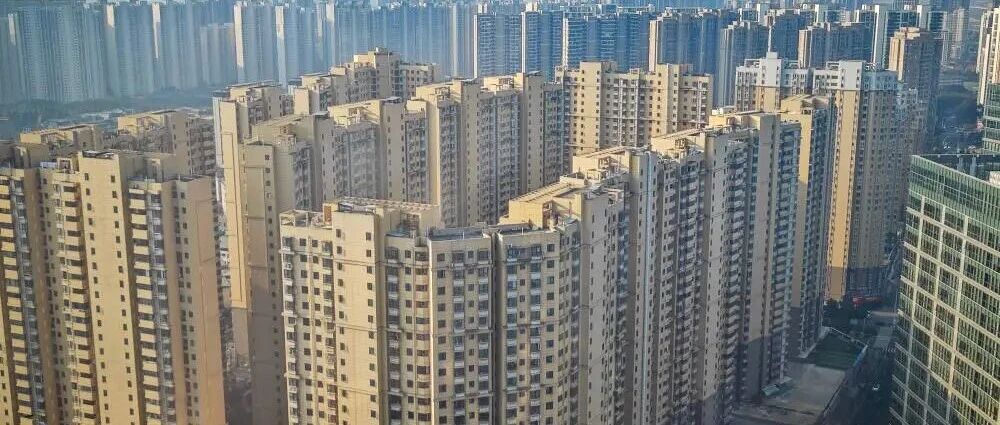
中国交建:公司上市以来的研发投入,聚焦核心业务技术攻关和新兴业务布局
Zheng Quan Ri Bao Zhi Sheng· 2025-12-16 13:41
证券日报网讯 12月16日,中国交建在互动平台回答投资者提问时表示,股价受宏观经济、行业周期等 多重外部因素影响,非公司单方面可控。公司上市以来的研发投入,聚焦核心业务技术攻关和新兴业务 布局,其中用于施工生产中的高新技术材料费占主要部分。基建行业项目投资周期长,公司正通过优化 业务结构、降本增效、稳定分红等举措提升经营质量。作为基建龙头,公司将紧抓战略机遇深化转型, 以稳健业绩实现公司与股东价值共同提升。 (编辑 丛可心) ...

2025年11月经济数据点评:经济数据波动,不阻碍经济目标即将完成
Chengtong Securities· 2025-12-16 11:55
Economic Growth and Stability - Despite increased volatility in economic data in the second half of the year, the annual economic growth target is expected to be met due to a strong first half, with GDP growth of 5.2%[1] - Industrial production growth remains stable, with a year-on-year increase of 4.8% in November, slightly down from 4.9% in October[12] - Exports have rebounded significantly, with a year-on-year growth of 5.9% in November, up from -1.1% in October, driven by external demand[12] Investment Trends - Fixed asset investment cumulative year-on-year growth decreased from -1.7% to -2.6%, with a monthly decline of 11.5% in November[15] - Manufacturing investment maintained positive growth at 1.9% year-on-year, although monthly growth was negative at -4.5%[16] - Real estate investment saw a cumulative year-on-year decline of 15.9%, with a monthly drop of 30% in November[27] Consumer Spending - Social retail sales growth fell to 1.3% year-on-year in November, a decrease of 1.6 percentage points from the previous month, marking six consecutive months of decline[31] - The retail sales total saw a month-on-month decline of 0.42%, indicating weakened consumer momentum[31] - Major consumer categories, including jewelry and home appliances, experienced significant drops in sales growth, with jewelry sales falling from 37.6% to 8.5% year-on-year[34]
——11月经济数据点评:需求延续弱势,生产保持韧性
Shenwan Hongyuan Securities· 2025-12-16 11:28
Group 1 - The report highlights a continued weakness in demand, particularly in consumer spending, which has been significantly impacted by a decline in automobile sales and the reduction of government subsidies for trade-ins [2][3] - Cumulative retail sales growth for January to November 2025 is reported at 4.0%, a decrease of 0.3 percentage points compared to the previous month, with automobile sales showing a cumulative year-on-year decline of 1.0% [3][22] - Industrial value-added growth for November 2025 is at 6.0%, down 0.1 percentage points from October, indicating a divergence between traditional industries related to real estate and high-tech sectors [3][4] Group 2 - The report notes a rebound in inflation, primarily driven by rising food prices, with the Consumer Price Index (CPI) increasing to 0.7% year-on-year in November, marking a 0.5 percentage point rise [3][5] - Fixed asset investment shows a cumulative year-on-year decline of 2.6% for November, with real estate investment down 15.9% and infrastructure investment at 0.13% [3][7] - The report indicates that the overall economic fundamentals are weakening, with investment growth and consumer spending declining, while inflation recovery remains uncertain [3][23]