
建筑

Search documents
上证城镇基建指数下跌0.01%,前十大权重包含中国电建等
Jin Rong Jie· 2025-08-04 16:14
Group 1 - The Shanghai Urban Infrastructure Index (H50034) experienced a slight decline of 0.01%, closing at 1237.17 points with a trading volume of 16.678 billion yuan [1] - Over the past month, the Shanghai Urban Infrastructure Index has increased by 6.04%, and by 6.76% over the last three months, while it has decreased by 1.59% year-to-date [1] - The index reflects the performance of listed companies influenced by changes in economic and consumption structures, focusing on themes such as intensive, intelligent, and green low-carbon development [1] Group 2 - The top ten weighted stocks in the Shanghai Urban Infrastructure Index include China State Construction (9.44%), China Railway (6.99%), and Poly Development (6.9%) among others [1] - The index is composed entirely of stocks listed on the Shanghai Stock Exchange, with the industrial sector accounting for 57.78%, real estate for 31.31%, and materials for 10.91% [2] - The index samples are adjusted biannually, with changes implemented on the next trading day following the second Friday of June and December [2]





AI取代人类?美国GDP增长新动力:AI支出超消费者支出
Sou Hu Cai Jing· 2025-08-04 14:35
近期,一系列令人瞩目的数据揭示了人工智能(AI)对美国经济结构的深远影响。一项研究表明,在过去一年中,AI对美国GDP增长的贡献已超越人类 消费者支出,成为新的增长引擎。更令人震惊的是,美国在AI基础设施上的投资正迅速逼近甚至有望超过对人类劳动者的支出。 这一趋势不仅体现在宏观经济层面,也深刻影响了劳动力市场。据最新数据显示,过去一年里,美国约有50万个工作岗位因AI技术的普及而消失。这一 变化不仅引发了广泛的社会关注,也让即将步入职场的大学毕业生面临前所未有的就业挑战。 今年,美国应届毕业生们遭遇了史上最艰难的就业季。许多计算机科学(CS)专业的高材生,尽管拥有出色的学术背景和丰富的实习经验,却仍难以找 到理想的工作。有报道称,部分毕业生甚至投出了上千份简历,最终却只收到星巴克等零售行业的低薪工作邀请。 与此同时,美国数据中心的建设投资也在持续攀升。最新数据显示,今年6月份,美国数据中心建设的年化投资首次超过400亿美元,与去年同期相比增长 了28%。这一数字自ChatGPT推出以来,更是增长了近两倍。数据中心的蓬勃发展,进一步凸显了AI技术在现代经济中的重要地位。 这一现象不仅改变了企业的投资策略,也深刻 ...



宏观经济专题:7月出口或有韧性
KAIYUAN SECURITIES· 2025-08-04 13:43
Supply and Demand - Industrial production shows marginal weakening, with construction activity at seasonal lows, particularly in asphalt and cement operations[2] - Some chemical chains and automotive steel tire production rates have declined, with PX operating rates returning to historical midpoints[2] - Construction demand remains weak, with apparent demand for rebar, wire rod, and building materials below historical levels[2] Prices - International commodity prices are fluctuating, with oil, copper, aluminum, and gold showing a generally strong trend[3] - Domestic industrial products, excluding some building materials, are experiencing a rebound in prices, with the South China comprehensive index showing an upward trend[3] Real Estate - New housing transactions remain at historical lows, with a 16% week-on-week increase in transaction area, but still down 38% and 17% compared to 2023 and 2024 respectively[4] - Second-hand housing transactions are also weak, with prices declining and transaction volumes in major cities like Beijing and Shanghai showing year-on-year decreases of 8% and 2% respectively[4] Exports - July exports are expected to show resilience, with a projected year-on-year increase of approximately 2.8%, and container shipping data indicating a potential increase of around 7%[5] Liquidity - Recent weeks have seen a rise in funding rates, with R007 at 1.49% and DR007 at 1.42% as of August 1[70] - The central bank has conducted a net withdrawal of 15,675 billion yuan through reverse repos in the same period[70] Risk Factors - Potential risks include unexpected fluctuations in commodity prices and stronger-than-expected policy measures[75]
广东建科中签号出炉 共约5.86万个
Zheng Quan Shi Bao Wang· 2025-08-04 13:25
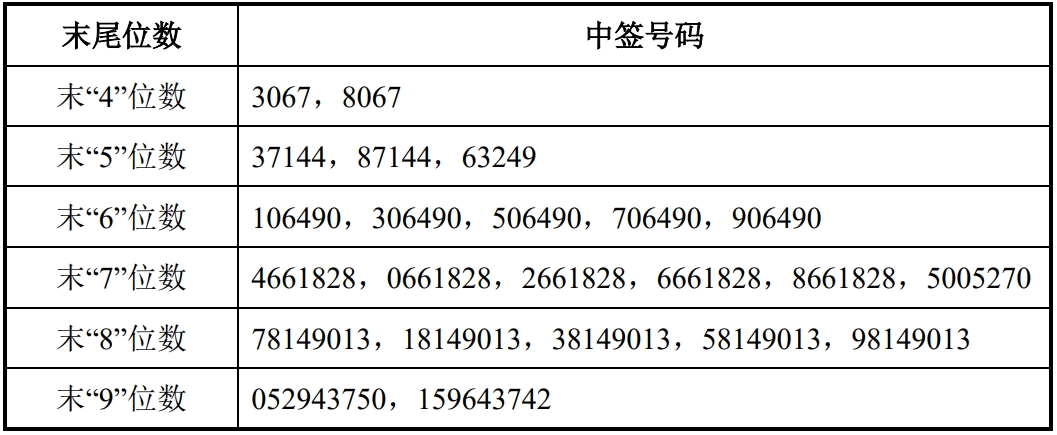
人民财讯8月4日电,广东建科(301632)8月4日晚间披露首次公开发行股票网上中签结果,中签号码共有58609个,每个中签号码只能认购500股广东 建科股票。 ...
需求侧发力+反内卷双驱动,建筑行业基本面有望改善
Guotou Securities· 2025-08-04 03:32
Investment Rating - The report maintains an investment rating of "Outperform the Market - A" for the construction industry [5]. Core Insights - The construction industry is expected to improve its fundamentals driven by demand-side initiatives and anti-competition measures, with a focus on enhancing the quality of projects and promoting technological innovation [10][18]. - The report highlights that infrastructure investment growth is projected to improve in the second half of the year, supported by accelerated project construction and government bond issuance [2][12]. - The real estate development investment has declined by 11.2% year-on-year, but urban renewal projects may boost demand for construction and building materials [2][11]. Summary by Sections Industry Dynamics Analysis - The Politburo meeting emphasized the need for sustained macroeconomic policy efforts, including proactive fiscal policies and moderate monetary easing to stimulate effective investment [16]. - The national composite PMI output index for July was 50.2%, indicating continued economic expansion despite a slight decline [16]. - Construction activity has slowed due to adverse weather conditions, with the business activity index at 50.6% and new orders index at 42.7% [16][18]. Market Performance - The construction industry experienced a decline of 2.41% from July 28 to August 1, underperforming compared to major indices [19]. - The engineering consulting services sector showed better performance with a weekly increase of 0.87% [19]. Key Investment Targets - The report suggests focusing on leading state-owned enterprises in construction, such as China State Construction, China Communications Construction, and China Railway Construction, which are expected to benefit from improved operational quality and market conditions [10][12]. - It also recommends attention to companies involved in pre-stressed materials manufacturing and international engineering service providers with strong competitive advantages [10][11]. Company Announcements - Significant contract announcements include China Railway Construction signing contracts worth 1.06 trillion yuan in the first half of 2025, with a notable increase in overseas contracts [31]. - Other companies, such as Jianghe Group and Anhui Construction, reported substantial new contracts, indicating ongoing demand in the sector [31]. Industry News - Recent meetings have focused on enhancing market regulation to eliminate low-quality competition and promote fair practices within the construction industry [32]. - The Ministry of Housing and Urban-Rural Development is working to strengthen cooperation with Hong Kong in areas such as construction standards and urban renewal [32].
拓空间,有效投资潜力大(锐财经·年中经济观察⑫)
Ren Min Ri Bao Hai Wai Ban· 2025-08-03 22:46
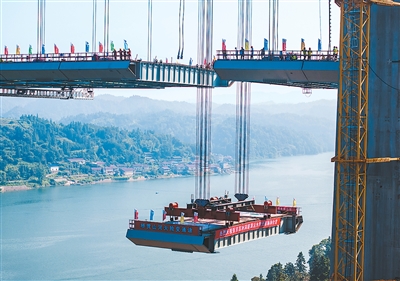
Group 1 - The Zhangguan Expressway, an important part of the national highway network, has successfully completed the main bridge of the Dongting Creek Yuanshui Bridge, laying a solid foundation for the entire line to be opened by 2026 [2] - The expressway connects Zhangjiajie City and Huaihua City, enhancing regional connectivity and infrastructure development [2] Group 2 - In the first half of the year, fixed asset investment (excluding rural households) reached 248,654 billion yuan, with a year-on-year growth of 2.8% [5] - The nominal growth rate has declined compared to the first five months, while the actual growth rate, after adjusting for price factors, is 5.3% [5][6] - The investment in the primary industry grew by 6.5%, the secondary industry by 10.2%, while the tertiary industry saw a decline of 1.1% [5] Group 3 - The investment in equipment and tools increased by 17.3%, contributing 86.0% to the overall investment growth [7] - Infrastructure investment grew by 4.6%, with significant increases in water transportation (21.8%) and water management (15.4%) [8] - The investment in hydrogen energy projects doubled, and the charging and swapping infrastructure investment surged by nearly 70% [8] Group 4 - The government is focusing on high-quality promotion of "two major" constructions and stimulating private investment to expand effective investment [9] - A total of 8,000 billion yuan in "two major" construction projects has been allocated, with 7,350 billion yuan in central budget investment nearly fully distributed [9] - The government aims to enhance the investment multiplier effect and promote private capital in sectors like transportation, energy, and water conservancy [9][10]
上半年新登记经营主体增长超九成,广州黄埔再现“创业热”
2 1 Shi Ji Jing Ji Bao Dao· 2025-08-03 12:14
Economic Performance - Huangpu District's GDP reached 206.91 billion yuan in the first half of 2025, with a year-on-year growth of 4.0% at constant prices, indicating a stable economic recovery [1] - The district's industrial output value for above-scale enterprises was 395.1 billion yuan, with significant contributions from the automotive industry, particularly in new energy vehicles, which achieved an output value of 62.36 billion yuan, growing by 8.7% [1] - The integrated circuit industry saw a 17.1% increase in output value, while the energy sector reported an output value of 90.62 billion yuan, maintaining positive growth [1] Investment and Consumption - Huangpu District accounted for 23% of the city's total fixed asset investment, with 235 newly signed industrial projects and a total agreed investment exceeding 100 billion yuan [2] - The social retail sales in Huangpu reached 93.8 billion yuan, representing 16.7% of the city's total, with a growth rate of 11.2%, and new energy vehicle sales surged by 68.5% [2] - The district implemented a housing ticket system, facilitating the purchase of 1,489 residential units, covering approximately 150,000 square meters, with a total value of about 2.6 billion yuan [2] Future Development Plans - Huangpu aims to promote 77 expansion projects and implement a three-year plan for new quality productivity manufacturing space, expecting to add 1.5 million square meters of new capacity [3] - The district is accelerating the approval process for urban village renovations, with eight reconstruction projects underway, aiming to build 1.27 million square meters of resettlement communities [3] - Efforts will be made to enhance consumer engagement through initiatives like trade-in programs and the promotion of commercial projects to stabilize the real estate market [3]


A股市场运行周报第52期:短线调整中线无碍,先观望、再择机-20250802
ZHESHANG SECURITIES· 2025-08-02 11:17
Core Viewpoints - The market is currently in a short-term adjustment phase due to the significant rise of the US dollar and the pullback of leading sectors such as innovative pharmaceuticals in Hong Kong, but the overall upward trend remains intact [1][4][55] - The adjustment is expected to last approximately two weeks, with key technical supports at the 20-day moving average, lower gaps, and the upward trend line for the Shanghai Composite Index [1][4][55] - Even if the trend line is breached, the 60-day moving average will serve as a reliable medium-term support, indicating that the overall market outlook remains positive for a "slow bull" market [1][4][55] Market Overview - The market experienced an overall adjustment this week, with major indices such as the Shanghai Composite, Shanghai 50, and CSI 300 declining by 0.94%, 1.48%, and 1.75% respectively [11][53] - The technology growth sector showed relative strength, while cyclical sectors experienced significant pullbacks, with materials and coal down by 4.69% and 4.56% respectively [12][54] - The average daily trading volume in the Shanghai and Shenzhen markets decreased to 17.9 trillion yuan, reflecting a decline in market sentiment [19] Industry Configuration - The recommended industry allocation strategy is a balanced approach of "1+1+X," focusing on large financials (banks and brokerages) alongside technology growth sectors such as military, computing, media, electronics, and new energy [1][4][56] - There is an emphasis on identifying low-position stocks above the annual line within sectors to optimize "high-low cut" operations [1][4][56] Future Market Outlook - The market is expected to continue its upward trend as long as the key technical supports hold, with potential short-term buying opportunities if the index maintains the upward trend line and the US dollar against the offshore RMB begins to decline [1][4][55] - Historical patterns suggest that the Shanghai Composite Index may aim to surpass its previous high of 3674 points, with reliable short-term supports identified at recent gaps and moving averages [4][52][55]
今年超长期特别国债 发行进度已超60%
Zheng Quan Ri Bao· 2025-08-02 00:21
Group 1 - The Ministry of Finance is conducting the first re-issuance of the 2025 ultra-long special government bonds, with a total face value of 35 billion yuan and a fixed interest rate of 2.10% [1] - In July, three issues of ultra-long special government bonds were completed, totaling 206 billion yuan, making it the second-largest monthly issuance this year [1] - The overall issuance plan for ultra-long special government bonds this year is 1.3 trillion yuan, an increase of 300 billion yuan from last year, with 796 billion yuan issued by August 1, achieving 61% of the target [1] Group 2 - The National Development and Reform Commission has allocated a total of 800 billion yuan for "two major" construction projects this year, with 735 billion yuan of central budget investment already distributed [2] - The accelerated issuance of ultra-long special government bonds is expected to support economic development by boosting infrastructure investment and enhancing consumer demand [2][3] - The issuance of ultra-long special government bonds is seen as a catalyst for long-term growth, acting as both a stabilizer for economic performance and a promoter of structural upgrades in consumption [3]
外贸增势展现苏州经济韧性
Su Zhou Ri Bao· 2025-08-01 23:00
Group 1: Trade Performance - Suzhou achieved a record high in foreign trade with total imports and exports reaching 1,295.88 billion yuan, a year-on-year increase of 5.7% [1] - The growth is attributed to the improvement in export product quality, rapid growth in emerging markets, and effective measures taken to stabilize orders and develop new markets [1] Group 2: Support for Enterprises - Suzhou established a "Stabilizing Foreign Trade" task force, consisting of 43 professionals from 24 departments, to provide 24-hour support for enterprises [2] - The task force has served 1,660 key enterprises, achieving a 95.2% resolution rate for their requests [2][3] Group 3: Market Expansion Initiatives - The "Hundred Groups and Thousand Enterprises Going Abroad" initiative has successfully organized nearly 20 trade delegations, helping around 300 enterprises explore new markets in Europe, the Middle East, South America, and Southeast Asia [4] - Suzhou's textile industry has also made significant strides in North Africa, securing approximately 3 million USD in intended orders during a recent trade exhibition [5] Group 4: New Business Models and Technologies - Suzhou's cross-border e-commerce imports and exports surged by 185.3% in the first half of the year, with a focus on innovative products and new technologies [7] - Key export products such as integrated circuits and lithium-ion batteries saw substantial growth, with increases of 25.3% and 44.3% respectively [7] Group 5: Innovation and Competitiveness - Companies like Kafei Mei have significantly increased their R&D investment, leading to improved product longevity and a sixfold increase in revenue since 2021 [7][8] - Fast Home Intelligent Technology secured six project orders in Saudi Arabia, demonstrating the competitive edge gained through AIoT solutions and a strong focus on innovation [8]