
大宗商品

Search documents
中信期货晨报:国内商品期货多数上涨,新能源材料板块领涨-20250718
Zhong Xin Qi Huo· 2025-07-18 08:36
1. Report Industry Investment Rating No relevant content provided. 2. Core Viewpoints of the Report - For domestic assets, there are mainly structural opportunities, with the policy - driven logic strengthened. There is a higher probability of the implementation of incremental policies in the fourth quarter. Attention should be paid to the impact of the supply - side "anti - involution" policy on assets. Overseas, focus on the progress of tariff frictions and geopolitical risks. In the long - term, the weak US dollar pattern continues. Be vigilant against volatility spikes and pay attention to non - US dollar assets. Maintain a strategic allocation of resources such as gold [7]. 3. Summary by Relevant Catalogs 3.1 Macro Highlights Overseas Macro - The "reciprocal tariff" rates of the US on most economies have been released, with most rates (except for Japan and Malaysia) being lowered, reducing short - term tariff uncertainties. In May, the US wholesale sales monthly rate was - 0.3% (expected 0.2%, previous value revised from 0.1% to 0%), and the wholesale inventory monthly rate final value was - 0.3% (expected - 0.3%, previous value - 0.3%). In June, the 1 - year inflation expectation of the New York Fed was 3.0% (expected 3.1%, previous value 3.2%). In June, the new non - farm employment in the US was better than expected, but there were concerns in the employment market. On July 4th, the "Big and Beautiful" Act was implemented, which may have limited long - term boost to the US economy and will increase the US deficit by $3.3 trillion in the next 10 years [7]. Domestic Macro - In June, China's export volume rebounded slightly year - on - year to 5.8%, CPI rose 0.1% year - on - year, and PPI fell 3.6% year - on - year. The improvement in exports to the US was the main boost, and the "anti - involution" policy had a significant impact on some domestic - demand - oriented commodities. On July 1st, the Sixth Meeting of the Central Financial and Economic Commission proposed to "regulate the low - price and disorderly competition of enterprises in accordance with regulations and promote the orderly withdrawal of backward production capacity" [7]. Asset Views - Domestic assets present mainly structural opportunities, with the policy - driven logic strengthened. Pay attention to the impact of the supply - side "anti - involution" on assets. Overseas, focus on tariff frictions and geopolitical risks. In the long - term, the weak US dollar pattern continues. Be vigilant against volatility spikes and pay attention to non - US dollar assets. Maintain a strategic allocation of resources such as gold [7]. 3.2 Viewpoint Highlights Macro - Domestically, there may be moderate reserve requirement ratio cuts and interest rate cuts, and the fiscal end will implement established policies in the short term. Overseas, the inflation expectation structure flattens, the economic growth expectation improves, and the stagflation trading cools down [8]. Finance - The sentiment in the stock market rebounds, and the bond market maintains a volatile trend. Stock index futures continue a mild upward trend; stock index options remain cautious; the sentiment in the bond market for treasury bond futures weakens [8]. Precious Metals - The risk preference rises, and precious metals such as gold and silver continue to adjust [8]. Shipping - The sentiment in the shipping market falls. For the container shipping route to Europe, focus on the game between the peak - season expectation and the implementation of price increases [8]. Black Building Materials - Iron ore performs strongly, supporting the price center of the sector. Most varieties such as steel, iron ore, coke, and others are in a volatile state, with different influencing factors for each [8]. Non - ferrous Metals and New Materials - There is a game between reciprocal tariff negotiations and domestic policy stimulus expectations. Most non - ferrous metal varieties are in a volatile state, with some showing a downward trend, such as zinc and nickel [8]. Energy and Chemicals - OPEC+ over - expected production increase will drag down the energy and chemical sector to fluctuate weakly. Different chemical products have different short - term trends, such as some showing volatile rises, some showing volatile falls, and some remaining volatile [10]. Agriculture - In the agricultural sector, the prices of some products such as pigs are under pressure, and different agricultural products such as grains, oils, and livestock are in a volatile state, affected by various factors such as supply and demand, weather, and policies [10].
合作伙伴征集|2025年BNEF上海峰会
彭博Bloomberg· 2025-07-16 03:46
Core Insights - The 2025 BNEF Shanghai Summit will take place on November 25-26, focusing on major challenges and opportunities in the energy transition process [3] - The summit aims to gather over 600 high-level executives, investors, and policymakers from various sectors including energy, industry, and transportation [3] Partnership Value - Partners will enhance their brand influence in energy, finance, and sustainable development through collaboration with BloombergNEF [4] - Strategic networking opportunities will be provided through customized business meetings and exclusive closed-door sessions [4] - Partners can showcase their expertise by participating in main forum speeches or hosting closed-door roundtables [4] - Opportunities for business development will be available, including showcasing innovative solutions and gaining insights from BloombergNEF's research [4] - Digital communication support will amplify the partnership's impact through BloombergNEF's media network [4] Collaboration Opportunities - Flexible partnership plans will be tailored to align with the brand positioning and development goals of potential partners, covering various dimensions such as brand display, content co-creation, and business expansion [5] - Interested parties are encouraged to contact their BloombergNEF account manager or email for further collaboration details [5]


2025 年全球经济:动荡变革中探寻稳健增长路径
Sou Hu Cai Jing· 2025-07-15 03:25
Group 1: Global Economic Overview - The global economy is facing complex challenges, including the aftermath of the pandemic, geopolitical conflicts, energy structure adjustments, and technological revolutions, leading to uncertain market conditions [1] - Inflation remains a significant issue for major economies, with the U.S. core PCE above the 2% target and the Eurozone struggling with energy price volatility and weak manufacturing [3] - The International Bank for Settlements highlights interconnected challenges such as weak potential output growth, increasing fiscal vulnerabilities, and rising credit and liquidity risks in the non-bank financial sector [3] Group 2: China's Economic Performance - In 2024, China's GDP reached 134.9 trillion yuan, growing at a rate of 5%, with primary, secondary, and tertiary industries growing at 3.5%, 5.3%, and 5% respectively [4] - The consumer market is recovering, with significant growth in tourism and sales of upgraded consumer goods like electric vehicles and smart home products, indicating the release of domestic market potential [4] - High-tech manufacturing and equipment manufacturing saw value-added growth of 8.9% and 7.7%, respectively, outpacing overall industrial value-added growth [4] Group 3: Challenges in China's Economy - The real estate market is still adjusting, with some companies facing unresolved debt risks and local government fiscal sustainability under pressure [5] - Despite global demand slowdown affecting foreign trade, exports of "new three items" (electric vehicles, lithium batteries, solar batteries) increased by 28.7%, showcasing the competitiveness of Chinese manufacturing [5] Group 4: Investment Strategies - Investors are advised to diversify asset allocation, with a noticeable structural trend in the stock market where consumer recovery and tech growth sectors alternate in leading performance [6] - The bond market remains stable under expectations of monetary policy easing, with government bonds and high-grade credit bonds still holding certain allocation value [6] - Commodity markets are experiencing volatility due to geopolitical factors and supply chain restructuring, with gold gaining appeal as a safe-haven asset [6] Group 5: Future Economic Outlook - The future of the global economy is uncertain, influenced by the Federal Reserve's interest rate decisions, the effectiveness of China's growth policies, and the resolution of the European energy crisis [7] - China aims to deepen its domestic demand strategy and promote technological innovation, contributing to high-quality development amid a complex international environment [7] - The country advocates for inclusive economic globalization and strengthens cooperation through initiatives like the Belt and Road, aiming to enhance the global economic governance system [7]

特朗普对8国祭出50%最严关税 全球经济再临高压测试
Sou Hu Cai Jing· 2025-07-11 05:29
Core Points - The U.S. government announced a tiered tariff policy on eight countries, effective August 1, with rates ranging from 20% to 50%, significantly impacting global trade dynamics [1][3] - The tariffs are differentiated based on the economic scale and market dependency of the countries involved, with Brazil facing the highest rate of 50% [3] - The policy aims to address perceived trade imbalances and includes punitive measures against Brazil for its previous administration's actions [3][4] Economic Impact - The tariffs cover all product categories, including industrial raw materials, agricultural products, and consumer goods, with a notable concern over increased production costs for U.S. companies [3] - The timing of the policy is strategically set to avoid disrupting the U.S. traditional consumption peak season and to mitigate potential inflation risks [3] - The tariffs may lead to increased input inflation for U.S. manufacturing, particularly concerning Brazilian commodities like steel, coffee, and soybeans [3][4] Global Trade Relations - The tariffs are expected to reshape global trade relationships, with Brazil and other affected countries considering retaliatory measures, including invoking WTO dispute resolution mechanisms [4] - The U.S. has warned that any retaliatory actions could result in doubled tariffs and stricter penalties for third-country transshipment [4] - The policy raises questions about the effectiveness of the WTO multilateral system, with reports indicating a significant challenge to global trade rules since the 1985 Plaza Accord [4] Long-term Considerations - The effectiveness of the tariff policy will depend on several factors, including the political landscape in the U.S. midterm elections, the response from major trading partners, and the actual outcomes of the Federal Reserve's inflation control measures [4] - There is a concern that if tariffs become a normalized policy tool, the global economy may enter a fragmented state of existence [4]
2025 年全球财经格局:波动中的新机遇与挑战
Sou Hu Cai Jing· 2025-07-11 03:12
Global Market Overview - The Federal Reserve's monetary policy adjustments have been a core variable affecting global markets, with a pause in tightening announced in Q1 2025 after three rate hikes in 2024, leading to significant capital flow restructuring [3] - Emerging markets attracted over $80 billion in foreign capital inflows in the first four months of the year, a 65% increase compared to the same period last year, with Southeast Asian and Latin American markets being the focal points [3] - In contrast, developed economies in Europe and the US are still in an adjustment phase, with the Eurozone facing energy price volatility and weak manufacturing recovery, resulting in a 3.2% decline in the Euro against the Dollar [3] China Economic Performance - China's economy demonstrated strong resilience with a Q1 GDP growth of 5.2%, driven by high-end manufacturing and the digital economy [4] - The production of new energy vehicles increased by 35%, industrial robots by 28%, and the core AI industry scale surpassed 5 trillion yuan, indicating a shift towards an innovation-driven model [4] - The A-share market exhibited structural characteristics, with the Sci-Tech Innovation Board rising by 12.6% this year, outperforming the broader market, particularly in strategic emerging industries like semiconductors and biomedicine [4] Investment Strategies - Investors are encouraged to establish a diversified asset allocation framework in response to the complex market environment [5] - The commodity market is undergoing structural changes, with rising demand for lithium and cobalt due to the increasing share of renewable energy, and global battery demand expected to exceed 2 TWh in 2025 [5] - Green bonds are emerging as a growth point, with global issuance expected to surpass $500 billion this year, and China accounting for 25% of this market [5] - Three main investment themes are suggested: globally competitive high-end manufacturing firms, service companies benefiting from consumption upgrades, and tech companies positioned to capitalize on the digital economy [5] Conclusion on Global Financial Landscape - The global financial landscape is undergoing profound changes, presenting both challenges and opportunities for investors [6] - A scientific investment framework and a long-term perspective are essential for navigating the complexities of the financial waves in this uncertain era [6]

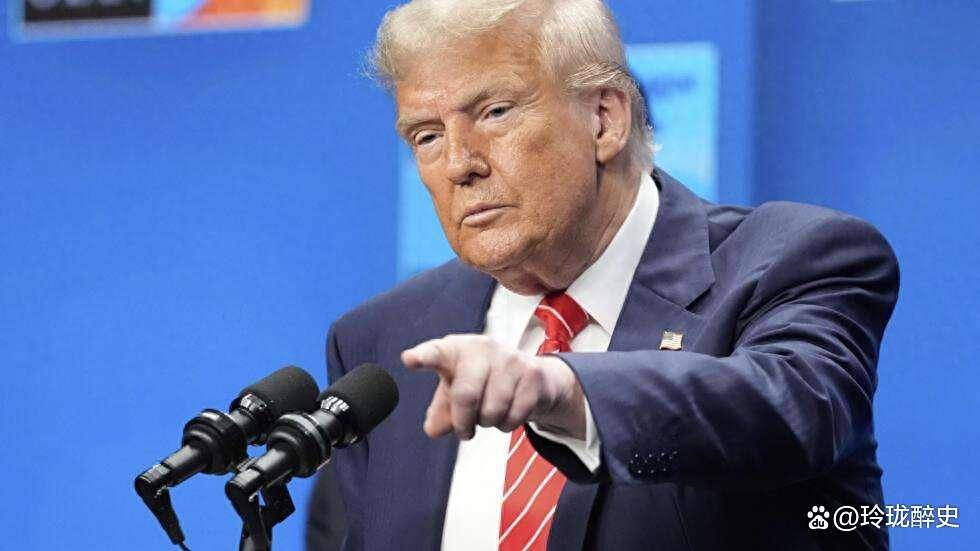
特朗普对关税“松口”,亚洲股市集体反弹,日元跌破146
Hua Er Jie Jian Wen· 2025-07-08 03:02
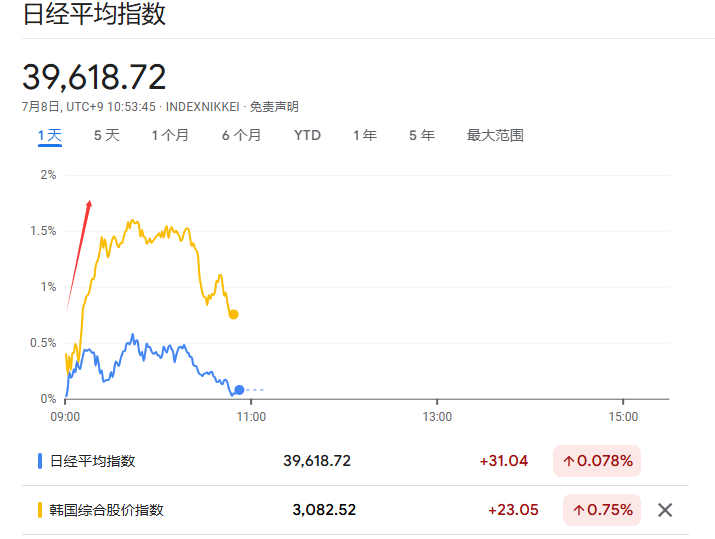
Group 1 - The core point of the article is that President Trump signed an executive order to extend the tariff delay until August 1, alleviating tensions in global financial markets [1] - Following the announcement, Asian stock markets showed a significant rebound, with the Hang Seng Tech Index increasing by 1%, and the South Korean KOSPI rising over 1.5% before settling around 0.8% [1] - The Nikkei 225 index initially rose by 0.5% but later experienced a slight pullback, while major indices in Thailand and Vietnam also saw gains [1] Group 2 - In the foreign exchange market, the euro and pound rebounded, leading to a weaker dollar, although the yen fell to a two-week low against the dollar [1][6] - The euro appreciated by 0.3% to 1.1742, and the pound rose by 0.24% to 1.3631, while the dollar index declined by approximately 0.2% [6] - The Japanese yen and South Korean won both experienced fluctuations, with the yen continuing to face pressure, dropping to 146.44 against the dollar [9] Group 3 - Trump's announcement included a warning of potential tariffs on imports from Kazakhstan, Malaysia, South Africa, Laos, and Myanmar, with rates ranging from 25% to 40% [15] - The market interpreted Trump's actions as a negotiation strategy rather than a definitive stance on tariffs, with analysts suggesting that investors are overlooking the latest tariff announcements [15] - The August 1 deadline for tariff negotiations is confirmed but not absolute, as Trump indicated openness to alternative proposals from other countries [15]
【UNFX课堂】行为金融学角度的反转交易:群体超调β与均值回归γ的博弈模型
Sou Hu Cai Jing· 2025-07-07 11:18
Group 1 - The core logic of reversal trading is based on extreme emotions acting as value inflection points, where market sentiment reaches extremes leading to significant price deviations from intrinsic value, creating "cognitive arbitrage opportunities" [1] - Reversal trading differs from trend-following strategies by capturing the return to consensus, as seen in instances like the violent rebound of oil futures after they fell to negative values in 2020 [1] Group 2 - The extreme emotion identification system includes quantitative indicators for buy and sell signals based on valuation metrics, such as PB below the historical 10th percentile for buying and PE above the historical 90th percentile for selling [2] - Additional signals include liquidity metrics, where a 60%+ reduction in financing balance and VIX above 40 indicate buying opportunities during extreme pessimism, while a daily turnover rate above 10% signals selling during extreme optimism [2] Group 3 - Confirmation tools for extreme emotions involve assessing whether valuations deviate from fundamentals, and if liquidity crises exist, which would trigger buying signals [3] - In the case of the Hong Kong stock market in October 2022, the Hang Seng Index had a PB of 0.8, indicating a 10-year low, combined with record net buying from the Stock Connect, confirming a reversal buy point [4] Group 4 - The golden window for reversal trading indicates that the speed of recovery from pessimism is greater than the dissolution of optimism, as evidenced by historical events like the tech bubble burst in 2000 [4] - Three types of reversal strategies are identified: long positions after extreme pessimism, short positions after extreme optimism, and specific patterns like emotional mispricing and cyclical stock rebounds [4][5] Group 5 - The characteristics of targets for reversal trading include industry leaders with stable free cash flow and high ROE, which may be indiscriminately sold due to macro risks [5] - High-risk strategies involve leveraging positions in companies facing downgrades and significant price drops due to forced liquidations, necessitating day trading to capitalize on panic selling [5][6] Group 6 - Risk control mechanisms include avoiding value traps, ensuring companies have a net debt ratio below 50%, and being cautious of market trends and liquidity issues [6][7] - The essence of reversal trading lies in identifying collective market errors at extreme moments, emphasizing the importance of rationality and discipline in decision-making [8]
美国关税仍存不确定性,国内PMI边际改善
Guo Mao Qi Huo· 2025-07-07 09:19
1. Report Industry Investment Rating - No relevant information provided 2. Core Views of the Report - This week, domestic commodities continued a slight rebound, with both industrial and agricultural products extending their upward trends. The main reasons were the economic resilience of China and the US, a mitigation of geopolitical risks, and a weakening US dollar, which improved market risk appetite and led to the commodity market rebound [3]. - The US labor market showed some resilience in June, but due to a high proportion of government employment and potential future downward revisions, continued monitoring is needed. The Fed may increase the flexibility of interest - rate cuts, and there is a possibility of a rate cut in September [3]. - The "Big and Beautiful" tax and spending bill passed by the US Congress is expected to boost the GDP by an average of 1.0% over ten years (2025 - 2034) and increase long - term GDP by 1.2%. However, it may widen the wealth gap and raise concerns about US fiscal sustainability [3]. - The US is in the final stage of trade negotiations, and Trump has signed tariff letters for 12 countries with tariff rates ranging from 10% to 70%, set to take effect on August 1 [3]. - China's official manufacturing PMI in June was 49.7, up 0.2 percentage points from the previous value, indicating an overall improvement in the domestic economy. However, the manufacturing sector has not emerged from contraction, and small enterprises and emerging industries face significant pressure. There are still concerns about the domestic economic development, and new incremental policies may be introduced in the second half of the year [3]. - In the short term, uncertainty in the commodity market has increased, and market volatility may intensify. Although there are positive factors such as economic resilience and geopolitical easing, the approaching end of the US tariff suspension period and slow negotiation progress may cause market disruptions [3]. 3. Summary by Relevant Sections PART TWO: Overseas Situation Analysis - **US Labor Market**: In June, the US added 147,000 non - farm jobs, higher than the expected 106,000, and the unemployment rate was 4.1%, lower than the expected 4.3% and the previous value of 4.2%. However, due to a high proportion of government employment and potential future downward revisions, continued monitoring is required. The Fed may increase the flexibility of interest - rate cuts, and a rate cut in September is possible [3]. - **US Tax Bill**: The "Big and Beautiful" tax and spending bill passed by the US Congress is expected to boost the GDP by an average of 1.0% over ten years (2025 - 2034) and increase long - term GDP by 1.2%. But it may widen the wealth gap and raise concerns about US fiscal sustainability [3]. - **US Trade Negotiations**: The US is in the final stage of trade negotiations. Trump has signed tariff letters for 12 countries with tariff rates ranging from 10% to 70%, set to take effect on August 1 [3]. PART THREE: Domestic Situation Analysis - **China's PMI**: China's official manufacturing PMI in June was 49.7, up 0.2 percentage points from the previous value, indicating an overall improvement in the domestic economy. However, the manufacturing sector has not emerged from contraction, and small enterprises and emerging industries face significant pressure. The Strategic Emerging Industries PMI (EPMI) decreased by 3.1 percentage points to 47.9%, a new low for the year [3][21]. - **Domestic Economic Concerns**: There are still concerns about the domestic economic development. Externally, the end of the US tariff suspension period is approaching, and the progress of trade negotiations is slow. Domestically, the real estate market has seen a decline in both volume and price, and emerging industries face pressure. New incremental policies may be introduced in the second half of the year [3]. PART FOUR: High - Frequency Data Tracking - **Industrial Data**: On July 4, the operating rates of PTA plants, polyester plants, and POY were 76%, 89%, and 64% respectively [32]. - **Automobile Sales Data**: The data shows the trends of factory wholesale and retail sales and their year - on - year changes [35]. - **Agricultural Product Prices**: The data presents the average wholesale prices of various agricultural products such as vegetables, pork, fruits, and the Agricultural Product Wholesale Price 200 Index [40].
利率周报:经济的边际变化或在于消费-20250701
Hua Yuan Zheng Quan· 2025-07-01 10:57
1. Report Industry Investment Rating No relevant information provided in the report. 2. Core Viewpoints of the Report - The current economic operation is in a neutral range, and the marginal change in the economy compared to 2024 may lie in consumption [2][104]. - The negative economic cycle of "sharp decline in housing prices, sharp decline in the stock market - wealth shrinkage - consumption downgrade" in the past two years has come to an end [2][104]. - Pay attention to the progress of future China - US trade negotiations and whether the fentanyl tariff can be reduced to 0, as well as possible policy adjustments for weak business reception activities that may affect consumption [2][104]. 3. Summary According to the Table of Contents 3.1 Macro News - On June 24, six departments including the People's Bank of China jointly issued the "Guiding Opinions on Financial Support for Boosting and Expanding Consumption", which aims to activate markets such as automobiles, culture and tourism, and elderly care through various measures [8]. - On June 26, the Financial Regulatory Administration and others issued the "Implementation Plan for the High - Quality Development of Inclusive Finance in the Banking and Insurance Industries", aiming to build a high - quality inclusive finance system and solve the financing problems of small and micro enterprises, "agriculture, rural areas, and farmers", and new citizens [8]. - The second - quarter meeting of the Monetary Policy Committee of the People's Bank of China in 2025 was held on June 23. It was more cautious about the world economic growth momentum and more optimistic about the domestic economy. The probability of a recent reserve requirement ratio cut and interest rate cut is low [8]. - From January to May 2025, the total profit of industrial enterprises above designated size was 2.72 trillion yuan, a year - on - year slight decrease of 1.1%. However, the profit structure had highlights, with the profit of the equipment manufacturing industry increasing by 7.2% [9][10]. - Israel and Iran announced a formal cease - fire, leading to a significant decline in domestic and international oil prices recently [13]. 3.2 Medium - term High - Frequency: Consumption and Production Show Differentiated Recovery Characteristics 3.2.1 Consumption: Policy Stimulus Shows Remarkable Results - As of the week of June 22, the average daily retail volume of passenger car manufacturers increased by 30.0% year - on - year, and the average daily wholesale volume increased by 1.4% year - on - year [16][19]. - As of the week of June 13, the retail volume and retail amount of three major household appliances increased by 24.6% and 13.5% year - on - year respectively [16][25]. 3.2.2 Transportation: Supply Chain Resilience is Prominent - As of the week of June 22, the container throughput of ports increased by 5.3% year - on - year, railway freight volume increased by 2.4% year - on - year, and highway truck traffic volume increased by 0.7% year - on - year [17][27]. - As of the week of June 22, the number of civil aviation flights guaranteed increased by 1.7% year - on - year, and as of June 27, the average passenger volume of subways in first - tier cities in the past 7 days increased by 2.3% year - on - year [17][36]. 3.2.3 Capacity Utilization: Infrastructure Chain is Stronger than Chemical Chain - As of June 25, the blast furnace capacity utilization rate of major steel enterprises nationwide was 77.6%, a year - on - year increase of 2.2 pct, and as of June 26, the average asphalt capacity utilization rate was 25.0%, a year - on - year increase of 1.0 pct [17][49]. - As of June 26, the soda ash capacity utilization rate was 85.7%, a year - on - year decrease of 1.6 pct, and the PVC capacity utilization rate was 74.9%, a year - on - year decrease of 1.5 pct [17][53]. 3.2.4 Real Estate: Continuously Under Pressure - As of June 27, the transaction area of commercial housing in 30 large and medium - sized cities in the past 7 days increased by 0.5% year - on - year, and the number of transactions decreased by 2.0% year - on - year [18][62]. - As of June 22, the listing price index of second - hand houses in national cities decreased by 7.5% year - on - year [18][67]. 3.2.5 Price: Commodity Prices are Under Pressure - As of June 27, the average wholesale price of pork decreased by 16.8% year - on - year, and the average wholesale price of vegetables decreased by 0.8% year - on - year [18][75]. - As of June 27, the average spot price of WTI crude oil was 67.4 US dollars per barrel, a year - on - year decrease of 17.0% [18][81]. 3.3 Bond Market and Foreign Exchange Market: Structural Easing Coexists with Cross - Month Pressure - On June 27, the yields of 1 - year, 5 - year, 10 - year, and 30 - year treasury bonds were 1.35%, 1.51%, 1.65%, and 1.85% respectively, with changes of - 1.0BP, + 0.3BP, + 0.6BP, and + 1.3BP compared to June 20 [2][89]. - On June 27, the central parity rate and spot exchange rate of the US dollar against the Chinese yuan were 7.16/7.17, down 68/147 pips compared to June 20 [94]. 3.4 Institutional Behavior: The Duration of Credit Bond Funds has Decreased - As of June 29, the net - breaking rate of public wealth management products of wealth management companies was about 0.81%, a decrease of 1.16 pct compared to the beginning of the year, and the current net - breaking rate's percentile within the year was below 5% [96]. - As of June 27, the median and average duration of medium - and long - term pure bond funds for interest - rate bonds were about 4.7 years and 5.1 years respectively, an increase of about 0.12 years compared to the previous week; the median and average duration of medium - and long - term pure bond funds for credit bonds were about 1.9 years and 2.1 years respectively, a decrease of about 0.19 years compared to the previous week [97][98]. 3.5 Investment Suggestions - Be bullish on long - duration urban investment bonds and bank capital bonds with a yield of over 2%. Currently, the yield of 10Y treasury bonds is close to a historical low, and the cost - effectiveness of investing in interest - rate bonds is low. Among interest - rate bonds, local bonds have a higher cost - effectiveness than treasury bonds [104]. - Continue to pay attention to Hong Kong - listed banks. The low interest rates in the domestic market may drive up the valuations of high - dividend stocks [104].
大类资产周报:资产配置与金融工程指数强势突破,贴水大幅收敛-20250630
Guoyuan Securities· 2025-06-30 07:12
Quantitative Models and Construction Methods 1. Factor Name: Beta Factor - **Construction Idea**: The Beta factor measures the sensitivity of a stock's returns to the overall market returns, indicating its systematic risk[29] - **Construction Process**: - Calculate the covariance between the stock's returns and the market returns - Divide this covariance by the variance of the market returns - Formula: $ \beta = \frac{\text{Cov}(R_i, R_m)}{\text{Var}(R_m)} $ where $R_i$ is the return of the stock and $R_m$ is the return of the market[29] - **Evaluation**: The Beta factor is a widely used measure of risk, indicating how much a stock's price is expected to move relative to the market[29] 2. Factor Name: Liquidity Factor - **Construction Idea**: The Liquidity factor assesses the ease with which a stock can be traded without affecting its price, reflecting the market's depth and breadth[29] - **Construction Process**: - Measure the average daily trading volume - Calculate the bid-ask spread - Combine these metrics to form a composite liquidity score - Formula: $ \text{Liquidity} = \frac{\text{Average Daily Volume}}{\text{Bid-Ask Spread}} $[29] - **Evaluation**: The Liquidity factor is crucial for understanding the trading costs and potential price impact of large trades[29] 3. Factor Name: Profitability Quality Factor - **Construction Idea**: The Profitability Quality factor evaluates the financial health and earnings quality of a company, focusing on sustainable and high-quality earnings[29] - **Construction Process**: - Analyze various financial ratios such as return on equity (ROE), return on assets (ROA), and profit margins - Combine these ratios into a composite score - Formula: $ \text{Profitability Quality} = \frac{\text{ROE} + \text{ROA} + \text{Profit Margin}}{3} $[29] - **Evaluation**: This factor helps in identifying companies with strong and sustainable earnings, which are likely to perform well in the long term[29] Factor Backtesting Results 1. Beta Factor - **IR**: 0.45[29] - **Annualized Return**: 8.5%[29] - **Volatility**: 12.3%[29] 2. Liquidity Factor - **IR**: 0.38[29] - **Annualized Return**: 7.8%[29] - **Volatility**: 11.5%[29] 3. Profitability Quality Factor - **IR**: 0.52[29] - **Annualized Return**: 9.2%[29] - **Volatility**: 10.8%[29] Additional Factors and Their Performance 1. Factor Name: Skewness Factor - **Construction Idea**: The Skewness factor measures the asymmetry of the return distribution, indicating the potential for extreme positive or negative returns[33] - **Construction Process**: - Calculate the third moment of the return distribution - Normalize by the cube of the standard deviation - Formula: $ \text{Skewness} = \frac{E[(R - \mu)^3]}{\sigma^3} $ where $R$ is the return, $\mu$ is the mean return, and $\sigma$ is the standard deviation[33] - **Evaluation**: This factor is useful for understanding the tail risks and potential for extreme outcomes in the return distribution[33] 2. Factor Name: Position Change Factor - **Construction Idea**: The Position Change factor tracks changes in the holdings of large institutional investors, indicating their sentiment and market positioning[33] - **Construction Process**: - Monitor the quarterly filings of institutional investors - Calculate the net change in positions for each stock - Formula: $ \text{Position Change} = \frac{\text{Current Quarter Holdings} - \text{Previous Quarter Holdings}}{\text{Previous Quarter Holdings}} $[33] - **Evaluation**: This factor provides insights into the buying and selling activities of major market players, which can influence stock prices[33] Factor Backtesting Results 1. Skewness Factor - **IR**: 0.42[33] - **Annualized Return**: 8.1%[33] - **Volatility**: 11.9%[33] 2. Position Change Factor - **IR**: 0.47[33] - **Annualized Return**: 8.7%[33] - **Volatility**: 11.2%[33]