有色

Search documents
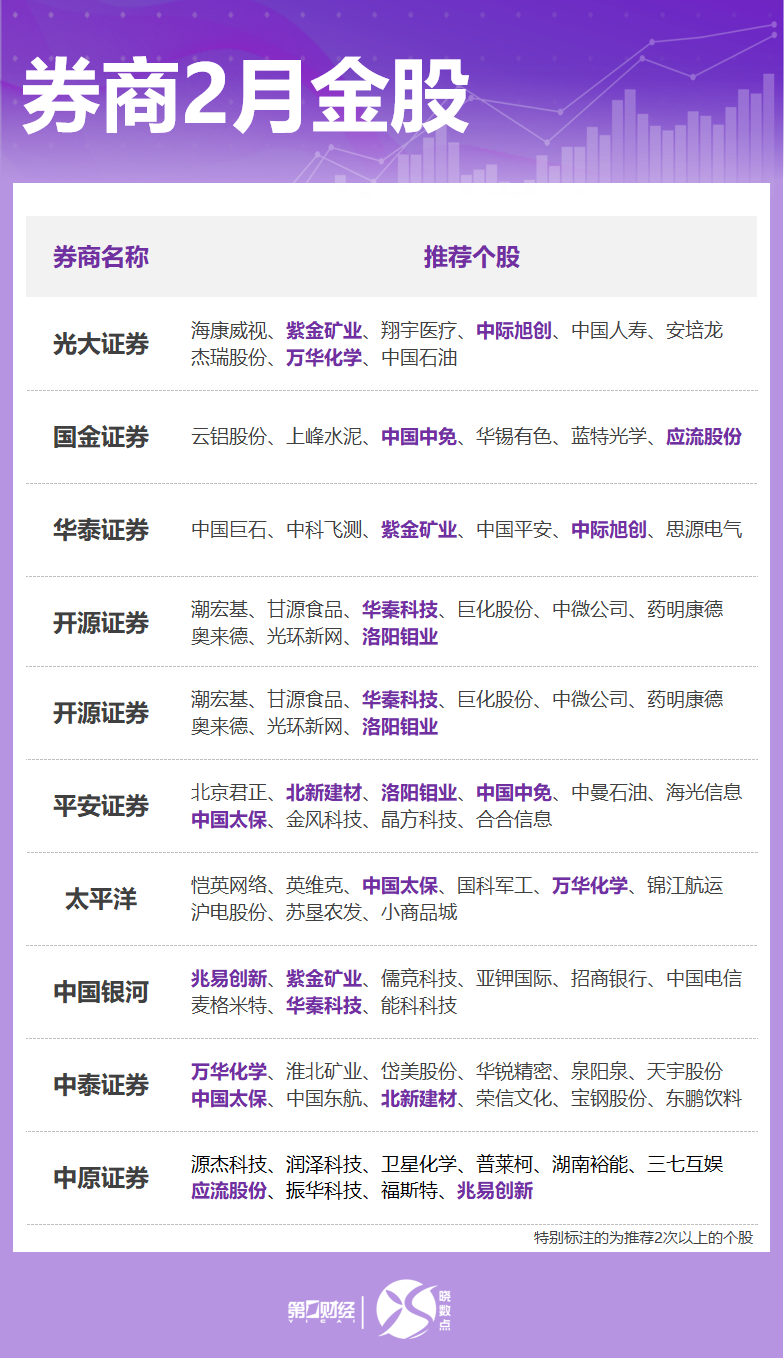
晓数点丨券商2月金股出炉:这些股获力挺,看好科技、顺周期等方向
Di Yi Cai Jing· 2026-02-01 03:56
多家券商认为春季躁动的持续时间可能拉长,春节后市场或将迎来一波新的行情。 其中,兆易创新1月内涨幅最多,累计涨近47%,最新收盘价报314.88元;中国中免1月内跌幅最大,累计跌超5%,最新 收盘价报89.37元。 | STATE | | | | | | | | --- | --- | --- | --- | --- | --- | --- | | 证券 | 最新 | 总市值 | 1月月内 | 所属 | 获推荐 | 推荐 | | 简称 | 收盘价 (元) | (亿元) | 涨跌幅 | 行业 | 次数 | 券商 | | 中国太保 | 45.55 | 4093.97 | 8.69% | 美部 | 3 | 中泰证券 太平洋 | | | | | | | | 平安证券 | | 器等处,不 | 40.14 | 10509.07 | 16.45% | 材料 | 3 | 华泰证券 中国银河 | | | | | | | | 光大证券 | | 万华化学 | 87.97 | 2753.88 | 14.72% | 材料 | 3 | 中泰证券 光大证券 | | | | | | | | 太平洋 | | | | 第二回经 | | | | ...




策略周报:衡以待:行情下半场的配置思路-20260131
Guoxin Securities· 2026-01-31 12:52
Core Conclusions - The A-share market typically exhibits balanced performance during spring rallies, with both growth and value sectors showing gains. In the latter half of bull markets, sector differentiation tends to converge, leading to a more uniform upward trend [1][2] - Recently, previously lagging sectors such as liquor and real estate have performed well, indicating a structural convergence in the market as it enters the latter half of the bull market and spring rally [1][3] - The equity market is expected to remain stable with potential for further upward movement. A balanced allocation strategy is recommended, with a focus on technology represented by AI applications, as well as traditional assets like liquor and real estate, and upstream cyclical sectors [1][3] Historical Context - Historically, during spring rallies since 2005, both growth and value styles have performed similarly, with average maximum gains of 24.0% for growth and 23.5% for value [2][14] - The current market is still within a bull market atmosphere that began in September 2024, with significant structural differentiation observed. The latter half of bull markets typically sees a more balanced performance across sectors [2][18] Market Dynamics - The recent A-share market has shown notable sector rotation, with the performance gap between styles narrowing. Since December 17, 2025, the spring rally has gradually unfolded, supported by broad-based ETFs, flexible foreign capital, and leveraged funds [1][11] - As of January 23, 2026, the industry rotation strength in the A-share market was at a historical low of 18% over the past five years, but there has been a recent uptick, suggesting that structural rotation may be beginning [12][14] Future Outlook - The current spring rally is expected to continue, with historical comparisons indicating a potential index increase of around 20%. The maximum increase of the Shanghai Composite Index since December 17, 2025, has only been 9.8%, indicating room for growth [3][30] - Continued macroeconomic policy support is anticipated to provide a fundamental basis for market growth, with a focus on stabilizing the real estate market as indicated by recent government statements [30][31] Sector Allocation - The technology sector, particularly driven by the AI wave, remains a key focus, with expectations for the rally to expand from hardware to application sectors. Recent developments in AI applications have been notable, suggesting a shift towards practical implementations [31][32] - In addition to technology, traditional value sectors such as undervalued liquor and real estate assets are also recommended for consideration in the current market environment [31][32]
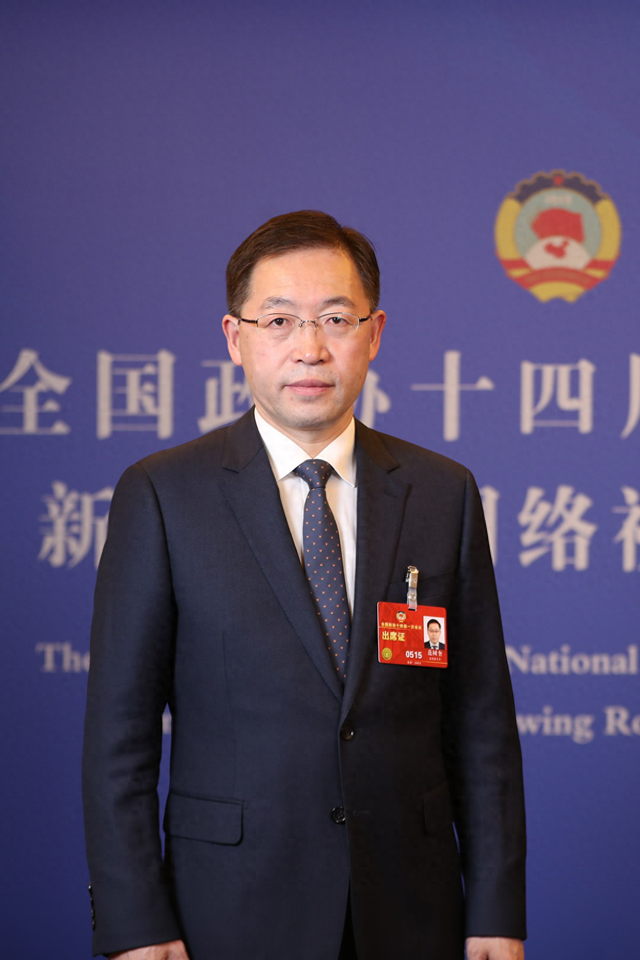
范树奎:国家级并购基金将引领产业整合升级
Xin Lang Cai Jing· 2026-01-30 18:44
Core Viewpoint - The establishment of a national-level merger and acquisition (M&A) fund is expected to drive China's industrial integration into a "strategic-led" new phase, shifting the core logic from spontaneous market integration to a dual-driven approach of national strategy and market efficiency [3][4]. Group 1: Characteristics of the National-Level M&A Fund - The national-level M&A fund will have six key characteristics: clearer strategic orientation, optimized resource allocation, more flexible investment methods, stronger risk control, enhanced innovation drive, and promotion of industry advantages [4][5]. - It will focus on critical areas such as key core technology breakthroughs, supply chain security, and the development of strategic emerging industries, thereby enhancing the overall competitiveness of the national industry [4][5]. Group 2: Collaboration with Regional Funds - The national-level M&A fund will work in conjunction with regional funds in areas like Beijing-Tianjin-Hebei, the Yangtze River Delta, and the Greater Bay Area, creating a synergistic system that promotes high-quality development [6][7]. - It will facilitate the flow of technology, talent, and capital across regions, forming a "research-development-transformation-industry" cross-regional chain [7]. Group 3: Investment Focus Areas - The fund will prioritize investments in three main dimensions: traditional pillar industries (e.g., steel, non-ferrous metals, construction materials), emerging technology industries (e.g., integrated circuits, renewable energy), and future industries (e.g., quantum computing, brain-machine interfaces) [8][9]. - Companies that align with these investment areas should possess digital transformation capabilities, core technologies, and clear equity structures to attract early-stage investment or acquisition [9]. Group 4: Avoiding Internal Competition - To prevent "involution" competition between the national-level M&A fund and local industry funds, it is crucial to strengthen top-level design, improve coordination mechanisms, and clarify functional positioning [10][11]. - Establishing a multi-level, complementary fund ecosystem will maximize capital aggregation and effectively support the construction of a modern industrial system [12].
高位高波,长钱长投
Sou Hu Cai Jing· 2026-01-30 14:57
Group 1: Market Overview - The current market is characterized by high volatility and elevated levels, suggesting that a "long money, long investment" strategy may be a rational choice for investors [3][5][6] - The A-share market's upward momentum is driven by the shifting balance of power between China and the U.S., leading to capital flow and value reassessment [9][10] - Recent market fluctuations indicate strong support levels, with a notable rebound after a brief dip below previous lows, reflecting a robust market sentiment [5][9] Group 2: Commodity Market Insights - The commodity market is witnessing a consensus on the value of resources in a "weak fiat currency" era, with the Trump administration's interference in Federal Reserve decisions accelerating the price increase logic for commodities [3][6][7] - Coal prices are supported by a recent uptick in spot prices and favorable policies, with the coal sector attracting long-term investment due to its stable high dividend yield [4][15][18] - Gold prices have shown significant volatility, with recent highs nearing $5,600 before dropping below $5,000, yet the long-term fundamentals for gold remain strong, suggesting potential buying opportunities during corrections [4][18][24] Group 3: Economic and Geopolitical Factors - The U.S. economy faces challenges, including concerns over "stagflation," which may limit the Federal Reserve's monetary policy options, increasing the appeal of gold as a hedge against asset depreciation [22][23] - Geopolitical tensions in regions like the Middle East and Ukraine contribute to heightened market risk aversion, providing additional support for gold prices [23][24] - China's economic recovery may be accelerated by rising commodity prices, which could help break the negative feedback loop affecting domestic economic growth [11][12]

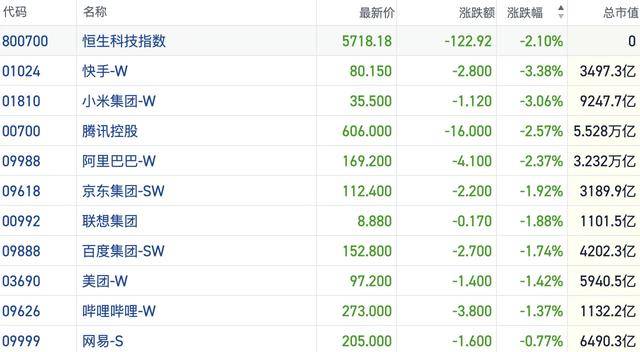
港股风向标|恒指连续上攻后获利盘兑现 高位热点剧烈回调释放风险
Sou Hu Cai Jing· 2026-01-30 13:57
Market Overview - The Hong Kong stock market experienced a high-level adjustment, with the Hang Seng Index falling by 2.08% to 27,387.11 points, the Hang Seng China Enterprises Index down by 2.47%, and the Hang Seng Tech Index decreasing by 2.1% [1][2]. Performance of Major Tech Stocks - Major tech stocks led the market decline, with Kuaishou and Xiaomi dropping over 3%, while Alibaba and Tencent fell by more than 2%. Other companies like Baidu, Meituan, and NetEase also followed suit [2][3]. Sector Performance - The market saw a broad decline across various sectors, particularly in precious metals and non-ferrous metals, which experienced significant pullbacks. Key sectors such as AI applications and finance also weakened, alongside consumer electronics, automotive, and pharmaceuticals [4][5][6]. Short Selling Activity - The total short selling amount reached 29.507 billion HKD, accounting for 9.78% of the Hang Seng Index's trading volume. The top three companies with the highest short selling amounts were CSPC Pharmaceutical, Zijin Mining, and Xiaomi Group, with short selling amounts of 1.268 billion HKD, 1.031 billion HKD, and 1.014 billion HKD respectively [4]. Precious Metals Market - The precious metals sector faced severe adjustments, with gold and silver prices experiencing significant declines. Spot gold dropped by 7.95% to 4,949.62 USD per ounce, while spot silver fell by 16.93% to 95.86 USD per ounce, reaching a low of 95 USD [8]. Future Market Outlook - The market sentiment remains cautious due to fluctuating expectations regarding the Federal Reserve's interest rate decisions and regulatory policies in mainland China. The volatility in the Hong Kong market is expected to persist in the short term, with a focus on stocks that possess core competitiveness and long-term value [9].
多只ETF、LOF罕见跌停
Xin Lang Cai Jing· 2026-01-30 12:51
Group 1 - The precious metals, industrial metals, and minor metals sectors experienced a significant decline, with multiple gold and colored ETFs hitting the limit down [1][2][9] - Several LOF funds that had previously hit the limit up faced a limit down after resuming trading, indicating market volatility [10][18] - On January 29, gold and colored ETFs attracted substantial net inflows, while semiconductor-related ETFs also saw reverse positioning [11][15] Group 2 - The communication ETF sector showed a general increase, with several ETFs related to communication and artificial intelligence rising significantly [12][13] - Low-valuation sectors such as agriculture, forestry, and paper-making led the market gains, contrasting with the overall decline in precious metals [12] - The trading volume for gold ETFs surged, with the gold ETF reaching a transaction volume of 257.78 billion, significantly higher than the previous week's average of 71.07 billion [4][14] Group 3 - On January 29, various ETFs related to colored metals and gold saw net inflows exceeding 10 billion, indicating strong investor interest [15][17] - The semiconductor sector, despite its recent declines, attracted significant reverse investments, with notable inflows into semiconductor equipment ETFs [16][17] - The core logic supporting gold prices remains unchanged, driven by high geopolitical risks and the weakening of the dollar's credibility due to high U.S. government deficits [8][19]
盘面出现三大异象!市场风格生变?
Mei Ri Jing Ji Xin Wen· 2026-01-30 08:52
Market Overview - The A-share market showed mixed results with the Shanghai Composite Index rising by 0.16%, while the Shenzhen Component and ChiNext Index fell by 0.30% and 0.57% respectively [1] - The total trading volume in the Shanghai, Shenzhen, and Beijing markets reached 32,597 billion yuan, an increase of 2,671 billion yuan compared to the previous day [1] - A total of 1,803 stocks rose, with a median decline of 0.92% for the stocks [1] Market Anomalies - Three notable anomalies were observed in the market: a rise in some broad-based ETFs despite a previous decline, the Shanghai 50 and CSI 300 indices leading gains while small-cap indices adjusted, and significant gains in low-positioned sectors like liquor and real estate [2] - The Shanghai 50 and CSI 300 ETFs were major targets for mysterious selling by funds recently, indicating a potential shift in market dynamics [2] Sector Performance - The liquor sector, which had been underperforming for the past two years, experienced a sudden surge, surprising many investors [3] - The real estate sector also saw a significant rebound, influenced by the positive performance of the liquor sector and regulatory changes regarding the "three red lines" policy [10] - The semiconductor, components, and communication equipment sectors, which had previously shown strong performance, faced declines today, indicating a potential shift in investor sentiment towards technology stocks [3][10] Liquor Sector Insights - The liquor sector's recent surge is attributed to strong demand during the upcoming Spring Festival, with reports indicating that some distributors have already sold out their quotas for premium products [6] - The China Securities Index for liquor recently hit a low near "924," and today's volume surge suggests strong support for the sector, with expectations for future price stability as long as recent lows are not breached [8] - Data from major liquor companies like Moutai and Luzhou Laojiao indicate significant trading activity, with institutional investors showing mixed buying and selling patterns [9] Real Estate Sector Developments - Reports indicate that several real estate companies are no longer required to report "three red lines" metrics, which may ease regulatory pressures and support sector recovery [7][10] Market Sentiment and Future Outlook - The market is experiencing a temporary shift in style, with blue-chip stocks gaining strength while technology stocks weaken, but a complete change in market style will require ongoing observation [4][12] - The current market environment is characterized by significant volatility, making it challenging for investors to navigate, particularly in sectors that have seen rapid price increases [5][12]

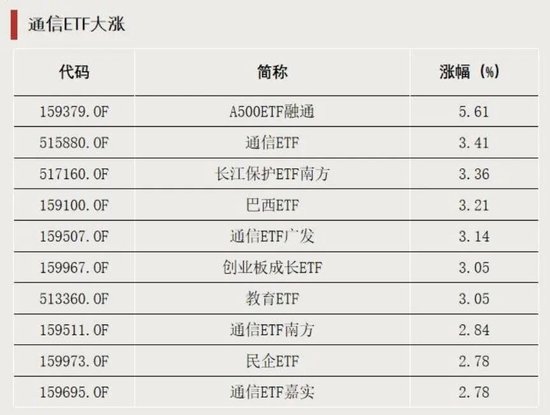
ETF收评 | AI硬件走强,通信ETF、通信ETF广发涨3%
Ge Long Hui· 2026-01-30 07:14
Market Performance - The Shanghai Composite Index fell by 0.96%, while the ChiNext Index rose by 1.38% [1] - There was a significant decline in gold and base metal stocks, with several hitting the daily limit down [1] - Sectors such as liquor, real estate, brokerage, and oil & gas experienced notable declines [1] Sector Highlights - Commercial aerospace, fintech, photovoltaic, and AI application sectors underwent adjustments [1] - CPO and Yushu robotics concept stocks were active, while agricultural stocks strengthened [1] ETF Movements - The A500 ETF saw a notable increase of 5.6% [1] - AI hardware showed strength, with CPO concept stocks rising during the session [1] - The Guotai Fund's communication ETF and Guangfa communication ETF both increased by 3% [1] - The chip design sector was active, with the Guolianan Fund's Sci-Tech chip design ETF rising by 2.3% [1] Commodity and Metal Sector - The metal sector experienced a deep correction, with gold stock ETFs and related stocks hitting the daily limit down [1] - The non-ferrous metal sector also saw a decline, with the industrial non-ferrous ETF from Wanji hitting the daily limit down [1]
顺周期回暖+内需消费分层,现金流ETF嘉实(159221)备受市场关注
Xin Lang Cai Jing· 2026-01-30 03:25
Group 1 - The Guozheng Free Cash Flow Index fell by 2.86% as of January 30, 2026, with mixed performance among constituent stocks, led by Fostar, while Nanshan Aluminum experienced the largest decline [1] - CICC pointed out that the supply-demand gap for electrolytic aluminum continues to widen, and with global fiscal and monetary policies resonating, aluminum prices are expected to reach new highs, with profit per ton of aluminum likely to expand as prices rise [1] - Guotai Junan Securities noted that while copper prices are currently affected by macro sentiment and AI-related demand adjustments, the long-term outlook remains strong due to ongoing tight supply of copper mines and declining spot processing fees [1] Group 2 - The National Grid's fixed asset investment for the "14th Five-Year Plan" is expected to reach 4 trillion yuan, a 40% increase compared to the previous plan, which supports the copper price outlook [1] - Yingda Securities emphasized the importance of following the "14th Five-Year Plan" and subsequent policy directions, suggesting a focus on technology growth stocks with earnings support, as well as cyclical varieties, domestic consumption, dividend stocks, and sectors with improving economic conditions [1] - The top ten weighted stocks in the Guozheng Free Cash Flow Index as of December 31, 2025, include China National Offshore Oil Corporation, SAIC Motor, Gree Electric Appliances, and others, accounting for 51.95% of the index [2]






刚刚,沪指、黄金同步
Wind万得· 2026-01-30 02:47
1 月 30 日, A 股早盘低开低走。截至发稿,沪指跌破 4100 点,上证指数和深证成指跌幅均超1.5%。 板块方面,有色金属、钢铁、建材等跌幅居前。有色板块现跌停潮,南山铝业、铜陵有色、白银有色、云南铜业、兴业银锡等近 30 股跌停。 农业、文化传媒、银行等板块逆势上涨。 | 万得全A | 创业板指 | | 北证50 | | --- | --- | --- | --- | | 6719.75 | 3285.53 | | 1519.29 | | -127.53 -1.86% | -18.98 -0.57% | | -16.71 -1.09% | | 沪深300 | 中证500 | | 中证A500 | | 4677.87 | 8270.91 | | 5847.13 | | -76.00 -1.60% -246.94 -2.90% -121.78 -2.04% | | | | | 中证1000 | 深证100 | | 中证红利 | | 8150.97 | 5793.86 | | 5690.23 | | -181.24 -2.18% | -60.46 -1.03% | | -67.41 -1.17% | | ...