原油
Search documents
申银万国期货首席点评:关税反转,全面反弹
Shen Yin Wan Guo Qi Huo· 2025-04-10 06:29
Report Industry Investment Rating No relevant content provided. Core View of the Report The report analyzes the impact of Trump's tariff suspension announcement on various sectors including energy, precious metals, and stock indices. It suggests short - term trends and future concerns for each sector, with a focus on how the tariff policy, market sentiment, and economic fundamentals interact to influence prices and investment opportunities [2][3][4]. Summary by Directory I.当日主要新闻关注 - **International News**: The US government will suspend the collection of reciprocal tariffs on dozens of countries for 90 days, with a minimum tariff rate of 10% [6]. - **Domestic News**: The Central Peripheral Work Conference emphasized building a community with a shared future with neighboring countries through strategic trust, development integration, stability maintenance, and increased exchanges [7]. - **Industry News**: In March, the retail sales of passenger cars reached 1.94 million, a year - on - year increase of 14.4% and a month - on - month increase of 40.2%. New energy passenger vehicle retail sales were 991,000, a year - on - year increase of 38% and a month - on - month increase of 45% [8]. II.外盘每日收益情况 - Various international market indices and commodities showed different trends. For example, the S&P 500 rose 9.52%, the European STOXX 50 fell 3.80%, and ICE Brent crude oil rose 6.65% [8]. III.主要品种早盘评论 1) Financial - **Stock Indices**: Trump's 90 - day tariff suspension on non - retaliatory countries led to a surge in US stocks and A50 futures. Chinese stock indices rebounded strongly, with policies from multiple departments boosting market confidence. It is recommended to be cautiously bullish [4][11]. - **Treasury Bonds**: Treasury bonds generally rose, with the yield of the 10 - year active bond falling to 1.65%. It is recommended to go long while controlling risks, considering factors like the US tariff suspension and China's economic policies [12]. 2) Energy and Chemicals - **Crude Oil**: Trump's tariff suspension led to a late - session rebound in international oil prices. Short - term oil prices are expected to decline, but attention should be paid to the impact on US sanctions [2][13]. - **Methanol**: Methanol prices rose at night. The short - term trend is bullish, considering factors such as production load and inventory [14]. - **Rubber**: The price of rubber continued to decline. The long - term trend is expected to be weak, affected by factors like tariffs and supply - demand [15]. - **Polyolefins**: Polyolefins showed a weak and volatile trend. The short - term market will be affected by shocks, and attention should be paid to cost and demand [16]. - **Glass and Soda Ash**: Glass and soda ash futures showed a bottom - hitting and rebounding trend. The future trend depends on domestic demand [17]. - **PTA**: PTA prices are expected to remain weak due to insufficient cost support and demand [18]. - **Ethylene Glycol**: Ethylene glycol is under pressure due to factors like inventory and demand [19]. 3) Metals - **Precious Metals**: Gold and silver rebounded. Gold is expected to remain strong, with future trends depending on multiple factors [3][20]. - **Copper**: The price of copper may fluctuate widely in the short term, affected by factors such as tariffs and demand [21]. - **Zinc**: Zinc prices may also have wide - range short - term fluctuations, with attention on tariffs and other factors [22]. - **Aluminum**: Aluminum prices may be weak and volatile in the short term, considering supply and demand [23]. - **Nickel**: Nickel prices may fluctuate in the short term, affected by multiple factors [24]. - **Lithium Carbonate**: In March, there was an oversupply of lithium carbonate. The price may decline further if production expectations are not revised [25][26]. 4) Black Metals - **Iron Ore**: The impact of tariffs on iron ore is limited. The short - term trend is expected to be weak and volatile, with attention on steel mill复产 progress [27]. - **Steel**: The impact of tariffs on steel is not direct. The short - term trend is expected to be weak and volatile, with attention on steel mill复产 and demand [28]. - **Coking Coal and Coke**: The valuation of coking coal and coke may be repaired upwards, with attention on upstream inventory digestion [29]. - **Ferroalloys**: The support for ferroalloys may strengthen, with attention on steel procurement and inventory [30]. 5) Agricultural Products - **Oils and Fats**: Oils and fats were weak at night. The short - term trend is affected by factors such as inventory and oil prices [32]. - **Protein Meals**: The price of far - month soybean meal has support, considering factors such as trade disputes and planting area [33]. 6) Shipping Index - **Container Shipping to Europe**: The short - term trend of the container shipping index to Europe is expected to be weak, with attention on shipping company capacity control and price increases [34].
综合晨报:美国对等关税暂缓90天执行-20250410
Dong Zheng Qi Huo· 2025-04-10 00:43
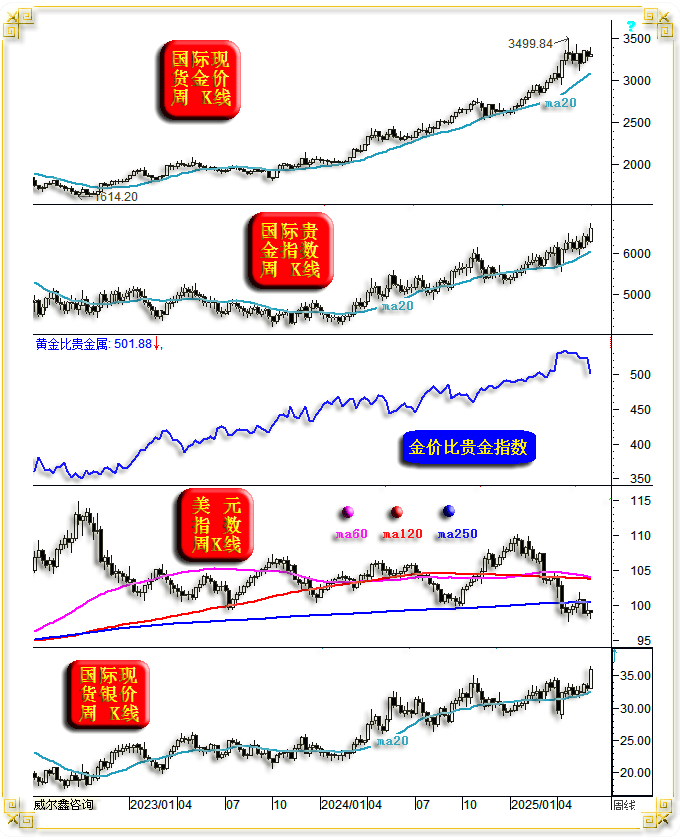
Report Industry Investment Rating No relevant content provided. Core Viewpoints of the Report - The tariff issue continues to disrupt the market, causing significant fluctuations in risk assets. The suspension of reciprocal tariffs by the US has led to a rapid increase in market risk appetite, but the escalation of China-US tariffs is beneficial for gold. - The US dollar index has weakened due to the suspension of reciprocal tariffs on most countries by Trump, and it is expected to remain volatile in the short term. - The stock index futures market has been boosted by China's tariff countermeasures against the US, but the subsequent macro - level changes will increase market volatility. - The commodity market is generally under pressure. The prices of palm oil, coal, iron ore, and some energy - chemical products are affected by various factors such as market sentiment, supply - demand relationships, and tariff policies. Summary by Directory 1. Financial News and Reviews 1.1 Macro Strategy (Gold) - Event: Trump approved a 90 - day suspension of reciprocal tariffs on over 75 countries, during which the reciprocal tariffs will be reduced to 10%. - Review: Gold prices soared by over 3%, once rising by over $100, setting a record for the largest single - day increase. The suspension of tariffs increased market risk appetite, but the escalation of China - US tariffs is beneficial for gold. Gold is a good tool to hedge against the decline in the US dollar's credit. - Investment advice: Adopt a bullish approach in the short - term volatile market [14]. 1.2 Macro Strategy (Foreign Exchange Futures - US Dollar Index) - Event: Summers warned that the US is far from out of danger and has lost a lot of credibility. The Fed meeting minutes showed that the US economy faces risks. Trump suspended reciprocal tariffs on most countries. - Review: The suspension of tariffs led to a significant rebound in market risk appetite, causing the US dollar index to weaken. The reciprocal tariffs are in a temporary adjustment phase, and the US dollar index is expected to remain volatile. - Investment advice: The US dollar is expected to be volatile in the short term [15][16][17]. 1.3 Macro Strategy (US Stock Index Futures) - Event: China increased tariffs on US imports from 34% to 84%. The Fed meeting minutes showed that inflation is slightly high and economic uncertainty has increased. Trump suspended tariffs on some countries but raised tariffs on China to 125%. - Review: The China - US tariff negotiation is at a deadlock, and policy uncertainty remains high. The financial market is volatile, and the risk of a liquidity shock has not been eliminated. - Investment advice: Adopt a bearish approach and avoid chasing high prices [20][21][22]. 1.4 Macro Strategy (Stock Index Futures) - Event: The Chinese Premier held a symposium on the economic situation. China increased tariffs on US imports from 34% to 84%. - Review: The A - share market rebounded, and market sentiment was boosted. However, subsequent macro - level changes will increase market volatility. - Investment advice: Adopt a risk - averse approach in the short term [23][24][26]. 1.5 Macro Strategy (Treasury Bond Futures) - Event: China released a white paper on China - US economic and trade relations. The central bank conducted a 7 - day reverse repurchase operation, with a net withdrawal of 111 billion yuan. - Review: The main logic of the treasury bond market is clear. The probability of a short - term easing of trade conflicts is low, and the expectation of loose monetary policy is difficult to be falsified. The upward trend of treasury bonds is likely to continue. - Investment advice: Hold positions and wait for the implementation of loose policies, or add positions on dips [27][28][29]. 2. Commodity News and Reviews 2.1 Agricultural Products (Soybean Oil/Rapeseed Oil/Palm Oil) - Event: Indonesian palm oil industry and farmer groups urged the government to reduce export tariffs to 0% to offset the impact of US tariffs. - Review: The global market sentiment is low, and the price of palm oil has fallen. China's counter - tariffs on the US may be beneficial for far - month soybean oil. The possibility of Indonesia reducing palm oil export tariffs is low. - Investment advice: Consider closing previous short positions and pay attention to the MPOB report [30][31]. 2.2 Agricultural Products (Cotton) - Event: As of the end of March, China's commercial cotton inventory decreased, and India's cotton planting area may increase. The CCI has purchased a large amount of cotton, and its sales volume is not high. - Review: The CCI's purchase and sales situation, as well as the trade war, may affect India's cotton production, consumption, and import estimates. The price of Zhengzhou cotton has fallen, but the decline may slow down. - Investment advice: The cotton price is expected to be weakly volatile. Pay attention to macro - policies, planting, weather, and industry conditions in major producing countries [32][35][37]. 2.3 Black Metals (Steam Coal) - Event: China's coal demand is expected to increase slightly in 2025. - Review: The coal price has been relatively stable. The power plant's inventory is at a neutral level, and the price is expected to be supported in May but lacks elasticity. - Investment advice: The power plant may replenish coal inventory in May, but the price increase is limited [38]. 2.4 Black Metals (Iron Ore) - Event: JFE Steel in Japan plans to shut down a blast furnace, reducing its annual crude steel production capacity by about 4 million tons. - Review: The black metal market has continued to decline, but the short - term deterioration of fundamentals is not severe. Pay attention to the risk of liquidity. - Investment advice: Maintain a bearish approach and wait for a better opportunity to short after a rebound [39][40][41]. 2.5 Black Metals (Coking Coal/Coke) - Event: The coking coal market in East China has remained stable. Some coal mines in Shanxi have reduced production, and downstream coke enterprises have started to increase prices. - Review: The coking coal spot market has improved, but the futures market faces pressure. The coke spot market may continue to increase prices, but the medium - long - term supply is expected to be loose. - Investment advice: The spot market has stabilized, but the futures market faces pressure from subsequent demand and warehouse receipts [42][43]. 2.6 Agricultural Products (Corn Starch) - Event: The operating rate of corn starch enterprises has decreased significantly, but inventory has only decreased slightly. - Review: High raw material prices and weak downstream demand have led to a decrease in the operating rate. The futures price difference between corn starch and corn is expected to remain stable. - Investment advice: The CS05 - C05 price difference is expected to remain around the normal processing fee of 380 yuan [44][45][47]. 2.7 Agricultural Products (Corn) - Event: The inventory at northern ports has decreased for two consecutive weeks, and the price of corn in the production area is relatively firm. - Review: The outflow of corn from Northeast China has accelerated, and the weak basis has suppressed the futures price. The 07 contract is considered undervalued. - Investment advice: Maintain the view that the 07 contract is undervalued and pay attention to whether the acceleration of inventory reduction in Northeast China can boost trader sentiment [48]. 2.8 Black Metals (Rebar/Hot - Rolled Coil) - Event: The retail sales of passenger cars in March increased significantly year - on - year. - Review: The steel price has rebounded, and market sentiment has improved. However, the demand for building materials is weak, and the demand for hot - rolled coils is declining slowly. - Investment advice: Adopt a cautious approach in the short term and hedge on the spot market when prices are high [49][50][51]. 2.9 Agricultural Products (Pigs) - Event: The sales volume of three major listed pig enterprises increased in March, and the average selling price slightly increased. - Review: The short - term fluctuation of pig prices has increased, but it will eventually return to the fundamental situation. The spot price may face downward pressure. - Investment advice: Continuously pay attention to short - selling opportunities on rebounds [52][53][54]. 2.10 Non - Ferrous Metals (Industrial Silicon) - Event: Yunnan Nengtou Group's Yongchang Silicon's 100,000 - ton hydropower silicon project was put into operation. Some production capacity in Xinjiang was reduced, and some new production capacity in the southwest is expected to be put into operation. - Review: The supply has decreased, but the demand is weak, and the fundamental situation of industrial silicon is difficult to change. - Investment advice: The futures price may range from 9,000 to 10,500 yuan/ton. Pay attention to short - selling opportunities on rebounds and Si2511 - Si2512 reverse arbitrage opportunities [55][56][57]. 2.11 Non - Ferrous Metals (Lead) - Event: The LME lead spread was at a discount, and the price of refined lead decreased. - Review: The lead price is expected to be volatile in the short term. Although the medium - term outlook is bullish, macro risks have not been eliminated. - Investment advice: Adopt a wait - and - see approach in the short term and look for buying opportunities on dips. Continue to hold the internal - external reverse arbitrage [58][59][60]. 2.12 Non - Ferrous Metals (Copper) - Event: The blockade of Glencore's Antapaccay copper mine in Peru was suspended. Codelco plans to significantly increase copper production this year. Indonesia will increase mining royalties. - Review: The short - term macro factors have a relatively uncertain impact on copper prices. The short - term supply and demand in China are strong, and the inventory is expected to decrease. - Investment advice: The copper price is expected to be volatile in the short term. Adopt a wait - and - see approach and pay attention to positive arbitrage opportunities in Shanghai copper [61][62][64]. 2.13 Non - Ferrous Metals (Zinc) - Event: The LME zinc spread was at a discount, and the Shanghai - Guangdong price difference widened. - Review: The zinc price is mainly affected by macro factors. The market is cautious, and the export of zinc may be suppressed. - Investment advice: Adopt a wait - and - see approach in the short term and look for short - selling opportunities on rebounds in the medium term. Adopt a wait - and - see approach for arbitrage [65][66][67]. 2.14 Non - Ferrous Metals (Lithium Carbonate) - Event: An Australian company produced the first batch of lithium carbonate in Argentina. Argentina plans to increase lithium production by 75% in 2025. - Review: The current fundamentals of lithium carbonate are bearish, and the price may continue to decline in the long term. - Investment advice: Consider partial profit - taking on short positions in the short term and pay attention to short - selling opportunities on rebounds in the long term [68][69][70]. 2.15 Non - Ferrous Metals (Nickel) - Event: Indonesia will increase mining and coal royalties in the second week of April. - Review: The nickel price has slightly decreased, and the cost is expected to increase marginally. The market may digest negative sentiment. - Investment advice: Pay attention to buying opportunities on dips after the release of negative sentiment [71][72]. 2.16 Energy and Chemicals (Liquefied Petroleum Gas) - Event: China increased tariffs on US imports to 84%. The US C3 inventory started to accumulate. - Review: The PG price has decreased, but it may strengthen due to the increase in tariffs and the recovery of crude oil prices. However, policy uncertainty should be noted. - Investment advice: The domestic market may experience a valuation - repair market, but reduce risk exposure and participate cautiously [73][74][75]. 2.17 Energy and Chemicals (Crude Oil) - Event: The US EIA crude oil inventory increased. Trump announced the suspension of reciprocal tariffs. - Review: The oil price has rebounded, but there is still a risk of decline due to the uncertainty of the tariff issue and the OPEC+ production policy. - Investment advice: The oil price is expected to be volatile in the short term and still has a downward risk [76]. 2.18 Energy and Chemicals (PTA) - Event: The tariff war has escalated, and the demand for PTA is uncertain. - Review: The PTA price has decreased, and the demand for polyester is affected by tariffs. The impact on PTA pricing is relatively lagged. - Investment advice: The PTA price will mainly follow the crude oil price in the short term and is expected to be weakly volatile [77][78]. 2.19 Energy and Chemicals (Styrene) - Event: The inventory of styrene in the East China main port decreased. - Review: The styrene price has reached a new low and then rebounded. The downstream inventory may accumulate, and the production profit may not be sustainable. - Investment advice: The eb - bz spread may expand in the short term and contract in the long term [78][79]. 2.20 Energy and Chemicals (Caustic Soda) - Event: The price of high - concentration caustic soda in Shandong decreased, and the supply was stable while the demand was weak. - Review: The caustic soda price is expected to decline, and the market is mainly affected by macro factors in the short term. - Investment advice: Adopt a wait - and - see approach [80][82][83]. 2.21 Energy and Chemicals (Pulp) - Event: The price of imported wood pulp decreased. - Review: The pulp price is mainly affected by macro factors, and the market is bearish. - Investment advice: Adopt a wait - and - see approach [84]. 2.22 Energy and Chemicals (PVC) - Event: The spot price of PVC powder decreased. - Review: The PVC price is mainly affected by macro factors, and the market is bearish. - Investment advice: Adopt a wait - and - see approach [85]. 2.23 Energy and Chemicals (Bottle Chips) - Event: The export price of bottle chips decreased, and a polyester bottle chip device in East China restarted. - Review: The bottle chip price has decreased, and the processing fee has been passively repaired, but it is difficult to break away from the low - level oscillation range. - Investment advice: The bottle chip price will follow the cost side and be weakly volatile in the short term [86][88][89]. 2.24 Energy and Chemicals (Soda Ash) - Event: The price of soda ash in the East China market was adjusted slightly. - Review: The soda ash price is in a low - level oscillation, and the supply is expected to increase while the demand is general. - Investment advice: Adopt a short - selling approach on rebounds in the medium term [90]. 2.25 Energy and Chemicals (Float Glass) - Event: The price of float glass in Hubei remained stable. - Review: The float glass price is mainly affected by demand. Although there may be an improvement in the second - quarter demand, the upward space is limited. - Investment advice: The float glass price will be in a low - level range in the short term. Pay attention to buying opportunities on large dips [91][92][93].
新关税政策将会产生“重要影响”
Dong Zheng Qi Huo· 2025-04-08 00:42
金价延续跌势,海外市场恐慌情绪有所缓解,但贸易战短期并 没有明显的缓和迹象,其他国家预期陆续和美国进行谈判,但 中国推出反制措施后,特朗普再度施压。 宏观策略(外汇期货(美元指数)) 贝森特:预计在 4 月 9 日关税上调之前不会达成任何协议 综 特朗普最新表态没有考虑暂停加征关税,短期市场波动加剧, 市场风险偏好短期回升,流动性冲击暂时结束。 日度报告——综合晨报 新关税政策将会产生"重要影响" [T报ab告le_日R期an:k] 2025-04-08 宏观策略(黄金) 美联储理事库格勒:新关税政策将会产生"重要影响" 巴西大豆收获完成 87% 中美贸易战升级为当前市场主要矛盾,CBOT 大豆下跌,昨日巴 西 CNF 升贴水上涨但涨幅有限,昨日我国进口巴西豆成本甚至 较清明小长假前略降、豆粕期价涨幅有限。 有色金属(氧化铝) 西澳地区为主的海外氧化铝成交价格继续回落 氧化铝企业因担心长单客户损失、对成本下降的预期以及储备 现金流和产业链优势等因素,继续维持生产。 能源化工(原油) 合 宏观策略(股指期货) 晨 商务部召开美资企业圆桌会 报 受关税冲击影响,A 股市场暴跌,主要指数跌幅高达 8%以上。 短期内 ...
国泰君安期货所长早读-2025-04-07
Guo Tai Jun An Qi Huo· 2025-04-07 01:52
所长 早读 国泰君安期货 2025-04-07 期 请务必阅读正文之后的免责条款部分 1 期货研究 期货研究 所 长 首 推 | 板块 | 关注指数 | | --- | --- | | 农产品 | ★★★★ | 农产品:此次美国对全球加征对等关税是历史性的大事件;加征幅度超预期;各国大概率会不同 程度反制,不确定性极高。由于这一次是对全球加征关税,因此不能完全用 2018 年的思路 去看待。农产品方面,美国大豆、玉米和棉花出口占全球出口份额比较高,大豆 27%、玉米 33%、棉花 26%,美国出口下降预期已经推高巴西现货升水,对销区的成本上升的影响较大, 且大概率是持续性的影响。大豆方面,虽然榨利较高,但是下游仍有养殖利润,承接力度较 强,囤库意愿较高。风险:全球高关税带来的经济衰退预期。 请务必阅读正文之后的免责条款部分 2 短线或继续大跌,长线关注超跌反弹机会 观点分享: 外盘油价较上周五累计暴跌近 14%,内盘跌停概率较大。短期市场极度恐慌,其中 Brent 或继续交易衰退考验 55 美元/桶,中长期关注企稳筑底后的多配机会。理由:第一, 短期看,市场交易主要大国、经济体之间关税互征引发的通缩,恐慌情绪 ...
综合晨报-2025-04-02
Guo Tou Qi Huo· 2025-04-02 06:41
Report Industry Investment Rating No relevant content provided. Core Viewpoints - The market is weighing the supply risks from Russia and Iran and the negative impact on demand from the upcoming US tariffs. The details of Trump's counter - tariffs and specific industry tariffs will be announced at 3 am Beijing time on Thursday [2]. - Various commodities show different trends and are affected by factors such as supply - demand balance, geopolitical issues, and tariff policies. Some commodities are in a state of adjustment, while others are facing supply or demand - side pressures [2][3][4] Summary by Commodity Categories Energy Commodities - **Crude Oil**: After a sharp rise the previous day, international oil prices fell overnight. The market is considering supply risks and tariff impacts. API data showed an unexpected 603700 - barrel increase in US crude oil inventories last week, and the market expects a 206000 - barrel decline in DOE inventories tonight. The resistance levels of Brent at $74 - 75 per barrel and SC at 550 yuan per barrel are still under attention [2]. - **Fuel Oil & Low - Sulfur Fuel Oil**: Heavy - oil producing countries like Russia and Iran face US tariffs, making FU more affected in the context of tight global heavy - oil resources. The second - batch export quota of Chinese low - sulfur fuel oil increased by 1.2 billion tons year - on - year, putting downward pressure on the supply side and narrowing the high - low sulfur spread [21]. - **Liquefied Petroleum Gas**: Recent refinery overhauls have reduced external supply, and lower domestic import costs and rising crude oil prices have led to an increase in refinery gas prices. The overseas April CP is stable, and the international market is slightly strong. PDH margins are falling, and chemical demand is weakening after the overhaul season. The market is in a state of weak supply and demand, and the futures price is oscillating [23]. - **Bitumen**: Port diluted bitumen inventories have decreased by 30000 tons and are at a historical low. Although the import efficiency of domestic refineries has improved, the refinery operating rate is still at a low - to - medium level. With rising temperatures, demand is expected to improve, and factory inventories have been decreasing for two consecutive weeks. The April inventory reduction pressure is expected to ease. The short - term unilateral trend follows crude oil [22]. Metal Commodities - **Precious Metals**: Gold prices remained strong, and silver continued to diverge after the US announced weaker - than - expected manufacturing PMI and job vacancy data. The upward trend of gold prices continues, but the rapid increase may lead to greater volatility. Empty - position holders are advised to wait and see. Attention should be paid to the US March ADP employment data and tariff policies [3]. - **Base Metals**: - **Copper**: Copper prices adjusted overnight, with an internal - strong and external - weak pattern. LME copper is worried about counter - tariffs and has closed down for five consecutive days. SHFE copper is adjusting below 80000 yuan. Domestic spot copper has a small premium, and production decline in April is limited due to by - product profits. The market is sensitive to Trump's counter - tariffs, and if LME copper effectively breaks below $9600 - 9700, the adjustment range may expand [4]. - **Aluminum**: SHFE aluminum continued to oscillate weakly. The inventory removal speed is slightly faster than in previous years, and the apparent consumption is good. The market expects a good performance in the peak season. After the cost reduction, higher profits require greater import expectations. SHFE aluminum oscillates above 20000 yuan, and the short - term is affected by overseas macro factors, with support at the annual - line level [5]. - **Zinc**: SHFE zinc continued to correct, facing pressure from the 60 - day moving average, and the medium - term downward trend remains unchanged. The zinc concentrate TC in April continues to rise, and smelters are more motivated to produce. Export prospects are affected by "rush - to - export" and accumulated tariffs, and domestic demand depends on infrastructure and manufacturing. The consumption side has resilience but lacks growth. The short - term support is at 23000 yuan per ton, and the medium - term strategy is to short on rebounds [7]. - **Lead**: The price of lead - acid batteries did not follow the decline in lead prices, and secondary lead smelters are reluctant to sell. The spread between refined and scrap lead has narrowed to 25 yuan per ton. The operating rates of primary and secondary lead smelters are generally high, and it is the consumption off - season. The replacement demand is weak, and dealers are not very enthusiastic about purchasing. The SMM1 lead price has a real - time discount of 220 yuan per ton to the futures price, indicating average downstream acceptance. In the short term, there is a game between consumption and cost, and SHFE lead has a weak direction, with low trading enthusiasm. It is expected to oscillate in the range of 17200 - 17800 yuan per ton [8]. - **Nickel & Stainless Steel**: SHFE nickel weakened, and the market trading was active. The premium of Jinchuan nickel dropped to 1450 yuan, Russian nickel had a discount of 50 yuan, and electrowon nickel had a discount of 150 yuan. The price of high - nickel pig iron remained strong, and the Indonesian ore end still affects raw material pricing. Nickel - iron inventory is at a low level of 23000 tons, pure - nickel inventory slightly increased to 47400 tons, and stainless - steel inventory decreased by 10000 tons to 980000 tons. The early - year supply - side and low - price excitement is coming to an end, and high inventory and weak demand are suppressing prices. The main support factor is the nickel - iron price. If nickel - iron weakens, the decline may intensify. Technically, there is buying support below 130000 yuan for SHFE nickel, with a general downward trend, but short - sellers need patience [9]. - **Tin**: LME tin led the rise overnight. With production risks in the two major supplying countries, the 3050 - ton inventory of LME tin increases the probability of a short - squeeze, and the LME 0 - 3 month premium has rapidly expanded to $264. SHFE tin increased positions significantly at night, and the K - line retraced the gains above 290000 yuan. The warehouse receipts of SHFE tin increased, and the domestic market is also considering the strength of demand. Attention should be paid to the resumption of production in low - inventory areas. SHFE tin needs a strong external market to effectively break through 290000 yuan [10]. Agricultural Commodities - **Grains and Oilseeds**: - **Soybeans & Soybean Meal**: US soybeans rose due to positive expectations of the US biodiesel policy. The domestic soybean meal basis showed an oscillating decline. The soybean meal futures are expected to oscillate and consolidate, waiting for trading opportunities during the US crop season. There may be weather - related speculation in the US summer, and there is support at the bottom. Soybeans have room for expansion at high prices but are also restricted at the top. In the medium term, soybean meal is expected to move within a range [35]. - **Vegetable Oils**: US soybean oil rose significantly due to a better - than - expected biodiesel policy. However, the actual raw - material demand for biodiesel is weak, and high raw - material prices may be unfavorable for demand. A large amount of soybeans are expected to arrive in late April, increasing supply - side pressure and posing a risk of an oscillating decline in the soybean oil basis. For palm oil, the performance during the medium - term production - increasing season needs attention, and the price may oscillate. Overall, vegetable oils are expected to oscillate within a range, and there may be opportunities to buy on dips for soybean and palm oils in the medium term [36]. - **Corn**: The national grain - selling progress is 87%, close to the end and the fastest in the past four years. The supply at Shandong deep - processing enterprises has increased again, and the spot purchase price has turned down. North - port inventories have been rising, and Northeast corn prices are stable with a slight decline. South - port inventories are decreasing slowly. The concentrated release of grain by holders after the transfer of grain rights may lead to a decline in domestic corn futures [39]. - **Livestock and Poultry Products**: - **Hogs**: Hog futures trended weakly with oscillations, and multiple contracts hit new lows. Spot prices fluctuated slightly. The long - term supply pressure remains due to rising production capacity and an increase in the number of newborn piglets in February. Secondary fattening and weight - pressing in the early stage have limited price declines and postponed supply pressure. It is expected that spot hog prices will move towards the range of 12 - 13 yuan per kilogram. With the narrowing of the fat - lean price spread, attention should be paid to the pressure of large - hog sales. The hog futures market continues to trade on future supply pressure, with a bearish outlook [40]. - **Eggs**: Egg futures fluctuated narrowly, and some contracts hit new lows. Spot prices in many regions decreased. The chickens that started laying eggs in April were hatched in November last year. Due to the continuous year - on - year increase in chick hatching, the industry's production capacity is expected to rise until July this year. Weekly data shows an increase in old - hen culling. Whether it will lead to large - scale culling needs attention. Inventory data shows high pressure in the circulation link. Technically, after the contract increased positions and prices declined, the previous oscillation range was broken, and prices are expected to face more pressure, with a bearish strategy [41]. - **Fibers and Others**: - **Cotton**: US cotton rose significantly. The US Department of Agriculture's planting intention report showed that the expected cotton - planting area in 2025 is 9.867 million acres, lower than the market forecast of 10.189 million acres. The actual planting area in 2024 was 11.182 million acres. Attention should be paid to weather and subsequent planting progress. The strong US cotton may drive up domestic prices, but spot trading is average. The trading of pure - cotton yarn has not changed much, and prices are slightly weak. The downstream operating rate is lower than the peak - season level in previous years, and the yarn inventory of spinning enterprises is low. Demand is still weak, and it is advisable to wait and see for now [42]. - **Sugar**: ICE sugar rebounded overnight. The market's focus has shifted to the Brazilian fundamentals. Less rainfall in Brazil in the first quarter may lead to a decline in yield per unit. Domestically, the pressure of increased production has been digested, and the market will focus on consumption and imports. Domestic sugar sales are good this year, and the supply of imported sugar has decreased significantly. However, the downward trend of ICE sugar remains, and the domestic total supply is relatively sufficient. The upside space of Zhengzhou sugar is limited, and it is advisable to wait and see [43]. - **Wood**: Wood futures oscillated. Spot prices were weak. The number of orders for construction poles from processing plants was average, and the enthusiasm for purchasing logs was low. Although the port shipment volume has increased recently, it is difficult to digest the inventory in the short term. The log inventory pressure is high, and spot prices are under pressure to decline. The fundamentals are weak, and it is advisable to wait and see for now [45]. - **Paper Pulp**: Paper - pulp futures fell slightly yesterday. Attention should be paid to whether it can stabilize. The spot price of Shandong Yinxing pulp decreased by 50 yuan to 6450 yuan per ton, and the prices of Hebei U - needle and B - needle pulp and broad - leaf pulp also decreased. As of March 27, 2025, the inventory of mainstream Chinese paper - pulp ports was 2.013 million tons, a decrease of 33000 tons from the previous period, a 1.6% month - on - month decrease but still at a high level year - on - year. The external - market quotation is relatively firm, with an expectation of price increases. The port inventory is still high, demand is average, and the market has a strong resistance to high - price pulp. It is advisable to wait and see [46]. Other Commodities - **Industrial Silicon**: Industrial - silicon futures closed slightly lower at 9790 yuan per ton. A factory plans to shut down 28 units, reducing daily output by about 1800 tons, but the market is waiting and seeing. The production schedule of downstream photovoltaic silicon wafers is expected to decrease by 3GW in April due to an earthquake, reducing the demand for polycrystalline silicon. The load of organic - silicon monomers is expected to decrease by about 5% month - on - month. The demand side of industrial silicon is difficult to improve, and the supply management of the industry is crucial. The actual production - reduction intensity in the northwest is still unclear, and the futures price is expected to oscillate at a low level [12]. - **Polypropylene & Plastic**: The main contract of plastic continued to fluctuate narrowly around the 5 - day moving average. The restart of some polyethylene - production units has increased supply. Only the operating rates of the agricultural - film and drawing industries have increased, but the agricultural - film operating rate in North China has reached its peak and is expected to decline. The downstream's enthusiasm for purchasing raw materials is low. Petrochemical and trading companies continue to reduce inventory through price concessions. In the medium term, the plastic price is expected to be weak. The 5 - day moving average of the main contract of polypropylene is flat, and it faces pressure from the 60 - day moving average. The new - capacity release is postponed, and the existing units are under maintenance, so the supply pressure is controllable. The downstream operating rate is generally stable and improving, but new orders are limited due to profit - level issues, and downstream purchases are mainly based on rigid demand [27]. - **PVC & Caustic Soda**: PVC fluctuated narrowly during the day. In April, more PVC enterprises are under regular maintenance, reducing supply pressure. Domestic demand is flat, and the inquiry atmosphere for foreign trade exports is slightly better, with concentrated delivery of export orders. The industry inventory pressure is still high, and the fundamentals are weak, maintaining a weak pattern. For caustic soda, the price of liquid caustic soda purchased by downstream alumina enterprises decreased, and the spot price continued to decline slightly, with a narrowing basis. The machinery enterprises in northern Shandong that previously reduced production are resuming, increasing supply. Downstream and trading companies are not enthusiastic about purchasing. Some alumina enterprises are in the red and have production - reduction expectations. The inventory has increased month - on - month, with high pressure, and the futures price is still under pressure at a high level [28]. - **PX & PTA**: PX and PTA oscillated following oil prices at night. The gasoline crack spread oscillated and rebounded, and the PX operating rate declined, improving the supply - demand situation. However, the weak terminal orders continue to affect market sentiment, and the PX valuation oscillates at a low level, mainly driven by crude oil. The PTA operating rate has rebounded from a low level, and the maintenance of downstream filament and staple - fiber enterprises has increased, resulting in a weak supply - demand situation for PTA, which is mainly driven by cost [29]. - **Ethylene Glycol**: The supply of ethylene glycol remains high. Although the maintenance of syngas - based units has increased, the expected decline in polyester operating rate offsets the positive impact of production reduction. The weekly arrival volume has rebounded, and the supply - demand situation is weak. The futures price oscillated at night. There was news of a decline in overseas shipments yesterday, and attention should be paid to the impact of supply changes on the market [30]. - **Short - Fiber & Bottle - Chip**: The operating rate of short - fiber increased, and the industry inventory continued to decrease, improving the fundamentals. However, the processing margin continued to weaken, increasing the willingness of enterprises to reduce production. The sales volume rebounded yesterday. Attention should be paid to the opportunity of the processing margin to rebound from a low level due to the decline in industry operating rate. The price of bottle - chip futures oscillated. The recent restart of units has put pressure on the processing margin, which has rapidly declined to a low - level range. The absolute price is driven by cost [31]. - **Glass**: The number of glass warehouse receipts was small, and the price rose significantly yesterday. The price in Hubei increased by 20 yuan, and sales improved. Currently, coal - fired production still has a small profit, while petroleum - coke and natural - gas - fired production are in the red. The driving forces for cold - repair and ignition are both weak, and the production capacity oscillates within a certain range. The improvement of processing orders is not obvious, and enterprises are cautious about accepting orders with slow payment. The high - position situation remains to be resolved, and there is a large game between long and short positions. It is advisable to wait and see in the short term [32]. - **Soda Ash**: Soda ash prices rose following glass. Soda - ash factories accumulated inventory on Monday. Previously - overhauled enterprises have gradually resumed production, and the weekly output increased last week. Although the second - line of Jinshan is under maintenance and Hubei Shuanghuan is operating at a reduced load, the impact is limited. With the increase in Yuangxing's production, the weekly output may return to over 700000 tons. The supply - demand situation of photovoltaic glass improved in March, with an increase in daily melting volume and an increase in the rigid demand for heavy - ash. However, the speed of future ignition plans may slow down. With supply pressure and a slowdown in demand growth, the futures price is expected to face pressure at a high level [34]. - **Iron and Steel Products**: - **Rebar & Hot - Rolled Coil**: Steel prices continued to rebound slightly at night. The sequential growth of rebar's apparent demand slowed down, and it was still weak year - on - year. The production was stable in the short term, and the inventory was slowly decreasing, but the absolute value was
铜冠金源期货商品日报-2025-04-01
Tong Guan Jin Yuan Qi Huo· 2025-04-01 04:28
Report Industry Investment Rating No relevant information provided. Core Views of the Report - Tariff expectations intensify risk - averse trading. Overseas, tariff disturbances increase market risk - averse sentiment. Domestically, the economy may cool down in Q2. Trump's tariff increase expectations disrupt global risk assets, and the bond market pressure will weaken compared to March [2][3]. - Gold prices hit a new high due to concerns about US tariffs triggering inflation and hindering economic growth. Silver prices are weak due to the decline in copper prices. The short - term gold price is expected to remain strong, but caution is needed after the tariff policy is implemented [4]. - Copper prices are expected to decline in the short - term. The US economic stagflation risk is rising, and the global economic slowdown expectation is strengthened. The copper market's fundamental tightness at the mine end remains unchanged, but the current trading focus is on overseas trade situations [6][7]. - Aluminum prices are under pressure due to tariff uncertainties. Although the fundamentals support is still good, the aluminum price is expected to fluctuate [8][9]. - Alumina prices are expected to remain weak as the market supply is still abundant, and there is no large - scale maintenance or production reduction in the short term [10][11]. - Zinc prices have fallen significantly. The approaching of the equal - tariff policy makes the market trading sentiment cautious, and the zinc price is expected to remain weak before the tariff is implemented [12]. - Lead prices are weakly sorted due to weak supply and demand. The short - term lead price will fluctuate around the macro - sentiment and is expected to be weakly adjusted [13]. - Tin prices are supported by supply - side tightening expectations, but the approaching of Trump's tariff increases macro - risks. Short - term chasing of high prices should be cautious, and attention should be paid to the situation in Myanmar [14][15]. - Industrial silicon prices are bottom - oscillating. High inventory restricts the upward momentum of the spot market, and the short - term price is expected to continue to build the bottom [16][17]. - Lithium carbonate prices are oscillating at a low level. High inventory suppresses demand, and the price is expected to continue to oscillate [18]. - Nickel prices may fluctuate. The cost and demand drive the nickel - iron price to be strong, but the stainless - steel inventory pressure may affect the demand for nickel - iron. Pay attention to the implementation of Indonesian policies [19][20]. - Crude oil prices have risen due to the intensification of the US - Iran conflict. The short - term oil market may be affected by emotions, and it is recommended to wait and see [21]. - Steel prices are oscillating. The demand growth rate is slowing down, and attention should be paid to the impact of the main contract change on the market [22]. - Iron ore prices are mainly oscillating. The overseas supply has increased, and the iron - water production growth rate has slowed down [23][24]. - Bean and rapeseed meal prices may oscillate. The USDA's end - of - month report is relatively neutral, and the domestic soybean inventory decline is slowing down [25][26]. - Palm oil prices may oscillate within a range. The export of Malaysian palm oil may increase, and the domestic palm oil is slowly destocking [27][28]. Summary by Related Catalogs 1. Metal Main Variety Trading Data - The table shows the closing data of major futures markets yesterday, including contracts such as SHFE copper, LME copper, SHFE aluminum, etc., with details of closing prices, price changes, price change percentages, total trading volumes, total open interests, and price units [29]. 2. Industrial Data Perspective - The table presents the industrial data of various metals on March 31 and March 28, including price changes, inventory changes, and other information of copper, nickel, zinc, lead, aluminum, alumina, tin, precious metals, steel, iron ore, coke, coking coal, lithium carbonate, industrial silicon, and bean and rapeseed meal [30][33][35].
宁证期货今日早评-2025-03-31
Ning Zheng Qi Huo· 2025-03-31 07:23
姓名:曹宝琴 邮箱:caobaoqin@nzfco.com 期货从业资格号:F3008987 期货投资咨询从业证书号:Z0012851 今 日 早 评 重点品种: 【短评-焦煤】Mysteel统计独立焦企全样本:产能利用率 为71.90%增0.36%;焦 炭日均产 量64.13增0.32,焦 炭库存 129.99减4.96,炼焦煤总库存862.88增40.66,焦煤可用天数 10.1天增0.43天。评:供应端,产地部分煤矿因井下原因及煤 矸石处理问题收紧产量,甘其毛都通关车数环比回升,口岸库 存居高不下,海外澳煤价格低位企稳,澳煤进口性价比暂无。 需求端,焦炭产量小幅增加,刚需支撑仍存,下游采购积极性 好转,上游煤矿小幅去库。总体来看,宏观情绪改善以及刚需 支撑尚存,现货市场情绪有所回暖,盘面估值偏低,下行阻力 加大。煤矿生产仍处高位,基本面改善程度有限,二季度蒙煤 长协价格仍有下调预期,预计短期盘面震荡偏弱。 【短评-纯碱】全国重质纯碱主流价1504元/吨,下降3元/ 吨;纯碱开工88.96%,开工窄幅增加;金山、江苏井神检修结 束,盐湖、青海昆仑设备恢复;连云港碱业110万吨/年新产能 预期一季度投产;纯 ...
百利好晚盘分析:谈判取得进展 警惕回调风险
Sou Hu Cai Jing· 2025-03-25 09:49
Group 1: Gold Market - Recent closed-door meetings between the US and Russia in Saudi Arabia have led to "creative progress" regarding maritime security and energy facility protection, indicating a potential easing of tensions in the Russia-Ukraine conflict [1] - The Federal Reserve maintained interest rates but revised inflation expectations upward while lowering economic forecasts, increasing the likelihood of an earlier rate cut, potentially by June [1] - Technical analysis shows gold has experienced three consecutive weekly gains, with a bullish trend, although short-term fluctuations are expected around the $3,030 resistance level [1] Group 2: Oil Market - The US military has conducted at least 47 attacks against Houthi forces in Yemen, while Houthi forces have targeted the US aircraft carrier USS Harry S. Truman, raising concerns about the security of oil shipping routes in the Red Sea [2] - The Mandeb Strait, through which approximately 7.2 million barrels of oil pass daily, is critical for global oil trade, and any blockade could severely impact energy supplies [2] - Despite the easing of tensions in the Russia-Ukraine situation, the geopolitical landscape in the Middle East remains tense, with potential for escalation due to increased US actions against Houthi forces and sanctions on Iran [2] Group 3: Nikkei 225 - The Nikkei 225 index has shown a weak performance, failing to break the resistance at the 38,100 level, with a higher probability of continued declines [3] - Key support levels to watch are at 37,400 and 37,000 [3] Group 4: Copper Market - Copper prices have surged over 11% in the past two weeks, indicating strong bullish momentum, although there is a potential need for a pullback [4] - A drop below $5.02 could lead to a focus on the $4.90 support level [4]
石化周报:海外天然气价格明显增长
Tai Ping Yang· 2025-03-17 12:23
Investment Rating - The industry is rated as "Positive," expecting an overall return exceeding 5% above the CSI 300 index in the next six months [59]. Core Viewpoints - Natural gas prices have increased out of season due to geopolitical changes and strong consumption in Europe, with EU natural gas consumption rising by 38.66% year-on-year and inventory decreasing by 39.27% [3][5]. - Brent crude oil prices have shown a slight increase of 0.28% this week, but the average price has decreased by 6.46% year-on-year [4][15]. - The price spread of refined oil remains low, influenced by domestic economic conditions and competition from natural gas and new energy vehicles [4][24]. Summary by Sections 1. Industry and Product Tracking - **Natural Gas Price Increase**: Domestic LNG ex-factory price index is 4557 CNY/ton, down 3.06% week-on-week but up 8.68% year-on-year. NYMEX natural gas futures price is $4.09 per million BTU, down 1.82% week-on-week but up 133.26% year-on-year [10]. - **Crude Oil Price Decline**: Brent oil price has increased by 0.28% this week, with U.S. commercial crude oil inventory increasing by 0.33% week-on-week but down 2.63% year-on-year [4][15]. - **Refined Oil Price Spread**: Shandong independent refinery operating rate is at 52%, showing a slight increase but down 6.48% year-on-year [24]. - **Chemical Fiber Prices**: Polyester price is 7288 CNY/ton, down 0.87% week-on-week and down 7.05% year-on-year [28]. - **Potash Fertilizer Prices**: Domestic potash fertilizer spot price is 3240 CNY/ton, with an average price increase of 16.05% year-on-year [34]. 2. Market Performance - The petrochemical sector has increased by 1.34%, ranking 20th among 30 major industries [40]. - Notable stock performances include Keli Co., which rose by 10.10%, and Dongfang Shenghong, which fell by 4.90% [43][44]. 3. Key Company Announcements and Industry News - **Key Company Announcements**: Companies like *ST Haiyue and Zhongman Petroleum have made significant announcements regarding legal actions and investment plans [48]. - **Industry News**: The U.S. plans to cancel the sale of strategic petroleum reserves, and a CCUS project has commenced in North China [49][51]. 4. Changes in Major Downstream Consumption Areas - Domestic fuel vehicle sales decreased by 1.3% year-on-year, while highway freight traffic increased by 4.50% year-on-year [52]. 5. Key Targets - The report includes a forecast for key companies, indicating potential growth in earnings per share (EPS) and price-to-earnings (PE) ratios for the upcoming years [57].
深度专题 | “俄乌局势”的宏观传导图谱
赵伟宏观探索· 2025-03-01 00:26
Group 1 - The article discusses the potential macroeconomic impacts on the market if the Russia-Ukraine situation eases, particularly in light of recent diplomatic efforts and rising probabilities of a ceasefire [1][8] - Recent statements from Trump and developments in US-Russia relations have increased the implied probability of a ceasefire by 8% from January 23 to February 18, reaching 73.5% for 2025 [2][9] - Market reactions indicate that both equity and commodity markets are pricing in the easing of the Russia-Ukraine conflict, with the Ukraine ceasefire index and reconstruction index rising by 11.6% and 11.5% respectively since January [2][10] Group 2 - The article outlines three main macro transmission channels from the 2022 Russia-Ukraine conflict: supply chain disruptions, economic fundamentals impact, and changes in investor sentiment [3][16] - Significant price increases were observed in energy, agricultural products, and base metals during the initial conflict period, with European gas prices soaring by 207% and wheat futures increasing by 63.1% [3][16] - The conflict has also affected European market profitability and risk appetite, leading to a shift towards defensive sectors and a flight to safe-haven assets like gold [3][20] Group 3 - The current easing of tensions may not mirror the initial conflict's collective price increases, as supply chain responses may vary across commodities [4][27] - The recovery of natural gas supply is contingent on the repair of the Nord Stream pipeline, while oil supply increases may be limited by OPEC+ constraints [4][28] - The article notes that the rebuilding of Ukraine is estimated to cost around $523.6 billion, but the long-term market impact may be limited due to financing gaps and execution risks [5][52] Group 4 - The article highlights that European defense spending is expected to rise significantly, but much of the funding may flow to US suppliers rather than local European manufacturers [5][58] - The potential for a return of capital to European markets is contingent on the relative strength of economic recovery compared to the US, as European equity markets have seen a slight recovery in fund flows [5][50]