农产品

Search documents
农产品日报:市场观望为主,豆粕窄幅震荡-20251113
Hua Tai Qi Huo· 2025-11-13 02:15
农产品日报 | 2025-11-13 市场观望为主,豆粕窄幅震荡 粕类观点 近期市场资讯,11月11日,巴西全国谷物出口商协会表示,巴西11月大豆出口量料为426万吨,上周预测为377万 吨。巴西11月豆粕出口量料为247万吨,上周预测为223万吨。 市场分析 当前整体供需格局并未改变,下游油厂开机率偏高,但大豆及豆粕库存仍维持高位,下游需求方面多以滚动补库 为主,整体仍处于供应宽松格局。综合来看,未来仍需重点关注大豆进口情况,新季南美大豆的天气情况以及政 策端的变化情况。 策略 谨慎偏空 风险 市场要闻与重要数据 期货方面,昨日收盘豆粕2601合约3059元/吨,较前日变动+5元/吨,幅度+0.16%;菜粕2601合约2494元/吨,较前 日变动-6元/吨,幅度-0.24%。现货方面,天津地区豆粕现货价格3050元/吨,较前日变动+0元/吨,现货基差M01-9, 较前日变动-5;江苏地区豆粕现货3000元/吨,较前日变动+0元/吨,现货基差M01-59,较前日变动-5;广东地区豆 粕现货价格3000元/吨,较前日变动跌+0元/吨,现货基差M01-59,较前日变动-5。福建地区菜粕现货价格2680元/ 吨,较 ...
FICC日报:市场避险情绪升温,关注美国10月CPI数据-20251113
Hua Tai Qi Huo· 2025-11-13 02:13
Report Summary 1. Report Industry Investment Rating No industry investment rating information is provided in the report. 2. Core View of the Report - Amid rising market risk - aversion, focus on the US October CPI data. In the commodity market, during the current inflation - expectation game phase, pay attention to non - ferrous metals and precious metals with high certainty. Consider buying precious metals and non - ferrous metals on dips [2][4][5]. 3. Summary by Related Catalogs Market Analysis - In the domestic market, positive news has emerged, but the economic foundation needs further consolidation. The "15th Five - Year Plan" proposal was released on October 28, and the average GDP growth rate during the 15th Five - Year Plan period is expected to be around 5%. On October 30, the China - US economic and trade teams reached a three - aspect consensus, and China officially postponed tariffs on November 5. In October, the national manufacturing PMI was 49, a 0.8 decline from the previous month. China's October exports (in US dollars) decreased by 1.1% year - on - year, compared with an 8.3% increase in the previous value. China's October CPI increased by 0.2% year - on - year, and the core CPI reached the highest level since March 2024. The PPI increased month - on - month for the first time this year. On November 12, the A - share market adjusted with a slight decline in the three major indices, the bond market rose across the board, most commodities fell, and precious metals rose [2]. - In the US, the liquidity risk has temporarily eased. The Fed cut interest rates by 25BP as expected and announced the end of balance - sheet reduction on December 1. On November 10, the US Senate voted to pass the "Continuing Appropriations and Extensions Act". The US October ISM manufacturing index dropped to 48.7%, shrinking for eight consecutive months. The ADP private - sector employment in October decreased by 45,000, the largest decline in two and a half years. There are uncertainties regarding the Fed chair candidate and future tariff policies [3]. Commodity Analysis - In the black sector, it is still dragged down by downstream demand expectations, and focus on the "anti - involution" situation. The long - term supply limitation in the non - ferrous sector has not been alleviated, and it has been boosted by the global easing expectation recently. The medium - term supply of the energy sector is considered to be relatively loose as OPEC + announced an additional production increase of 137,000 barrels per day in November. In the chemical sector, the "anti - involution" space of methanol, caustic soda, urea and other varieties is worth attention. In the agricultural products sector, with the China - US peace talks, pay attention to China's procurement plan for US goods and next year's weather forecast. For precious metals, after the short - term sharp adjustment risk is cleared, consider buying on dips [4]. Strategy - For commodities and stock index futures, consider buying precious metals and non - ferrous metals on dips [5]. A - Share Market - The A - share market recovered after hitting the bottom, with the three major indices slightly declining. More stocks fell than rose, and over 3500 stocks in the Shanghai, Shenzhen and Beijing stock markets closed down. The trading volume was 1.96 trillion yuan. At the close, the Shanghai Composite Index fell 0.07%, the Shenzhen Component Index fell 0.36%, and the ChiNext Index fell 0.39% [6]. US Tariff and Economic News - US Treasury Secretary Bessent said that there will be major tariff news in the next few days, and tariff dividends are under discussion. Trump mentioned a $2000 tax refund for families with an annual income of less than $100,000. Bessent also said that the economic situation was good before the government shutdown, and he expects real income to rebound in the first and second quarters of next year [3][6].
国泰君安期货商品研究晨报:农产品-20251113
Guo Tai Jun An Qi Huo· 2025-11-13 01:49
Report Overview - Date: November 13, 2025 - Publisher: Guotai Junan Futures Research Institute - Report Type: Commodity Research Morning Report - Agricultural Products Industry Investment Ratings No industry investment ratings were provided in the report. Core Views - Palm oil: Limited rebound height, beware of a second dip [2] - Soybean oil: U.S. soybeans have stabilized, continue to widen the spread between soybean oil and palm oil [2] - Soybean meal: U.S. soybeans closed higher, may follow a rebound and fluctuate [2] - Soybean: Spot prices are stable, the market fluctuates [2] - Corn: Short - term bullish [2] - Sugar: Pay attention to the crushing situation in India [2] - Cotton: Lack of upward drivers, futures prices declined slightly [2] - Eggs: Maintain a sideways trend [2] - Live pigs: The spread between fat and standard pigs is weakening, the driving force is emerging [2] - Peanuts: Pay attention to the actions of oil mills [2] Summary by Commodity Palm Oil and Soybean Oil - **Fundamental Data**: Palm oil's daily - closing price was 8,744 yuan/ton with a - 0.30% change, and night - closing price was 8,664 yuan/ton with a - 0.91% change. Soybean oil's daily - closing price was 8,288 yuan/ton with a 0.61% change, and night - closing price was 8,260 yuan/ton with a - 0.34% change [4]. - **Macro and Industry News**: Malaysia's 2025 palm oil production is expected to exceed 20 million tons, up 3.4% from last year. November production may drop 9% to 1.86 million tons, and December may drop 11% to 1.66 million tons. SGS estimated Malaysia's November 1 - 10 palm oil exports at 190,533 tons, a 49.53% decrease from the previous month [5][6]. - **Trend Intensity**: Palm oil: - 1; Soybean oil: 0 [10] Soybean Meal and Soybean - **Fundamental Data**: DCE soybean No.1 2601's daily - closing price was 4,127 yuan/ton with a - 0.02% change, and night - closing price was 4,113 yuan/ton with a - 0.12% change. DCE soybean meal 2601's daily - closing price was 3,059 yuan/ton with a + 0.03% change, and night - closing price was 3,052 yuan/ton with a - 0.03% change [11]. - **Macro and Industry News**: On November 12, CBOT soybeans closed slightly higher due to position adjustments before the USDA's supply - demand report. Analysts expect U.S. soybean export sales to net increase by 45 - 160 million tons for the week ending November 6 [11][13]. - **Trend Intensity**: Soybean meal: + 1; Soybean: 0 [13] Corn - **Fundamental Data**: The Northeast purchase average price was not available, the Jinzhou closing price was 2,160 yuan/ton (up 10 yuan), and the Guangdong Shekou price was 2,310 yuan/ton (up 10 yuan). C2601's daily - closing price was 2,177 yuan/ton with a 0.05% change, and night - closing price was 2,179 yuan/ton with a 0.09% change [14]. - **Macro and Industry News**: Northern corn bulk shipping port prices increased by 10 - 20 yuan/ton, and Guangdong Shekou prices also increased [15]. - **Trend Intensity**: 0 [18] Sugar - **Fundamental Data**: The raw sugar price was 14.57 cents/pound, the mainstream spot price was 5,760 yuan/ton, and the futures main - contract price was 5,478 yuan/ton [20]. - **Macro and Industry News**: The 25/26 Indian sugar export quota is 1.5 million tons. Brazil's October sugar production increased by 1% year - on - year, and exports increased by 13% [20]. - **Trend Intensity**: 0 [23] Cotton - **Fundamental Data**: CF2601's daily - closing price was 13,515 yuan/ton with a - 0.33% change, and night - closing price was 13,475 yuan/ton with a - 0.30% change. ICE cotton 3 was 64.82 cents/pound with a - 0.93% change [25]. - **Macro and Industry News**: Cotton spot trading was good, but the cotton yarn market was sluggish. ICE cotton futures continued to fall, affected by crude oil and awaiting the USDA report [26]. - **Trend Intensity**: 0 [29] Eggs - **Fundamental Data**: Egg 2512's closing price was 3,063 yuan/500 kg with a - 3.25 change, and Egg 2601's closing price was 3,543 yuan/500 kg with a - 1.92 change [31]. - **Trend Intensity**: 0 [31] Live Pigs - **Fundamental Data**: The Henan spot price was 11,880 yuan/ton, the Sichuan spot price was 11,500 yuan/ton, and the Guangdong spot price was 12,560 yuan/ton. Live pig 2601's price was 11,795 yuan/ton [33]. - **Macro and Industry News**: The September national feed production was 30.36 million tons, a 3.4% month - on - month increase and a 5% year - on - year increase [34]. - **Trend Intensity**: - 1 [35] Peanuts - **Fundamental Data**: The Liaoning 308 general - grade price was 8,900 yuan/ton (up 200 yuan), and the Henan Baisha general - grade price was 7,000 yuan/ton. PK601's closing price was 7,914 yuan/ton with a 0.61% change [37]. - **Macro and Industry News**: In some peanut - producing areas, the supply was low, and prices were stable or strong. The Kaifeng Yihai Kerry contract price for general - grade peanuts was 8,050 yuan/ton [38][39]. - **Trend Intensity**: 0 [41]
资讯早班车-2025-11-13-20251113
Bao Cheng Qi Huo· 2025-11-13 01:21
1. Report Industry Investment Rating No information provided. 2. Core Viewpoints - China's economy shows mixed trends with some indicators like GDP and CPI improving while others such as manufacturing PMI and export growth weakening [1]. - The commodity market is influenced by various factors including monetary policies, geopolitical risks, and supply - demand dynamics [2][3][4]. - The financial market, including the bond and stock markets, has its own characteristics and trends, with different investment strategies recommended [22][28][31]. 3. Summary by Directory 3.1 Macro Data - GDP growth in Q3 2025 was 4.8% year - on - year, lower than the previous quarter's 5.2% [1]. - Manufacturing PMI in October 2025 was 49%, down from 49.8% in the previous month [1]. - CPI in October 2025 was 0.2% year - on - year, up from - 0.3% in the previous month [1]. - Export and import growth in October 2025 were - 1.1% and 1.0% year - on - year respectively, showing a slowdown in exports [1]. 3.2 Commodity Investment 3.2.1 Comprehensive - The central bank's moderately loose monetary policy in 2025 led to reasonable growth in financial aggregates and low social financing costs, with optimized credit structure [2]. - In October 2025, the national futures market volume decreased by 13.26% year - on - year while the turnover increased by 4.54% year - on - year [3]. - There are different views within the Fed on interest rate policies, which affects the global financial market [3]. 3.2.2 Metals - Gold prices continued to rise on November 12, 2025, with domestic brand gold jewelry prices hitting new highs [4]. - Global geopolitical risks and Fed's internal policy divergence drove investors to gold as a safe - haven asset [4]. - Some metal inventories in the London Metal Exchange changed on November 11, 2025, with zinc and tin inventories increasing and others like lead and nickel decreasing [5]. 3.2.3 Coal, Coke, Steel and Minerals - The Simandou Iron Ore Project was officially put into production, with a proven reserve of 44 billion tons and a planned annual capacity of 120 million tons [6]. 3.2.4 Energy and Chemicals - OPEC's downward adjustment of global oil demand and increased US API crude inventory led to a decline in US oil prices [8]. - The National Energy Administration released a guidance on promoting the integrated and coordinated development of new energy, aiming to enhance the proportion of green power [9]. - The EIA adjusted its oil price forecasts for 2025 and 2026 [9]. 3.2.5 Agricultural Products - COFCO Group signed a large - scale agricultural product purchase contract with Brazil, involving nearly 20 million tons of soybeans, soybean oil, and palm oil [13]. - Malaysia's palm oil production in 2025 is expected to reach a record high of 20 million tons, a 3.4% year - on - year increase [14]. 3.3 Financial News 3.3.1 Open Market - On November 12, 2025, the central bank conducted 195.5 billion yuan of 7 - day reverse repurchase operations, resulting in a net injection of 130 billion yuan [16]. 3.3.2 Key News - China and Spain strengthened cooperation in various fields after the meeting between the two heads of state [18]. - China's central bank plans to improve the central bank system during the "15th Five - Year Plan" period [18]. - The issuance scale of panda bonds in China has reached the trillion - yuan level, and the global bond issuance scale hit a record high this year [19][20]. 3.3.3 Bond Market - China's bond market generally warmed up, with most interest - rate bond yields falling and treasury bond futures rising [22]. - The yields of European and US bonds showed different trends on November 12, 2025 [26]. 3.3.4 Foreign Exchange Market - The on - shore RMB against the US dollar rose on November 12, 2025, and the US dollar index fell slightly [27]. 3.3.5 Research Reports - Different securities firms put forward investment strategies for convertible bonds, bonds, and interest - rate bonds in 2026 [28][29]. 3.3.6 Today's Reminders - On November 13, 2025, a large number of bonds will be listed, issued, have payments made, and have principal and interest repaid [30]. 3.4 Stock Market - The China Securities Regulatory Commission will deepen comprehensive investment and financing reforms to enhance the stability of the capital market [31]. - Foreign investors' holdings of A - shares have increased, and global large - scale investment institutions have increased their positions in Chinese stocks [32]. - A - shares fluctuated on November 12, 2025, with some sectors rising and others falling, and the trading volume reached 1.96 trillion yuan [33]. - Hong Kong's Hang Seng Index rose on November 12, 2025, with pharmaceutical and real - estate stocks leading the gains [33]. - This year, the number of newly - issued funds in the whole market reached a three - year high, with a "strong equity, weak bond" trend [34].
油脂油料早报-20251113
Yong An Qi Huo· 2025-11-13 01:10
Group 1: Overnight Market Information - Analysts expect US soybean export sales to net increase by 45 - 160 million tons for the 2025 - 26 season and 0 tons for the 2026 - 27 season as of the week ending November 6, 2025 [1] - US soybean meal export sales are expected to net increase by 5 - 40 million tons for the 2025 - 26 season and 0 tons for the 2026 - 27 season [1] - US soybean oil export sales are expected to net increase by 0 - 2.5 million tons for the 2025 - 26 season and 0 tons for the 2026 - 27 season [1] - Malaysia's palm oil product exports from November 1 - 10, 2025, decreased by 49.53% compared to the same period last month, with exports of 190,533 tons [1] Group 2: Spot Prices - Spot prices for various products including soybean meal in Jiangsu, rapeseed meal in Guangdong, soybean oil in Jiangsu, palm oil in Guangzhou, and rapeseed oil in Jiangsu are provided from November 6 - 12, 2025 [2]
农产品早报-20251113
Yong An Qi Huo· 2025-11-13 00:59
1. Report's Industry Investment Rating - Not provided in the given content 2. Core Views of the Report - Corn prices are expected to oscillate in the short - term due to unstable supply and weak downstream consumption. In the long - run, after the first peak of grain sales, prices may rebound as farmers may hold back on selling [2] - Starch prices are pressured by high inventory in the short - term, and downstream consumption rhythm will be the key factor for long - term price trends [3] - For sugar, maintain a short - selling strategy as the global and domestic supply is loose. However, short - term downward space is limited [5] - Cotton is suitable for long - term buying as new cotton production is lower than expected and the external environment for textile exports has improved [8] - Egg prices have a slightly higher price center due to balanced supply and demand. Faster chicken culling may drive prices up [14] - Apple prices are expected to fluctuate in the short - term with a reduction in new - season production and quality issues in some regions [16] - Pig prices will experience short - term market fluctuations. Mid - term supply pressure remains high, and the de - stocking process is the key driver of the market [16] 3. Summary by Commodity Corn/Starch - **Price Data**: From 2025/11/06 to 2025/11/12, corn prices in some areas increased slightly (e.g., 10 yuan increase in some locations), while starch processing profit decreased by 20 yuan [2] - **Market Analysis**: Short - term corn price increase is limited by weak downstream demand. Starch prices follow raw material prices but are suppressed by high inventory [2][3] Sugar - **Price Data**: Changes from 2025/11/06 to 2025/11/11 show fluctuations in spot prices and other indicators, with the number of warehouse receipts remaining unchanged [4][5] - **Market Analysis**: Short - term Zhengzhou sugar is more affected by policies. In the long - term, if the global sugar market surplus worsens, domestic sugar costs may be affected [5] Cotton/Cotton Yarn - **Price Data**: From 2025/11/06 to 2025/11/12, cotton prices decreased slightly (e.g., 3128 cotton dropped from 14490 to 14395), and some related profit indicators changed [6][8] - **Market Analysis**: New cotton production is lower than expected, and improved external conditions for textile exports make it suitable for long - term investment [8] Eggs - **Price Data**: From 2025/11/06 to 2025/11/12, egg prices in some production areas increased slightly, and the basis and prices of some substitutes changed [14] - **Market Analysis**: Supply pressure is relieved, and demand is increasing. Faster chicken culling may drive up prices [14] Apples - **Price Data**: From 2025/11/06 to 2025/11/12, the spot price of Shandong 80 first - and second - grade apples remained at 8000 yuan, and inventory and basis data changed [15][16] - **Market Analysis**: New - season apple production has decreased, and prices will fluctuate in the short - term [16] Pigs - **Price Data**: From 2025/11/06 to 2025/11/12, pig prices in some production areas decreased slightly, and the basis changed significantly [16] - **Market Analysis**: Short - term prices will fluctuate, and mid - term supply pressure is high. The de - stocking process is crucial [16]
前三季度陕西对东盟进出口610.8亿元
Shan Xi Ri Bao· 2025-11-13 00:10
Core Insights - ASEAN has become Shaanxi's largest trading partner in 2023, with imports and exports reaching 61.08 billion yuan, a year-on-year increase of 19.2%, accounting for nearly one-sixth of Shaanxi's total trade value [1] - The growth in trade is attributed to deepening industrial chain cooperation between Shaanxi and ASEAN, particularly in electronic information, green energy, and mineral resources [1] - The import value of agricultural products from ASEAN to Shaanxi has surged by 80.4% to 570 million yuan, making ASEAN the second-largest source of agricultural imports for Shaanxi [1] Trade Performance - In the first three quarters, Shaanxi's import and export value of intermediate goods with ASEAN reached 51.33 billion yuan, up 17% year-on-year, representing over 80% of the total trade value with ASEAN [1] - Key electrical and mechanical products, including circuit control devices and lithium-ion batteries, saw export growth rates exceeding 40% [1] Agricultural Trade - Shaanxi's exports of tea and vegetables to ASEAN increased significantly, with growth rates of 1,231% and 1,710% respectively in the first three quarters [1] - ASEAN is now the second-largest export market for Shaanxi's agricultural products [1] Future Opportunities - The completion of the China-ASEAN Free Trade Area 3.0 negotiations is expected to provide new opportunities for Shaanxi to expand its industrial chain and supply chain cooperation with ASEAN, further promoting stable trade development [2]
债市基本面高频数据跟踪报告:2025年11月第1周:钢材去库较季节性偏慢
SINOLINK SECURITIES· 2025-11-12 14:58
1. Report Industry Investment Rating No relevant content provided. 2. Core Viewpoints of the Report - The economic growth shows that the destocking of steel is slower than the seasonal norm, with production - side开工率普遍回升 and demand - side facing various situations such as slow steel destocking and uneven performance in different sectors. - Inflation is characterized by a weak rebound in pig prices at the bottom, along with different price trends in CPI and PPI components [1][2]. 3. Summary According to the Directory 3.1 Economic Growth: Steel Destocking Slower than Seasonal Norm 3.1.1 Production: General Increase in Operating Rates - **Power Plant Daily Consumption Seasonal Rebound**: On November 10, the average daily consumption of 6 major power - generating groups was 796,000 tons, up 4.3% from November 3. On November 6, the daily consumption of power plants in eight southern provinces was 1.879 million tons, up 4.1% from October 30, driven by winter heating and industrial electricity load recovery [4][12]. - **Blast Furnace Operating Rate Recovered to Pre - Restriction Level**: On November 7, the national blast furnace operating rate was 83.2%, up 1.4 percentage points from October 31, and the capacity utilization rate was 87.8%, down 0.8 percentage points. The blast furnace operating rate of Tangshan steel mills was 91.9%, up 23.5 percentage points from October 31. However, the subsequent maintenance and production - cut efforts may increase due to weak downstream markets [4][16]. - **Tire Operating Rate Moderately Rebounded**: On November 6, the operating rate of all - steel truck tires was 65.5%, up 0.1 percentage points from October 30, and that of semi - steel car tires was 73.7%, up 0.3 percentage points. The operating rate of looms in the Jiangsu and Zhejiang regions continued to be strong [4][19]. 3.1.2 Demand: Steel Destocking Slower than Seasonal Norm - **Improvement in New Home Sales in 30 Cities on a Month - on - Month Basis**: From November 1 - 11, the average daily sales area of commercial housing in 30 large and medium - sized cities was 197,000 square meters, up 65.7% from October, but down compared with the same periods in previous years. Sales in first - tier, second - tier, and third - tier cities all declined year - on - year [4][24]. - **Weak Start in the Automobile Retail Market**: In November, retail sales were down 19% year - on - year, and wholesale sales were down 22% year - on - year. The high base last year and tightened subsidy policies contributed to the low growth [4][28]. - **Weak Fluctuation in Steel Prices**: On November 11, compared with November 4, rebar, wire rod, hot - rolled coil, and cold - rolled prices changed by + 0.3%, + 1.4%, - 0.9%, and - 0.4% respectively. Steel destocking was slower than the seasonal norm, with the inventory of five major steel products at 1.075 million tons on November 7, down 2,100 tons from October 31 [4][33]. - **Regional Differentiation in Cement Prices**: On November 11, the national cement price index rose 0.1% from November 4. The prices in the East China and Yangtze River regions showed different trends. The year - on - year decline in cement prices widened [4][34]. - **Weak Decline in Glass Prices**: On November 11, the active glass futures contract price was 1,062 yuan/ton, down 3.7% from November 4. The year - on - year and month - on - month declines in glass prices were significant [4][39]. - **End of Four - Consecutive - Increase and Turn to Decline in Container Shipping Freight Index**: On November 7, the CCFI index rose 3.6% from October 31, while the SCFI index fell 3.6%. The container shipping market is in the traditional off - season, but there may be a replenishment wave in late November and December [4][41]. 3.2 Inflation: Weak Rebound in Pig Prices at the Bottom 3.2.1 CPI: Weak Rebound in Pig Prices at the Bottom - **Weak Rebound in Pig Prices at the Bottom**: On November 11, the average wholesale price of pork was 18.1 yuan/kg, up 0.5% from November 4. Although the supply pressure will be gradually released, the overall consumption environment is still weak [4][47]. - **Moderate Increase in Agricultural Product Price Index**: On November 11, the agricultural product wholesale price index rose 0.5% from November 4. Different agricultural products showed different price trends, with chicken having the highest increase [4][52]. 3.2.2 PPI: Oil Price Rebound after Decline - **Oil Price Rebound after Decline**: On November 11, the spot prices of Brent and WTI crude oil were $64.4 and $61.0 per barrel respectively, with Brent down 1.7% and WTI up 0.8% from November 4. Supply - side and demand - side factors jointly affect the oil price [4][55]. - **Moderate Increase in Copper and Aluminum Prices**: On November 11, the prices of LME 3 - month copper and aluminum rose 1.7% and 0.2% respectively from November 4. The domestic commodity index's month - on - month decline narrowed [4][59]. - **Mixed Month - on - Month Price Changes in Industrial Products**: Since November, industrial product prices have shown different trends, with some rising and some falling. Most of the year - on - year declines in industrial product prices have converged, except for cement and glass [4][61].
欧盟理事会:理事会和议会就打击农产品食品领域的跨境不公平贸易行为达成共识。
Xin Lang Cai Jing· 2025-11-12 13:19
欧盟理事会:理事会和议会就打击农产品食品领域的跨境不公平贸易行为达成共识。 ...

生猪周期怎么看华创资管多资产周报商品篇 2025-11-12
Xin Lang Cai Jing· 2025-11-12 11:57
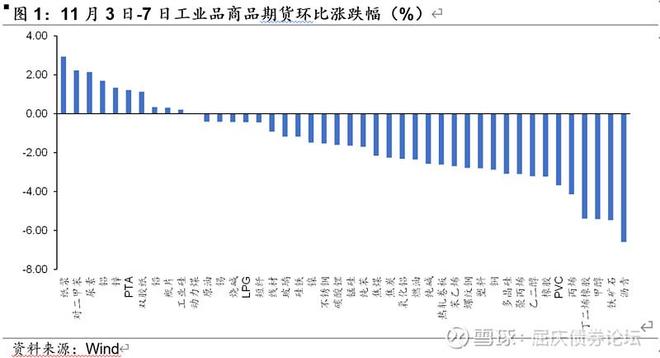
Core Viewpoint - The report indicates that the current pig cycle is nearing its bottom, with potential for a price increase in the future, driven by supply adjustments in response to declining breeding profits [10][19]. Group 1: Commodity Market Overview - The overall commodity market showed a weak trend, with the South China Industrial Products Index declining by 0.72% week-on-week [1]. - The top five gainers in industrial products included pulp, paraxylene, urea, aluminum, and zinc, while the biggest losers were asphalt, iron ore, methanol, butadiene rubber, and propylene [1]. Group 2: Pulp Market Analysis - Pulp futures prices increased by 3.10%, showing a bullish trend technically, with low import costs and improved corporate profits [2]. - Domestic pulp inventory at major ports has seen a slight decrease, but remains at a relatively high level, indicating a loose supply [2]. - Demand from downstream paper production has generally increased, with white cardboard starting to stock up for the Spring Festival orders, leading to a recovery in trading [2]. Group 3: Asphalt Market Analysis - Asphalt futures prices fell by 6.59%, influenced by a drop in international oil prices and weak demand [6]. - With decreasing temperatures, road projects in northern regions have largely halted, while southern projects may enter a rush phase, putting pressure on future demand [6]. - Despite a contraction in supply with low operating rates, weak demand has led to significant declines in both futures and spot prices [6]. Group 4: Agricultural Products Overview - The South China Agricultural Products Index rebounded by 0.57% week-on-week, with the top five gainers being soybean meal, chicken eggs, corn, and corn starch, while the biggest losers included red dates, fiberboard, rapeseed, apples, and palm oil [8]. Group 5: Pig Cycle Analysis - The pig cycle is primarily driven by supply-side factors, with stable pork demand in China. When pork prices rise, farmers increase breeding, leading to a subsequent supply surplus and price decline [10]. - Historical trends show that the time from price peak to trough is typically around one year, while the recovery phase can take between one to four years [10]. - Current pig prices are in a bottoming phase, with expectations of a price peak around August 2024, suggesting that prices may be close to their bottom now [10]. Group 6: Breeding and Supply Dynamics - The growth rate of breeding sows is expected to peak in April 2025, after which it will gradually decline, impacting pig supply [12]. - The relationship between pig output and pork prices is inversely correlated, with a lag of about six months [12]. - As of late September 2025, breeding profits have turned negative, leading to a slow reduction in breeding sows, but an acceleration in this reduction is anticipated due to ongoing losses [14][19].