
建材

Search documents
2025年7月中旬流通领域重要生产资料市场价格变动情况
Guo Jia Tong Ji Ju· 2025-07-24 01:30
Core Viewpoint - The monitoring of market prices for 50 important production materials across nine categories indicates a mixed trend, with 28 products experiencing price increases, 20 seeing declines, and 2 remaining stable in mid-July 2025 compared to early July 2025 [2][3]. Group 1: Price Changes in Major Categories - In the black metal category, notable price increases include rebar at 3160.6 CNY per ton (up 1.7%), wire rod at 3327.5 CNY per ton (up 1.9%), and hot-rolled ordinary plates at 3299.1 CNY per ton (up 2.3%) [4]. - In the non-ferrous metals category, prices for electrolytic copper decreased by 1895.3 CNY per ton (down 2.4%), while aluminum ingots fell by 141.2 CNY per ton (down 0.7%) [4]. - Chemical products showed mixed results, with sulfuric acid increasing by 11.4 CNY per ton (up 1.7%) and methanol decreasing by 36.2 CNY per ton (down 1.6%) [4]. Group 2: Energy and Coal Prices - In the petroleum and natural gas sector, liquefied natural gas (LNG) rose to 4325.5 CNY per ton (up 0.9%), while liquefied petroleum gas (LPG) fell to 4455.6 CNY per ton (down 1.2%) [4]. - Coal prices also saw increases, with anthracite coal at 865.4 CNY per ton (up 4.3%) and coking coal at 1150.0 CNY per ton (up 7.0%) [4]. Group 3: Agricultural Products and Inputs - In agricultural products, cotton prices increased by 226.9 CNY per ton (up 1.6%), while corn prices decreased by 38.6 CNY per ton (down 1.6%) [5]. - Fertilizer prices showed a slight increase, with urea at 1822.4 CNY per ton (up 0.1%) and compound fertilizer at 3149.4 CNY per ton (up 0.9%) [5]. Group 4: Monitoring Methodology - The price monitoring encompasses a wide range of products across 31 provinces, involving nearly 2000 wholesalers and dealers, ensuring comprehensive coverage of the market [8][9]. - The methodology includes on-site price collection, as well as inquiries via phone and electronic communication [9].
工信部推出十大行业稳增长方案,钢铁有色建材68只个股扭亏增长!
Sou Hu Cai Jing· 2025-07-23 23:05
Group 1: Industry Overview - Traditional industries are undergoing a deep adjustment period, with policies signaling a shift towards optimizing industrial structure and eliminating disorderly competition [1] - The Ministry of Industry and Information Technology has announced a new round of growth stabilization plans for key industries, including steel, non-ferrous metals, petrochemicals, and building materials [1] Group 2: Steel Industry - The steel industry is at a critical transformation point, with significant growth in demand for high-end steel products driven by high barriers and added value [3] - Factors such as energy cycle changes, domestic substitution processes, and upgrades in high-end equipment manufacturing are creating development space for quality steel enterprises [3] - High-margin special steel companies are performing exceptionally well due to their technological advantages and product differentiation [3] Group 3: Non-Ferrous Metals - The effects of supply-side reforms in the non-ferrous metals sector are gradually becoming evident, with an accelerated process of phasing out outdated production capacity [3] - The overall supply-demand structure is being balanced, with improvements expected in profit levels for copper smelting and alumina production in the medium term [3] Group 4: Building Materials - The building materials industry is benefiting from ongoing supportive real estate policies, which are providing strong momentum for industry development [4] - Leading consumer building materials companies are showing robust growth by optimizing channel structures and expanding retail categories [4] - A significant number of stocks in the steel, non-ferrous metals, and building materials sectors are expected to show year-on-year profit growth or turnaround, with notable companies like Tianqi Lithium and Anyang Steel projected to achieve substantial profit recovery [4]


金十数据全球财经早餐 | 2025年7月24日
Jin Shi Shu Ju· 2025-07-23 23:05
男生普通话版 下载mp3 女声普通话版 下载mp3 粤语版 下载mp3 西南方言版 下载mp3 东北话版 下载mp3 上海话版 下载mp3 今日优选 据称美国对欧盟商品的基准关税为15% 美日达成贸易协议,对日关税税率为15% 大部分国家或面临15%至50%的简单关税 贝森特:特朗普已经说了,他不会解雇鲍威尔 白宫官员:特朗普政府并未否认特朗普在爱泼斯坦名单上 泽连斯基削弱反腐机构独立性引发民众抗议 何立峰将赴瑞典与美方举行经贸会谈 印度恢复向中国公民发放旅游签证 市场盘点 周三,随着美国与更多贸易伙伴达成协议,市场避险情绪降温。美元指数依旧疲软,最终收跌0.16%,报97.162。美债收益率全线回升,基准的10年期美债 收益率收报4.388%,2年期美债收益率收报3.886%。 现货黄金连涨三日后回调,在传出欧美接近达成协议的消息后加速下挫,一度接近3380美元关口,最终收跌1.29%,收报3387.23美元/盎司;现货白银持稳 在39美元关口上方,最终收跌0.07%,报39.27美元/盎司。 由于贸易谈判的进展缓解了油市需求担忧,国际油价接近收平。WTI原油在65美元关口附近横盘震荡,最终收跌0.18%, ...

【早报】中美将在瑞典举行经贸会谈;关于汽车“智驾”系统,公安部提醒
财联社· 2025-07-23 23:00
Macro News - The Ministry of Commerce announced that Vice Premier He Lifeng will visit Sweden from July 27 to 30 for economic and trade talks with the US, aiming to address mutual economic concerns based on the consensus reached during the June 5 call between the two countries' leaders [1][5] - The Ministry of Foreign Affairs responded to concerns from India and Bangladesh regarding China's Yarlung Tsangpo River hydropower project, stating that the project is within China's sovereign territory and aims to accelerate clean energy development without adverse effects on downstream regions [2][5] Industry News - The Ministry of Public Security indicated that current automotive "smart driving" systems have not achieved full "autonomous driving" capabilities, emphasizing that drivers remain responsible for their actions, and stricter regulations will be implemented [3][7] - The National Medical Products Administration reported that 43 innovative drugs were approved in China in the first half of the year, a 59% increase year-on-year, with China's innovative drug development pipeline accounting for about 25% of the global total [4][7] - The Ministry of Transport, along with other departments, will launch a special governance action for vehicle transport from July 2025 to December 2025, focusing on strict market access management for new vehicles [8][7] Company News - Everbright Bank announced that Citic Financial Assets has increased its shareholding to 1% [11] - Yirui Technology disclosed that shareholders Tianjin Sequoia and Beijing Sequoia plan to reduce their holdings by up to 2% through block trades [12] - Shenzhen Energy announced plans to invest 7.897 billion yuan in the construction of the Shantou Honghaiwan offshore wind power project [16] - Huaxin Cement expressed uncertainty regarding potential revenue from the Yarlung Tsangpo River hydropower project [19] Investment Opportunities - The first international standard for photovoltaic direct current, led by China, has been officially released, providing a foundation for distributed photovoltaic development and new distribution system construction [22] - The AI glasses market is expected to see rapid growth, with global sales projected to reach 3.5 million units by 2025, driven by new product launches [23] - The first fourth-generation commercial fast reactor CFR1000 in China has completed its preliminary design, marking significant progress in the country's nuclear energy development strategy [26]

中证商品期货指数上半年窄幅震荡
Qi Huo Ri Bao· 2025-07-23 22:48
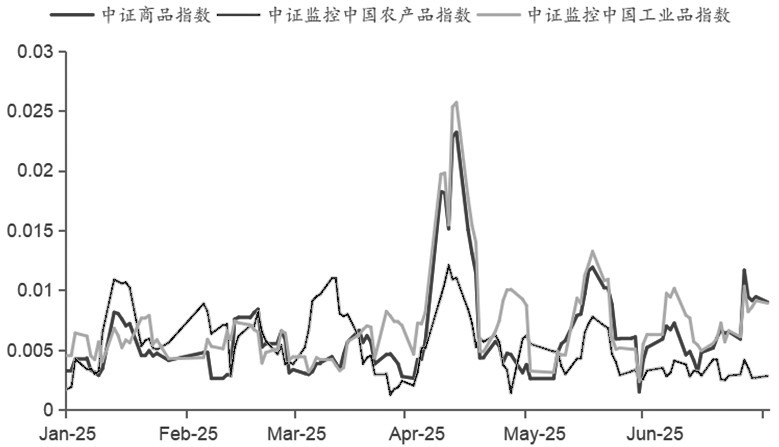
Core Viewpoint - The commodity market in the first half of 2025 exhibited a narrow fluctuation trend, with the China Securities Commodity Index showing a slight annual increase of 0.20% and a volatility of 10.27% [1] Market Overview - The commodity market experienced increased volatility due to frequent macro events, with weak overall demand impacting industrial products more significantly than agricultural products [2] - Three major macro "black swan" events occurred in the first half of 2025, including U.S. sanctions on Russian oil, a global tariff storm, and conflicts in the Middle East, all contributing to market fluctuations [2] Performance Characteristics - There was a clear divergence between agricultural and industrial products, with agricultural prices being more stable and influenced by supply-side changes, while industrial prices were more sensitive to demand fluctuations [3] - Different types of events caused further differentiation within the commodity market, with industrial products reacting strongly to demand-side shocks while agricultural products remained relatively stable [3] Index Returns Attribution 1. **Term Structure Contribution** - The term structure yield for the first half of 2025 was 1.07%, showing a slight increase from 2024, indicating a potential improvement in global economic growth [6] 2. **Sector Contribution** - Agricultural products experienced slight price increases with lower volatility, while industrial products faced larger price declines and fluctuations, reflecting insufficient global demand [7] 3. **Product Contribution** - Precious metals and agricultural products contributed positively to returns, while black metals and energy chemicals generally contributed negatively [8] Macro Indicators 1. **Macro Level** - The China Securities Commodity Index serves as an important reference for macroeconomic conditions, showing a strong correlation with PPI, which may lead by about two months [9] 2. **Micro Level** - Sub-sector indices show a high correlation with the profit totals of corresponding industries, providing timely insights for business decision-making [12] Comparative Analysis - The China Securities Commodity Index demonstrates a clear advantage in terms of risk and return compared to major overseas commodity indices, making it an attractive option for domestic and international investors [18] - The correlation between the China Securities Commodity Index and major overseas indices is relatively low, indicating a unique positioning in the market [21]
周期投资热情压抑已久私募聚焦结构性机会
Zhong Guo Zheng Quan Bao· 2025-07-23 21:00
Core Viewpoint - The domestic commodity futures market has seen a rapid increase in prices for various industrial products, driven by policy initiatives and infrastructure projects, but there is a growing divergence in the outlook for cyclical stocks among private equity firms [1][2]. Group 1: Market Dynamics - The Ministry of Industry and Information Technology announced a new plan to stabilize growth in ten key industries, focusing on structural adjustments and the elimination of outdated capacity [1]. - The recent strong performance of sectors such as infrastructure, non-ferrous metals, steel, and building materials is seen as a clear indication of favorable fundamentals for bulk commodities [2]. - There is a significant difference in the current environment compared to the 2016 commodity boom, primarily due to a lack of short-term demand resonance and a different supply structure [1][2]. Group 2: Price Trends and Valuation - Current prices for some industrial raw materials are at historical highs, contrasting with the low prices seen in 2016, which may lead to a more differentiated impact from new policies [2]. - The cyclical sectors are experiencing a rebound partly due to supply-side reform expectations and the fact that overall valuations are at historical lows, with institutions holding fewer shares [3]. Group 3: Investment Strategies - Private equity firms are focusing on structural opportunities, particularly in industries with low capacity growth and strong global competitiveness, such as non-ferrous metals [4]. - There is a flexible investment strategy being adopted, combining short-term speculation with long-term positioning, particularly in sectors like steel and chemicals that are expected to benefit from large infrastructure projects [4][5]. - Some firms have begun to build positions in sectors like new energy and coal, which have seen significant price adjustments in recent years, reflecting a positive medium-term outlook for the market [5].
多只A股,澄清!
中国基金报· 2025-07-23 16:10
Core Viewpoint - The launch of the Yarlung Tsangpo River downstream hydropower project, with a total investment of approximately 1.2 trillion yuan, has sparked significant interest in related stocks in the A-share market, leading to a surge in stock prices for multiple companies [2][4]. Group 1: Company Responses - Several listed companies, including Huaxin Cement and *ST Zhengping, have issued clarifications stating that they currently have no involvement in the Yarlung Tsangpo project [4]. - *ST Zhengping highlighted its extensive experience in high-altitude construction and its two wholly-owned subsidiaries in Tibet, but noted uncertainty regarding its potential participation in the project [5]. - Huaxin Cement acknowledged its capacity to supply construction materials for large infrastructure projects in Tibet but also indicated uncertainty about revenue and profitability from the Yarlung Tsangpo project [5]. - Zhuzhou Design stated that it specializes in architectural design and lacks the qualifications for hydropower project design [5]. - Huajian Group confirmed that its current business does not involve the Yarlung Tsangpo downstream hydropower project [5]. Group 2: Market Analysis - Analysts view the Yarlung Tsangpo hydropower project as a significant national-level project, expected to generate new demand in engineering construction, electrical equipment, and civil explosives [9]. - Market analysts pointed out potential challenges such as complex geological conditions and policy changes that could impact profitability for companies involved [9]. - Huatai Securities noted that due to the project's technical difficulties and high material standards, benefiting companies are likely to be concentrated among leading firms, with the construction period potentially lasting 10 to 15 years [9].



债市基本面高频数据跟踪报告:价格大涨,需求仍弱:2025年7月第3周
SINOLINK SECURITIES· 2025-07-23 15:39
Report Industry Investment Rating No information provided on the industry investment rating in the report. Core Viewpoints The report indicates that economic growth shows a situation of significant price increases but weak demand, with inflation characterized by insufficient momentum for a rebound in pork prices and weak and volatile oil prices [1][2]. Summary by Directory 1. Economic Growth: Significant Price Increases, Weak Demand 1.1 Production: Most Operating Rates Rebound - **Power Plant Daily Consumption Fluctuates at a High Level**: On July 22, the average daily consumption of 6 major power - generating groups was 882,000 tons, a 1.7% decrease from July 15. On July 15, the daily consumption of power plants in eight southern provinces was 2.27 million tons, a 5.7% increase from July 10 [4][11]. - **Blast Furnace Operating Rate Recovers Moderately**: On July 18, the national blast furnace operating rate was 83.5%, a 0.4 - percentage - point increase from July 11; the capacity utilization rate was 90.9%, a 1.1 - percentage - point increase from July 11. In Tangshan, the blast furnace operating rate of steel mills was 92.0% on July 18, a 0.8 - percentage - point increase from July 11 [4][14]. - **Tire Operating Rate Rebounds for Two Consecutive Weeks**: On July 17, the operating rate of all - steel truck tires was 65.1%, a 0.5 - percentage - point increase from July 10; the operating rate of semi - steel car tires was 76.0%, a 3.1 - percentage - point increase from July 10. The operating rate of looms in the Jiangsu and Zhejiang regions fluctuated within a narrow range [4][16]. 1.2 Demand: Steel and Glass Prices Rise Significantly - **New Home Sales in 30 Cities Turn Negative Month - on - Month**: From July 1 to 22, the average daily sales area of commercial housing in 30 large and medium - sized cities was 192,000 square meters, a 21.8% decrease compared to the same period in June, a 21.7% decrease compared to July last year, and a 35.1% decrease compared to July 2023 [4][21]. - **Automobile Market Retail Sales are Stable and Strong**: In July, retail sales increased by 7% year - on - year, and wholesale sales increased by 34% year - on - year [4][23]. - **Steel Prices Strengthen Further**: On July 22, the prices of rebar, wire rod, hot - rolled coil, and cold - rolled coil increased by 6.0%, 5.6%, 6.4%, and 3.4% respectively compared to July 15 [4][30]. - **Cement Prices are Continuously Under Pressure**: On July 22, the national cement price index decreased by 2.1% compared to July 15. The cement prices in the East China and Yangtze River regions decreased by 3.3% and 1.7% respectively [4][31]. - **Glass Prices Rise Significantly**: On July 22, the active glass futures contract price was 1,203 yuan per ton, an 11.2% increase compared to July 15 [4][35]. - **Container Shipping Freight Index Fails to Peak in the Peak Season**: On July 18, the CCFI index decreased by 0.8% compared to July 11, and the SCFI index decreased by 5.0% [4][38]. 2. Inflation: Insufficient Momentum for a Rebound in Pork Prices 2.1 CPI: Insufficient Momentum for a Rebound in Pork Prices - **Pork Price Rebound Lacks Momentum**: On July 22, the average wholesale price of pork was 20.7 yuan per kilogram, remaining stable compared to July 15. Since July, the average wholesale price of pork has increased by 1.2% month - on - month [4][44]. - **Agricultural Product Price Index Fluctuates at the Bottom**: On July 22, the agricultural product wholesale price index decreased by 0.2% compared to July 15. By variety, eggs (up 4.9%) > chicken (up 1.1%) > beef (up 0.3%) > vegetables (up 0.2%) > pork (flat) > mutton (down 0.5%) > fruits (down 3.2%) [4][49]. 2.2 PPI: Oil Prices are Weak and Volatile - **Oil Prices are Weak and Volatile**: On July 22, the spot prices of Brent and WTI crude oil were $70.0 and $65.3 per barrel respectively, a 1.6% and 1.8% decrease compared to July 15 [4][52]. - **Copper and Aluminum Prices Rise**: On July 22, the prices of LME 3 - month copper and aluminum increased by 2.5% and 1.6% respectively compared to July 15 [4][56]. - **Most Industrial Product Prices Rise**: Since July, most industrial product prices have risen. The month - on - month prices of wire rod, cement, and steam coal have decreased, while other industrial product prices have increased month - on - month, with coking coal and coke leading the gains. The year - on - year decline of most industrial product prices has narrowed [4][60].
国元证券每日复盘-20250723
Guoyuan Securities· 2025-07-23 15:36
Market Performance - On July 23, 2025, the Shanghai Composite Index fluctuated and lost the 3600-point level, closing at 3582.30, up 0.01%[15] - The Shenzhen Component Index fell by 0.37%, closing at 11059.04, while the ChiNext Index decreased by 0.01%[15] - Total market turnover was 18642.75 billion CNY, a decrease of 284.50 billion CNY from the previous trading day[15] Sector and Style Analysis - Among the 30 CITIC first-level industries, most sectors declined; leading sectors included Non-Bank Financials (up 1.31%), Home Appliances (up 0.51%), and Banks (up 0.38%)[20] - The worst-performing sectors were Building Materials (down 2.56%), Defense and Military (down 1.80%), and Comprehensive Finance (down 1.35%)[20] - In terms of investment style, Financials outperformed, followed by Consumption and Growth, while Large-Cap Value stocks led over Large-Cap Growth stocks[20] Capital Flow - On July 23, 2025, the net outflow of main funds was 646.03 billion CNY, with large orders seeing a net outflow of 346.87 billion CNY and super large orders a net outflow of 299.17 billion CNY[24] - Small orders continued to see a net inflow of 609.73 billion CNY, while medium orders had a slight inflow of 10.19 billion CNY[24] ETF Trading Activity - Major ETFs such as the Huaxia SSE 50 ETF and the Huatai-PB CSI 300 ETF saw varied trading volumes, with the SSE 50 ETF trading at 21.25 billion CNY, an increase of 2.14 billion CNY from the previous day[29] - The CSI 500 ETF had a trading volume of 17.65 billion CNY, up by 3.66 billion CNY, while the CSI 1000 ETF traded at 10.37 billion CNY, an increase of 2.32 billion CNY[29] Global Market Overview - On July 23, 2025, major Asia-Pacific indices closed higher, with the Hang Seng Index up 1.62% at 25538.07 points and the Nikkei 225 up 3.51% at 41171.32 points[33] - In contrast, European indices showed mixed results, with the DAX down 1.09% and the FTSE 100 up 0.12%[33]
连续上攻后,市场预期有哪些新变化
2025-07-23 14:35
Summary of Key Points from Conference Call Records Industry or Company Involved - The discussion primarily revolves around the **A-share market** and **infrastructure investment**, particularly focusing on the **Yaxi Water Conservancy Project** and its implications for various sectors including **construction**, **resources**, and **new energy**. Core Points and Arguments 1. **Market Catalysts and Fund Flows**: The A-share market has seen a surge due to significant catalysts such as the announcement of a **1.2 trillion yuan** investment in the Yaxi Water Conservancy Project and the Ministry of Industry and Information Technology's new growth stabilization plan for key industries. This has led to increased investor interest in undervalued sectors like infrastructure and cyclical goods [2][4][5]. 2. **Impact of Yaxi Water Conservancy Project**: Although the Yaxi project is estimated to contribute only **0.15%** to GDP, it has generated strong market sentiment as it is perceived as part of a broader anti-involution policy. This has led to a notable rally in related sectors despite the limited actual economic impact [5][6]. 3. **Investment Strategy Conflicts**: There is a noted conflict between short-term and long-term investment strategies. Short-term strategies may focus on following the price movements of upstream resource futures, while long-term strategies should align with anti-involution policies and sectors like photovoltaics, lithium batteries, and automotive [9][10]. 4. **Market Risk Appetite**: The easing of US-China relations and a decrease in the VIX index to its lowest level since February have contributed to a heightened risk appetite among investors. This has resulted in a significant inflow of new capital into the market, with margin financing exceeding **10%** [10][11]. 5. **Performance Disparity in Earnings**: There is a significant disparity in earnings forecasts, with **42%** of companies expected to report negative net profits. Traditional sectors are under pressure, while high-end manufacturing and new sectors like renewable energy and AI show potential for growth [3][14][15]. 6. **Sector Performance**: High-end manufacturing sectors, including small metals and marine equipment, are performing well, while traditional sectors like coal and real estate are struggling. The proportion of companies with profit growth exceeding **50%** has increased from **8%** to **18%** year-over-year [15][16]. 7. **New Investment Opportunities**: Emerging sectors such as renewable energy, humanoid robotics, artificial intelligence, and innovative pharmaceuticals are expected to attract continued investment. This trend mirrors past market behaviors where low-valuation sectors were replaced by stronger growth sectors [17][19]. 8. **Dividend Strategy Focus**: The dividend strategy should emphasize individual stock rotation rather than a single sector focus. Stocks with stable dividend yields, such as those in food and beverage, are currently more favorable [18]. 9. **Future Market Trends**: The market is expected to maintain a strong upward trend, with a potential shift from growth to value stocks. Short-term fluctuations may present buying opportunities, particularly in sectors like innovative pharmaceuticals and semiconductors [13][19]. Other Important but Possibly Overlooked Content - The market's current sentiment is influenced by a combination of fundamental factors and liquidity conditions, with a notable lack of overheating or rapid corrections in the market [10][12]. - The potential for retail investor participation is anticipated to increase as previous losses are recouped, leading to a more favorable environment for market entry [12].