
软饮料

Search documents
《椰子水团体标准》正式发布 行业迎来“有标可依”时代
Jin Rong Jie· 2025-12-15 03:41
Core Viewpoint - The coconut water market is experiencing a trust crisis as low-priced products raise questions about authenticity, prompting the release of a new industry standard to ensure clarity and quality in the category [1][2]. Group 1: Industry Standard - The newly released "Coconut Water" group standard defines coconut water as a product made solely from coconut fruit, distinguishing it from flavored drinks with added sugars and additives [2]. - The standard emphasizes clear labeling requirements, mandating that products must indicate whether they are reconstituted or not, and allows products meeting the standard to claim "100%" [2]. - Transparency in labeling is highlighted as a legal obligation for producers, reinforcing consumer rights to know what they are purchasing [2]. Group 2: Industry Responsibility - The release of the standard is seen as a responsibility for the future of the industry, encouraging producers to adopt and implement the guidelines throughout their production processes [3]. - Retailers and platforms are encouraged to use the standard as a criterion for product selection, promoting high-quality offerings [3]. - Consumers and media are urged to engage with the standard to help monitor and improve market conditions [3]. Group 3: Role of Leading Companies - Leading companies are crucial in translating the standard into market trust, as their adherence to the guidelines can set a precedent for the industry [4]. - The brand "Coconut Knows" emphasizes integrity and transparency, committing to honest practices and clear ingredient disclosures [5]. - The company recognizes that over 30% of coconut water consumers are mothers, highlighting the importance of maintaining trust in family health [5]. Group 4: Industry Evolution - The industry is at a pivotal point, transitioning from chaotic growth to standardized maturity, with a focus on authenticity and collaboration for sustainable development [6].
椰子水团体标准发布,涉及原料、标签等
Jing Ji Guan Cha Wang· 2025-12-14 03:20
然而,快速增长的背后,也存在市场乱象。中国热带农业科学院椰子研究所产业发展部主任邓福明说, 当前市场存在三大乱象:其一是掺水,构成了风味欺骗;其二是加糖,背离天然属性,又增加健康负 担;其三是添香,属于伪造天然口感,欺骗消费者感官。这些乱象正是导致市场上产品价格与成本严重 倒挂、消费者疑虑重重的技术根源。 据灼识咨询报告,2024年中国椰子水行业规模达11亿美元,过去五年复合年增长率达61%,远超软饮料 整体增速。 经济观察网12月12日,中国轻工业发展研究中心产业技术研究院联合杭州光合植造食品科技有限公司等 单位发布《椰子水团体标准》,该标准规范了椰子水的原料、理化指标、标签、运输等方面。其中提 到,复原椰子水应标明"复原",非复原椰子水可标示"NFC"。 ...
用东方树叶能养茶菌?农夫山泉:有异常立即停止饮用
Xin Lang Cai Jing· 2025-12-12 05:23
12月12日,有网友晒出图片,开瓶后的东方树叶中出现白色半透明球形菌团,最大直径达乒乓球大小, 不少人将其当作"天然茶宠"把玩。 责任编辑:杨赐 12月12日,有网友晒出图片,开瓶后的东方树叶中出现白色半透明球形菌团,最大直径达乒乓球大小, 不少人将其当作"天然茶宠"把玩。 另有用户晒出攻略,将饮用过半的东方树叶置于常温环境数日后,茶汤中自然生成絮状或团状菌 体,"无需接种,靠茶叶养分就能生长"。 对于上述情况,农夫山泉官方客服向新浪财经表示:"只是普通饮品,若有异常请立即停止饮用"。 另有用户晒出攻略,将饮用过半的东方树叶置于常温环境数日后,茶汤中自然生成絮状或团状菌 体,"无需接种,靠茶叶养分就能生长"。 对于上述情况,农夫山泉官方客服向新浪财经表示:"只是普通饮品,若有异常请立即停止饮用"。 责任编辑:杨赐 ...



食品饮料行业 2026 年度投资策略报告(一):需求多元、供给升级,大众消费的嬗变与曙光-20251211
Guoxin Securities· 2025-12-11 08:02
Group 1 - The report indicates that the food and beverage industry experienced a slowdown in 2025, with a 5.3% decline in the sector, underperforming the CSI 300 index by 19.4 percentage points [1][25] - The soft drink sector maintained relative strength, while the snack industry showed mixed performance, with leading companies continuing to expand [1][20] - Consumer confidence remained low, with the disposable income growth rate for urban residents at 4.4% year-on-year, reflecting weak internal demand [12][20] Group 2 - Looking ahead to 2026, the report identifies structural opportunities in the consumer goods sector, driven by channel differentiation and supply upgrades [2][29] - The report emphasizes the need for consumer goods companies to adapt to new retail channels and enhance product differentiation to meet evolving consumer preferences [2][29] - The anticipated recovery in consumer confidence and macroeconomic policies is expected to shift consumer focus from extreme price competition to a preference for quality and added value [2][29] Group 3 - Investment recommendations for 2026 include focusing on high-quality and differentiated products, with specific companies highlighted such as Babi Foods and Wanchen Group [3][4] - The report suggests that companies with strong performance recovery expectations, such as Anjui Foods and Yihai International, should be considered for investment [3][4] - High dividend or comprehensive shareholder return stocks, such as Yili Group, are also recommended for investors [3][4] Group 4 - The report provides earnings forecasts and investment ratings for key companies, indicating a positive outlook for companies like Yanjing Beer and Nongfu Spring [4][5] - The food and beverage sector's overall revenue and profit growth rates have weakened, with the industry experiencing a cumulative revenue growth of only 0.3% and a profit decline of 4.5% in the first three quarters of 2025 [20][22] - The snack sector's revenue growth was primarily driven by the expansion of Wanchen Group, while other segments faced challenges [20][22]




国泰海通晨报-20251211
Haitong Securities· 2025-12-11 00:28
Group 1: Food and Beverage Industry - The report emphasizes prioritizing growth while focusing on undervalued traditional consumer leaders with strong long-term growth certainty, particularly in the soft drink sector, where companies like Nongfu Spring and Dongpeng Beverage show increased valuation attractiveness [1][4] - Recommendations include growth-oriented and stable targets in the liquor sector, such as Shanxi Fenjiu and Guizhou Moutai, alongside structural high-growth beverage companies like Dongpeng Beverage and Nongfu Spring [2] - The snack and food raw material sectors are highlighted for growth opportunities, with companies like Bailing Chuangyuan and Three Squirrels recommended for investment [2] Group 2: Strategy and Market Trends - The AI industry continues to show high prosperity, with demand for high-end storage devices like DRAM DDR4 increasing, driven by ongoing AI infrastructure investments [5][7] - Service consumption has seen a significant year-on-year increase, with notable improvements in tourism and entertainment sectors, indicating a shift towards light consumption types [6] - The real estate and durable goods sectors are experiencing a marginal decline in prosperity, with industrial metal prices rising significantly due to global supply dynamics [5][6] Group 3: Biopharmaceuticals - The report maintains a "Buy" rating for Kefu Medical, highlighting a strong revenue growth of 30.72% in Q3 2025, with a focus on improving operational efficiency in its hearing aid business [9][10]


国泰海通 · 晨报1211|食品饮料、策略
国泰海通证券研究· 2025-12-10 11:52
Group 1: Alcohol Industry - The price of Feitian Moutai has experienced fluctuations, currently ranging from 1530 to 1550 RMB, influenced by year-end cash flow needs and supply release schedules [3] - Moutai has introduced a product authentication service through its iMoutai app to enhance consumer protection and market order [3] - The liquor industry is in a stabilization phase, with valuations and dividends indicating a certain cost-effectiveness, suggesting that the capital market may bottom out ahead of the fundamentals [3] Group 2: Beverage Sector - The valuation attractiveness of growth stocks in the soft drink sector has increased due to recent price corrections, with low valuation and high dividend stocks maintaining long-term allocation value [4] - China Wangwang reported a 2.1% year-on-year revenue increase for FY25H1, with snack sales showing nearly double-digit growth and emerging channels also growing significantly [4] Group 3: AI and Service Consumption - The AI industry continues to show high prosperity, with demand in the electronic supply chain driven by AI infrastructure investments, leading to price increases in high-end storage devices [9] - Service consumption has shown a year-on-year improvement, with significant increases in tourism and movie box office revenues, indicating a shift towards light consumption types [10] Group 4: Real Estate and Durable Goods - Real estate sales have seen a significant decline, with a 34.8% year-on-year drop in transaction volume across 30 major cities, attributed to high base effects from policy optimizations [10] - The sales of passenger vehicles have also decreased, with a year-on-year decline of 8.1% in November 2025, indicating increasing inventory pressure among dealers [10] Group 5: Manufacturing and Resource Prices - The price of DRAM storage devices remains high, with DDR4 and DDR5 prices at 46.5 and 26.3 USD respectively, reflecting strong demand driven by AI infrastructure [11] - Coal prices have significantly decreased, while industrial metal prices have risen due to expectations of overseas interest rate cuts [11]

宝藏商业课!巴菲特1990年在斯坦福法学院的传授:想赚大钱?专心“桶里捞鱼”
聪明投资者· 2025-12-10 07:04
Core Viewpoint - The article emphasizes the interconnectedness of business and investment, highlighting that understanding one enhances the comprehension of the other. It advocates for defining one's "circle of competence" and staying within it to make informed investment decisions [5][12][30]. Group 1: Circle of Competence - Warren Buffett stresses the importance of identifying and operating within one's circle of competence, using the example of Mrs. Blumkin, who successfully ran a furniture business by only engaging in areas she understood [9][19][22]. - Many CEOs of large companies often lack experience in capital allocation, leading to poor acquisition decisions when they venture outside their expertise [10][24][25]. - The article suggests that having fewer but more informed investment opportunities can lead to better outcomes, contrasting this with the prevalent culture on Wall Street that encourages frequent trading [11][32][36]. Group 2: Investment Philosophy - The investment approach advocated is to focus on high-quality businesses and to wait patiently for clear opportunities, rather than being swayed by market noise [30][36][60]. - The article discusses the advantages of owning a portion of a great business, like Coca-Cola, rather than seeking to acquire entire companies, which often leads to overpaying in competitive bidding situations [36][39][44]. - It highlights the importance of investing one’s own capital, as seen in Berkshire Hathaway, where management invests a significant portion of their wealth, aligning their interests with those of shareholders [39][40]. Group 3: Market Dynamics - The article critiques the modern investment theory that equates price volatility with risk, arguing that buying undervalued assets can be safer than overpaying for perceived stability [75][78]. - It points out the challenges of global competition and the risks associated with investing in foreign markets, emphasizing a preference for companies registered in the U.S. [81][83]. - The discussion includes the notion that successful investments often come from understanding the underlying business rather than relying on market trends or speculation [57][60].


【中泰食品饮料】何长天:需求景气延续,关注新消费下的结构性机会
Xin Lang Cai Jing· 2025-12-10 02:40
Group 1 - The core viewpoint of the article highlights the structural prosperity driven by health and functionality in the soft drink industry, with demand expected to remain robust into 2026 [4][14] - As of November 28, 2025, the Shenwan Soft Drink Index has increased by 7.6% year-to-date, underperforming the Shanghai Composite Index by 8.4% and outperforming the Food and Beverage Index by 12.4% [3][13] - The latest PE-TTM for the soft drink industry is approximately 28.3 times, placing it at the 46th percentile over the past three years, indicating a recent decline in valuation levels since Q3 [3][13] Group 2 - The soft drink sector has shown a compound annual growth rate (CAGR) of 12.8% from 2022 to 2024, ranking third among food and beverage sub-sectors, with revenue growth rates of 2.4%, 17.8%, and 14.4% for Q1 to Q3 of 2025 [6][16] - The demand recovery in the soft drink industry post-pandemic has outperformed other fast-moving consumer goods (FMCG), with sales growth rates of 6.6% and 8.7% for 2023 and 2024, respectively [6][16] - Key factors contributing to the industry's resilience include the rapid growth of new categories such as sugar-free tea and functional beverages, which cater to diverse consumer needs for nutrition and functionality [6][16] Group 3 - The health and functionality trends in soft drinks are expected to continue, with a focus on cost-effectiveness and larger packaging options appealing to consumers [7][17] - The competitive landscape is shifting towards increased concentration and platformization, with leading companies enhancing their market positions through improved revenue resilience and profitability [8][18] - From 2019 to 2024, leading companies have shown a CAGR of 8.6% in revenue, while regional and niche companies have experienced a decline, indicating a strengthening of the competitive advantage for market leaders [8][18] Group 4 - Investment recommendations suggest focusing on structural growth opportunities within the beverage sector, particularly in functional drinks and sugar-free tea, as the macro environment may reach a profitability turning point [9][19] - The continuation of cost advantages in raw materials and packaging is expected to support profitability, with a focus on companies that demonstrate strong competitive strategies and new product developments [9][19] - The main investment themes include selecting high-growth segments and maintaining positions in leading companies to capitalize on industry growth and market share expansion [9][19]

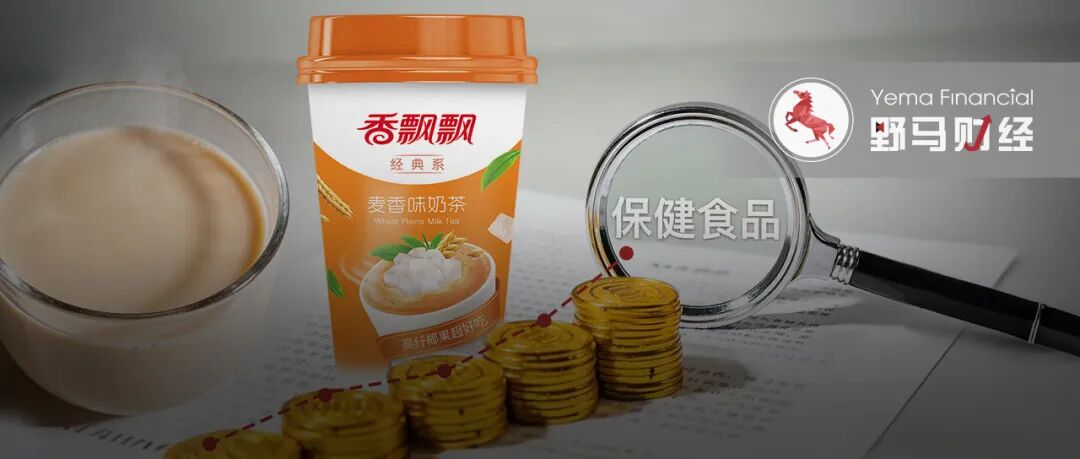
绕地球一圈的香飘飘又瞄准了保健品
3 6 Ke· 2025-12-10 01:31
Core Viewpoint - The company, Xiangpiaopiao, is facing significant financial challenges, with a notable decline in revenue and profits, prompting a strategic shift towards the health food sector as a potential growth avenue [1][4][5]. Financial Performance - In the first three quarters of 2025, Xiangpiaopiao reported revenue of approximately 1.684 billion yuan, a year-on-year decrease of 13.12% [6]. - The net profit attributable to shareholders was approximately -89.21 million yuan, representing a staggering year-on-year decline of 603.07% [6][11]. - The company's cash flow from operating activities was also negative, amounting to -26.96 million yuan, a decrease of 185.05% year-on-year [7][11]. Strategic Shift - Xiangpiaopiao has proposed amendments to its business scope to include the production of health foods, indicating a strategic pivot to explore new product lines [4][5]. - The company confirmed that if health food products are launched, they will still carry the Xiangpiaopiao brand, although it remains uncertain when these products will be introduced [1][4]. Market Position and Challenges - The company is experiencing a decline in its traditional beverage sales, particularly in the instant tea segment, due to increased competition from ready-to-drink tea brands [11][19]. - The marketing expenses remain high, with sales expenses reaching 499 million yuan in the first three quarters, consuming a significant portion of revenue [11]. Future Outlook - Analysts suggest that the success of Xiangpiaopiao's potential health food products will depend on the company's preparation and execution in this new market [2][5]. - The health food sector is seen as a way to escape the limitations of the current instant tea market, which is facing saturation and declining margins [4][19].

中泰证券:软饮料行业基本面韧性更优,关注两条主线
Xin Lang Cai Jing· 2025-12-10 01:00
Core Viewpoint - The beverage consumption peak season has ended, with leading companies reporting stable third-quarter results and further strengthening their advantages. The macro environment may see a profit turning point by 2026, supported by consumer policies to boost domestic demand. However, it will take time for the mid-term household balance sheets to recover. The soft drink industry shows resilience against environmental disturbances, with a robust fundamental outlook. [1] Industry Summary - The beverage industry is expected to continue benefiting from cost advantages in raw materials and packaging, with a focus on competitive strategies and new product developments among companies. [1] Company Summary - It is recommended to prioritize leading companies in the structural growth segments within the beverage sector, particularly in functional drinks and sugar-free tea. [1]
