基建

Search documents
专访品牌南非姆普法内:非洲首届G20峰会为中资提供历史性机遇
2 1 Shi Ji Jing Ji Bao Dao· 2025-11-11 23:37
Core Insights - South Africa is signaling new cooperation opportunities to global investors, particularly from China, in the context of global green transition and supply chain restructuring [1][2] - The South African Investment Conference held in Beijing emphasized the potential for collaboration in renewable energy, fintech, and agri-tech, highlighting the urgency for early participation [1][5] Renewable Energy - South Africa is actively promoting investments in renewable energy, including hydrogen, solar, and wind energy projects, creating ample opportunities for external investors [4][5] - The urgency for investment in renewable energy is underscored, with the potential for significant mutual benefits for both South Africa and China [5] Financial Services - The financial services sector in South Africa is mature and well-developed, presenting new growth opportunities, particularly in fintech [5] - South Africa encourages Chinese enterprises to engage in digital banking, payments, credit, and blockchain collaborations [5] Agriculture - Agriculture remains a crucial economic pillar for South Africa, with increasing opportunities for investment and collaboration in agri-tech [5] - The opening of the Chinese market has facilitated the entry of more South African products, enhancing bilateral agricultural cooperation [5] Key Mineral Resources - South Africa possesses abundant "critical minerals" essential for battery and renewable energy industries, ranking fifth globally in mining GDP contribution [2][8] - The country produces nearly 60% of the world's platinum group metals, providing a significant resource base for potential investors [2] Strategic Positioning - South Africa serves as a strategic gateway for Chinese investors looking to enter the African market, leveraging its industrialization and financial infrastructure [2][7] - The upcoming G20 summit in South Africa is expected to enhance the country's role in attracting high-quality investments and promoting sustainable development [2][6] Youth and Talent - South Africa has a relatively young population, which is adaptable to new technologies, providing a dynamic labor force for future industries [9] - The country’s industrial base and financial services support innovation, creating a conducive environment for technology-driven investments [9]
消费龙头稳健前行新兴产业强势突围
Si Chuan Ri Bao· 2025-11-11 20:18
Core Insights - The overall performance of Sichuan-listed companies in the third quarter of 2025 shows significant revenue and profit figures, with total operating revenue reaching 823.1 billion and net profit at 82.15 billion [1] Revenue and Profit Distribution - Sichuan companies exhibit a tiered revenue distribution, with 14 companies entering the "100 billion revenue club" [2] - Sichuan Changhong, New Hope, and Sichuan Road and Bridge lead the revenue rankings with 81.889 billion, 80.504 billion, and 73.281 billion respectively [2] - In terms of profit, 15 companies reported net profits exceeding 1 billion, with Wuliangye leading at 21.511 billion [2] - A total of 31 companies saw net profit growth exceeding 100%, with Olin Bio achieving over 10 times growth [2] Industry Performance - Traditional consumer industries are stable, while some cyclical industries face significant pressure, as seen with Sichuan Changhong's 5.94% revenue growth and Tongwei's 5.38% revenue decline [3] - Emerging industries, particularly in communication and military sectors, are becoming new growth engines, exemplified by New Yisheng's revenue growth of 221.70% [4] Traditional Industry Adaptation - Traditional leaders in the liquor and photovoltaic sectors are actively seeking breakthroughs despite facing challenges, with Wuliangye and Luzhou Laojiao both experiencing revenue declines [5][6] - Both companies are pursuing transformation strategies, including product innovation and targeting younger consumer demographics [6] - Tongwei is leveraging its full industry chain advantage to navigate the cyclical challenges in the photovoltaic sector [6] Institutional Confidence - Institutional investments in Sichuan companies indicate long-term confidence, with many companies favored by institutional capital reflecting their solid industrial foundation and innovative potential [5][6]
A股:最后的洗盘?准备好麻袋!周二或迎新行情,大盘可能这样走
Sou Hu Cai Jing· 2025-11-10 23:02
Core Viewpoint - The A-share market is experiencing a consolidation phase with strong performance in the consumer and securities sectors, while technology stocks are showing signs of recovery after a period of adjustment. There is speculation about a potential multi-sector rally in the near future, possibly indicating a final washout phase before a new uptrend [1]. Group 1: Market Performance - On Monday, the consumer and securities sectors led the market, with significant inflows into several brokerage stocks, contributing to a positive index performance. Technology stocks, however, did not participate in the rally but showed signs of stabilization in the afternoon [2]. - The consumer sector was driven by a slight rebound in CPI data, interpreted as manageable inflation and signs of improved consumption. Despite limited growth in food and beverage segments, the liquor sector emerged as a leader in the rebound, supported by institutional buying ahead of the year-end consumption peak [4]. Group 2: Sector Analysis - The technology sector has faced significant pressure over the past two weeks, but some semiconductor and computer stocks began to stabilize on Monday afternoon. This adjustment is seen as a way to clear out short-term speculative positions, potentially paving the way for future capital inflows [5]. - The securities sector is at a critical breakout point after a period of low consolidation, while the real estate sector is supported by stable policy expectations, with increasing capital accumulation at lower levels. A coordinated effort from these two sectors could significantly boost the index [6]. Group 3: Market Sentiment and Signals - The trading volume exceeded 1 trillion, indicating that institutional investors are reallocating rather than withdrawing from the market. The valuation gap between sectors is notable, with consumer PE at 65% and technology at 35%, suggesting differing potential for explosive growth [12]. - Key sectors to watch for potential upward movement include technology (specifically semiconductor equipment and AI chips), consumer (focusing on mid-tier liquor and smart home appliances), and heavyweight stocks (brokerage ETFs and leading state-owned real estate companies) [12].


A股再破4000点,美联储降息的大环境下,A股绝不可能回调
Sou Hu Cai Jing· 2025-11-10 13:09
Core Viewpoint - The A-share market has recently surpassed the 4000-point mark, raising concerns about whether it will continue to rise towards 5000 points or face a correction. Investors are particularly anxious as many have not experienced such high levels in the past decade, and there are questions about potential market bubbles, especially with the high price-to-earnings ratios in the Sci-Tech Innovation Board [1][3]. Economic and Monetary Policy Context - The global economic and political landscape is currently influenced by the Federal Reserve's sixth interest rate cut and the impending halt of its balance sheet reduction. This shift indicates a forthcoming period of monetary easing, which could lead to significant capital market fluctuations globally [3]. - The "dollar tidal effect" has been highlighted, where the Fed's interest rate hikes have previously led to capital flight from smaller economies, forcing them to raise their own interest rates to retain foreign investment [3][6]. A-Share Market Dynamics - The A-share market's trajectory over the past two years has been characterized by a recovery from a low of 2600 points to the current 4000 points, driven by state-led monetary policies rather than organic market recovery. Institutional investments from entities like the Central Huijin and social security funds have exceeded 265 billion yuan [6][8]. - The current bull market is not indicative of a broad economic recovery but rather a state-driven liquidity boost aimed at preventing foreign capital from taking advantage of low valuations during the Fed's easing cycle [8][9]. Implications for Foreign Investment - The A-share market's rise has positively impacted the Hong Kong stock market, suggesting a broader revaluation of Chinese assets. The aim is to prevent foreign investors from acquiring undervalued Chinese stocks during the Fed's monetary easing [9][10]. - The overall foreign investment in the A-share market remains limited, with foreign ownership at approximately 4%, but the interconnectedness with the Hong Kong market is significant [8][9]. Future Market Outlook - The expectation is that the A-share market will not experience significant corrections, with a potential upward trend towards 5000 or even 6000 points. The stability of large state-owned enterprises, particularly in banking and insurance, is crucial for maintaining the index's performance [11]. - Investors are advised to focus on individual stocks rather than the overall market index, as the performance of the index may not reflect the profitability of many individual stocks [11].

基本面高频数据跟踪:地产销售再度回落
GOLDEN SUN SECURITIES· 2025-11-10 08:27
1. Report Industry Investment Rating No information about the report industry investment rating is provided in the given content. 2. Core View of the Report The report updates the high - frequency data of Guosheng bond - related fundamentals from November 3, 2025, to November 9, 2025. It shows that the Guosheng fundamental high - frequency index is stable with changes in various sub - indicators. The interest - rate bond long - short signal is adjusted downwards, and different economic aspects such as production, demand, prices, inventory, transportation, and financing present different trends [1][9]. 3. Summary According to the Directory 3.1 Total Index: Fundamental High - Frequency Index is Stable - The Guosheng fundamental high - frequency index is 128.6 points (previous value: 128.5 points), with a week - on - week increase of 0.1 point and a year - on - year increase of 6.1 points (previous value: 6.0 points), and the year - on - year increase is expanding. The interest - rate bond long - short signal factor is 4.4% (previous value: 4.6%), a decrease of 0.2 percentage points [1][9][11]. 3.2 Production: Electric Furnace Operating Rate Drops - The industrial production high - frequency index is 127.5 points (previous value: 127.4 points), with a week - on - week increase of 0.0 point and a year - on - year increase of 5.3 points (previous value: 5.4 points), and the year - on - year increase is narrowing. The electric furnace operating rate is 59.6% (previous value: 60.9%), a decrease of 1.3 percentage points [1][9][15]. 3.3 Real Estate Sales: Commercial Housing Transaction Area Drops Significantly - The commercial housing sales high - frequency index is 41.7 points (previous value: 41.9 points), with a week - on - week decrease of 0.2 point and a year - on - year decrease of 6.2 points (previous value: 6.1 points), and the year - on - year decrease is expanding. The transaction area of commercial housing in 30 large - and medium - sized cities is 18.8 million square meters (previous value: 31.7 million square meters), a decrease of 12.9 million square meters [1][9][29]. 3.4 Infrastructure Investment: Asphalt Operating Rate Drops - The infrastructure investment high - frequency index is 122.4 points (previous value: 122.3 points), with a week - on - week increase of 0.1 point and a year - on - year increase of 9.0 points (previous value: 8.8 points), and the year - on - year increase is expanding. The asphalt operating rate is 29.7% (previous value: 31.5%), a decrease of 1.8 percentage points [1][9][44]. 3.5 Exports: Export Container Freight Rate Index Continues to Rise - The export high - frequency index is 143.6 points (previous value: 143.6 points), with a week - on - week increase of 0.0 point and a year - on - year increase of 1.0 point (previous value: 1.1 points), and the year - on - year increase is narrowing. The CCFI index is 1058.2 points (previous value: 1021.4 points), an increase of 36.8 points [46]. 3.6 Consumption: Average Daily Movie Box Office Drops - The consumption high - frequency index is 120.6 points (previous value: 120.7 points), with a week - on - week decrease of 0.0 point and a year - on - year increase of 3.6 points (previous value: 3.6 points), and the year - on - year increase remains unchanged. The average daily movie box office is 29630,000 yuan (previous value: 30900,000 yuan), a decrease of 1270,000 yuan [1][9][55]. 3.7 CPI: Food Prices Rise Slightly Overall - The CPI monthly - on - monthly forecast is - 0.1% (previous value: 0.0%). The average wholesale price of pork is 18.1 yuan/kg (previous value: 18.0 yuan/kg), the average wholesale price of 28 key - monitored vegetables is 5.8 yuan/kg (previous value: 5.6 yuan/kg), the average wholesale price of 7 key - monitored fruits is 7.1 yuan/kg (previous value: 7.1 yuan/kg), and the average wholesale price of white - striped chickens is 17.6 yuan/kg (previous value: 17.5 yuan/kg) [2][61]. 3.8 PPI: Spot Prices of Copper and Aluminum Drop - The PPI monthly - on - monthly forecast is 0.0% (previous value: 0.0%). The spot settlement price of LME copper is 10704 US dollars/ton (previous value: 10964 US dollars/ton), a decrease of 261 US dollars/ton; the spot settlement price of LME aluminum is 2859 US dollars/ton (previous value: 2868 US dollars/ton), a decrease of 9 US dollars/ton [2][64]. 3.9 Transportation: Transportation High - Frequency Index Rises Steadily - The transportation high - frequency index is 132.4 points (previous value: 132.1 points), with a week - on - week increase of 0.2 point and a year - on - year increase of 10.4 points (previous value: 10.3 points), and the year - on - year increase is expanding. The subway passenger volume in first - tier cities is 39790,000 person - times (previous value: 40550,000 person - times), a decrease of 750,000 person - times; the road logistics freight rate index is 1050 points (previous value: 1049 points), an increase of 0.3 point; the number of domestic flights is 12273 (previous value: 12461), a decrease of 188 [2][76]. 3.10 Inventory: Electrolytic Aluminum Inventory Increases - The inventory high - frequency index is 162.9 points (previous value: 162.8 points), with a week - on - week increase of 0.1 point and a year - on - year increase of 8.0 points (previous value: 8.1 points), and the year - on - year increase is narrowing. The electrolytic aluminum inventory is 11.6 million tons (previous value: 8.5 million tons), an increase of 3.1 million tons; the soda ash inventory is 170.3 million tons (previous value: 169.7 million tons), an increase of 0.6 million tons [2][82]. 3.11 Financing: Net Financing of Local Bonds Drops Significantly - The financing high - frequency index is 241.6 points (previous value: 241.0 points), with a week - on - week increase of 0.6 point and a year - on - year increase of 30.4 points (previous value: 30.4 points), and the year - on - year increase remains unchanged. The net financing of local bonds is - 36 billion yuan (previous value: 178 billion yuan), a decrease of 213.9 billion yuan; the net financing of credit bonds is 92 billion yuan (previous value: - 12.6 billion yuan), an increase of 104.6 billion yuan [2][94].
建筑行业2025年3季报综述:规模下降业绩承压,经营现金流有改善
Changjiang Securities· 2025-11-10 08:13
Investment Rating - The investment rating for the construction industry is "Positive" and is maintained [9]. Core Insights - The construction industry has experienced a decline in revenue and performance, but the rate of decline has narrowed compared to the previous year. The overall profitability remains relatively stable, with only a slight decrease compared to the same period last year [6][19]. - The industry is facing challenges due to sluggish demand, but companies are adopting more conservative approaches to new orders, focusing on the payment capabilities of owners and reducing capital advances [6][19]. - The first three quarters of 2025 saw a decrease in operating cash outflow, and while the asset-liability ratio and interest-bearing debt ratio increased compared to the beginning of the year, they showed a slight decrease on a quarter-on-quarter basis [6][19]. Summary by Sections Industry Overview - As of October 31, 2025, the construction industry reported a total revenue of 58,403.89 billion, a decrease of 5.14% year-on-year, with the decline rate narrowing by 0.09 percentage points compared to the same period in 2024. The net profit attributable to shareholders was 1,288.62 billion, down 8.41%, with a narrowing decline of 2.98 percentage points [21][19]. Profitability - The overall gross margin for the industry decreased to 10.0%, down 0.05 percentage points year-on-year. The net profit margin was 2.21%, a decrease of 0.08 percentage points [28][31]. Cash Flow - The net cash outflow from operations for the first three quarters of 2025 was 4,082.54 billion, a reduction of 719.02 billion year-on-year. The cash collection ratio increased by 3.45 percentage points to 99.24%, while the cash payment ratio increased by 3.07 percentage points to 106.04% [38][39]. Subsector Performance - Most subsectors experienced a decline in revenue, with the international engineering sector seeing a drop of 25.4%, and the decoration sector down by 22.32%. However, the chemical engineering sector reported a revenue increase of over 10% [50][53]. - The gross margin for seven subsectors increased year-on-year, with the international engineering sector achieving a gross margin of 15.81%, an increase of 2.88 percentage points [54][55].
广发证券:港股或再次迎来布局良机
智通财经网· 2025-11-09 23:28
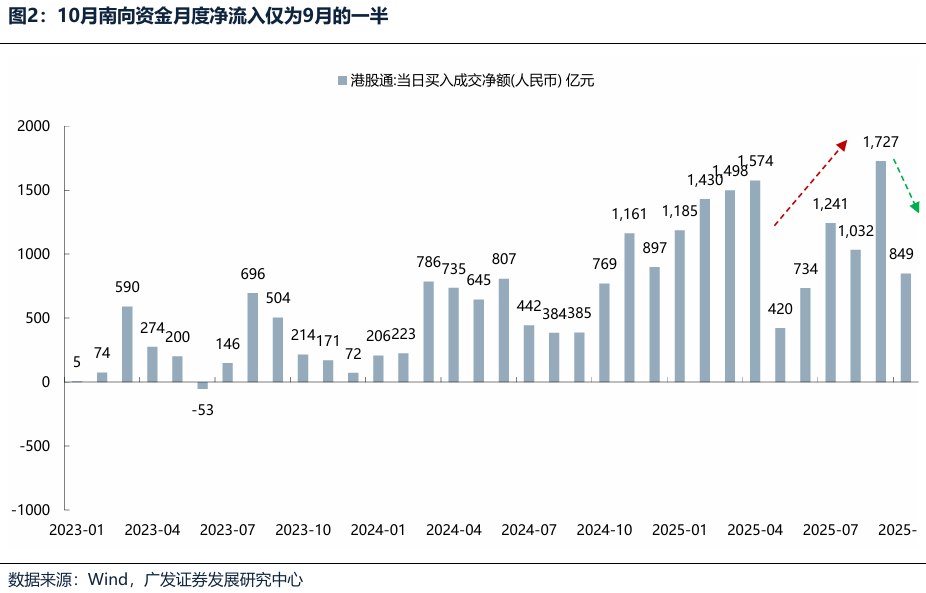
Core Viewpoint - The foundation of the Hong Kong stock market bull run remains intact, but the evolution is likely to exhibit characteristics of "oscillating upward with a gradually rising focus" rather than a rapid one-sided increase. The fundamental drivers in November are strong, emphasizing the value of high-prosperity sectors [1][4]. Group 1: Market Dynamics - The recent volatility in the Hang Seng Technology Index is attributed to the reversal of previous favorable factors, leading to temporary liquidity pressure in the Hong Kong stock market [1]. - The current net profit growth rate and price increase may appear divergent; however, the recent rise in the Hong Kong stock market is strongly supported by fundamentals, with new industries experiencing explosive growth while traditional sectors lag [4]. - Industries with performance support, such as new energy, AI, non-ferrous metals, steel, and semiconductors, have seen larger price increases, while sectors with declining performance growth, like real estate, infrastructure, consumption, and finance, have seen smaller price increases [4]. Group 2: Economic Indicators - Over 70% of companies in the Hong Kong stock market are domestic enterprises, with revenue and profits derived from the Chinese economy. The operational trends of Hong Kong companies can be inferred from A-share financial reports [4]. - The overall stability and improvement in Chinese enterprises are attributed to advanced manufacturing, particularly in technology and external demand, despite ongoing pressures in traditional economic sectors [4]. Group 3: Future Triggers for Market Upturn - Potential triggers for the next phase of the Hong Kong stock market's rise include improvements in liquidity expectations, such as a dovish shift in the Federal Reserve's stance, the end of the U.S. government shutdown, and the cessation of balance sheet reduction by the Fed [8]. - The probability of a rate cut by the Federal Reserve in December has decreased to 66.9%, influenced by factors like the government shutdown and the Fed's balance sheet policies, which have led to a significant widening of the interest rate spread between SOFR and IORB [8][10].

不是通胀要来了,真实体感还在变差!
Sou Hu Cai Jing· 2025-11-09 08:58
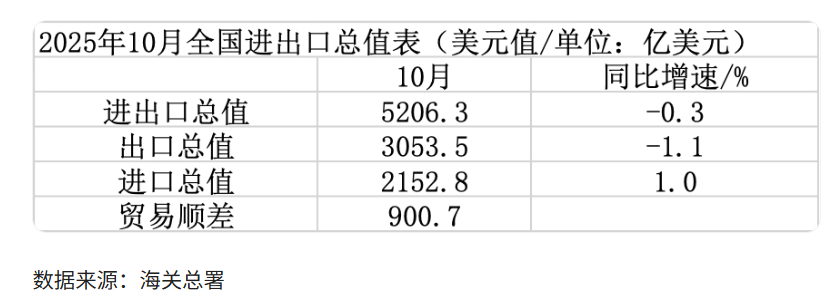
Core Viewpoint - The recent increase in the Consumer Price Index (CPI) and the narrowing decline in the Producer Price Index (PPI) suggest potential inflation, driven by rising global commodity prices and the effects of loose monetary and fiscal policies [1][2]. Economic Indicators - October CPI rose by 0.2% year-on-year, while core CPI, excluding food and energy, increased by 1.2% [1]. - The total import and export value in October was $520.63 billion, with exports at $305.35 billion (down 1.1% year-on-year) and imports at $215.28 billion (up 1.0% year-on-year) [6]. Investment Trends - National fixed asset investment decreased by 0.5% in the first three quarters, with private investment down by 3.1% [4]. - Investment in high-tech sectors has seen significant growth, exceeding 20%, while traditional sectors like real estate are struggling [6][7]. Consumer Behavior - Despite loose monetary policies, consumer borrowing is declining as individuals focus on deleveraging, impacting consumption [4]. - The introduction of new tax policies for e-commerce is expected to reduce disposable income for many, further constraining consumer spending [11][14]. Employment and Production - The potential for inflation may not translate into increased demand, as companies may reduce production in response to rising costs, leading to layoffs and decreased consumer spending [9][10]. - The shift towards high-tech investments may not provide immediate employment solutions for the broader workforce, which still relies heavily on traditional industries [7]. Trade Dynamics - The tightening of tax regulations is anticipated to negatively impact export activities, with businesses facing increased tax burdens and reduced profit margins [11][13][14]. - The overall trade environment is showing signs of contraction, with exports beginning to decline significantly from October onwards [5][13].
重大揭秘!A股顶住全球股市多轮杀跌
Sou Hu Cai Jing· 2025-11-08 22:45
Group 1 - The market is experiencing a struggle, with many accounts still below 3500 points despite the index being stable above 4000 points, indicating a mixed performance in individual stocks and rapid shifts in market focus [2][4] - There are positive signals emerging in the market, such as a shift from sideways movement to a slow upward trend, and a clearer mainline focus with cyclical sectors like infrastructure and materials taking the lead [4][5] - The behavior of main funds has changed, with a recent shift from net outflows to inflows, suggesting a more favorable environment for investors [5][7] Group 2 - The market ecology is upgrading, with increased incremental funds and improved investor confidence, as indicated by a two-margin balance returning to 1.5 trillion and new account openings exceeding 200,000 for three consecutive weeks [7] - Investors are advised to avoid chasing trends and instead focus on cyclical stocks at low points, such as infrastructure and building materials, which are showing potential for growth [7][9] - There is an emphasis on long-term perspectives with short-term strategies, particularly in sectors like robotics, where price sensitivity and value comparisons are crucial for investment decisions [9]

亮眼成绩系统回顾 第七部进博会蓝皮书发布
Yang Shi Xin Wen· 2025-11-07 06:12
Core Insights - The latest "CIIE Blue Book" highlights the integration of digital economy and real economy as a key theme, showcasing new opportunities and trends for domestic and international enterprises [1][3] - The report indicates that the cumulative intention transaction amount for the seventh CIIE exceeded $80 billion, reflecting a 2.0% increase compared to the previous year, demonstrating the strong conversion capability of the debut economy [3] Group 1 - The "CIIE Blue Book" systematically reviews the achievements of the first seven CIIEs, particularly focusing on the new opportunities presented by the seventh CIIE under the empowerment of the digital economy [1] - The report emphasizes the organic combination of technology trade and product trade, facilitating the rapid transformation of technological advancements into new driving forces for the development of the real economy [3] Group 2 - The first seven CIIEs have showcased nearly 3,000 representative new products, technologies, and services, promoting the deep integration of digital technologies such as artificial intelligence and industrial internet with China's manufacturing, agriculture, and service industries [3] - In 2024, China's wind power and photovoltaic products are expected to cover over 200 countries and regions, contributing more than 80% of global photovoltaic modules and 70% of wind power equipment [5]