AI算力

Search documents
燧原科技冲击IPO,聚焦AI芯片领域,三年多亏损超51亿
Ge Long Hui· 2026-02-07 08:14
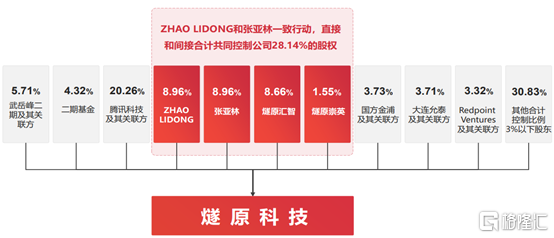
Company Overview - Suirian Technology, officially known as Shanghai Suirian Technology Co., Ltd., is an AI chip company that has recently submitted its IPO application to the Sci-Tech Innovation Board under the sponsorship of CITIC Securities [1] - The company has developed four generations of architecture and five cloud AI chips, creating a comprehensive product system that includes AI chips, AI accelerator cards, intelligent computing systems, and AI computing software platforms [1][7] Management and Ownership - The company was founded in 2018 by Zhaolidong and Zhang Yalin, who collectively control approximately 28.14% of the shares prior to the IPO [4] - Tencent's subsidiary holds about 20.26% of the shares, with other notable shareholders including Wuyuefeng Phase II and Dalian Yuntai [4] Financial Highlights - Suirian Technology aims to raise 6 billion yuan (approximately $60 million) through the IPO, which will be used for the development and industrialization of its fifth and sixth-generation AI chip series, as well as advanced AI hardware and software projects [5] - The company's revenue has shown significant growth, with figures of approximately 0.9 million yuan in 2022, 3 million yuan in 2023, 7.22 million yuan in 2024, and 5.4 million yuan in the first nine months of 2025 [15] - Despite revenue growth, the company has incurred substantial losses, totaling over 5.1 billion yuan across three years, with net losses of approximately 11.16 million yuan in 2022 and 16.65 million yuan in 2023 [15] Product and Technology - The core technology system of Suirian Technology includes three main categories: chip and hardware, software and programming platforms, and computing cluster solutions [7] - The company has developed a proprietary AI computing and programming software platform called "Yusuan TopsRider," which integrates its hardware with AI applications [7] - The revenue breakdown for the first nine months of 2025 shows that AI accelerator cards and modules accounted for 76.73% of total revenue, while intelligent computing systems and clusters contributed 23.03% [9] Market Context - The global AI accelerator card market is projected to grow from approximately $119 billion in 2024 to $525.77 billion by 2028, with China's market expected to reach 2.16 trillion yuan by 2024 [13] - Suirian Technology operates in a competitive landscape dominated by international players like NVIDIA, which holds over 70% of the Chinese AI accelerator card market [17] - The company faces challenges such as high customer concentration, with over 90% of revenue coming from its top five clients, including Tencent Technology [11][17]

东兴证券晨报-20260206
Dongxing Securities· 2026-02-06 09:09
Economic News - The Ministry of Finance, General Administration of Customs, and State Taxation Administration announced a "zero tariff" policy for imported goods purchased by residents of Hainan Free Trade Port, allowing an annual exemption limit of 10,000 yuan per person [1] - The Shanghai Futures Exchange will adjust the price fluctuation limits and trading margin ratios for gold and silver futures starting February 9, 2026, with gold futures' fluctuation limit increasing from 16% to 17% [2] - The Ministry of Industry and Information Technology and other departments released a plan for the high-quality development of traditional Chinese medicine, aiming to cultivate 60 high-standard raw material production bases by 2030 [3] - The Ministry of Commerce reported a 7.4% year-on-year growth in service trade in 2025, with knowledge-intensive service trade growing by 6.6% [4] - The National Internet Information Office and 11 other departments issued opinions to enhance digital services for foreign personnel entering China, aiming for a more interconnected digital service system by 2030 [5] Key Company Information - Meituan announced the acquisition of Dingdong Maicai's China business for approximately $717 million (about 5 billion yuan) [6] - Guoxuan High-Tech plans to raise 5 billion yuan through a private placement to expand its new energy battery production capacity [7] - Nanjing Mining Group intends to acquire a 10% stake in Eagle Valley Gold through a cash investment of $30 million [8] - Muyuan Foods reported a 2.73% year-on-year increase in the sale of live pigs in January 2026, with sales revenue declining by 11.93% [9] - Baidu announced a new stock repurchase plan of up to $5 billion, effective until December 31, 2028, to enhance long-term shareholder value [10] Industry Insights - The rubidium and cesium market is expected to enter a new structural expansion cycle driven by the penetration of perovskite solar cells and the development of space photovoltaics [11] - Perovskite solar cells are projected to have a market penetration rate of 30% by 2030, significantly increasing from 1.3% in 2025 [12] - The flexible structure of perovskite solar cells allows for applications in various fields, including building-integrated photovoltaics (BIPV), wearable devices, and vehicle power generation [13] - The global BIPV market is expected to grow from $16.66 billion to $47.02 billion between 2026 and 2031, with a CAGR of 23.06% [14] - The demand for rubidium is projected to grow at a CAGR of 115% from 2025 to 2030, driven by the increasing production of perovskite solar cells [15]
成都7家企业登上“中国500强”
Xin Lang Cai Jing· 2026-02-05 20:15
Group 1 - Chengdu has 7 companies listed in the "2025 Hurun China 500," with a threshold of 34 billion yuan, an increase of 7.5 billion yuan from the previous year, representing a growth of 28% [1] - The total value of the 500 companies increased by 21 trillion yuan, a growth of 38%, reaching 77 trillion yuan, with an average value growth of 41.5 billion yuan, totaling 1.53 trillion yuan [1] - Among the top three companies, TSMC's value increased by 3.5 trillion yuan to 10.5 trillion yuan, Tencent's value grew by 1.9 trillion yuan to 5.3 trillion yuan, and ByteDance's value rose by 1.8 trillion yuan to 3.4 trillion yuan [1] Group 2 - Chengdu's representative company, Xinyi Technology, saw its value increase by 218.5 billion yuan to 309 billion yuan, ranking 31st and rising 89 places [2] - In the innovative drug sector, Chengdu's representative company, Baili Tianheng, experienced a value increase of 79.5 billion yuan to 153 billion yuan, ranking 86th and rising 56 places [2] - The other five Chengdu companies listed are: Tongwei Co., Ltd. (ranked 120th, 116 billion yuan), Langjiu (ranked 205th, 72 billion yuan), Kelun Pharmaceutical (ranked 279th, 55 billion yuan), New Hope (ranked 354th, 45 billion yuan), and Guojin Securities (ranked 457th, 36 billion yuan) [2]






AI算力行业周报:Meta与康宁签订60亿美元光纤大单,英伟达即将举办CPO网络研讨会-20260204
Huaxin Securities· 2026-02-04 07:53
Investment Rating - The report maintains a "Buy" rating for companies such as沃尔核材 (Worley), 天孚通信 (Tianfu Communication), and 长飞光纤 (Changfei Fiber) while recommending "Accumulate" for 立讯精密 (Luxshare Precision) [7] Core Insights - Meta has signed a long-term supply agreement with Corning for fiber optic cables worth up to $6 billion to accelerate AI data center construction, highlighting the strong demand for fiber optics in the AI infrastructure [3] - Nvidia is hosting a webinar focused on co-packaged silicon photonics (CPO) switches, emphasizing their strategic value in scaling AI computing power [4] - The report suggests focusing on companies like 天孚通信, 立讯精密, 长飞光纤, and 沃尔核材 due to their potential in the AI computing sector [5] Weekly Market Analysis - From January 26 to January 30, the communication sector saw a significant increase of 5.83%, ranking second among all sectors, while the electronics sector decreased by 2.51% [12][19] - The AI computing-related sub-sectors mostly showed an upward trend, with the communication network equipment and devices sector leading with an increase of 8.56% [19] - The report indicates a divergence in capital flow, with the communication sector experiencing a net inflow of 11.53 billion yuan, while the electronics sector faced a net outflow of 55.83 billion yuan [23][25] Company Announcements - Lotus Holdings announced progress in its transition to computing power business, including various contracts for GPU servers and cloud services [49] - Tongfu Microelectronics reported a reduction in shareholding by its major shareholder, which will not affect the company's governance structure [51] - Tianfu Communication completed a share reduction plan by a board member, which was executed in accordance with regulations and did not impact company control [52]
【A股收评】沪指站上4100点,马斯克点燃光伏板块
Sou Hu Cai Jing· 2026-02-04 07:41
2月4日,三大指数涨跌不一,截至收盘,上证指数涨0.85%,深证成指涨0.21%,创业板指跌0.4%,科创50跌1.2%。两市超过3100只股票飘红,两市成交额 约2.48万亿元。 消息面上,上海市启动首批收购二手住房用于保障性租赁住房项目试点,聚焦浦东新区、静安区、徐汇区的小户型二手房源。机构认为,上海二手房收储试 点是积极举措,有助于缓解供给压力。此外,二手房市场率先回暖显示"小阳春"行情提前显现,核心城市韧性凸显,可能推动房企去库存和业绩改善。 机场航运概念走强,中国东航(600115.SH)、华夏航空(002928.SZ)涨停10%,南方航空(600029.SH)、中国国航(601111.SH)涨幅居前。 消息面上,近日全国春运电视电话会议预计,2026年春运跨区域人员流动量将达95亿人次,同比增长约5.3%,或将再创历史新高。 跌幅榜上,黄金、商业航天等概念走弱,臻镭科技(688270.SH)跌9.79%,四川黄金(001337.SZ)跌近9%,航天动力(600343.SH)跌4.81%。 AI应用、AI算力等人气板块亦走弱,壹网壹创(300792.SZ)跌8.57%,新易盛(300502.SZ)跌 ...


引进福田国资后,粤港湾控股(01396)配发募资1.2亿加码AI算力布局
智通财经网· 2026-02-04 06:54
Core Viewpoint - The company, Guangdong-Hong Kong Bay Holdings, is actively increasing its investment in AI computing power services, indicating a strong commitment to transforming its business model and positioning itself for future growth in the AI sector [1][2][3] Group 1: Financing and Share Issuance - On February 3, the company announced a subscription agreement to issue 20.31 million shares at a price of HKD 6 per share, representing an approximately 8.40% discount to the market price of HKD 6.55 at the time of the agreement [1] - The total amount raised from this issuance is expected to be approximately HKD 121.9 million [1] - Two subscribers were involved, with Subscriber A, a long-term investor, increasing its stake to 4.72% after subscribing for 15 million shares, while Subscriber B, an independent third party, will hold 0.43% after subscribing for 5 million shares [1] Group 2: Strategic Focus on AI Computing Power - The company plans to allocate approximately 90% of the net proceeds from the current share issuance to potential AI computing power service projects, reinforcing its commitment to the AI sector [1][2] - The company has previously indicated that around 70% of the net proceeds from a prior issuance were intended for AI computing power cloud service projects, highlighting a consistent strategy [2] Group 3: Business Growth and Market Position - Tian Dun Data, the core operational entity for the company's AI computing power business, has accumulated nearly 200 enterprise clients, including major cloud service providers and leading AI companies [3] - Revenue for Tian Dun Data is projected to grow from HKD 50 million in 2022 to HKD 230 million in 2024, reflecting a compound annual growth rate of 114.5% [3] - The company is expected to benefit from its ongoing high investment in AI computing power, positioning itself for significant growth and transformation in its business fundamentals [3]
301362,20cm涨停!实现3连板
Xin Lang Cai Jing· 2026-02-04 03:13
Group 1: Coal Sector Performance - The coal sector experienced a significant surge on February 4, with all constituent stocks showing gains, including Yanzhou Coal Mining Company, Shaanxi Black Cat, and China Coal Energy, all hitting the daily limit up [4][23]. - Notable stocks included Yanzhou Coal at 15.27 CNY, up 10.01%, and China Coal Energy at 14.08 CNY, also up 10% [9][27]. - The surge in coal stocks is attributed to a reduction in coal production quotas by the Indonesian government, which has led to a halt in spot coal exports [9][27]. Group 2: AI Computing Sector Decline - The AI computing sector saw a decline on February 4, with significant drops in various indices including memory, analog chips, and GPU sectors [11][29]. - Individual stocks such as Kaipu Cloud and New Yisheng experienced declines exceeding 10% [31][32]. - The overall trend indicates a bearish sentiment in the AI computing space, with multiple stocks facing substantial losses [30][31]. Group 3: Minexplosion Optoelectronics Performance - Minexplosion Optoelectronics achieved a 20% limit up on February 4, reaching 77.74 CNY per share, marking its third consecutive day of gains [16][34]. - The company is expanding its business into high-end PCB drilling technology through the acquisition of a majority stake in Xiamen Maida [19][37]. - The stock's performance reflects strong market interest and potential growth in specialized manufacturing sectors [34][37]. Group 4: Market Overview - On February 4, major A-share indices opened lower, with the Shanghai Composite Index down 0.08% and the ChiNext Index down 0.8%, before showing signs of recovery [2][21]. - The market exhibited a mixed performance, with sectors such as oil, transportation, and defense showing gains, while telecommunications and computing sectors struggled [3][21].

看涨率又升了!
第一财经· 2026-02-03 12:01
Market Overview - The three major A-share indices exhibited a V-shaped trend, collectively closing higher, with the Shanghai Composite Index stabilizing above 4000 points due to the joint efforts of heavyweight and thematic stocks. The Shenzhen Component Index led the gains, with growth stocks performing prominently, and the ChiNext Index rebounding under the leadership of the sci-tech sector [2]. Market Performance - A total of 4851 stocks rose, indicating a broad market rally, with a notable increase in the number of stocks hitting the daily limit up. Key sectors leading the gains included commercial aerospace/satellite internet, optical modules/CPO, controllable nuclear fusion, rare metals/rare earths, photovoltaic equipment, military industry, communication equipment, and AI computing hardware. Consumer sectors such as food and beverage and retail also saw upward movement ahead of the holiday, while precious metals, petrochemicals, and banking insurance experienced capital outflows and adjustments [3]. Capital Flow - The total trading volume of the two markets was 1.54 trillion yuan, down 1.57%, reflecting an overall contraction in trading volume and structural differentiation. Capital did not significantly withdraw but shifted from traditional heavyweight stocks in the Shanghai market to growth stocks in the Shenzhen market. Sectors like finance and real estate showed lackluster performance, while commercial aerospace, photovoltaic equipment, rare metals, and AI computing saw impressive trading volumes. Leading growth stocks had the highest trading volumes, indicating a concentration of funds in high-prosperity sectors [5]. Fund Inflows - Institutional investors actively positioned themselves, clearly adjusting their portfolios, with emerging sectors such as commercial aerospace, space photovoltaic, AI computing, and optical modules becoming the main focus for capital. There was a noticeable outflow from defensive sectors like precious metals, banking, and insurance. Retail investors transitioned from passive following to active participation, with some chasing strong stocks, particularly those hitting the daily limit up, especially in the commercial aerospace and AI computing sectors [6].

科技成长赛道迎来强势反弹!科创200ETF富国(589780)涨超4%,1000ETF(159629)、创业板200ETF富国(159571)等宽基ETF涨超3%
Mei Ri Jing Ji Xin Wen· 2026-02-03 07:39
科创200ETF富国(589780)跟踪科创板代表性小盘指数——科创200指数(000688),具备小市值、高 研发、强盈利的特征;1000ETF(159629)跟踪中证1000指数(000852),覆盖全市场优质中小成长 股,科技属性强、成长性高;创业板200ETF富国(159571)则跟踪创业板200指数(399606),布局创 业板中盘股主力,聚焦新兴产业、盈利可期。 今日盘中,A股科技成长主线全面爆发,半导体、存储芯片及AI算力板块集体走强,带动科创200ETF 富国(589780)涨超4.1%,1000ETF(159629)、创业板200ETF富国(159571)、科创100ETF富国 (589950)均涨超3%,截至发稿的最新涨幅分别为3.51%、3.46%、3.07%,中小盘科技股表现强势。 (文章来源:每日经济新闻) 从板块趋势来看,科技成长赛道近期呈现"政策+产业"双轮驱动特征。政策端,央行持续释放流动性支 持硬科技领域,1月以来累计净投放超万亿元,资金精准流向AI算力、半导体等战略赛道;产业端,全 球AI基础设施投资加速扩容,带动半导体产业链景气度持续回升。 研究机构指出,中长期逻辑上,在 ...

电网投资、光伏、AI算力三轮驱动 哪些需求被重新定义?
Qi Huo Ri Bao Wang· 2026-02-02 01:25
1 电网投资迈入新阶段 在能源转型与数字革命交汇的时代,铜、铝的长期需求格局正被重新定义:中国"十五五"规划以特高压与配网智能化为核心的电网结构性投资、全球光伏产 业从高速增长迈向高质量发展平台期的深刻转型,以及由AI引爆的全球数据中心建设与升级浪潮。这三者逻辑各异、节奏不同,却共同构成了研判铜、铝 未来需求的宏观框架。厘清这三大驱动力的内在机制与互动关系,至关重要。 我国电网建设已从规模扩张阶段全面转入以构建新型电力系统为核心的高质量发展阶段。自2025年以来,电网投资总量攀升至历史新高的同时,其结构正经 历从"重电源"到"重消纳与输送"的深刻转型,这为铜、铝消费提供了结构化且持续的核心驱动力。 从投资结构看,重心明确聚焦于三大方向:首先是特高压骨干网架建设,这是保障"沙戈荒"等大型清洁能源基地电力外送的关键。2025年已有陇东—山东、 宁夏—湖南等多个特高压工程投产,蒙西—京津冀等新工程开工。预计"十五五"期间特高压总投资规模有望达到8000亿元以上,年平均投资额1600亿元以 上。其次是配电网智能化升级。为适应海量分布式新能源和充电桩接入,配电网向有源双向交互系统转型。预计"十五五"期间配电网投资CAG ...