
证券业

Search documents
固定收益|点评报告:如何看待债市的不可能三角
Changjiang Securities· 2026-01-08 05:11
1. Report Industry Investment Rating No information provided in the content. 2. Core View of the Report The current bond market decline is due to the constraint of the "impossible triangle," and before the supply pressure of ultra - long bonds is fully digested by the market, the bond market is unlikely to have a trend - based opportunity. It is expected that the long - end yield will continue to show a weak and volatile trend. The long - end yield of the 30 - year Treasury bond is expected to fluctuate in the range of 2.2% - 2.4%, and the bond market may have a phased repair opportunity in the second half of the first quarter of 2026 [2][8][41]. 3. Summary According to the Directory 3.1 Current Bond Market's "Impossible Triangle" Since the second half of 2025, the bond market has been falling continuously. After the People's Bank of China's unexpected "hawkish" Treasury bond trading operation in November 2025, the market is worried about the carrying pressure of ultra - long - term interest - rate bonds, and the supply of ultra - long bonds has become the core contradiction. From early November 2025 to January 7, 2026, the yield of the 30 - year Treasury bond rose by about 20 basis points, and the price of the ultra - long - term Treasury bond futures (TL) fell by nearly 6 yuan. The current market decline is due to the "impossible triangle" constraint, that is, the following three cannot hold simultaneously: fiscal policy continues to lengthen the debt issuance duration, the central bank does not buy long - duration Treasury bonds, and does not change the interest - rate risk sensitivity index restrictions for banks [4][15]. 3.2 Outlook for the People's Bank of China's Treasury Bond Trading Operations in 2026 It is expected that the People's Bank of China will continue to mainly buy short - duration Treasury bonds, maintaining a "high - frequency and small - volume" monthly operation mode, and guiding the market to reduce irrational expectations and excessive attention to this tool. Treasury bond trading will return to a normal and regular liquidity management tool, and its impact on the bond market will be neutral. Overseas experience shows that large - scale purchases of long - term bonds usually occur when the policy rate drops to a very low level or even zero. Since the domestic policy rate still has a 140 - basis - point space, it is too early for unconventional policies. The current Treasury bond trading operations of the Chinese central bank are more similar to Reserve Management Purchases (RMP) rather than Quantitative Easing (QE) [5][19][20]. 3.3 Outlook for Fiscal Debt Issuance Duration in 2026 Theoretically, when interest rates continue to adjust, local governments will shorten the debt issuance duration. However, this process may face two problems. First, it is a slow process for local governments to actively shorten the duration. The proportion of new local bonds in the stock of local bonds is not high, and the increase in interest expenditure caused by long - duration debt issuance is not significant in the short term, so the possibility of local governments significantly shortening the duration in the short term is low. Second, the term arrangement of local government bond issuance has high flexibility, and the Ministry of Finance does not restrict the scale and quantity of long - term local bond issuance. Therefore, the overall duration of local government stock debt is difficult to significantly shorten in a short time [23]. 3.4 Views on Adjusting Banks' Interest - Rate Sensitivity Indicators Although the adjustment of interest - rate sensitivity indicators can increase the bond - allocation capacity of large banks to some extent, the maturity mismatch trend between the asset and liability ends of banks has been deepening in recent years, and the adjustment of indicators is difficult to significantly expand the ability of large banks to undertake long - term bonds. According to the revision of the regulatory standards for interest - rate risk in the banking book by the Basel Committee in July 2024, the interest - rate parallel upward shock parameter should be lowered from 250BP to 225BP. Based on the data of the six major banks at the end of 2024, this parameter adjustment can release about 1.23% of the indicator space on average, corresponding to about 172.2 billion yuan of Tier - 1 capital. In the scenario of still considering a 250 - basis - point extreme shock and calculating based on the modified duration of 8.35 years of the stock local government bonds, it is expected to add about 824.568 billion yuan of bond - allocation capacity for large banks. However, the maturity mismatch between assets and liabilities of banks is still deepening, with the liability side showing a trend of current - account and non - bank deposits, and the asset side showing a long - term trend, so the ability of banks to undertake long - term bonds is still limited [35]. 3.5 Outlook for the Bond Market The bond market still faces the constraint of the "impossible triangle." Before the supply narrative of ultra - long bonds is fully priced, there is no obvious opportunity to bottom - fish in the bond market. The view of a weak and volatile long - end yield is maintained, and the yield of the 30 - year Treasury bond may be further adjusted to 2.4%. After the supply pressure of ultra - long bonds is fully digested by the market, the bond market may have a phased repair opportunity, which may occur in the second half of the first quarter of 2026. At that time, the dynamic balance among fiscal debt issuance rhythm, central bank operation attitude, and bank allocation behavior will be the key to determining the market direction [8][41].
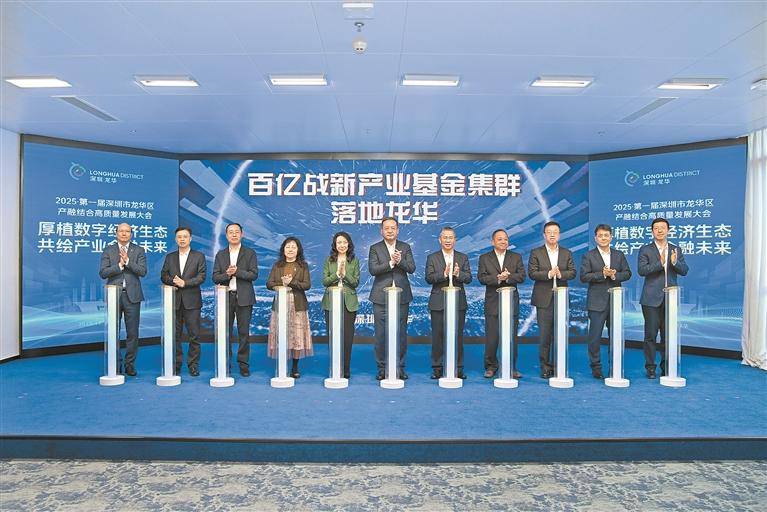
6000亿授信+百亿基金集群,全面打造产融结合示范区 龙华:金融活水奔涌中轴 产融共振向新而行
Sou Hu Cai Jing· 2026-01-08 02:38
Core Insights - The article highlights the significant progress of Longhua District in Shenzhen towards becoming a "demonstration zone for industry-finance integration," marked by a strategic credit agreement of 600 billion yuan and the launch of a cluster of industrial funds [1][5]. Industry Foundation - Longhua District's industrial sector contributes over 40% to its GDP, with advanced manufacturing being a key driver of the regional economy [2]. - As of November 2025, there are 39 listed companies in Longhua with a total market capitalization exceeding 1.9 trillion yuan, with over 80% focused on advanced manufacturing [2]. - The district has established a modern industrial system supported by digital economy initiatives, with 1,286 digital economy enterprises and a scale exceeding 563.89 billion yuan by the end of 2024 [2]. Financial Empowerment - The establishment of a cluster of industrial funds, including two AIC funds each with a scale of 2 billion yuan, focuses on key sectors such as digital economy and new energy [5]. - A strategic credit agreement of 600 billion yuan has been signed with 12 major financial institutions, targeting key areas for infrastructure and urban renewal projects [5][10]. - Innovative financial products have been developed to address the financing challenges faced by small and micro enterprises, including the "Park Loan" and "Supply Chain Loan" [6]. Financial Network Development - By the end of 2024, Longhua has attracted 356 financial institutions, including 151 banks and 87 insurance companies, creating a diverse financial service network [8]. - The presence of financial institutions has facilitated the development of a comprehensive service system tailored to various industries and enterprise stages [8][9]. Future Outlook - Longhua aims to enhance its financial development framework with a focus on collaborative growth among government, industry, and finance, targeting the achievement of ambitious economic goals [11][12]. - The district plans to implement a "1+1+N" financial development system to foster partnerships with multiple financial institutions and promote various financial sectors [12].


2025年12月外储规模小幅上升 央行连续14个月增持黄金
Zhong Guo Zheng Quan Bao· 2026-01-07 23:31
Core Insights - As of December 2025, China's foreign exchange reserves increased by $11.5 billion to $335.79 billion, marking a rise of 0.34% from the previous month [1][2] - The increase in reserves is attributed to the depreciation of the US dollar index and fluctuations in global financial asset prices, alongside positive valuation effects from exchange rate adjustments [1][2] - China's gold reserves reached 74.15 million ounces, with an increase of 30,000 ounces, marking the 14th consecutive month of gold accumulation by the central bank [1][4] Foreign Exchange Reserves - The foreign exchange reserves rose by $155.5 billion compared to the end of the previous year, remaining above $3.3 trillion for five consecutive months, the highest level since December 2015 [2] - The US dollar index fell by 9.4% in 2025, contributing to the increase in reserves, alongside rising global stock indices and a 40 basis point decline in US Treasury yields [2] - The current level of foreign exchange reserves is considered moderately sufficient, providing essential support for maintaining the RMB exchange rate at a reasonable equilibrium [3] Gold Reserves - The central bank's gold reserves accounted for 9.51% of the total foreign exchange reserves, an increase of 3.54 percentage points from the previous year, setting a new historical high [4] - The acceleration of RMB internationalization is expected to benefit from a certain scale of gold reserves, which can provide liquidity for RMB-denominated gold products [4] - The central bank's strategy to increase gold reserves is seen as a long-term direction to optimize international reserve structure and respond to current international environmental changes [4]
每日债市速递 | 央行公开市场单日净回笼2963亿
Sou Hu Cai Jing· 2026-01-07 13:24
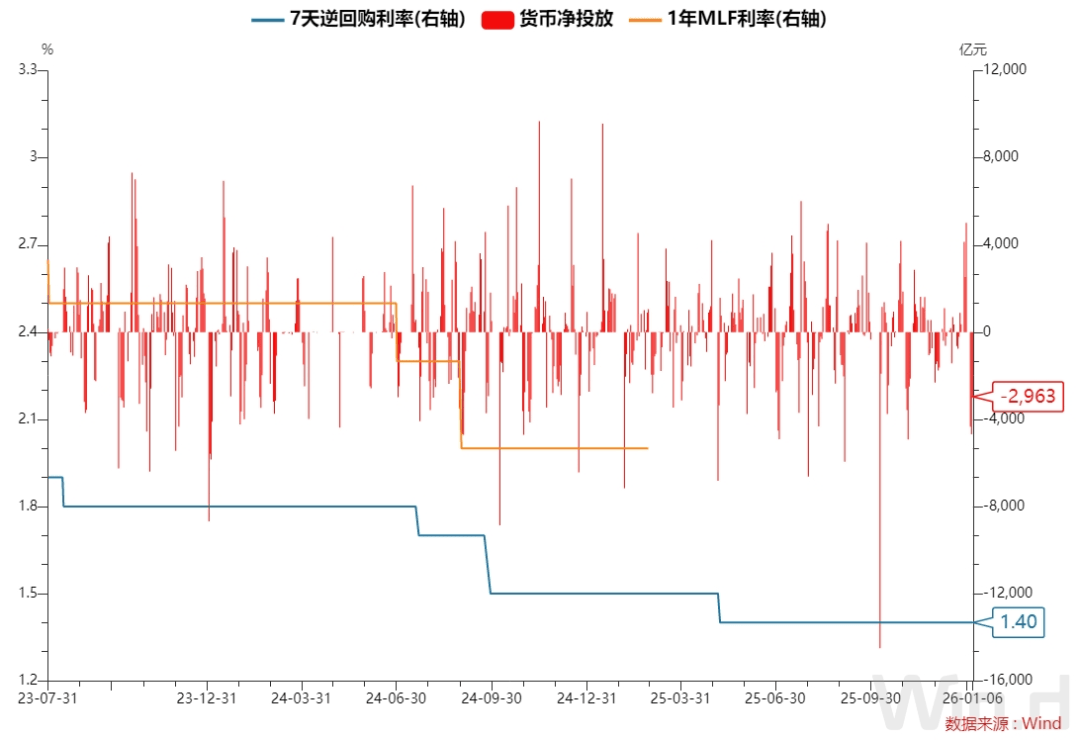
Monetary Policy - The central bank announced a reverse repurchase operation of 162 billion yuan for 7 days at a fixed rate of 1.40%, with a total bid and winning amount of 162 billion yuan [1] - On the same day, 312.5 billion yuan of reverse repos matured, resulting in a net withdrawal of 296.3 billion yuan [1] Market Liquidity - The interbank market liquidity remains loose, with the weighted average rate of DR001 slightly rising to around 1.26% [2] - Overnight quotes in the anonymous click (X-repo) system are abundant at 1.25%, while non-bank institutions' pledged certificates and credit bonds are quoted at 1.40%-1.45% [2] Bond Market - The latest transaction rate for one-year interbank certificates of deposit is around 1.63%, up more than 1 basis point from the previous day [8] - Major interbank bond yields have generally risen, with the 30-year futures contract down 0.31%, the 10-year down 0.13%, the 5-year down 0.11%, and the 2-year down 0.05% [10] International Context - The latest overnight financing rate in the U.S. is reported at 3.75% [4] Corporate Actions - China Gas Holdings Limited has initiated the issuance of two panda bonds, marking the first issuance for 2026 [12] - The panda bond market has rapidly expanded, with net financing in 2025 reaching a new high, pushing the total market size beyond 420 billion yuan [12]
【财闻联播】11000亿元!央行,明日操作!市场监管总局:CCC认证模式将调整
券商中国· 2026-01-07 12:19
★ 宏观动态 ★ 央行:明日开展11000亿元买断式逆回购操作 央行公告,为保持银行体系流动性充裕,2026年1月8日,中国人民银行将以固定数量、利率招标、多重价位中 标方式开展11000亿元买断式逆回购操作,期限为3个月(90天)。 国家外汇局:截至2025年12月末我国外汇储备规模为33579亿美元 国家外汇管理局统计数据显示,截至2025年12月末,我国外汇储备规模为33579亿美元,较11月末上升115亿美 元,升幅为0.34%。 2025年12月,受主要经济体货币政策、宏观经济数据等因素影响,美元指数下跌,全球金 融资产价格涨跌互现。汇率折算和资产价格变化等因素综合作用,当月外汇储备规模上升。我国不断巩固拓展 经济稳中向好势头,经济长期向好的支撑条件和基本趋势没有改变,有利于外汇储备规模保持基本稳定。 工信部:到2028年推动不少于5万家企业实施新型工业网络改造升级 工信部印发《工业互联网和人工智能融合赋能行动方案》。目标到2028年,工业互联网与人工智能融合赋能水 平显著提升。满足人工智能工业应用高通量、低时延、高可靠、低抖动通信需求的新型工业网络规模持续扩 大,在原材料、装备制造、消费品、电子信 ...

金融期货早评-20260107
Nan Hua Qi Huo· 2026-01-07 01:36
Report Industry Investment Rating No relevant content provided. Core Viewpoints of the Report - The 2026 central bank work meeting confirmed a moderately loose monetary policy, emphasizing the "integrated effect" of incremental and stock policies, which provides support for the economy and enhances the attractiveness of RMB assets. However, geopolitical conflicts and Fed policy uncertainty pose potential risks [2]. - In the short term, the stock index is expected to be strong, but there may be a phased correction due to local over - heating. The bond market may need to find a bottom, and if the stock market corrects, it may help the bond market stabilize [5][7][8]. - The shipping index (European line) is expected to fluctuate at a high level in the short term, with risks of insufficient actual cargo volume support. The far - month contract is suppressed by the resumption of navigation and off - season expectations [13]. - For new energy products, lithium carbonate has long - term value support and opportunities to build long positions on dips. Industrial silicon has limited downside space and is suitable for building long positions in far - month contracts. The spot price of polysilicon has risen, and attention should be paid to the sustainability of prices and terminal winning bids [17][19]. - In the non - ferrous metals market, copper prices are in an accelerating upward phase, aluminum is expected to be volatile and strong, zinc may reach a short - term top, nickel - stainless steel may be strong in the short term but with callback risks, tin has limited upside space, and lead is expected to fluctuate [24][25][28]. - In the oilseeds and fats market, oilseeds show a near - strong and far - weak pattern. Fats are expected to fluctuate widely in the short term [31][34]. - The asphalt crack spread may be strong in the short term due to supply disruptions [36][37]. - For precious metals, platinum and palladium may face short - term correction risks due to index parameter adjustment, while gold and silver are in an easy - to - rise and hard - to - fall pattern in the short term and are bullish in the medium - to - long term [40][43]. - In the chemical industry, pulp and offset paper prices have risen, and it is advisable to wait and see. LPG is supported in the short term by geopolitics but is under pressure in the long term. PTA - PX and MEG - bottle chips are affected by geopolitical disturbances and cost fluctuations. Methanol is likely to start an upward trend. PP and PE have short - term improvements in fundamentals but face Spring Festival inventory accumulation pressure. Pure benzene - styrene is running strongly, and rubber is expected to fluctuate widely [46][49][52][54][57][60][63][65][70]. - For black commodities, steel prices are expected to fluctuate, iron ore is running strongly, coking coal and coke may rebound, and ferroalloys may be under pressure to suppress the upward rhythm [80][82][84][86]. - In the agricultural and soft commodities market, cotton is affected by supply - demand expectations and policy adjustments, sugar is in a strong - side - oscillating pattern, rubber is expected to fluctuate widely, apples are running strongly, dates are in a low - level oscillation, and logs follow an interval trading strategy [90][92][96][99][101][103]. Summary by Relevant Catalogs Financial Futures - **Macro**: The central bank will implement a moderately loose monetary policy in 2026, using tools such as reserve requirement ratio and interest rate cuts. The Fed's policy and the Venezuelan situation may affect the market. The internal "policy integration" and external geopolitical disturbances create structural opportunities in the market [1][2]. - **RMB Exchange Rate**: Before the release of the US December ADP employment data, the US dollar index is oscillating. The RMB is relatively strong, and the central bank shows an intention to stabilize the exchange rate. Export enterprises are advised to lock in forward exchange settlement at 7.02, and import enterprises can adopt a rolling foreign exchange purchase strategy at 6.96 [3][4]. - **Stock Index**: The stock index is strong, but there may be a phased correction due to local over - heating. The short - term is expected to be strong [5][7]. - **Treasury Bond**: The bond market is under pressure. If the stock market corrects, it may help the bond market stabilize. It is recommended to hold medium - term long positions and try to buy on dips in the short term [7][8]. - **Container Shipping (European Line)**: The shipping index futures rose on January 2. The market is in a game between pre - Spring Festival and price increase implementation. The short - term is expected to fluctuate at a high level, and attention should be paid to the actual cargo volume support and resumption of navigation [9][11][13]. Commodities New Energy - **Lithium Carbonate**: The futures limit up, and the spot trading weakens. In the long - term, there is value support, and it is advisable to build long positions on dips [15][17]. - **Industrial Silicon & Polysilicon**: The prices of downstream products have risen. Industrial silicon is in a supply - demand weak situation but has a low - risk long - position value. The spot price of polysilicon has risen, and attention should be paid to price sustainability and terminal winning bids [18][19]. Non - Ferrous Metals - **Copper**: The copper price is in an accelerating upward phase. The futures market has net capital inflows. It is recommended to hold long positions in the 90000 - 100000 range and be cautious about new long positions above 100000 [22][24]. - **Aluminum Industry Chain**: Aluminum is expected to be volatile and strong, alumina is expected to oscillate, and cast aluminum alloy is expected to be volatile and strong. The core factors include funds and supply - demand expectations [25][26]. - **Zinc**: It may reach a short - term top. The short - term is expected to oscillate at a high level, and attention should be paid to the pressure at 24600 [27]. - **Nickel - Stainless Steel**: It rose strongly. The short - term may be strong due to Indonesian supply policy expectations, but there are callback risks [27][28]. - **Tin**: It is not recommended to short in the short term, and the upside space is limited. It is expected to be volatile and strong before the sentiment fades [29][30]. - **Lead**: It rose with the sector. It is expected to oscillate, and the price may fall after the sentiment fades [30]. Oilseeds and Fats - **Oilseeds**: It shows a near - strong and far - weak pattern. The supply pressure in Brazil next year suppresses the main contract, but there is a short - term supply gap. It is recommended to hold a 35 positive spread [31][33]. - **Fats**: It is expected to fluctuate widely in the short term. The fundamentals affect the price ratio, and attention should be paid to production areas and biodiesel information [34]. Energy and Oil & Gas - **Asphalt**: The supply is disturbed, and the short - term crack spread may be strong. The conflict between the US and Venezuela may affect the supply of heavy - crude oil and thus the price of asphalt [36][37]. Precious Metals - **Platinum & Palladium**: They rose strongly. In the short term, beware of the selling pressure caused by index parameter adjustment. In the medium - to - long term, the price center is expected to rise [40][41]. - **Gold & Silver**: They are approaching the previous high. In the short term, it is easy to rise and hard to fall. In the medium - to - long term, they are bullish, and corrections are opportunities to add long positions [42][43]. Chemicals - **Pulp - Offset Paper**: The spot price of pulp has risen, and the futures price is affected by spot support and overall commodity sentiment. The price of offset paper futures is rising, and it is advisable to wait and see [45][46]. - **LPG**: It is supported by geopolitics in the short term but is under long - term pressure. Attention should be paid to overseas events and domestic PDH maintenance [47][49]. - **PTA - PX**: It is affected by geopolitical disturbances and cost fluctuations. PTA is expected to have a tight supply - demand pattern in the first half of 2026, and PX is expected to be in short supply in the second quarter [50][52]. - **MEG - Bottle Chips**: It rebounded due to geopolitical speculation. The demand side is under pressure, and the inventory is high. The rebound is likely to be phased [53][54]. - **Methanol**: It is likely to start an upward trend. The change in inventory accumulation expectations is the main factor, and attention should be paid to the restart of Fude and the reduction of Iranian imports [55][57]. - **PP**: The short - term fundamentals have improved, and the Spring Festival inventory accumulation pressure exists. It is expected to oscillate [58][60]. - **PE**: It is rising from the bottom. The supply pressure is relieved, but the demand support is insufficient. It is in a supply - demand reduction pattern [61][63]. - **Pure Benzene - Styrene**: It is running strongly, affected by geopolitical pricing and capital allocation. The fundamentals are improving but are still in the off - season. Do not chase the high [64][65]. - **Rubber**: It is expected to fluctuate widely. The short - term may be strong, but there are callback risks. Pay attention to the pressure levels of different contracts and the RU - BR spread [66][70][72]. - **Soda Ash & Glass & Caustic Soda**: Soda ash has a surplus expectation, glass has high inventory and cold - repair expectations, and caustic soda is in a wide - range oscillation [73][75][76]. - **Propylene**: It is supported by cost in the short term, but the upside space is limited due to the loose supply - demand situation [77][78]. Black Commodities - **Rebar & Hot - Rolled Coil**: The prices are expected to oscillate. The fundamentals of steel products have little contradiction, but there is a possibility of inventory accumulation in the future [80]. - **Iron Ore**: It is running strongly. The high supply and rigid demand balance each other, and the price is affected by macro expectations [81][82]. - **Coking Coal & Coke**: They rebounded strongly. The inventory structure of coking coal has improved, and the supply pressure in January may ease. The coking profit of coke is under short - term pressure, and attention should be paid to the downstream steel mill's复产 elasticity [83][84]. - **Ferroalloys**: They rose due to electricity price news. The production has increased, and the inventory is accumulating. The upward rhythm may be suppressed, but the downside space is limited [85][86][87]. Agricultural and Soft Commodities - **Cotton**: The short - term is affected by supply - demand expectations and policy adjustment expectations. Pay attention to the cotton planting industry chain conference in Xinjiang and beware of price corrections. It is recommended to build long positions on dips [89][90][91]. - **Sugar**: It is in a strong - side - oscillating pattern. Pay attention to the trend of raw sugar [92][94]. - **Rubber**: It is expected to fluctuate widely. The short - term may be strong, but there are callback risks. Pay attention to the pressure levels of different contracts and the RU - BR spread [94][96][98]. - **Apple**: It is running strongly. The shortage of delivery products is expected to push up the prices of near - and far - month contracts [99][100]. - **Date**: It is in a low - level oscillation. The short - term price may be stable, and the long - term supply is abundant, and the price is under pressure [101][102]. - **Log**: It is oscillating. The 03 contract can adopt an interval trading strategy of buying low and selling high in the 760 - 790 range [103][104].
灵活高效降准降息,央行明确适度宽松货币政策路线图
2 1 Shi Ji Jing Ji Bao Dao· 2026-01-06 14:44
Core Viewpoint - The 2026 People's Bank of China (PBOC) work meeting emphasizes the importance of promoting high-quality economic development and reasonable price recovery as key considerations for monetary policy, indicating a shift towards a more growth-oriented monetary approach [1][2]. Group 1: Monetary Policy Implementation - The PBOC plans to maintain a moderately loose monetary policy, utilizing various tools such as reserve requirement ratio (RRR) cuts and interest rate reductions to ensure ample liquidity and align social financing growth with economic growth and price level expectations [1][3]. - The new monetary policy director, Xie Guangqi, highlighted the need for effective communication and coordination between monetary policy and fiscal and industrial policies to enhance demand management and structural adjustments [3][4]. Group 2: Loan Cost Transparency - The meeting outlined plans to expand the coverage of explicit enterprise loan comprehensive financing costs, which aims to clarify the total cost of loans for businesses, including interest and various fees [5][6]. - The initiative to promote explicit personal loan comprehensive financing costs is a new focus, particularly targeting internet loans, to address transparency issues in the complex fee structures associated with these loans [6]. Group 3: Exchange Rate Stability - The PBOC aims to maintain the stability of the RMB exchange rate at a reasonable and balanced level while preventing excessive fluctuations, aligning with previous statements from the monetary policy committee [7][8]. - The recent strengthening of the RMB against the USD is noted, with the exchange rate reaching 7.0230, indicating a potential for dual fluctuations influenced by both favorable and unfavorable factors [7][8].
降准降息可期!央行2026年政策定调
Xin Lang Cai Jing· 2026-01-06 13:40
Core Viewpoint - The People's Bank of China (PBOC) has outlined seven key priorities for 2026, focusing on monetary policy implementation, financial services for the real economy, risk prevention, and financial reform and opening up [1][8]. Monetary Policy - The PBOC will continue to implement a moderately accommodative monetary policy in 2026, emphasizing high-quality economic development and reasonable price recovery as core considerations [1][9]. - The monetary policy will have two main directions: total policy and structural policy, with a focus on maintaining ample liquidity and relatively loose social financing conditions [1][9]. - Experts suggest that the PBOC's approach will balance overall adjustment and structural optimization, with the RMB expected to maintain a mild appreciation trend [1][2]. Structural Policies - Structural policies will aim to provide targeted support to key areas, enhancing the financial service framework and improving evaluation systems [2][10]. - The PBOC plans to optimize the use of various structural monetary policy tools, which will likely increase in volume while operational interest rates may be adjusted downward [2][10]. Exchange Rate Management - The RMB has shown a strong recovery, with the offshore RMB/USD exchange rate breaking 6.97 for the first time in two and a half years [3][11]. - The PBOC aims to maintain the RMB exchange rate at a reasonable and balanced level while preventing excessive fluctuations [3][11]. - Analysts predict that the RMB may appreciate moderately in 2026, supported by a favorable external environment and a weak USD trend [3][12]. Non-Bank Financial Institutions - The PBOC is prioritizing the resolution of financial risks in key areas, including the establishment of mechanisms to provide liquidity support to non-bank financial institutions under specific scenarios [6][13]. - The proposed liquidity support mechanisms are seen as a proactive response to potential systemic risks and aim to enhance the financial stability framework [6][13]. - Recommendations for the design of these mechanisms include creating a tiered liquidity support system and developing a diverse collateral framework [7][14].
央行明确今年七大重点工作
Sou Hu Cai Jing· 2026-01-06 13:07
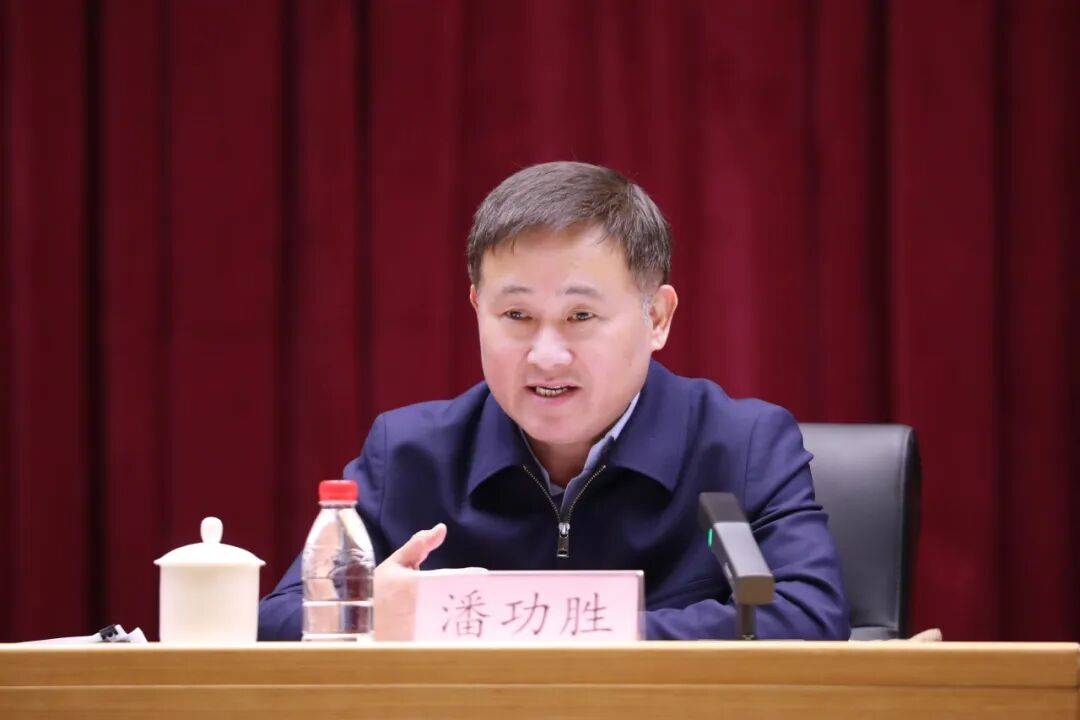
2026年中国人民银行工作会议召开 要点速览: ——继续实施好适度宽松的货币政策。灵活高效运用降准降息等多种货币政策工具,保持流动性充裕,保持社会融资条件相对宽松,引导金融总量合理增 长、信贷投放均衡。 ——完善结构性货币政策工具体系;高质量建设和发展债券市场"科技板"。 ——建立在特定情景下向非银机构提供流动性的机制性安排,发挥好两项支持资本市场的货币政策工具作用。 ——加强对银行间债券市场、货币市场、外汇市场、票据市场、黄金市场及有关衍生品的监督管理。 ——进一步提升金融管理和服务能力。稳妥实施好一次性个人信用修复政策。 ——强化虚拟货币监管,持续打击相关违法犯罪活动;深化科技管理与创新应用;稳步发展数字人民币。 2026年中国人民银行工作会议1月5日-6日召开。会议以习近平新时代中国特色社会主义思想为指导,深入学习贯彻党的二十届四中全会和中央经济工作会 议精神,总结2025年工作,分析当前形势,研究中国人民银行"十五五"改革发展规划,部署2026年工作。中国人民银行党委书记、行长潘功胜出席会议并 讲话,朱鹤新、曲吉山、宣昌能、陆磊、陶玲、邹澜出席会议。 六是金融高水平开放稳步拓展。完善准入前国民待遇加负 ...
央行重大部署!将抓好七大重点工作
Zhong Guo Ji Jin Bao· 2026-01-06 12:35
Core Insights - The People's Bank of China (PBOC) is focusing on implementing a series of monetary policy measures to support economic stability and financial market operations in 2026, guided by Xi Jinping's thoughts and the outcomes of the 20th National Congress [1][6] Group 1: Monetary Policy Measures - The PBOC has adopted a moderately loose monetary policy, utilizing various tools such as lowering reserve requirements and interest rates to ensure ample liquidity and reduce financing costs [2][7] - A comprehensive monetary policy framework is being developed to stabilize market interest rates around policy rates and enhance communication with the market [2][7] Group 2: Financial Risk Management - Financial risks in key areas are being effectively mitigated, with a focus on maintaining market stability and addressing debt risks associated with financing platforms [3][8] - The establishment of the PBOC's Macro-Prudential and Financial Stability Committee aims to strengthen the financial stability framework [3][8] Group 3: International Cooperation - The PBOC is enhancing international financial cooperation, participating in global governance initiatives, and engaging in macroeconomic policy coordination through platforms like the G20 [2][9] Group 4: Financial Services and Development - The PBOC is improving financial services to support high-quality economic development, with increased funding for technology innovation and small enterprises [2][7] - Over 700 entities have issued technology innovation bonds totaling more than 1.5 trillion yuan, reflecting a commitment to enhancing financial support in key sectors [2] Group 5: Regulatory Enhancements - The PBOC is advancing legislative reforms and regulatory frameworks to strengthen financial management and oversight, including measures against virtual currency trading and enhancing anti-money laundering regulations [4][10] - The bank is also focusing on improving the digital currency management system and ensuring effective cash supply [4][10]