食品

Search documents
守护“舌尖上的安全”,侦办食品领域案件486起
Xin Lang Cai Jing· 2026-01-11 18:13
在开展涉粮食安全犯罪打击方面,四川公安组织开展"守护天府粮仓2025"专项打击,共侦办相关刑事案 件18起。 聚焦川酒"金招牌",四川公安会同市场监管等部门开展集中攻坚和跨省收网,与重庆、贵州等省(市) 公安机关建立跨区域协作机制,共侦办相关刑事案件92起,捣毁生产、仓储、销售窝点198处,打掉犯 罪团伙103个,涉案金额5.8亿元。 针对校园食品安全问题,四川公安加强与教育、市场监管等部门协同,联合开展研判,共侦办相关刑事 案件26起。 1月9日,在"向人民报告"新闻发布会上,公安厅环食药侦总队总队长张荣洪对四川公安在打击危害食品 安全犯罪、强化知识产权刑事保护方面取得的成果成效进行了介绍。 2025年,四川公安会同市场监管、农业农村等部门,以"零容忍"态度严打食品领域犯罪,共侦办相关刑 事案件486起,1起案件被公安部评为全国十大精品案件。 针对制售假劣肉制品犯罪,四川公安组建专业战队,强化快检抽查,开展研判攻坚,开展两波次集群打 击,共侦办相关刑事案件249起。 2025年,四川公安共立案侦办假冒商标、侵权盗版、侵犯商业秘密等各类侵犯知识产权和制售伪劣商品 犯罪案件934起,其中9起被公安部列为典型案例 ...
2025年12月CPI和PPI点评:工业消费品带动物价温和修复
Changjiang Securities· 2026-01-11 10:44
Group 1: Report Title and General Information - The report is titled "Industrial Consumer Goods Drive Moderate Price Recovery - December 2025 CPI and PPI Review" [1] - The report was published on January 11, 2026 [10] Group 2: Report Highlights and Core Views - In December 2025, domestic prices improved unexpectedly supported by imported factors and pre - holiday consumption. Core CPI year - on - year growth remained at 1.2%, and the year - on - year decline of PPI narrowed [2] - In 2026, food CPI may still be dragged down by pig prices in the first half of the year, but the service sector is resilient, and the industrial consumer goods sector is supported by the "anti - involution" policy and the international metal price increase cycle. With the low - base effect, prices may continue a moderate recovery. It is neutrally expected that the year - on - year growth rate of PPI will turn positive in the fourth quarter [2] - This year, the bond market may operate in an environment of moderate price recovery. The long - term bond is expected to fluctuate weakly, with the 10 - year Treasury yield expected to fluctuate between 1.8% - 1.9%. The bond market's periodic recovery opportunity may come in the second half of the first quarter [2] Group 3: December 2025 Price Data - In December 2025, CPI rose 0.2% month - on - month and 0.8% year - on - year, with the year - on - year increase expanding by 0.1 percentage points compared with the previous month. Core CPI rose 1.2% year - on - year [7] - In December 2025, PPI rose 0.2% month - on - month and fell 1.9% year - on - year, with the year - on - year decline narrowing by 0.3 percentage points compared with the previous month [7] Group 4: Factors Affecting CPI Core CPI - Industrial consumer goods are the main support for core CPI, while service prices are stable. In December 2025, the year - on - year growth rate of core CPI remained at 1.2% for three consecutive months [11] - The year - on - year growth rate of industrial consumer goods (excluding energy) prices increased to 2.5% for six consecutive months, driving the year - on - year increase of CPI by about 0.63 percentage points. Gold jewelry prices rose 5.6% month - on - month due to rising international gold prices; copper and memory price increases drove household appliances and communication tools to rise 1.4% and 3% month - on - month respectively; the price decline of fuel cars and new - energy cars narrowed to 2.4% and 2.2% year - on - year respectively [11] - Service prices improved steadily, with the year - on - year growth rate slightly falling 0.1 percentage points to 0.6%. Among them, the month - on - month prices of household services and medical services were still stronger than the seasonal average [11] Overall CPI - The increase in food prices drove CPI to continue rising, while energy prices still dragged down CPI. In December 2025, CPI was stronger than the seasonal average month - on - month, and the year - on - year increase expanded by 0.1 percentage points to 0.8%, reaching the highest level since March 2023 [11] - Food prices rose 1.1% year - on - year, with the increase expanding by 0.9 percentage points compared with the previous month, driving the year - on - year increase of CPI by about 0.21 percentage points. Pre - holiday consumption demand pushed up the prices of fresh fruits and shrimps and crabs by 2.6% and 2.5% respectively. The drag of pork and egg prices on the year - on - year CPI decreased, but pig prices may remain low in the first half of this year [11] - Energy prices fell 3.8% year - on - year, with the decline expanding by 0.4 percentage points compared with the previous month. Affected by international oil price changes, domestic gasoline prices fell 1.2% month - on - month, and the year - on - year decline expanded to 8.4% [11] Group 5: Factors Affecting PPI - The continuous implementation of the "anti - involution" policy and the increase in international non - ferrous metal prices drove the month - on - month increase of PPI for three consecutive months, and the year - on - year decline narrowed. In December 2025, the month - on - month growth rate of PPI rebounded for three consecutive months, with the increase expanding by 0.1 percentage points to 0.2%. The year - on - year decline of PPI also narrowed by 0.3 percentage points to - 1.9% [11] - The year - on - year declines of both living materials and production materials narrowed. Production materials rose 0.3% month - on - month, while living materials remained flat month - on - month [11] - With the implementation of the "anti - involution" measures, the supply - demand structure of some industries improved, and the year - on - year price declines of the coal mining and washing, lithium - ion battery manufacturing, and photovoltaic industries narrowed [11] - The increase in international non - ferrous metal prices drove the prices of non - ferrous metal mining and dressing and non - ferrous metal smelting and rolling processing industries to rise 3.7% and 2.8% month - on - month respectively, with the increases expanding by 1.1 and 0.7 percentage points compared with the previous month [11] Group 6: Upstream and Downstream Price Trends - The prices of upstream mining industries continued to rise, while the prices of mid - and downstream industries were stable. The price game may have been transmitted to the downstream. The substantial implementation of the "anti - involution" policy drove the continuous price recovery of industries such as coal and photovoltaic, but some key industries for capacity management did not improve significantly [11] - Among upstream industries, the prices of coal mining and washing and non - ferrous metal mining and dressing increased for many months, while the year - on - year price growth rates of industries such as petroleum, coal and other fuel processing (- 7.9%) and non - metallic mineral products (- 6.8%) were still declining [11] - The month - on - month price growth rates of industries such as general equipment manufacturing, automobile manufacturing, and computer, communication and other electronic equipment manufacturing were basically flat or fluctuated slightly, and the upstream prices of most industries had not been smoothly transmitted to the mid - and downstream raw material processing and manufacturing industries [11] Group 7: Future Outlook - In 2026, food CPI may still be dragged down by pig prices in the first half of the year, but the service sector is resilient, and the industrial consumer goods sector is supported by the "anti - involution" policy and the international metal price increase cycle. With the low - base effect, prices may continue a moderate recovery. It is neutrally expected that the year - on - year growth rate of PPI will turn positive in the fourth quarter [11] - This year, the bond market may operate in an environment of moderate price recovery. The long - term bond is expected to fluctuate weakly, with the 10 - year and 30 - year Treasury yields expected to adjust to around 1.9% and 2.4% respectively. The bond market's periodic recovery opportunity may come in the second half of the first quarter [11]
未来10年,最挣钱的凭什么一定是这群人?
创业家· 2026-01-11 10:11
Core Insights - Amazon's report on global e-commerce trends highlights emerging consumer preferences and market opportunities driven by technology and emotional needs [1][2][39]. Group 1: AI Quality Space - Over 65% of consumers in Europe and the US are willing to spend more on smart home products, seeking emotional connections and comfort [4][6]. - The market for personalized customization, emotional interaction, and privacy is significant, focusing on how technology can meet human emotional needs [7]. Group 2: Sleep Economy - 37% of American adults reported a decline in sleep quality in 2023, indicating a growing market for sleep-related products and services [10][11]. - Consumers are willing to invest in sleep solutions, prioritizing health and quality of life [12]. Group 3: Happy Office - There is a rising expectation for workspaces that enhance comfort and productivity, with ergonomic furniture and technology becoming increasingly important [13][14]. Group 4: Subtle Technology - Consumers are seeking seamless technology integration into their lives, valuing high-quality, understated designs that enhance living standards without being intrusive [15]. Group 5: Pet Economy - The global pet industry is projected to grow by 45% over the next six years, with 55% of pet owners in Europe and Japan willing to spend more on pet health and wellness [16][17]. - Pets are increasingly viewed as family members, creating demand for health-focused pet products and services that foster emotional connections [19]. Group 6: Outdoor Cooking - The popularity of outdoor cooking and camping is rising, with consumers looking for professional-grade cooking equipment and social dining experiences [20][22]. Group 7: Mobile Treasure Chest - Vehicles are evolving into multifunctional spaces, serving as homes, entertainment areas, and offices, with a focus on comfort and efficiency [23][27]. Group 8: Generation Z Consumers - Generation Z, as digital natives, prioritize values-driven consumption, personalization, and unique experiences while being price-conscious [28][29]. Group 9: Fitness Pioneers - The health and fitness sector is increasingly focused on scientific, efficient, and personalized approaches, with a rise in smart wearable devices and tailored fitness solutions [31][34]. Group 10: E-sports Enthusiasts - Emerging markets are witnessing rapid growth in e-sports, with consumers seeking high-performance equipment and immersive experiences [35][37]. Conclusion - The report identifies three key drivers of these trends: accelerated technology, emotional shifts, and lifestyle changes, reflecting the complex needs of modern consumers [39][40].


物价:回顾2025,展望2026:2025年12月通胀数据点评
Huachuang Securities· 2026-01-11 03:43
Group 1: Inflation Overview - In December 2025, CPI increased year-on-year from 0.7% to 0.8%, while core CPI remained stable at 1.2%[2] - PPI narrowed its year-on-year decline from -2.2% to -1.9%[2] - The GDP deflator index for Q4 2025 is expected to be around -0.4%, with earlier quarters at -0.8%, -1.2%, and -1%[2] Group 2: CPI Analysis - The cumulative CPI increase for 2025 is 0.8%, a significant recovery compared to the average -0.1% in 2023-24[5] - Food prices rose by 1.1% in 2025, driven by increases in fruits, vegetables, and beef[5] - Gold jewelry prices surged by 68.5%, contributing to the overall CPI improvement[5] Group 3: PPI Trends - In the first half of 2025, PPI experienced a monthly average decline of -0.3%, compared to -0.2% in 2023 and 2024[6] - The second half of 2025 saw PPI stabilize with a monthly average of 0%, indicating a recovery in various industry chains[6] - Factors influencing PPI include global recession fears due to U.S. tariff policies and ongoing adjustments in the domestic real estate market[6] Group 4: 2026 Outlook - CPI is projected to rise by approximately 0.8% in 2026, with a technical adjustment of 0.1 percentage points due to base effects[10] - PPI is expected to decline by about -1%, with an upward adjustment of 0.4 percentage points due to price increases in the non-ferrous sector[10] - Potential upward risks for CPI include increased consumer subsidies and improved service supply in the economy[10]
春季行情主升时行业如何轮动?
Huajin Securities· 2026-01-10 11:19
Group 1: Market Trends - The spring market's main rising phase may see a rebound in growth sectors, particularly those with low valuation sentiment and significant future financing inflows[1] - Historical data shows that during the main rising phases, the Shanghai Composite Index has increased by approximately 4% to 22%, averaging around 19 trading days[10] - Key sectors that performed well during previous main rising phases include media, electronics, and non-ferrous metals, which experienced substantial financing inflows[1] Group 2: Sector Performance - In the current spring market, technology growth sectors such as media, computing, and pharmaceuticals are expected to rebound due to low valuations and sentiment[2] - Financing inflows since December 17, 2025, have been significant in sectors like electronics, non-ferrous metals, and defense, driven by ongoing industry trends[18] - The main rising phase typically sees theme indices outperforming primary industry indices, with notable gains in sectors like integrated circuits and digital marketing[42] Group 3: Economic Indicators - Short-term economic recovery remains weak, with CPI growth recorded at 0.8% and PPI at -1.9%, indicating a gradual improvement in industrial profitability[23] - The short-term liquidity environment is expected to loosen further, with potential interest rate cuts from the Federal Reserve and domestic central bank actions[31] - Risk appetite is likely to increase due to positive policy implementations and limited overseas risks, such as the anticipated Fed rate cut[38]
利好来了!上海重磅发布,事关商业航天、机器人……
Zheng Quan Shi Bao· 2026-01-10 08:38
Core Viewpoint - The Shanghai Municipal Government has released a three-year action plan (2026-2028) to support the transformation and upgrading of advanced manufacturing, focusing on structural optimization, innovation, and resource support. Group 1: Action Plan Overview - The action plan aims to add 100 manufacturing enterprises with an annual output value exceeding 1 billion yuan by 2028, totaling over 600 such enterprises, and to drive the addition of 500 large-scale industrial enterprises in the supply chain [2] - The plan emphasizes the development of new-generation electronic information, smart connected vehicles, high-end equipment, advanced materials, and green low-carbon industries [2][3] Group 2: Key Industry Focus - The action plan encourages investment in emerging fields such as low-altitude economy, commercial aerospace, embodied intelligence, biomanufacturing, and smart terminals, aiming to overcome bottlenecks in the industrial scale development of innovative products like eVTOLs, commercial rockets, and humanoid robots [1][2] - It supports integrated circuit companies to achieve breakthroughs across the entire industry chain, focusing on equipment, advanced processes, and materials [2] Group 3: Innovation and Research Support - The plan proposes financial incentives for companies increasing their basic research investments, with subsidies ranging from 200,000 to 1 million yuan based on the level of investment [4][5] - It encourages the establishment of research centers and collaboration with universities and research institutions to enhance technological innovation [5] Group 4: Digital and Intelligent Manufacturing - The action plan includes initiatives to promote AI in manufacturing, aiming for large enterprises to achieve full coverage of digital applications by 2027 and to increase robot density to 600 units per million people by 2028 [5][6] - It outlines a new round of smart factory initiatives, targeting a 70% digitalization level for smart manufacturing equipment by 2028 [5] Group 5: Green Transformation and Financial Support - The plan emphasizes green transformation, encouraging the development of low-carbon products and providing financial rewards for energy-saving upgrades [6] - It aims to create over 100 national-level green factories by 2028, with initial recognition receiving a one-time reward of 200,000 yuan [6] - Financial institutions are encouraged to offer lower-interest loans and customized insurance services for key technological equipment and new materials [6]

【县区信息】濂溪区局:护航春节消费安全守护民生底线
Sou Hu Cai Jing· 2026-01-10 07:13
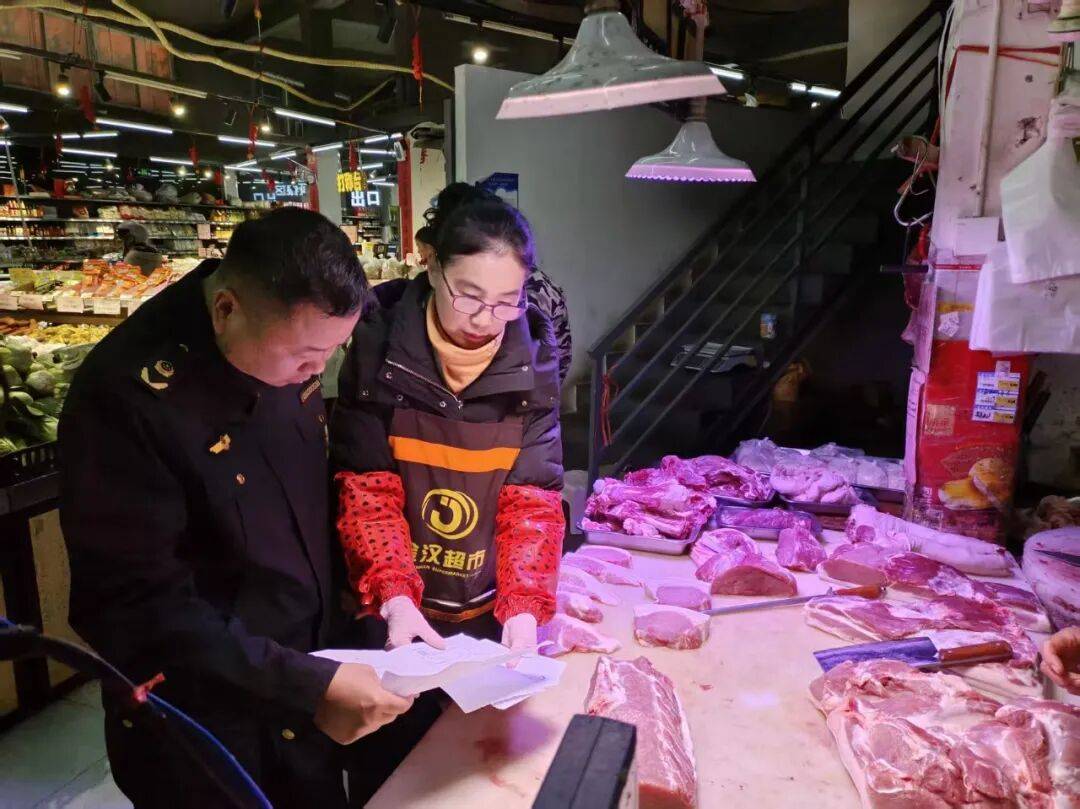
Core Viewpoint - The article emphasizes the proactive measures taken by the Lianxi District Market Supervision Administration to ensure consumer rights and safety during the upcoming Spring Festival, focusing on fair trading and quality assurance in essential goods [1]. Group 1: Market Regulation Measures - The Lianxi District Market Supervision Administration is implementing strict regulations on supermarket pricing scales, particularly in fresh produce and grain oil sections, to prevent cheating and ensure fair transactions [3]. - Enforcement personnel are verifying the validity of pricing scale certificates and conducting accuracy checks using standard weights to combat the "short weight" phenomenon [3]. Group 2: Food Safety Assurance - Given the high consumption of pork during the festival, the administration is closely monitoring the entire pork sales chain, ensuring that vendors possess valid certifications and that the pork's origin and quality are traceable [5]. - Detailed checks are being conducted on purchase records to prevent substandard pork from entering the market, thereby safeguarding food safety for consumers [5]. Group 3: Heating Product Safety - With the peak demand for heating products in winter, the administration is conducting mandatory CCC certification checks on electric blankets and heaters, ensuring compliance with safety standards [7]. - Enforcement personnel are verifying that products display clear CCC certification marks and that all necessary documentation is complete and accurate [7]. Group 4: Ongoing Regulatory Commitment - The Lianxi District Market Supervision Administration plans to maintain regular inspections in key areas to enhance regulatory effectiveness and respond to consumer needs, aiming to improve the overall consumer experience during the festival [7].
去年12月CPI同比上涨0.8%
Xin Lang Cai Jing· 2026-01-10 01:57
Group 1 - The core viewpoint of the articles highlights the increase in the Consumer Price Index (CPI) due to rising consumer demand and effective consumption promotion policies, with a month-on-month increase of 0.2% and a year-on-year increase of 0.8% in December 2025 [1][2] - The core CPI, excluding food and energy prices, rose by 1.2% year-on-year, indicating underlying inflationary pressures in the economy [1] - The month-on-month CPI increase was primarily driven by a 0.6% rise in industrial consumer goods prices, excluding energy, which contributed approximately 0.16 percentage points to the CPI increase [1] Group 2 - Year-on-year, the CPI's increase of 0.8% represents a 0.1 percentage point rise from the previous month, marking the highest level since March 2023, largely driven by an increase in food prices [2] - Food prices rose by 1.1% year-on-year, with significant increases in fresh vegetables and fruits, which saw price hikes of 18.2% and 4.4% respectively, contributing an additional 0.16 percentage points to the CPI [2] - Prices for beef, lamb, and aquatic products increased by 6.9%, 4.4%, and 1.6% respectively, while pork prices decreased by 14.6%, although the rate of decline has slightly narrowed [2]
国常会:今年继续补贴消费贷;美股三大指数集体收涨|21早新闻
2 1 Shi Ji Jing Ji Bao Dao· 2026-01-09 23:19
Government Policies - The State Council's executive meeting on January 9 announced a package of policies to promote domestic demand through financial and fiscal collaboration, including optimizing service industry loans and personal consumption loan interest subsidies [1] - The meeting also discussed the establishment of a special guarantee plan for private investment and a risk-sharing mechanism for bonds issued by private enterprises [1] Macroeconomic Indicators - The National Bureau of Statistics reported that in December 2025, the CPI increased by 0.8% year-on-year and 0.2% month-on-month, with food prices rising by 0.3% [2] - The PPI decreased by 1.9% year-on-year but increased by 0.2% month-on-month [2] - The Ministry of Finance and the State Taxation Administration announced adjustments to export tax rebate policies for photovoltaic products, effective from April 1, 2025 [2] Investment News - The China Securities Regulatory Commission and the Ministry of Finance introduced a reward system for whistleblowers reporting serious violations in the securities and futures markets, with rewards up to 1 million yuan [3] - A-shares saw significant gains, with the Shanghai Composite Index surpassing 4100 points, marking a new high in over 10 years, and a trading volume exceeding 3.1 trillion yuan [3] - The Hang Seng Index rose by 0.32%, with notable gains in sectors such as media and non-ferrous metals [3] Company Developments - Tianpu Co. experienced unusual stock price fluctuations, leading to an investigation by the CSRC for potential omissions in disclosures, with the stock set to resume trading on January 12 [4] - Luzhou Laojiao announced a mid-year profit distribution plan, proposing a dividend of 13.58 yuan per 10 shares, totaling approximately 2 billion yuan [5] - Jiangyun Co. plans to restructure its assets related to passenger car sales and after-sales services, which is expected to constitute a major asset reorganization [6] - Tongfu Microelectronics intends to raise no more than 4.4 billion yuan through a private placement to enhance storage chip testing capacity [6] - Ju Shi Chemical received a notice of administrative penalty for inflating revenue and profits through false trading, with total fines expected to reach 6.7 million yuan [6]
扩内需促消费政策显效2025年物价呈温和回升态势
Shang Hai Zheng Quan Bao· 2026-01-09 18:38
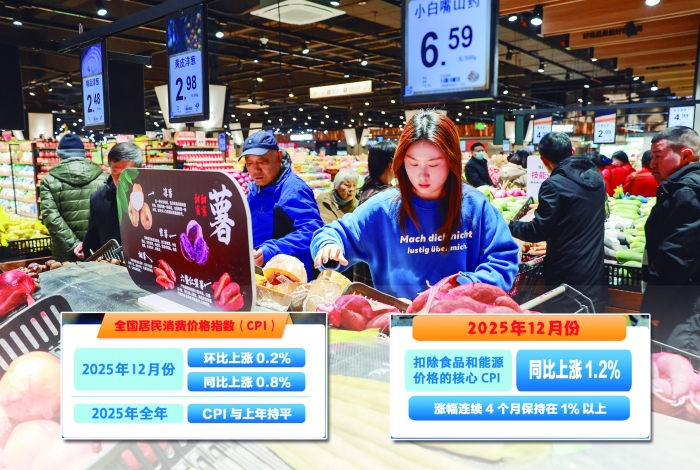
Core Viewpoint - The expansion of domestic demand and consumption policies is showing effectiveness, leading to a moderate recovery in prices and improved supply-demand relationships in key industries [2][6][7]. Group 1: CPI and PPI Trends - In December 2025, the Consumer Price Index (CPI) increased by 0.8% year-on-year, marking the highest level since March 2023, with food prices significantly contributing to this rise [2][3]. - The Producer Price Index (PPI) decreased by 1.9% year-on-year in December, but the decline was narrower than in November, indicating positive changes in certain industries due to improved market competition [4][6]. - The core CPI, excluding food and energy, rose by 1.2% year-on-year, maintaining a growth rate above 1% for four consecutive months, reflecting stable demand recovery [3][6]. Group 2: Industry-Specific Insights - Prices in the coal mining, lithium-ion battery manufacturing, and photovoltaic equipment sectors showed reduced declines, indicating a positive trend in market competition and production capacity management [4][5]. - The price of lithium-ion batteries and cement manufacturing increased by 1.0% and 0.5% month-on-month, respectively, demonstrating a recovery in these key industries [4][5]. - The prices of external storage devices and bio-liquid fuels rose by 15.3% and 9.0% year-on-year, respectively, driven by the growth of new productive forces [5]. Group 3: Future Outlook - Experts predict that with continued policy support for domestic demand and consumption, the CPI is expected to show a steady upward trend in 2026, with food prices returning to a reasonable fluctuation range [6][7]. - The overall economic operation is expected to improve, with demand gradually recovering and supply-side structural optimization continuing [7].