
基础设施建设

Search documents
拆解信贷“成绩单” 资金流向了哪里?
Zheng Quan Ri Bao· 2025-07-15 17:25
Group 1 - The People's Bank of China reported that in the first half of the year, new RMB loans increased by 12.92 trillion yuan, with a total loan balance of 268.56 trillion yuan as of the end of June, reflecting a year-on-year growth of 7.1% [1] - Corporate loans accounted for 89.5% of the new loans, with an increase of 11.57 trillion yuan, indicating a 6.6 percentage point rise compared to the same period last year [1] - Long-term loans for enterprises reached 7.17 trillion yuan, representing over 60% of corporate loans, supporting long-term investments and operations [1] Group 2 - Household loans increased by 1.17 trillion yuan, with 923.9 billion yuan directed towards operational loans, showing strong support for individual businesses and small enterprises [1] - The financial support for individual businesses and small enterprises is crucial for stimulating market vitality, promoting employment, and driving innovation [2] - New loans were primarily directed towards key sectors such as manufacturing and infrastructure, with manufacturing long-term loans increasing by 8.7% and infrastructure loans by 7.4% [2] Group 3 - As of the end of May, the balance of loans under the "Five Major Articles" reached 103.3 trillion yuan, with a year-on-year growth of 14%, indicating robust financial support for the real economy [3] - Technology loans amounted to 43.3 trillion yuan, growing by 12% year-on-year, while green, inclusive, pension, and digital loans saw growth rates of 27.4%, 11.2%, 38%, and 9.5% respectively [3] - The central bank's implementation of moderately loose monetary policy and new support measures effectively incentivized financial institutions to meet the financing needs of the real economy [3]
2025年6月宏观数据解读:6月经济:名义GDP增速边际放缓,关注股债双牛兑现
ZHESHANG SECURITIES· 2025-07-15 14:03
Economic Overview - In June, the actual GDP growth for Q2 was 5.2%, aligning with market expectations, while nominal GDP growth slowed by 0.7 percentage points to approximately 3.9%[1] - The industrial added value for June increased by 6.8% year-on-year, exceeding market expectations, with a month-on-month growth of 0.5%[3] - The capacity utilization rate for large-scale industries in Q2 was 74.0%, down 0.1 percentage points from the previous quarter and 0.9 percentage points from the same period last year, indicating potential overcapacity[3][23] Investment Trends - Fixed asset investment (excluding rural households) in the first half of 2025 was 248,654 billion yuan, growing by 2.8%, which was below market expectations of 3.8%[5] - Infrastructure investment grew by 4.6%, while manufacturing investment increased by 7.5%, and real estate development investment fell by 11.2%[7][39] - The marginal slowdown in investment demand is attributed to concerns over medium- to long-term uncertainties following tariff adjustments[5][39] Consumer Behavior - The total retail sales of consumer goods in June rose by 4.8% year-on-year, down from 6.4% in May, reflecting a 1.6 percentage point decline[4][31] - The "618" shopping festival significantly supported retail sales, with e-commerce sales reaching 8,556 billion yuan, a 15.2% increase year-on-year[33] - Automotive sales showed robust growth, with June retail sales increasing by 4.6% year-on-year, despite price promotions impacting overall retail revenue[36] Market Outlook - The second half of 2025 is expected to see a dual bull market in stocks and bonds, driven by a potential easing of Sino-US trade relations and risk-averse funds supporting market sentiment[2][21] - The 10-year government bond yield is projected to decline to around 1.5% amid low expectations for large-scale domestic demand stimulus[2][21]
上半年人民币贷款增加12.92万亿元 呈现总量增长、结构优化特征
Zheng Quan Ri Bao· 2025-07-14 16:17
Core Insights - The People's Bank of China reported that by the end of June 2025, the total social financing stock was 430.22 trillion yuan, a year-on-year increase of 8.9% [1] - The broad money (M2) balance reached 330.29 trillion yuan, growing by 8.3% year-on-year [1] - The balance of RMB loans stood at 268.56 trillion yuan, reflecting a year-on-year growth of 7.1% [1] Financial Support for the Real Economy - The financial system's credit support for the real economy remained at a high level, with RMB loans increasing by 12.92 trillion yuan in the first half of the year [2] - Corporate loans accounted for 89.5% of the total new loans, with an increase of 11.57 trillion yuan, marking a 6.6 percentage point rise compared to the previous year [2] - The structure of loans continued to optimize, with significant increases in loans to manufacturing and infrastructure sectors [2] Loan Growth in Key Areas - Loans in the "Five Major Areas" showed total growth and expanded coverage, with a balance of 103.3 trillion yuan, up 14% year-on-year [3] - Technology loans reached a balance of 43.3 trillion yuan, growing by 12% year-on-year, with technology-related enterprises receiving 22.5 trillion yuan [3] - Green, inclusive, pension, and digital loans also saw significant year-on-year growth rates of 27.4%, 11.2%, 38%, and 9.5% respectively [3] Social Financing and Money Supply - The cumulative increase in social financing for the first half of 2025 was 22.83 trillion yuan, which is 4.74 trillion yuan more than the same period last year [4] - Government bond net financing reached 7.66 trillion yuan, an increase of 4.32 trillion yuan year-on-year, with local government bonds contributing significantly [4] - The M2 balance grew by 8.3%, which is 2.1 percentage points higher than the previous year [4][5] Factors Influencing Financial Growth - Increased government bond issuance and financial institutions' bond investments contributed to the rise in money supply [5] - The stable growth of credit also supported money supply expansion, alongside a recovery in corporate deposits [5] - Overall, the financial data for the first half of the year indicates a reasonable growth in social financing and money supply, aligning with economic growth and price level expectations [5]
沙中商务理事会主席穆罕默德·艾尔·阿吉兰:投资中国就是投资未来
Guo Ji Jin Rong Bao· 2025-07-14 04:11
Group 1 - The strategic partnership between Saudi Arabia and China is deepening, focusing on enhancing bilateral economic relations amidst complex global geopolitical and trade dynamics [2][5] - The chairman of the Saudi-Chinese Business Council emphasizes the importance of cooperation in mining, manufacturing, and advanced technology sectors, aligning with Saudi Arabia's industrialization goals [3][8] - The need for multilateral cooperation is highlighted as a response to rising protectionism and globalization challenges, with both countries committed to a win-win development approach [5][8] Group 2 - Saudi Arabia's Vision 2030 aims to diversify its economy away from oil dependency, promoting sustainable development and encouraging private sector investment in renewable energy [9] - The potential for collaboration in clean energy is significant, leveraging Saudi Arabia's renewable resources and China's advanced technology in the sector [9] - Financial technology development is seen as a key area for enhancing bilateral trade and investment, with both countries recognizing the importance of digital solutions and payment systems [9]


中国能建建筑集团:聚焦主责主业 提升核心竞争力
Ren Min Ri Bao· 2025-07-09 22:06
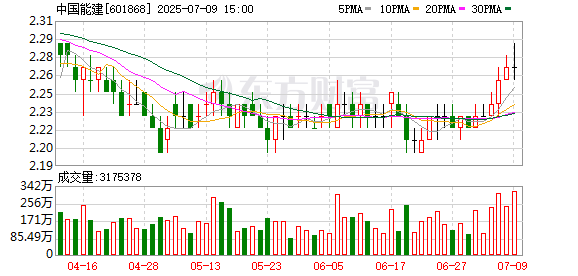
Core Viewpoint - China Energy Construction Group focuses on its main responsibilities in energy power and infrastructure, enhancing core functions and competitiveness while contributing to China's modernization journey [2] Traditional Energy Business Transformation - The company leverages its advantages in research, talent, and management to upgrade traditional energy operations, significantly contributing to energy conservation and environmental protection [3] - Total installed capacity has surpassed 165 million kilowatts, with 36 units of 1 million kilowatts and nearly 70 units of 660,000 kilowatts constructed, along with over 420 operational units of various capacities [3] New Energy Business Development - The company seizes opportunities in the new energy sector, with installed capacity in wind, solar, thermal, hydrogen, and energy storage exceeding 50 million kilowatts [4] - The proportion of new energy business increased from 12.85% in 2020 to 38.47% in the first half of 2025, with orders growing by 7.4 times [4] - Major projects include the 2 million kilowatt solar project in Ordos and the 4.1 million kilowatt new energy base in Xinjiang, contributing to the "dual carbon" goals [4] Infrastructure Business Advancement - The company is expanding its infrastructure business, focusing on the Yangtze River Delta and Guangdong-Hong Kong-Macao Greater Bay Area, with over 80 million square meters of construction area [6] - Notable projects include the first concentrated delivery of residential projects at Guangzhou Baiyun Airport and the award-winning smart expressway project for the Hangzhou Asian Games [6] International Business Expansion - The company actively develops its international business along the "Belt and Road" initiative, extending operations to 24 countries and regions [7] - Projects such as the Brunei Hengyi project and the Turkish Hunutlu power plant have received national awards, showcasing the company's quality and standards [7] - Future plans include focusing on core responsibilities and achieving high-quality goals for the 14th Five-Year Plan while establishing itself as a competitive global engineering service provider [7]

国家发展改革委:我国连续15年稳坐全球制造业“头把交椅”
Zheng Quan Ri Bao· 2025-07-09 16:12
Economic Growth and Development - China's economy is expected to reach approximately 140 trillion yuan this year, with an incremental growth of over 35 trillion yuan [1] - The manufacturing sector has consistently added over 30 trillion yuan annually since the start of the 14th Five-Year Plan, maintaining China's position as the world's leading manufacturing nation for 15 consecutive years [1] Domestic Demand and Consumption - Domestic demand remains the main driver of China's economic growth, contributing an average of 86.4% to the annual growth rate of 5.5% over the past four years [2] - The National Development and Reform Commission (NDRC) plans to strengthen the domestic circulation and implement strategies to expand domestic demand [2] Infrastructure Development - The 14th Five-Year Plan has seen significant advancements in infrastructure, which is crucial for economic and social development [3] - The NDRC aims to enhance the modern infrastructure system while adhering to principles of appropriate foresight and avoiding excessive overreach [3] Foreign Investment - From 2021 to May this year, foreign direct investment in China reached 4.7 trillion yuan, surpassing the total for the 13th Five-Year Plan period [3] - Foreign enterprises contribute significantly to China's economy, accounting for one-third of exports, one-fourth of industrial value added, and one-seventh of tax revenue [3] Policy Direction for Foreign Investment - The NDRC will continue to relax market access and promote orderly expansion in relevant sectors to attract foreign investment [4] - Policies will ensure fair treatment for foreign enterprises, enhancing their participation in standard-setting and procurement processes [4]
复盘供给侧改革:“反内卷”如何催生产能出清主升浪
Changjiang Securities· 2025-07-09 15:23
Group 1 - The report emphasizes the need to regulate low-price disorderly competition among enterprises and promote the orderly exit of backward production capacity, aiming to address the issue of "involution" in market competition [2][8] - Historical cases show that supply-side clearance driven by policy typically begins with market expectations, while the main upward trend requires improvements in industry structure to support cash flow and balance sheet recovery [8][10] - The current round of overcapacity is primarily concentrated in mid- and downstream industries, unlike the previous cycle which was focused on upstream resource sectors [9][10] Group 2 - The report suggests focusing on two main strategies: industries that have experienced prolonged supply-side clearance and are likely to see improvements in supply-demand dynamics, and industries that may benefit from policy-driven accelerated clearance [10][11] - For natural clearance, the report recommends monitoring demand-side indicators for upstream industries and supply-side indicators for mid- and downstream sectors, highlighting sectors such as agricultural chemicals, general machinery, pharmaceuticals, and components [10] - For policy-driven clearance, attention should be given to industries mentioned in recent policies aimed at addressing "involution," including photovoltaic, lithium batteries, automobiles, and cement [10][17]
中美贸易摩擦下的经济形势:抓住偶然背后的必然
3 6 Ke· 2025-07-08 02:33
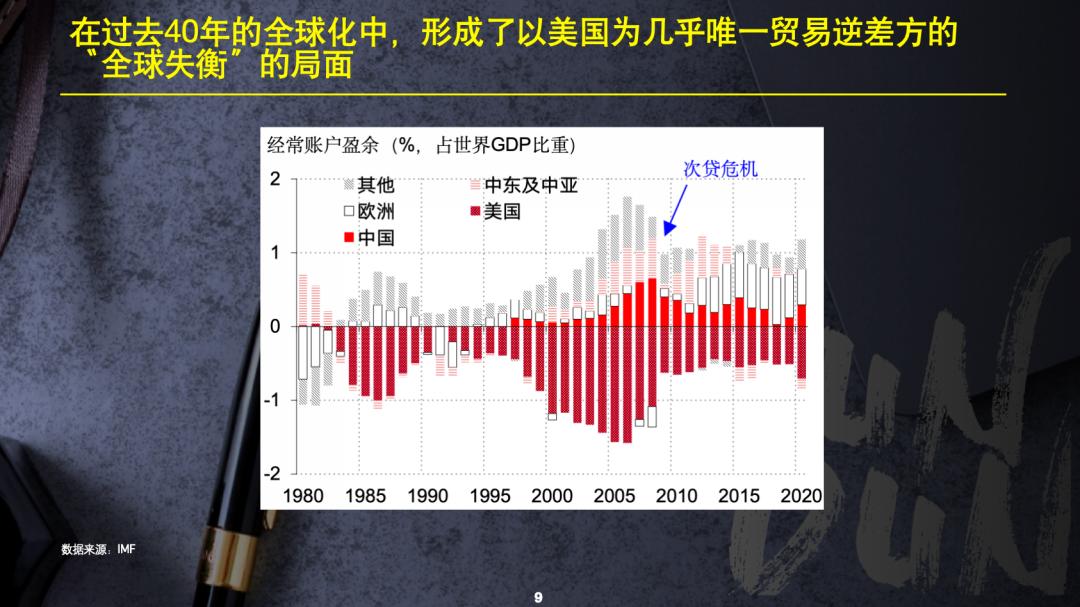
Group 1 - The trade conflict between the US and China has escalated significantly, with tariffs reaching as high as 125% before a temporary agreement to reduce them to 10% was reached [1] - Analysts predict that this trade competition will be a long-term struggle, as the economic goals of both countries are fundamentally at odds [1][3] - The US's "equal tariffs" policy aims to reduce its trade deficit by imposing high tariffs on countries with which it has a trade deficit, particularly China [3][5] Group 2 - The root cause of the global imbalance is linked to the unique position of the US dollar, which allows the US to maintain a trade deficit due to its ability to print money without cost [5][6] - The dollar's dominance has led to the hollowing out of the US manufacturing sector, with its share of GDP dropping from 24% in the 1970s to an estimated 10% in 2024 [6] - The benefits of globalization have been unevenly distributed in the US, leading to increased social tensions and a growing income gap between workers and capital owners [7] Group 3 - The US has two potential strategies to address the challenges posed by globalization: abandoning dollar hegemony and implementing a universal basic income policy [10] - However, these strategies are difficult to implement due to the entrenched interests in the current system, leading to a retreat into "de-globalization" as a secondary option [10][11] - The economic relationship between the US and China has become increasingly imbalanced, with China experiencing trade surpluses and low consumption while the US faces trade deficits and high consumption [11][14] Group 4 - China faces significant challenges in boosting effective demand, which is crucial for economic growth, as income distribution has historically favored capital over labor [16][18] - The country has three potential strategies to address demand issues: a fundamental shift towards consumption, investment-driven growth, and managing excess capacity [18][21] - The current policy focus is on investment to stabilize economic growth, particularly through infrastructure and real estate initiatives [25] Group 5 - The Chinese market is currently experiencing bottom-level fluctuations across stock, bond, and currency markets, with expectations for government intervention to support growth [26][29] - The stock market is supported by state intervention, while the bond market faces limited room for further interest rate cuts due to low demand sensitivity [26][29] - The Chinese yuan is expected to remain stable against the dollar, with the central bank actively managing its value to prevent significant depreciation [29]
A股盘前播报 | 特朗普征税函第一波 日韩等14国25%到40%不等
智通财经网· 2025-07-08 00:42
Group 1: Macro Insights - The U.S. government, under Trump's administration, has announced a new wave of tariffs ranging from 25% to 40% on imports from 14 countries, including Japan and South Korea, effective August 1 [1] - The People's Bank of China has increased its gold reserves for the eighth consecutive month, reaching 73.9 million ounces by the end of June, indicating a potential bullish trend for gold prices in the second half of the year due to expectations of interest rate cuts by the Federal Reserve [2] - The National Development and Reform Commission of China has allocated an additional 10 billion yuan for infrastructure projects aimed at promoting employment and income growth in rural areas [3] Group 2: Company-Specific Developments - Tesla's stock price fell by 6.79% following the announcement of Elon Musk's new political party, raising concerns about the impact on Tesla's core automotive business, alongside a reported 13% year-over-year decline in vehicle deliveries for Q2 [4] - Industrial Fulian expects a revenue increase of 36.84% to 39.12% year-on-year for the first half of the year, projecting revenues between 11.958 billion yuan and 12.158 billion yuan [14] - Xianggang Technology anticipates a net profit increase of 410% to 478% year-on-year for the first half of the year, estimating profits between 75 million yuan and 85 million yuan [14]

全球制造:或将复苏:实物需求的新一轮上升周期
SINOLINK SECURITIES· 2025-07-06 07:54
Group 1 - The report highlights a potential recovery in global manufacturing, driven by renewed emphasis on physical demand and infrastructure investment in developed economies, particularly Germany and the United States [3][12][21] - Germany plans to invest €120 billion in infrastructure by 2025, with an additional €800 billion in deficits projected from 2025 to 2029, representing about 20% of its GDP [12][18] - The U.S. "One Big Beautiful Bill Act" increases tax credits for advanced manufacturing investments from 25% to 35% and allows 100% depreciation for fixed assets in the year they are put into use [12][15] Group 2 - The "anti-involution" policy is gaining attention, particularly in industries with high capacity utilization and low product prices, which may see significant profit improvements through capacity restrictions [4][31][33] - The report notes that excess capacity is concentrated in high-end manufacturing sectors like photovoltaics and lithium batteries, where demand growth is expected to continue, making direct capacity reduction less likely [4][31] - Traditional industries with higher capacity utilization and lower prices may benefit more from the "anti-involution" policies, leading to better profit elasticity [31][33] Group 3 - The report discusses a shift from virtual to real assets, indicating that while liquidity may pose risks, the fundamentals present opportunities for investment [5][37] - Chinese companies have increased capital expenditures despite declining ROIC, suggesting a recovery phase for capital returns, particularly in traditional sectors [5][37] - The report recommends asset allocation towards upstream resource products (copper, aluminum, oil) and capital goods (engineering machinery, heavy trucks) to benefit from rising physical asset demand [5][37]