消费

Search documents
A股开盘速递 | A股集体高开 沪指涨0.16% 商业航天等板块领涨
智通财经网· 2025-12-08 02:28
Market Overview - The A-share market opened higher with the Shanghai Composite Index rising by 0.16% and the ChiNext Index increasing by 0.32% [1] - Sectors such as commercial aerospace, military industry, and securities saw significant gains, while photovoltaic, consumer electronics, and coal sectors experienced declines [1] Institutional Insights - CITIC Securities suggests that the current market volatility is a normal state before potential fundamental changes, with a focus on resource revaluation and companies expanding overseas [1] - The firm anticipates that potential appreciation of the RMB may lead to unexpected monetary easing, which could disrupt the current volatility pattern [1] - Short-term risks include intensified US-China tensions in technology, trade, and finance, as well as domestic policy effectiveness and economic recovery falling short of expectations [1] Sector Focus - Everbright Securities emphasizes short-term attention on defensive and consumer sectors, while mid-term focus remains on TMT (Technology, Media, and Telecommunications) and advanced manufacturing sectors [2] - The firm notes that the market may lack strong catalysts in the short term, leading to a phase of consolidation [2] - High dividend and consumer sectors are expected to perform better during the current market fluctuations [2] Recommendations - Guojin Securities identifies a clearer mainline structure emerging in the market, recommending investments in industrial resource products and non-bank financials [3] - The firm highlights the positive feedback loop between the easing of constraints on non-bank financial institutions and the recovery of overall profitability in the A-share market [3] - Key investment areas include industrial resource chains (copper, aluminum, lithium, oil), non-bank financials (insurance, brokerage), and opportunities in China's equipment exports and manufacturing sectors [3]
南方基金:震荡中的信号:是迷雾还是曙光?
Sou Hu Cai Jing· 2025-12-08 02:25
回顾11月,全球市场在中美贸易会晤预期升温、美联储降息预期反复、AI泡沫担忧加剧等多重扰动下 震荡加剧。 这些信号,让不少朋友开始疑惑:当前市场是在酝酿风险,还是在积蓄动能? 今天,局长就带大家拆解这些"矛盾"背后的逻辑,并聊聊如何在震荡中保持定力。 一、市场为何总要"蹲下"震荡? 市场并非总是一路上扬,"蹲下"震荡实属常态,是消化浮筹、积蓄新动能的过程。 回顾历史,无论是2014年还是2019年,在大的趋势行情启动前,市场都经历过类似的"中场休息"。 2014年7月至11月,沪指在2000-2200点区间横盘近三个月。期间经济数据低迷与改革预期交织,直至11 月21日央行降息为市场注入强心针,开启了一轮波澜壮阔的牛市。 2019年初,市场在中美贸易摩擦与资本市场改革预期中震荡两个月,最终在政策支持与外部缓和下走出 震荡,迎来科技主线崛起。 当前,上证指数在关键点位反复博弈,可视为四中全会后"政策真空期"的蓄势。许多投资者感觉"热点 轮动比翻书还快",这恰恰是震荡市的典型特征——缺乏清晰单一的主线,资金在各板块间试探。从历 史经验看,这种震荡往往在为下一次风格选择做准备。 但需注意,当前经济修复路径与产业格局 ...
国泰海通 · 晨报1208|非银、宏观、策略、煤炭
国泰海通证券研究· 2025-12-07 15:37
Group 1: Non-Banking Financial Institutions - The China Banking and Insurance Regulatory Commission (CBIRC) has lowered the risk factors for long-term holdings of certain stocks, which is expected to encourage insurance funds to increase their equity asset allocation while maintaining solvency constraints [2] - The policy aims to enhance the capital utilization efficiency of high-quality institutions, allowing leading brokerages to accelerate their development in proprietary trading, derivatives, institutional business, and wealth management [2] - The new regulations on financial leasing companies are expected to improve asset quality and risk pricing transparency, benefiting well-governed and clearly defined business leasing institutions [2] Group 2: Macro Economic Insights - The U.S. economy is showing signs of marginal decline, with industrial output and durable goods orders decreasing, while personal disposable income has slightly increased [6] - The European economy remains resilient, with mixed signals from industrial production and retail sales, while inflation rates show slight increases [6] - The Federal Reserve is expected to lower interest rates in December, with a high probability of around 87%, while the European Central Bank is likely to pause rate cuts [8] Group 3: Market Strategy - The Chinese stock market is anticipated to enter a "cross-year offensive" phase, with expectations of policy, liquidity, and fundamental support leading to upward movement in indices [11] - The focus is on sectors such as technology, finance, and consumer goods, with recommendations for stocks in internet, media, and manufacturing industries [14] - The demand for asset management is expected to surge as traditional fixed-income products decline, leading to a shift towards diversified investment strategies [12] Group 4: Energy Sector Insights - The U.S. is facing a clear electricity supply shortage, which is projected to expand by 2030, necessitating a systematic approach to energy solutions, particularly in natural gas and renewable sources [17] - The current energy system in the U.S. is transitioning towards a mix dominated by natural gas and clean energy, with coal playing a backup role [18] - By 2030, renewable sources are expected to contribute significantly to new electricity generation, while coal will serve as a stabilizing force in the energy mix [19]


中国股票利好来了 全球基金经理预计中国股市将在2026年继续上涨
Zhong Guo Ji Jin Bao· 2025-12-07 13:07
富达国际新加坡的投资组合经理George Efstathopoulos表示:"可以说,中国展现出更强韧性,投资者正 越来越多地接受一个'可投资的中国',这里既能提供多元配置,也能提供创新机会。现在如果中国股市 回调,我会更倾向于逢低买入。" 根据摩根士丹利的数据,截至今年11月,境外长线资金通过沪深港股通等渠道,净买入了约100亿美元 的中国内地及香港股票,这与2024年约170亿美元的资金流出形成鲜明反差。本轮净流入完全来自跟踪 指数的被动资金,而主动型基金经理则合计撤出约150亿美元。 原因之一在于,很多依赖"选股"的主动投资者,仍未能摆脱过去几年对中国经济的固有印象。 美国银行亚太股票策略主管Winnie Wu表示,她在与全球投资者的频繁交流中发现,部分基金经理认 为,在美股表现同样强势的背景下,配置中国资产的"门槛"依然不低。不过,她也指出,中国企业盈利 改善以及通缩压力出现拐点,有望扭转这种局面。"下一阶段的中国股市上涨,将更多由全球资金来驱 动。" 看多中国股市的逻辑,主要建立在两个支撑点上:一是芯片、生物医药、机器人等领域正在崛起的新一 代科技巨头;二是市场寄望于这个全球第二大经济体能够进入再通 ...
国金策略:新的变化正在出现,未来结构上的信号可能比总量更加清晰
Sou Hu Cai Jing· 2025-12-07 11:00
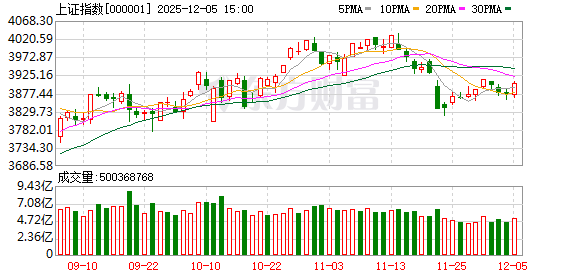
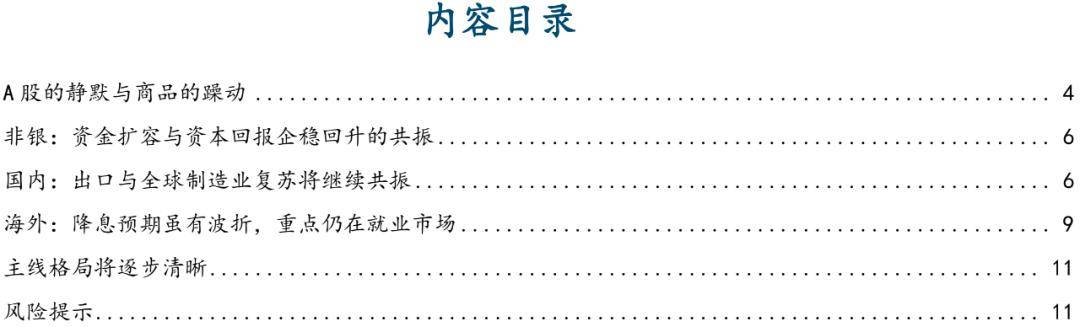
Group 1 - The A-share market is experiencing a period of low trading volume and volatility, with a significant decrease in trading activity and market sentiment due to the lack of new economic or financial data and the upcoming key policy meetings [2][10] - In contrast to the A-share market's stagnation, commodity prices, particularly silver and copper, have seen strong increases, driven by low inventory levels and changing demand dynamics influenced by new industries and policy shifts [2][13] Group 2 - Recent changes in the financial market include a relaxation of constraints on non-bank financial institutions, which is expected to bring more incremental capital into the market and benefit the long-term asset side of non-bank institutions as A-share earnings recover [3][19] - Historical data suggests that after previous relaxations of risk factors for insurance companies and increased leverage for brokerages, the market has performed well, indicating potential for excess returns in the non-bank sector compared to the overall market [3][21] Group 3 - Positive marginal changes in external demand are emerging, with significant improvements in new export orders and related indicators, suggesting a rebound in China's export growth [4][22] - Long-term trends indicate that the onset of a U.S. interest rate cut cycle typically leads to a loosening of global liquidity, which can stimulate foreign direct investment and trade demand, benefiting China's exports [4][24] Group 4 - Despite some fluctuations in overseas interest rate cut expectations, the focus remains on the U.S. labor market, which is currently weak, with recent data showing job losses and high unemployment rates [5][37] - The market anticipates that even if there are short-term fluctuations in the interest rate cut pace, the overall trend towards lower rates is likely to continue, supporting global investment and manufacturing recovery [5][42] Group 5 - The A-share market's current low trading volume and cooling sentiment may lead to clearer structural signals in the future, with potential benefits from the relaxation of constraints on non-bank institutions and the recovery of overall A-share earnings [6][48] - Recommendations for investment include focusing on industrial resource chains, non-bank capital expansion, China's equipment exports, and sectors benefiting from increased consumer spending as capital flows back into the market [6][48]
股指周报:板块轮动加快,股指缩量震荡-20251207
Zhe Shang Qi Huo· 2025-12-07 05:49
策略综述及建议 策略综术 【指数判断】 进入四季度下半旬,板块轮动加快。股指震荡为主;中长期来看,国内市场为流动性叙事,增量资金源源不断,股指盘整过后仍有上行动能。 【逻辑跟踪】 1. 国际形势是复杂的,中美经贸磋商取得积极成果,双方在关税、海事等多方面达成共识。 板块轮动加快,股指缩量震荡 日期:2025-12-07 【股指期货周报20251207】板块轮动加快,股指缩量震荡 2. 美国进入新的降息周期,降息利于人民币升值,利于外资回流,带来新的增量资金。 3.当前稳定资本市场政策积极,股指底线明确,而新技术、新消费在推动者经济预期企稳回升:"十五五"规划提高对科技创新要求,扩内需,未来五年政策 大方向落地。 4. 无风险利率降至低位后,中长期资金入市及居民入市将进入全新周期。 5. 未来指数需要关注成交情况,两市成交若能维持在两万亿上方,则仍能维持相对强势。 6. 建议重点配置具备盈利确定性的半导体、AI算力等科技成长赛道,同时关注金融、Giz券 、消费等低估值防御板块的轮动配置价值。 【风险提示】 浙商期货有限公司 报告撰写人:周志超 从业资格号: F03087618 投资咨询号: Z0019474 全 ...
私募整体仓位创新高!看好A股中长期趋势
券商中国· 2025-12-06 09:41
Core Viewpoint - The article discusses the rising expectations for the year-end market rally, highlighting that private equity firms are maintaining high positions despite recent market adjustments [1][4]. Group 1: Market Trends and Adjustments - Recent reports from various private equity firms indicate a continuation of strategies, with a focus on growth assets, although some structural adjustments are occurring, particularly in previously high-performing sectors like AI [2][3]. - The market has experienced a weak adjustment in November, with core indices declining and trading activity decreasing compared to the previous month. This adjustment is attributed to profit-taking, portfolio rebalancing by institutions, and a general risk-averse behavior among investors [3][4]. Group 2: Private Equity Positioning - As of November 21, 2025, the stock private equity position index reached 82.97%, marking a significant increase of 1.84% from the previous week and setting a new high for the year [4]. - The proportion of fully invested private equity firms (over 80% positions) has risen to 68.99%, while the shares of medium, low, and empty positions have decreased significantly [4]. Group 3: Future Investment Strategies - Private equity firms are optimistic about structural opportunities in the market, supported by favorable policies and liquidity conditions. They anticipate that the overall liquidity in A-shares will remain ample, with expectations of a potential interest rate cut by the Federal Reserve [4][5]. - Investment focus is shifting towards high-certainty growth sectors, particularly in the context of U.S.-China relations and global supply chain restructuring, with an emphasis on manufacturing, semiconductors, and emerging consumer trends [5][6]. - Companies are advised to pay attention to assets at the bottom of their cycles and valuations, as these may offer lower risk and potential for significant returns in the medium term [6].

中信证券:A股配置上建议聚焦资源/传统制造业定价权重估与企业出海主线
Xin Lang Cai Jing· 2025-12-06 01:59
中信证券研报指出,在流动性改善、地缘扰动、AI泡沫短期无虞三重因素下,亚洲股市更需聚焦基本 面线索变化带来的结构性配置机会。美联储12月降息预期反转缓解亚洲市场宏观压力,而全球GPR指数 高位运行下俄乌冲突等构成阶段性扰动,AI领域现金流支撑与供应链瓶颈使极端泡沫叙事难现。具体 市场核心观点如下。1)A股:需基本面超预期突破,配置上建议聚焦资源/传统制造业定价权重估与企 业出海主线,关注低拥挤品种与红利标的。2)港股:受益内外部催化有望实现戴维斯双击,建议侧重 科技、医疗、资源品等五大方向。3)韩国股市:依托基本面、政策与流动性推动重估,建议重点关注 半导体/AI等行业。4)印度股市:具备补涨潜力,货币政策宽松背景下建议优先配置利率敏感型企业与 消费板块,逆向看多IT服务。5)日本股市:受益治理红利与外资增配,聚焦行业整合、资产重估等四 大方向。6)东南亚股市:呈现复苏态势,马来西亚建议关注AI与数据中心产业链;印尼建议聚焦消费 与新能源汽车;泰国建议首选消费和旅游板块,整体需密切跟踪宏观变量与政策动向。 ...

搭建高效产融对接平台
Shen Zhen Shang Bao· 2025-12-05 16:48
Core Insights - The event "Starry Pengcheng" focused on the transformation of the consumer market from "scale expansion" to "value co-creation" [1] - The event aimed to build an efficient platform for industry-finance connection to promote high-quality development of Shenzhen's consumer industry [1] - Over 80 representatives from leading domestic and international consumer companies, investment institutions, and innovative enterprises participated to explore new opportunities in consumer development [1] Industry Developments - Experts from the Shenzhen Stock Exchange provided policy interpretations on how the capital market can support the development of new consumer industries [1] - Insights on investment logic and integration practices based on consumer industry observations were shared by representatives from Tongchuang Weiye [1] - The event included roadshow matching and interactive exchanges to facilitate collaboration [1]
[12月5日]指数估值数据(利好出现,A股港股上涨;牛市里没到高估怎么办;港股指数估值表更新;抽奖福利)
银行螺丝钉· 2025-12-05 13:50
Core Viewpoint - The market is experiencing a structural bull market, characterized by significant gains in specific sectors while others lag behind, indicating potential investment opportunities in undervalued stocks [10][11][12]. Group 1: Market Performance - The overall market opened lower but closed higher, returning to a rating of 4.2 stars [1]. - All market caps, including large, mid, and small caps, saw increases, with small caps outperforming slightly [2]. - Both value and growth styles experienced upward movement [3]. Group 2: Positive Market Drivers - Positive news circulated during the trading day, contributing to market gains [4]. - Insurance institutions lowered risk factors for indices like the CSI 300 and the Low Volatility Dividend 100, allowing for increased allocation to these stocks [5][6]. - This adjustment led to significant increases in sectors such as securities, insurance, and value stocks [7]. Group 3: Structural Bull Market Characteristics - Structural bull markets often see certain categories of stocks rise significantly while others may not reach high valuations [10][12]. - Historical examples include the small-cap growth bull market in 2015 and the large-cap value bull market from 2016 to 2017 [13][14]. Group 4: Current Market Trends - The main drivers of this year's market increase are small-cap and growth styles, with indices like the CSI 2000 and tech-focused boards showing gains exceeding the market average [15]. - Many stocks in these categories have strong fundamentals, with tech companies in A-shares and Hong Kong showing over 30% year-on-year profit growth [18]. - Some sectors, such as consumer and healthcare, have seen moderate profit growth, while others like consumption have experienced declines [21][25]. Group 5: Future Outlook - Stocks that are currently underperforming may become leaders in future market cycles, emphasizing the need for patience among investors [27][32]. - Even undervalued indices can yield returns over time, as seen with dividend and low-volatility indices that have appreciated by 50-70% since 2018 despite not reaching high valuations [40][41]. Group 6: Valuation Insights - The article provides a valuation table for Hong Kong indices, indicating that the market has already returned to a rating of over 3 stars due to earlier gains compared to A-shares [42]. - The valuation metrics for various indices, including PE ratios and dividend yields, are summarized for investor reference [43].