白酒

Search documents
踩踏式抛货超10万箱!习酒沉默,经销商慌了?
Sou Hu Cai Jing· 2026-02-26 03:35
Core Viewpoint - The recent price collapse of Yuanxi liquor is a significant indicator of the failure in channel management and trust between manufacturers and distributors, leading to a crisis in the market [2][3][6] Group 1: Market Dynamics - Yuanxi liquor's wholesale price plummeted from 500 yuan per box to 339 yuan, with a single-day drop exceeding 100 yuan, indicating a severe market disruption [2] - The estimated influx of stock reached tens of thousands of boxes, potentially exceeding 100,000 boxes, overwhelming the operational capacity of ordinary distributors [2][3] - The average inventory turnover days in the liquor industry have reached 900 days, with Yuanxi's channel inventory pressure significantly surpassing the industry average [3][4] Group 2: Company Strategy and Performance - Yuanxi liquor has been relying on channel pressure to achieve scale expansion, creating an illusion of sales growth during the boom period of sauce liquor [3][5] - The company is projected to invest 300 million yuan to assist distributors in digesting 4 billion yuan of inventory, which is seen as a temporary fix rather than a fundamental solution [3][5] - The high-end product line, Junpin Yuanxi, is prioritized over mass-market products, leading to a neglect of the core product, Yuanxi liquor, which has resulted in a price collapse [4][5] Group 3: Channel Structure and Trust Issues - The channel structure of Yuanxi liquor has been compromised by the presence of opportunistic distributors who do not contribute to market building, exacerbating the price collapse during downturns [4][5] - The disconnect between the company's promises to maintain market order and the reality of price collapse highlights a significant gap in execution [5][6] - The strategy of focusing on high-end products while neglecting mass-market offerings has led to a loss of brand credibility and a breakdown in trust within the distribution network [4][6]


舍得酒:郭广昌的提款机?
Xin Lang Cai Jing· 2026-02-26 02:10
Core Viewpoint - The article discusses the financial struggles and strategic asset sales of Fosun Group, particularly focusing on its investment in Shede Liquor, highlighting the concept of "sacrifice for gain" in the context of business survival and adaptation to market conditions [4][7][10]. Group 1: Financial Performance and Challenges - In January 2026, the parent company of Shede Liquor, Yuyuan Group, announced an expected net loss of 4.8 billion yuan for 2025, marking its first annual loss since its listing in 1992 [4][10]. - The losses are attributed to pressures from a declining real estate market and weak consumer demand, prompting a significant asset impairment and inventory reduction strategy [4][10]. - In 2025, Shede Liquor reported a revenue of 3.1 billion yuan and a net profit of 470 million yuan, which, while modest compared to industry leaders, positions it as the second most profitable entity within Fosun's portfolio [37][39]. Group 2: Strategic Asset Sales - Fosun Group has sold over 80 billion yuan worth of assets in recent years, including stakes in various companies and properties, to improve liquidity amid tightening regulations and financial pressures [7][29]. - The company has divested from several businesses, including Qingdao Beer and Shunxin Agriculture, while maintaining and even increasing its stake in Shede Liquor, indicating its strategic importance [31][32]. - The asset sales are part of a broader strategy to navigate liquidity challenges, with Fosun's CEO emphasizing that "a sellable enterprise is a good enterprise" [29][30]. Group 3: Market Position and Future Outlook - Shede Liquor, despite its challenges, has maintained a strong market presence and is seen as a key asset for Fosun, especially as it navigates through a difficult industry landscape [38][41]. - The company has proactively reduced inventory and adjusted its market strategy, which has allowed it to avoid the severe profit declines experienced by many competitors in the industry [40][41]. - The increase in Shede Liquor's dividend payout ratio from 25.77% in 2020 to 40.9% in 2024 reflects its importance as a cash-generating asset for Fosun, even as overall profits have declined [39][40].


今世缘2月25日获融资买入1064.08万元,融资余额3.66亿元
Xin Lang Cai Jing· 2026-02-26 01:31
Core Viewpoint - The company, Jiangsu Jinshiyuan Liquor Co., Ltd., has experienced a decline in revenue and net profit for the first nine months of 2025, indicating potential challenges in its financial performance [2]. Group 1: Financial Performance - For the period from January to September 2025, the company achieved operating revenue of 8.881 billion yuan, a year-on-year decrease of 10.66% [2]. - The net profit attributable to shareholders for the same period was 2.549 billion yuan, reflecting a year-on-year decline of 17.39% [2]. Group 2: Shareholder and Market Activity - As of September 30, 2025, the number of shareholders increased to 66,300, up by 5.09% from the previous period [2]. - The average number of circulating shares per shareholder decreased to 18,798 shares, down by 4.84% [2]. - The company has distributed a total of 6.835 billion yuan in dividends since its A-share listing, with 3.653 billion yuan distributed in the last three years [3]. Group 3: Financing and Trading Activity - On February 25, the company saw a financing buy-in amount of 10.64 million yuan, with a net buy of 806,500 yuan, indicating active trading [1]. - The total financing and securities balance reached 370 million yuan, with the financing balance accounting for 0.91% of the circulating market value, which is above the 60th percentile of the past year [1]. - The company had a low short-selling balance of 3.858 million yuan, indicating a lower level of bearish sentiment in the market [1].

这座西南小城何以吸引世界目光
Xin Hua She· 2026-02-26 01:27
新华社成都2月25日电 清晨,薄雾轻笼江上,金沙江和岷江在四川宜宾交汇,自此始称长江,滚滚向 前,奔流不息。 今年春节前夕,宜宾文旅宣传曲《宜宾叻》火爆出圈。大年初一晚,三江汇合处欣赏灯光秀和无人机表 演的人群熙熙攘攘。春节期间,合江门、李庄古镇等景点游人如织。 故乡的这份烟火气,是我驻外工作时萦绕心头的乡愁。 "老板,来二两燃面。"在叙州区一家饭馆,老板娘周宗芹正忙着招呼客人,店里飘散着芝麻油和小葱的 香味。 如果说宜宾曾经的经济支柱是以白酒和煤炭为代表的"一白一黑",那么今天的宜宾正在打造的新引擎, 是以数字经济和绿色能源为代表的"一蓝一绿"。 宁德时代、凯翼汽车、极米科技等企业落户宜宾三江新区,助力宜宾经济驶上提质升级快车道。宜宾动 力电池产业崛起,成为当地继白酒产业之后的又一个千亿级产业。 作为长期从事国际财经新闻报道的记者,我深知动力电池是当前大国竞合的重要领域,全球产业博弈激 烈。动力电池广泛应用于电动汽车、机器人等新兴产业,这是中国制造向高端化、智能化、绿色化迈进 的代表产业之一,也是构筑开放包容的全球产业链供应链体系的关键一环。 近年来,海外媒体报道中频繁出现家乡的名字:世界动力电池大会连续4 ...
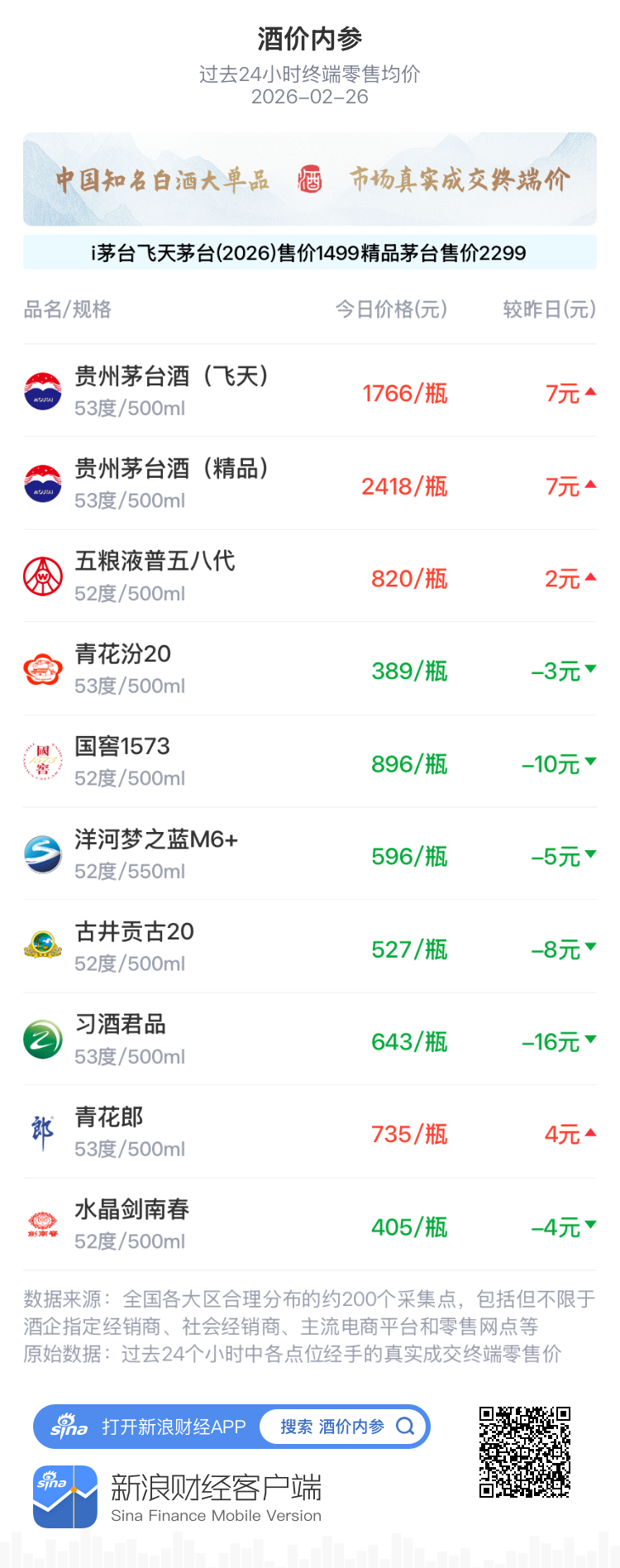
酒价内参2月26日价格发布 总价创十天新低单品分化加剧
Xin Lang Cai Jing· 2026-02-26 01:15
Core Viewpoint - The Chinese liquor market is experiencing significant price fluctuations, with the average retail price of the top ten liquor products showing a notable decline, reaching a new low in the past ten days, following a peak during the Spring Festival [1]. Price Movement Summary - The total price for a package of the top ten liquor products is 9195 yuan, down by 26 yuan from the previous day [1]. - Among the top ten products, four saw price increases while six experienced declines [1]. - The price support is mainly concentrated on leading brands, while mid-tier products are under pressure [1]. Price Changes of Specific Products - **Price Increases**: - Feitian Moutai increased by 7 yuan to 1766 yuan per bottle [3]. - Premium Moutai also rose by 7 yuan to 2418 yuan per bottle [3]. - Qinghua Lang increased by 4 yuan to 735 yuan per bottle [4]. - Wuliangye Pu 58th generation saw a slight increase of 2 yuan to 820 yuan per bottle [3]. - **Price Decreases**: - Xijiu Junpin dropped by 16 yuan to 643 yuan per bottle [4]. - Guojiao 1573 fell by 10 yuan, continuing a two-day decline [1]. - Gujing Gonggu 20 decreased by 8 yuan to 527 yuan per bottle [4]. - Yanghe Dream Blue M6+ decreased by 5 yuan to 596 yuan per bottle [4]. - Shui Jing Jian Nan Chun and Qinghua Fen 20 fell by 4 yuan and 3 yuan respectively [1].

2025年中国酱酒销售收入预计2350亿元,下降2%
Bei Jing Shang Bao· 2026-02-26 01:08
Core Insights - The sales revenue of China's sauce liquor is expected to reach 235 billion yuan in 2025, reflecting a year-on-year decline of 2.08% [2] - The production capacity of sauce liquor is projected to be approximately 500,000 kiloliters in 2025, a decrease of 23% year-on-year, accounting for 14% of the total white liquor production in China [2] - Profit is estimated to be around 98 billion yuan, showing a slight increase of 1.03% [2] Industry Analysis - Despite the current downturn in the sauce liquor market, leading company Moutai is expected to maintain stable high-quality growth without significant fluctuations in performance [2] - The industry adjustment is fundamentally different from the previous round, with reduced consumption leading to excess inventory in the distribution channels, which has impacted the upstream supply chain [2] - The real performance of leading liquor companies has already been reflected by the third quarter of 2025, and the industry adjustment is anticipated to bottom out in 2026-2027 [2]
【宝鸡】42个劳务品牌持续擦亮“金名片”
Shan Xi Ri Bao· 2026-02-26 00:39
Core Viewpoint - The development of labor brands in Baoji City, particularly the "Qianyang Embroidery" and "Baoji Noodle" brands, has significantly contributed to local employment and economic growth, showcasing a successful model of integrating traditional crafts with modern market demands [2][5][6]. Group 1: Qianyang Embroidery Labor Brand - The "Qianyang Embroidery" labor brand has created flexible employment opportunities for over 10,000 local residents, particularly rural women, allowing them to earn more than 1,000 yuan per month while working from home or at the cultural industry park [2][3]. - The annual output value of the Qianyang embroidery industry exceeds 86 million yuan, reflecting its growth and market acceptance [3]. - The brand's development is part of a broader strategy by Baoji City to cultivate labor brands, with 42 unique labor brands established, generating employment for over 400,000 people [2][6]. Group 2: Baoji Noodle Labor Brand - The "Baoji Noodle" labor brand has evolved from a street food into a 6 billion yuan industry, with over 30,000 outlets nationwide, creating approximately 100,000 jobs [5][6]. - The brand emphasizes standardization in production and marketing, which has been crucial for its growth and market penetration, including exports to Southeast Asia, Europe, and America [5]. - Baoji City has developed a comprehensive policy framework to support labor brands, including financial incentives and expert guidance, enhancing their sustainability and effectiveness [6]. Group 3: Economic Impact and Future Prospects - The labor economy in Baoji City generated 32.3 billion yuan during the 14th Five-Year Plan period, with annual urban and rural employment growth rates of over 40,000 and 900,000, respectively [6]. - The city aims to enhance the quality and efficiency of labor brands, positioning them as key drivers for rural revitalization and economic stability [6].
江苏洋河酒厂股份有限公司关于与专业机构共同投资暨关联交易的进展公告
Shang Hai Zheng Quan Bao· 2026-02-25 18:11
新浪财经"酒价内参"重磅上线 知名白酒真实市场价尽在掌握 登录新浪财经APP 搜索【信披】查看更多考评等级 证券代码:002304 证券简称:洋河股份 公告编号:2026-008 江苏洋河酒厂股份有限公司 关于与专业机构共同投资暨关联交易的 进展公告 本公司及董事会全体成员保证信息披露的内容真实、准确、完整,没有虚假记载、误导性陈述或重大遗 漏。 一、与专业机构共同投资暨关联交易概述 江苏洋河酒厂股份有限公司(以下简称"公司")于2025年10月29日召开第八届董事会第十五次会议,审 议通过了《关于与专业机构共同投资暨关联交易的议案》,同意公司作为有限合伙人认缴出资人民币3 亿元,参与设立江苏宿迁智能制造产业专项母基金(暂定名)。具体情况详见公司于2025年10月31日在 《证券时报》《中国证券报》《上海证券报》《证券日报》和"巨潮资讯网"(www.cninfo.com.cn)披露 的《关于与专业机构共同投资暨关联交易的公告》(公告号:2025-034)。 公司于2025年12月17日召开第八届董事会第十七次会议,审议通过了《关于调整与专业机构共同投资暨 关联交易的议案》,基金暂定名由江苏宿迁智能制造产业专项 ...

白酒决胜的下一站,县域市场?
Sou Hu Cai Jing· 2026-02-25 16:25
Core Viewpoint - The next battleground for the Chinese liquor industry is shifting towards county-level markets as growth potential in first and second-tier cities becomes saturated. The ability to tap into the county market will be crucial for liquor companies to sustain their competitiveness in the face of slowing high-end consumption [1][6]. Group 1: Market Potential - Research indicates that a significant portion of future consumption growth in China will come from third-tier cities and below, as well as county and town markets, with McKinsey predicting that by around 2030, over 60% of new personal consumption growth will originate from these lower-tier markets [1][4]. - As of the end of 2023, there are 1,813 county-level administrative units in China, with a combined population of approximately 450 million, accounting for nearly one-third of the urban population [2][4]. - The economic scale of county-level markets is substantial, estimated at around 30 trillion yuan, which also represents close to one-third of the national economic total [2][4]. Group 2: Consumer Behavior - The trend of "returning home" and "migration back" is expected to drive consumption growth in county markets, supported by improved infrastructure such as transportation and logistics, which reduces time and information costs for consumers [5][6]. - County residents have a relatively stable financial outlook, with over half of surveyed individuals expecting income growth of more than 5% in the next 2-3 years, while only 4% anticipate a decline [5][6]. - The high proportion of self-owned housing and low household debt levels in county areas contribute to a more favorable environment for consumer spending compared to high-debt urban counterparts [5][6]. Group 3: Industry Dynamics - The Chinese liquor industry is entering a deep adjustment phase by 2025, with high-end price segments under pressure and sales in high-tier cities slowing down, making the county market a critical area for stability [6][9]. - The demand structure in county markets is shifting towards mid-range price segments, particularly in the 100-300 yuan range, which is becoming increasingly competitive and stable [9][10]. - Major liquor brands, including top-tier companies, are intensifying their focus on county markets, with strategies aimed at optimizing costs, channel efficiency, and member management to enhance their presence and performance in these areas [10].

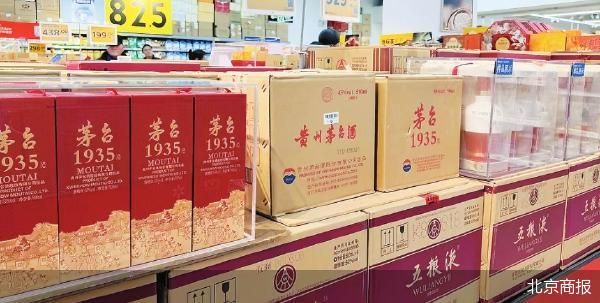
“哑铃型”结构显现 白酒市场如何淡季不淡
Bei Jing Shang Bao· 2026-02-25 16:13
Core Insights - The white liquor market is entering a consumption off-season after the Spring Festival, with a clear "dumbbell" consumption structure emerging, where high-end and mass-market products are seeing increased demand, while mid-range products are struggling [1][3][4] Group 1: Market Trends - High-end liquor brands like Moutai and Wuliangye have shown strong performance during the Spring Festival, with sales volume and prices rising, indicating robust demand [3][4] - The mid-range liquor segment (priced between 300-800 yuan) is facing significant challenges, lacking the financial attributes and gifting demand that high-end products possess, and is also competing with lower-priced products in the market [4][6] - Mass-market products under 300 yuan, such as Luzhou Laojiao and Hai Zhi Lan, have gained popularity, particularly in home consumption scenarios [4][6] Group 2: Consumption Patterns - The recovery of high-end liquor sales is driven by the resurgence of gifting and social occasions during the Spring Festival, with Moutai and Wuliangye being perceived as valuable gifts [6][7] - Home consumption has become a dominant trend, with a significant portion of consumers engaging in solitary drinking or social drinking at home, creating opportunities for products priced between 100-300 yuan [7][8] - The demand for liquor is increasingly tied to family gatherings and social events, with a notable increase in the number of people traveling during the Spring Festival, leading to heightened demand for home consumption [6][7] Group 3: Strategic Recommendations - As the industry enters a traditional off-season, companies are advised to focus on inventory management and explore new consumer demands, particularly in family and high-cost-performance products [8][9] - Companies should leverage successful strategies from the banquet market to enhance sales in lower-demand periods, ensuring they capture the growing demand for liquor in various social settings [9][10] - The banquet market remains a critical area for growth, with opportunities for brands to enhance visibility and sales through targeted marketing and product offerings [9][10]