
有色

Search documents
苏州工业园区出台工业企业停工停产复工复产安全生产工作指南
Su Zhou Ri Bao· 2026-01-04 01:57
Core Viewpoint - The Suzhou Industrial Park Emergency Management Bureau has developed a comprehensive safety production guideline for general industrial enterprises, focusing on systematic and standardized procedures for work stoppages and resumption, particularly during major holidays and production adjustments [1][2]. Group 1: General Requirements - The guideline specifies four basic safety production requirements: holding safety production meetings, conducting hazard inspections led by key personnel, enhancing employee safety education, and strictly controlling special operations [2]. - It emphasizes the establishment of an emergency duty system, implementation of a safety officer AB corner mechanism, and improvement of emergency communication, material storage, and accident response processes [2]. Group 2: Key Industry Areas - The guideline addresses seven high-risk areas including metal melting, dust explosion hazards, hazardous chemical usage, lithium battery production, ammonia refrigeration, confined space operations, and "in-plant" management, providing specific hazard inspection standards for each [2]. Group 3: Climate and Holiday Considerations - The guideline outlines differentiated preventive measures based on seasonal and holiday climate characteristics, including strategies for cold weather, thunderstorms, flooding, and fire/explosion risks [2].
山东12个重点行业划定稳增长路线图
Sou Hu Cai Jing· 2026-01-03 01:50
党的二十届四中全会提出加快建设航天强国,山东也已明确加力培育壮大航天产业。《政策清单》结合 山东优势,给出两条针对性措施:一是对商业航天火箭企业或卫星企业依托海上发射平台实施的发射项 目,按照不超过购买"发射险""三者险"两项保费总额的35%给予奖补,每个项目最高奖补300万元;二 是面向商业航天领域培育遴选一批具备核心技术竞争力、配套服务水平高、产业带动能力强的企业,依 法依规给予每家最高100万元奖补,支持开展航天配套技术研发投入、生产线升级改造及产业链上下游 协作项目建设等。 "这两条政策是真金白银的支持,也是基于商业航天发展规律顺势而出的'组合拳',带动的将不仅是企 业层面的创新突破,更是一个产业的崛起。"东方空间联合创始人、副总裁彭昊旻表示,海上发射保险 补贴直击商业航天"高频次、航班化"发射的成本痛点,可帮助企业降低火箭发射成本,支持常态化发 射;而产业链补贴有助于加速吸引和培育优质的产业伙伴在山东集聚,把商业航天"蛋糕"做大。 "十五五"开局之年,保持工业经济平稳增长至关重要。近日发布的《2026年促进经济"稳中求进、提质 增效"政策清单(第一批)》(下称《政策清单》)就工业稳产提质释放多重利好 ...
12个重点行业划定稳增长路线图
Da Zhong Ri Bao· 2026-01-03 01:15
Group 1 - The core focus of the news is the release of a policy list aimed at stabilizing and enhancing the growth of 12 key industries in Shandong, which collectively account for approximately 67% of the province's industrial output and 75% of its manufacturing output [2][3] - The 12 identified industries include steel, non-ferrous metals, chemicals, automotive, and textiles, which are characterized by their large scale, strong driving force, and high interconnectivity [2][3] - Specific quantitative growth targets have been set for these industries by 2026, such as a 4% increase in the steel industry's added value, production of 1.2 million new energy vehicles, and revenue exceeding 850 billion yuan for the electronic information manufacturing sector [3] Group 2 - The policy list includes measures to support the commercial aerospace sector, such as subsidies for rocket and satellite companies utilizing offshore launch platforms, with a maximum subsidy of 3 million yuan per project [4] - The initiative aims to foster innovation and industry growth by providing financial support for companies with core technological competitiveness and strong service capabilities in the commercial aerospace field [4] - The government plans to enhance the green transformation of the construction industry by promoting the use of green building materials through government procurement, with a target of at least 40% application of green materials in star-rated green building projects [5] Group 3 - The Shandong government is committed to improving the support mechanisms for private enterprises, including establishing a comprehensive solution mechanism for enterprise demands and enhancing the "Ru Hui Tong" policy implementation platform [6][7] - The focus will be on addressing common issues faced by enterprises and ensuring that beneficial policies are easily accessible and quickly implemented [7]
A股展望牛市2.0
Guo Ji Jin Rong Bao· 2026-01-02 04:20
Core Viewpoint - The A-share market is expected to continue its bullish trend into 2026, with a projected index increase of 10%, driven by a shift from valuation recovery to profit growth [1][4]. Market Outlook - A-shares, Hong Kong stocks, and U.S. stocks are anticipated to maintain their bullish momentum, supported by global liquidity easing, economic recovery, rapid development of the AI industry, and rising resource prices [2]. - The current bull market is characterized by a policy shift, improved liquidity, and various factors including technological breakthroughs and changes in U.S.-China relations [2]. - Analysts predict that the A-share market will see a profit growth of 8% in 2026, following a 6% increase in 2025, aided by macro policies and a shift of household savings into the stock market [3]. Investment Strategies - The market is expected to transition into a "prosperity verification period" in 2026, where the core driver will be fundamental improvements rather than valuation increases [5]. - Key investment areas include technology and resource sectors, with a focus on AI applications, new energy, and industries benefiting from the "anti-involution" policies [6][7]. - Goldman Sachs suggests focusing on four main areas: AI and technology, leading Chinese companies expanding overseas, new consumption sectors, and industries benefiting from supportive policies [6]. Market Dynamics - The market structure is expected to become less extreme compared to 2025, with a broader distribution of economic prosperity across consumption, cyclical, and manufacturing sectors [7]. - The transition from a valuation-driven market to a profit-driven market is anticipated, with a potential for a "bull market 2.0" phase in the latter half of 2026 [4].
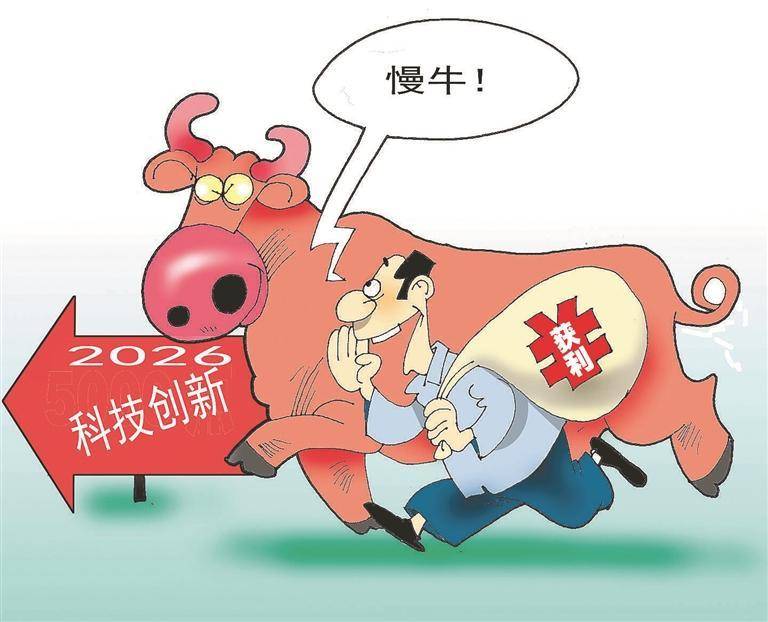
“慢牛”领跑!估值驱动转向盈利驱动
Sou Hu Cai Jing· 2026-01-01 23:12
Group 1 - The A-share market is expected to shift from valuation-driven to profit-driven, exhibiting a "slow bull" characteristic in 2026 [2][3] - Investors are advised to focus on four major directions: technology innovation, advanced manufacturing, upstream cycles, and domestic consumption [2][8] - Technology investment difficulty in 2026 will be greater than in 2025, requiring precise grasp of industry rhythms and deep stock selection for excess returns [11] Group 2 - The macroeconomic policy is expected to support resilient growth and structural upgrades, with a GDP growth target of around 5% for 2026 [5][6] - Manufacturing investment is anticipated to receive support from strong export resilience and continued policy backing for advanced manufacturing [5][6] - The focus on expanding domestic demand is crucial for stabilizing growth, with measures including increased consumption subsidies and support for service industries [5][6] Group 3 - A-share earnings are expected to enter a new phase of slow recovery in 2026, driven by technology manufacturing, inventory replenishment, and profit margin recovery [7][9] - The investment strategy should focus on cyclical recovery and technological self-reliance, with an emphasis on sectors like non-ferrous metals, machinery, and social services [7][8] Group 4 - The market is likely to see a convergence of technology and value styles, with structural opportunities emerging in value sectors as the economy stabilizes [12] - The focus on "outbound + technology" is expected to dominate market trends, particularly in the AI industry chain and resource sectors [13] Group 5 - The overall market is anticipated to be balanced between growth and value, with significant opportunities in both large-cap and small-cap stocks [14][16] - The recovery in earnings and return on equity (ROE) levels is expected to support stock market performance, with long-term funds increasingly entering the market [16]

长城基金汪立:把握科技与内需主题轮动机会
Xin Lang Cai Jing· 2026-01-01 03:52
Core Viewpoint - The A-share market is expected to take a significant step forward in 2026, supported by a systemic decline in risk-free interest rates, a peak in time deposit maturities, government encouragement for long-term capital entry, capital market reforms enhancing investment attractiveness, and a transformation in China's industrial structure [1][4]. Group 1: Market Outlook - The market may enter a boom period for asset management demand as the peak of time deposit maturities approaches in 2026, alongside government initiatives to encourage long-term capital inflow [1][4]. - Capital market reforms are expected to enhance the investability of Chinese assets and improve market resilience against risks, potentially leading the stock market from a volatile phase to a more stable and positive trend [1][4]. - The acceleration of China's industrial structure transformation is shifting from traditional industries to new technology sectors, which are entering an innovation expansion cycle, while Chinese manufacturing is expanding globally, reducing economic uncertainties [1][4]. Group 2: Investment Directions - The company is optimistic about sectors such as technology, brokerage, and consumer goods, indicating a potential cross-year investment strategy [2][5]. - In the technology sector, there is a focus on internet, media, computing, and power equipment manufacturing, particularly those with global competitive advantages, due to the rapid advancement of AI models and applications [2][5]. - The financial sector, including brokerages and insurance, is expected to benefit from deepening capital market reforms, which may revive market risk appetite [2][5]. - Consumer sectors are showing signs of improvement, with a focus on low-priced, low-inventory stocks in food and beverage, agriculture, and tourism services, as well as cyclical stocks in non-ferrous metals and chemicals [2][5]. - Domestic demand is anticipated to become a key theme, with a focus on emerging consumption, sports economy, and winter tourism as the government aims to build a strong domestic market [2][5].
2026年我国经济高质量发展三大看点
Guo Ji Jin Rong Bao· 2026-01-01 00:31
Group 1 - China's economy is expected to maintain steady growth in 2025, successfully achieving annual targets, with strong momentum continuing into 2026 driven by new consumption, enhanced production capabilities, and a solid export position in global supply chains [1] Group 2 - New consumption is set to expand and improve, with policies aimed at boosting domestic demand, including increased quotas for trade-in programs and an expanded range of supported products, leading to over 2.5 trillion yuan in sales benefiting more than 360 million people in 2025 [2] - The shift in consumer trends towards value-for-money and emotional value is notable, with experiential consumption in areas like culture, travel, and fitness driving growth [2] - AI is enhancing both online and offline retail experiences, with innovations like instant retail and smart shopping becoming more prevalent, expected to lead to deeper integration and quality improvements in consumption by 2026 [3] Group 3 - Core technology breakthroughs are reshaping industrial advantages, with advancements in AI, semiconductors, and commercial aerospace expected to drive high-quality upgrades in various sectors [4] - The renewable energy sector is projected to expand significantly, with an expected addition of over 20 million kilowatts of wind and solar power capacity by 2026, contributing to energy structure optimization and carbon peak goals [4] - The digital transformation of manufacturing is advancing, with a penetration rate of 68% in 2025, leading to efficiency improvements of over 25% in key industries [4] Group 4 - Export resilience is anticipated, with a focus on diversifying markets and consolidating China's leading position in global supply chains [6] - The reduction of tariff uncertainties is expected to stabilize trade with the U.S., while high-value, green products are becoming key growth drivers, with electric vehicle exports reaching 3.01 million units in 2025, a 62% increase [7] - China's trade with Belt and Road Initiative countries accounted for over 50% of exports in 2025, indicating a strong foundation for non-U.S. trade [7] - Continued high-level openness and trade innovation are expected to strengthen global supply chain positions, with rapid growth in cross-border e-commerce and digital technologies reducing trade costs [8]
广发宏观:高频数据下的12月经济:价格篇
GF SECURITIES· 2025-12-31 13:24
Group 1: Economic Indicators - The Business Price Index (BPI) recorded 899 points in the fourth week of December, reflecting a 2.4% increase compared to the end of November[3] - The highest BPI index for the year was 907 points on March 16, while the lowest was 849 points on June 11[3] - The energy index decreased by 4.2% month-on-month, while the non-ferrous index increased by 11.4% month-on-month[4] Group 2: Commodity Prices - Silver prices surged by 9.76%, nickel by 7.05%, and copper by 4.31% in the fourth week of December[4] - The South China Comprehensive Index rose by 3.1% month-on-month, with a year-on-year average increase of 3.0%[5] - The photovoltaic industry composite index (SPI) increased by 6.0% month-on-month, with lithium carbonate futures rising by 26.2%[6] Group 3: Real Estate and Logistics - The second-hand housing price index in major cities (Beijing, Shanghai, Guangzhou, Shenzhen) decreased by 1.0% to 1.9% month-on-month[5] - The Baltic Dry Index (BDI) fell by 26.7% month-on-month, while the road logistics price index decreased by 1.3%[7] - The average wholesale price of pork dropped by 1.4%, while key vegetable prices fell by 2.8%[7] Group 4: Price Trends - The ICPI index (based on online data) reached 100.41, indicating a month-on-month increase of 0.42%[7] - The DXI index (representing the DRAM memory industry) rose by 21.1%, reaching a historical high[6]
国泰海通|策略:周期资源品价格上涨,科技硬件景气延续
国泰海通证券研究· 2025-12-31 08:48
Group 1: Economic Overview - The mid-term economic performance shows divergence, with significant price increases in chemical and non-ferrous resources due to supply constraints, while the AI industry continues to drive strong demand in the electronics sector [1] - Service consumption is showing marginal improvement, with Shanghai Disneyland's crowd index remaining high and the Hainan tourism price index increasing by 2.5% week-on-week due to border closure impacts [2] Group 2: Consumer Trends - In the real estate sector, the transaction area of commercial housing in 30 major cities decreased by 30.5% year-on-year, with first, second, and third-tier cities seeing declines of 38.2%, 27.0%, and 32.7% respectively [2] - The average daily retail of passenger cars decreased by 11% year-on-year, although the decline has narrowed [2] Group 3: Technology and Manufacturing - The electronics industry remains robust, driven by AI infrastructure investment, with DRAM prices increasing by 12.4% for DDR4 and 5.3% for DDR5 week-on-week [3] - Chemical raw material prices have significantly increased, with PX and PTA prices rising by 0.5% and 7.4% respectively, attributed to supply constraints [3] Group 4: Logistics and Transportation - Domestic and international flight operations saw a slight increase of 0.3% and a decrease of 2.6% respectively, indicating a decline in long-distance travel demand [4] - Nationwide highway truck traffic and railway freight volume decreased by 0.5% and 6.1% respectively, reflecting weakened logistics demand [4]

全品种价差日报-20251231
Guang Fa Qi Huo· 2025-12-31 06:15
Report Overview - The report is a daily spread report for all varieties, dated December 31, 2025 [2] Commodity Analysis Ferrous Metals - **Silicon Iron (SF603)**: Futures price is 5750, spot price is 5678, basis is -22, basis rate is -0.37%, and historical quantile is 21.60% [1] - **Silicon Manganese (SM603)**: Futures price is 5942, spot price information is incomplete, basis rate is -0.37%, and historical quantile is 21.60% [1] - **Rebar (RB2605)**: Futures price is 3134, spot price is 3300, basis is 166, basis rate is 5.30%, and historical quantile is 66.60% [1] - **Hot - Rolled Coil (HC2605)**: Futures price information is incomplete, spot price of Q235B (4.75mm, Shanghai) is relevant, basis rate and other data are provided [1] - **Iron Ore (I2605)**: Futures price is related to 62.5% Brazilian mixed powder (BRBF) from Vale at Rizhao Port, futures price change is -0.14%, and historical quantile is 63.40% [1] - **Coke (J2605)**: Futures price is 1713, spot price (converted price of quasi - first - grade metallurgical coke) is 1715, basis is -2, basis rate is -0.14%, and historical quantile is 63.40% [1] - **Coking Coal (JM2605)**: Futures price is 1156, spot price (converted price of S1.3 G75 main coking coal (Mongolian No. 5)) is 1120, basis is 37, basis rate is 3.26%, and historical quantile is 36.70% [1] Non - Ferrous Metals - **Copper (CU2602)**: Futures price is 97620, spot price is 98090, basis is -470, basis rate is -0.48%, and historical quantile is 14.37% [1] - **Aluminum (AL2602)**: Futures price is 22180, spot price is 22565, basis is -385, basis rate is -1.71%, and historical quantile is 0.41% [1] - **Zinc (ZN2602)**: Futures price is 23230, spot price is 23380, basis is -150, basis rate is -0.64%, and historical quantile is 23.95% [1] - **Tin (SN2602)**: Futures price is 323500, spot price is 326330, basis is -2830, basis rate is 8.95%, and historical quantile is 350 [1] - **Nickel (NI2602)**: Futures price is 129300, spot price is 132390, basis is -3090, basis rate is -2.3%, and historical quantile is 0.62% [1] - **Stainless Steel (SS2602)**: Futures price is 13090, spot price is 13320, basis is 230, basis rate is 1.76%, and historical quantile is 42.91% [1] - **Lithium Carbonate (LC2605)**: Futures price is 118000, spot price is 121580, basis is -3580, basis rate is -2.94%, and historical quantile is 13.21% [1] - **Industrial Silicon (SIS605)**: Futures price is 335 (incomplete information), spot price is 9250, basis rate is 19.96%, and historical quantile is 8915 (might need clarification) [1] Precious Metals - **Gold (AU2602)**: Futures price is 982.2, spot price is 984.8, basis is -2.6, basis rate is -0.27%, and historical quantile is 29.40% [1] - **Silver (AG2604)**: Futures price is 18119.0, spot price is 18140.0, basis is -21.0, basis rate is -0.12%, and historical quantile is 49.40% [1] Agricultural Products - **Soybean Meal (M5605)**: Futures price is 2778.0, spot price is 3060, basis is 282.0, basis rate is 10.15%, and historical quantile is 67.90% [1] - **Soybean Oil (A5e02)**: Futures price is 7878.0, spot price is 8300, basis is 422.0, basis rate is 5.36%, and historical quantile is 73.30% [1] - **Palm Oil (P2605)**: Futures price is 8620, spot price is 8658.0, basis is -38.0, basis rate is -0.44%, and historical quantile is 15.50% [1] - **Rapeseed Meal (RM605)**: Futures price is 2403.0, spot price is 2550, basis is 147.0, basis rate is 6.12%, and historical quantile is 75.90% [1] - **Rapeseed Oil (Oleos)**: Futures price is 9086.0, spot price is 9820, basis is 734.0, basis rate is 8.08%, and historical quantile is 94.60% [1] - **Corn (C2603)**: Futures price is 2230.0, spot price is 2330, basis is 100.0, basis rate is 4.48%, and historical quantile is 88.70% [1] - **Corn Starch (CS2603)**: Futures price is 2526.0, spot price is 2620, basis is 94.0, basis rate is 3.72%, and historical quantile is 42.90% [1] - **Live Hogs (H2603)**: Futures price is 11790.0, spot price is 12500, basis is 710.0, basis rate is 6.02%, and historical quantile is 68.50% [1] - **Eggs (JD2602)**: Futures price is 2910, spot price is 2938.0, basis is -28.0, basis rate is -0.99%, and historical quantile is 36.80% [1] - **Cotton (CF605)**: Futures price is 14560.0, spot price is 15384, basis is 824.0, basis rate is 5.66%, and historical quantile is 34.80% [1] - **Sugar (SR605)**: Futures price is 5258.0, spot price is 5420, basis is 162.0, basis rate is 3.08%, and historical quantile is 0.00% [1] - **Apples (AP605)**: Futures price is 9200, spot price is 9200, basis is 0.0, basis rate is 23.70% [1] - **Red Dates (CJ605)**: Futures price is 8300, spot price is 9020.0, basis is -720.0, basis rate is -7.98%, and historical quantile is 58.30% [1] Energy and Chemicals - **Para - Xylene (PX603)**: Futures price is 7316.0, spot price is 7203.0, basis is -113.0, basis rate is -1.54%, and historical quantile is 9.20% [1] - **PTA (TA605)**: Futures price is 5144.0, spot price is 5100.0, basis is -44.0, basis rate is -0.80%, and historical quantile is 40.00% [1] - **Ethylene Glycol (EG2605)**: Futures price is 3710.0, spot price is 3847.0, basis is -137.0, basis rate is -3.56%, and historical quantile is 9.60% [1] - **Polyester Staple Fiber (PF602)**: Futures price is 6564.0, spot price is 6540.0, basis is -24.0, basis rate is -0.37%, and historical quantile is 34.90% [1] - **Styrene (EB2602)**: Futures price is 6860.0, spot price is 6781.0, basis is -79.0, basis rate is 1.17%, and historical quantile is 46.50% [1] - **Methanol (MA605)**: Futures price is 2182.0, spot price is 2219.0, basis is -37.0, basis rate is -1.67%, and historical quantile is 15.60% [1] - **Urea (UR605)**: Futures price is 1743.0, spot price is 1710.0, basis is -33.0, basis rate is -1.89%, and historical quantile is 7.80% [1] - **LLDPE (L2605)**: Futures price is 6461.0, spot price is 6365.0, basis is -96.0, basis rate is -1.49%, and historical quantile is 3.90% [1] - **PP (PP2605)**: Futures price is 6321.0, spot price is 6275.0, basis is -46.0, basis rate is -0.73%, and historical quantile is 14.40% [1] - **PVC (V2605)**: Futures price is 5120, spot price is 4810.0, basis is -310.0, basis rate is -6.44%, and historical quantile is 5.80% [1] - **Caustic Soda (SH603)**: Futures price is 2196.9, spot price is 2273.0, basis is -76.1, basis rate is -3.35%, and historical quantile is 31.80% [1] - **LPG (PG2602)**: Futures price is 4528.0, spot price is 4097.0, basis is 431.0, basis rate is 10.52%, and historical quantile is 61.90% [1] - **Asphalt (BU2602)**: Futures price is 3038.0, spot price is 2940.0, basis is -98.0, basis rate is -3.23%, and historical quantile is 30.50% [1] - **Butadiene Rubber (BR2602)**: Futures price is 11565.0, spot price is 11500.0, basis is -65.0, basis rate is -0.56%, and historical quantile is 22.80% [1] - **Float Glass (FG605)**: Futures price is 896.0, spot price is 1051.0, basis is -155.0, basis rate is -17.30%, and historical quantile is 8.19% [1] - **Soda Ash (SA605)**: Futures price is 1181.0, spot price is 1122.0, basis is -59.0, basis rate is -5.26%, and historical quantile is 18.69% [1] - **Natural Rubber (RU2605)**: Futures price is 15670.0, spot price is 15300.0, basis is -370.0, basis rate is -2.42%, and historical quantile is 74.89% [1] Financial Futures - **Stock Index Futures**: - **IF2603.CFF**: Futures price is 4651.3, spot price is 4622.2, basis is -29.1, basis rate is -0.63%, and historical quantile is 14.20% [1] - **IH2603.CFE**: Futures price is 3036.6, spot price is 3035.4, basis is -1.2, basis rate is -0.04%, and historical quantile is 49.70% [1] - **IC2603.CFE**: Futures price is 7458.9, spot price is 7381.0, basis is -77.9, basis rate is -1.06%, and historical quantile is 6.80% [1] - **IM2603.CFE**: Futures price is 7597.3, spot price is 7459.2, basis is -138.1, basis rate is -1.85%, and historical quantile is 10.60% [1] - **Treasury Bond Futures**: - **2 - year Bond (TS2603)**: Futures price is 100.13, spot price information involves conversion factor (0.9774), basis calculation is based on relevant formula, basis rate is -0.03%, and historical quantile is 17.80% [1] - **5 - year Bond (TF2603)**: Futures price is 105.81, spot price information involves conversion factor (0.9412), basis calculation is based on relevant formula, basis rate is -0.07%, and historical quantile is 17.90% [1] - **10 - year Bond (T2603)**: Futures price is 107.94, spot price information involves conversion factor (0.9288), basis calculation is based on relevant formula, basis rate is 0.05%, and historical quantile is 22.70% [1] - **30 - year Bond (TL2603)**: Futures price is 111.80, spot price is 126.22, basis calculation involves conversion factor (1.1263), basis rate is 0.27%, and historical quantile is 42.50% [1]