
食品饮料

Search documents
26股获机构上调评级至“买入”:汽车、食品饮料、电子等板块多只个股上榜
Xin Lang Cai Jing· 2026-02-22 00:25
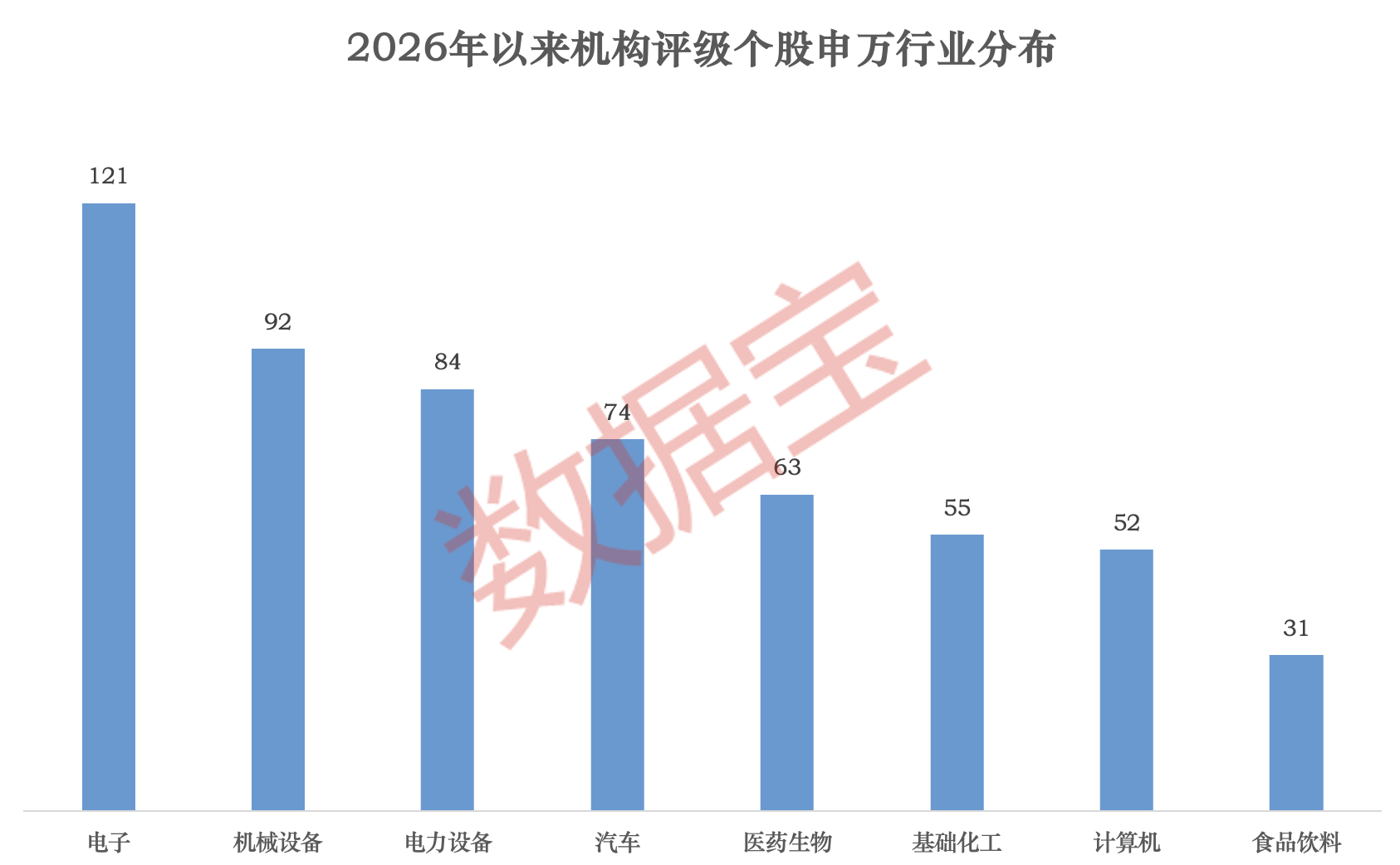
Group 1 - Since 2026, a total of 63 institutions have conducted 1,827 ratings, with 932 stocks receiving a "buy" rating from brokerage reports, including buy, overweight, strong buy, and recommend [1] - The stocks rated by institutions are primarily concentrated in the electronics, machinery equipment, and power equipment industries, with 121, 92, and 84 stocks respectively [1] - The automotive, pharmaceutical, basic chemicals, and computer sectors follow closely, each with over 50 rated stocks [1] Group 2 - Among the stocks rated by five or more institutions, Dongpeng Beverage, BYD, Wancheng Group, Kweichow Moutai, and China Duty Free rank highest, with 16, 15, 14, 14, and 14 institutions respectively [1] - A total of 26 stocks have had their ratings upgraded, including Weichai Power, Seres, Jianghuai Automobile, and Lin Tai New Materials from the automotive sector, as well as Wancheng Group, New Dairy, and Quanyuan Spring from the food and beverage sector [1] Group 3 - The companies with the highest institutional attention since 2026 include Dongpeng Beverage with a net profit of 4.465 billion yuan, a year-on-year increase of 34.22% [5] - BYD's net profit data is not specified, while Wancheng Group is projected to have a net profit of 1.315 billion yuan, a significant increase of 244.66% [5] - Kweichow Moutai and China Duty Free both received ratings from 14 institutions, but their net profit data is not disclosed [5] Group 4 - Weichai Power has a total market value of 235.07 billion yuan and has seen a price increase of 55.76% since 2026 [6] - Jianghuai Automobile has a market value of 128.85 billion yuan with a price increase of 15.47% [6] - Wancheng Group has a market value of 39.79 billion yuan with a modest price increase of 3.45% [6]





连续两年,省委书记、省长在正月初五“请客”
Xin Lang Cai Jing· 2026-02-21 16:12
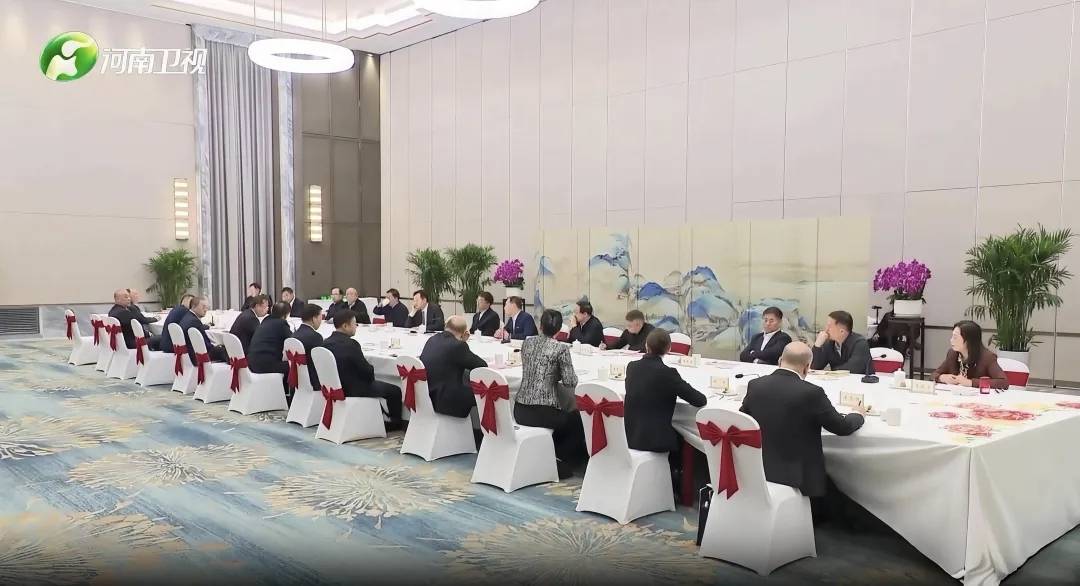
Core Viewpoint - The article highlights the ongoing efforts of the Henan provincial government to strengthen relationships with private enterprises and promote the development of the private economy through various initiatives and policies [1][2][8]. Group 1: Government Engagement with Private Enterprises - The Henan provincial government hosted a dinner for private entrepreneurs, marking the second consecutive year of this initiative [1]. - A total of 17 private entrepreneurs attended the dinner, with two new participants compared to the previous year [2]. - Key representatives included Qin Yinglin from Muyuan Foods, the world's largest pig farming company, and Zhang Hongfu from Mixue Ice City, a leading player in the new consumption sector [2]. Group 2: Economic Performance and Growth - In 2025, Henan's GDP is projected to reach 6.66 trillion yuan, with a growth rate of 5.6%, ranking third nationally and first among central provinces [7]. - Private investment in Henan increased by 7.3% from January to October last year, surpassing the national average by 11.8 percentage points [7]. - The province has 11.605 million business entities, with over 95% being private enterprises [7]. Group 3: Policy Initiatives and Support - The Henan government has established a leadership group to promote high-quality development of the private economy, involving multiple government departments [3][4]. - A series of supportive policies have been implemented, including measures to optimize government services and promote fair competition [5]. - The new revised "Henan Province Optimizing Business Environment Regulations" will take effect on March 1, providing legal support for the private economy [5]. Group 4: Future Outlook and Encouragement - The provincial leaders emphasized the importance of a favorable business environment and ongoing policy support to encourage private enterprises to thrive [8]. - There is a call for private entrepreneurs to maintain confidence in development and take on significant responsibilities in driving economic growth [8].
连续两年正月初五,河南省委书记、省长与民营企业家餐叙,“全网最爱发钱老板” 崔培军、蜜雪冰城创始人、卫龙董事长都来了
Sou Hu Cai Jing· 2026-02-21 15:15
Core Viewpoint - The annual meeting between the Henan provincial government and private entrepreneurs highlights the government's supportive stance towards private enterprises, with a focus on fostering a close relationship between the government and businesses [1][2]. Group 1: Government and Business Relations - The meeting on February 21, attended by key figures such as Liu Ning and Wang Kai, emphasizes the government's role in nurturing and protecting private enterprises, as articulated by Liu Ning's metaphor of businesses as trees needing soil and water [1][2]. - The participation of prominent entrepreneurs, including the founder of Henan Mining Crane Co., Ltd., Cui Peijun, reflects the government's commitment to engaging with the private sector [2][3]. Group 2: Entrepreneurial Highlights - Cui Peijun, recognized as "the boss who loves to give money," distributed 60 million yuan in cash as year-end bonuses, with a total annual bonus amounting to 180 million yuan [1][2]. - The event featured leaders from various sectors, including Qin Yinglin from Muyuan Foods and Liu Jianfeng from Luoyang Molybdenum, showcasing the diversity and strength of Henan's private enterprises [2][3]. Group 3: Economic Impact - Henan Mining Crane Co., Ltd. is noted as a representative of Henan's manufacturing industry and is viewed as a microcosm for observing how common prosperity can be implemented within enterprises [2][3].
味好美发布2025财年业绩及2026财年展望,中国市场成关键增量
Xin Lang Cai Jing· 2026-02-21 15:13
Company Overview - McCormick expects net sales for fiscal year 2026 to grow by 13%-17%, with 11%-13% of this growth attributed to the consolidation of its Mexican subsidiary, which will be completed in January 2026. Excluding this acquisition, the organic growth rate is projected to be only 1%-3%, indicating ongoing pressure on core business growth [1][2]. Financial Performance - In fiscal year 2025, the flavor solutions segment (B2B) saw an operating profit increase of 9.0%, primarily driven by major clients such as Pepsi and McDonald's. Conversely, the consumer segment (B2C) experienced a slight profit decline of 0.7%. Future performance will depend on the company's ability to balance B2B and B2C results through cost control and increased marketing investment, with a planned double-digit growth in the 2026 budget [3]. Market Dynamics - The Asia-Pacific market, particularly China, has become a key growth driver, with a 6.2% sales increase in the flavor solutions segment for fiscal year 2025, entirely fueled by demand from China. However, the company's strategy of "trading price for volume" raises concerns about potential profit erosion due to price competition. Additionally, the company relies heavily on its top three clients, which account for 49% of sales, indicating a high dependency on major customers. Rising commodity costs and channel transformations may continue to compress profit margins [4].
美国1750亿美元关税退税,对A股的影响(附50股)
Sou Hu Cai Jing· 2026-02-21 11:41
Group 1 - The core point of the article is that the recent US Supreme Court ruling on the $175 billion tariff refund has significant implications for both China and the A-share market, despite the refund being an internal US matter [2][6][28] - The $175 billion in tariffs was primarily collected from imports, including a 10% tariff on Chinese goods, and is now being refunded to US importers [8][10] - The refund will indirectly benefit Chinese companies as US importers, who have been financially strained by tariffs, will use the refunded money to pay off debts to Chinese suppliers and resume orders [12][14][28] Group 2 - The immediate impact on the A-share market is expected to be positive, with a potential "opening red" for A-shares as market sentiment improves following the ruling [40][46] - The ruling is seen as a signal that the previous high tariffs on Chinese goods may not be a permanent state, which could lead to a more favorable environment for Chinese exports [20][48] - Structural opportunities in the A-share market are identified, focusing on five main lines: export-oriented sectors, domestic substitution, strategic resources, domestic consumption, and new energy [51][62][88] Group 3 - Export-oriented sectors, particularly those with high exposure to the US market, are expected to benefit directly from the tariff refunds, with companies like Midea Group and Haier expected to see improved performance [52][72][73] - Domestic substitution and self-sufficiency in sectors like semiconductors and military equipment are highlighted as long-term strategic focuses, with companies like SMIC and AVIC Shenyang Aircraft being key players [53][78][86] - Strategic resources such as rare earths and gold are also expected to see price support due to ongoing global supply chain disruptions, benefiting companies like Northern Rare Earth and Shandong Gold [56][87]




【新春看市场】健康年货旺销成潮流
Jing Ji Ri Bao· 2026-02-21 06:52
Group 1: Health Consumption Trends - Health consumption has become a prominent choice during the Spring Festival, reflecting the robust vitality of the Chinese economy [1] - Consumers are increasingly opting for health-oriented products as New Year gifts, with a focus on organic and nutritious items [1] - Data from Meituan shows a significant increase in health product orders, with orders for Ejiao rising nearly 4 times and protein powder orders increasing by 118% [1] Group 2: Consumer Preferences for Gifts - A survey by JD Research indicates that 65.6% of consumers prioritize purchasing health-related gifts for their parents, with 77.2% choosing nutritional supplements [2] - The food gift box market is experiencing a "health return," with 83.6% of consumers selecting food gift boxes for their elders, emphasizing low-sugar and low-fat options [2] - The demand for low-sugar pastries is growing rapidly, outpacing the industry average, as consumers seek products that combine nutrition and taste [2] Group 3: Smart Health Products - Smart health technology products are becoming popular as gifts, with 73.5% of consumers looking for intelligent and convenient health monitoring devices for their parents [3] - Health monitoring and chronic disease management products account for 45.2% of the smart gift market [3] - The rise in health consumption is attributed to improved living standards, heightened health awareness, and innovative supply from businesses [3]
特朗普暗示违法征收的关税不退了,美财长称关税收入将“基本保持不变”
Hua Er Jie Jian Wen· 2026-02-20 23:52
Core Viewpoint - The Trump administration is determined to maintain tariff barriers despite a Supreme Court ruling declaring most of the tariffs illegal, indicating a shift to new tariffs under different legal provisions to replace those struck down [1][2][3]. Group 1: Tariff Changes and Legal Framework - President Trump announced plans to impose a 10% import tariff on global goods, replacing the tariffs deemed illegal by the Supreme Court [1]. - Treasury Secretary Becerra stated that the government will utilize alternative legal powers granted by Congress, including provisions from the Trade Act of 1974 and the Trade Expansion Act of 1962, to establish a new tariff system [1][2]. - Becerra emphasized that no reduction in tariff revenue is expected, projecting that tariff income will remain "basically unchanged" by 2026 [2]. Group 2: Financial Implications and Refunds - The Supreme Court's ruling could lead to a significant refund battle, with estimates suggesting that over $170 billion in tariffs may need to be refunded to importers [3][4]. - The U.S. government’s actual tariff revenue is closer to $130 billion, contrary to estimates suggesting $175 billion, indicating potential discrepancies in financial expectations [2]. - The refund process is expected to be complex and lengthy, potentially taking weeks to months, or even exceeding a year [5]. Group 3: Industry Reactions and Market Impact - Various industries, including textiles, toys, and food and beverage, are significantly affected by the tariff changes, with many companies already filing lawsuits to reclaim paid tariffs [3][4]. - The National Retail Federation has called for a streamlined refund process, highlighting the economic boost that tariff reductions could provide [5]. - Analysts predict that while the ruling may offer short-term relief, broader trade policy uncertainties will continue to impact retail sales, with benefits expected to diminish by 2028 [5][6].
达能2025年业绩增长4.5%,中国市场表现强劲
Jing Ji Guan Cha Wang· 2026-02-20 16:48
Core Insights - The core viewpoint of the article highlights Danone's financial performance for the year 2025, focusing on overall performance, regional market dynamics, and future growth guidance [1]. Financial Performance - In 2025, Danone's global sales revenue increased by 4.5%, exceeding 220 billion RMB. The company anticipates a same-store sales growth of 3% to 5% for the full year of 2026, with recurring operating profit growth expected to outpace sales revenue growth [2]. Business Development - The region is identified as a key driver of Danone's performance growth. In the fourth quarter, sales revenue grew by 10.4%, primarily driven by volume and product mix, which contributed to a growth of 10.6%. For the full year, the specialized nutrition business (including infant formula and medical nutrition) generated revenue of €2.768 billion, reflecting a year-on-year increase of 13.2%. The bottled water and beverage segment reported revenue of €777 million, up 6.1% year-on-year [3]. Recent Events - The report mentions the impact of a recent infant formula recall, stating that the financial impact is assessed to be "not significant," with an expected effect on net sales of approximately 0.5% to 1% in the first quarter of 2026. The company emphasizes that products sold through official channels in China were unaffected and is focused on rebuilding trust. Additionally, Danone has prepared an unprecedented product renewal plan for the 2026 sales season in the Chinese market, aiming to minimize inventory levels in preparation for the launch of new products [4].

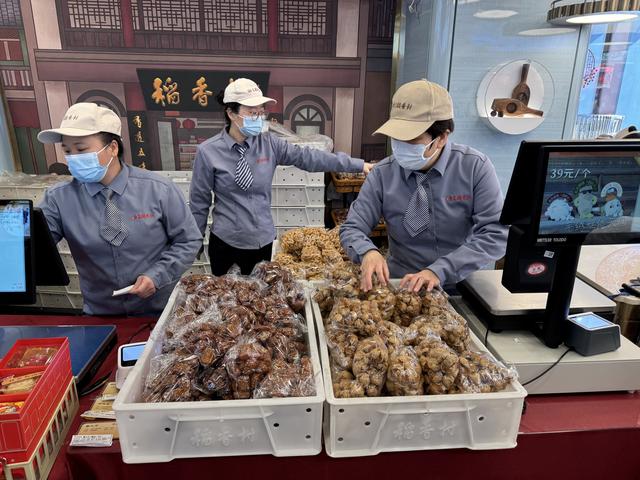
新春走基层 | 打卡北京隆福寺:一篮年货,喜乐相伴
Xin Lang Cai Jing· 2026-02-20 15:34
Core Insights - The article highlights the vibrant atmosphere of the traditional Chinese New Year market in Dongcheng District, Beijing, showcasing popular old brands like Beijing Daoxiangcun and Fengnian Sausage, which have become top destinations for visitors during the holiday season [1][3]. Group 1: Market Dynamics - The foot traffic at Beijing Daoxiangcun's zero store during the holiday period is reported to be two to three times higher than usual, with peak sales reaching approximately three tons of the three popular snack items per day [3]. - The market has implemented queue management to handle the influx of visitors, indicating a significant increase in consumer interest and demand for traditional snacks [3]. Group 2: Product Offerings - The article describes innovative snack offerings inspired by classic Chinese literature, such as the "Tang Seng Fruit" and "Pigsy Fruit," which reflect cultural themes and are designed to attract younger consumers [3]. - Sales of traditional products like sausages and condiments have doubled compared to regular days, with specific items like soy sauce and vinegar selling out quickly due to high demand [5]. Group 3: Cultural Significance - The market serves as a vital cultural hub, preserving the essence of old Beijing's customs and traditions while also adapting to modern consumer preferences, thus enhancing the festive atmosphere and boosting sales [5].
达能预计因婴儿配方奶粉召回事件损失7000万欧元
Xin Lang Cai Jing· 2026-02-20 13:32
Core Insights - Danone estimates a financial loss of €35 million to €70 million (approximately $82.4 million) in the first quarter due to a recent recall of baby formula caused by contamination fears [1] - The company's Deputy CEO, Jürgen Esser, expressed confidence in a gradual return to normalcy following the one-time shock and reaffirmed the full-year performance expectations [1] Financial Impact - Projected economic loss for Q1 is between €35 million and €70 million [1] - The estimated loss translates to about $82.4 million [1] Management Outlook - Jürgen Esser indicated a belief in a recovery to normal operations after the initial impact [1] - The company remains confident in meeting its annual performance targets despite the setback [1]