
石油

Search documents
多国拒绝海军护航,特朗普威胁进一步打击哈尔克岛
Hua Tai Qi Huo· 2026-03-17 08:13
原油日报 | 2026-03-17 多国拒绝海军护航,特朗普威胁进一步打击哈尔克岛 市场要闻与重要数据 7、阿联酋富查伊拉港的石油装运已恢复。此前,由于一架无人机袭击导致该国石油工业区发生火灾,该港口的油 品装载作业曾暂停。富查伊拉港位于阿曼湾畔,紧邻霍尔木兹海峡。这里通常是阿联酋穆尔班原油每日约100万桶 出口的重要通道,这一出口量约占全球原油需求的1%。(来源:Bloomberg) 8、英国首相斯塔默表示,英国不会卷入更广泛的伊朗战争,但会与包括欧洲国家在内的盟友合作,以重新开放霍 尔木兹海峡这一关键航道,不过他也承认这并非易事。在面对国内批评人士以及特朗普的施压(关于应为针对伊 朗的军事行动提供何种支持)的情况下,斯塔默表示重新开放一条对石油和液化天然气运输至关重要的航道是稳 定能源 市场的关键。(来源:Bloomberg) 1、 纽约商品交易所4月交货的轻质原油期货价格下跌5.21美元,收于每桶93.50美元,跌幅为5.28%;5月交货的伦 敦布伦特原油期货价格下跌2.93美元,收于每桶100.21美元,跌幅为2.84%。SC原油主力合约收跌6.53%,报720元 /桶。(来源:Bloomberg) ...
红海原油运量同比增至21倍
日经中文网· 2026-03-17 08:00
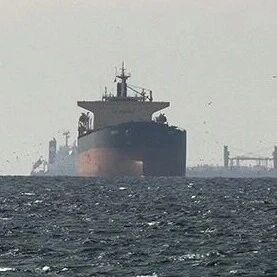
伊朗事实上封锁霍尔木兹海峡(REUTERS) 在沙特阿拉伯,通过输油管从西部的红海沿岸地区出口的原油激增。但周边海域也存在商船卷入纷争的 风险,运费上涨。经由霍尔木兹海峡的通道难以完全被替代,将成为推高原油采购成本的因素…… 鉴于伊朗事实上封锁霍尔木兹海峡的长期化,在原油运输一线,已开始广泛使用迂回路线。 在沙特阿拉伯,通过输油管从西部的红海沿岸地区出口的原油激增。但周边海域也存在商船 卷入纷争的风险,运费上涨。经由霍尔木兹海峡的通道难以完全被替代,将成为推高原油采 购成本的因素。 美国、以色列和伊朗的军事冲突没有平息的迹象。美国13日攻击了伊朗的主要原油出口基地 哈尔克岛。市场更加警惕战火扩大带来的供应风险。 目前,伊朗主要出口基地哈尔克岛的运输设备和储存设施并未受到严重破坏,供应并未立即 停止。但14日有消息称,阿联酋南部的石油出口基地富查伊拉港遭到无人机袭击。 在平时,沙特的原油大部分从油田所在的波斯湾一侧出口。美国调查公司Veson Nautical的 数据显示,从大型油轮的出口量来看,2025年波斯湾一侧出口约占80%,通过东西输油管从 红海一侧出口的量仅占20%左右。 在伊朗遭袭后,情况发生了变化 ...

历次中东战争回顾,做好滞涨冲击准备
Zi Jin Tian Feng Qi Huo· 2026-03-17 06:30
Report Industry Investment Rating - Not provided Core Views - The new Iranian Supreme Leader Mujtaba's first statement indicates that blocking the Strait of Hormuz is Iran's strategic means and a major weapon against the US and Israel. Trump's TACO attitude exposes the US's weakness, and Iran will take advantage of it to raise negotiation demands, with conditions almost unacceptable to the US and Israel [5]. - Trump is in an awkward situation where he can't end the war, and ending it would be useless. Even if Trump ends the war unconditionally, Iran won't stop the blockade. The US currently has only two aircraft carrier battle - groups in the Middle East, far less than the six used in the Iraq war. The current military strength is insufficient to suppress Iran or even fulfill escort tasks. The US may have to escalate the war, launch a full - scale attack on Iran, or even carry out another decapitation to have conditions for peace talks [5]. - Looking back at previous Middle East wars, especially the Yom Kippur War, when oil embargo was first used as a weapon, it led to global economic "stagflation". US industrial production decreased by 14%, and Japanese industrial production decreased by over 20%, triggering a serious economic crisis in Western countries. Last year, low - cost energy suppressed the US CPI, and now oil prices above $100 will trigger an inflation chain reaction, possibly pushing the CPI back to a high level [5]. - The final outcomes of previous Middle East wars were products of compromise after extreme games among major powers. In the Yom Kippur War, the US and Israel finally compromised and stopped the war under the threat of the Soviet Union's possible direct participation and nuclear deterrence. In the current Middle East crisis, similar to the Yom Kippur War, Russia has benefited the most so far. It has dragged the US into the Middle East war, raised oil prices, which can reduce Western aid to Ukraine, increase Russia's income, and raise Russia's negotiation chips. Although Russia can't provide a large amount of weapons to Iran, it still plays a role in information warfare and diplomacy. China clearly opposes the war but has no effective means. The oil shock is not beneficial to the Chinese economy, but China is not the most affected. If the US is severely hit, it is beneficial for China to increase its negotiation chips with the US. The game among major powers in the Middle East is far from reaching the limit [7]. - In the market, the US stock market shows an arc - shaped top trend, and the US Treasury yield curve moves towards a bear - flattening. Stock markets in India, South Korea, Japan and other countries with high energy risk exposure are the most affected. Overall, the conditions for all parties to end the war and hold peace talks are not met, and war escalation is a high - probability event. Investment strategies should focus on risk prevention. The A - share market also faces great pressure and may need to fall to create room for opportunities this year [8]. Summary by Related Catalogs Why is the impact so huge? - Strategic counter - measure upgrade: Arab oil - producing countries first used oil as a geopolitical weapon rather than just an economic commodity [12]. - High global dependence: Western countries at that time were highly dependent on Middle East oil, with nearly half of their total oil demand imported from Arab countries [12]. - Supply - demand imbalance: OPEC's significant production cut (25%) and embargo jointly tightened the global oil supply [12]. - Dollar system resonance: Combined with the collapse of the Bretton Woods system in 1971 and the decline of the US dollar's credit, these three factors jointly led to a super oil - price market [12]. How did the war end? - Battlefield turn and cease - fire resolution (October 22 - 26): On October 22, the UN Security Council passed Resolution 338, requiring both sides to "immediately cease fire and implement Resolution 242". The cease - fire took effect at 6:52 pm Israeli time [12]. - Cease - fire breakdown: The Israeli army continued to advance and surrounded Egypt's 3rd Army on the 23rd, controlling the refinery on the outskirts of Suez City and cutting off its supply line [12]. - Second cease - fire: On October 24, under the dual pressure of the US and the Soviet Union, both sides finally complied with the cease - fire agreement, and large - scale fighting basically ended. On October 26, the formal cease - fire took effect, and the war actually ended (lasting only 21 days) [12]. Oil price trends and impacts - The current round of oil prices is likely to peak before the end of the war, mainly due to information expectations in the futures market and the large - scale oil reserves established by the G7, which have a certain buffering effect. This oil crisis may bring a major opportunity for the revitalization of the new - energy industry in a trough, and it is recommended to focus on it [13]. - During the Fourth Middle East War, the end of the military conflict did not mean the end of the energy crisis, and the political impact of the oil weapon had a significant lag. The decline in oil prices was the result of the joint action of political negotiations, market regulation, and policy responses. This crisis promoted the global energy - security strategic transformation, including Western countries establishing oil reserves, promoting energy diversification, accelerating the R & D of new - energy technologies, and the rise of the Japanese automobile industry [15]. - Specific oil - price changes at different war nodes: When the war ended on October 26, 1973, oil prices continued to rise from $10 to $13 due to the ongoing embargo and market panic; on January 18, 1974, when the Egypt - Israel cease - fire agreement was reached, oil prices peaked at $13 as the peace process started and the market expected the embargo to be lifted; on March 18, 1974, when the embargo was lifted, oil prices began to fall as supply recovered and political risk premiums disappeared; in September 1975, when the second - stage Egypt - Israel agreement was reached, oil prices stabilized at $9 - $10 as the Middle East situation eased and the market fully adapted to the new price system [14].
突然,直线拉升!霍尔木兹海峡,传来大消息!又一艘油轮遇袭!
券商中国· 2026-03-17 06:27
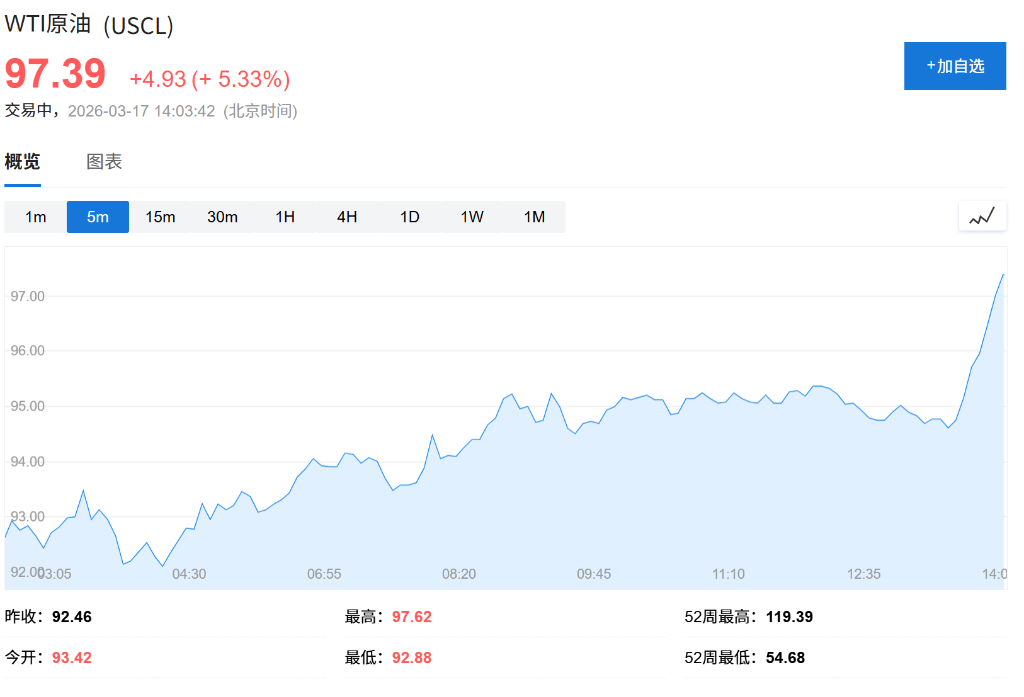
此前一天,阿联酋Shah天然气田因无人机袭击引发火灾,导致作业暂停,官员正在评估损失。另外,伊拉克一 处油田和阿联酋重要港口也遭到无人机和导弹袭击。 与此同时,霍尔木兹海峡也有大消息传出。德国、意大利、澳大利亚、比利时等多国表示,不参与霍尔木兹海 峡护航。 今日盘中,国际油价直线拉升,WTI原油涨超5%,布伦特原油超4%。截至券商中国记者发稿,WTI原油、 布伦特原油分别上涨5.35%、4.65%,价格分别报97.41美元/桶、104.87美元/桶。 "风险依然严峻:只需一支伊朗民兵向过往油轮发射导弹或布设水雷,就足以让整个局势再度紧张。"IG市场分 析师托尼·西卡莫尔在报告中指出。菲利普诺瓦高级市场分析师普里扬卡·萨赫德瓦表示,目前,石油市场聚焦 于冲突持续时间、霍尔木兹海峡供应中断,以及最终这场混乱对海湾地区石油基础设施造成的破坏。 霍尔木兹海峡及其周边海域,又有突发事件! 据最新消息,英国海上贸易行动办公室17日说,一艘停泊在阿曼湾的油轮遭不明发射物袭击。 一艘油轮遇袭 据央视新闻报道,英国海上贸易行动办公室17日说,一艘停泊在阿曼湾的油轮遭不明发射物袭击,据报告有轻 微结构损坏,没有人员受伤。 该办公 ...

光大期货能化商品日报-20260317
Guang Da Qi Huo· 2026-03-17 06:23
1. Report Industry Investment Rating - Not mentioned in the provided content 2. Core Viewpoints of the Report - The oil price shows a wide - range volatile trend due to the continuous geopolitical conflicts and the influence of supply - related news. The market needs to pay attention to whether the conflict directly affects Iranian oil export facilities [1][3]. - The short - term high - and low - sulfur cracking spreads of fuel oil are expected to remain at a high level, and the impact of the geopolitical situation on the cost side should be noted [3]. - The asphalt price is expected to remain at a high level in the short term. The supply is expected to decrease, and the demand is expected to increase, with attention to the impact of the geopolitical situation on the cost side [3]. - The polyester price shows a high - level wide - range volatile trend in the short term due to the resonance of cost - side increase and supply reduction, while the downstream demand is weak. The ethylene glycol may have a slight correction if there is an expectation of import recovery [5]. - The natural rubber and synthetic rubber trends may further diverge. The butadiene rubber price will fluctuate with the geopolitical situation and oil price, and the natural rubber will face the dual pressures of increased supply and decreased demand [5][7]. - The methanol inventory will enter a downward channel, but the current Iranian situation is unclear, which may cause large fluctuations in the market [7]. - The polyolefin market maintains a de - stocking rhythm, but the short - term geopolitical risks push up the cost, squeezing the downstream profit space, and the follow - up demand growth may be blocked [7][9]. - The PVC price is expected to maintain a wide - range volatile trend. The supply is expected to remain at a high level, and the demand will gradually recover [9]. 3. Summary According to Relevant Catalogs 3.1 Research Views - **Crude Oil**: On Monday, the oil price center dropped. The WTI April contract closed down $5.21 to $93.5 per barrel, a decline of 5.28%. The Brent May contract closed down $2.93 to $100.21 per barrel, a decline of 2.84%. SC2604 closed at 712.5 yuan per barrel, down 49.3 yuan per barrel, a decline of 6.47%. The US Treasury Secretary said that Iranian oil tankers are continuously leaving the Strait of Hormuz, and the US has taken a tacit attitude. The IEA has agreed to use 400 million barrels of emergency strategic reserves, and Saudi Arabia has available global inventories. Saudi Arabia is accelerating oil exports through alternative routes, with at least 27 oil tankers waiting at Yanbu Port on Monday, up from 11 on Friday. Iraq is working on modifying an oil pipeline to directly export oil to Turkey's Ceyhan Port [1]. - **Fuel Oil**: On Monday, the main contract of fuel oil (FU2605) on the Shanghai Futures Exchange rose 1.81% to 4,848 yuan per ton, and the main contract of low - sulfur fuel oil (LU2605) rose 2.18% to 5,729 yuan per ton. The market structure of high - and low - sulfur fuel oil in Singapore has strengthened significantly. The blockade of the Strait of Hormuz restricts the supply of fuel oil from the Middle East, and the soaring freight rates close the east - west arbitrage window, tightening the supply. The demand from domestic refineries for alternative raw materials and overseas ship refueling is expected to increase [3]. - **Asphalt**: On Monday, the main contract of asphalt (BU2604) on the Shanghai Futures Exchange rose 10.63% to 4,464 yuan per ton. Affected by the geopolitical conflict, the short - term supply of raw materials is expected to be tight. Some major refineries are ensuring the supply of refined oil, so the asphalt production is expected to decrease, and the supply will remain at a low level. The demand in the northern region is expected to increase in April as the temperature warms up [3]. - **Polyester**: TA605 closed at 6,982 yuan per ton on Monday, up 0.69%. EG2605 closed at 4,897 yuan per ton, up 3.55%. PX futures main contract 605 closed at 10,180 yuan per ton, up 1.62%. The production of domestic and overseas suppliers has been reduced. The cost increase and supply reduction resonate, while the downstream demand is weak. The ethylene glycol production in Iran has resumed, but the shipping needs further recovery [5]. - **Rubber**: On Monday, the main contract of Shanghai rubber (RU2605) rose 105 yuan per ton to 16,870 yuan per ton, NR rose 175 yuan per ton to 13,495 yuan per ton, and butadiene rubber (BR) main contract fell 25 yuan per ton to 15,700 yuan per ton. In January 2026, the US imported 23.48 million tires, a year - on - year increase of 2.6% and a month - on - month increase of 2.5%. The natural rubber and synthetic rubber trends may diverge [5][7]. - **Methanol**: The inventory of methanol will enter a downward channel, and the MTO plant may increase the willingness to resume production. However, the current Iranian situation is unclear, which may cause large fluctuations in the market [7]. - **Polyolefins**: The upstream plant maintenance plans have increased, and the subsequent production is expected to decline. The downstream factory operating load has increased, and the spring demand is being released. The market maintains a de - stocking rhythm, but the short - term geopolitical risks push up the cost, squeezing the downstream profit space [7][9]. - **Polyvinyl Chloride (PVC)**: The PVC price in the East, North, and South China markets has increased. The geopolitical situation has a greater impact on the ethylene - based method, but the profit of the calcium carbide - based method has strengthened rapidly. The supply is expected to remain at a high level, and the demand will gradually recover [9]. 3.2 Daily Data Monitoring - The table shows the basis data of various energy and chemical products on March 16, 2026, including spot prices, futures prices, basis, basis rates, and their changes compared with March 13, as well as the quantile of the latest basis rate in historical data [10]. 3.3 Market News - The US Treasury Secretary said that Iranian oil tankers are continuously leaving the Strait of Hormuz, and the US has taken a tacit attitude. The IEA has agreed to use 400 million barrels of emergency strategic reserves, and Saudi Arabia has available global inventories. The US President Trump called on countries to help dredge the Strait of Hormuz [12]. - With the closure of the Strait of Hormuz, Saudi Arabia is accelerating oil exports through alternative routes. At least 27 oil tankers were waiting at Yanbu Port on Monday, up from 11 on Friday, and Saudi Arabia aims to export up to 5 million barrels of oil per day through this alternative channel [12]. 3.4 Chart Analysis - **4.1 Main Contract Prices**: There are 19 charts showing the closing prices of main contracts of various energy and chemical products from 2022 to 2026, including crude oil, fuel oil, low - sulfur fuel oil, asphalt, LPG, PTA, ethylene glycol, etc. [14][15][16] - **4.2 Main Contract Basis**: There are 31 charts showing the basis of main contracts of various energy and chemical products from 2022 to 2026, including crude oil, fuel oil, low - sulfur fuel oil, asphalt, ethylene glycol, etc. [32][34][38] - **4.3 Inter - period Contract Spreads**: There are 22 charts showing the spreads between different contracts of various energy and chemical products, such as fuel oil, asphalt, PTA, ethylene glycol, etc. [46][48][51] - **4.4 Inter - variety Spreads**: There are 12 charts showing the spreads and ratios between different varieties of energy and chemical products, such as crude oil internal and external spreads, fuel oil high - and low - sulfur spreads, etc. [62][64][66] - **4.5 Production Profits**: There are 4 charts showing the production profits and processing fees of various energy and chemical products, such as LLDPE, PP, PTA, and ethylene - based ethylene glycol [71][73] 3.5 Team Member Introduction - **Zhong Meiyan**: Deputy Director of Everbright Futures Research Institute, with a master's degree from Shanghai University of Finance and Economics. She has won many awards and has more than ten years of research experience in the futures derivatives market [76]. - **Du Bingqin**: Director of Energy and Chemical Research at Everbright Futures Research Institute, with a master's degree in applied economics from the University of Wisconsin - Madison. She has won many awards and has in - depth research on the energy industry [77]. - **Di Yilin**: Analyst of natural rubber and polyester at Everbright Futures Research Institute, with a master's degree in finance. She has won many awards and is mainly engaged in the research of related futures varieties [78]. - **Peng Haibo**: Analyst of methanol, propylene, pure benzene, polyolefins, and PVC at Everbright Futures Research Institute, with an engineering master's degree and a title of intermediate economist. He has relevant work experience and has passed the CFA Level III exam [79].
中东能源设施接连遇袭,油价急拉重破百元,亚洲科技股借英伟达利好上涨,现货金上涨0.4%
Hua Er Jie Jian Wen· 2026-03-17 06:06
Group 1 - The core viewpoint of the articles highlights the escalating conflict in the Middle East, particularly Iran's attacks on energy infrastructure in the Persian Gulf, leading to a significant rebound in oil prices, surpassing $100 per barrel [1][2] - The WTI crude oil futures saw a rapid increase, with a 5% rise, breaking the $97 per barrel mark, driven by heightened tensions following Iran's attack on a major gas field in the UAE [1][7] - The Australian Reserve Bank has raised interest rates for the second consecutive time, citing the dual threats of inflation and economic growth posed by the ongoing conflict [2][10] Group 2 - The market is closely monitoring the actions of central banks, particularly the Federal Reserve, as rising oil prices may trigger a hawkish shift in monetary policy [2][10] - The shipping traffic through the Strait of Hormuz has nearly come to a standstill, with a notable increase in Iranian-associated vessels, reaching a wartime peak of 12 ships in the last 24 hours [2][13] - The aluminum market is experiencing upward pressure due to supply disruptions from the Middle East, with prices rebounding after a two-day decline, reflecting the sensitivity to potential supply interruptions [14][17] Group 3 - Asian technology stocks received a temporary boost from optimistic forecasts regarding AI chip sales, projected to exceed $1 trillion by the end of 2027, although the sustainability of this rally remains uncertain [1][8] - The Korean Composite Index rose by 2.4%, and the Nikkei 225 increased by 0.4%, with major semiconductor companies like SK Hynix and Samsung Electronics seeing significant gains [7][8] - The overall market sentiment remains cautious, as the simultaneous rise in oil prices and technology stocks presents a complex scenario for investors [10]

谁会先“断油”?这些亚洲国家可能撑不过40天……
财联社· 2026-03-17 05:06
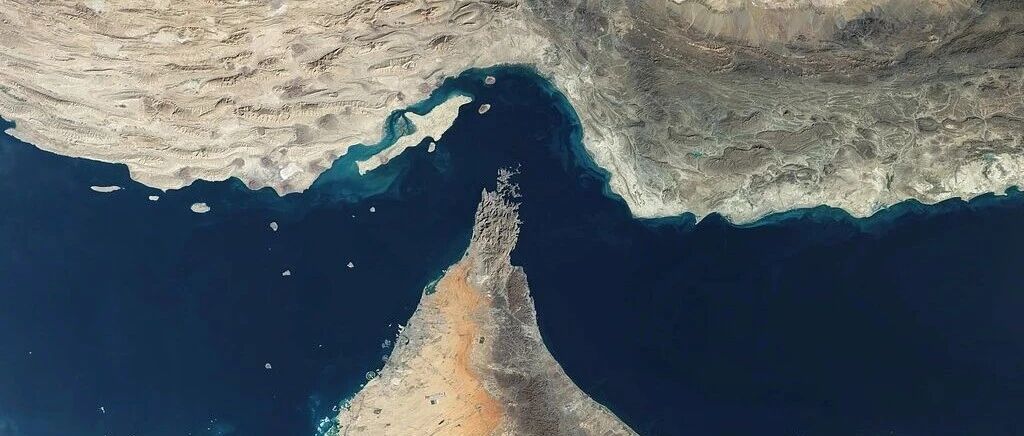
Core Viewpoint - The article highlights the significant decline in oil flow through the Strait of Hormuz, with current estimates at 500,000 barrels per day, a reduction of 19.5 million barrels per day compared to historical averages, leading to a tightening global oil supply and rising prices [1][4]. Group 1: Oil Flow and Supply Impact - Oil flow through the Strait of Hormuz has decreased significantly, with an estimated current flow of 500,000 barrels per day, down from an average of 20 million barrels per day [1]. - Approximately 17 million barrels of oil per day are still unable to be transported due to supply chain disruptions [1]. - The production cut in Middle Eastern oil countries is nearing 7 million barrels per day and may exceed 10 million barrels per day soon [4]. Group 2: Regional Supply Vulnerabilities - Southeast Asian countries are particularly vulnerable, relying on over 13 million barrels per day from the Strait, which constitutes about 50% of their total imports [7]. - Japan and South Korea are the most affected among the top four oil buyers, with 81% and 62% of their oil coming from the Strait, respectively [9]. - China has a relatively secure energy position, with reserves that could buffer against supply disruptions for nearly 300 days [9]. Group 3: Emergency Measures and Policy Responses - Many Asian governments are exploring emergency measures to stabilize domestic fuel markets, including export restrictions and strategic reserve utilization [17]. - Vietnam has implemented measures such as encouraging remote work to save fuel and suspending fuel import tariffs [17]. - Thailand has frozen diesel and gasoline prices and is using a fuel fund for subsidies to maintain low prices [18].

海外宏观周报:能源冲击下的美联储决议-20260317
China Post Securities· 2026-03-17 05:00
Geopolitical Risks - The geopolitical situation in the Middle East has escalated, leading to significant volatility in international energy markets[1] - Iran's attack on U.S. military bases in the region has prompted U.S. airstrikes on Iran's key oil export hub, increasing regional security risks[1] - Oil production cuts from Saudi Arabia, UAE, Iraq, and Kuwait total approximately 6.7 million barrels per day, representing about 6% of global supply[1][9] Federal Reserve Outlook - The Federal Reserve is expected to maintain interest rates at current levels during its upcoming meeting, with only one rate cut anticipated this year according to the dot plot[2] - Rising energy prices complicate the Fed's decision-making, particularly regarding inflation assessments and employment data interpretations[2] - If high oil prices persist, the timing of potential rate cuts may be delayed, although this does not signal the end of the easing cycle[2] Economic Indicators - The U.S. Consumer Price Index (CPI) for February shows a year-on-year increase of 2.4% and a month-on-month increase of 0.3%[10] - Core CPI, excluding food and energy, rose by 2.5% year-on-year, with a month-on-month increase of 0.2%[10] - The Michigan Consumer Sentiment Index decreased to 55.5, slightly above market expectations, with one-year inflation expectations at 3.4%[10][14]
原油价格与糖价的关系
Xi Nan Qi Huo· 2026-03-17 03:39
Report Summary 1. Report Industry Investment Rating No information provided. 2. Core View of the Report The report reveals a complete transmission chain of "rising crude oil prices → rising gasoline prices → rising Brazilian ethanol prices → rising Brazilian sugar prices." The sharp rise in crude oil prices will significantly impact Brazilian sugar production, especially as the new sugar - cane crushing season starts on April 1st. Current high crude oil prices will greatly influence sugar mills' production decisions, potentially leading to a reduction in sugar output [20][23]. 3. Summary by Relevant Catalogs Overview - Since 2026, due to factors such as the escalation of the Middle - East geopolitical conflict and the interruption of shipping in the Strait of Hormuz, international crude oil prices have soared, with Brent crude oil prices exceeding $120 per barrel. Historically, there is a high long - term correlation between crude oil and raw sugar prices [2]. - The Strait of Hormuz remains closed, disrupting global crude oil trade. Its normal daily oil transport volume is about 20 million barrels, accounting for 25% - 30% of global seaborne oil trade and about 20% of global oil consumption. Future crude oil price trends will greatly affect sugar prices [2]. Relationship between Crude Oil Price and Brazilian Gasoline Price - Crude oil is the core raw material for gasoline production, accounting for over 70% of gasoline production costs. Rising crude oil prices lead to increased raw material costs for refineries, which then pass on the cost pressure to end - user gasoline prices [3]. - Although gasoline in Brazil is market - priced, Petrobras, as the largest refiner, controls about 70% of crude oil, 90% of natural gas, and 98% of refining capacity in Brazil, having strong pricing power in the wholesale market. The government makes comprehensive pricing decisions considering domestic costs, market competition, inflation, and people's livelihood. Under Petrobras' price control, Brazilian gasoline prices have not significantly increased in March 2026, with international Brent crude oil rising over 40% and Brazilian gasoline only rising 0.65% during the same period [6]. Relationship between Brazilian Gasoline Price and Brazilian Ethanol Price - Brazil is the world's largest producer and consumer of sugar - cane ethanol. Ethanol, as an important alternative fuel and blending component for gasoline, has a strong price linkage with gasoline. The implementation of the E30 ethanol - gasoline policy in Brazil since August 1, 2025, makes ethanol and gasoline in direct substitution competition. Rising gasoline prices drive up ethanol demand and prices [8][10]. - When crude oil prices rise significantly, the demand for ethanol as a substitute for gasoline increases, and ethanol prices follow. The market generally uses 0.7 as the critical value for the ethanol - gasoline ratio. When the ethanol price does not exceed 70% of the gasoline price, consumers prefer ethanol, increasing its demand and price [11]. Brazilian Ethanol Price Increase Leading to a Chain Increase in Sugar Price - Brazil is the world's largest sugar producer and exporter, accounting for over 70% of global sugar exports. Brazilian sugar - cane can be used to produce both sugar and ethanol, and sugar mills can adjust the production ratio (sugar - ethanol ratio) according to the price ratio of ethanol to sugar. Rising ethanol prices prompt sugar mills to increase ethanol production and reduce sugar production, leading to a decrease in sugar supply and an increase in sugar prices [15]. - As of March 13, the Brazilian ethanol - equivalent sugar price is about 16.48 cents per pound, while the ICE raw sugar settlement price is 14.41 cents per pound, indicating that producing ethanol is more advantageous [16]. Conclusion - The sharp rise in crude oil prices since March 2026 will gradually be transmitted to Brazilian domestic gasoline prices, then to ethanol prices, and finally cause sugar mills to significantly adjust their production ratios. Hedgepoint estimates that the sugar - cane - to - sugar ratio is expected to be 48.6%, a 2 - percentage - point decrease. StoneX analysts believe that Brazilian sugar mills will prioritize ethanol production in the early 2026/27 crushing season, further reducing sugar output [20][23].
申万宏源2026年春季美股投资策略:“举”重“弱”轻,保持对冲
Shenwan Hongyuan Securities· 2026-03-17 03:13
Group 1 - The S&P 500 index has decreased by 3.1% since the beginning of the year, primarily due to valuation drag, while earnings growth has contributed positively [6] - The Nasdaq index has also fallen by 3.3%, with a valuation drag of 7.4% and earnings growth contributing 4.4% [6] - Value stocks have outperformed growth stocks, and mid-cap and small-cap stocks have outperformed large-cap stocks [3][13] Group 2 - The energy sector has seen a price increase of 28.3%, while the consumer discretionary sector has decreased by 8.0% [11] - The software, financial, and consumer discretionary sectors have led the market decline, while energy and consumer staples have shown gains [3][11] - The average volatility of individual stocks is significantly higher than that of the indices, indicating increased stock-specific risk [3][13] Group 3 - The report indicates that the U.S. economy is entering a K-shaped recovery phase, with non-farm employment growth slowing to just 116,000 in 2025 compared to 4.526 million in 2022 [35] - The report highlights that the AI sector is characterized by significant capital investment in data centers, with a focus on fixed assets [3][40] - The software industry is experiencing a valuation drop, with many AI application stocks declining over 20% due to concerns about AI disrupting traditional business models [12][40] Group 4 - The report suggests that the capital expenditure of the S&P 500 will increasingly rely on sectors beyond technology, with industrials, utilities, and energy expected to see a rebound in capital expenditure growth starting in 2025 [3][11] - The report notes that the valuation of U.S. industrials, materials, and energy sectors is relatively reasonable from a PB-ROE perspective, indicating potential investment opportunities [3][11] - The report emphasizes that the AI value chain is evolving, with upstream sectors focusing on cost advantages and downstream sectors still in the early stages of development [3][40]