金融

Search documents
Can’t Live on $2k a Month in Social Security? Add These ETFs to Your Retirement Portfolio
Yahoo Finance· 2026-02-01 12:26
Quick Read The right ETFs could supplement your Social Security checks nicely and provide access to steady income. VYM and SCHD are dividend-focused equity ETFs with low expense ratios and stable holdings. BND offers lower volatility through investment-grade bonds rather than stocks. Investors rethink 'hands off' investing and decide to start making real money A lot of people assume that once they retire, they'll be able to manage their expenses on Social Security alone. But you may be surprised ...
贵金属巨震之下,会造成哪些金融市场品种的连锁反应,有哪些历史经验教训,有何关键企稳信号指标?
Sou Hu Cai Jing· 2026-02-01 09:31
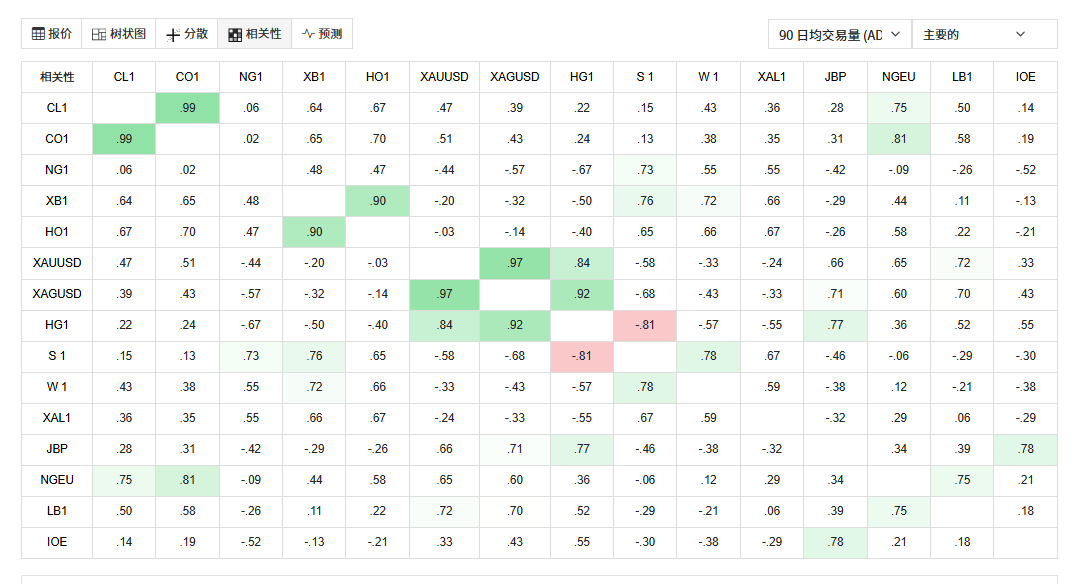
Group 1 - The core trigger for the recent significant drop in precious metals is the nomination of Kevin Warsh as the next Federal Reserve Chairman, which shattered market expectations for monetary easing and led to a surge in real interest rates and a rebound in the dollar [1][17] - Historical experiences indicate that after significant declines in precious metals, markets typically exhibit a pattern of reaction within one month, with the current decline expected to exceed past events in intensity [8][10][14] - The correlation between precious metals and industrial metals is notably high, with gold (XAUUSD) and silver (XAGUSD) showing a correlation of 0.97, indicating that they tend to move together in price [3][6] Group 2 - The relationship between precious metals and the dollar is characterized by a long-term negative correlation, which was particularly evident during the recent drop when the dollar index rose by 1.8%, diminishing the attractiveness of precious metals [6][17] - The market's expectation of continued high interest rates under Warsh's leadership is likely to support the dollar and further pressure precious metals, reinforcing the cycle of "dollar up - precious metals down" [6][17] - The recent decline in precious metals has also affected related sectors, with precious metal stocks experiencing significant drops, while financial sectors benefiting from a stronger dollar saw slight increases [6][17]

【广发宏观吴棋滢】财政:12月收支变化与2026年开年预期
郭磊宏观茶座· 2026-02-01 09:23
Core Viewpoint - The fiscal revenue in December 2025 experienced a significant decline of 25.0% year-on-year, primarily due to a high base effect from December 2024, which saw a 40.4% increase in central fiscal revenue [1][6][9]. Group 1: Fiscal Revenue Analysis - In December 2025, general public budget revenue decreased by 25.0% year-on-year, with tax revenue down by 11.5% and non-tax revenue down by 47.9% [6][7]. - The central general public budget revenue fell by 50.3%, while local general public budget revenue remained stable with a year-on-year increase of 4.1% [6][7]. - The overall completion rate of the general public budget revenue for 2025 was 98.3%, indicating a satisfactory level despite the decline in December [9][10]. Group 2: Tax Revenue Trends - Tax revenue showed a pattern of being weak in the first half of 2025 but improved in the second half, with an overall annual growth of 0.8%, which was below the initial target of 3.7% [10][11]. - Specific tax categories such as stamp duty and personal income tax saw significant increases, with stamp duty growing by 24.1% and personal income tax by 11.5% [12][13]. - The growth in tax revenue was attributed to factors such as tax incentives, regulatory adjustments, and an active capital market [11][12]. Group 3: Fiscal Expenditure Insights - The fiscal expenditure in 2025 showed a weak trend, with a year-on-year increase of only 1.0% and a completion rate of 96.8% [16][17]. - The expenditure structure revealed a focus on social security, environmental protection, and health, while infrastructure spending saw negative growth in several areas [12][16]. - The divergence between revenue and expenditure created a fiscal gap of 71,350 billion yuan, which was lower than the initial budget estimate [16][22]. Group 4: Government Fund Budget Overview - The government fund budget revenue for 2025 decreased by 14.7%, with land transfer income significantly impacted [21][22]. - The government fund budget expenditure increased by 11.3%, primarily driven by special bonds and other fiscal instruments [21][22]. - The fiscal gap in the government fund budget was 55,170 billion yuan, indicating a need for adjustments in fiscal policy to stabilize the real estate market [21][22]. Group 5: 2026 Fiscal Outlook - The early fiscal situation for 2026 suggests potential improvements in tax revenue due to rising industrial indices and PPI [23]. - The land market remains weak, with a significant decline in land transfer revenue, indicating ongoing challenges in the real estate sector [23]. - The issuance of bonds in early 2026 is expected to align with proactive fiscal policies aimed at stimulating economic activity [23].

国内观察:2026年1月PMI:春节及高基数影响下的回落
Donghai Securities· 2026-02-01 08:24
Group 1: PMI Data Overview - In January, the manufacturing PMI decreased to 49.3%, down from 50.1% in December[2] - The non-manufacturing PMI also fell to 49.4%, compared to 50.2% in the previous month[2] - The decline in PMI is attributed to the upcoming Spring Festival and a high base effect from the previous month[2] Group 2: Sector Performance - High-tech and midstream equipment manufacturing PMIs remain above the threshold at 52.0% and 50.1% respectively, despite slight declines[2] - Downstream consumer goods manufacturing PMI dropped to 48.3%, indicating a significant decrease of 2.1 percentage points[2] - The construction PMI fell to 48.8%, a decrease of 4.0 percentage points, reflecting seasonal impacts and a high base from the previous month[2] Group 3: Price Indices - The main raw material purchase price index rose to 56.1%, an increase of 3.0 percentage points, while the factory price index reached 50.6%, up by 1.7 percentage points[2] - This marks the first time in 20 months that the factory price index has risen above the critical point, suggesting a potential narrowing of PPI declines[2] Group 4: Demand and Supply Dynamics - The production index decreased to 50.6%, down by 1.1 percentage points, while the new orders index fell to 49.2%, down by 1.6 percentage points[2] - The new export orders index also declined to 47.8%, indicating a slowdown in export momentum compared to the previous month[2] Group 5: Policy and Economic Outlook - The first batch of "two new" funds has been allocated, and a coordinated fiscal and financial policy to boost domestic demand has been deployed[2] - Continued attention is needed on marginal changes in investment, consumer performance during the Spring Festival, and new policies from the upcoming Two Sessions[2]
国内观察2026年1月PMI:春节及高基数影响下的回落
Donghai Securities· 2026-02-01 08:16
Group 1: PMI Data Overview - In January, the manufacturing PMI decreased to 49.3%, down from 50.1% in December[2] - The non-manufacturing PMI also fell to 49.4%, compared to 50.2% in the previous month[2] - The decline in PMI is attributed to the upcoming Spring Festival and a high base effect from the previous month[2] Group 2: Sector Performance - High-tech and midstream equipment manufacturing PMIs remain above the threshold at 52.0% and 50.1% respectively, despite slight declines[2] - Downstream consumer goods manufacturing PMI dropped to 48.3%, indicating a significant decrease of 2.1 percentage points[2] - The construction PMI fell to 48.8%, a decrease of 4.0 percentage points, reflecting seasonal impacts and a high base from the previous month[2] Group 3: Price Indices - The main raw material purchase price index rose to 56.1%, an increase of 3.0 percentage points, while the factory price index reached 50.6%, up by 1.7 percentage points[2] - This marks the first time in 20 months that the factory price index has risen above the critical point, suggesting a potential narrowing of PPI declines[2] Group 4: Demand and Supply Dynamics - The production index decreased to 50.6%, down by 1.1 percentage points, while the new orders index fell to 49.2%, a drop of 1.6 percentage points[2] - New export orders also declined to 47.8%, indicating a slowdown in external demand[2] Group 5: Policy and Economic Outlook - The first batch of "two new" funds has been allocated, and a coordinated fiscal and financial policy to boost domestic demand has been deployed[2] - Continued monitoring of investment trends, consumer performance during the Spring Festival, and policy developments during the Two Sessions is advised[2]
十大机构看后市:本轮ETF集中赎回潮结束,A股有望在春节前企稳,春节前后迎新一轮上行行情,2月上涨概率76%
Xin Lang Cai Jing· 2026-02-01 07:49
Core Viewpoint - The A-share market is experiencing adjustments, with major indices showing declines, but there are expectations for stabilization and potential upward trends in the near future [20][22][30]. Group 1: Market Trends and Predictions - The current round of ETF redemption is believed to be coming to an end, providing a repair window for heavyweight stocks, with a style shift from small-cap to large-cap stocks occurring [21]. - A short-term adjustment in the A-share market is anticipated, but the overall adjustment space is limited, with expectations for stabilization before the Spring Festival and a new upward trend afterward [22]. - The spring market is expected to continue, with a potential for a new upward phase following a period of consolidation [23][30]. Group 2: Sector Focus and Investment Strategies - Focus on sectors with competitive advantages in global pricing power, such as chemicals, non-ferrous metals, electric equipment, and new energy, while being cautious of speculative precious metals [21]. - The food and beverage and real estate sectors are viewed as short-term opportunities rather than long-term investment options [24]. - Investment strategies should consider a balanced approach between growth and value sectors, with particular attention to technology and cyclical stocks [31][32]. Group 3: Economic Indicators and Policy Impact - February is traditionally a strong month for the A-share market, with a 76% probability of index increases based on historical data [28]. - The market is expected to benefit from ongoing policy support aimed at boosting consumption and economic growth, particularly as local government meetings approach [34]. - The macroeconomic environment is likely to remain loose, supporting continued inflows into the stock market [34][35].
果然追上来了,郑州未来如何发力才能保位?
Sou Hu Cai Jing· 2026-02-01 07:10
Core Insights - The article discusses the economic performance and competitive dynamics between Zhengzhou and Fuzhou, highlighting Zhengzhou's GDP of 15,282.6 billion yuan and Fuzhou's GDP of 15,112.32 billion yuan for 2025, with growth rates of 5.7% and 5.6% respectively [1][3]. Group 1: Economic Comparison - Zhengzhou's GDP for 2025 is reported at 15,295.8 billion yuan, slightly ahead of Fuzhou by 183.48 billion yuan, but Fuzhou shows a faster growth rate of 5.6% compared to Zhengzhou's 5.3% [5]. - In the fourth quarter, Fuzhou's GDP reached approximately 5,107.32 billion yuan, significantly outpacing Zhengzhou's 4,106 billion yuan, indicating a strong end-of-year performance for Fuzhou [5][6]. Group 2: Competitive Landscape - Zhengzhou's advantages include being a national central city, a comprehensive transportation hub, and a cluster for advanced manufacturing, while Fuzhou excels in marine economy, digital economy, and private sector activity [6][7]. - Fuzhou's service sector is more robust, with a tertiary industry proportion of 58.96%, compared to Zhengzhou's 52% [6][18]. Group 3: Strategic Directions for Zhengzhou - Zhengzhou aims to enhance its manufacturing sector by focusing on advanced manufacturing and addressing Fuzhou's strengths in marine and new energy industries [7][9]. - The city plans to develop a comprehensive transportation hub integrating air, rail, and logistics to enhance its economic reach and competitiveness [12][13]. Group 4: Service Sector and Innovation - To address its service sector shortfall, Zhengzhou will focus on high-end services and traditional service quality improvements, targeting a financial sector value of over 1,000 billion yuan by 2026 [16][18]. - The city intends to boost its innovation capabilities by increasing R&D intensity and fostering high-tech enterprises, aiming for a R&D investment intensity of 3.2% by 2026 [21][24]. Group 5: Regional Collaboration - Zhengzhou seeks to leverage its urban agglomeration by enhancing collaboration within the Central Plains urban cluster, aiming for a GDP of over 42,000 billion yuan by 2026 [26][28]. - The strategy includes attracting industries from the eastern regions and utilizing its population advantage to counterbalance Fuzhou's coastal economic strengths [25][29]. Group 6: Future Goals - By 2026, Zhengzhou aims to surpass Fuzhou by over 500 billion yuan in GDP, with a growth rate exceeding 6% and an advanced manufacturing value exceeding 7,000 billion yuan [30][31]. - Long-term goals include achieving a GDP of over 20,000 billion yuan by 2030, establishing a competitive edge through a combination of advanced manufacturing, hub economy, and innovative services [31][32].

美原油日产1400万桶,却难撑38万亿债务,骗局终难掩
Sou Hu Cai Jing· 2026-02-01 07:01
Group 1 - The article highlights the deep-seated anxieties and challenges within the U.S. economy, despite claims of American superiority over China [1][5] - The U.S. military strategy is criticized for its inability to effectively counter low-cost threats, indicating a potential long-term economic burden [3] - The U.S. national debt, which stands at $35 trillion, poses a significant risk to economic stability, as government revenues struggle to cover interest payments [5] Group 2 - Manufacturing output has increased, but a decline in exports has led to a slowdown in new orders and stagnation in job growth, suggesting that financial gains are not translating into real economic productivity [7] - The article discusses the U.S. media's tendency to distort facts to maintain a narrative of American success, reflecting a political agenda rather than an objective analysis [9] - The U.S. military's ambitious defense projects face challenges such as budget overruns and technological limitations, raising questions about their effectiveness [11] Group 3 - The article contrasts the U.S. approach with China's economic transformation, which emphasizes high-quality growth and innovation rather than mere numerical expansion [15] - China's advancements in technology, such as the commercial operation of the C919 aircraft and breakthroughs in quantum computing, signify a shift from following to leading in the tech sector [17] - The narrative presented by U.S. media is described as a "spiritual placebo," masking the reality of a declining empire and the erosion of dollar hegemony [19]

中央金融办最新发声!
券商中国· 2026-02-01 05:09
原标题: 锚定建设金融强国目标 走好中国特色金融发展之路 中央金融委员会办公室 中央金融工作委员会 一、深刻领悟习近平总书记重要讲话的重大意义,增强做好金融工作的政治自觉、思想自觉、行动自觉 习近平总书记以宏阔的战略视野和深刻的历史洞察,系统阐明了金融工作的道路方向、重要方针、原则立 场,对做好金融工作具有重大而深远的指导意义。 把我们党对金融工作本质规律和发展道路的认识提升到了新高度。 我们党历来高度重视金融工作,在领 导中国革命、建设、改革的长期实践中,不断深化对金融作用和地位的认识。党的十八大以来,在以习近 平同志为核心的党中央领导下,金融实践创新、理论创新、制度创新持续推进,金融事业发展取得新的重 大成就。在这一过程中,我们对金融本质的把握以及对金融发展规律的认识也得到进一步深化。我们愈发 深刻认识到,我国金融事业是中国共产党领导下的金融事业,归根结底要造福人民;我们的金融发展道路 既遵循现代金融发展的客观规律,更具有适合我国国情的鲜明特色,绝不能照搬照抄;我们的金融工作具 有鲜明的政治性、人民性,必须毫不动摇坚持党中央对金融工作集中统一领导,坚决站稳人民立场,维护 人民利益。只有这样,才能确保我国金 ...

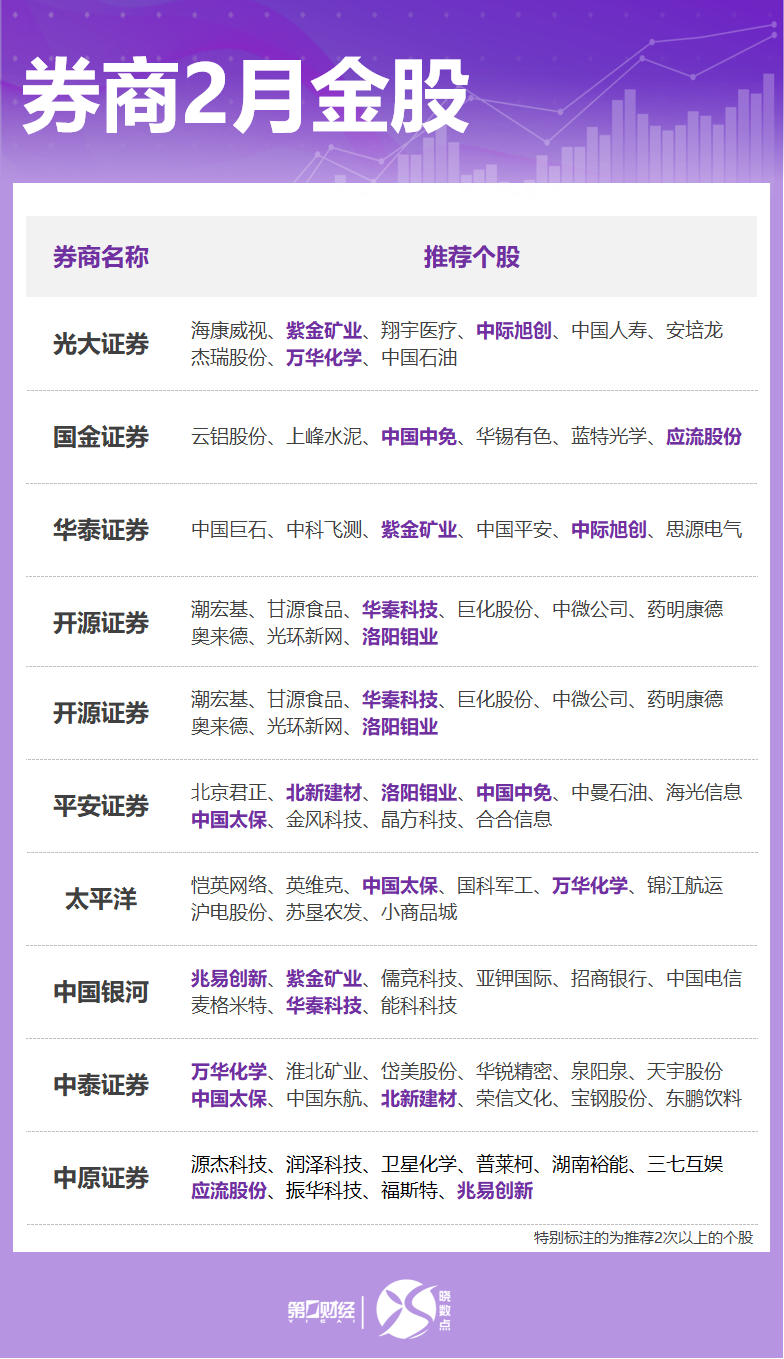
券商2月金股出炉:这些股获力挺 看好科技、顺周期等方向
Di Yi Cai Jing· 2026-02-01 04:05
Core Viewpoint - The A-share market showed a trend of rising and then narrow fluctuations in January, with the Shanghai Composite Index increasing by 3.76%, the Shenzhen Component Index by 5.03%, and the ChiNext Index by 4.47% [1] Group 1: Stock Recommendations - Multiple brokerages have released their investment portfolios for February, covering various sectors including finance, non-ferrous metals, and materials [1] - The most frequently recommended stocks include China Pacific Insurance, Zijin Mining, and Wanhua Chemical, each receiving recommendations from three brokerages [4] - Notable stock performances include兆易创新, which saw a nearly 47% increase in January, and中国中免, which experienced a decline of over 5% [4] Group 2: Industry Preferences - Brokerages suggest that the spring market may see a prolonged period of activity, with potential new trends emerging post-Chinese New Year [6] - Recommendations focus on technology, consumer sectors, and cyclical industries, with an emphasis on identifying Alpha opportunities in cyclical sectors [7] - Specific sectors highlighted for potential growth include food and beverage, real estate, and resource-related industries, with a focus on quality stocks that exhibit both Beta elasticity and Alpha value [7][8] Group 3: Investment Strategies - A balanced growth strategy is recommended, focusing on technology, raw materials, and construction materials benefiting from urban renewal policies [8] - The service consumption sector, including tourism and dining, is suggested for early positioning ahead of the holiday season [9] - Attention is drawn to sectors likely to exceed performance expectations during the earnings reporting period, particularly in resource products and equipment manufacturing [10]