电力设备及新能源

Search documents
2025年四季报公募基金十大重仓股持仓分析
Huachuang Securities· 2026-01-24 12:42
Market Performance - Since October 2025, major indices have shown upward volatility, with the CSI 2000, CSI 500, and National CSI 2000 all achieving over 10% gains, while the Shanghai Composite Index has repeatedly surpassed 4000 points, reaching recent highs[1] - The top five performing sectors in Q4 2025 were non-ferrous metals (33.48%), national defense and military industry (28.59%), oil and petrochemicals (25.94%), basic chemicals (18.59%), and building materials (18.01%)[1] Fund Establishment and Positioning - A total of 100 new actively managed equity funds were established in Q4 2025, with a total share of 604.71 billion[2] - The average stock positions of various types of actively managed equity funds decreased compared to Q3 2025, with mixed equity funds averaging 88.69% (down 1.05%) and ordinary stock funds at 90.52% (down 0.52%)[3][31] Industry Distribution - The sectors with increased holdings of over 10 billion included non-ferrous metals, communication, basic chemicals, and non-bank financials, while sectors with decreased holdings included pharmaceuticals, computers, electronics, power equipment and new energy, and media[4] - The top five heavy-weight sectors for actively managed equity funds in Q4 were electronics (22.89%), communication (11.14%), power equipment and new energy (9.29%), pharmaceuticals (8.1%), and non-ferrous metals (8.09%) with notable increases in non-ferrous metals (up 2.08%) and communication[4][47] Individual Stock Analysis - The top five stocks with the largest increases in holdings were Zhongji Xuchuang, Dongshan Precision, China Ping An, Xinyi Technology, and Shengyi Technology[5] - The largest reductions in holdings were seen in Industrial Fulian, Yiwei Lithium Energy, Ningde Times, Luxshare Precision, and Focus Media[5] Billion Fund Holdings - As of January 22, 2026, there were 31 funds with over 10 billion in assets, a decrease of 3 from the previous quarter, with significant changes in holdings for companies like Shengyi Technology and Zhongji Xuchuang[6] Hong Kong Stock Holdings - The top three Hong Kong stocks held by funds in Q4 2025 were Tencent Holdings, Alibaba-W, and SMIC, each with a market value exceeding 18 billion, but all saw reductions of over 10 billion compared to the previous quarter[7]



公募基金2025年四季报全扫描【国信金工】
量化藏经阁· 2026-01-22 10:58
Fund Position Monitoring - The median position of ordinary equity funds is 91.51%, and for mixed equity funds, it is 90.42%, showing a slight decrease compared to the previous quarter. The current positions are at historical percentiles of 92.19% and 95.31% respectively [1][6] - The average Hong Kong stock allocation for ordinary equity funds is 11.89%, down by 1.1% from the previous quarter, while for mixed equity funds, it is 14.56%, down by 2.54% [11][6] - The number of funds investing in Hong Kong stocks is 243 for ordinary equity funds and 1692 for mixed equity funds, with a total allocation ratio of 59.59% [11][9] Fund Holding Concentration Monitoring - The proportion of heavy-weight stocks in equity allocation is 55.03%, remaining stable compared to the previous period. The total number of stocks held by fund managers increased to 2467 from 2379, indicating greater diversity in stock holdings [10][6] Sector Allocation Monitoring - The disclosed allocation weights for the main board, ChiNext, and Sci-Tech Innovation Board are 49.04%, 20.96%, and 13.89% respectively, with a significant decrease in Hong Kong stock allocation to 16.11% [21][23] - The allocation to large cycle sectors increased by 4.3% to 26.13%, while technology and pharmaceutical sectors saw reductions of 2.94% and 1.59% respectively [23][21] Industry Allocation Monitoring - The top three industries by allocation weight are electronics (23.01%), communication (11.08%), and electric power equipment and new energy (9.28%) [26][25] - The industries with the most active increases in allocation are non-ferrous metals (1.22%), basic chemicals (1.13%), and non-bank financials (0.81%), while the most reduced allocations are in computing (-1.34%), media (-0.98%), and national defense and military industry (-0.75%) [27][25] Individual Stock Allocation Monitoring - The stocks with the highest absolute market value allocations are Zhongji Xuchuang (768 billion), Xinyi Sheng (638 billion), and Ningde Times (630 billion) [30][29] Performance Fund and Billion Fund Industry Allocation Monitoring - The top three industries allocated by performance funds are communication (32.74%), electronics (27.73%), and non-ferrous metals (12.72%) [34][35] - The top three industries allocated by billion-scale funds are electronics (27.21%), communication (13.47%), and pharmaceuticals (10.45%) [34][35]



聚焦顺周期行业,自由现金流ETF基金(159233)冲击4连涨
Sou Hu Cai Jing· 2026-01-22 06:03
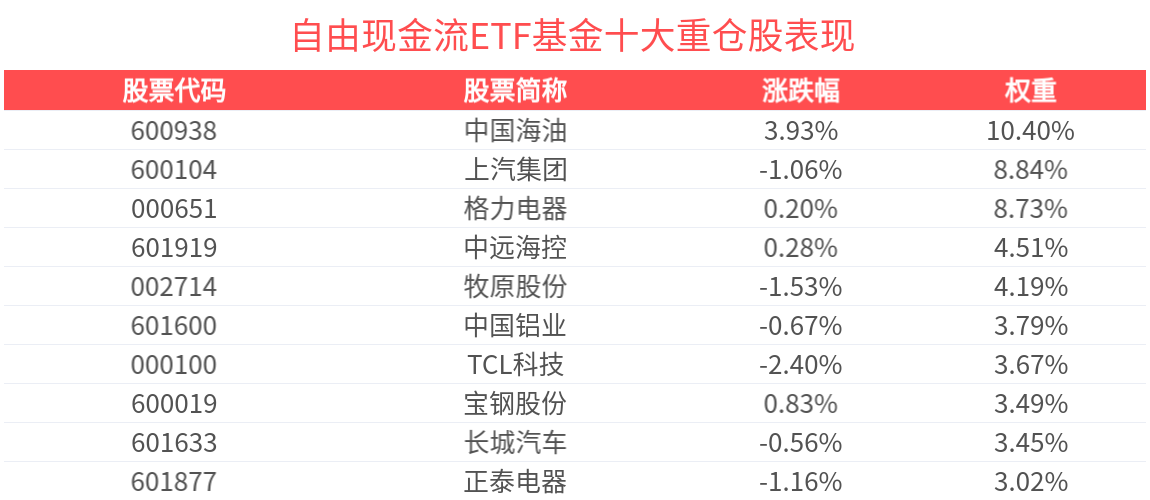
Group 1 - The core viewpoint of the news highlights the positive performance of the CSI All Share Free Cash Flow Index, which rose by 0.78%, with significant gains in constituent stocks such as Silver Nonferrous (+10.04%) and China Power (+5.53%) [1] - The Free Cash Flow ETF (159233) has also shown a 0.94% increase, marking its fourth consecutive rise, and is currently priced at 1.3 yuan [1] - The ETF tracks the CSI Free Cash Flow Index, focusing on cyclical industries, making it a useful tool for investors to capture structural opportunities amid economic recovery [1][3] Group 2 - The demand for AI computing power is experiencing exponential growth due to the increasing complexity of AI models and the expansion of application scenarios, with global AI server shipments expected to rise by 28.3% in 2026 [2] - The transportation sector is projected to see a historic high in cross-regional personnel flow during the 2026 Spring Festival, with an estimated 9.5 billion people expected to travel, driving demand in rail and air transport [2] - The Free Cash Flow ETF (159233) is designed to select high-quality cyclical assets based on free cash flow, providing investors with a convenient way to invest in these sectors [3]
20cm速递|创业板50ETF国泰(159375)开盘涨超1.4%,科技主线依然具有延续性
Mei Ri Jing Ji Xin Wen· 2026-01-22 05:46
Core Viewpoint - The technology sector remains the main focus of the market, showing continuity despite a slight reduction in momentum, supported by high market risk appetite, reasonable valuations, strong overseas performance, and expectations of global liquidity easing [1]. Group 1: Market Performance - On January 22, the ChiNext 50 ETF (159375) opened with a gain of over 1.4%, indicating a positive trend in the technology sector [1]. - The ChiNext 50 Index (399673), which the ETF tracks, includes 50 securities with high average trading volumes, focusing on large-cap leading companies [1]. Group 2: Sector Analysis - The technology sector is expected to maintain a cautiously optimistic outlook, particularly in sub-sectors where there may be a dual resonance of capital and industrial logic [1]. - The industry allocation of the ChiNext 50 Index emphasizes emerging growth areas such as electric power equipment and new energy, pharmaceuticals, and information technology, reflecting the overall performance of companies with strong growth and high technological innovation attributes [1].

20cm速递|创业板50ETF国泰(159375)涨超1.6%,科技创新主线持续强化
Mei Ri Jing Ji Xin Wen· 2026-01-21 03:04
Group 1 - The core viewpoint emphasizes that technological innovation, particularly in artificial intelligence and smart manufacturing, is a key driver for market indices, with strategic emerging industries pushing the index upward [1] - The "Artificial Intelligence+" initiative has been included in the 14th Five-Year Plan, indicating accelerated technological breakthroughs and industrial applications [1] - The ChiNext 50 Index, representing new economy sectors, is expected to benefit from multiple drivers including technological innovation, industrial upgrades, and policy dividends [1] Group 2 - The ChiNext 50 ETF (159375) tracks the ChiNext 50 Index (399673), which has a daily price fluctuation limit of 20% and selects 50 securities with high average trading volumes from the ChiNext market [1] - The industry allocation of the index is focused on emerging growth areas such as power equipment and new energy, pharmaceuticals, and information technology, reflecting the performance of companies with strong growth and high technological innovation attributes [1]
聚焦顺周期,布局高价值,自由现金流ETF(159233)交投活跃
Xin Lang Cai Jing· 2026-01-19 03:32
Core Viewpoint - The market is witnessing a strong performance in the free cash flow index, with significant gains in related sectors, particularly in cyclical industries, driven by recent positive developments in the automotive and transportation sectors [1][2]. Group 1: Free Cash Flow Index Performance - The CSI Free Cash Flow Index (932365) increased by 1.08%, with notable gains from stocks such as Xinhua Department Store (+9.99%), Zhongmin Energy (+9.93%), and Pinggao Electric (+9.76%) [1]. - The Free Cash Flow ETF (159233) rose by 1.28%, closing at 1.26 yuan, and is designed to track the CSI Free Cash Flow Index, focusing on cyclical industries [1]. Group 2: Automotive Sector Developments - A new electric vehicle quota agreement between China and Canada is expected to accelerate the entry of Chinese electric vehicles into the North American market, with a reduction in tariffs from 100% to 6.1% for a quota of 49,000 vehicles annually [1]. - The China Automobile Association projects that vehicle exports will reach 7.4 million units by 2026, reflecting a year-on-year growth of 4.3% [1]. Group 3: Transportation Sector Insights - The 2026 Spring Festival travel season is set to begin on February 2, with an expected 539 million passengers, marking a 5.0% increase year-on-year, which will boost demand in the transportation sector [2]. - The Spring Festival is anticipated to enhance profitability across various transportation segments, including railways, civil aviation, and logistics, leading to improved cash flow stability for transportation companies [2].
20cm速递|创业板50ETF国泰(159375)回调超0.5%,市场关注成长风格持续性
Mei Ri Jing Ji Xin Wen· 2026-01-13 06:35
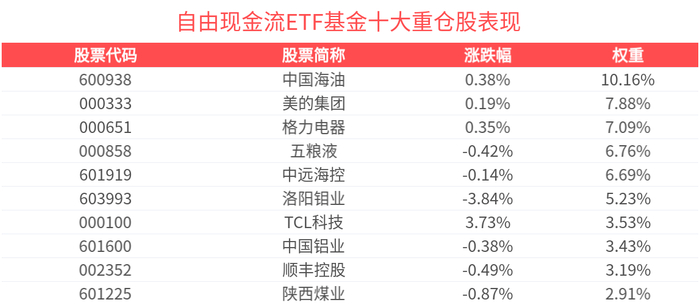
Group 1 - The core viewpoint of the article highlights that the ChiNext 50 ETF (159375) has experienced a pullback of over 0.5%, with market attention on the sustainability of the growth style [1] - Huaxin Securities indicates that the growth style represented by the ChiNext 50 Index may have a slight advantage due to a marginal easing of the funding environment and an increase in risk appetite [1] - The ChiNext 50 Index, which tracks the top 50 securities in the ChiNext market based on liquidity and average daily trading volume, aims to reflect the overall market performance of well-known large-cap companies in the ChiNext market [1] Group 2 - The index is heavily weighted in sectors such as power equipment and new energy, pharmaceuticals, and computer technology, showcasing the core characteristics of high growth and high technology content in the ChiNext market [1] - Last week, the marginal easing of the funding environment led to a bullish stock market and bearish bond market, with the growth style continuing to outperform value [1] - The yield on ten-year bonds rose by 3 basis points to 1.88%, and the term spread expanded to 59 basis points, indicating changes in market dynamics [1]
中银量化大类资产跟踪:股指突破关键点位,有色及贵金属行情持续发酵
Bank of China Securities· 2026-01-11 07:26
- The report does not contain any specific quantitative models or factors for analysis [1][2][3] - The report primarily focuses on market trends, valuation metrics, and style performance without detailing quantitative models or factor construction [1][2][3] - No formulas, construction processes, or backtesting results for quantitative models or factors are provided in the report [1][2][3]

固收+市场全景解析
Mai Gao Zheng Quan· 2026-01-07 12:33
- The report focuses on the "Fixed Income+" (固收+) product, which aims to achieve absolute returns higher than pure fixed-income products, with risk-return characteristics between bond and equity products. The specific scope includes mixed bond funds with average convertible bond positions not exceeding 80% over the past eight quarters and equity positions (stocks + 0.5×convertible bonds) not exceeding 40% on average, with a maximum equity position of 60%[18] - The classification of "Fixed Income+" funds is based on long-term equity risk exposure, dividing them into three categories: conservative, balanced, and aggressive. The classification thresholds are set at 15% and 25% for average equity positions over the past eight quarters[21][20] - The report highlights the growth in "Fixed Income+" fund scale, with a total increase of 7700.41 billion yuan (63.50%) from the end of 2024 to Q3 2025. Among the categories, conservative funds grew by 3695.98 billion yuan, balanced funds by 2101.94 billion yuan, and aggressive funds nearly doubled with an increase of 1902.49 billion yuan[18][21] - The performance of "Fixed Income+" funds from 2020 to 2025 demonstrates strong stability and cross-cycle return capabilities. Even aggressive funds show significantly lower drawdowns compared to equity and convertible bond products. The products exhibit strong return elasticity during equity market uptrends and resilience during downturns[31][35] - The leverage ratio of "Fixed Income+" funds has been declining, from 1.24 at the end of 2023 to 1.10 by Q3 2025. Conservative funds generally maintain higher leverage, while aggressive funds rely more on equity asset elasticity for returns[57][60] - The duration of "Fixed Income+" funds has increased from 1.92 years in 2024 to 3.04 years by Q3 2025, reflecting a strategy to extend duration for bond yield enhancement amid declining bond yields[61][63]
读研报 | 2021-2025牛股年鉴,百大牛股都长啥样?
中泰证券资管· 2026-01-06 11:33
Core Viewpoint - The article discusses the evolution of "bull stocks" in the A-share market over the past five years, highlighting changes in industry focus, market capitalization preferences, and performance metrics. Group 1: Yearly Analysis of Bull Stocks - In 2021, the new energy sector was a fertile ground for bull stocks, with midstream manufacturing and materials contributing 29% and 24% respectively. The market began shifting from large caps to "small high-tech" stocks, with 21 stocks entering the top 100 despite being in the bottom 20% by market cap at the start of the year [2] - In 2022, consumer services, machinery, and electric equipment sectors produced the most bull stocks. A notable trend was the preference for smaller companies, with 83 bull stocks having a market cap below 10 billion yuan at the beginning of the year. The median profit growth of these stocks was 157.99%, significantly higher than the overall A-share growth of 1.38% [3] - In 2023, the TMT sector contributed 50% of the bull stocks, with midstream manufacturing and essential consumption following. The trend towards smaller market caps continued, with only 4 stocks in the top 20% by market cap at the start of the year. The profitability of bull stocks was lower than the overall A-share market, indicating a shift in investor focus towards high elasticity and thematic opportunities [5] - In 2024, the TMT sector remained dominant, accounting for 37% of bull stocks. The number of stocks in the top 20% by market cap increased to 21, showing a shift from the previous year's small-cap focus. Profitability slightly improved compared to the overall market, with a median growth rate of 13.62% compared to 2.05% for A-shares [6] - In 2025, midstream manufacturing contributed 35% of bull stocks, with TMT at 27%. The trend of smaller market caps persisted, with over half of the bull stocks starting the year in the top 60% by market cap [8] Group 2: Market Trends and Preferences - The analysis reveals a significant shift in market preferences over the past five years, moving from a focus on large-cap stocks to a greater appreciation for mid and small-cap stocks. This reflects changing investor sentiment and market dynamics [8] - The profitability and growth metrics of bull stocks have fluctuated, with a notable increase in the emphasis on earnings growth over return on equity (ROE) in recent years. This indicates a broader market trend towards valuing high growth potential [2][3][5][6] - The article concludes that the search for bull stocks should adapt to changing market conditions, suggesting that relying on previous years' templates may not yield successful outcomes in the future [8]