消费

Search documents
江苏三季报里透出什么“风”
Sou Hu Cai Jing· 2025-10-26 02:18
Core Viewpoint - Jiangsu's economic performance in the first three quarters shows resilience and growth, achieving a GDP of 10,281.1 billion yuan, a year-on-year increase of 5.4%, surpassing the national average of 5.2% [1][2][7] Group 1: Resilience in Adversity - Jiangsu's economy has shown remarkable resilience despite external pressures such as geopolitical conflicts and trade protectionism, with a record high foreign trade volume of 4.38 trillion yuan, growing by 6.4% [2][4] - The industrial added value for large-scale enterprises increased by 6.8%, supported by government policies aimed at enhancing the business environment and promoting innovation [2][4] Group 2: Leveraging Opportunities - The "Su Chao" initiative has emerged as a significant driver of consumption, with sales in monitored commercial enterprises increasing by over 30% since its launch [4][5] - High-tech manufacturing added value grew by 11.7%, with high-tech industries accounting for 51.8% of total industrial output, indicating a successful transition towards new production capabilities [5][6] Group 3: Confidence and Strategic Direction - The 5.4% GDP growth reflects Jiangsu's commitment to high-quality development and the effectiveness of policies implemented to achieve economic stability and progress [7][8] - The recent Party Congress has set ambitious goals for the next five years, emphasizing high-quality development and technological self-reliance, which Jiangsu aims to exemplify [8]
基金研究周报:沪指再创10年新高,金价显著回调(10.20-10.24)
Wind万得· 2025-10-25 22:30
Market Overview - The A-share market showed a strong upward trend from October 20 to October 24, with major indices rising across the board. The ChiNext Index led with a weekly increase of 8.05%, while the ChiNext 50 surged by 9.48% [3] - The Shanghai Composite Index closed at 3950.31 points, marking a 2.88% increase for the week, reaching a 10-year high. Other major indices like the CSI 300 and CSI 500 also saw gains of over 3.2% [3] - The market's trading volume increased significantly, reflecting a resurgence in trading enthusiasm, with a total weekly trading volume averaging approximately 1,779.28 billion yuan [12] Sector Performance - The Wind primary sector average rose by about 2.43%, with the information technology sector leading at a 7.72% increase. Other strong performers included industrials, communication services, and energy, while the consumer staples sector declined by 0.78% [15] - Growth sectors, particularly in technology, are expected to continue performing well, driven by the "14th Five-Year Plan" [15] Fund Issuance - A total of 22 funds were issued last week, including 15 equity funds, 2 mixed funds, 1 bond fund, and 4 FOF funds, with total issuance reaching 16.096 billion units [19] Fund Performance - The Wind All-Fund Index increased by 1.95% last week, with the ordinary equity fund index rising by 3.58% and the mixed equity fund index up by 3.82% [4] - The bond fund index saw a modest increase of 0.15%, indicating a stronger performance in equity funds compared to bonds [4] Global Market Trends - Global markets experienced a strong rebound, with major US indices rising: the Dow Jones up 2.20%, S&P 500 up 1.92%, and Nasdaq leading with a 2.31% increase. Technology stocks, particularly Apple, reached new highs [6] - In Europe, the FTSE 100 rose by 3.11%, and the DAX increased by 1.72%, while Asian markets also saw significant gains, with the Nikkei 225 and Hang Seng Index both up over 3.6% [6] Bond Market Insights - The US Treasury yields showed a mixed trend, with the 10-year yield fluctuating around 4.0%. Market expectations for a potential rate cut by the Federal Reserve are rising, although upward risks remain due to fiscal pressures and persistent inflation [6]


高频经济周报(2025.10.19-2025.10.25):地产市场回落,出口量价齐升-20251025
Shenwan Hongyuan Securities· 2025-10-25 13:16
1. Report Industry Investment Rating No relevant content provided. 2. Core View of the Report The report analyzes the economic situation from October 19 to October 25, 2025, covering aspects such as industrial production, people and goods flow, consumption, investment, exports, and major asset performance. It shows that industrial production is performing well, people flow continues to rise, freight prices increase slightly, car sales growth slows down, prices are differentiated, construction shows good performance while the real - estate market declines, port throughput rises, and shipping indices are differentiated. Major assets present a mixed performance with bonds showing both gains and losses, stocks generally rising, most commodities rising, and foreign currencies generally falling [3]. 3. Summary According to the Catalog 3.1. Major Assets - This week, bond indices showed mixed performance, stock indices generally rose, most commodities increased, and foreign currencies generally declined. Among bond indices, the AAA and AA+ indices of China Bond corporate bonds rose the most, with a weekly increase of 0.14%, while the 10 - year China Bond treasury bond index fell the most, with a weekly decline of 0.13%. The ChiNext Index rose the most among stock indices, with a weekly increase of 8.05%. Among commodities, the Nanhua Energy and Chemical Index rose the most, with a gain of 3.66%, and the Nanhua Precious Metals Index fell the most, with a decline of 6.69%. Foreign currencies depreciated against the RMB, with the Japanese yen having the largest decline of 2.06% and the US dollar depreciating by 0.05% [3]. 3.2. Industrial Production - Production performed well. From the upstream perspective, the weekly coal consumption in the national power plant sample area decreased by 1.27% week - on - week, the operating rate of petroleum asphalt plants increased by 1.30 pcts to 35.80%, and the blast furnace operating rate increased by 0.48 pcts to 84.73%, while the crude steel output decreased by 0.89% week - on - week. In the real - estate chain, the operating rate of rebar increased by 1.64 pcts to 42.97%, the operating rate of float glass remained flat at 76.65%, and the mill operating rate increased by 0.38 pcts to 38.27%. In the consumer goods chain, the operating rate of polyester filament remained flat at 91.04%, the PTA operating rate increased by 0.42 pcts to 75.98%, and the methanol operating rate decreased by 1.67 pcts to 82.71%. In the automotive chain, the operating rate of automobile semi - steel tires increased by 0.95 pcts to 73.67%, and the operating rate of automobile all - steel tires increased by 1.06 pcts to 65.58% [3]. 3.3. People and Goods Flow - People flow continued to rise, and freight prices increased slightly. The 7 - day moving average (7DMA) of the national migration scale index increased by 6.68% week - on - week. The 7DMA of domestic flight operations increased by 1.53%, while the 7DMA of international flight operations decreased by 0.79%. The subway passenger volumes in Beijing, Shenzhen, and Guangzhou increased, while that in Shanghai decreased. The 4 - week moving average (4WMA) of the road logistics freight rate index increased by 0.01% week - on - week, and the total volume was higher than the same period in previous years [3]. 3.4. Consumption - Car sales growth slowed down, and price performance continued to be differentiated. The previous period's automobile wholesale increased by 1.00% year - on - year, while retail sales decreased by 3.00% year - on - year. Both the 4WMA of wholesale and retail year - on - year growth rates declined. The weekly box office of movies decreased by 39%, and the 7DMA of the number of movie - goers decreased by 41%. Agricultural product prices were differentiated, with pork prices decreasing by 1.66% week - on - week and vegetable prices increasing by 5.65% week - on - week [3]. 3.5. Investment - Construction showed good performance, and the real - estate market declined. The cement inventory ratio increased by 0.2 pcts week - on - week, the cement price index increased by 0.23% week - on - week, and the cement shipping rate increased by 0.6 pcts week - on - week. The rebar inventory decreased by 4.1% week - on - week, the proportion of profitable steel mills nationwide decreased by 7.8 pcts week - on - week, and the apparent demand for rebar increased by 2.8% week - on - week. Overall, the terminal demand for construction was good. The 7DMA of the commercial housing transaction area in 30 large and medium - sized cities decreased by 7.3% week - on - week. By city - tier, the transaction area of first - tier cities increased, while those of second - and third - tier cities decreased. The 7DMA of the second - hand housing transaction area in 16 cities decreased by 4.7% week - on - week, and the national second - hand housing listing price index decreased by 0.2% week - on - week. The land transaction area in 100 large and medium - sized cities increased, and the land transaction premium rate increased week - on - week [3]. 3.6. Exports - Port throughput increased, and shipping indices were differentiated. The weekly port cargo throughput increased by 2.5%, and the container throughput increased by 3.6%. The BDI index decreased by 3.77% week - on - week, while the domestic SCFI and CCFI indices increased by 7.11% and 2.02% week - on - week respectively [3].
美股三大指数集体上涨,英特尔涨5.6%
Feng Huang Wang Cai Jing· 2025-10-24 13:47
Market Performance - The three major U.S. stock indices collectively rose, with the Dow Jones increasing by 0.50%, the S&P 500 by 0.67%, and the Nasdaq Composite by 0.88% [1] Company Highlights - Intel's stock rose by 5.6% after reporting Q3 revenue that exceeded expectations and returning to profitability [1] - Beyond Meat's shares surged over 16% due to Q3 revenue that was better than market expectations [1] - Adverum Biotechnologies saw its stock increase by over 5% following Eli Lilly's announcement to acquire the company [1] - Procter & Gamble's stock rose nearly 4% as its first fiscal quarter net sales exceeded expectations [1] - Quantum computing stocks experienced gains, with D-Wave Quantum up over 6%, IONQ up over 4%, and both Quantum Computing and Rigetti Computing rising over 3% [1] Industry Developments - JPMorgan Chase plans to allow institutional clients to use Bitcoin and Ethereum as collateral for loans by the end of the year, relying on third-party custodians for token storage [2] - SpaceX is reportedly set to provide satellite communication services for Apple's iPhone, integrating existing satellite functionality into new satellite designs [3] - IBM announced that a key quantum computing algorithm can run on standard AMD chips, demonstrating the algorithm's practicality and cost-effectiveness [4]
“北方第二城”争夺战升级,青岛天津差距缩小,谁的胜算更大?
Sou Hu Cai Jing· 2025-10-24 11:25
Core Insights - The competition for the title of "Northern Second City" in China is primarily between Tianjin and Qingdao, with a very narrow GDP gap of only 119 billion yuan as of mid-2025, indicating an intense rivalry [1][3][19] - Historical data shows that Tianjin has long held the lead, but Qingdao has been rapidly closing the gap, with the difference shrinking from over 2.6 trillion yuan in 2014 to just 119 billion yuan in 2025 [3][4][19] - Qingdao's economic growth rate is stronger, with a GDP growth of 5.3% in the first half of 2025 compared to Tianjin's nominal growth of only 3.09% [3][4] Economic Performance - As of mid-2025, Tianjin's GDP stands at 871.66 billion yuan, while Qingdao's is at 858.73 billion yuan, marking a significant reduction in the gap [1][3] - Qingdao's GDP increment has consistently outpaced Tianjin's, with a 2022 increment of 336.56 billion yuan and a 2023 increment of 381.55 billion yuan [4][19] - Despite Tianjin's lower growth rate, it has a historical pattern of stronger performance in the latter half of the year, which could influence annual results [6][19] Industrial Strength - Tianjin maintains a robust industrial base with an industrial added value of 573.87 billion yuan in 2024, significantly higher than Qingdao's 428.35 billion yuan [8][11] - Tianjin has eight industries with a scale exceeding 100 billion yuan, while Qingdao's industrial structure is weakening, with a notable decline in the second industry's share from 52.5% in 1978 to 33.4% in 2023 [8][11] - Qingdao's industrial revenue is only about half of Tianjin's, indicating a significant industrial competitiveness gap [11][19] Administrative and Resource Advantages - Tianjin benefits from being a direct-controlled municipality, which provides it with superior administrative support and policy advantages, including a fiscal revenue of 213.37 billion yuan compared to Qingdao's 133.93 billion yuan [14][16] - Qingdao, while having a lower administrative level, has a strong regional influence and resource aggregation capability, with a metropolitan area that covers over 20,000 square kilometers [16][19] - Qingdao's per capita disposable income of 68,800 yuan surpasses Tianjin's 57,700 yuan, reflecting higher consumer spending power [16][17] Future Outlook - Qingdao's growth momentum and regional advantages suggest a potential for surpassing Tianjin in GDP within the next 2-3 years if current trends continue [19][20] - However, Qingdao must address its industrial shortcomings to sustain long-term growth, while Tianjin could leverage its industrial foundation to maintain its lead [20][22] - The ultimate determination of the "Northern Second City" title will depend on which city can achieve a successful transformation and drive high-quality economic development [24]

港股Q4风格切换?恒生科技或为主线!一手抓“科技+红利”的520560成资金布局窗口
Xin Lang Ji Jin· 2025-10-24 09:13
Core Viewpoint - The Hong Kong stock market showed signs of recovery on October 24, driven primarily by the strong performance of the information technology sector, while the new energy vehicle sector lagged behind [1]. Group 1: Market Performance - The Hong Kong 30 ETF (520560) demonstrated stable performance, closing up 0.51% and successfully surpassing the five-day moving average, indicating strong buying power in the market [1]. - Semiconductor Manufacturing International Corporation (SMIC) surged by 8%, leading the gains among constituent stocks, followed by Lenovo Group, Alibaba-W, and Kuaishou-W, each rising over 2% [2]. Group 2: Fund Flows - The Hong Kong 30 ETF has attracted significant capital attention, with an average daily trading volume exceeding 31 million yuan since its listing on October 13, and a net inflow of nearly 30 million yuan over the past ten trading days [2]. Group 3: Future Outlook - Guotai Junan Securities anticipates a potential major style shift in the Hong Kong stock market in the fourth quarter, with low-position growth sectors like Hang Seng Technology likely to outperform [4]. - CITIC Securities believes that the resumption of the Federal Reserve's interest rate cut cycle will benefit the Hong Kong stock market, particularly the technology sector, which is expected to see valuation expansion due to the ongoing growth in the global AI computing power industry [4]. Group 4: ETF Characteristics - The Hong Kong 30 ETF closely tracks the Hang Seng China (Hong Kong-listed) 30 Index, featuring a "barbell strategy" that combines high-growth technology and high-dividend stocks, focusing on leading companies across various sectors [5]. - The ETF's top ten holdings account for over 73% of its weight, indicating a high concentration and strong capacity for accommodating large trades with lower impact costs [5].

互联网涨幅居前,银行、消费紧随其后,医疗陷入调整
Ge Long Hui· 2025-10-24 04:10
Group 1 - The Hang Seng Index rebounded, closing up 0.72%, with the internet sector leading the gains, followed by banking, industry, technology, and real estate sectors [1] - The internet sector saw a rise of 1.07%, with Meituan up 4.06%, Alibaba up 1.67%, Tencent Holdings up 1.52%, JD Group up 1.5%, and Baidu Group up 1.22%. However, companies like SenseTime, Bilibili, and Kingdee International experienced declines [3] - The banking sector opened strong and maintained a consolidation above the midline, closing up 0.88%, with Postal Savings Bank rising 4.59% and Minsheng Bank up 2.39% [3] Group 2 - The consumer sector rebounded, closing up 0.35%, with notable gains from companies like Chenzi Biological up 6.68%, Li Ning up 6.55%, and Sands China up 4.4% [3] - The healthcare sector opened low and saw a slight reversal near the end, closing down 1.31%, with CSPC Pharmaceutical down 2.96% and China Biopharmaceutical down 2.78% [3]



聚焦高质量发展,进一步稳固A股慢牛
Huajin Securities· 2025-10-24 00:09
Group 1 - The report emphasizes a shift towards focusing on economic construction during the 14th Five-Year Plan, indicating a heightened urgency for economic growth compared to the previous plan [10][13][19] - Key areas of focus include the development of advanced manufacturing, technological self-reliance, and expanding domestic demand, which are seen as strategic priorities for the 15th Five-Year Plan [2][13][20] - The report anticipates that policies aimed at achieving economic growth targets will likely lead to increased fiscal and monetary support in the fourth quarter [10][18] Group 2 - The report suggests that the A-share market is likely to maintain a slow bull trend, with improving profit expectations driven by policies focused on economic construction and advanced manufacturing [3][15][18] - Short-term market dynamics may also benefit from increased liquidity and a positive outlook on economic growth, which could enhance market risk appetite [3][18][19] - The report identifies specific sectors that may benefit from these trends, including TMT (Technology, Media, and Telecommunications), machinery, and military industries, which are aligned with the modernization of the industrial system [4][19][20] Group 3 - Industries related to new productive forces, such as TMT, machinery, and military sectors, are expected to benefit from policies promoting technological innovation and infrastructure development [4][19][20] - The advanced manufacturing sector, including non-ferrous metals, chemicals, and pharmaceuticals, is highlighted as a key area for growth, driven by national security and environmental sustainability initiatives [20][21][22] - Consumer sectors, particularly those related to social services and retail, are also positioned to gain from policies aimed at boosting domestic demand and improving living standards [22][23]
三季度经济增速为何放缓?四季度经济前景如何?
Hua Xia Shi Bao· 2025-10-23 14:18
Economic Growth Analysis - The overall economic growth in China has shown a slowdown in Q3, with GDP growth at 4.8%, down from 5.2% in the first three quarters [2][3] - Nominal GDP growth for Q3 was 3.7%, with a cumulative nominal GDP growth of 4.1% for the first three quarters [2] Factors Contributing to Slowdown - The slowdown is attributed to three main factors: reduced policy effectiveness, diminishing internal growth momentum, and weak consumer sentiment [3][4] - Macro policies were strong in the first half of the year but weakened in the second half, impacting economic support [3] - The effectiveness of certain policies, such as the consumption upgrade program, has diminished, leading to a decline in retail sales growth [3][4] Positive Economic Indicators - Despite the slowdown, there are positive signs such as improved industrial capacity utilization and a rebound in PPI [6][7] - Exports have remained resilient, with a year-on-year growth of 8.3% in September, supported by diversified markets and competitive products [7] - High-tech industries have shown robust growth, with a 9.6% increase in value-added output in the first three quarters [8] September Economic Performance - In September, exports and industrial production saw a rebound, while consumer spending and investment continued to decline [9][10] - Retail sales and catering revenue showed a decrease, indicating ongoing consumer weakness [10] - Real estate sales saw a slight improvement due to new policies in major cities, but overall investment remains low [11] Future Economic Outlook - The economic performance in Q4 will depend on the introduction of new policies, with potential GDP growth forecasted between 4.6% and 4.8% [13] - The need for new incremental policies is emphasized to support economic recovery [14][19] Recommendations for Policy Adjustments - Suggestions include increasing fiscal support, optimizing debt management, and enhancing monetary policy to stimulate economic activity [15][16] - A comprehensive approach to real estate policy is recommended to stabilize the market and support local governments [17][18] - Consumer-oriented policies should be developed to boost spending and improve income distribution [19][20]

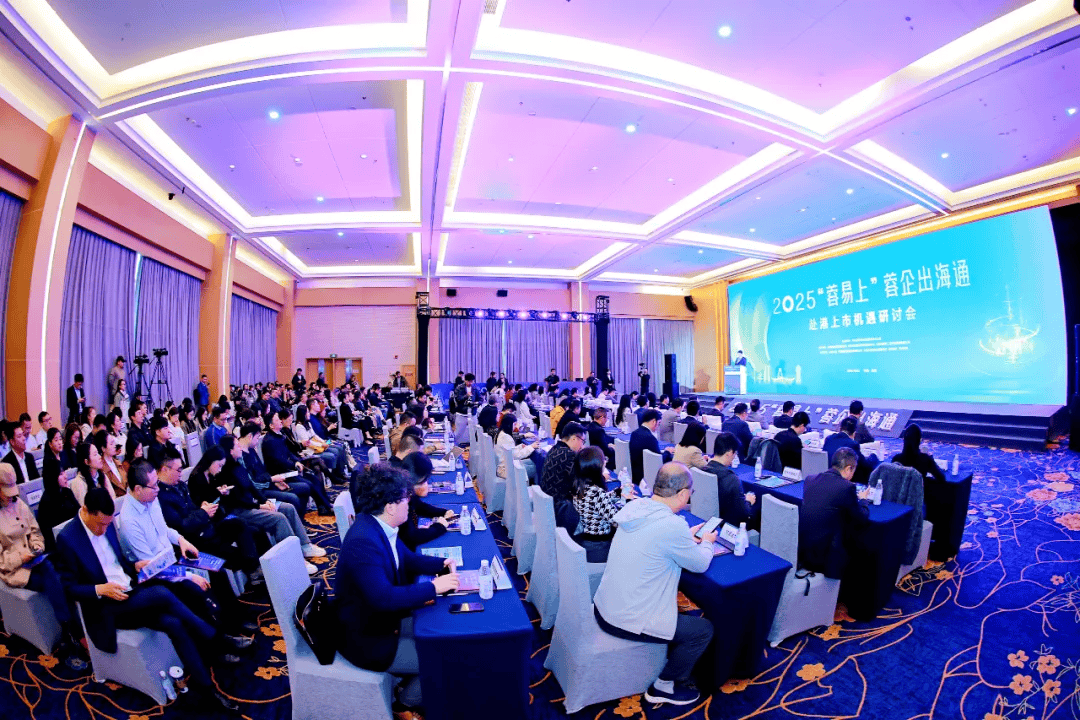
百利天恒通过聆讯,成都企业迎赴港上市热潮
Sou Hu Cai Jing· 2025-10-23 13:56
Core Viewpoint - Hong Kong is experiencing a listing boom, with companies like Baile Tianheng preparing for their IPOs, reflecting a strong interest from Chengdu enterprises in accessing international capital markets [1][8]. Group 1: Market Activity - Baile Tianheng has passed the listing hearing on the Hong Kong Stock Exchange, with Chengdu's total number of listed companies expected to reach 28 [1]. - Numerous institutions and enterprises actively participated in the "Rongyi Shang" event, indicating a high level of interest in Hong Kong listings [3]. - The scale of participation in the event this year has significantly increased compared to last year, showcasing the enthusiasm of Chengdu enterprises for listing in Hong Kong [3]. Group 2: Sector Insights - The event featured specialized sessions for biopharmaceutical and technology/consumer sectors, with over a hundred representatives from enterprises and financial institutions attending [3][5]. - Key insights were shared regarding the opportunities and challenges faced by companies seeking to list in Hong Kong, particularly in the biopharmaceutical sector [5][7]. - Legal experts discussed critical points encountered by enterprises during the listing process, emphasizing the importance of legal support for technology and consumer companies [5]. Group 3: Investment Opportunities - Investment institutions highlighted the opportunities presented by listing in Hong Kong, particularly for Chengdu enterprises looking to expand internationally [8]. - Several Chengdu companies, including Guoxing Aerospace and Xinyue Holdings, have submitted applications for Hong Kong listings this year, indicating a trend of local firms seeking to leverage international capital markets [8]. - As of now, Chengdu has 122 A-share listed companies, 27 listed in Hong Kong, and 5 in the US, with the total expected to reach 154 following Baile Tianheng's listing [8].