消费

Search documents
今年以来南向资金净流入金额逼近1.2万亿港元 港股中长期上行趋势不改
Zhong Guo Zheng Quan Bao· 2025-10-14 21:32
Group 1 - As of October 14, 2023, southbound capital has accumulated a net inflow of 11,985.67 billion HKD this year, setting a historical high for annual net inflow [1][2] - The Hang Seng Index has risen over 26% and the Hang Seng Tech Index has increased over 32% year-to-date, with stocks having a market capitalization exceeding 1 trillion HKD showing an average increase of over 30% [1][4] - Southbound capital has been the largest source of incremental funds for the Hong Kong stock market, with over 80% of trading days this year witnessing net inflows [2][3] Group 2 - As of October 13, 2023, southbound capital holdings reached 5,458.21 billion shares, an increase of 821.50 billion shares since the beginning of 2023, with a total market value of 63,500 billion HKD [2] - The financial, information technology, and consumer discretionary sectors have the highest market values held by southbound capital, amounting to 14,032.34 billion HKD, 13,707.60 billion HKD, and 9,006.28 billion HKD respectively [2] - Major stocks held by southbound capital include Tencent Holdings exceeding 6,800 billion HKD and Alibaba-W, China Mobile, and others exceeding 2,000 billion HKD [2][3] Group 3 - Recent adjustments in the Hong Kong stock market have seen the Hang Seng Index drop over 5% and the Hang Seng Tech Index drop over 8% in October [5] - Analysts suggest that while short-term volatility may persist, the long-term upward trend for the Hong Kong stock market remains intact, supported by domestic growth policies and stabilizing investor sentiment [5][6] - The technology sector is expected to benefit from current industry trends, with potential for further inflows from foreign capital and continued support from southbound capital [6]

港股中长期上行趋势不改
Zhong Guo Zheng Quan Bao· 2025-10-14 20:17
Group 1 - Southbound capital has seen a cumulative net inflow of 11,985.67 billion HKD as of October 14, marking a historical high for the year and more than double the amount from the same period in 2024 [1][2] - The Hang Seng Index has risen over 26% and the Hang Seng Tech Index has increased over 32% year-to-date, with stocks having a market capitalization exceeding 1 trillion HKD showing an average increase of over 30% [1][2] - Over 80% of trading days this year have recorded net inflows from southbound capital, indicating strong investor interest in the Hong Kong stock market [1] Group 2 - As of October 13, southbound capital holdings reached 5,458.21 billion shares, an increase of 821.50 billion shares since the beginning of 2025, with a total market value of 63,500 billion HKD, up by 27,700 billion HKD [2] - The financial, information technology, and consumer discretionary sectors have the highest holdings, with values of 14,032.34 billion HKD, 13,707.60 billion HKD, and 9,006.28 billion HKD respectively [2] - Major stocks held by southbound capital include Tencent Holdings at over 6,800 billion HKD and Alibaba-W, China Mobile, and others exceeding 2,000 billion HKD [2] Group 3 - Analysts suggest that Hong Kong's tech and consumer assets are attractive due to their scarcity and relevance to current trends like AI applications and new consumption [3] - Despite recent market adjustments, the long-term upward trend for Hong Kong stocks is expected to continue, supported by domestic growth policies and stable investor sentiment [3][4] - The fourth quarter is anticipated to see continued inflows into Hong Kong stocks, particularly in the tech sector, with the Hang Seng Tech Index expected to have the most significant upside potential [3][4]



双创指数回调 多只科技主题基金单日跌超7%
Mei Ri Jing Ji Xin Wen· 2025-10-14 15:32
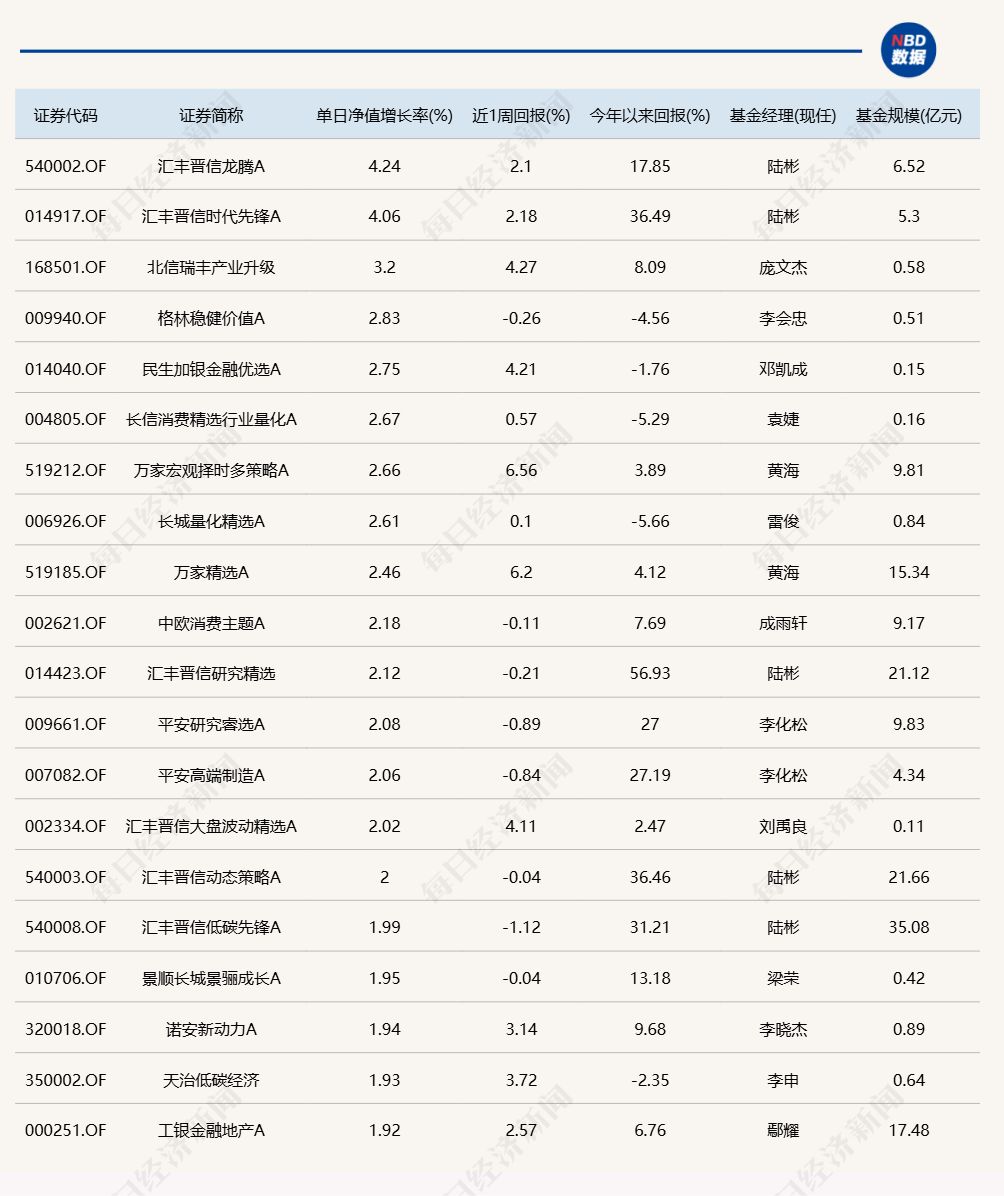
Market Overview - On October 14, the market experienced fluctuations, with both the ChiNext Index and the STAR 50 Index dropping over 4% during the day [1] - More than 3,500 stocks in the market closed lower, indicating a broad market decline [1] - The total trading volume in the Shanghai and Shenzhen stock exchanges reached 2.58 trillion yuan, an increase of 221.5 billion yuan compared to the previous trading day [1] Fund Performance Top Performing Funds - The top performing fund for the day was HSBC Jintrust Longteng A, with a daily net value growth rate of 4.24% and a year-to-date return of 17.85% [2] - HSBC Jintrust Era Pioneer A followed closely with a daily growth rate of 4.06% and a year-to-date return of 36.49% [2] - Other notable funds included Beixin Ruifeng Industrial Upgrade with a daily growth of 3.2% and a year-to-date return of 8.09% [2] Underperforming Funds - The worst performing fund was GF Advanced Manufacturing A, which saw a daily decline of 7.25% and a year-to-date return of 45.76% [3] - Other significant declines included Shenwan Zangxin Intelligent Drive A with a drop of 7.18% and a year-to-date return of 70.81% [3] - The fund Anxin Growth Selection A also faced a decline of 7.1%, despite a strong year-to-date return of 94.15% [3] Bond Fund Performance Top Bond Funds - The best performing bond fund was Huisheng Huiyi A, with a daily net value growth rate of 0.79% and a year-to-date return of 0.28% [4] - Tianzhi Stable Double Win followed with a daily growth of 0.72% and a year-to-date return of 0.8% [4] Underperforming Bond Funds - The worst performing bond fund was Jinying Yuanfeng A, which declined by 3.55% with a year-to-date return of 25.27% [4] - Other notable declines included Jinying Nian Nian Youyi One-Year Holding A with a drop of 3.49% and a year-to-date return of 13.58% [4]

[10月14日]指数估值数据(螺丝钉定投实盘第385期发车;养老指数估值表更新)
银行螺丝钉· 2025-10-14 14:00
Market Overview - The overall market experienced a decline, with a rating of 4.2 stars [1] - Large-cap stocks saw less decline compared to small and mid-cap stocks [2] - The market continues to exhibit style rotation, with significant drops in growth style stocks [3][4] - The ChiNext and STAR Market fell by 4% recently [5] Style Performance - Growth style stocks faced substantial declines, while value style stocks remained relatively stable [6] - Recently, previously underperforming "old economy stocks" have shown an overall increase [7] - Indices focusing on value, dividends, and free cash flow have seen overall gains [8] - The 300 Value Index has returned from undervaluation to normal levels [9] Investment Opportunities - There are still some undervalued sectors, particularly in consumer industries, that have started to gain traction [11][13] - The Hong Kong market reflects similar trends, with stable dividends and declines in technology growth stocks, which have not yet returned to undervaluation [14][16] - The volatility in the Hong Kong market has been greater than in the A-share market this year [17] Investment Strategies - The investment strategy includes a pause on regular investments in the index-enhanced advisory portfolio as it has returned to normal valuation, with plans to resume when it returns to undervaluation [20] - The active selection portfolio continues regular investments, while the monthly salary investment portfolio, which consists of 40% stocks and 60% bonds, is recommended for stable market participation [20] - The monthly salary portfolio features a "low buy high sell" strategy and a cash flow distribution function [20] Fund Performance - The performance of the China A500 and China Dividend indices has returned to normal valuation, with plans to pause investments until they reach undervaluation again [26] - The China A500 has achieved a profit of 22%, while the China Dividend index has seen a profit of approximately 6% [26] - The article emphasizes the importance of patience in long-term investments, highlighting that opportunities will continue to arise [33]
操作:注意了!主力意图明确!紧急撤退一个基金,抄3个方向
Ge Long Hui· 2025-10-14 12:12
Market Trends - The market is experiencing a rotation of funds from technology stocks to undervalued sectors such as liquor and coal, indicating a shift in investor sentiment [1] - The technology sector is expected to rebound after recent adjustments, prompting selective buying opportunities [1] Investment Strategies - The company has increased its position in TMT (Technology, Media, and Telecommunications) sector-focused funds, anticipating benefits from the ongoing AI wave [3] - A significant investment of 5000 yuan was made in a gold ETF, driven by the metal's strong performance due to geopolitical tensions and expectations of interest rate cuts by the Federal Reserve [4] - The company has also invested in a consumer-focused fund, which combines traditional and emerging consumption sectors, capitalizing on upcoming consumption peaks and government policies aimed at boosting consumer spending [5] Sector Analysis - The renewable energy sector is benefiting from global green transitions, with domestic solar installations expected to exceed 200GW this year [6] - The digital economy, represented by AI and semiconductors, is accelerating growth opportunities for hard-tech companies [6] - The biopharmaceutical sector is entering an innovation cycle supported by favorable policies [6] Portfolio Adjustments - The company is strategically reducing exposure to the photovoltaic sector while maintaining positions in semiconductor and new energy vehicle ETFs, indicating a cautious approach to market fluctuations [9] - The company is focused on managing risk and optimizing portfolio performance through careful position adjustments [9]
跨境ETF再添新贵,拉美地区也将纳入投资版图
Sou Hu Cai Jing· 2025-10-14 08:49
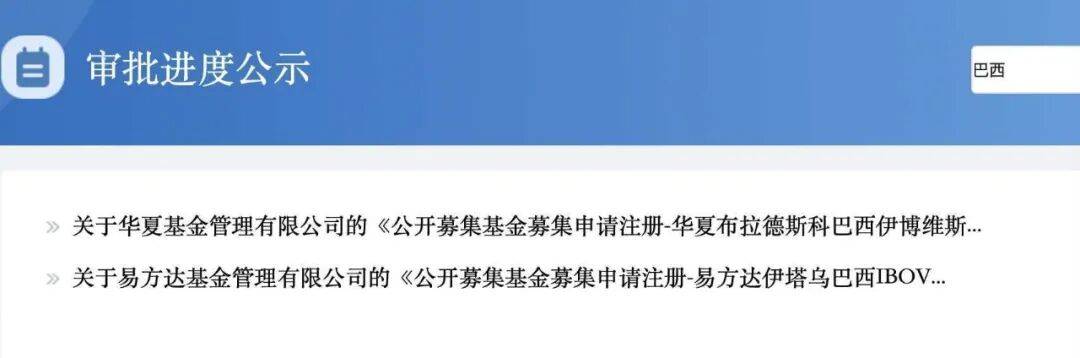
Core Insights - The article discusses the growing interest in cross-border ETF investments, particularly focusing on the recent submissions of Brazilian ETFs by Huaxia Fund and E Fund, highlighting the diversification of investment opportunities in overseas markets [1][8]. Group 1: Cross-Border ETF Landscape - The current trend in cross-border ETF investments shows a diverse range of options, with significant attention on the Saudi ETF and the French CAC40 ETF [1]. - The recent submissions of Brazilian ETFs indicate a new addition to the cross-border ETF family, enhancing the investment landscape for Chinese investors [1]. Group 2: Brazilian Market Insights - The Ibovespa index is a key indicator of the Brazilian economy, characterized by its resource-oriented nature, with major components including Vale and Petrobras, linking its performance closely to international commodity prices and Chinese economic demand [1][2]. - Brazil's stock market is heavily weighted towards the commodities sector, followed by a significant representation of the financial sector, reflecting its status as an emerging market [2]. Group 3: Performance and Valuation - The Ibovespa index has shown a 12% annualized return over the past decade, with a year-to-date return of 21.6% as of September, outperforming the Chinese stock market [5]. - The valuation of the Ibovespa index remains relatively low compared to other emerging markets, making it an attractive option for global asset allocation [5]. Group 4: ETF Market Dynamics - In the last three months, cross-border ETFs have seen a net inflow of nearly 200 billion, making them one of the most popular ETF categories, second only to bond ETFs [8]. - The overall ETF market has experienced a net inflow of approximately 428.4 billion, with significant contributions from various ETF categories, including cross-border ETFs [9]. Group 5: Future Outlook - The expansion of cross-border ETF connectivity is expected to enhance the accessibility of global capital markets for domestic investors, providing a convenient investment channel [8]. - The shift towards diversified asset allocation, including commodities and foreign exchange, is anticipated to play a crucial role in wealth management strategies moving forward [10].
前三季度98%普通股基上涨 华安医药生物上涨103%
Zhong Guo Jing Ji Wang· 2025-10-13 23:16
Core Insights - In the first three quarters of this year, 98% of the 976 comparable ordinary equity funds achieved positive performance, with only 23 funds experiencing declines [1] Group 1: Top Performing Funds - The top four performing ordinary equity funds, namely Huaan Pharmaceutical Biotechnology Stock A, Huaan Pharmaceutical Biotechnology Stock C, E Fund Information Industry Select Stock A, and E Fund Information Industry Select Stock C, all saw their performance double, with increases of 103.31%, 102.65%, 102.03%, and 101.26% respectively [1] - Huaan Pharmaceutical Biotechnology Stock's second-quarter report indicates heavy investments in companies such as Innovent Biologics, CSPC Pharmaceutical Group, and others, with significant stock price increases, particularly for 3SBio, which surged over four times [1] - E Fund Information Industry Select Stock's top ten holdings are primarily in the semiconductor sector, including companies like NewEase, Huitian Technology, and Tencent Holdings [1] Group 2: Fund Management and Performance - The E Fund Information Industry Select Stock is managed by Zheng Xi, who has extensive experience in equity investment management and has held various roles within E Fund [2] - Other notable funds such as E Fund Strategic Emerging Industries Stock A and C, and Jiashi Mutual Selection Stock A and C, also reported over 90% increases in the first three quarters [2] - Jiashi Mutual Selection Stock focuses on pharmaceutical stocks, with major holdings in companies like Innovent Biologics and Hengrui Medicine, managed by Hao Miao, who has a strong background in biomedical research [2] Group 3: Underperforming Funds - The fund with the largest decline, Minsheng Jianyin Preferred Stock, fell by 7.39%, primarily investing in blue-chip consumer stocks [4] - The fund's top ten holdings include companies like CATL and BYD, with the current manager, Liu Hao, having less than a year of experience [4] - Other underperforming funds include Changxin Consumer Select Quantitative Stock and Qianhai Kaiyuan Traditional Chinese Medicine Stock, both down by over 5% [4]
中金公司 假期动态与节后交易主线
中金· 2025-10-13 14:56
Investment Rating - The report indicates a cautious investment stance due to ongoing geopolitical risks and economic uncertainties, particularly in the context of U.S.-China trade relations and domestic consumption trends [1][3]. Core Insights - The report highlights that the recent surge in gold and base metal prices is driven by increased geopolitical risks and the potential for U.S. government shutdowns, suggesting that these factors will continue to support commodity prices in the near future [4][17]. - It emphasizes the importance of monitoring Japan's political changes, which could lead to both short-term asset price volatility and long-term structural economic reforms [5][23]. - The report notes that consumer spending data during the holiday period was weaker than expected, reflecting broader economic challenges, and suggests that high-valuation sectors are experiencing significant corrections [6][29]. Summary by Sections U.S.-China Trade Relations - The report discusses the impact of renewed U.S.-China tariffs, which have led to significant market volatility, particularly affecting U.S. stocks and Chinese concept stocks [3][10]. - It suggests that market sentiment has adjusted to these developments, potentially limiting asset declines [3]. Commodity Market Outlook - The report identifies a new bull market cycle for colored resources, driven by global supply chain adjustments and rising demand from emerging industries [2][15]. - It specifically highlights the bullish outlook for precious metals, basic metals, and strategic minor metals, with gold expected to benefit from declining real interest rates and de-dollarization trends [17][18]. Japanese Political Landscape - The report outlines the implications of recent political changes in Japan, which are expected to influence stock market performance and monetary policy [5][23]. - It notes that the new leadership may not pursue aggressive fiscal expansion, which could stabilize the yen and impact market expectations [24][27]. Consumer Trends - The report indicates that consumer spending during the recent holiday period was below expectations, with a notable shift in consumer preferences towards experience-based spending [6][29]. - It highlights that structural changes in consumer behavior, particularly among younger demographics, are shaping the retail landscape [29]. Market Valuation and Performance - The report assesses current market valuations as high, with both U.S. and Chinese markets showing signs of inflated valuations compared to historical levels [7][8]. - It notes that U.S. stock performance has been primarily driven by earnings revisions, while Hong Kong stocks have relied more on valuation increases [9]. Future Market Dynamics - The report expresses uncertainty regarding future market trends due to escalating unexpected events and the complexities of trade negotiations [10][11]. - It suggests that the credit cycles in both the U.S. and China are approaching a phase of recovery, with potential implications for asset prices [12][14]. Specific Metal Outlook - The report provides a positive outlook for silver, driven by industrial demand recovery and its correlation with gold price movements [20]. - It also highlights the potential for basic metals to enter a bull market due to supply disruptions and increasing demand from new industries [21][22]. Strategic Resource Management - The report emphasizes the growing importance of strategic resource management, particularly for critical minerals like cobalt, lithium, and rare earths, which are expected to maintain bullish trends [22].

[10月13日]指数估值数据(A股港股深V反弹;好品种+好价格+长期持有=好收益)
银行螺丝钉· 2025-10-13 14:09
Core Viewpoint - The market is experiencing fluctuations similar to the tariff crisis in April, but the current volatility is less severe, indicating potential investment opportunities as the market stabilizes [13][20][23]. Market Performance - The overall market showed slight declines, with large, mid, and small-cap stocks all experiencing minor drops [1][2]. - Growth style stocks exhibited relatively larger fluctuations compared to value stocks, which remained more stable during market volatility [3][6][7]. - The ChiNext index reached a high valuation recently, experiencing a drop of 3% intraday and closing down 1% [4][5]. Tariff Crisis Analysis - The current tariff crisis is expected to primarily impact short-term market sentiment rather than long-term fundamentals, similar to past events [23][33]. - The actual implementation of high tariffs has been limited, serving more as a negotiation tool rather than a definitive policy [31][32]. - The market's response to tariff news has shown diminishing returns in terms of volatility, indicating that investors are becoming desensitized to such announcements [34][36]. Investment Strategy - The growth style has seen significant appreciation compared to earlier in the year, leading to higher valuations, while value stocks remain relatively undervalued [37][38]. - The market's overall valuation has increased, resulting in less intervention from institutional investors compared to previous months [41][45]. - Investors are encouraged to focus on quality stocks at good prices for long-term gains, rather than being swayed by short-term market movements [49]. Upcoming Events - A live session is scheduled to discuss the implications of the current tariff crisis and strategies for navigating market fluctuations [50].
过去20年,消费行业经历了哪些牛熊市?|投资小知识
银行螺丝钉· 2025-10-13 14:09
Core Viewpoint - The article discusses the cyclical nature of the A-share market, particularly focusing on the consumer sector's performance through various bull and bear markets from 2006 to 2025, highlighting significant events and their impacts on market valuations. Group 1: First Bull and Bear Market (2006-2008) - In 2006 and 2007, the A-share market experienced its largest bull market in history, with the Consumer 50 Index rising over 5 times [3] - The bull market was short-lived, as the 2008 financial crisis led to a global stock market decline, causing the Consumer 50 Index to drop over 70% within a year [3] Group 2: Second Bull and Bear Market (2008-2014) - Following the 2008 crisis, a 4 trillion yuan stimulus plan in 2009 initiated a small bull market lasting until around 2011, with the consumer sector increasing by more than 100% [5] - From 2012, rising interest rates began to suppress the A-share market, leading to a decline in the consumer sector, exacerbated by food safety concerns stemming from the liquor plasticizer incident [6][5] - By 2014, the consumer sector's valuation reached historical lows [7] Group 3: Third Bull and Bear Market (2014-2018) - Starting in the second half of 2014, continuous interest rate cuts led to another bull market, with the consumer sector rebounding for over four years [8][9] - However, in 2018, trade policy impacts caused a market downturn, resulting in the consumer sector being undervalued by year-end [10] Group 4: Fourth Bull and Bear Market (2018-2025) - Beginning in 2019, the consumer sector entered its fastest-growing bull market, with the Consumer 50 Index nearly doubling in value [11] - This period also saw significant valuation bubbles forming within the consumer sector [11]