
光伏

Search documents
海外储能景气度全面提升
2026-03-26 13:20
Summary of Key Points from Conference Call Records Industry Overview - The global energy storage industry is experiencing a significant upturn, with the ranking of sectors in 2026 being: Commercial and Industrial Storage > Large-Scale Storage > Residential Storage > Photovoltaics [1] - The Iranian conflict has driven European natural gas prices (TTF) to €60/MWh, benefiting the commercial and industrial storage sectors due to increased instability in the power system [1][3] Core Insights and Arguments - Despite cautious market sentiment towards overseas energy storage demand since the 2022 European energy crisis, actual demand has shown consistent annual growth, driven by structural factors such as global energy transition and geopolitical tensions [2] - The expected ranking for the energy storage market in 2026 is: Commercial and Industrial Storage > Large-Scale Storage > Residential Storage > Photovoltaics, indicating a shift towards larger storage solutions as the market matures [2] - The export value of inverters from China in 2025 reached $9.042 billion, a 9.38% increase, while the volume decreased by 7.57%, reflecting a shift towards higher-value products [5] Market Trends - The inverter export market is transitioning from distributed solar storage in emerging markets to recovery in Europe and Australia, with a notable increase in average prices by approximately 20% [5][6] - In 2025, the average price of inverters exported to the Netherlands surged by 47.68%, indicating a shift in procurement focus towards commercial storage products [6] - The Australian "Home Battery Scheme" is expected to drive residential storage growth, with projections of 50%-60% growth in 2026 [1][7] Regional Performance - Jiangsu province is the only region in China to achieve both volume and value growth in inverter exports in 2025, benefiting from demand in large-scale storage and commercial projects [6] - The European market accounted for over 70% of China's inverter exports, with growth rates between 5% and 10%, while emerging markets like Hungary are becoming significant contributors to offset slowdowns in Western Europe [6][8] - In Africa, Nigeria is emerging as a new growth point for energy storage due to its weak grid, while Algeria is advancing large-scale solar projects with support from Chinese industry [7] Photovoltaic Product Export Changes - In 2025, China's total photovoltaic product exports reached approximately 383.3 GW, a 23.7% increase, with a significant shift in product structure: solar cell exports rose by 97.59% to 116.2 GW, while module exports only grew by 6.4% [8] - This shift indicates a trend towards localizing supply chains in key markets, impacting the competitive landscape for China's photovoltaic industry [8]
钧达股份(002865):卡位能源系统+整星制造,打造首家A+H商业卫星上市公司
Changjiang Securities· 2026-03-26 09:32
Investment Rating - The investment rating for the company is "Buy" and is maintained [12] Core Insights - The company, Junda Co., Ltd., specializes in TOPCon solar cells and is a leading player in the industry, with a high proportion of overseas shipments ensuring profitability above industry standards. Recently, the company has decisively transformed into commercial aerospace by laying out satellite energy systems (perovskite tandem + CPI film) and satellite manufacturing [4][7] - Junda is the first company to achieve dual listing in A and H shares, which helps supplement capital while accelerating global expansion. As of Q1-Q3 2025, overseas sales accounted for 51% of total sales, with higher prices for overseas solar cells compared to domestic ones [10][4] Summary by Sections Energy Systems and CPI Film - The transition of satellites from military and research uses to commercial applications is driven by economic considerations. In space photovoltaics, gallium arsenide cells are currently the main technology, but silicon is expected to become the next generation due to cost advantages, while perovskite is anticipated to be the ultimate technology due to its higher specific power [8][24] - Junda collaborates with Shangyi Optoelectronics to accelerate the development and production of CPI films and perovskite-silicon tandem products, with Shangyi being a rare domestic producer of satellite batteries [8][39] Satellite Manufacturing - Satellites are categorized into scientific, technical experimental, and application satellites, each serving distinct functions. The demand for communication satellites is significant, with over 200,000 satellites expected to be launched between 2030 and 2035, marking a peak in launches [9][52] - Junda strategically entered satellite manufacturing by holding a 60% stake in Xuntian Qianhe, a leading satellite manufacturing company in China, which has already launched 7 satellites and is constructing a new facility for larger-scale production [9][10] Globalization and Capital Enhancement - Junda's dual listing has significantly improved its capital adequacy, with the H-share listing facilitating capital supplementation and accelerating global expansion. The company has seen a notable increase in overseas sales, which are crucial for its profitability [10][4]

光伏周价格 | 供需矛盾持续发酵,全链价格下行压力仍存
TrendForce集邦· 2026-03-26 09:01
Core Viewpoint - The article highlights a continued decline in prices across the solar supply chain, driven by high inventory levels and weak demand, indicating a bearish market sentiment in the photovoltaic industry [4][5][6][8][9][10][11][12][13][15][16]. Group 1: Price Trends - The average price of N-type polysilicon has decreased by 13.33% to 39.000 RMB/kg, while N-type dense material has dropped by 13.95% to 37.000 RMB/kg [2]. - The average price of N-type 210mm monocrystalline silicon wafers is down by 3.85% to 1.250 RMB, and the average price of M10L monocrystalline TOPCon cells has decreased by 2.50% to 0.390 RMB/W [2][3]. - The average price of photovoltaic modules has shown a downward trend, with the average price for 182mm TOPCon double-sided modules remaining stable at 0.790 RMB/W, while the 210mm HJT double-sided modules average at 0.760 RMB/W [3]. Group 2: Supply Side Analysis - The inventory of polysilicon remains high at over 520,000 tons, leading to a continued oversupply situation, with some companies reducing prices to alleviate financial pressure [4]. - Silicon wafer inventory is also high at over 22 GW, with a return to pressure levels following a brief period of inventory reduction due to overseas market demand [8]. - The inventory of battery cells is maintained at over one week, with increasing pressure on manufacturers as demand from overseas markets diminishes [10]. Group 3: Demand Side Analysis - The market for polysilicon is experiencing weak demand, with downstream crystal pulling factories showing cautious purchasing attitudes and a prevailing wait-and-see sentiment [5]. - The demand for silicon wafers has not kept pace with inventory levels, leading to a lack of effective support for price stabilization [9]. - The overall demand for battery cells is weak, with no significant improvement in domestic demand and the end of overseas market purchasing [11]. Group 4: Future Outlook - The article suggests that the short-term outlook for polysilicon prices remains bearish due to oversupply and strong pessimism in the market [6]. - Silicon wafer prices are expected to continue their downward trend, although the extent of future declines may be limited by cost support [10]. - Battery cell prices are under pressure to decrease further, with potential risks of price corrections due to weak terminal demand [12].

机械行业太空光伏深度报告:双轨驱动:商业航天+算力革命,太空光伏迎新纪元
Guolian Minsheng Securities· 2026-03-26 08:18
Investment Rating - The report maintains a "Buy" rating for key companies in the space photovoltaic sector, including Maiwei Technology, Dier Laser, Jiejia Weichuang, and Aotwei [2][3]. Core Insights - The space photovoltaic sector is driven by the dual forces of commercial aerospace and the computing revolution, with space photovoltaic technology recognized as the primary energy source for space activities [6][7]. - The report highlights the rapid growth of commercial space launches, with global commercial launches expected to exceed 70% by 2025, and the increasing demand for AI-driven data centers, which necessitate innovative energy solutions [6][9]. - The report emphasizes the technological evolution in space photovoltaic systems, identifying triple-junction gallium arsenide as the current leader, while P-HJT and silicon/perovskite tandem technologies are anticipated to dominate in the near to mid-term [6][10]. Summary by Sections 1. Space Photovoltaics: The Sole Main Energy Source in Commercial Aerospace and Computing Revolution - The global aerospace industry is set to accelerate, with 323 launches and 4508 satellites expected in 2025, primarily driven by the US and China [13]. - The low Earth orbit (LEO) satellites are becoming a focal point, with over 1.3 million satellites currently proposed globally [16][18]. 2. Technological Iteration in Space Photovoltaics - Triple-junction gallium arsenide batteries dominate due to their high efficiency and radiation resistance, but their high cost limits large-scale production [42][47]. - P-HJT batteries are identified as the most cost-effective solution in current mass production technologies, with costs significantly lower than triple-junction gallium arsenide [48][50]. 3. Investment Recommendations - Focus on the SpaceX supply chain, with recommendations for leading companies such as Maiwei Technology (HJT battery equipment), Aotwei (module equipment), Dier Laser (battery laser processing), and Jiejia Weichuang (core battery processing equipment) [10][6]. - Additional companies to watch include Jing Sheng Mechanical and Electrical (silicon wafer growth equipment) and Liancheng CNC (silicon wafer processing equipment) [10].


亚太主要股指飘绿,港股科网股重挫,快手大跌14%,油气股逆势领涨
2 1 Shi Ji Jing Ji Bao Dao· 2026-03-26 07:54
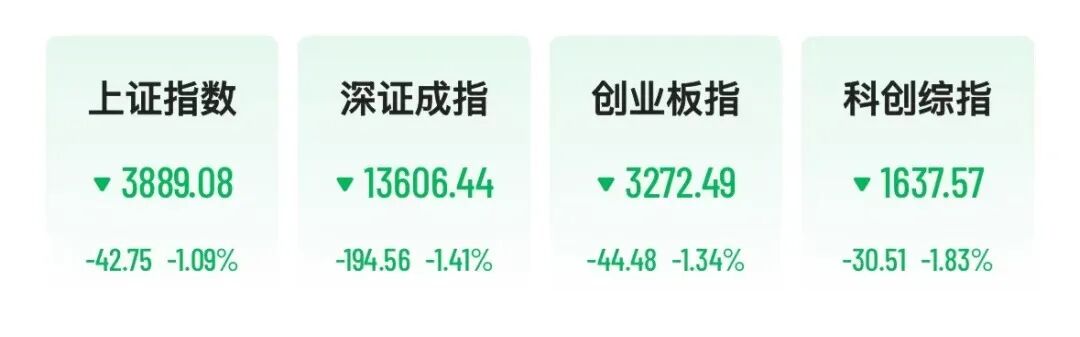
Group 1 - The Asia-Pacific stock markets experienced a widespread decline, with Japan's Nikkei 225 index falling by 0.27% and South Korea's KOSPI index dropping by 3.22% [1] - The A-share market saw a pullback, with all four major indices declining over 1%, and the Shanghai Composite Index falling below 3900 points, with nearly 4500 stocks declining across the market [1] Group 2 - Oil and gas stocks showed strength in the afternoon, with Blue Flame Holdings surging to the limit, and Shouhua Gas rising over 6%. International oil prices increased by approximately 2% for both New York and Brent crude [5] - Coal and chemical stocks experienced short-term gains, with Jinmei Technology hitting the limit and Haixing Co. rising over 8% [5] - The power sector was active, with Huadian Energy achieving four limits in six days, and Hunan Development achieving three consecutive limits [5] - Lithium battery material stocks showed repeated strength, with Rongjie Co. achieving three consecutive limits [5] - The commercial aerospace concept saw renewed activity, with Shenjian Co. and Zhongchao Holdings hitting the limit, and Xice Testing rising over 16% [5] Group 3 - The photovoltaic sector continued to weaken, with Guosheng Technology hitting the limit down, and Yubang New Materials and Shouhang New Energy both declining over 9% [6] - The Hong Kong stock market also faced declines, with the Hang Seng Index dropping over 2% and the Hang Seng Technology Index falling by 3.4% [6] Group 4 - Technology stocks collectively fell, with Kuaishou dropping over 14%, and major companies like Huahong Semiconductor and SMIC declining over 6% [7] - The consumer sector led the declines, with Pop Mart falling 11% [7] - Oil and gas stocks rose against the trend, with Baijin Oil Services increasing over 9% [7]

光伏行业可转债专题研究系列之一:光伏主产业链可转债梳理-20260326
EBSCN· 2026-03-26 07:51
1. Report Industry Investment Rating No relevant content provided. 2. Core Viewpoints of the Report - The photovoltaic industry will enter a critical stage of capacity clearance and pattern reshaping in 2026, with slowing global and domestic installation growth rates and prominent structural opportunities in emerging markets [39]. - New demands such as energy storage business and space photovoltaic applications are expected to become important increments. Energy storage business is entering a volume - growth period, and the integration of photovoltaic and energy storage is expected to become a new profit - growth point [42]. - With the low prices in the photovoltaic industry chain, corporate profitability under pressure, and the cycle of technological iteration and capacity adjustment, market - oriented mergers and acquisitions are expected to gradually take place, and the supply side is expected to be optimized [42]. 3. Summary According to the Directory 3.1 Photovoltaic Industry Overview 3.1.1 Overall Situation Review - Global photovoltaic demand has been growing since 2025 but is gradually entering a stable growth period. Overseas market demand is differentiated, with a decline in new photovoltaic installations in Europe and the United States and growth in emerging markets such as India and the Middle East. In China, under the "rush - installation wave" in the first half of 2025, the installation volume increased year - on - year, but decreased year - on - year in the second half [11]. - The supply side has over - capacity, and component prices have fallen below the cash - cost line. The production of polysilicon and silicon wafers decreased in 2025, and the industry's supply - demand imbalance led to a decline in prices and net losses of many listed companies [16]. - In terms of technological iteration, differentiation and cost - reduction go hand in hand. In 2025, photovoltaic cell technologies presented a diversified competition pattern, and the sharp rise in silver prices promoted the accelerated layout of silver - reduction technologies [25]. - The "anti - involution" policy combination has been implemented, and progress has been made in market competition order and capacity governance [26]. - In the second half of 2025, the price recovery of silicon materials and other sectors drove the improvement of corporate profitability, and some companies turned losses into profits in a single quarter [27]. 3.1.2 Industry Outlook - In 2026, the global and domestic installation growth rates are expected to slow down, and emerging markets will show structural opportunities. New demands such as energy storage and space photovoltaic applications are expected to become important increments [39][42]. - Market - oriented mergers and acquisitions are expected to gradually take place, and the supply side is expected to be optimized. The photovoltaic industry will gradually transition from "involution - type competition" to "high - quality development" [42]. 3.2 Basic Situation of Convertible Bonds in the Silicon Materials, Silicon Wafers, and Photovoltaic Cell and Component Industries - As of March 18, 2026, there are six convertible bonds in the photovoltaic main industrial chain, with their issuers being private enterprises. The single - bond issuance scale is generally large, and the remaining terms are concentrated between 1 - 3 years. The non - conversion ratios are generally high, and the credit ratings are generally high [45][46]. - In terms of trading, Shuangliang Convertible Bond and Jingneng Convertible Bond had the highest trading volumes since the beginning of 2026. Since the beginning of the year, the prices of the six convertible bonds have all risen, and except for Shuangliang Convertible Bond, the increases are all within 10%. As of March 18, 2026, Tong 22 Convertible Bond is debt - biased, and the other five are balanced [47][49]. - In terms of clause triggers, except for Tong 22 Convertible Bond, the conversion prices of the other convertible bonds have been revised downwards since 2025. Attention should be paid to the triggering of the put - back clause of Tong 22 Convertible Bond and the call clause of Jingneng Convertible Bond and Tian 23 Convertible Bond [50]. - In terms of profitability, the six issuers are expected to have net losses in 2025, but the losses of some issuers are expected to narrow year - on - year. In terms of cash flow, the operating net cash flows of the convertible - bond issuers in the first three quarters of 2025 were generally in net inflow but showed differentiation. In terms of debt burden and solvency, the issuers generally have a high leverage level, and the short - term solvency is generally acceptable [55][56][57]. 3.3 Key Convertible Bonds 3.3.1 Tong 22 Convertible Bond - The issuer, Tongwei Co., Ltd., is a global photovoltaic integrated leading enterprise. It will benefit from the profit recovery of the silicon - material sector. In 2025, the company's losses narrowed and its profitability improved [59]. - The company's leverage level is high, but it has sufficient cash - like assets, and its debt structure is mainly long - term debt, so the short - term debt pressure is relatively controllable. The company's feed production and other agricultural and livestock businesses contribute stable income, profits, and cash flow [60]. - The company plans to acquire Qinghai Lihao. If the acquisition is completed, it will be beneficial to the concentration of the upstream silicon - material sector and strengthen the company's cost and share advantages [61]. 3.3.2 Long 22 Convertible Bond - The issuer, LONGi Green Energy Technology Co., Ltd., is a global photovoltaic integrated component and silicon - wafer leading enterprise. It has a leading position in the production of components and silicon wafers and forms a differentiated competition route with BC technology [64]. - The company's leverage level is relatively low among leading integrated photovoltaic enterprises, and its cash reserves and short - term debt coverage ability are the strongest. In 2025, the company is expected to continue to have losses, but the overall losses are expected to narrow [65]. - The company's BC production capacity is increasing, and it is promoting cost - reduction through base - metal substitution. Its energy - storage business is implemented through the layout of Jingkong Energy, creating a "photovoltaic - energy - storage synergy" growth curve [66]. 3.3.3 Jingao Convertible Bond - The issuer, JA Solar Technology Co., Ltd., is one of the global photovoltaic integrated leading enterprises, with competitive advantages such as a global channel and overseas production capacity. Its battery - component shipments rank among the top in the industry [71]. - The company's leverage level is high, but the short - term debt pressure is relatively controllable. In 2025, the company is expected to have losses, but its operating cash flow performs well and has a strong cash - recovery ability [71][72]. - The company's high - power products are increasing in volume, and it is expanding overseas markets and developing in a photovoltaic - energy - storage synergy manner [72]. 3.3.4 Tian 23 Convertible Bond - The issuer, Trina Solar Co., Ltd., expands its energy - storage, system - solution, and digital - energy - service businesses on the basis of its component business, and the scale of its energy - storage business is expanding [77]. - The company's leverage level is high, and its energy - storage business has begun to contribute positive profits. In 2025, the company's loss is expected to be larger than that of the previous year [77]. - The company's energy - storage business is expanding overseas, and its system - solution and digital - energy - service businesses are developing. Non - component businesses are expected to become new profit - growth points [78]. 3.3.5 Jingneng Convertible Bond - The issuer, JinkoSolar Holding Co., Ltd., has the highest component shipments globally and has technical and scale advantages in N - type TOPCon products [84]. - The company's leverage level is high but relatively stable, and the short - term debt pressure is acceptable. In 2025, the company's net profit attributable to the parent is expected to be in a loss [84]. - The company's high - power products are increasing in volume, and its price system is rising. The introduction of base - metal substitution for cost - reduction and the photovoltaic - energy - storage synergy are expected to jointly drive the development of its performance [85].






TCL中环(002129):业绩符合预告,加速一体化布局
HTSC· 2026-03-26 06:59
Investment Rating - The report maintains a "Buy" rating for the company with a target price of RMB 10.91 [7]. Core Insights - The company reported 2025 revenue of RMB 29.05 billion, a year-on-year increase of 2.2%, with a net loss attributable to shareholders of RMB 9.26 billion, which is a reduction in loss by 5.6% compared to the previous year. The results are in line with the earnings forecast [1]. - The company is focusing on accelerating its integrated and global strategic layout, which is expected to benefit from the restructuring of the competitive landscape in the industry due to the clearing of inefficient capacity [1]. - The semiconductor business is anticipated to contribute as a new growth driver for the company [1]. Summary by Sections Silicon Wafer Business - The company has solidified its leading position in the global photovoltaic silicon wafer market, achieving revenue of RMB 12.24 billion in 2025 with a sales volume of 13.35 billion pieces, maintaining the highest market share in the industry. The cost of silicon wafers has decreased by over 40% year-on-year, and EBITDA improved by RMB 19.2 billion, with a gross margin increase of 1.1 percentage points [2]. - The G12 series products saw a year-on-year shipment increase of 40.8%, driven by technological innovation [2]. Battery Module Business - The company has developed a high-efficiency product system for battery modules, achieving revenue of RMB 9.32 billion in 2025, a year-on-year increase of 60.5%, with a sales volume of 15.1 GW, up 82% year-on-year. The overseas market has also achieved a GW-level breakthrough [3]. - The company plans to acquire a new energy company to integrate quality battery module production capacity [3]. Semiconductor Business - The semiconductor materials business generated revenue of RMB 5.71 billion in 2025, a year-on-year increase of 21.8%, with a sales volume of 1,222 MSI, up 24% year-on-year. The gross margin improved by 5.7 percentage points [4]. Profit Forecast and Valuation - The company has adjusted its profit forecasts for 2026-2027, projecting a net loss of RMB 2.33 billion in 2026 and a profit of RMB 2.50 billion in 2027. The target price has been adjusted to RMB 10.91, corresponding to a 39.3x PE for 2026 [5][11]. - The long-term outlook remains positive due to global energy transition supporting medium to long-term demand for photovoltaics [5].

调整给出上行空间,结构决定超额收益
Orient Securities· 2026-03-26 06:15
Market Strategy - The report suggests that the recent market adjustments provide an upward space, with structural factors determining excess returns. The release of short-seller pressure has led to a broad market rebound, supported by a decline in domestic market risk evaluation amidst rising global risk assessments. This rebound reflects the attraction of long positions due to improved odds [7]. Sector Strategy - The report highlights the transition of the cycle towards manufacturing, with new energy leading the manufacturing market. The importance of energy independence has been emphasized due to geopolitical conflicts, suggesting that mid-cap blue-chip stocks will expand from a simple cyclical price increase logic to a broader focus on "safety" and "independence" [3][7]. - In the photovoltaic sector, the report anticipates a valuation recovery driven by the backdrop of energy independence. The current public fund holdings in the photovoltaic industry are only 1.16%, indicating significant room for growth compared to 5.69% in mid-2022. This under-allocation suggests a potential for valuation improvement as expectations become more favorable [4][7]. - The coal sector is expected to show upward elasticity due to geopolitical tensions. The report notes that the price of thermal coal, a vital resource, may face policy constraints, while coking coal demand could rise due to improved profitability in coking enterprises. This could lead to a rebound in coking coal prices driven by fundamental factors [5][7]. Thematic Strategy - The report identifies that the new energy sector, particularly photovoltaic power, is positioned to become a core focus within the manufacturing sector. The global demand for energy is expected to continue growing, and the development of new energy sources will be a necessary choice for fossil fuel-importing countries like China and European nations [7]. - Specific stocks such as Jiejia Weichuang, Foster, and Haiyou New Materials are mentioned as potential investment opportunities within the photovoltaic sector, while companies like Huaibei Mining, Pingmei Shenma, Shanxi Coking Coal, and Lu'an Environmental Energy are highlighted in the coal sector [7].
山西证券研究早观点-20260326
Shanxi Securities· 2026-03-26 01:14
Market Overview - The domestic retail sales in January-February 2026 grew by 2.8% year-on-year, slightly above market expectations, with total retail sales amounting to 8.61 trillion yuan [6][7] - Online retail sales achieved a double-digit growth of 10.3%, while offline retail channels saw a decline in brand specialty store sales by 2.3% [6][7] - The textile and apparel sector experienced a year-on-year growth of 10.4%, driven by rising gold prices which boosted the performance of gold and jewelry sales [6][7] Company Insights - Zhongzi Technology (688737.SH) launched a restricted stock incentive plan to enhance employee motivation, with a target revenue of 25 billion yuan in 2026 and 30 billion yuan in 2027 [9][12] - The company reported a revenue of 1.767 billion yuan in 2025, with a year-on-year growth of 12.88%, despite a net loss of 56.19 million yuan due to increased expenses and asset impairment [9][12] - The introduction of the "National Seven" emission standards is expected to significantly increase the value of catalysts per vehicle, with the market size projected to exceed 100 billion yuan [9][12] Industry Analysis - The textile manufacturing sector is expected to see performance improvements from upstream manufacturers like Xin'ao and Bailong, while midstream leaders such as Yuyuan Group and Shenzhou International are viewed as undervalued [8][12] - The gold and jewelry sector is recommended for investment, particularly companies like Caibai Co., which is expected to see a net profit growth of 47.43%-71.07% in 2025 [8][12] - Retail sector recommendations include Miniso, which anticipates a revenue growth of 26% in 2025, and Yonghui Supermarket, which has seen significant sales increases during the holiday season [8][12] Investment Recommendations - The report suggests a focus on brands with stable performance in the apparel sector, such as Ge Li Si and Jiangnan Buyi, as well as home textile companies like Luolai Life and Water Mercury [6][8] - The sportswear sector is highlighted due to upcoming major events in 2026, recommending brands like Anta Sports and Li Ning [7][8] - Zhongzi Technology's three-pronged business strategy of "catalyst+, storage+, composite materials+" is expected to drive future growth, with projected revenues of 1.767 billion yuan in 2025, 2.401 billion yuan in 2026, and 2.943 billion yuan in 2027 [12]

中原证券晨会聚焦-20260326
Zhongyuan Securities· 2026-03-26 00:22
Core Insights - The report highlights the recovery of the shipping business by COSCO Shipping, resuming new booking services to several Middle Eastern countries [9] - The report indicates a significant increase in China's power generation capacity, with a total installed capacity of 3.95 billion kilowatts, marking a year-on-year growth of 15.9% [6][9] - The report emphasizes the strong performance of the communication and non-ferrous metal sectors in the A-share market, suggesting a favorable environment for medium to long-term investments [10][11] Domestic Market Performance - The Shanghai Composite Index closed at 3,931.84, up by 1.30%, while the Shenzhen Component Index rose by 1.95% to 13,801.00 [4] - The average P/E ratios for the Shanghai Composite and ChiNext indices are 15.79 and 45.41, respectively, indicating a suitable environment for medium to long-term investment [10][11] International Market Performance - The Dow Jones Industrial Average closed at 30,772.79, down by 0.67%, while the S&P 500 and Nasdaq also experienced declines of 0.45% and 0.15%, respectively [5] Industry Analysis - The smart home appliance market is projected to reach approximately $180 billion by 2026, with a compound annual growth rate (CAGR) of 22% from 2016 to 2026 [15] - China's smart home appliance market has grown from 200 billion yuan in 2016 to 500 billion yuan in 2022, indicating a doubling in size over six years [16] - The report identifies a three-tier structure in the smart appliance industry based on gross margin levels, highlighting the competitive landscape [17] Automotive Industry Insights - The automotive industry index has decreased by 8.13%, underperforming the CSI 300 index by 5.08 percentage points [18] - In February 2026, the production and sales of automobiles were affected by seasonal factors, with production down by 31.7% and sales down by 23.1% month-on-month [19] - The report maintains a "stronger than market" investment rating for the automotive sector, emphasizing the importance of innovation and global competitiveness [20] Semiconductor Industry Trends - The semiconductor industry continues to experience growth, with global sales increasing by 46.1% year-on-year in January 2026 [29] - The report notes a significant rise in DRAM and NAND prices, with expectations for continued price increases in the coming quarters [29] - AI demand is driving growth in the semiconductor sector, particularly in storage and chip manufacturing [29] Food and Beverage Sector Developments - The food and beverage sector has shown a slight increase, with specific categories like prepared foods and beer performing well [34] - The report indicates a decline in fixed asset investment in the food manufacturing sector, with a year-on-year growth of only 2.2% in 2025 [35] - The focus on health and quality in food production is becoming increasingly important, reflecting a shift in consumer preferences [30]