
机械

Search documents
2026年牛市展望系列4:26年A股业绩亮点有哪些?
Guoxin Securities· 2026-02-05 09:40
证券研究报告 | 2026年02月05日 策略专题研究 26 年 A 股业绩亮点有哪些?——2026 年牛市展望系列 4 核心观点 策略研究·策略专题 | 证券分析师:吴信坤 | 证券分析师:余培仪 | | | --- | --- | --- | | 021-61761046 | 021-61761040 | | | wuxinkun@guosen.com.cn | yupeiyi@guosen.com.cn | | | S0980525120001 | S0980526010001 | | | 基础数据 | | | | 中小板/月涨跌幅(%) | | 8526.31/3.18 | | 创业板/月涨跌幅(%) | | 3311.51/3.38 | | AH 股价差指数 | | 119.27 | | A 股总/流通市值 (万亿元) | | 101.97/93.33 | | 市场走势 | | | 核心结论:①25 年 A 股盈利边际企稳,主要动力源于整体企业的降本、以及 上市公司层面新经济的拉动已超过老经济的拖累。②宏微观基本面出现脱 钩,意味着传统盈利预测模型效果阶段性下降,定量模型显示中性假设下 26 年 A ...
如何吃透用好国家政策?辽宁召开专题会议
Xin Lang Cai Jing· 2026-02-04 18:26
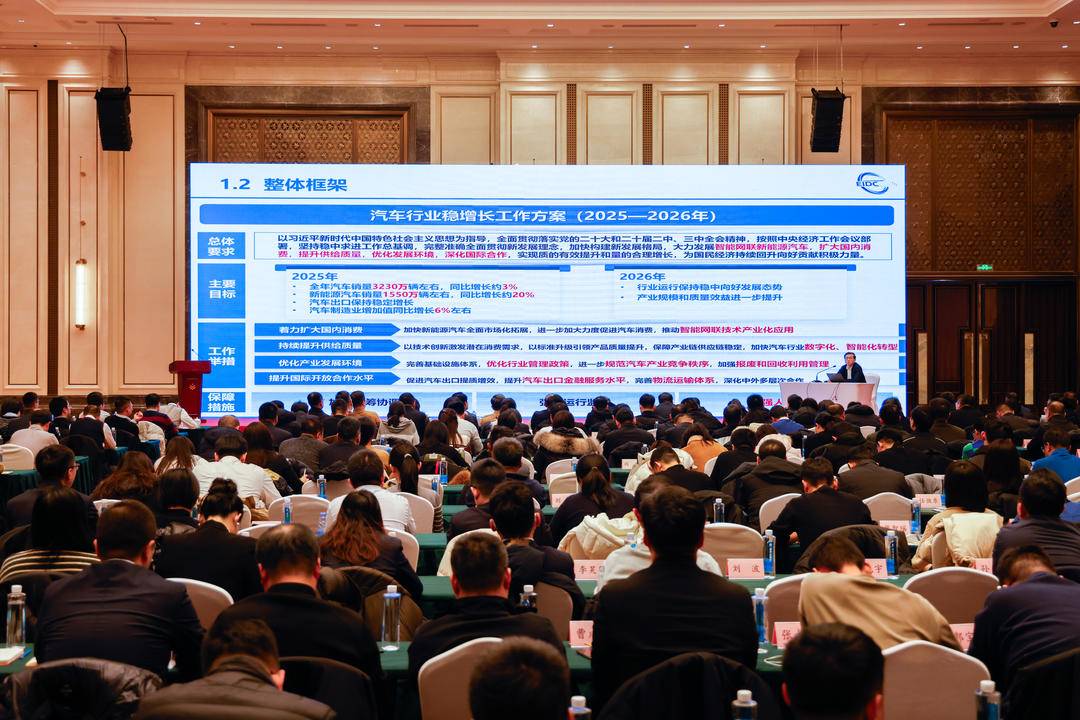
(来源:东北新闻网) 2月4日,由省工业和信息化厅、中国工商银行辽宁省分行举办的重点行业稳增长实施方案专题解读会在沈阳举行。会议围绕国家出台的稳增长系列政策, 重点解读汽车、机械、电力装备、电子信息、石化化工、钢铁、轻工等行业政策。全省12家金融机构、21个新型工业化院、30个重点县区、近50户企业、 33个行业协会共300余人参加会议。 会议现场 本次会议邀请了工业和信息化部相关司局及事业单位负责同志,围绕稳增长系列政策,结合辽宁产业结构特点与现实困境,就政策内涵、落实路径、行业 预期及企业纾困等方面进行深度讲解与现场指导。同时深化政银企协同,发挥金融支撑作用,精准把握政策导向,力求为行业、企业提供金融支持。 以汽车行业为例,会议对国家稳增长工作方案中着力扩大国内消费、提升供给质量、优化发展环境、深化国际合作等举措进行深入解读,并结合我省产业 实际提出具体发展建议。与会专家认为,辽宁应统筹优化全省产能,强化整车与零部件企业协同发展,推动整车企业持续上规模、增效益;依托我省科 教、场景、产业、区位及数据资源等优势,加强低温高寒环境下的动力电池、固态电池、自动驾驶等关键技术攻关与示范应用,拓展公交、物流、扫雪等 ...

APEC“中国年”首次高官会在广州启幕,亚太伙伴谈了什么大事?
Xin Lang Cai Jing· 2026-02-04 13:21
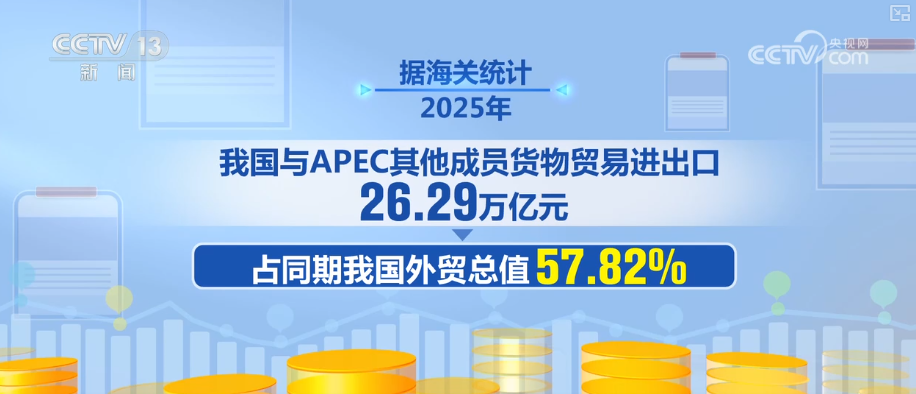
Group 1 - The APEC first senior officials' meeting is taking place in Guangzhou, marking the beginning of the "China Year" for APEC, which will last until October 10 [1] - By 2025, China's trade with APEC members is projected to reach 26.29 trillion yuan, accounting for 57.82% of China's total foreign trade, with a 39.4% increase during the 14th Five-Year Plan period [1] - China's trade with emerging APEC members, including ASEAN, Latin America (Peru, Mexico), and Central and Eastern Europe, is growing rapidly, supported by the Belt and Road Initiative [1] Group 2 - In 2025, China's exports of high-tech products to APEC members are expected to reach 4.63 trillion yuan, with a year-on-year growth of 8.1%, including significant increases in lithium-ion batteries, photovoltaic products, and electric vehicles [3] - Imports from APEC members are primarily in energy, agricultural products, semiconductor equipment, and precision instruments, with notable growth in machinery and high-tech products [3] Group 3 - Nearly half of China's exports to APEC members consist of intermediate goods, indicating a stable "China production - APEC assembly - global sales" supply chain, with a shift towards "R&D + manufacturing + services" [5] - The rapid growth of cross-border e-commerce exports and the dual drive of digital and green trade are emerging as new growth points [5] Group 4 - The construction of the Asia-Pacific Free Trade Area is providing long-term institutional guarantees for trade and investment liberalization, with China leveraging APEC to align with international high-standard trade rules [7] - Trade facilitation measures are being upgraded, including the 3.0 version of the China-ASEAN Free Trade Area, which reduces costs through tariff concessions and rule coordination [7] Group 5 - APEC "China Year" is expected to not only boost short-term trade growth but also facilitate the transformation of China's foreign trade from "scale expansion" to "quality improvement," enhancing its core position in the Asia-Pacific industrial chain [8]
金融制造行业2月投资观点及金股推荐-20260204
Changjiang Securities· 2026-02-04 11:06
Investment Rating - The report provides a "Buy" rating for several key stocks in the financial and manufacturing sectors, including China Resources Land and Beike-W [15][18][20][21]. Core Insights - The macroeconomic environment shows a continuation of strong supply and weak demand characteristics, with short-term growth pressure remaining manageable [9]. - The real estate sector is experiencing a valuation recovery opportunity for quality developers due to a resonance between fundamentals and policies [10]. - The banking sector is witnessing a recovery from oversold conditions, with stock prices rebounding ahead of improvements in the funding environment [20]. - The non-bank financial sector is expected to benefit from policy-driven high-quality development, with a focus on high-performing stocks [22]. - The new energy sector has established a bottom line, with attention on marginal changes in new technologies [25]. - The machinery sector is gaining order resilience from overseas solar expansion and new business developments, while space solar technology opens growth opportunities [31]. - The environmental sector is focusing on carbon neutrality opportunities, with overseas expansion and metal prices providing elasticity [33]. Summary by Sections Real Estate - The sector is expected to face challenges in 2026, but recent policy easing and improved second-hand housing sales indicate a potential recovery [14]. - China Resources Land is highlighted as a leading developer with strong operational capabilities and a solid financial position, projected to achieve a net profit of 26.2 billion, 27 billion, and 28.2 billion from 2025 to 2027 [15]. Banking - Nanjing Bank is recommended due to its expected double-digit revenue growth in 2025, driven by stable asset quality and improved net interest margins [21]. Non-Bank Financials - New China Life Insurance is noted for its high elasticity and potential for improved returns on equity, with projected intrinsic values of 292.1 billion and 329.0 billion for 2025 and 2026, respectively [24]. New Energy - The storage sector is expected to see demand stability supported by national capacity pricing, while lithium battery technology is anticipated to rebound with improved economic conditions [25]. - JunDa Co. is recognized for its strategic partnerships and potential growth in the space solar sector, with projected profits increasing significantly by 2027 [27]. Machinery - The machinery sector is benefiting from overseas solar project expansions, with companies like DiEr Laser positioned to capitalize on new technologies and increased order volumes [31][32]. Environmental - Weiming Environmental is highlighted for its potential in the Indonesian waste-to-energy market, with expected project launches in early 2026 [39]. - The company is projected to achieve net profits of 2.88 billion and 3.44 billion in 2025 and 2026, respectively [39]. Light Industry - The light industry is seeing a rebound in export-driven companies, with a focus on quality stocks that can leverage cost efficiencies and supply chain advantages [43]. Military Industry - The military sector is expected to benefit from the transition of military technology to civilian applications and increased military trade, with key recommendations including Aviation Power and AVIC Xi'an Aircraft Industry [51][53].





晚间公告|2月4日这些公告有看头
Di Yi Cai Jing· 2026-02-04 10:20
天通股份发布股票交易风险提示性公告,近期,公司因商业航天概念、铌酸锂晶体领域及CPO概念影响,受关注度较高。其中,公司主营业务未发生变化, 公司不生产商业卫星;铌酸锂晶体领域涉及公司"大尺寸射频压电晶圆项目",该项目为公司募投项目,建设期将延期至2029年12月,截至目前该项目尚未结 项,且尚未形成稳定收入;公司主营业务未发生变化,公司不生产光模块产品。 以下是第一财经对一些重要公告的汇总,供投资者参考。 【品大事】 中金公司:获批发行总额不超过350亿元债券 中金公司公告,近日收到中国证监会批复,中国证监会同意公司向专业投资者公开发行公司债券的注册申请。其中,本次公开发行一年期以上公司债券面值 总额不超过200亿元,本次公开发行短期公司债券面值余额不超过150亿元。该批复自同意注册之日起24个月内有效,公司在注册有效期内可以分期发行公司 债券。 利亚德:拟不超1亿元投资基金 后者定向投资商业航天领域非上市公司 利亚德公告,公司2月2日与深圳前海君川投资管理有限公司、中廷投资控股有限公司等有限合伙人共同签署《共青城道盈盛远创业投资合伙企业(有限合 伙)有限合伙协议》。共青城道盈盛远创业投资合伙企业(有限合伙) ...

国泰海通:汇率与运价边际回落 机械出口海外需求结构分化
智通财经网· 2026-02-04 06:40
智通财经APP获悉,国泰海通发布研报称,美元兑人民币小幅贬值,主要航线海运费同比继续下滑;美 国餐饮RPI环比下降,美国住房市场指数环比承压。建议重点关注具备全球制造布局、品牌输出能力与 渠道整合优势的出口型消费企业。在当前外部环境变化与政策博弈背景下,具备产能多元化配置、稳定 客户黏性及定价权的企业,有望在全球贸易格局调整中实现持续成长。该行看好市场占有率高、供应链 韧性强、并已建立成熟海外产能的标的。 国泰海通主要观点如下: 成本跟踪 美元兑人民币汇率小幅贬值;欧洲航线、美东航线、美西航线、东南亚航线海运费同比下降。1)汇率: 2026年1月30日美元兑人民币即期汇率为6.95,环比1月23日上升1.30%;欧元兑人民币汇率为8.28,环比1 月23日+0.97%。2)海运费:2026年1月第四周中国出口集装箱运价指数(CCFI)中,综合指数为1175.59, 同比下降16.92%,环比下降2.74%;欧洲航线为1574.69,同比下降25.16%,环比上升0.35%;美东航线为 975.78,同比下降24.75%,环比下降0.37%;美西航线为867.79,同比下降27.60%,环比上升1.64%;东南 ...

我国多元布局“新蓝海”拓展与APEC其他成员市场空间 高技术产品成纽带
Yang Shi Wang· 2026-02-04 02:24
Group 1 - In 2026, China will host the APEC summit, with the Ministry of Finance organizing a series of financial meetings, including the APEC Finance and Central Bank Deputies Meeting in Shanghai on February 4-5 [1] - The first official event of APEC "China Year" is currently taking place in Guangzhou, focusing on the theme of "Building an Asia-Pacific Community for Common Prosperity" and three priority areas: openness, innovation, and cooperation [1][2] - In 2025, China's trade with APEC members reached 26.29 trillion yuan, accounting for 57.82% of the country's total foreign trade [4] Group 2 - China's trade with APEC members during the 14th Five-Year Plan period amounted to 125.49 trillion yuan, showing a year-on-year growth of 39.4% [4] - The country is expanding its market space with APEC members, particularly in emerging markets such as ASEAN, Latin America, and Central and Eastern Europe, enhancing connectivity through initiatives like the Belt and Road [6] - In 2025, China exported high-tech products worth 4.63 trillion yuan to APEC members, with significant growth in lithium-ion batteries, photovoltaic products, and electric vehicles [7] Group 3 - China primarily imports energy, agricultural products, semiconductor equipment, and precision instruments from APEC members, with imports of electromechanical products and high-tech products showing notable growth [8] - Nearly half of China's exports to APEC members consist of intermediate goods, indicating a stable "China production - APEC assembly - global sales" supply chain [9] - The growth of cross-border e-commerce exports and the digital trade initiatives are driving new growth points in trade with APEC members [11] Group 4 - Trade facilitation measures are being upgraded, including the 3.0 version of the China-ASEAN Free Trade Area, which reduces costs through tariff concessions and rule coordination [13] - The APEC "China Year" is expected to not only boost short-term trade growth but also enhance the quality of foreign trade, solidifying China's core position in the Asia-Pacific industrial chain [13]
金融工程日报:沪指V型反转,太空光伏、商业航天等热点题材全线反弹-20260203
Guoxin Securities· 2026-02-03 12:55
- The CSI 500 Index performed well, with a rise of 3.11%[6] - The STAR 100 Index performed well, with a rise of 3.38%[6] - The CSI 500 Growth Index performed well, with a rise of 2.61%[6] - The mechanical, defense, building materials, basic chemicals, and steel industries performed well, with returns of 4.55%, 4.39%, 3.54%, 3.28%, and 3.25%, respectively[7] - The banking, non-bank, coal, petroleum and petrochemical, and electric power public utilities industries performed poorly, with returns of -0.81%, 0.06%, 0.24%, 0.44%, and 0.69%, respectively[7] - The TOPcon battery, BC battery, new energy equipment, rare earth, and photovoltaic concepts performed well, with returns of 8.01%, 7.11%, 6.36%, 6.09%, and 5.99%, respectively[10] - The central enterprise bank, yellow wine, bank selection, soybean, and swine fever vaccine concepts performed poorly, with returns of -1.63%, -0.73%, -0.66%, -0.47%, and -0.41%, respectively[10] - The number of stocks that hit the daily limit was 82, and the number of stocks that hit the daily limit was 23[13] - The closing return of stocks that hit the daily limit yesterday was 4.35%, and the closing return of stocks that hit the daily limit yesterday was -1.26%[14] - The sealing rate was 78%, an increase of 17% from the previous day, and the continuous board rate was 36%, an increase of 16% from the previous day[17] - The balance of margin financing and securities lending was 27,091 billion yuan, of which the balance of margin financing was 26,927 billion yuan, and the balance of securities lending was 164 billion yuan[19] - The balance of margin financing and securities lending accounted for 2.7% of the circulating market value, and the margin financing and securities lending transactions accounted for 9.3% of the market turnover[22] - The G60 Innovation ETF Shenwan Lingxin had the highest premium, with a premium of 1.83%, and the non-ferrous ETF Huatai PineBridge had the highest discount, with a discount of 3.89%[23] - The median annualized discount rates of the main contracts of the SSE 50, CSI 300, CSI 500, and CSI 1000 stock index futures over the past year were 0.63%, 3.79%, 11.15%, and 13.61%, respectively[28] - The annualized discount rate of the main contract of the SSE 50 stock index futures on the day was 0.48%, the annualized discount rate of the main contract of the CSI 300 stock index futures on the day was 1.41%, the annualized discount rate of the main contract of the CSI 500 stock index futures on the day was 0.53%, and the annualized discount rate of the main contract of the CSI 1000 stock index futures on the day was 2.94%[28] - The stocks with the highest net inflows from institutional seats were Tongling Nonferrous Metals, Sanbian Technology, Robotec, Hunan Gold, Aerospace Development, Zhongchao Holdings, Autoway, Dikang Holdings, Shuangjie Electric, and Hongqiang Holdings[37] - The stocks with the highest net outflows from institutional seats were Junda Holdings, Wanfeng Holdings, Jept, Southern Network Energy, Urban Construction Development, Tongyu Communications, Zerun New Energy, Weiling Holdings, Liujin Technology, and Intercontinental Oil and Gas[37] - The stocks with the highest net inflows from Northbound Trading were Robotec, Tongyu Communications, Dikang Holdings, Junda Holdings, Hunan Gold, Hailanxin, Far East Holdings, Zhongchao Holdings, Autoway, Southern Network Energy, and Urban Construction Development[38] - The stocks with the highest net outflows from Northbound Trading were Tongling Nonferrous Metals, Yuguang Gold and Lead, Zhejiang Wenlian, Jept, Aerospace Development, Intercontinental Oil and Gas, Juguang Technology, Taihao Technology, Litong Electronics, and others[38]
公司产品为HDI、IC载板等高阶产品的必备制程,并已深入参与服务器液冷散热系统
摩尔投研精选· 2026-02-03 10:39
Core Viewpoint - The current spring market rally is not yet over, despite recent pullbacks in A-shares, with the index returning to around 4000 points. The analysis suggests that the market is likely to continue its upward trend due to ongoing economic recovery and supportive policies [1]. Market Analysis - Historical data indicates that the average duration of spring rallies since 2010 is 39 days, with a maximum increase of 15.8%. The current rally has lasted 31 days with a gain of 9.8%, suggesting potential for further upward movement [2]. - The analysis maintains the view that the spring rally is entering a phase of "volume contraction and price increase," with a stronger focus on quality growth factors [3]. Sector Focus - The following sectors are highlighted for their performance expectations: 1. Cyclical sectors: Focus on tight supply in non-ferrous metals, chemicals, building materials, steel, and machinery [3]. 2. Non-bank financials: Emphasis on insurance companies benefiting from short-term premium growth and mid-term investment income enhancement [3]. 3. Technology sectors with solid fundamentals: Attention on themes such as satellite navigation, commercial aerospace, memory storage, optical modules, and circuit boards, which show clear trends in earnings growth [3].

月度报告(2026/2):2月行业配置推荐顺周期行业——行业配置策略-20260203
Huafu Securities· 2026-02-03 07:52
Core Insights - The report emphasizes a dynamic balance strategy that has achieved an annualized absolute return of 18.85% and a relative return of 12.26% from January 2015 to January 30, 2026, with a maximum drawdown of 10.18% [3] - Recommended industries for February 2026 include non-ferrous metals, basic chemicals, electric equipment and new energy, communication, light manufacturing, and steel [3][25] - The macro-driven strategy has generated an annualized excess return of 4.77% since January 2016, with a maximum drawdown of 9.51% [4][45] - The multi-strategy approach has yielded an annualized relative return of 6.32% since May 2011, with a maximum drawdown of 13.24% [5][66] - The extreme style high beta strategy has achieved an annualized relative return of 9.93% since July 2013, but has underperformed in 2026 with a relative excess return of -4.02% [5][80] Industry Performance Summary - In January 2026, the A-share market saw the CSI 300 index rise by 1.65%, while the CSI 500 index increased by 12.12% [16] - The top-performing sectors in January were non-ferrous metals, media, oil and petrochemicals, building materials, and electronics [16] - The dynamic balance strategy outperformed its benchmark in January with an absolute return of 9.18% and an excess return of 4.05% [22][55] - The macro-driven strategy achieved an absolute return of 6.76% in January, with an excess return of 1.20% [4][48] - The multi-strategy approach recorded an absolute return of 4.65% in January, but underperformed its benchmark with an excess return of -0.42% [5][69] Recommended Industries - The dynamic balance strategy recommends non-ferrous metals, basic chemicals, electric equipment and new energy, communication, light manufacturing, and steel for February 2026 [3][25] - The macro-driven strategy suggests food and beverage, defense and military, pharmaceuticals, non-ferrous metals, communication, and basic chemicals for February 2026 [4][24] - The multi-strategy approach recommends real estate, construction, banking, communication, textiles and apparel, pharmaceuticals, basic chemicals, and non-ferrous metals for February 2026 [5][56] - The extreme style high beta strategy recommends transportation, electric utilities, basic chemicals, machinery, banking, and oil and petrochemicals for February 2026 [5][74]