贵金属

Search documents
警报!A股资金像无头苍蝇乱撞,指数一调整,个股就普跌,资源股暴涨,科技股就崩盘
Sou Hu Cai Jing· 2026-02-01 09:05
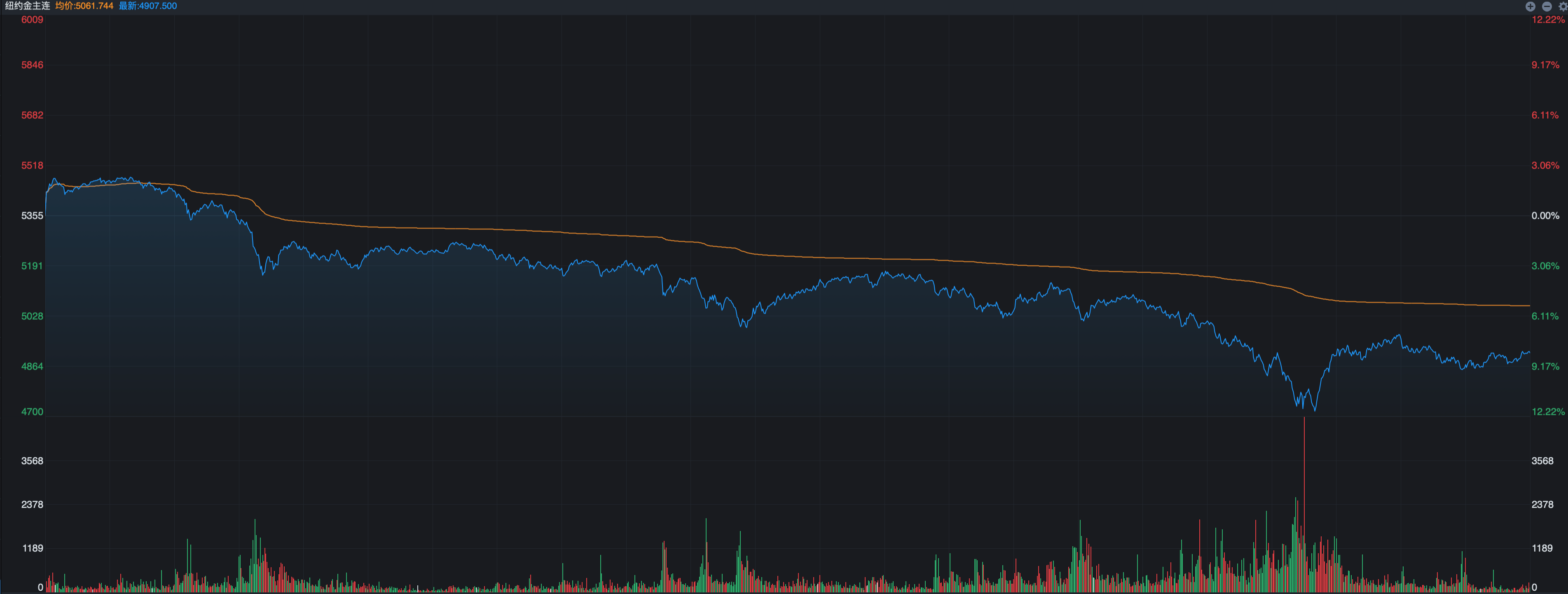
Market Overview - The A-share market is experiencing a chaotic state, with major indices showing little decline while most individual stocks are significantly down, leading to investor frustration [1] - On January 26, 2026, despite minor index declines, over 3,700 stocks fell, while resource stocks like gold and coal surged, indicating a lack of coherent market direction [1][3] Capital Flow Dynamics - The chaotic market reflects intense but disorganized capital battles among several key sectors, including high-position cyclical stocks and technology growth sectors [3][4] - High-position cyclical stocks, particularly in non-ferrous metals, saw significant price fluctuations driven by speculative capital, leading to market panic when these stocks dropped [3][4] - Funds exiting high-position stocks did not disappear but shifted towards technology sectors like semiconductors and AI, which are supported by clear industrial policies, although this transition was weak due to overall market fear [4][5] Investment Behavior - As high-position and growth sectors underperformed, some funds moved towards undervalued stocks in sectors like liquor, real estate, and finance for safety, but this was more of a technical rebound rather than a fundamental recovery [5][10] - The current market is characterized by a "stock selection" approach rather than a focus on index performance, emphasizing the importance of individual stock value assessments [13] Market Sentiment and Valuation - The extreme volatility is exacerbated by a lack of new capital entering the market, leading to a "stockholder's game" where existing funds are aggressively reallocated, causing erratic price movements [6][8] - Many high-flying stocks have reached historical valuation peaks, creating bubbles that are vulnerable to rapid declines upon any negative news, while traditional sectors remain undervalued but lack growth expectations [8][9] Sector Analysis - For high-position cyclical products like non-ferrous metals and precious metals, the risk-reward ratio has deteriorated significantly, making further investment risky [9] - In contrast, sectors like semiconductors and robotics, despite recent adjustments, have strong long-term growth prospects supported by domestic demand and favorable policies, presenting potential investment opportunities [11] Strategic Recommendations - Investors are advised to manage their positions carefully, maintain a comfortable cash reserve, and avoid impulsive trading behaviors in a volatile market [13][14] - A balanced investment strategy should include both growth sectors with clear performance expectations and stable dividend-paying stocks to mitigate volatility [14][16] - Reducing trading frequency and focusing on long-term fundamentals rather than short-term market fluctuations is recommended for navigating the current market environment [16] Broader Market Context - The Hong Kong stock market is showing different characteristics, with technology indices at historically low valuations and increasing international capital interest, providing an alternative investment avenue [16]

和讯投顾徐梦婧:商业航天领域热度持续攀升,周末迎来重大利好消息
Sou Hu Cai Jing· 2026-02-01 08:56
Group 1 - The international precious metals market experienced a significant decline, with silver prices dropping by 35% and gold prices falling below key support levels, which will put pressure on the A-share precious metals sector [1] - Bitcoin prices also saw a substantial crash, further affecting market risk appetite, while over 500 listed companies have issued profit warnings, including major firms like China Overseas Land & Investment and Wingtech Technology, which are expected to report losses exceeding 10 billion [1] - The commercial aerospace sector is gaining momentum, with SpaceX submitting an application to launch 1 million AI satellites to create the world's first space data center, and China is accelerating its own satellite and rocket launch initiatives, indicating a strong investment opportunity in this sector [1] Group 2 - The China Securities Regulatory Commission has expressed support for the development of new productivity sectors such as AI and semiconductors, while storage chip prices are set to rise, benefiting leading companies in the optical module industry [2] - Shanghai has introduced a subsidy policy for replacing old home appliances with new energy appliances, with a maximum subsidy of 20,000, which will drive consumption and support the recovery of the new energy sector [2] - Upcoming industry events, such as the brain-computer interface developer conference and photovoltaic industry seminar, are expected to catalyze opportunities in related sectors [2]
国联民生:百年浮沉,商品距离“大牛市”还缺什么?
Xin Lang Cai Jing· 2026-02-01 08:46
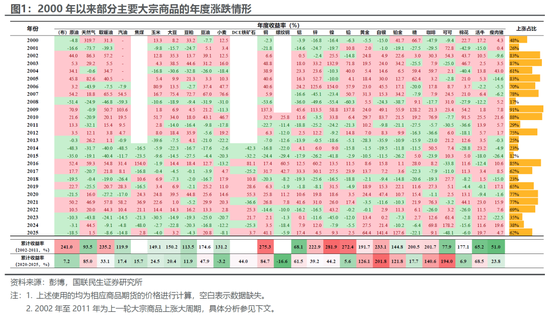
Group 1 - The current commodity price cycle, particularly for precious metals like gold and silver, is facing challenges, and the narrative surrounding the commodity price increase may still have room to develop [1][33] - The recent commodity price increase lacks breadth compared to the previous cycle from 2002 to 2011, where over 60% of major commodities experienced price increases, while the current cycle shows limited upward movement [1][33] - The report suggests that the current commodity price cycle may still be in its early stages, and further time may reveal greater upward potential [1][33] Group 2 - Since 1850, commodities have experienced five distinct upward cycles, with an average duration of approximately 12 years and an average price increase of 79% when adjusted for inflation [3][34] - The last two cycles have seen precious metals outperform, while the earlier cycles were characterized by stronger performances from energy, industrial metals, and agricultural products [5][36] - The report emphasizes the importance of analyzing the structural factors that drive these commodity cycles, including technological advancements and geopolitical tensions [6][18] Group 3 - Energy and industrial metals are considered the most stable and classic commodities, often driven by technological and industrial revolutions, as well as geopolitical conflicts [6][37] - Agricultural products have shown weaker long-term performance compared to other asset classes, often lagging behind inflation, but can excel during periods of significant supply shocks [9][41] - Gold and silver have not always been the primary focus in commodity cycles, with their significant price increases occurring mainly in the last two cycles due to the decoupling of currencies from gold standards [14][43] Group 4 - The report identifies three long-term perspectives that influence commodity cycles: war, technology, and emerging demand, highlighting that conflicts can disrupt supply chains and affect demand differently [18][19] - Technological cycles are noted to have a longer duration and can significantly impact commodity prices during their explosive and transitional phases [22][24] - Emerging demand often coincides with periods of war or technological transformation, driving commodity price increases [27][30]

掘金有色,把握主线:有色及贵金属月度策略(第15期)-20260201
Guo Tai Jun An Qi Huo· 2026-02-01 08:18
Report Industry Investment Rating No information provided in the content. Core Viewpoints of the Report - In 2026, hold non - ferrous metals, oil and gas, and rare earths until the US economy faces a recession crisis. The long - end interest rate in the US is likely to rise, and the US economy may overheat. The macro market's political volatility will decline, and the trading will focus on economic and policy factors. Gold is expected to reach around $6,000 per ounce, and silver's high is expected to be around $120 per ounce. Copper prices are expected to remain firm due to Fed rate cuts and supply - demand gaps. The electrolytic aluminum market may have an upward trend, with a global supply shortage [10][35][98]. Summary by Directory Asset Allocation: Macroeconomic Contradictions and Allocation Strategies - The US Treasury drives currency and inflation. The continuous growth of US Treasury debt is backed by GDP. Since 2000, the US government's expenditure/GDP ratio has been rising, and the deficit rate is high. If the stock market has a crisis, it may bring opportunities for commodities. The sensitivity of non - ferrous metals to interest rates has increased since 2020, and the game between the Fed and global commodity inflation has intensified [4][13]. - In 2026, hold non - ferrous metals, oil and gas, and rare earths. The US economy may overheat, and the long - end interest rate is likely to rise. The macro market's political volatility will decline, and trading will focus on economic and policy factors [10][35]. Precious Metals: Where Are Gold, Silver, Platinum, and Palladium Headed? - Gold is at a new starting point. Due to geopolitical risks and dovish Fed expectations, it is recommended to increase gold allocation, focus on unilateral long positions and call option strategies. For silver, it is recommended to take profit on long positions and consider long positions in the gold - silver ratio. In 2026, gold is expected to reach around $6,000 per ounce, and silver is expected to have a high of around $120 per ounce [29][35]. - Platinum and palladium are driven by the precious metals sector. They have strong follow - up elasticity but are also affected by the callback of gold and silver. The current upward trend of platinum is relatively healthy, and there is a possibility of a new high. Palladium may have supplementary upward momentum [36]. Copper: How to Choose the Trading Mode under the Background of Weak Reality and Strong Expectations? - In terms of trading, copper price volatility has declined, and the positions of SHFE and LME copper are at historical highs. The term structure of SHFE copper has weakened, and the spot import loss has narrowed. Globally, the total copper inventory is at a historical high, and the LC spread has narrowed [37][44][48]. - The global copper mine supply in 2025 was lower than expected, and the increase in 2026 is limited. The supply disturbance has increased, mainly due to factors such as reduced ore grades, strikes, and geopolitics. The domestic smelting capacity is expanding, and the refined copper output is expected to increase by 68.75 million tons in 2026 [62][66][69]. - In terms of consumption, high - quality consumption such as AI computing centers and new energy consumption contribute significantly to copper consumption. The "14th Five - Year Plan" in China supports power grid investment, which will drive copper consumption. Traditional industries also show an increase in copper consumption, but there are differences among countries [75][80][92]. - The global refined copper supply will shift from surplus in 2025 to a shortage in 2026. It is expected that the global copper supply will have a shortage of 197,000 tons in 2026, and the Chinese market will have a shortage of 191,500 tons. Copper prices are expected to remain firm in 2026 [95][96][98]. Electrolytic Aluminum: How to Grasp the Contradictions and Rhythms after the Abnormal Breakthrough? - In 2025, the electrolytic aluminum market was in a state of shock convergence. In the fourth quarter, the stock - futures linkage opened up the upward elasticity. In 2026, it is expected that the market will continue the upward - looking trend, with a global supply shortage of 420,000 - 760,000 tons. The short - term rhythm needs to pay attention to the decline in photovoltaic enterprise production, and the risks include macro - recession and over - production in Indonesia [100][101][104]. - Currently, the Shanghai aluminum is in a high - level shock, with a neutral - strong position. The short - term micro - demand is weak, but the macro - risk preference is optimistic, and it has marginal upward momentum [110]. Over - the - Counter Options: How to Use Option Hedging Tools under High Volatility and High Prices? - For long positions, when the price is high, consider replacing with in - the - money call options to retain the upside potential and control the maximum drawdown. You can also use spread options to optimize costs with a capped upside [118][122]. - For selling hedging of inventory, consider buying put collar options to optimize the hedging cost, limit inventory price fluctuations between $100,000 - $120,000, and receive an option premium of $150 per ton [126].
白银闪崩36%引爆币圈,代币化期货24小时爆仓1.4亿美元!传统避险资产为何变成链上高危“炸弹”?
Sou Hu Cai Jing· 2026-02-01 08:16
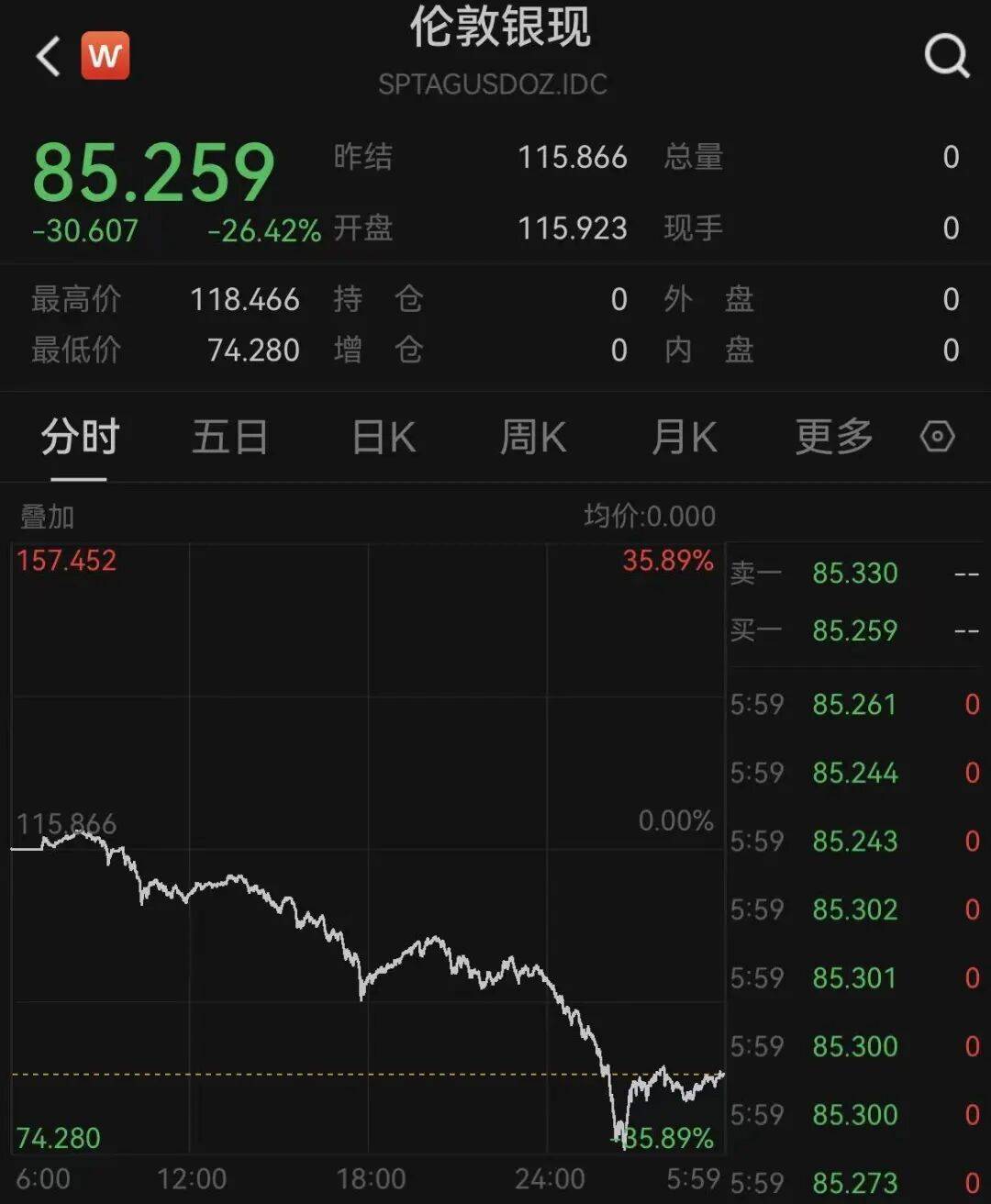
Core Viewpoint - The global financial market witnessed a historic event on January 31, with spot silver prices experiencing an "epic" crash, dropping by up to 36% within a day, reaching a low of $74.28 per ounce. This extreme downturn in the traditional precious metals market unexpectedly triggered a rare cross-market collapse in the cryptocurrency sector [1]. Group 1: Market Impact - In the past 24 hours, a total of 129,117 traders in the cryptocurrency market were liquidated, with the total amount exceeding $543.9 million [2]. - The liquidation scale of tokenized silver futures reached $142 million, surpassing Ethereum's $139 million and nearly doubling Bitcoin's $82 million [3][6]. Group 2: Tokenized Assets - Tokenized precious metal products, which map physical assets like gold and silver onto the blockchain, were expected to provide high liquidity and 24/7 trading. However, this feature amplified panic during the silver spot crash [5]. - The trading volume for tokenized silver contracts was significant, with Hyperliquid reporting over $100 million in 24-hour trading volume, Binance at $390 million, and Bitget at $27 million [9]. Group 3: Market Dynamics - A notable single liquidation order of $18.1 million occurred on the Hyperliquid platform, highlighting the market's lack of liquidity during the price volatility [8]. - The crash was exacerbated by a mismatch of "high leverage" and "low depth" in the market, with platforms like Hyperliquid, Binance, and Bitget offering leverage up to 50x or even 100x [8]. Group 4: Traditional Market Influence - The catalyst for this collapse was rooted in traditional financial markets, where a significant capital withdrawal was observed. As of January 27, hedge funds and large speculators had reduced their bullish positions in silver to a 23-month low, decreasing net long positions by 36% [11]. - The CME Group's decision to raise margin requirements for silver futures further pressured high-leverage traders, leading to forced liquidations in the tokenized market [12].
黄金白银四问四答
CAITONG SECURITIES· 2026-02-01 07:32
Group 1: Report Industry Investment Rating - No information provided in the content Group 2: Core Viewpoints of the Report - In 2026, the precious metals market has seen significant fluctuations. The short - term rise is driven by the safe - haven property, dollar credit issues, and tight silver inventory. The sharp increase was due to short - squeezes and the option gamma squeeze effect. Currently, factors triggering adjustments include the nomination of Warsh as the Fed chair, high volatility, a significant decline in silver ETF holdings, and exchange intervention. In the long - term, the upward trend remains, and historical data shows an average 18 - day correction with an 8% decline, and a re - entry point may be when the implied volatility drops below 20% [5][9] Group 3: Summary by Relevant Catalogs 1. Short - term Logic for the Recent Rise - **Safe - haven Property**: Multiple geopolitical conflicts in 2026, such as the capture of Venezuelan President Maduro and potential US tariffs on Europe and strikes against Iran, have sharply increased risk - aversion sentiment. Additionally, the potential US government shutdown also boosts the precious metals market [10][15] - **Dollar Credit Issues**: Due to the unpredictability of the US government and growing US debt, European institutions like Swedish and Danish pension funds have reduced their holdings of US - related assets, and some funds may choose gold as a new underlying asset [16] - **Silver - specific Logic**: The industrial and investment demand for silver has led to a significant decline in physical silver inventory. Compared to September 2025, the Shanghai Futures Exchange's silver inventory has dropped by over 58%, and COMEX silver inventory has decreased by 21% [17] 2. Reasons for the Previous Sharp Increase - **Short - squeeze**: As of January 29, the virtual - to - physical ratio of the Shanghai silver main contract was 8.75, much higher than the historical average. In January, over 40 million ounces of silver on COMEX applied for delivery, and as the March delivery month approaches, the demand may exhaust the current inventory [20] - **Option Gamma Squeeze Effect**: Retail investors' large - scale purchase of call options forces market - makers to buy underlying assets in the futures market, creating a self - reinforcing cycle. When gold broke through $5000 per ounce, it accelerated its upward movement [21] 3. Factors Triggering the Current Adjustment - **Direct Cause**: The nomination of Kevin Warsh as the next Fed chair stabilizes the dollar's credit, weakening the "de - dollarization" narrative and suppressing gold prices [24] - **Volatility Perspective**: As of January 29, the implied volatility of gold exceeded 35%, and that of silver was 94%, both at historical highs, indicating an over - heated market [25] - **Funds Perspective**: The significant decline in silver ETF holdings since January 26, approaching previous lows, signals an adjustment in the silver market. Gold's overall holding growth has also slowed [27][29] - **Exchange Intervention**: The CME has raised the margin for silver and gold six times since December 2025, and the Shanghai Futures Exchange has also increased margins and issued risk warnings [30] 4. What to Do After the Adjustment - **Medium - to - Long - term Perspective**: The long - term upward trend of precious metals remains. International concerns about US debt sustainability and Fed independence drive central banks to increase gold reserves, and the Fed's current interest - rate cut cycle reduces the opportunity cost of holding gold [34] - **Historical Reference**: Since 2024, gold has had three peak - to - trough corrections, with an average correction time of about 18 days and a decline of about 8% [35] - **Volatility Guidance**: Historically, gold rallies have often started when implied volatility dropped to a low level. In the future, when the volatility drops below 20%, it may be a signal to go long [36]
20260201周报:市场现货紧张,镨钕价格大幅上涨:有色金属-20260201
Huafu Securities· 2026-02-01 06:31
Investment Rating - The report maintains a "stronger than the market" rating for the industry [6] Core Views - Precious Metals: The demand for safe-haven assets combined with a declining US dollar continues to drive strong increases in gold prices. Geopolitical risks are a core driver for the recent highs in gold prices, with long-term investment value remaining intact [2][12] - Industrial Metals: A surge in copper prices was observed due to concentrated macro risks leading to impulsive capital movements. The report highlights that copper prices have significant upward potential driven by demand from electric vehicles and renewable energy sectors [3][18] - New Energy Metals: Lithium carbonate futures experienced a pullback, but the trend of inventory reduction continues. The report notes a slight decrease in lithium production and ongoing supply chain disruptions affecting future supply expectations [4][22] - Other Minor Metals: The market for rare earths is tight, with significant price increases for praseodymium and neodymium. The report indicates a strong demand from downstream sectors, leading to increased prices despite some weakness in dysprosium and terbium [4][26] Summary by Sections Precious Metals - Gold prices are rising due to increased safe-haven demand and geopolitical tensions, with significant individual stocks to watch including Zijin Mining and Zhongjin Lingbao [2][13] - Silver and platinum group metals are also benefiting from the gold price movements, with specific stocks highlighted for investment [2][13] Industrial Metals - Copper prices surged by 6.35% in a single day, driven by macroeconomic factors and geopolitical tensions. The report emphasizes the potential for further price increases due to strong demand from the electric vehicle sector [3][15][18] - Aluminum prices are also on the rise, supported by domestic monetary policy and consumption initiatives [3][19][20] New Energy Metals - Lithium carbonate production decreased slightly, but the overall inventory remains low, indicating a continued trend of inventory reduction. The report notes that while demand remains stable, there is cautious optimism regarding future supply [4][21][22] - Key stocks in the lithium sector include Ganfeng Lithium and Tianhua [4][25] Other Minor Metals - The report highlights a significant increase in praseodymium prices due to tight market conditions, while dysprosium and terbium prices have weakened. Specific stocks in this sector include China Rare Earth and Northern Rare Earth [4][26]
金价单日暴跌超11%,银价创40多年来最差单日表现
Xin Lang Cai Jing· 2026-02-01 05:52
Core Viewpoint - The international precious metals market experienced a significant decline, with gold prices dropping over 11% in a single day and silver prices plummeting by 31.37%, marking the worst single-day performance since March 1980 [1] Group 1: Price Movements - On January 30, international gold prices fell below key thresholds, resulting in a daily decline exceeding 11% [1] - Silver prices recorded a drastic drop of 31.37%, the worst single-day performance since March 1980 [1] - For the week, gold prices saw a cumulative decline of 4.71%, while silver prices fell by 22.50% [1]
全球政策预期突变,关注稀土等国内主导品种
Guotou Securities· 2026-02-01 05:14
Investment Rating - The industry investment rating is "Leading the Market - A" [4] Core Viewpoints - The report highlights a sudden shift in global policy expectations, particularly influenced by the nomination of Kevin Warsh as the next Federal Reserve Chairman, which has led to significant volatility in the precious metals market, particularly gold and silver [1] - Despite short-term fluctuations, the long-term demand for metals remains strong due to the ongoing development of new global industrial chains, with supply constraints persisting [1] - The report suggests focusing on domestic leading products such as rare earths, tungsten, and tantalum, which are less affected by macroeconomic changes, as well as industrial metals like copper and aluminum post-Spring Festival [1] Summary by Sections Precious Metals - Gold and silver prices have seen significant adjustments, with COMEX gold and silver closing at 4879.6 and 84.8 USD/oz respectively, reflecting changes of -1.94% and -16.0% [2] - The market remains optimistic about the long-term upward trend of gold prices, driven by central bank and ETF purchases, despite short-term price corrections [2] - Recommended stocks include Shandong Gold, Shandong International, and others [2] Industrial Metals - Copper prices on LME closed at 13070.5 USD/ton, down 0.85% from the previous week, while SHFE copper rose by 2.56% to 103170.0 CNY/ton [3] - The report notes stable production rates in downstream copper rod and wire cable enterprises, with social copper inventory at 322,800 tons, a decrease of 7400 tons week-on-week [3] - Suggested stocks for copper include Luoyang Molybdenum, Jiangxi Copper, and others [3] Aluminum - SHFE aluminum experienced a rapid decline to 24600 CNY/ton after a previous surge due to geopolitical tensions and speculative trading [3] - The report indicates a weak fundamental support for aluminum prices in the short term, with inventory trends continuing to rise [6] - Recommended stocks include China Hongqiao, Yunnan Aluminum, and others [7] Energy Metals - Nickel prices showed volatility, with LME nickel reaching a high of 19160 USD/ton before closing at 140000 CNY/ton, reflecting a weekly decline of nearly 3.8% [8] - The report anticipates that nickel prices will remain volatile due to uncertainties in Indonesian mining policies [8] - Suggested stocks include Huayou Cobalt and others [9] Strategic Metals - Rare earth prices have been on the rise, with praseodymium and neodymium oxide quoted at 740,000 CNY/ton, an increase of 9.5% [12] - The report expects stable growth in both domestic and international demand for rare earths, with a potential new round of inventory replenishment [12] - Recommended stocks include Northern Rare Earth and others [12]
美联储提名负责人,能逆转黄金多头吗?
Sou Hu Cai Jing· 2026-02-01 03:46
Core Viewpoint - The significant drop in silver and gold prices is primarily attributed to excessive previous gains, leading to profit-taking and heightened market volatility triggered by external factors [1][3]. Group 1: Market Dynamics - The recent sharp decline in precious metals is seen as a reaction to profit-taking after a period of rapid price increases, where even minor market movements can amplify bearish sentiment [1]. - The nomination of the new Federal Reserve head, Walsh, is perceived as a catalyst for the drop, as his potential policies may tighten dollar liquidity, negatively impacting precious metals [3]. Group 2: Underlying Factors - The fundamental reasons behind the recent surge in gold and silver prices are more related to concerns over the credibility of the dollar rather than inflation or interest rate changes [4]. - The ongoing geopolitical situation is expected to maintain concerns over the dollar's credibility, which may sustain the trend of central banks purchasing gold, keeping the long-term bullish outlook for gold prices intact [4]. Group 3: Short-term and Mid-term Outlook - In the short term, there may be further downward pressure on gold and silver prices due to the magnitude of the recent decline, necessitating caution [4]. - However, from a mid-term perspective, the outlook for gold and other precious metals remains optimistic, with potential for recovery once a new equilibrium is established [4].