中短债基金

Search documents
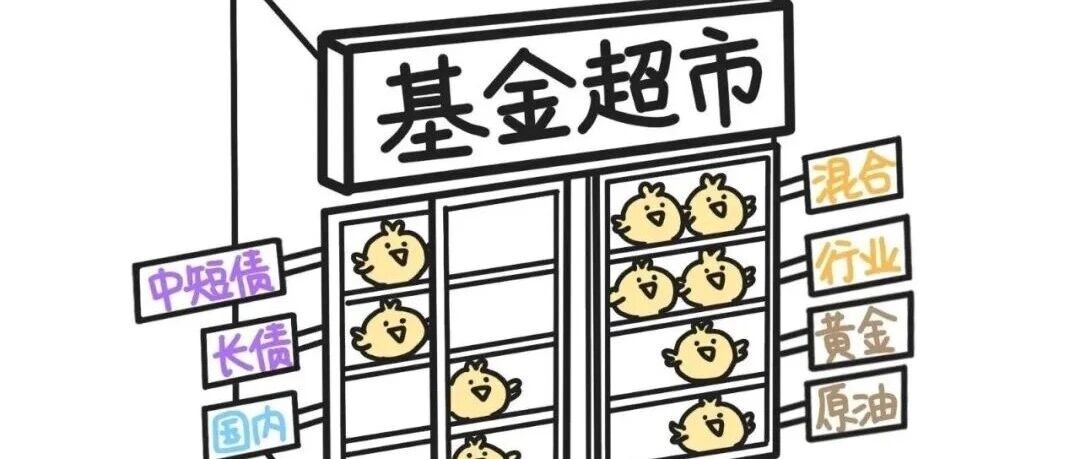
新手养基第一步 关掉你的基金超市
雪球· 2025-12-12 13:00
Core Viewpoint - The article emphasizes the pitfalls of having an excessive number of funds in an investment portfolio, likening it to running a supermarket, which can lead to false diversification and management difficulties [6][17]. Group 1: Reasons for Excessive Fund Holdings - Fear of Missing Out (FOMO) drives investors to buy into new concepts and themes, leading to an overwhelming number of funds [9]. - Misunderstanding the principle of diversification results in investors believing that holding more funds inherently reduces risk [11]. - Decision paralysis occurs when investors are overwhelmed by choices, leading them to buy multiple funds without a clear strategy [13]. Group 2: Problems with Excessive Fund Holdings - False Diversification: Holding many funds does not guarantee risk diversification, as many funds may share the same underlying assets [18]. - Management Overload: Monitoring numerous funds can be time-consuming and impractical, making it difficult to analyze performance and make informed decisions [22]. Group 3: Steps to Optimize Fund Holdings - Step 1: Define a portfolio structure based on individual risk tolerance and investment goals, including allocations to different types of funds [27][30][34]. - Step 2: Tag each fund according to its category to gain clarity on the portfolio composition [37]. - Step 3: Consolidate similar funds by evaluating them based on performance, drawdown history, fund size, fee structure, and manager experience [41][45][49]. Group 4: Tools and Recommendations - The article suggests using fund comparison tools available in various apps to facilitate the selection process and streamline decision-making [50]. - It introduces a three-part asset allocation tool that helps investors avoid common pitfalls by providing a structured framework for fund selection and management [65][66].

月初首周,理财规模季节性回升
HUAXI Securities· 2025-12-07 12:17
Group 1: Wealth Management Scale - The wealth management scale increased by CNY 960 billion to CNY 33.61 trillion from December 1-5, indicating a seasonal rebound[1] - The scale is expected to face pressure as December is a traditional quarter-end month, with weekly reductions anticipated starting from the second week of December[1] - Historical data suggests that the weekly decline in wealth management scale could reach CNY 3,000-4,000 billion by the last week of December[1] Group 2: Leverage Rates - The average leverage level in the interbank system rose from 107.13% to 107.37% during the week[2] - Exchange leverage levels slightly decreased from 123.01% to 122.99%, showing a downward trend throughout the week[2] - Non-bank institutions showed insufficient motivation to increase leverage, with their average leverage level declining from 112.19% to 112.10%[2] Group 3: Bond Fund Duration - The duration of interest rate-based medium and long-term bond funds compressed from 3.49 years to 3.36 years, marking a continuous decline over five weeks[3] - In contrast, the duration of credit-based medium and long-term bond funds increased from 2.13 years to 2.20 years[3] - Short and medium-term bond funds saw their durations extend, with average durations rising from 1.38 years to 1.42 years for medium-term funds and from 0.76 years to 0.79 years for short-term funds[3] Group 4: Risk Alerts - Potential risks include unexpected adjustments in monetary policy, liquidity changes, and fiscal policy alterations[4]
告别躺赚时代:大额存单退场,你的钱该去哪儿?
Sou Hu Cai Jing· 2025-12-06 20:45
Core Viewpoint - The long-term large-denomination certificates of deposit (CDs) are disappearing from banks, leading to a significant shift in savings habits among depositors as interest rates decline sharply [1][3][5]. Group 1: Product Supply - Major state-owned banks, including Industrial and Commercial Bank of China, Agricultural Bank of China, Bank of China, and China Construction Bank, have stopped selling 5-year large-denomination CDs [3]. - Some banks have also ceased offering 3-year large-denomination CDs, with no clear timeline for their return [3]. - Local banks are following suit, with announcements of the cancellation of 5-year fixed-term deposits [3]. Group 2: Interest Rate Decline - The interest rates for large-denomination CDs have dropped to the "1" range, with 3-year CDs at 1.55% for major banks [5]. - In contrast, prior to 2020, 3-year and 5-year CDs had yields above 3%, with some smaller banks offering rates close to 4% [5]. - The traditional practice of higher interest rates for larger deposit amounts has been disrupted, as the rates for different deposit amounts are now the same [5]. Group 3: Banking Strategy - The collective withdrawal of long-term large-denomination CDs is a response to the ongoing pressure on banks' net interest margins, which fell to 1.42% by Q3 2025 [7]. - Banks aim to lower liability costs and stabilize net interest margins by reducing the supply of long-term deposits [7]. - The current low net interest margin environment compels banks to avoid high-cost long-term deposits to maintain profitability [7]. Group 4: Shift in Depositor Behavior - With the discontinuation of long-term large-denomination CDs, depositors are seeking alternative investment products, such as savings insurance, government bonds, or structured deposits [9]. - However, these alternatives come with their own limitations, such as lower liquidity for savings insurance and limited issuance for government bonds [9]. - A survey indicates an increase in residents inclined to invest more, rising by 5.6 percentage points to 18.5% [9]. Group 5: New Investment Preferences - Non-principal guaranteed bank wealth management products have become a preferred investment method among residents, with the market size reaching 32.13 trillion yuan, a 9.42% year-on-year increase [11]. - Financial advisors are recommending a diversified asset allocation strategy to improve returns and liquidity, moving away from excessive reliance on long-term deposits [11]. - Low-risk bank wealth management products are suggested as alternatives that may offer better returns than traditional deposits [11]. Group 6: Future Trends - The banking sector is expected to shift towards shorter-term products, emphasizing flexibility and a diverse range of financial products [13]. - Banks need to enhance their wealth management capabilities to maintain customer relationships and ensure stable returns [13]. - Depositors are encouraged to prioritize liquidity in their investments during a declining interest rate environment, allowing for better opportunities in the future [13].







产品创新不停歇,高质量发展鹏扬在行动
Xin Lang Ji Jin· 2025-10-20 09:56
Core Viewpoint - The public fund industry in China is entering a critical phase of deepening reforms and enhancing quality and efficiency, aiming for high-quality development to meet national strategies and public expectations [1] Group 1: Industry Developments - The Beijing Securities Regulatory Bureau, in collaboration with the Beijing Securities Association and over 40 public fund management firms, launched a series of activities focused on high-quality development in the public fund sector, themed "New Era, New Fund, New Value" [1] - The initiative aims to enhance investor education and protection, promote the transformation and upgrading of the public fund industry, and improve its ability to serve the real economy [1] Group 2: Company Innovations and Strategies - Pengyang Fund has established itself as a rising force in the domestic public fund market, achieving a total management scale exceeding 200 billion yuan by the end of September 2025, driven by innovation embedded in its business development [1][2] - The company has launched the first short-term bond fund in the market in 2017 and has expanded into "fixed income plus" products to cater to shifting investor risk preferences [2] - In the equity business, Pengyang Fund has aligned its product offerings with national strategies and market demands, introducing investment tools focused on digital economy, advanced manufacturing, pharmaceuticals, and consumption [3] - The company has developed various index products, including the first quality factor smart index fund and the first digital economy theme index ETF, responding to the passive investment trend [3] - The "Action Plan for Promoting High-Quality Development of Public Funds" released in May 2025 serves as a guiding document for future product innovation and strategic direction [4] - Pengyang Fund plans to enhance its active investment management capabilities and develop more actively managed equity funds with clear investment styles and stable long-term returns [4]
节前限购节后重启 多家公募机构稳健应对
Zheng Quan Ri Bao Wang· 2025-09-29 13:12
Core Viewpoint - Multiple public fund institutions have implemented purchase limits or suspended subscriptions for low-risk products ahead of the National Day and Mid-Autumn Festival holidays, indicating a proactive approach to managing liquidity risks and protecting existing investors' returns [1][2][3] Group 1: Fund Management Actions - Fund managers, including Invesco Great Wall Fund and Yinhua Fund, have announced limits on large subscriptions for various low-risk funds starting from September 29, with plans to resume subscriptions on October 9 [2] - As of September 29, 3,111 funds implemented purchase limits, an increase from 2,950 funds on August 29, indicating a growing trend in managing fund inflows [2] Group 2: Rationale Behind Limitations - The primary reason for the pre-holiday purchase limits is to mitigate risks associated with asset trading during holidays and to manage frequent capital fluctuations, ensuring liquidity safety and fair returns for investors [4][5] - Analysts suggest that the timing of these limits is crucial, as holidays typically see peaks in fund inflows and outflows, which can disrupt fund operations if not managed properly [4][5] Group 3: Investor Guidance - Investors are advised to pay attention to fund limit announcements and plan their subscription and redemption strategies accordingly to avoid missing opportunities due to purchase limits [6]
长假临近 基金公司为何纷纷限购低风险固收类产品?
Mei Ri Jing Ji Xin Wen· 2025-09-25 15:35
Core Viewpoint - Many fund companies are adjusting their subscription policies for certain products ahead of the upcoming double holiday, with a focus on limiting subscriptions for low-risk funds [1][2][3] Group 1: Subscription Policy Adjustments - Multiple fund companies, including Southern Fund, Huatai-PB Fund, and Huitianfu Fund, announced subscription limits for various products, primarily targeting low-risk funds such as bond and money market funds [1][2] - Subscription limits will generally take effect on September 29 and will be lifted on October 9, allowing for normal subscriptions to resume [1][3] - Specific limits include a cap of 50 million yuan for individual accounts and a daily subscription limit of 1,000 yuan for certain equity funds [3][5] Group 2: Rationale Behind Limitations - The adjustments are aimed at managing fund inflows during peak periods before holidays, which can lead to significant fluctuations in fund sizes and impact existing investors' returns [3][4] - Analysts suggest that limiting subscriptions helps to stabilize fund operations and protect the interests of existing fund holders, preventing dilution of shares for long-term investors [3][4] Group 3: Types of Affected Funds - The subscription limits primarily affect low-risk products, including money market funds, short-term bond funds, and index funds based on interbank certificates of deposit [3][5] - Some equity funds are also implementing subscription limits, which is less common compared to previous years where primarily low-risk products were restricted [5][6] Group 4: Market Context and Investor Behavior - The equity market has shown signs of recovery, leading to a shift in investor preference towards stock funds, but there remains a strong demand for low-risk products during the holiday period [6] - Investors are advised to prepare for potential large inflows and outflows around the holiday, which could impact fund managers' asset allocation decisions [6]
多风格多策略固收+|鹏华方昶:为投资人提供长期高夏普比固收+产品
Sou Hu Cai Jing· 2025-09-02 17:17
Core Viewpoint - The low interest rate environment poses challenges for traditional investment products, prompting investors to seek alternatives that balance safety, liquidity, and returns [5][6][7]. Group 1: Low Interest Rate Environment - Major banks have collectively lowered deposit rates, with one-year fixed deposit rates dropping below 1%, leading to a search for "deposit alternatives" among investors [5][6]. - The low interest rate trend is expected to persist, affecting the returns of traditional stable products like bank deposits and money market funds [6][7]. - Investors are advised to diversify their asset allocation to balance risk and return, utilizing strategies like "fixed income plus" to enhance yields [6][9]. Group 2: Investment Strategies - A diversified strategy is essential, focusing on high-quality credit bonds and interest rate bonds as core assets, complemented by equities and convertible bonds for yield enhancement [6][9]. - Investors should consider low-volatility fixed income products, which typically have a maximum drawdown of less than 2%, making them suitable for short-term idle funds [7][8]. - The use of AI and quantitative tools is recommended to improve risk management and enhance investment flexibility in a low interest rate environment [6][9]. Group 3: Asset Allocation - In an "asset scarcity" environment, investors should prioritize safety, yield, and liquidity through diversified and dynamic asset allocation [9][10]. - A balanced portfolio should include stocks, bonds, and commodities, utilizing strategies like risk parity and dynamic balancing to optimize risk-return profiles [9][10]. - High-quality, stable dividend-paying stocks are attractive in a low interest rate environment, while growth stocks should be selectively included for potential higher returns [10][11]. Group 4: Bond Market Outlook - The bond market is currently experiencing increased volatility, with a need for investors to balance safety margins and yield flexibility [11][17]. - The outlook for the bond market is neutral, with short-term assets showing higher certainty and long-term assets gradually revealing comparative advantages [17]. - Credit risk in the bond market is expected to decrease, providing opportunities for investment in high-rated credit bonds [11][17].

8月22日债市快讯:利率债又现跌势,扛不住了?此刻,该加仓还是减仓?
Sou Hu Cai Jing· 2025-08-23 10:47
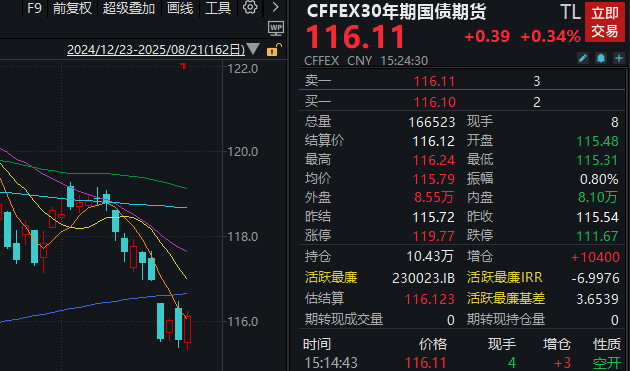
Core Viewpoint - The bond market is experiencing significant downward pressure, with a notable increase in yields, while the stock market is thriving, leading to a shift in investor sentiment and capital allocation [1][2][4]. Group 1: Bond Market Dynamics - On August 22, the issuance of 30-year special government bonds reached 83 billion yuan, with a bid rate of 2.15%, but the subscription multiple was only 2.89 times, indicating weak market demand [1]. - The bond market has seen a decline since early August, particularly affecting long-term bond funds, with some funds experiencing daily net value drops exceeding 0.5% [1][6]. - The issuance results of the 30-year bonds heightened market concerns, as the issuance rate exceeded the secondary market rate of 2.075%, reflecting a lack of demand even for highly secure assets [6][7]. Group 2: Stock Market Influence - The A-share market is witnessing unprecedented growth, with the Shanghai Composite Index surpassing 3,800 points, leading to a significant influx of capital into equities [1][2]. - The "stock-bond seesaw" effect is evident, where a booming stock market results in a cooling bond market, as institutions prefer equities when expected returns are higher [2][4]. Group 3: Fund Performance - Different types of bond funds are showing varied performance; short-term bond funds remain stable, while ultra-long bond funds and interest rate bond funds have suffered significant losses [6][9]. - Mixed bond funds have performed well due to their limited equity exposure, effectively hedging against bond market declines [7]. Group 4: Future Outlook - The bond market's recovery may depend on the stock market's performance; if the A-share market remains strong, the bond market may continue to struggle [9][11]. - There is a potential for re-evaluation of bond investment opportunities as yields rise, with a key psychological threshold identified at a 1.80% yield for 10-year government bonds [11].
债基八月遇冷大幅回撤,专家建议优选短债与“固收+”基金避险
Sou Hu Cai Jing· 2025-08-22 12:47
Core Viewpoint - The stock market has experienced a significant rally since August, while bond funds have struggled due to rising long-term bond yields and tightening liquidity conditions [1][4]. Group 1: Stock Market Performance - Since August 4, the A-share market has been on an upward trend, with the Shanghai Composite Index breaking a nearly ten-year high and the total market capitalization reaching a historical record [1]. - Trading activity in the A-share market has been robust, with daily transaction volumes exceeding 2 trillion yuan since August 13 [2]. Group 2: Bond Market Dynamics - The bond market has faced a sharp decline, particularly after August 7, with the 30-year government bond futures experiencing a significant drop of 1.33% on August 18 [2]. - As of August 20, over 660 bond funds reported negative returns for the month, with 86 funds experiencing net value losses exceeding 1% [4]. - The 30-year government bond yield rose from a low of approximately 1.95% to over 2.1%, while the 10-year yield increased from around 1.68% to nearly 1.79% [6]. Group 3: Fund Performance and Investor Behavior - On August 18, ten bond funds saw daily net value declines exceeding 1%, with the maximum drop reaching 1.63% [4]. - The recent strong performance of the stock market has intensified the negative correlation between stocks and bonds, leading many bond fund investors to shift towards equities [4][5]. - Institutional behavior has diverged, with funds and brokerages being net sellers of long-duration bonds, while large banks and insurance companies have increased their allocation to various durations of government bonds [5]. Group 4: Future Outlook - Analysts suggest that while the most severe adjustments in the bond market may have ended, full stabilization will depend on signals of easing liquidity or a cooling of stock market sentiment [5]. - Recommendations for bond fund investors include shortening duration to mitigate volatility and considering "fixed income plus" funds to enhance yield flexibility and reduce single-asset risk [5].
[8月21日]指数估值数据(想稳健参与市场,买点啥好;红利指数估值表更新;指数日报更新)
银行螺丝钉· 2025-08-21 14:03
Core Viewpoint - The market is experiencing fluctuations, with value styles showing relative strength during these times, indicating potential investment opportunities in value-oriented stocks and funds [3][4][10]. Market Overview - The overall market slightly declined, with the CSI All Share Index down by 0.13% [1]. - Large-cap stocks saw slight gains, while small-cap stocks experienced more significant declines [2]. - The pharmaceutical sector showed overall gains, contrasting with the slight decline in consumer stocks that had previously risen [5][6]. Investment Strategies - In the current market environment, it is advised to maintain a steady position and avoid frequent trading to prevent losses [8][11]. - The recent market behavior resembles the trends observed between 2013 and 2017, suggesting that undervalued stocks across various categories will eventually have their performance phases [9][10]. Value Style Performance - Value styles, including dividend and free cash flow stocks, have seen an increase, although the overall rise has been modest this year [4][18][19]. - The A-share CSI Dividend Index showed a slight decline from the beginning of the year until August 21, while the Hong Kong dividend stocks have seen some gains, albeit limited [20][21]. Fund Performance and Strategies - The "Monthly Salary Treasure" strategy is currently undervalued, with 40% of its portfolio in value-oriented stocks [17]. - The bond portion of the "Monthly Salary Treasure" strategy is focused on medium to short-term bonds, which are currently more favorable compared to long-term bonds that have seen significant declines this year [28][30]. - The strategy includes an automatic rebalancing feature to optimize returns by adjusting the stock and bond allocations based on market movements [28][30]. Valuation Insights - A valuation table for dividend indices has been created for reference, highlighting various metrics such as earnings yield, price-to-earnings ratio, and return on equity [22][41]. - The current valuation of value styles has not improved significantly since the beginning of the year, indicating potential for future appreciation as market conditions evolve [27]. Upcoming Events - A live session is scheduled to discuss historical bull and bear market characteristics and current market stages, providing insights for investors [4].