黄金珠宝饰品

Search documents
商贸零售行业周报:美团拟收购叮咚买菜,打造即时零售供应链优势-20260208
KAIYUAN SECURITIES· 2026-02-08 08:43
Investment Rating - The industry investment rating is "Positive" (maintained) [1] Core Insights - Meituan announced the acquisition of Dingdong Maicai for approximately $717 million, aiming to enhance its instant retail supply chain efficiency [4][24] - Dingdong Maicai has achieved profitability for 12 consecutive quarters and operates over 1,000 front warehouses, with a monthly purchasing user base exceeding 7 million [4][24] - The acquisition is expected to create synergies in supply chain, regional layout, and warehouse scale, enhancing Meituan's capabilities in the fresh produce sector [4][27] Industry Overview - The retail and social service indices reported a slight decline of 0.34% and a marginal increase of 0.02% respectively during the week of February 2 to February 6, 2026 [14][15] - The brand cosmetics sector showed the highest weekly growth of 4.99%, while the watch and jewelry sector led with a year-to-date increase of 16.56% [16][19] Investment Themes - Investment Theme 1: Focus on high-end and fashionable gold jewelry brands, recommending companies like Laopuhuangjin and Chaohongji, which are expected to benefit from market trends [6][29] - Investment Theme 2: Emphasize retail companies adapting to consumer trends and AI-enabled cross-border e-commerce leaders, with recommendations for Yonghui Supermarket and Aiyingshi [6][29] - Investment Theme 3: Highlight domestic beauty brands that cater to emotional value and innovative safe ingredients, recommending brands like Maogeping and Proya [6][30] - Investment Theme 4: Target differentiated medical beauty product manufacturers and leading chain medical beauty institutions, recommending Meilitiantian Medical Health and Aimeike [6][30] Company-Specific Insights - Laopuhuangjin is expected to achieve a revenue of 12.35 billion yuan in H1 2025, with a net profit increase of 285.8% [31] - Chaohongji anticipates a net profit growth of 125% to 175% in 2025, driven by differentiated product strength and brand expansion [31] - Meilitiantian Medical Health forecasts a net profit growth of at least 34% in 2025, supported by its dual growth strategy [39][40]
商贸零售行业1月投资策略:政策支持有望进一步加码,板块龙头蓄势待发
Guoxin Securities· 2026-01-12 13:43
Investment Rating - The report maintains an "Outperform" rating for the retail sector [3][56]. Core Insights - The retail sector is expected to benefit from increased policy support, with leading companies poised for growth [1][3]. - The overall consumption environment in 2025 is projected to be stable, with structural highlights emerging, particularly as consumption policies become clearer [1][12]. - The report identifies two main trends for 2026: the continuation of new consumption trends and the anticipated reversal of challenges faced by traditional consumption [2][20]. Summary by Sections Market Performance Review - In 2025, the SW retail index increased by 11.6%, underperforming the CSI 300 index by 6.1 percentage points, while the beauty care index rose by only 0.4%, lagging behind the CSI 300 by 17.35 percentage points [1][16]. - The retail sector's performance was initially strong in the first half of 2025 but faced a decline in the second half due to a shift in market focus towards technology [1][16]. Investment Recommendations - The report suggests several sectors for investment: 1. **Gold and Jewelry**: The sector is entering a consumption peak, with low valuations and expected growth in same-store sales and channel expansion. Recommended companies include潮宏基, 菜百股份, and 周大福 [3][56]. 2. **Beauty and Personal Care**: The sector is returning to low valuations, with traditional leaders showing signs of recovery. Recommended companies include 上美股份 and 珀莱雅 [3][56]. 3. **Offline Retail**: The end of the year is a peak sales period, with potential positive impacts from CPI recovery. Recommended companies include 名创优品 and 永辉超市 [3][56]. 4. **Cross-border E-commerce**: Companies are expected to benefit from reduced external tariff impacts, with recommendations including 小商品城 and 安克创新 [3][56]. Key Company Earnings Forecasts - The report provides earnings forecasts and investment ratings for key companies, all rated "Outperform" for 2025 and 2026, including 潮宏基, 上美股份, and 珀莱雅, with respective PE ratios indicating growth potential [5][59]. Recent Industry Data Tracking - As of November 2025, the total retail sales of consumer goods reached 43,898 billion yuan, with a year-on-year growth of 1.3%. The growth was influenced by high base effects and the timing of promotional events [26][30]. - Online retail sales for the first 11 months of 2025 reached 144,582 billion yuan, growing by 9.1%, with physical goods online retail accounting for 25.9% of total retail sales [28][30]. Policy Support and Future Outlook - Recent policy initiatives emphasize the importance of boosting consumer spending, with a focus on increasing the consumption rate and stabilizing demand through various measures [13][24]. - The report anticipates that traditional consumption leaders will gradually improve their performance as they adapt to new market conditions and innovate their product offerings [24][20].



纺织服饰周专题:迅销发布FY2026Q1季报,经营表现超公司预期
GOLDEN SUN SECURITIES· 2026-01-11 12:44
Investment Rating - The report maintains a "Buy" rating for several companies in the textile and apparel sector, including Anta Sports, Li Ning, and Shenzhou International, with specific price-to-earnings (PE) ratios for FY2026 [9][30]. Core Insights - Fast Retailing's FY2026 Q1 results exceeded expectations, with revenue increasing by 14.8% to 1,027.7 billion JPY, operating profit up 31% to 205.6 billion JPY, and net profit rising 11.7% to 147.4 billion JPY. The company has revised its FY2026 earnings forecast, expecting revenue growth of 11.7% to 3,800 billion JPY and operating profit growth of 17.9% to 650 billion JPY [1][12]. - The sports footwear and apparel sector shows strong resilience amid a volatile environment, with long-term growth potential. Recommended stocks include Anta Sports and Li Ning, with current PE ratios of 14 and 18, respectively [3][18]. - The apparel manufacturing sector is expected to see improved orders in 2026, with recommendations for Shenzhou International and Huayi Group, which are entering a capacity release cycle [3][30]. Summary by Sections Weekly Topic - Fast Retailing's FY2026 Q1 report shows significant growth across all regions, particularly in the Uniqlo division, which has seen revenue and operating profit increases [1][12]. Weekly Viewpoint - The report emphasizes the resilience of the sports footwear and apparel sector, recommending high-quality stocks such as Anta Sports and Li Ning, while also highlighting the potential for recovery in manufacturing stocks like Shenzhou International and Huayi Group [3][18]. Weekly Market Performance - The textile and apparel sector outperformed the market, with the textile manufacturing sector up 2.9% and brand apparel up 2.88% [22]. Recent Reports - The report anticipates stable retail demand in 2025, with a focus on the performance of key companies in the textile and apparel sector [27][28]. Key Company Announcements - The report includes updates on share buybacks and other corporate actions from companies like Jian Sheng Group, indicating ongoing strategic financial management [31]. Industry News - ASICS and FILA have launched new marketing campaigns, reflecting the industry's focus on brand engagement and consumer connection [32]. Raw Material Trends - Cotton prices have shown a year-on-year increase, with domestic cotton prices higher than international prices, indicating potential cost pressures for manufacturers [33][34].



商社2026年年度策略报告:周期复苏与AI创新的共振-20251214
CAITONG SECURITIES· 2025-12-14 11:54
Group 1: Retail and Service Industry Insights - The report highlights a recovery in the hotel and duty-free sectors, suggesting that the hotel prices have gradually increased since the second half of this year, with a recommendation to focus on hotel stocks such as Huazhu Group, Jinjiang Hotels, and ShouLai Hotels [6][12][17] - Duty-free sales are showing signs of bottoming out, with new policies implemented to expand the range of duty-free products and eligible consumers, leading to a significant increase in sales figures [12][15][16] - The report emphasizes the importance of service consumption policies, particularly in the context of the ice and snow economy, silver-haired economy, and sports events, recommending investments in companies like Changbai Mountain and Sanchuan Tourism [26][28][29] Group 2: AI Applications in Various Industries - The report discusses the acceleration of AI applications in the education and human resources sectors, with companies like Keri International and Beijing Renli leveraging AI to enhance recruitment efficiency [39][44] - AI's integration into 3D printing and e-commerce is highlighted, with a focus on companies like Huina Technology and Xiaogoods City, which are expected to benefit from cost reductions through full-chain penetration [6][39] - The report notes that AI applications are driving significant changes in operational efficiency and commercial opportunities across various sectors, particularly in human resources [39][44] Group 3: Beauty and Personal Care Sector - The beauty and personal care industry is experiencing a mild recovery, with domestic brands showing strong performance during the Double Eleven shopping festival, indicating a shift in competitive dynamics [6][32] - The report identifies key players in the beauty sector, recommending brands like Mao Ge Ping and Shanghai Jahwa, while also suggesting a focus on high-growth segments within the industry [6][32] - The medical beauty sector is under pressure but is seeing consolidation and innovation, with recommendations for companies like Jinbo Biological and Kedi-B [6][32] Group 4: Jewelry and Precious Metals - The jewelry sector is undergoing a transformation, with a focus on overseas expansion as a second growth curve, recommending companies like Laopu Gold and Chaohongji [6][32] - The report emphasizes the importance of high-value jewelry products and the impact of new tax regulations on the market dynamics [6][32] Group 5: Food and Beverage Industry - The food and beverage sector is witnessing a shift, with a focus on leading brands expanding their store counts and product categories, particularly in the tea and dining segments [32][38] - The report highlights the competitive landscape in the restaurant industry, noting the resilience of Western fast food and the growth of Chinese casual dining brands [32][38]

8点1氪:杨国福麻辣烫回应“1斤豆芽28元贵过山姆”;保卫处招聘要求硕士学历,高校回应;万科获深铁集团220亿元借款额度
36氪· 2025-11-04 00:47
Group 1 - Yang Guofu's mung bean sprouts are priced at 2.88 yuan for 50g, equating to 28.8 yuan per kilogram, which is significantly higher than Sam's Club's organic mung bean sprouts priced at 9.9 yuan for 600g, or 8.25 yuan per kilogram [5] - Many hot pot restaurants price their vegetables above 25 yuan per kilogram, with some premium items reaching as high as 100 yuan per kilogram [5] - Yang Guofu's hot pot stores have a uniform pricing of 26.8 yuan per kilogram for both meat and vegetables, while Zhang Liang's hot pot store charges 25.8 yuan per kilogram [5] Group 2 - Vanke announced a loan framework agreement with its major shareholder, Shenzhen Metro Group, for a maximum loan of 22 billion yuan, aimed at repaying bonds and interest [7] - Vanke reported a third-quarter revenue of 56.07 billion yuan, a year-on-year decline of 27.3%, and a net loss attributable to shareholders of 16.07 billion yuan, a 98% increase in losses compared to the previous year [7] Group 3 - Starbucks announced a joint venture with Boyu Capital to operate its retail business in China, with Boyu holding up to 60% of the joint venture [10] - The new joint venture will manage and operate approximately 8,000 Starbucks stores in China, with plans to expand to 20,000 stores in the future [10] Group 4 - Xiaomi's former executive Wang Teng announced his departure from the mobile industry to explore opportunities in the technology and health sectors [9] - The "2025 New Quality Productivity AI + Medical Innovation Application Competition" was held in Shanghai, focusing on AI applications in preventive medicine and chronic disease management [9] Group 5 - OpenAI signed a strategic partnership with Amazon Web Services (AWS) worth $38 billion to provide cloud computing infrastructure for its AI operations [23] - Microsoft plans to invest nearly $8 billion in AI cloud infrastructure in the UAE by 2029 [23]






超高溢价入股迈巴赫奢侈品公司,老凤祥高端化豪赌胜算几何?
Tai Mei Ti A P P· 2025-10-23 09:30
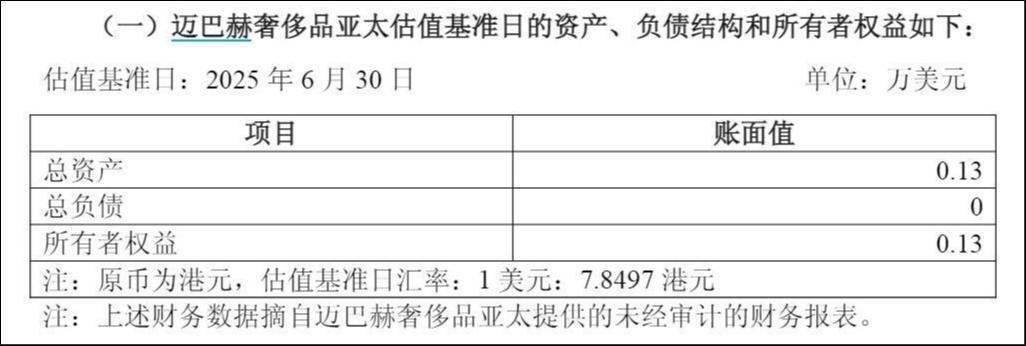
Core Viewpoint - The recent high-premium cross-border investment by the traditional Chinese jewelry brand Lao Feng Xiang (600612.SH) has drawn significant market attention amid high gold prices and pressure on its core business. The company announced a $24 million investment in a newly established luxury goods company with a net asset value of only $1,300, raising questions about the rationale behind such a high valuation and the uncertainty of investment returns [1][2]. Group 1 - Lao Feng Xiang plans to invest $24 million to acquire 20% of Maybach Luxury Goods Asia Pacific (MAP), which was established on February 11, 2025, and has not yet commenced operations. The valuation of MAP is $126 million, with a staggering appreciation rate of 9,692,207.69%, indicating a significantly inflated transaction value [2][3]. - The Shanghai Stock Exchange has issued a regulatory inquiry, requesting Lao Feng Xiang to justify the necessity and reasonableness of acquiring a minority stake at such a high premium without any historical operating performance from MAP [2][4]. - Lao Feng Xiang will not participate in the daily operations of MAP, only appointing one director and one financial director, which raises concerns about the company's involvement in the management and operational decisions of the new investment [3][4]. Group 2 - The luxury goods sector is a new area for Lao Feng Xiang, which may face challenges such as brand recognition, market promotion, pricing strategies, and consumer acceptance as it attempts to expand into this market [4]. - The international gold price has surged from around $3,300 per ounce to over $4,000, with a nearly 60% increase this year, negatively impacting the demand for gold jewelry and pressuring the performance of traditional gold retailers [5][6]. - Despite efforts to enhance its brand and expand into high-end markets, Lao Feng Xiang's financial performance has suffered, with a 20.5% decline in revenue to 56.793 billion yuan and a nearly 12% drop in net profit to 1.95 billion yuan in 2024 [7][9].

天风证券晨会集萃-20250730
Tianfeng Securities· 2025-07-29 23:44
Group 1: Macro Strategy and Market Overview - The upcoming third round of trade talks between China and the US is expected to focus on energy and rare earth materials, with potential extensions of negotiation deadlines [2] - A-shares saw slight increases across major indices, with the CSI 500 and ChiNext rising by 3.28% and 2.76% respectively [2] - The central bank's net fund injection was 109.5 billion yuan, indicating a slight rebound in short-term interest rates [2] - The US dollar index showed a slight decline, closing at 97.67, down 0.8% week-on-week, while the RMB appreciated by 0.18% [2] Group 2: Fixed Income and Debt Market - The Southbound Bond Connect is expected to facilitate investment in Chinese dollar bonds, with a focus on city investment bonds benefiting from local debt policies [4] - The Hong Kong bond market has a total outstanding amount of 19.55 billion USD in HKD bonds and 17.32 billion USD in offshore RMB bonds [4] - The outlook for Chinese dollar bonds remains positive, with expected continued good returns due to narrowing yield spreads and favorable policies [4][33] Group 3: Coal Industry Insights - Domestic coal social inventory decreased in June 2025, leading to a rebound in coal prices, with expectations for port prices to reach 700-750 yuan per ton [9] - The government aims for coal production to reach approximately 4.8 billion tons in 2025, with potential adjustments in production capacity to ensure supply [9] Group 4: Company-Specific Analysis - Wei Shi Jia Jie (00856) is expected to benefit significantly from the AI and cross-border payment sectors, with projected revenue growth from 63.7 billion yuan in 2020 to 81.1 billion yuan in 2024 [11] - The company is positioned to capture growth in the Southeast Asian ICT market, which is projected to reach approximately 415 billion USD by 2028 [11] - The company anticipates a significant increase in net profit from 830 million yuan in 2023 to 958 million yuan in 2024, reflecting a growth rate of 14.09% [11][15] Group 5: Construction and Materials Sector - Su Jiao Ke (300284) reported a revenue decline of 13.75% in H1 2025, but is transitioning towards becoming a "think tank technology enterprise" with a focus on new business areas [16] - The company has developed five cloud platforms aimed at enhancing its service offerings in urban safety and low-altitude economy [16] Group 6: Chemical Industry Trends - The proportion of public funds holding basic chemical stocks has slightly decreased, with a shift towards mid-cap stocks [15] - The chemical sector has seen a notable increase in the holding ratio of leading stocks, indicating a preference for smaller-cap stocks [15]

消费增长新范式思考之三:70后至00后的新兴消费变迁史,是轮回还是演进?
Guoxin Securities· 2025-06-25 09:31
Investment Rating - The report maintains an "Outperform" rating for the industry [1] Core Insights - The rise of new consumption is fundamentally driven by a significant change in consumer concepts shaped by the economic and social context of different generations, particularly from the 70s to the 00s [4][5] - The current consumer market is characterized by a shift from "survival-type" products to "quality + emotional-type" products, with a focus on emotional value and quality-price ratio [4][10] - Investment logic in new consumption should focus on sustainable growth capabilities rather than short-term speculative opportunities, emphasizing product innovation and strong brand recognition [4] Summary by Sections 1. Economic and Demographic Background of Consumption Changes - The per capita GDP in China has grown from over 10,000 RMB in 1995 to 84,000 RMB in 2023, establishing a buyer's market [4][15] - Consumer spending is increasingly constrained by rigid expenditures on housing, healthcare, and education, alongside wealth effects [4][19] - The educational attainment of the 95/00 generation has significantly increased, with a CAGR of 10.5% in the number of undergraduate graduates from 1998 to 2023 [4][23] - Urbanization rates have remained high, influencing consumption patterns and driving the reconstruction of consumption scenarios [4][24] 2. Product Evolution - The transition in consumer products reflects a shift towards quality and emotional engagement, with head brands focusing on domestic alternatives and functional trends [4][10] - The market has seen a rise in low-cost, emotionally valuable products, such as beauty care, jewelry, and IP toys, which are now key segments [4][10] 3. Marketing Evolution - Marketing strategies have evolved from traditional brand advertising to performance-driven advertising, with a focus on maximizing advertising efficiency [4][10] - The rise of digital platforms has transformed marketing channels, emphasizing the importance of consumer engagement and conversion rates [4][10] 4. Channel Evolution - The shift towards online channels has significantly increased penetration rates across various categories, with a focus on consumer value rather than supplier value [4][10] - The integration of public and private domains has become crucial for navigating the challenges posed by traditional retail models [4][10]




连续冰点!A股转机在即?!
格兰投研· 2025-05-28 14:29
Group 1: Fund Industry Changes - The core of the recent transformation in China's public fund industry is that fund companies must generate real profits for clients to earn higher management fees, with those failing to do so receiving only the minimum fee level [2][3] - The newly approved floating fee rate funds will adjust management fees based on the fund's performance in the first year, with a baseline fee of 1.2% [5][6] - If a fund's performance exceeds the benchmark by 6% or more, the management fee can increase to 1.5% in the following year; conversely, if performance falls below the benchmark by 3% or more, the fee drops to 0.6% [6][7] Group 2: Market Trends in Jewelry Sector - The jewelry sector is experiencing renewed interest driven by a shift in consumer behavior towards "self-gratification" rather than traditional needs, with non-wedding purchases rising from 50% to 75% [11][12] - The focus in the jewelry industry has shifted from inventory levels to product strength, emphasizing unique and personalized offerings that consumers are willing to pay a premium for [12] Group 3: Market Overview - The market saw a collective adjustment with a slight index decline of 0.76%, while 3,480 individual stocks fell [13] - Despite a lack of direct selling pressure from major holders, the market is experiencing slow declines due to cautious positioning by institutions [15] - The crowdedness in small-cap stocks has reached new highs, indicating potential volatility if larger stocks rebound [16] Group 4: Technology Sector Dynamics - The technology sector has seen a significant drop in crowdedness, reaching its lowest point this year, which may indicate a potential for recovery [17] - The decline in financing balances, currently around 1.8 trillion, is directly linked to the inactivity in the technology sector, suggesting that market elasticity is low [18][19] - A revival in the technology sector is essential for generating real profit opportunities in the A-share market [20]