Hua Er Jie Jian Wen

Search documents
美国进口疲软,中国春节数据真空,会是铜价的短期逆风吗?
Hua Er Jie Jian Wen· 2026-01-23 07:34
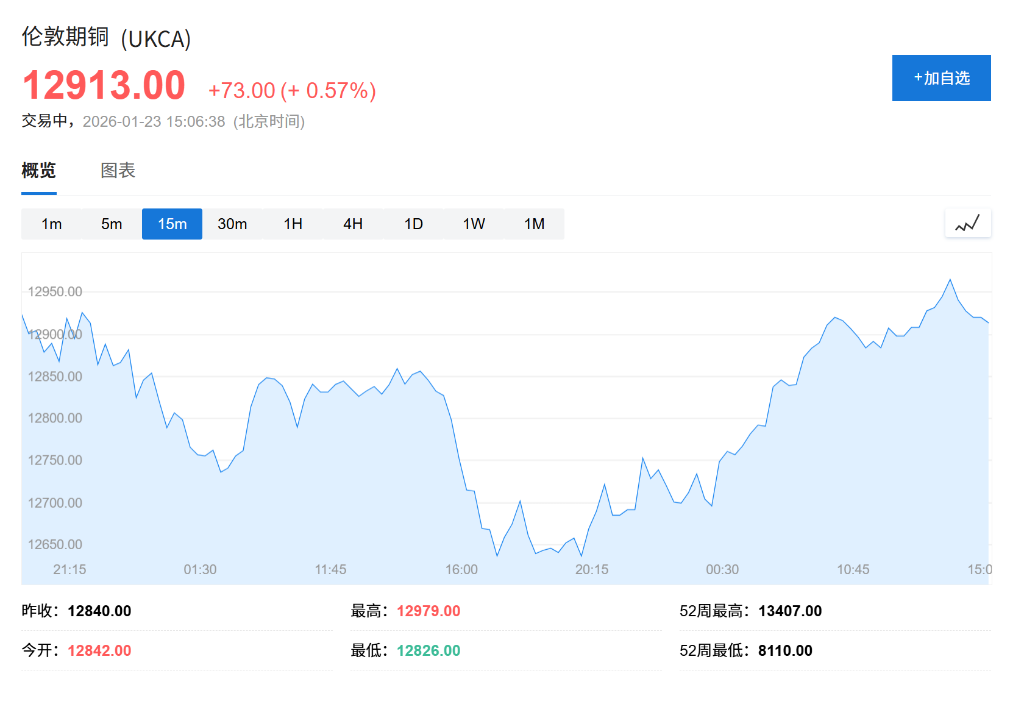
Core Viewpoint - Copper prices are facing short-term pressure despite macroeconomic support due to weakening U.S. import momentum and a demand vacuum ahead of the Chinese New Year [1][5]. Group 1: U.S. Import Dynamics - The surge in U.S. refined copper imports observed in December and early January has cooled down as the narrowing COMEX-LME price spread has eliminated financial incentives for continued large-scale imports [5][6]. - The market's adjustment to the expectations regarding Section 232 tariffs on refined copper has contributed to this change, as the anticipated tariffs were not implemented following the January 14 investigation results [5]. - Recent data indicates a significant inflow of copper into LME warehouses in the U.S., marking the first occurrence in nearly a year, which is suppressing LME prices and cross-period spreads [5][6]. Group 2: Chinese Demand Trends - China's apparent copper demand showed negative growth in December, while refined copper exports remained strong, leading to a seasonal increase in inventory [7]. - The upcoming data vacuum due to the Lunar New Year will add uncertainty to market conditions, with limited information on demand until mid-March [7]. - Despite global supply constraints, China's refined copper production is expected to grow by 10% in 2025, reaching a record high, supported by increased imports of copper concentrate and scrap [7]. Group 3: Supply Constraints - The supply side is extremely constrained, with Morgan Stanley projecting only a 0.2% growth in copper mine supply for 2026, resulting in an estimated market deficit of around 600,000 tons [2][9]. - Significant supply disruptions, such as the strike at Capstone's Mantoverde mine, are expected to extend into 2026, limiting refined copper supply growth [2][9]. - Historical data indicates that copper mine supply growth rates have been volatile, with 2025 and 2026 expected to be at historical lows [9]. Group 4: Market Outlook - Morgan Stanley anticipates a market deficit of approximately 600,000 tons in 2026 due to limited mine supply growth (0.2%) not keeping pace with strong demand growth (1.8%) driven by new factors like data centers and energy storage systems [10]. - The macroeconomic backdrop remains supportive of metal prices, with expectations of further interest rate cuts bolstering demand for non-yielding assets [10]. - Despite a positive outlook for metals, including copper, prices have exceeded initial forecasts, and short-term volatility may arise due to uncertainties in U.S. import trends [10].


腾讯不想靠“token生意”赚快钱
Hua Er Jie Jian Wen· 2026-01-23 06:42
这条路,自然也决定了腾讯云在这场AI马拉松的前期不会是领跑的选手。 在AI产业的商业化进程中,token 生意是初期的"流量入口",也是AI 应用的前提,其价值无可否定,但显然腾讯不打算将其token作为核心盈利模 式。 面对AI带来的增量机遇,杨晨对华尔街见闻表示,每家云厂商定位不一样,腾讯云重点发力的是AI与SaaS产品的融合,而这个方向也是腾讯云定 位的和整个市场差异化竞争最关键的一个点。 作者 | 黄昱 编辑 | 王小娟 过去一年来,各大云厂商在AI战场的竞争日益激烈,阿里云、字节火山引擎、百度智能云均在机场刷起存在感,打出自己在不同细分AI云市 场"第一"的广告。而腾讯云却拒绝了这场流量争夺。 近日,在一场媒体交流会上,腾讯云副总裁、产业生态合作业务负责人杨晨给出了答案。他透露,这确实和腾讯风格有关系,AI竞赛是场马拉 松,刚跑了两圈,没有必要显示腾讯云跑得多快,"坚持下去,比耐力"可能是更重要的。 这份"耐力"的背后,是腾讯云清晰的商业化取舍。杨晨明确表示,腾讯云不认为token 是门好生意 —— 这类以大模型 token 消耗为核心的标准化 算力/模型调用业务,看似规模庞大,实则客户黏性极差,不 ...


现有路径不通?OpenAI、亚马逊考虑改变大模型训练方式
Hua Er Jie Jian Wen· 2026-01-23 06:42
随着人工智能领域竞争进入深水区,行业顶尖研究人员正对现有的模型训练范式提出质疑。 来自OpenAI、Thinking Machines Lab以及亚马逊的研究人员正在探讨一种根本性的转变:放弃目前通用 的"先预训练、后后训练"的标准流程,转而采用针对特定任务更早引入精选数据的训练模式,以解决现 有模型的效率低下和"裂脑问题"等缺陷。 这一潜在的转变由亚马逊的David Luan等人大力倡导。其核心观点在于,目前的通用训练路径——即先 赋予模型广泛的世界知识(如诗歌或园艺),再针对特定任务(如代码编写或客户退款)进行微调—— 在逻辑上并不总是合理的。研究人员认为,如果模型的最终用途已经确定,那么在预训练阶段就应引入 与任务高度相关的精选数据,从而更直接地为最终目标服务。 这种方法论的调整若付诸实践,将深刻改变AI行业的开发格局。这不仅意味着开发团队可能不再需要 按照预训练和后后训练进行人为分割,更预示着市场将从"一个通用模型适应所有场景"走向"基于不同 数据集构建专用模型"的时代。这种转变将迫使开发者在训练初期就对数据进行更严格的筛选,从而决 定模型在特定领域的专长与短板。 市场已经出现了这种分化的迹象。Ope ...
日股能否抗住日元贬值、收益率上行的双重压力?
Hua Er Jie Jian Wen· 2026-01-23 06:39
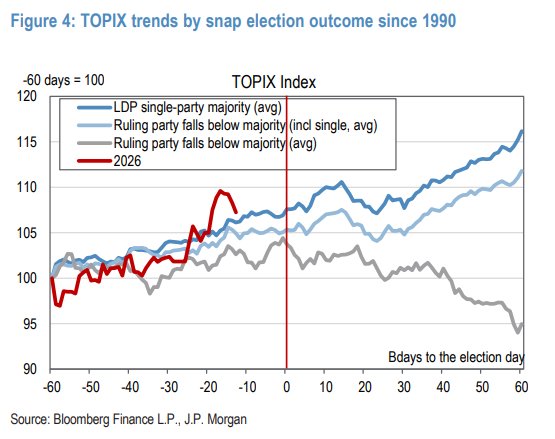
Core Viewpoint - Despite facing challenges such as early elections, a weak yen, and rising long-term interest rates, Japanese stocks still have room for growth by the end of 2026 [1] Group 1: Market Outlook - The core conclusion indicates that as long as the USD/JPY exchange rate does not exceed 165 and the 10-year Japanese government bond yield remains below 3%, the upward trend of Japanese stocks is likely to remain unchanged [2] - The upcoming early election on February 8 will significantly influence short-term market reactions, but expectations of fiscal stimulus and political stability point towards a stock market rise by the end of the year [3] Group 2: Currency and Interest Rate Thresholds - The critical threshold for the yen is set at 165, where excessive depreciation could harm unhedged investors' asset values and hinder real wage growth [4] - The 10-year government bond yield at 3% is a key pressure point for the financial system and stock valuations, particularly affecting regional financial institutions [8] Group 3: Scenarios and Predictions - In a baseline scenario where the ruling Liberal Democratic Party (LDP) secures a majority, the Nikkei index may remain flat or slightly decline post-election but is expected to rebound, targeting 57,000 points by the end of 2026 [5] - In a weak scenario where the LDP fails to secure a majority, the market may initially drop to around 52,000 points but could recover to 55,000 points by year-end due to fiscal expansion policies [5] - In a strong scenario where the LDP achieves a stable majority, the Nikkei index could immediately surpass 56,000 points post-election and reach over 60,000 points by year-end [5] Group 4: Risk and Support Dynamics - The sensitivity of Japanese corporate profits to exchange rates has decreased, with the beta coefficient dropping from 1.0 to 0.6, indicating reduced responsiveness to currency fluctuations [5] - If the 10-year JGB yield rises to the 3.0%-3.5% range, regional banks may face capital adequacy issues, potentially leading to forced selling of stocks to bolster capital [10] - Domestic institutional investors possess significant potential for capital repatriation, which could stabilize the market as domestic yields rise [10]

日本央行行长植田和男:若经济形势如预期般发展,我们将继续提高利率
Hua Er Jie Jian Wen· 2026-01-23 06:38
日本央行行长植田和男:若经济形势如预期般发展,我们将继续提高利率。 风险提示及免责条款 市场有风险,投资需谨慎。本文不构成个人投资建议,也未考虑到个别用户特殊的投资目标、财务状况或需要。用户应考虑本文中的任何 意见、观点或结论是否符合其特定状况。据此投资,责任自负。 ...
达沃斯精英晚宴上,“全球主义”正在被公开清算
Hua Er Jie Jian Wen· 2026-01-23 06:33
值得注意的是,据新华社报道,世界贸易组织总干事伊维拉22日在瑞士达沃斯强烈抨击当前全球贸易保 护主义抬头的情况,呼吁各方通过对话解决纠纷。 分析人士指出,这场晚宴交锋预示着,在特朗普新政府领导下,美国可能推动全球经济治理框架的重大 转向,而这一转向在商界和政界精英中的接受度可能超出外界预期。 美国商务部长卢特尼克在达沃斯世界经济论坛的一场私人晚宴上对全球主义发起猛烈抨击,宣称这一意 识形态已经"死亡",并直指其对美国中产阶级造成的伤害。这场由贝莱德首席执行官芬克(Larry Fink)主办的精英晚宴,成为新旧经济秩序理念激烈碰撞的现场。 全球主义遭遇正面挑战 1月22日,据媒体报道,卢特尼克的演讲聚焦于全球主义如何掏空美国社区、欧洲监管过度阻碍增长, 以及欧盟能源政策的矛盾性。这些言论标志着特朗普政府对战后国际经济秩序的公开质疑,可能预示全 球贸易和监管框架面临重大调整。 据报道,在这场有数百人受邀参加的周二晚宴上,卢特尼克对全球主义——这一将全球关切置于国家利 益之上的意识形态——进行了尖锐批评。 报道指出,据知情人士透露,尽管美国前副总统戈尔对卢特尼克的言论表示强烈不满,但在场的多数华 尔街和政府高层实际 ...
亚马逊被曝计划下周再裁员数千人,涉AWS及零售等核心部门
Hua Er Jie Jian Wen· 2026-01-23 06:15
Core Viewpoint - Amazon is planning a new round of large-scale layoffs, expected to affect thousands of jobs as part of a broader plan to optimize its workforce of approximately 30,000 corporate employees [1][2] Group 1: Layoff Details - The layoffs are anticipated to be similar in scale to the first round of layoffs in October last year, which affected about 14,000 white-collar positions [1][2] - The affected departments include Amazon Web Services (AWS), retail, Prime Video, and human resources [1][2] - If the target of 30,000 layoffs is fully implemented, it would represent nearly 10% of Amazon's total corporate workforce [1][2] Group 2: Strategic Implications - The layoffs highlight ongoing adjustments within large tech companies as they seek efficiency and respond to technological changes [1][2] - The current plan exceeds the previous record of approximately 27,000 positions cut in 2022, marking the largest layoff action in Amazon's 30-year history [2] Group 3: Reasons Behind Layoffs - Management's statements regarding the reasons for the layoffs show complexity; while AI was linked to the first round of layoffs, CEO Andy Jassy clarified that the current layoffs are not primarily driven by financial or AI factors but rather by cultural issues within the company [3] - Jassy indicated that there is excessive bureaucracy within the organization, leading to an increase in personnel and layers of management [3] - Despite downplaying AI's direct role in the layoffs, the trend of using AI to replace human labor is becoming irreversible, with companies increasingly automating tasks to reduce costs [3] Group 4: Previous Layoff Progress - The current layoff plan is being executed in phases, with the first round's affected employees given a 90-day transition period to seek internal or external opportunities [4] - This transition period for the first round of layoffs is set to end soon, after which the second round of layoffs will commence [4]

日元跌势难止?投行评日央行决议:鹰派信号“不强”,都在等4月加息
Hua Er Jie Jian Wen· 2026-01-23 06:03
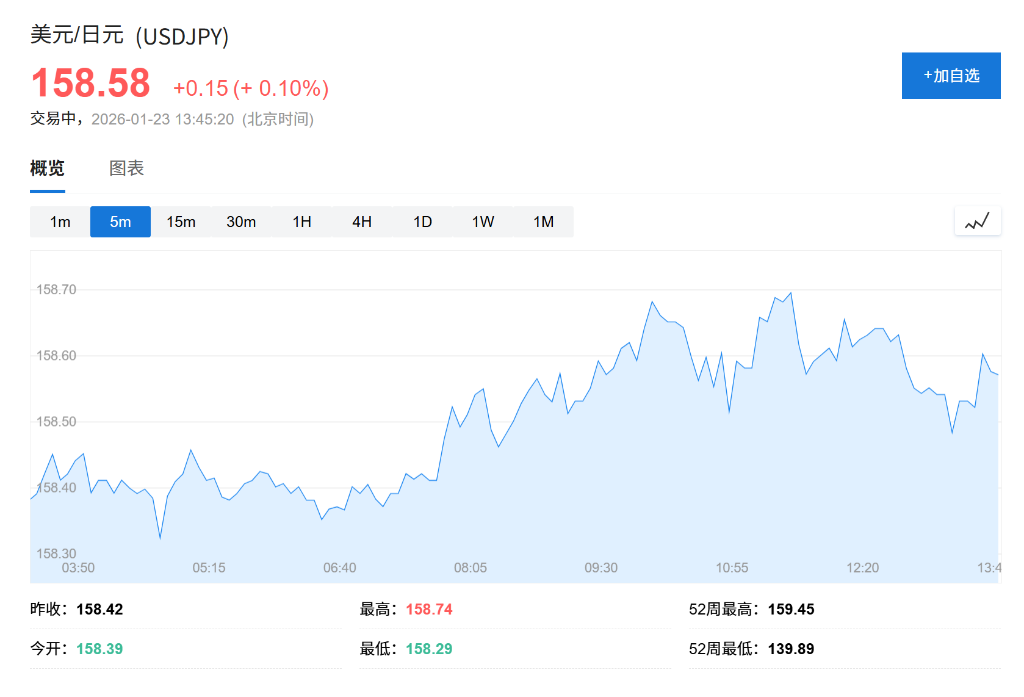
日本央行维持利率不变后,日元延续跌势,策略师们普遍认为央行释放的鹰派信号力度不足以扭转日元疲软态势。市场焦点已转向4月可能的加息 行动,但在美联储会议前,投资者对日元的观望情绪浓厚。 1月23日,日本央行如期维持基准利率在三十年高位不变,决议公布后日元对美元一度跌0.2%至158.74。央行正在评估上月加息对经济的影响。 决议略显鹰派,日元仍承压 日本央行此次维持利率不变符合市场预期,但决议声明的细节变化引发策略师们对政策走向的解读。 汇丰控股首席亚洲经济学家Frederic Neumann表示,日央行上调通胀预测暗示官员立场的鹰派倾斜。通过提高通胀预期,货币政策官员表达了对物 价前景的更大信心,这反过来应会强化进一步加息的理由。他指出,日本债券市场和汇率将受益于更强的货币政策锚定,日央行的鹰派倾斜将大 大有助于遏制波动性。 野村证券外汇策略师Yujiro Goto认为,日央行货币政策会议的沟通方式意在传递对4月加息的意识。在此次会议前,市场已完全消化了7月前的加 息预期。尽管决议显示鹰派,但在新闻发布会前,日元贬值压力仍在酝酿。 Minato Bank策略师Shogo Karitani指出,声明中增加了汇率 ...
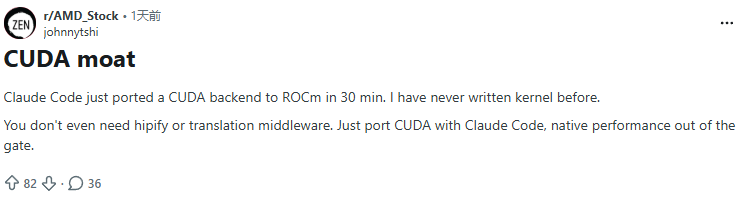
仅用半小时!Claude Code“终结”英伟达“最强护城河”?
Hua Er Jie Jian Wen· 2026-01-23 03:59
Core Insights - The AI code platform Claude Code has successfully migrated NVIDIA's CUDA code to AMD's ROCm platform within half an hour, showcasing the potential of generative AI in breaking down computational ecosystem barriers [1] - This case has raised market concerns that it may weaken NVIDIA's long-standing technological moat built around CUDA [3] Group 1: Migration Process - A user reported that the only issue encountered during the migration was the "data layout" difference [4] - Claude Code operates using an intelligent agent framework that can smartly replace CUDA keywords with their ROCm counterparts while maintaining the underlying logic of specific kernels [4] - The tool simplifies the migration process, allowing developers to complete the work directly through a command-line interface without needing to configure complex conversion environments like Hipify [4] Group 2: Limitations and Challenges - The user did not specify the exact type of codebase processed, but the design of ROCm mimics several aspects of NVIDIA's CUDA platform, making simple code migration relatively easy for AI tools [5] - Industry experts believe that the real challenge lies in migrating complex, interrelated codebases, which require the intelligent agent system to understand a significant amount of contextual information for effective conversion to ROCm [5] - There are concerns that Claude Code may struggle with deep hardware optimizations, particularly regarding specific cache hierarchies, limiting its practicality in high-performance computing scenarios [6]


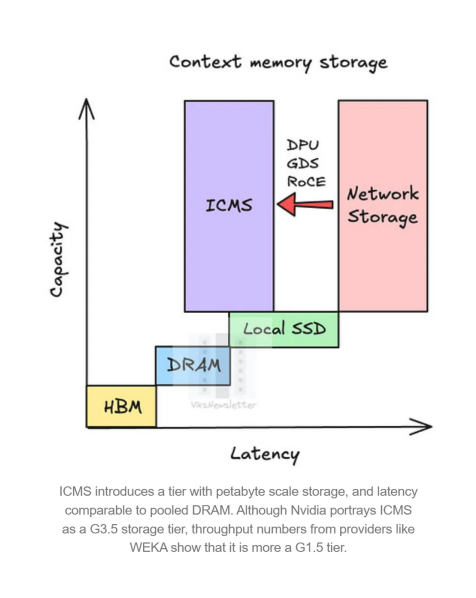
闪迪暴涨背后:三大催化共振,NAND成“必需品”,AI 重估存储价值
Hua Er Jie Jian Wen· 2026-01-23 03:41
Core Insights - The storage sector is experiencing a "perfect storm," with SanDisk's stock price increasing over 100%, driven by a value reassessment triggered by advancements in AI architecture [1][11] - Storage is transitioning from a cost item to a core production element for AI, as evidenced by developments from NVIDIA and DeepSeek [1][10] Group 1: Technological Developments - NVIDIA's CEO Jensen Huang introduced the concept of Inference Context Memory Storage (ICMS) at CES 2026, highlighting that context is becoming a new bottleneck for AI rather than computing power [2][3] - The new DGX Vera Rubin NVL72 SuperPOD architecture includes dedicated storage racks for inference context, significantly increasing NAND requirements [2][3] - DeepSeek's Engram model allows NAND to be used as slow memory, enabling deterministic memory access and reducing latency issues compared to HBM [4][5][8] Group 2: Market Implications - The global NAND market, with an annual demand of approximately 1.1–1.2 ZB, is expected to see nearly 10% structural growth driven by AI infrastructure rather than traditional consumer electronics [3][11] - NAND's role is evolving from merely cold data storage to being integrated into a tiered memory system, acting as "slow RAM" for AI applications [8][9] - The combination of BlueField DPU and NAND offers a cost-effective solution for long-term memory needs in AI agents, decoupling storage demand from traditional computing resources [9][10] Group 3: Strategic Value of NAND - The strategic value of NAND is being re-evaluated as it becomes indispensable in AI architectures, leading to a potential shift in pricing logic [11] - Analysts suggest that the developments in NAND technology represent a path to achieving more efficient storage-computing collaboration, which may be more cost-effective than merely expanding computing power [8][9][11]